150+ Abandoned Cart Email Examples Packed With Recovery Ideas


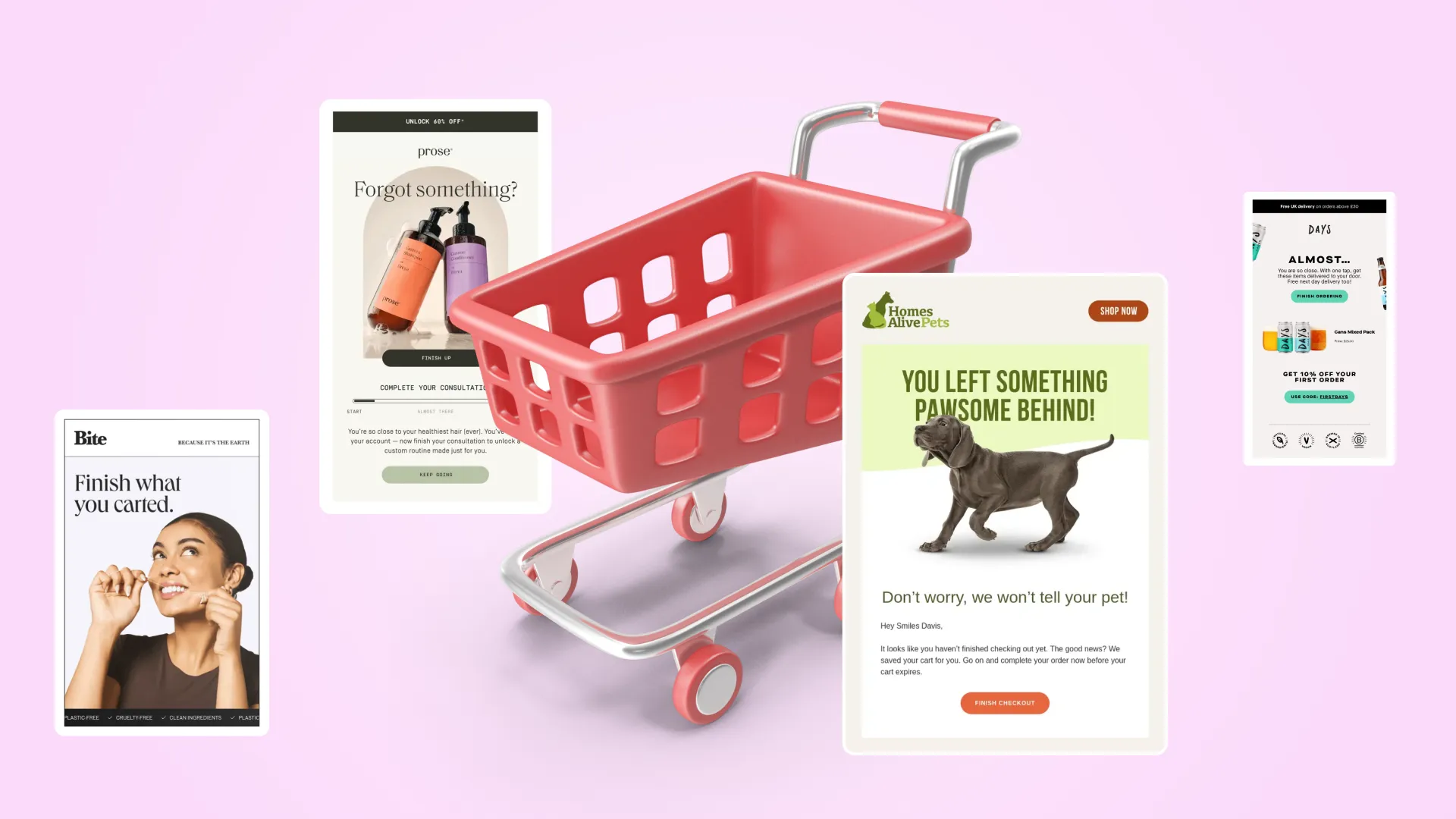
A shopper adds something to their cart, gets distracted, checks the shipping cost, second-guesses the price, or simply decides to think about it. An abandoned cart email picks up that unfinished decision while the purchase is still fresh.
Below, you’ll find 150+ abandoned cart email examples from real brands, covering everything from simple reminders and product-led designs to discounts, urgency, personalization, social proof, humor, and complete abandoned cart flows. Use them to see how different brands bring shoppers back-and how the message changes depending on what may have stopped the purchase in the first place.
Quick links:
→ Simple Abandoned Cart Email Examples
→ Product-Focused Abandoned Cart Email Examples
→ Abandoned Cart Email Examples With Discounts
→ Personalized Abandoned Cart Email Examples
→ Urgency and Scarcity Abandoned Cart Email Examples
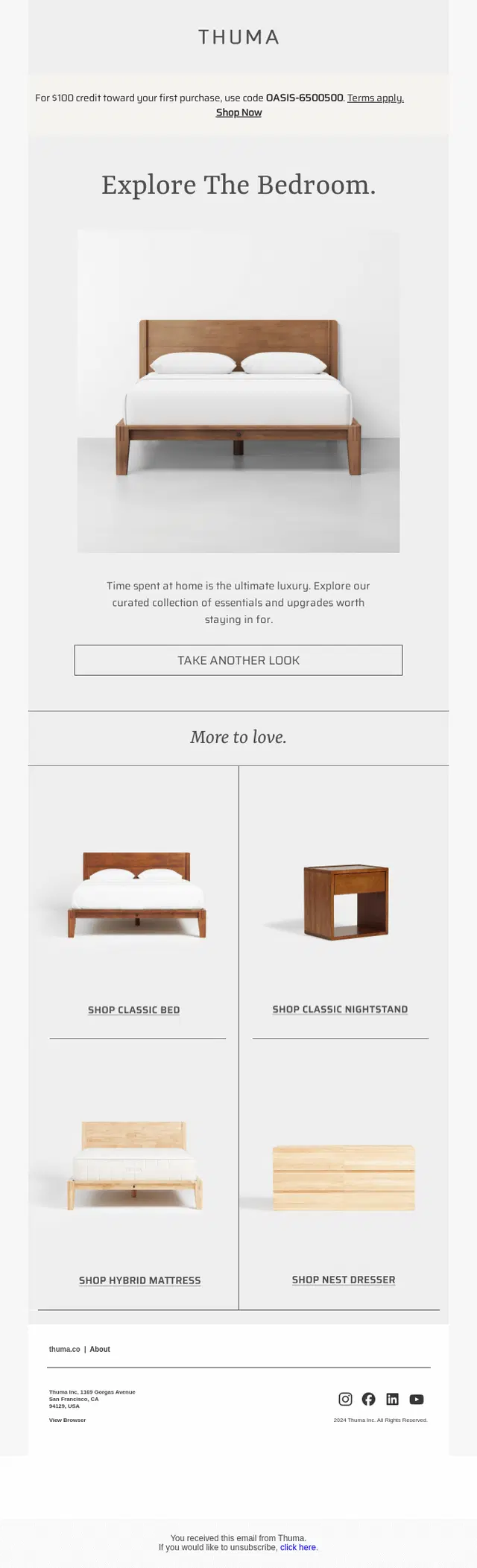
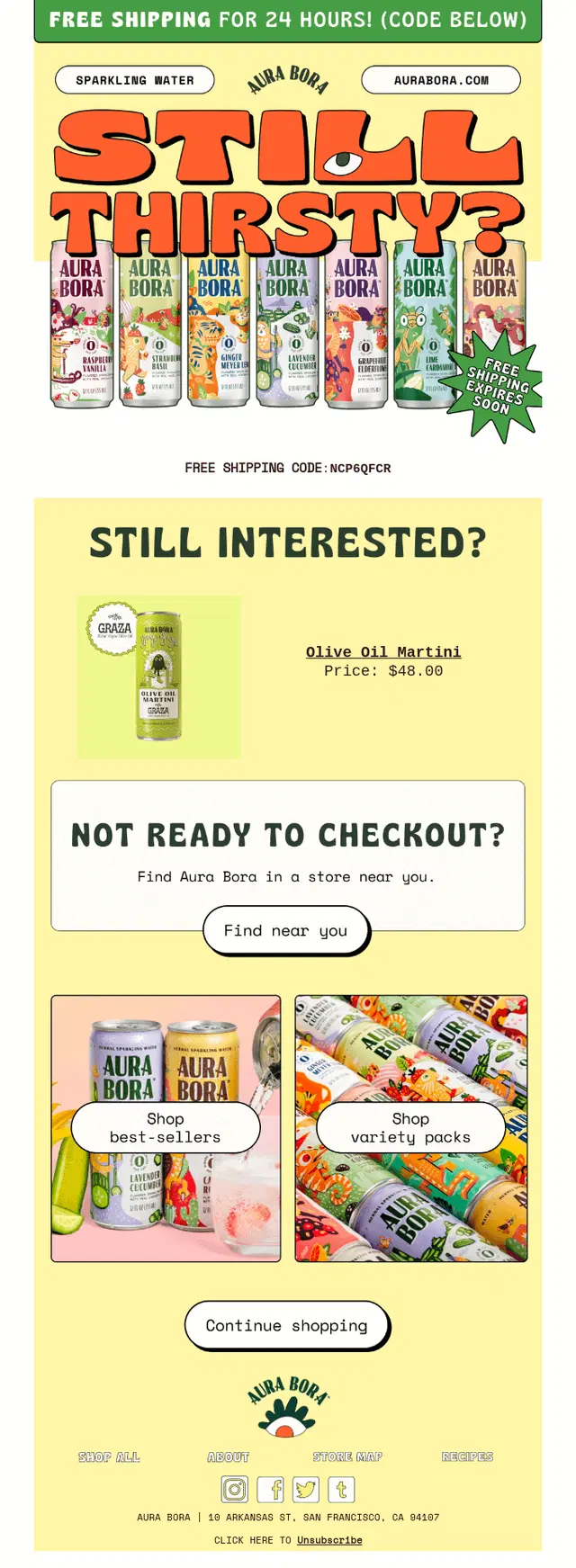
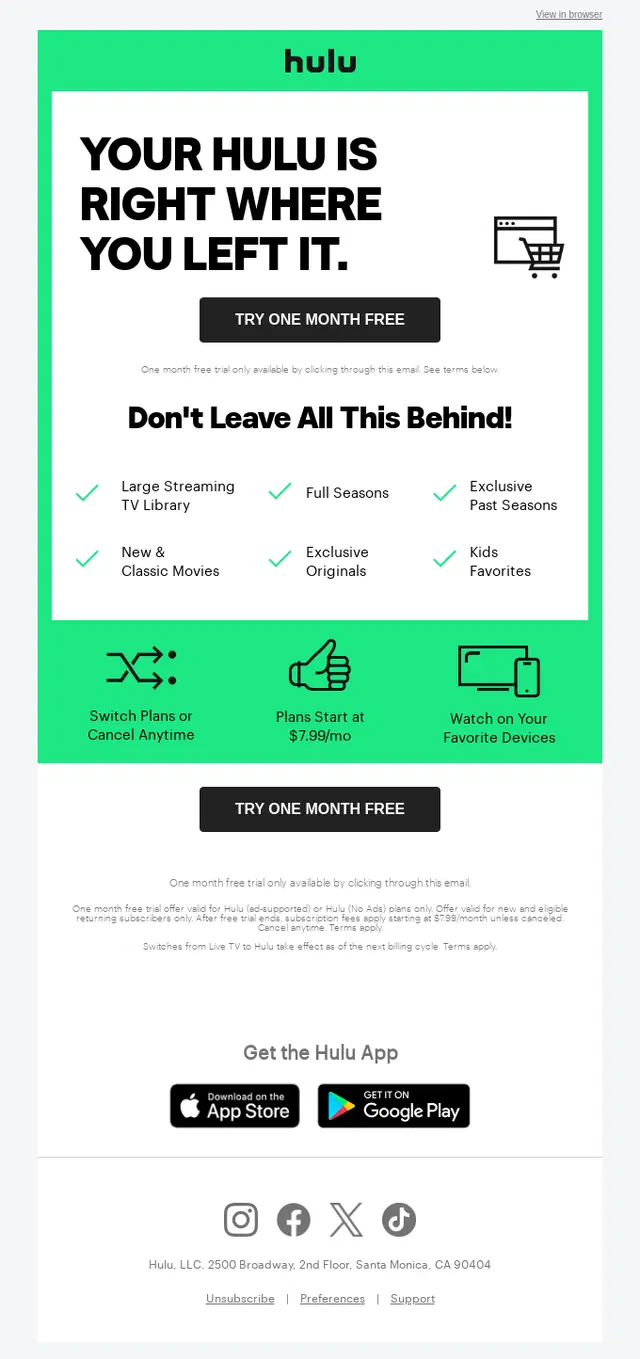
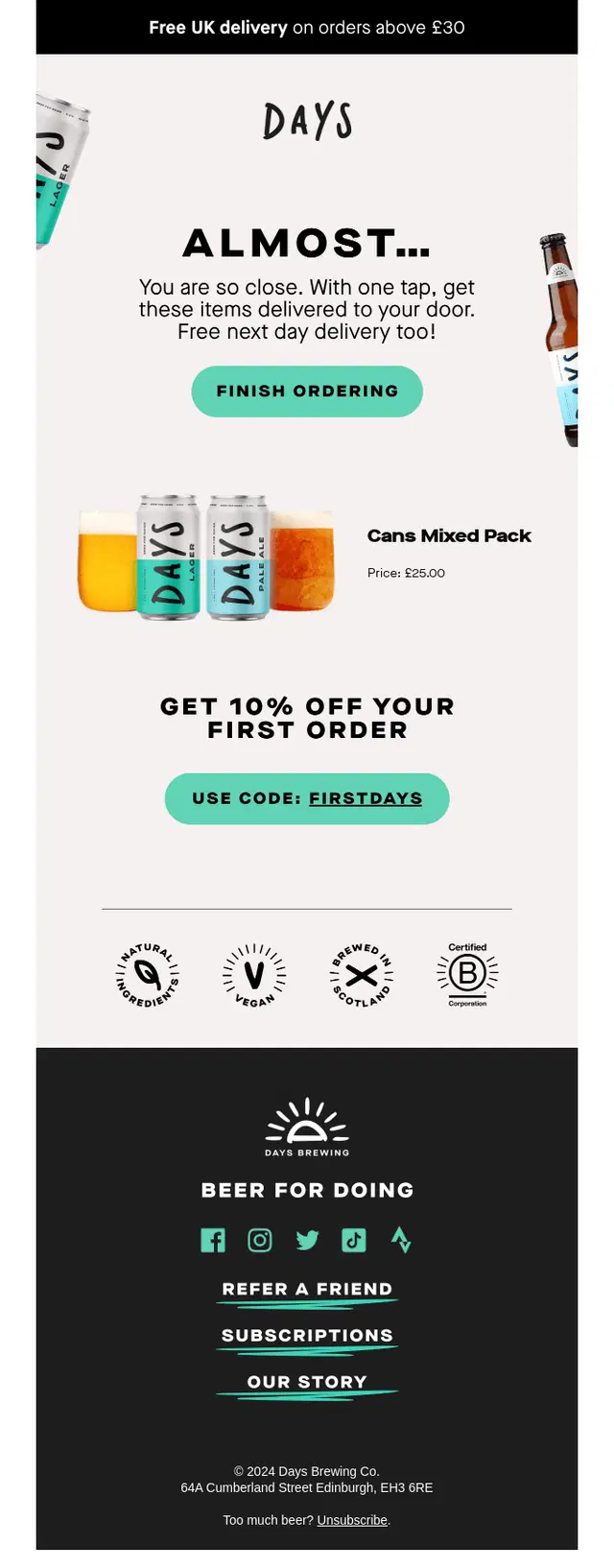
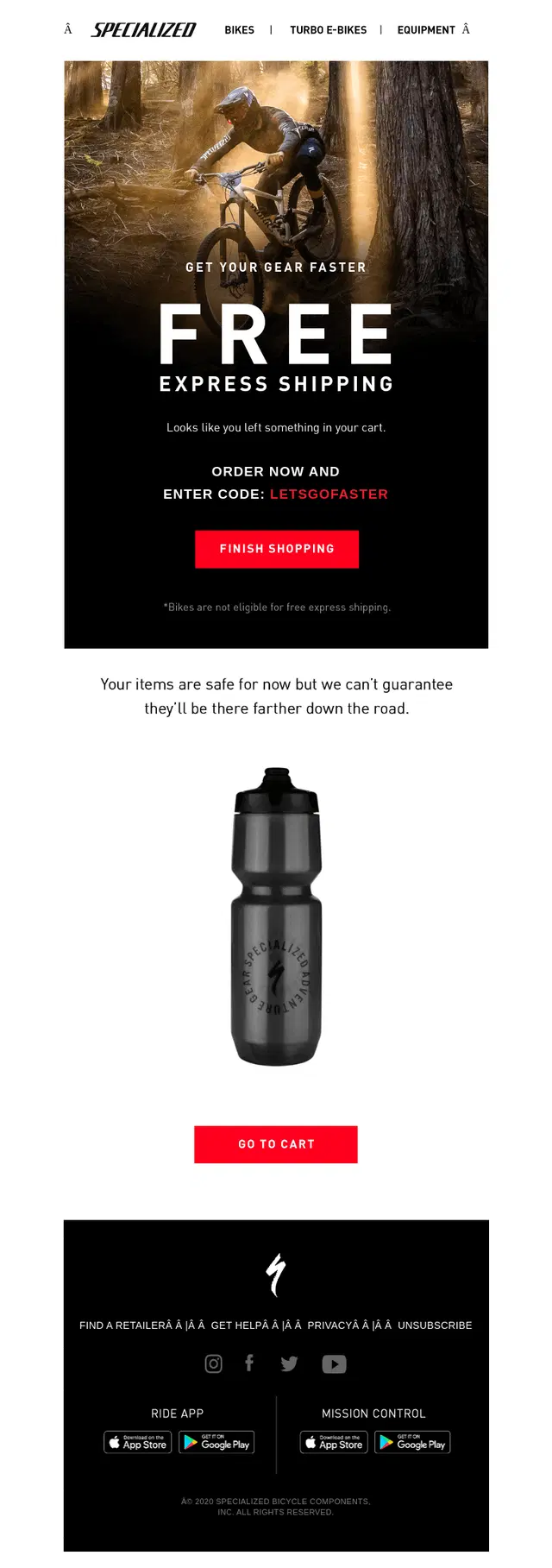
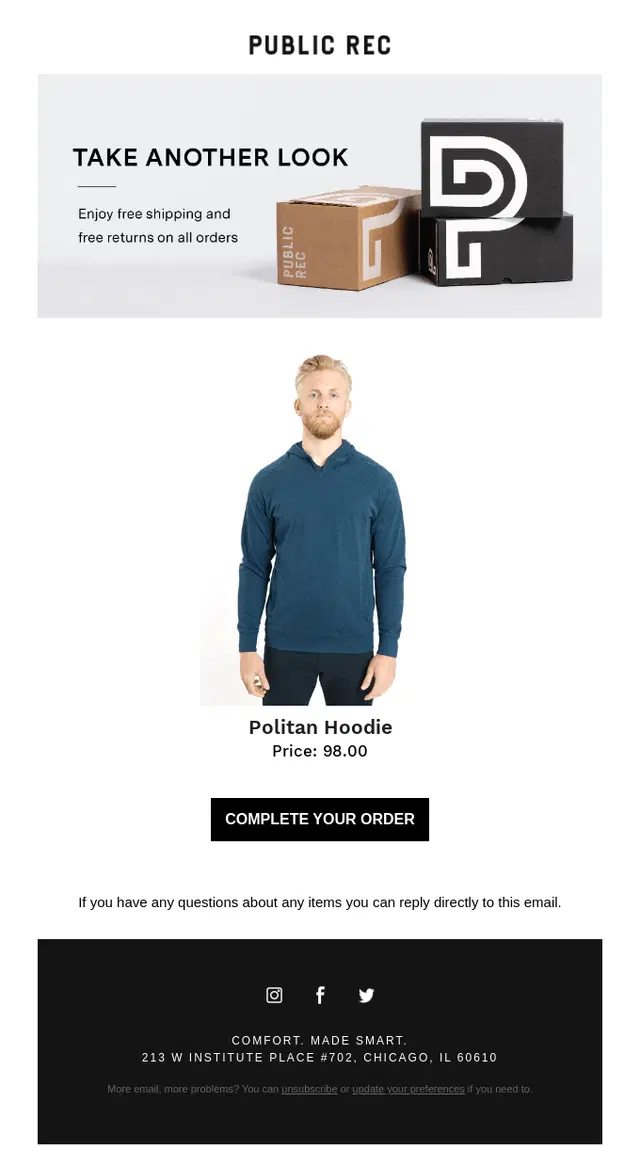
→ Abandoned Cart Emails With Free Shipping and Other Incentives
→ Social Proof and Trust-Building Abandoned Cart Emails
→ Creative and Funny Abandoned Cart Email Examples
→ Longer Abandoned Cart Email Sequence
How Many Abandoned Cart Emails Should I Send?
Abandoned Cart Email Best Practices
Abandoned Cart Email Subject Line Examples
Simple Abandoned Cart Email Examples
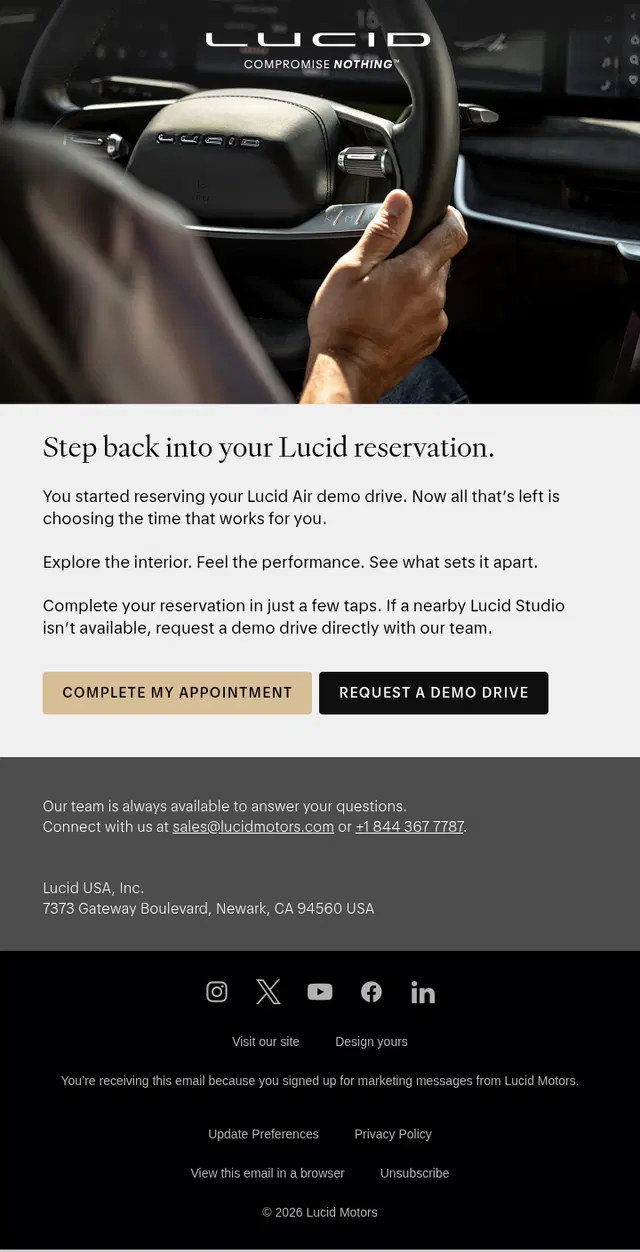
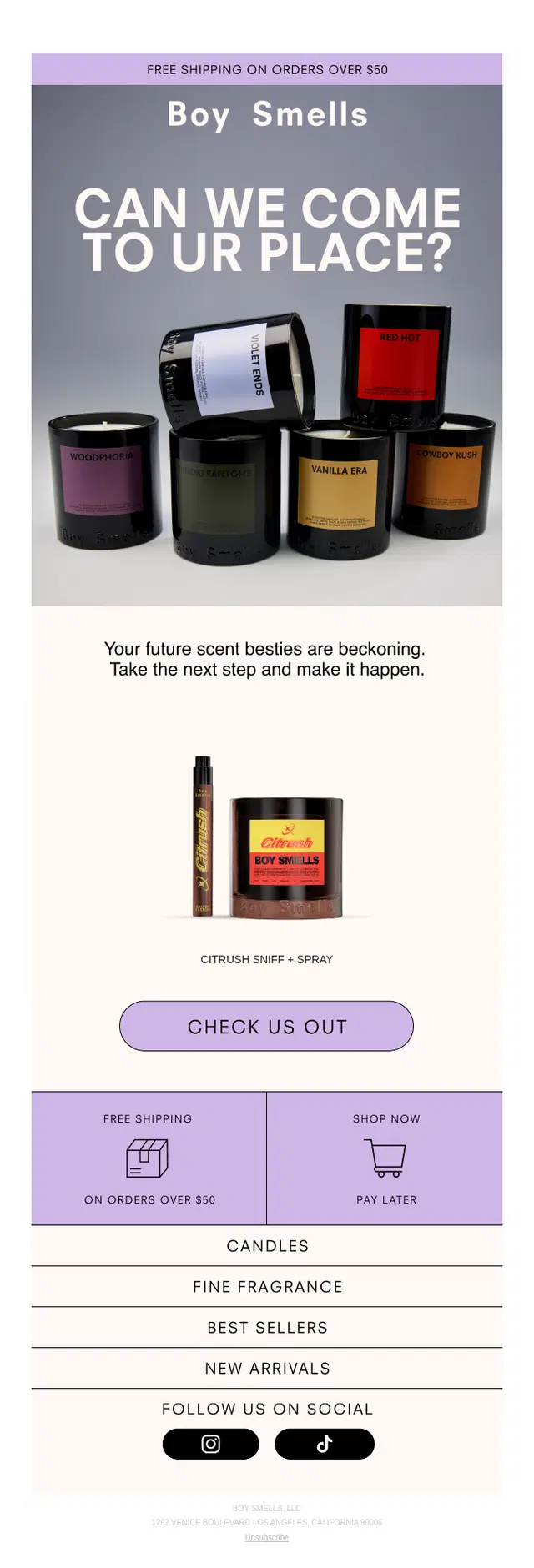
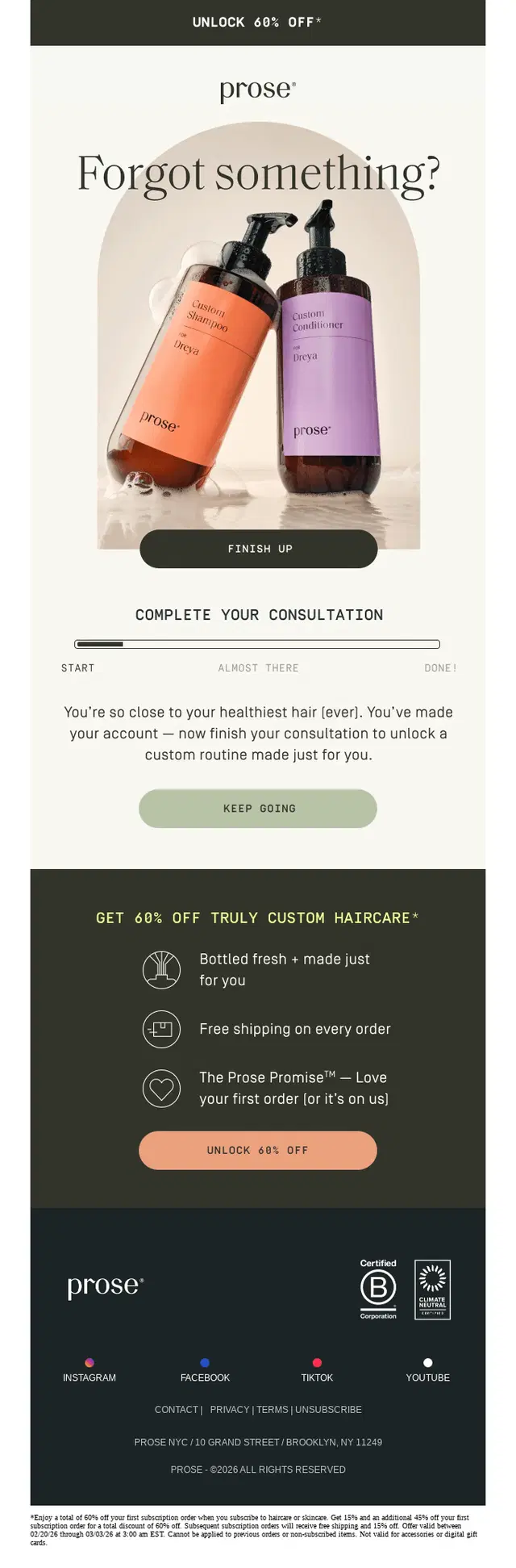
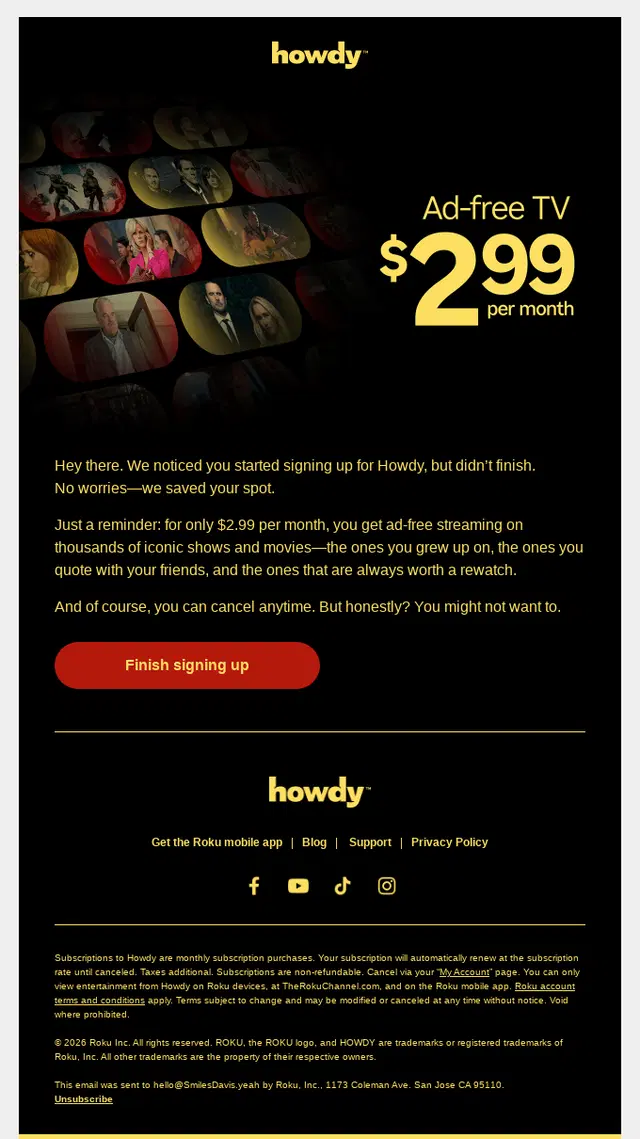
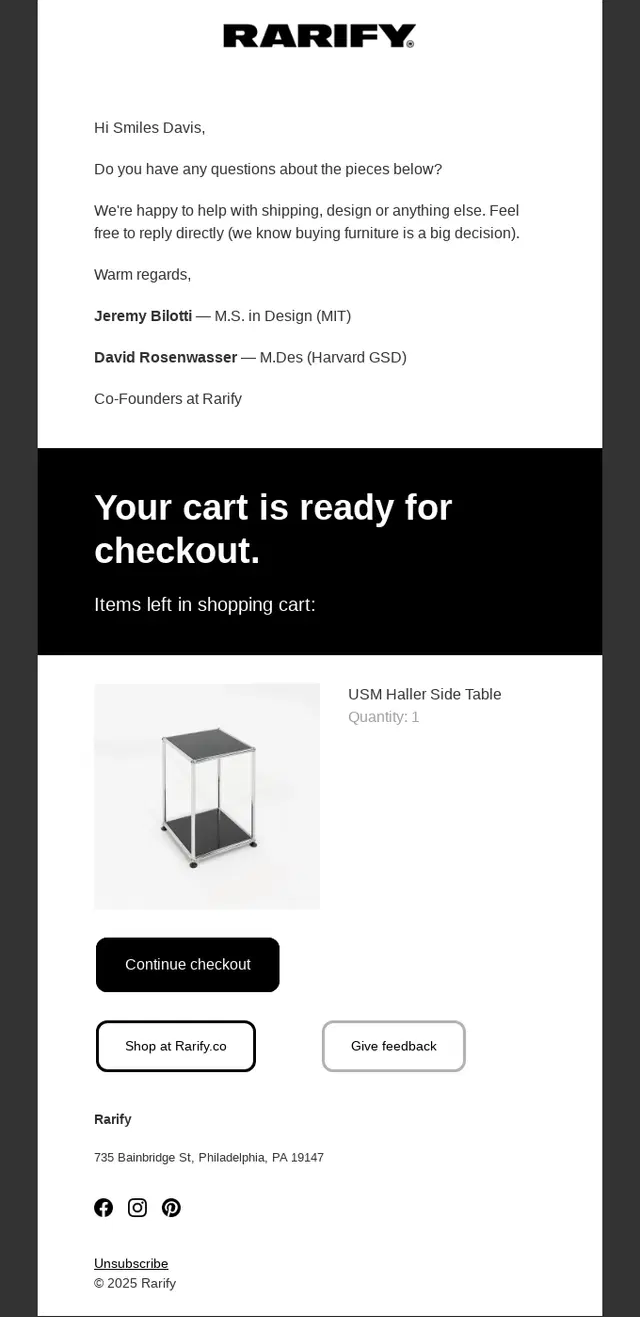
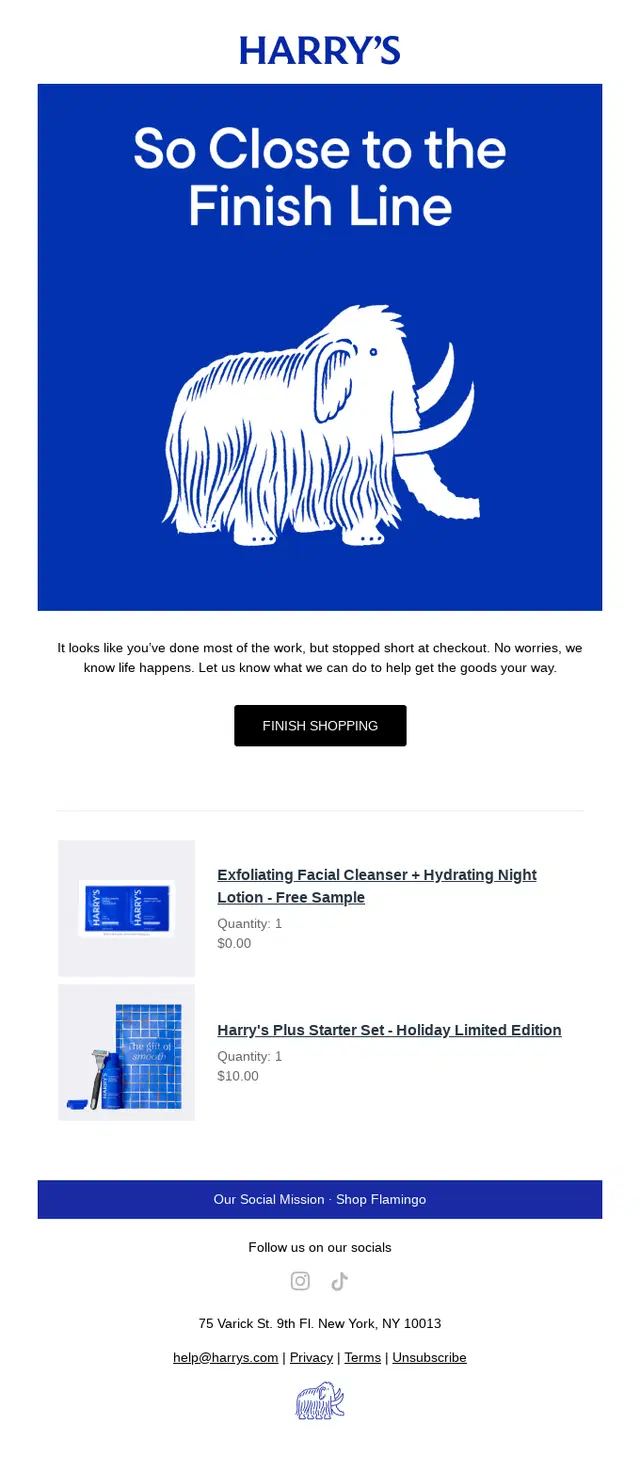
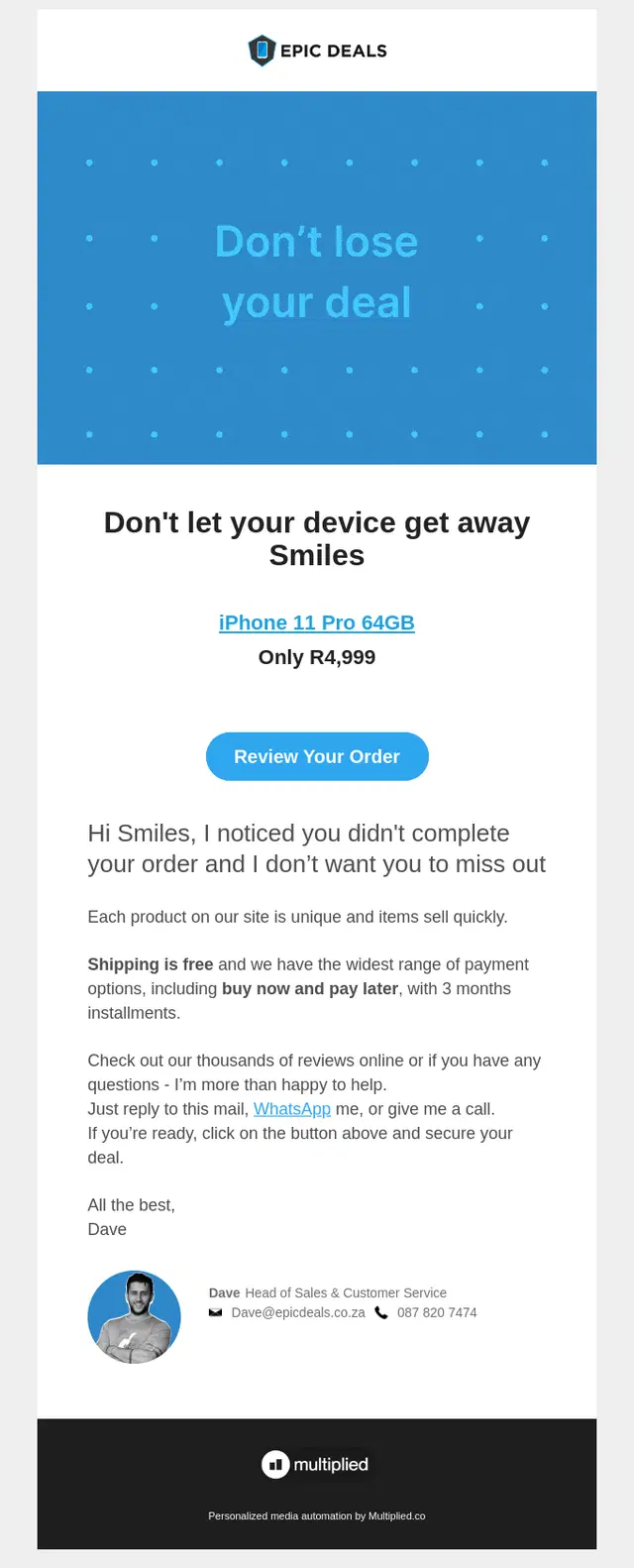
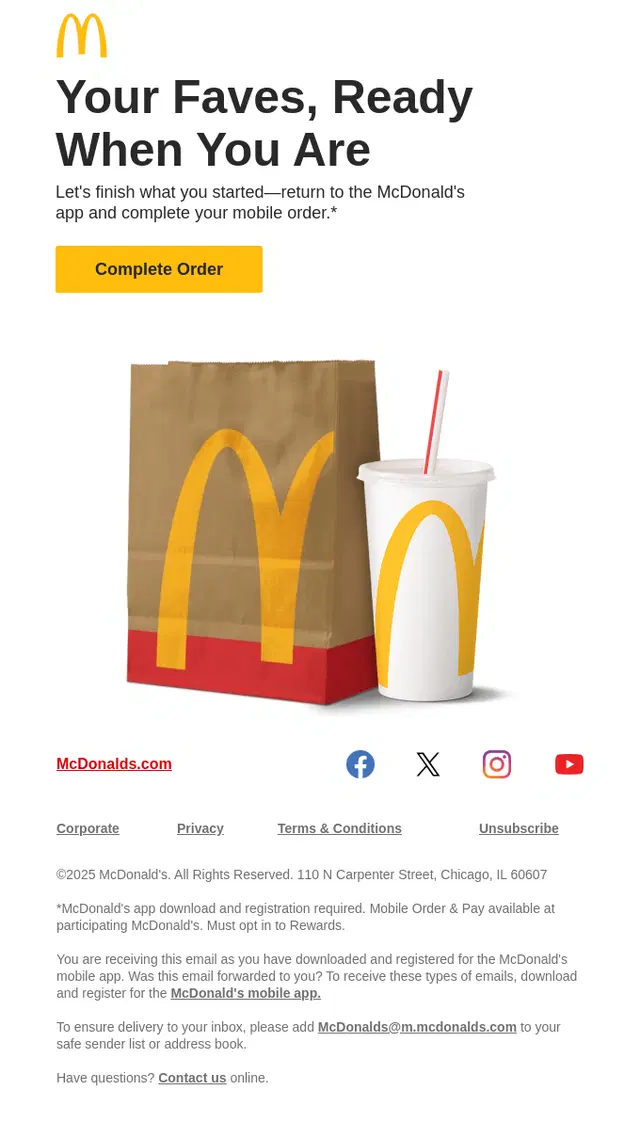
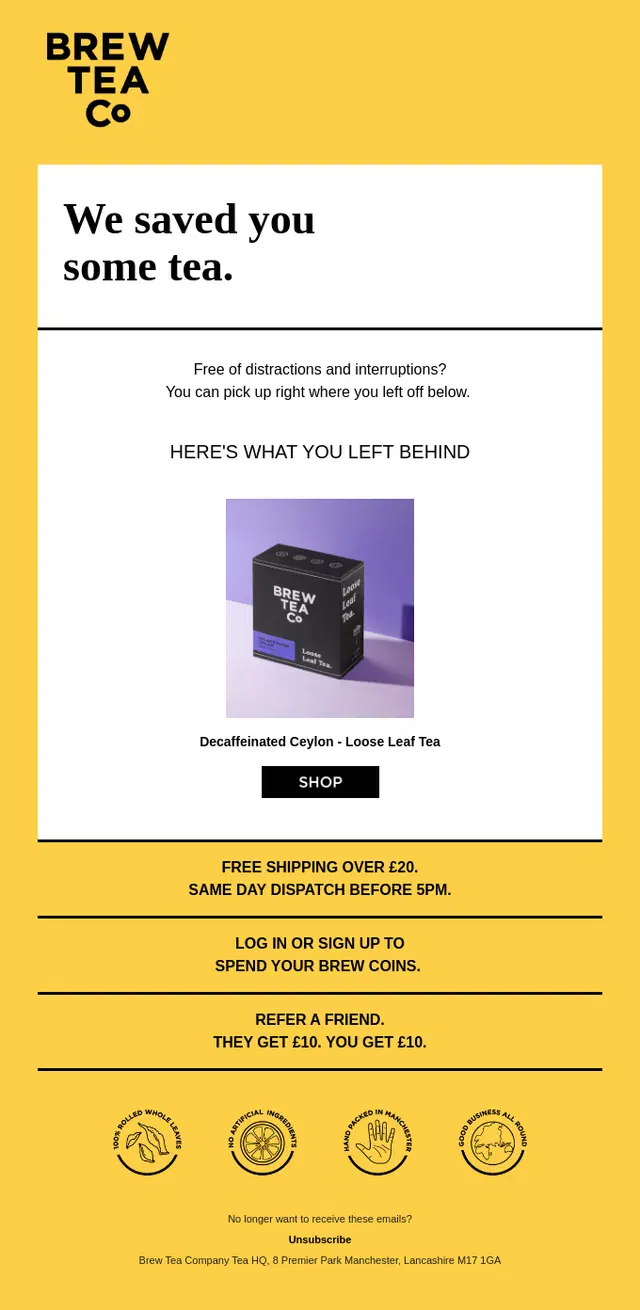
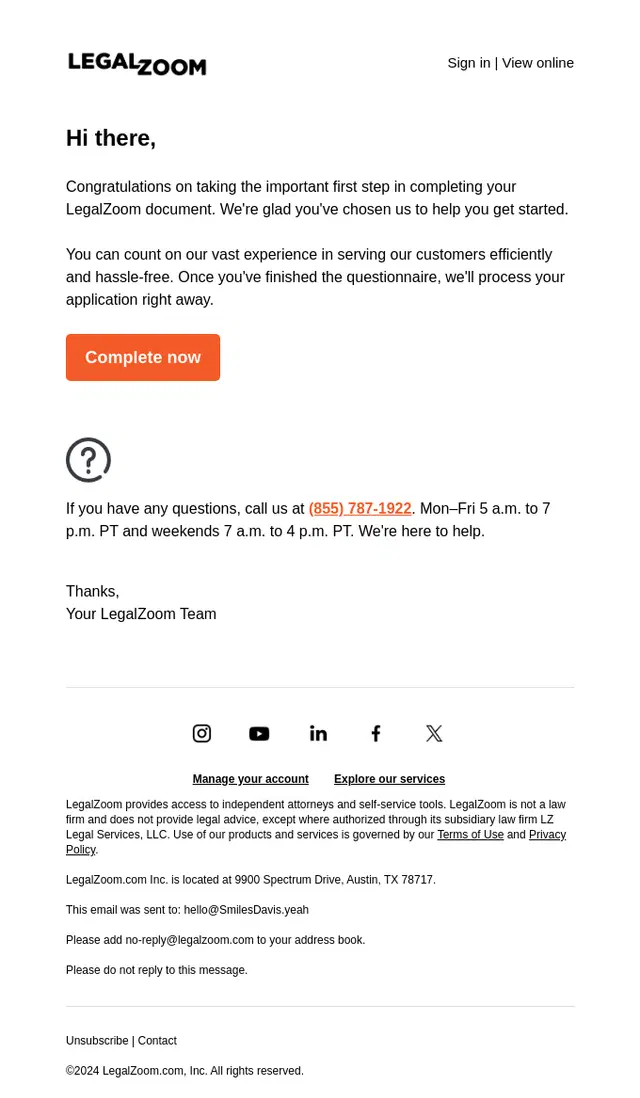
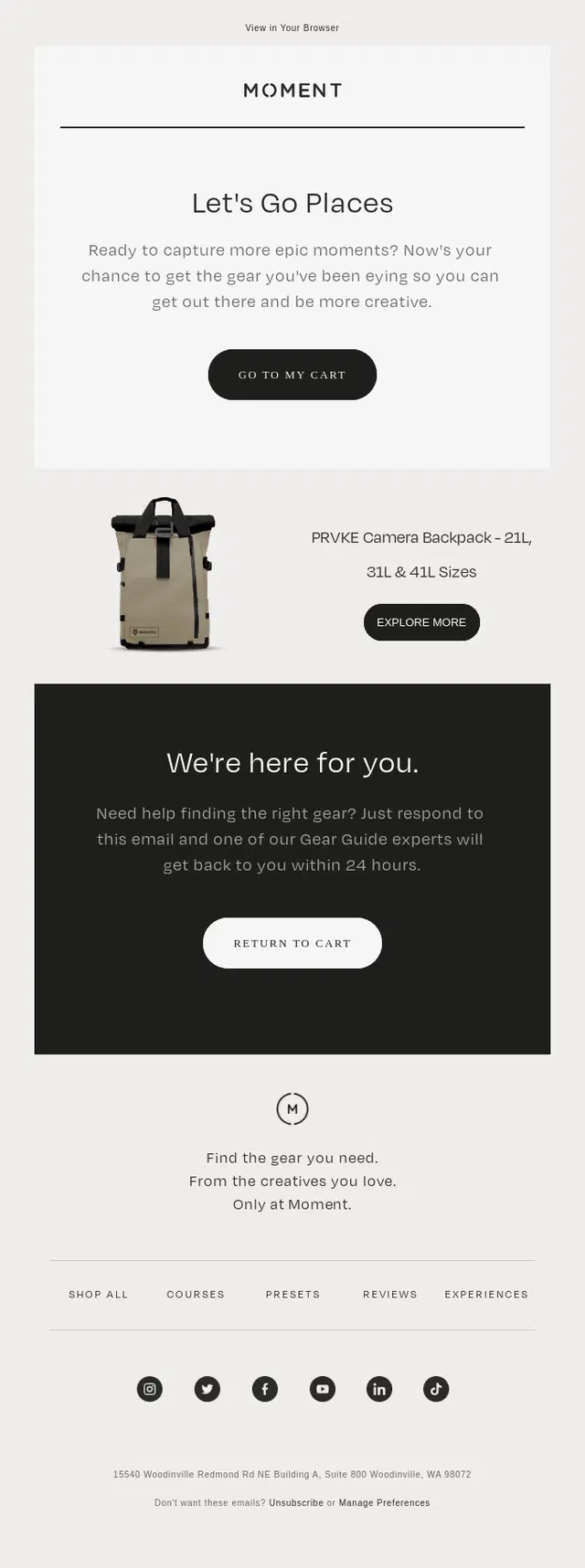
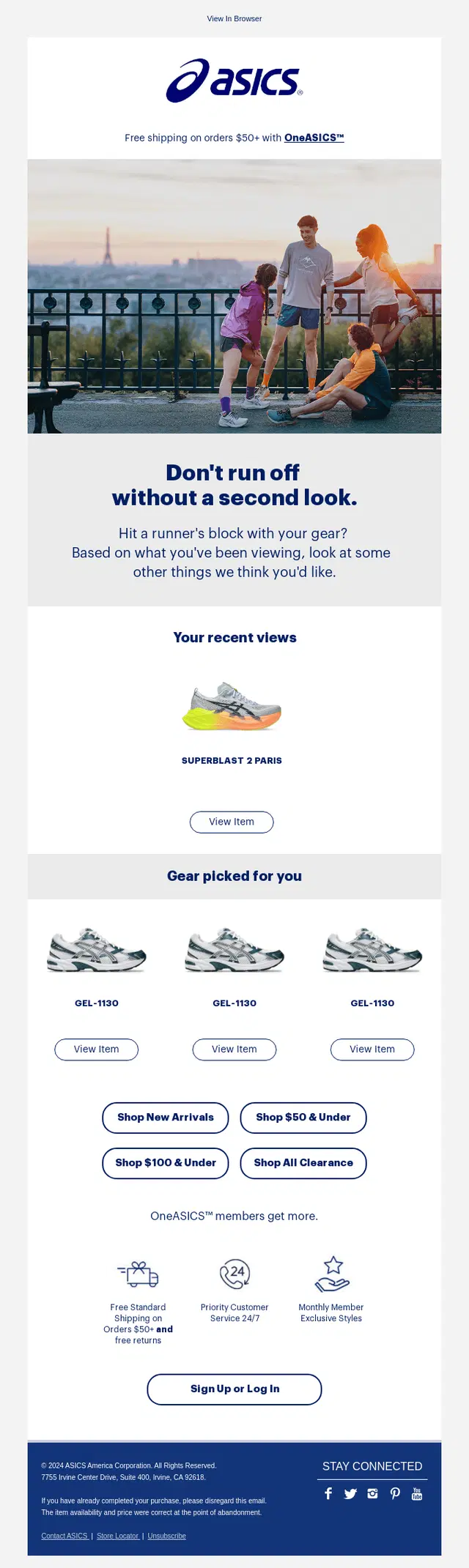
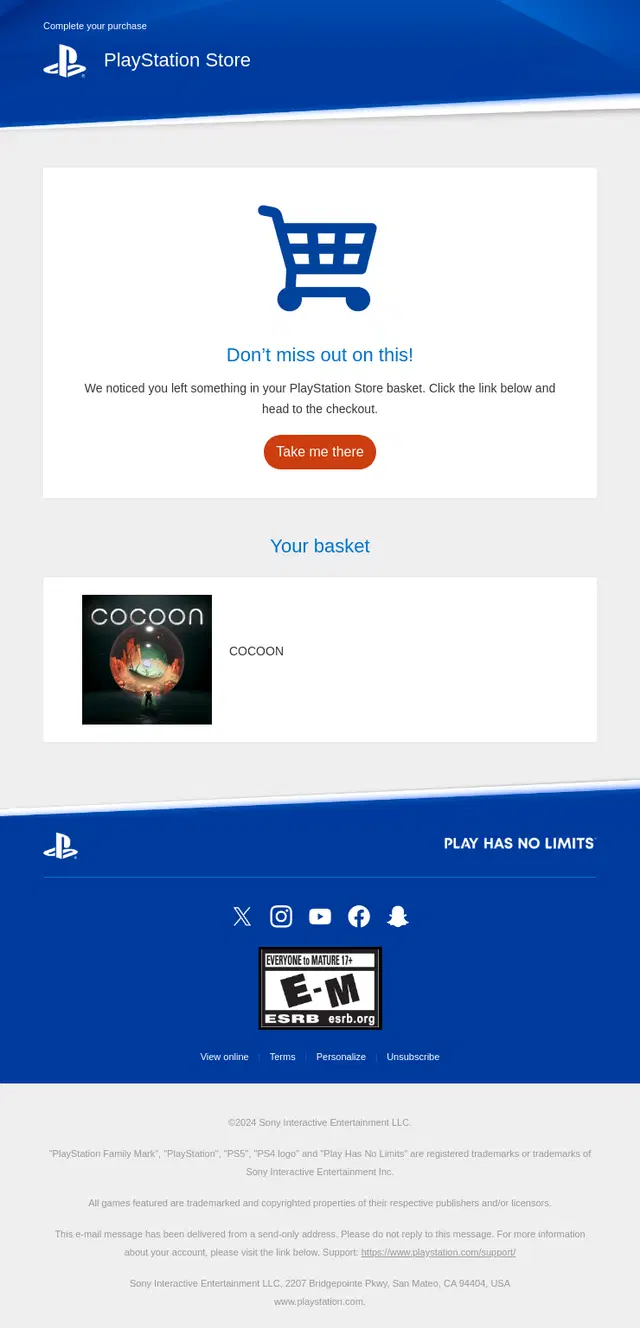
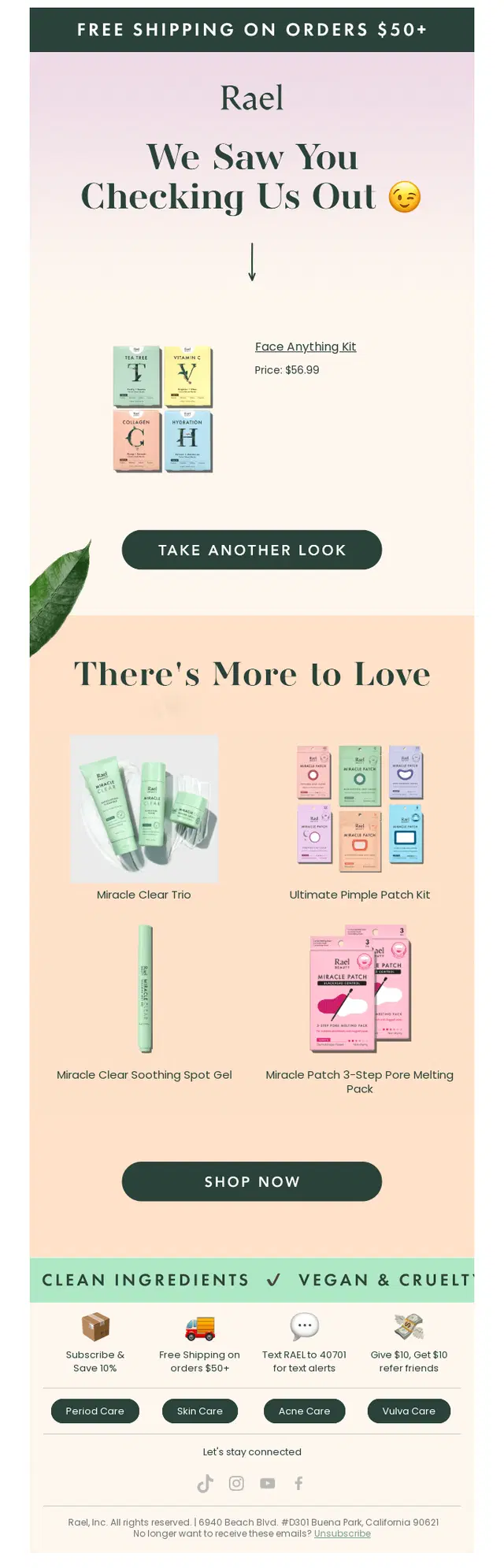
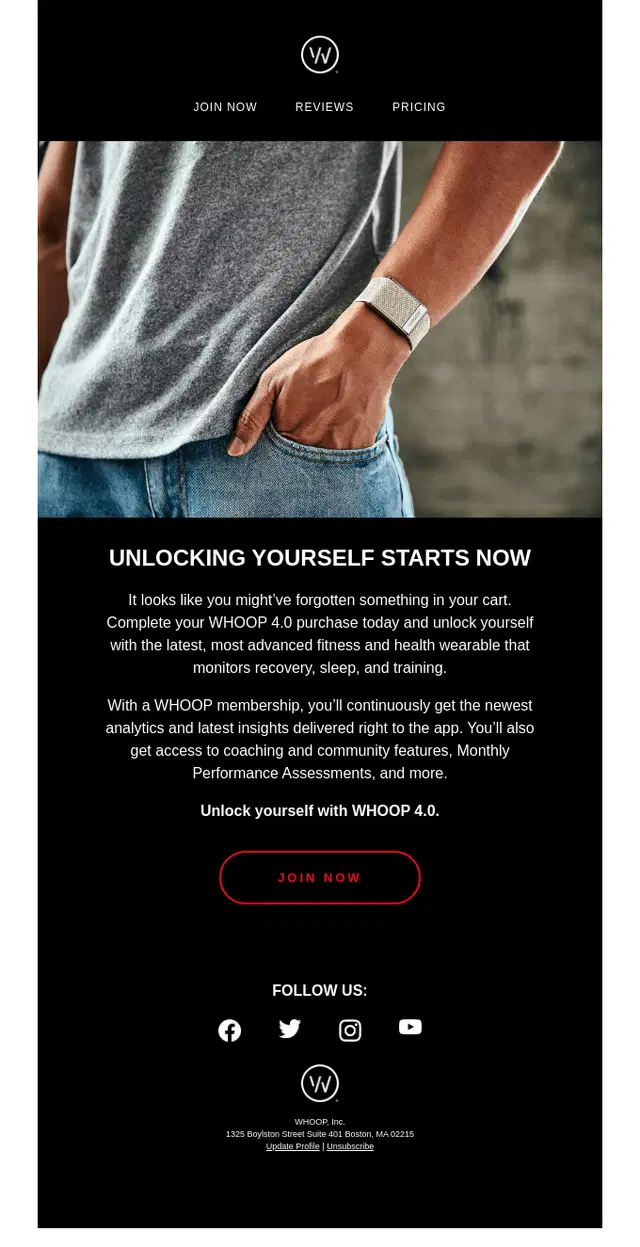
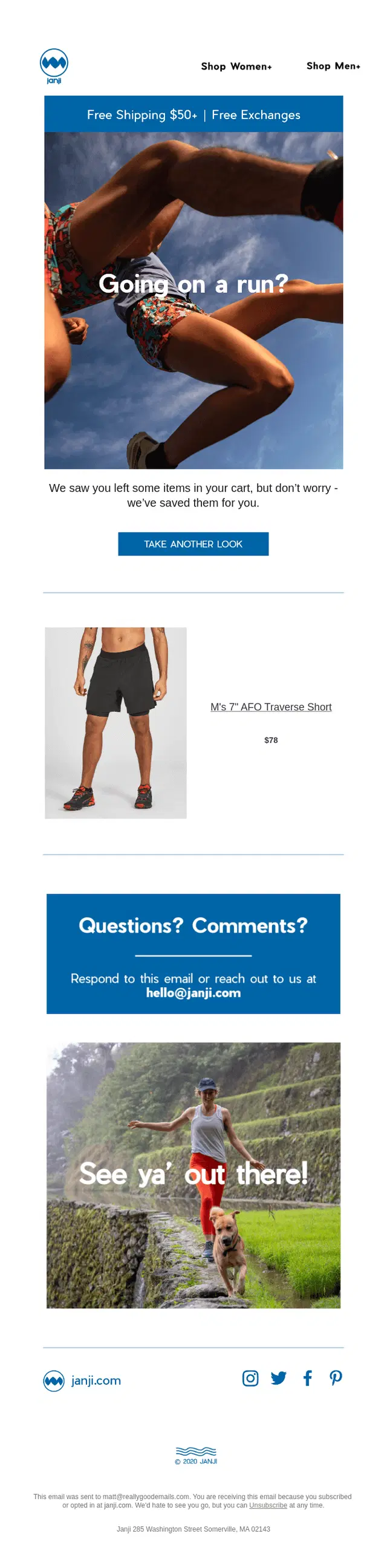
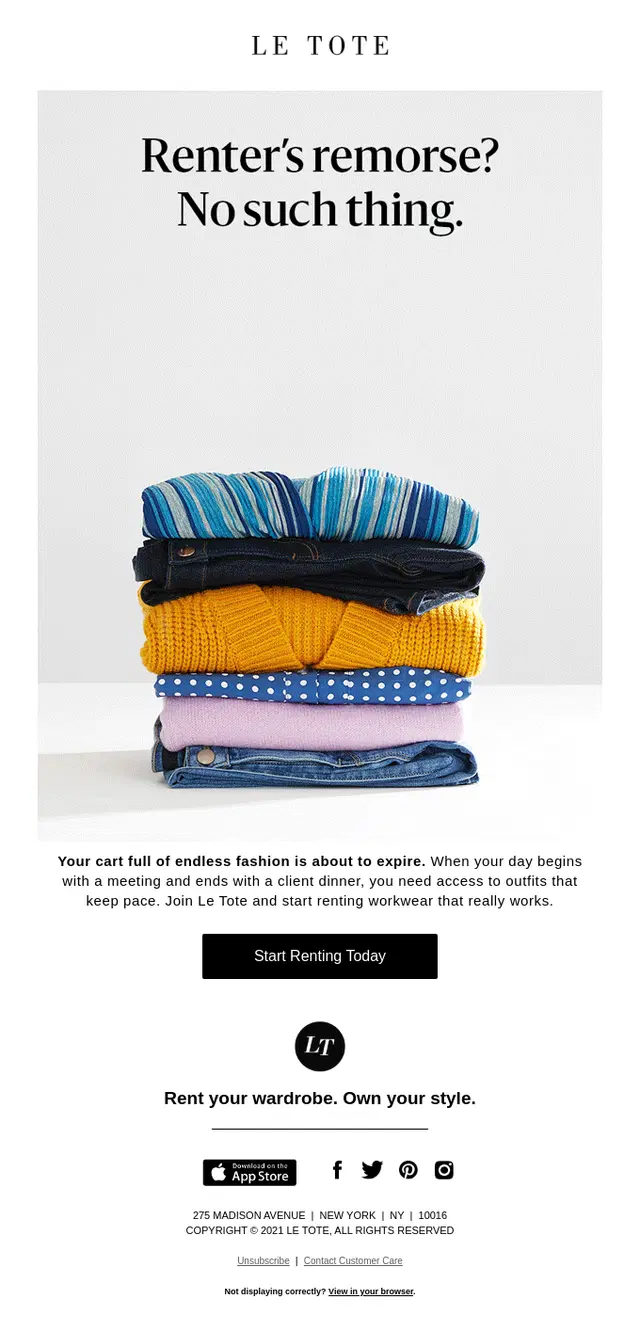
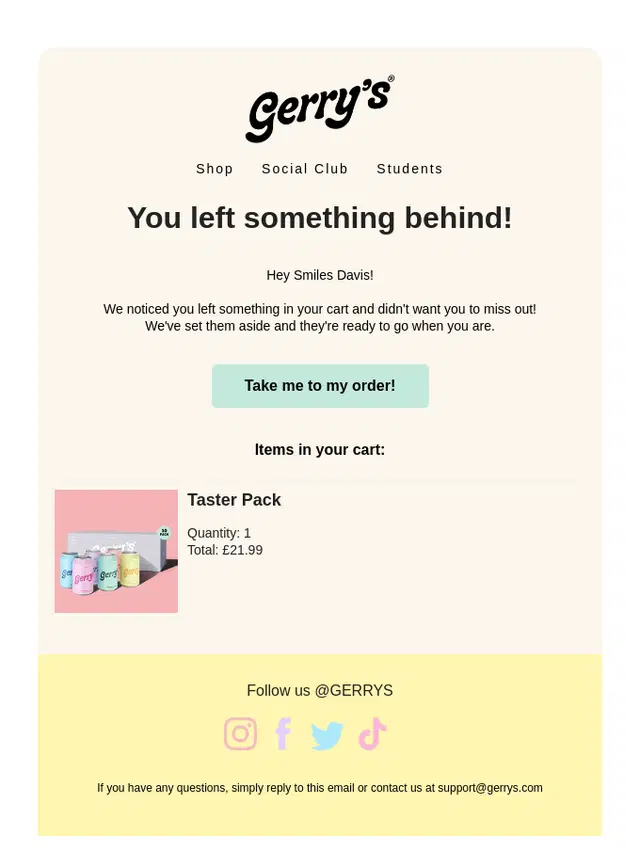
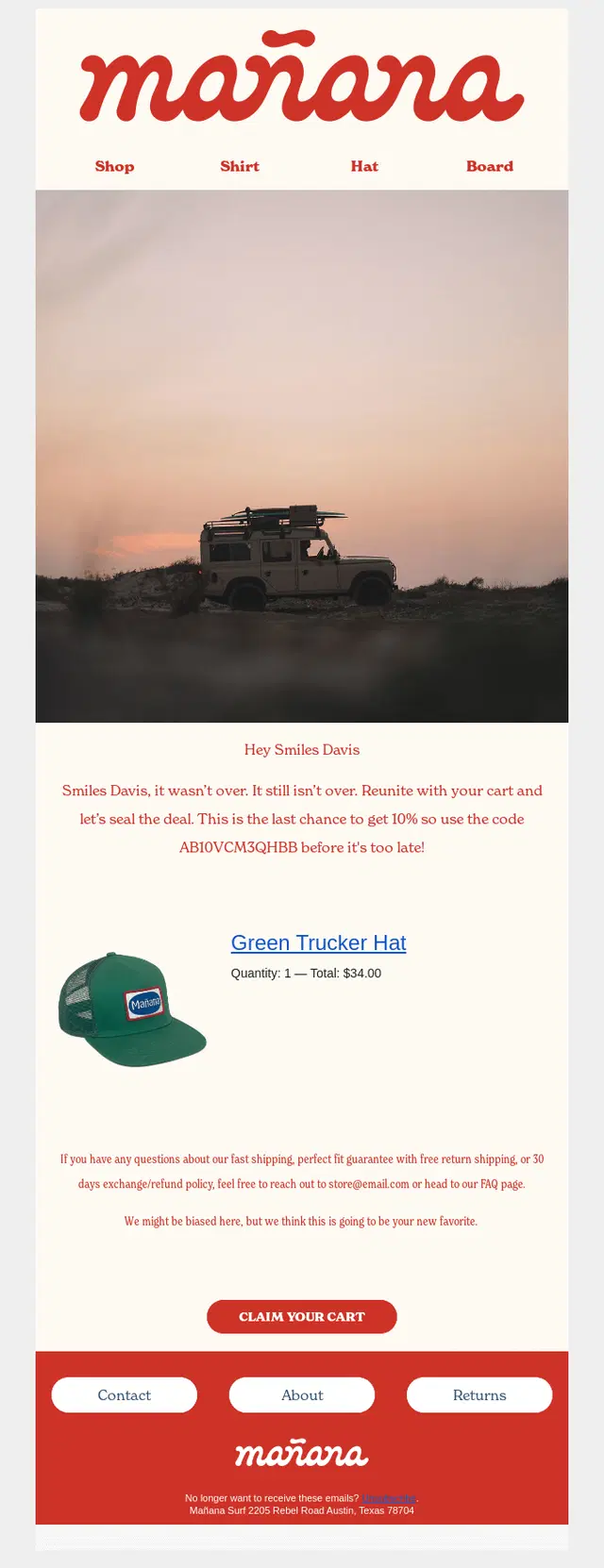
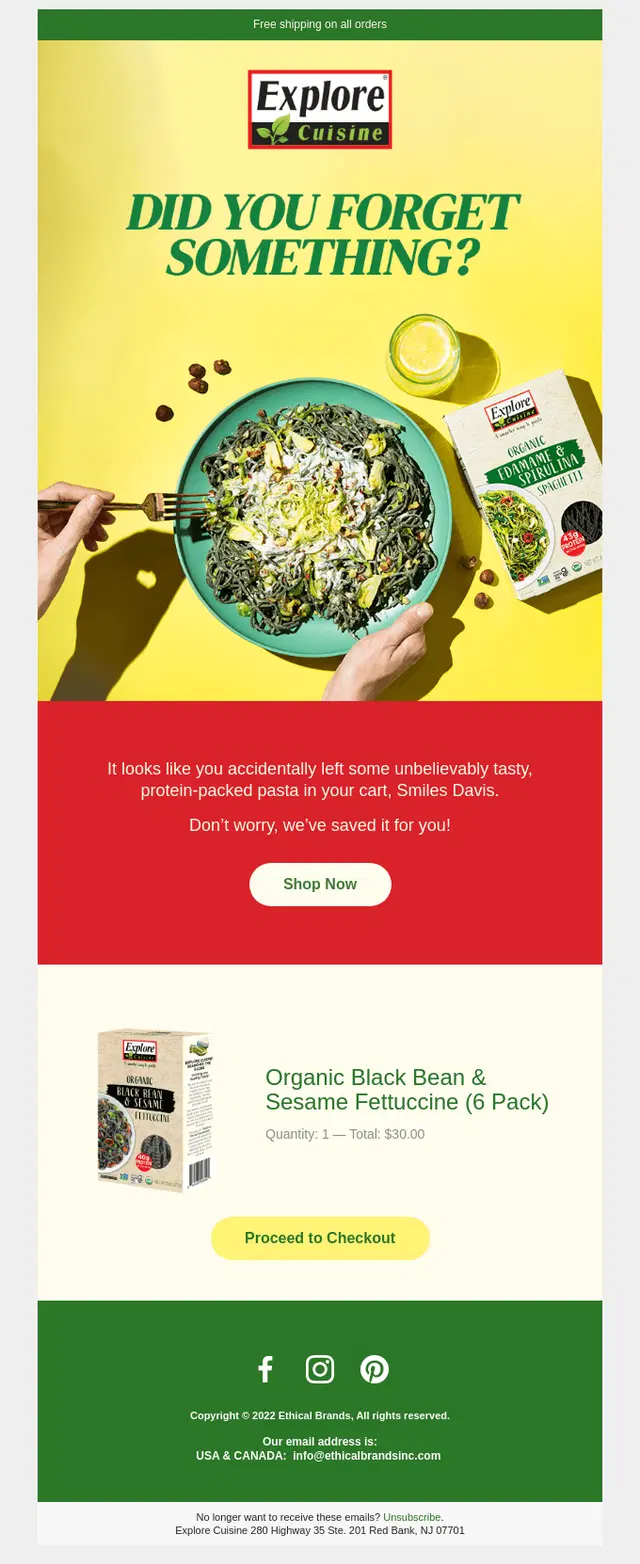
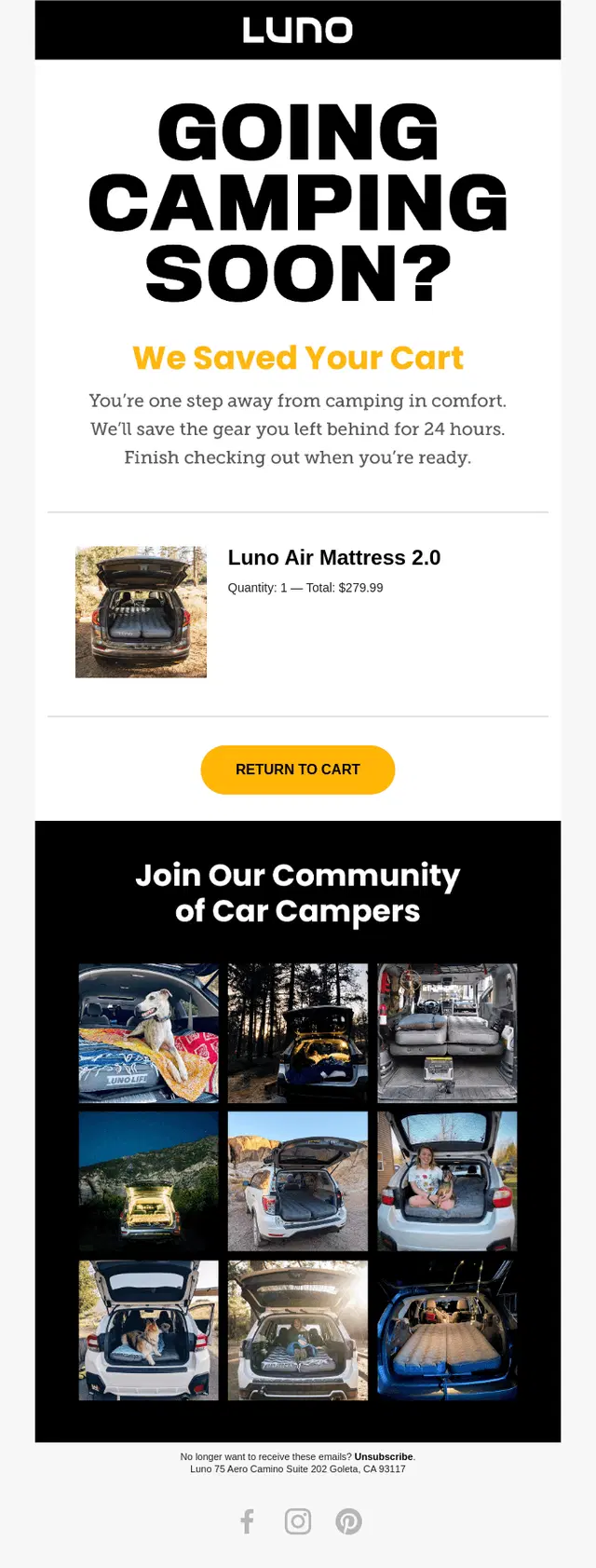
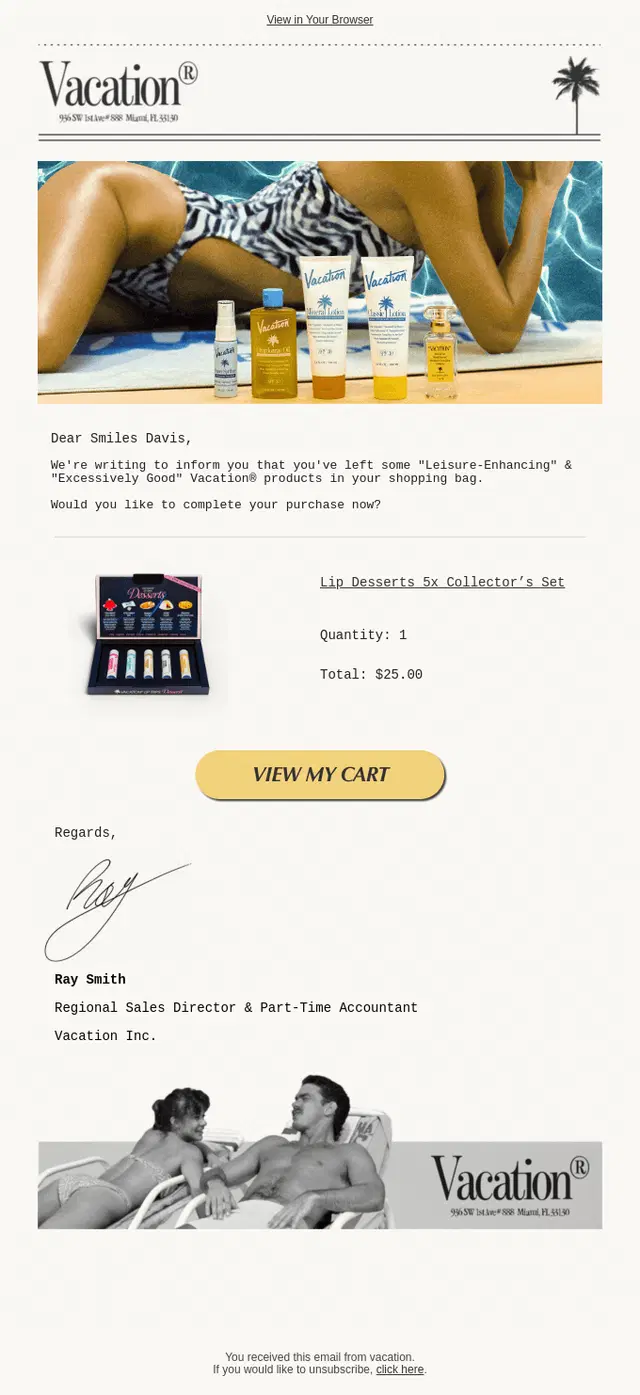
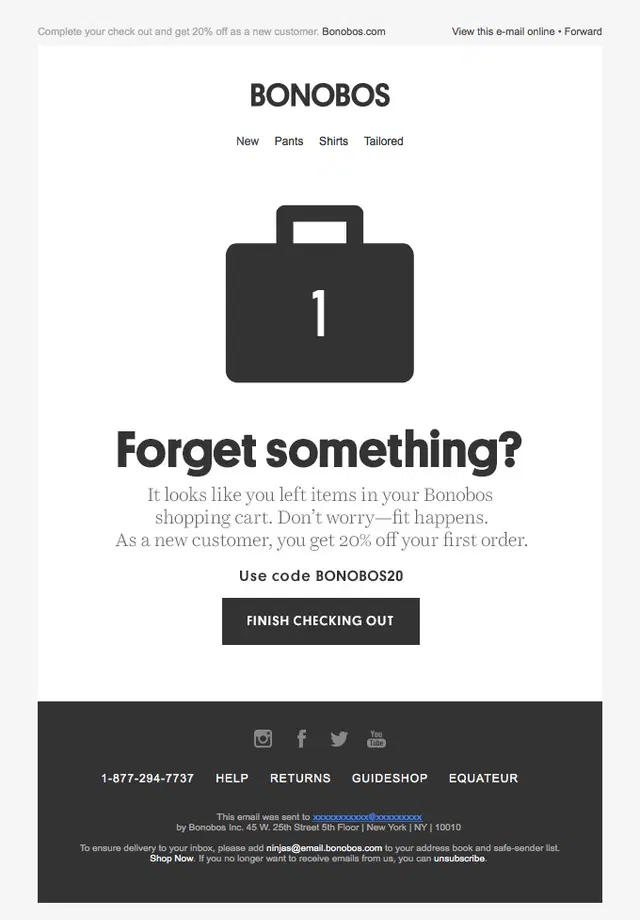
Not every cart recovery email needs a hard sell. A simple abandoned cart email can do the job with little more than the product left behind, a short reminder, and one clear way back to checkout.
The examples below keep persuasion to a minimum and make the next step obvious.

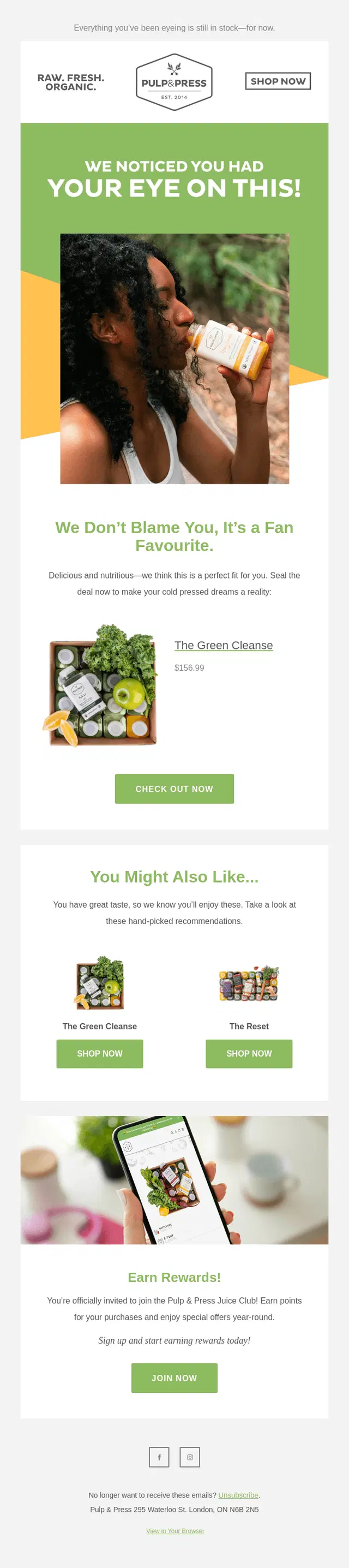
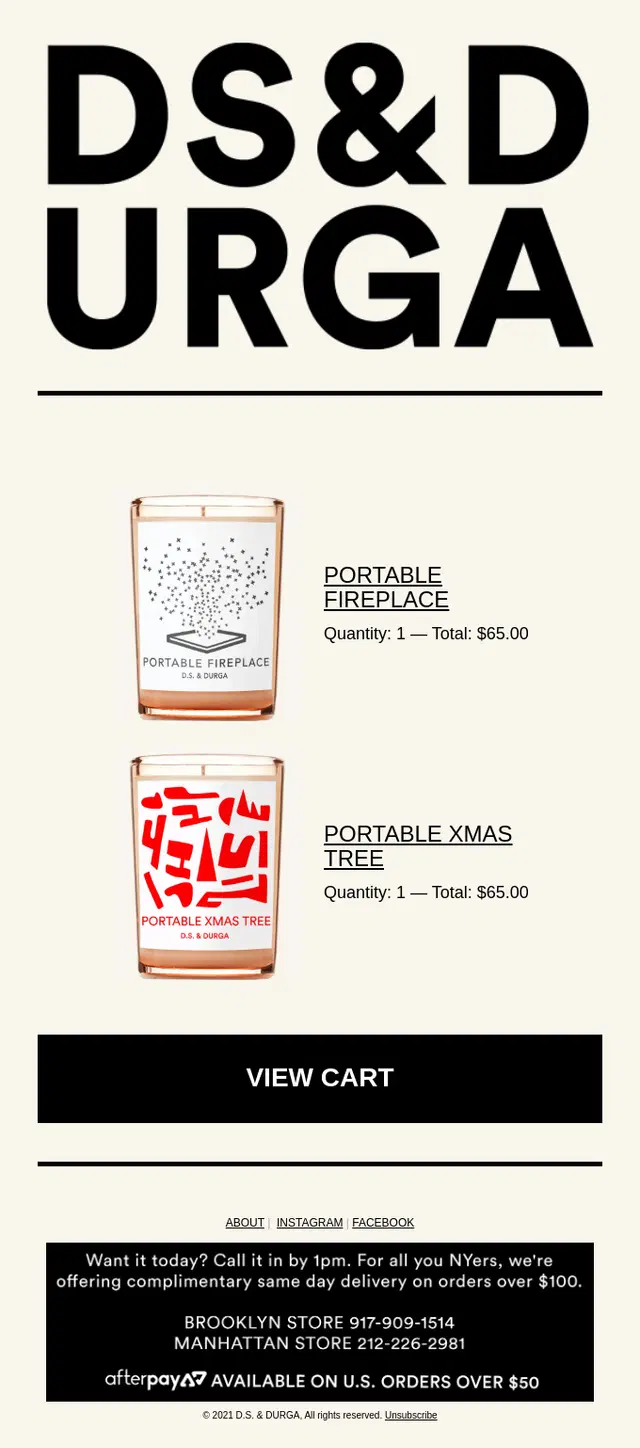
Product-Focused Abandoned Cart Email Examples
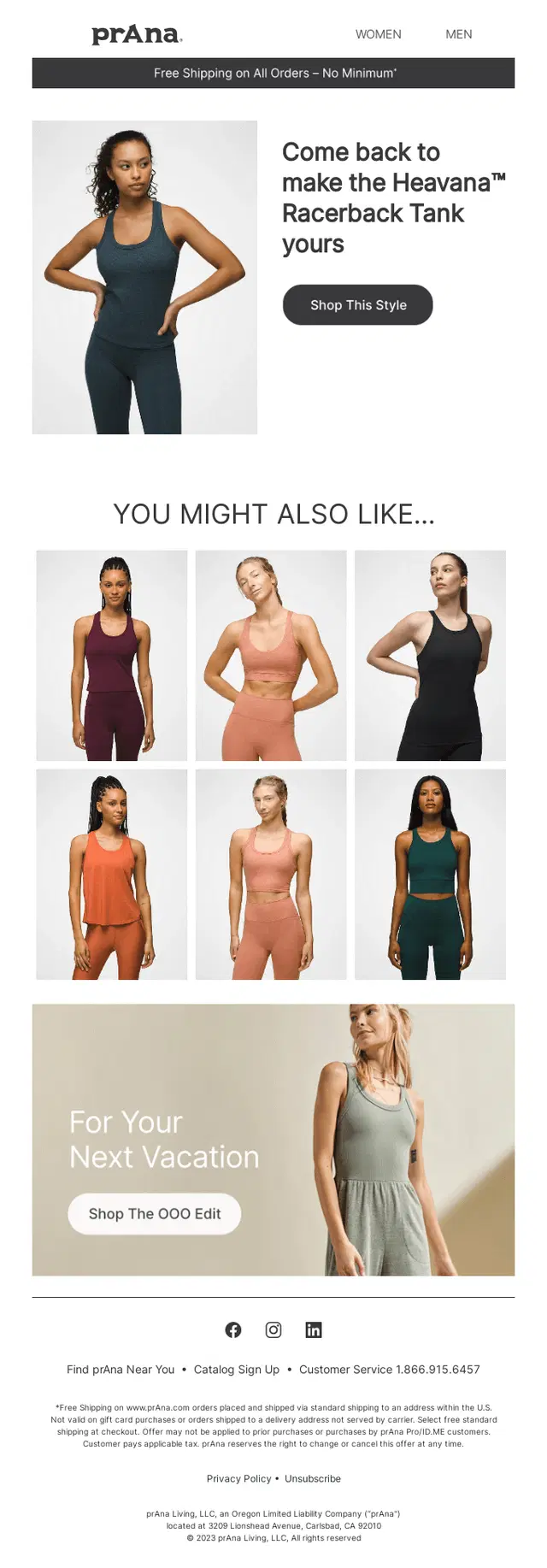
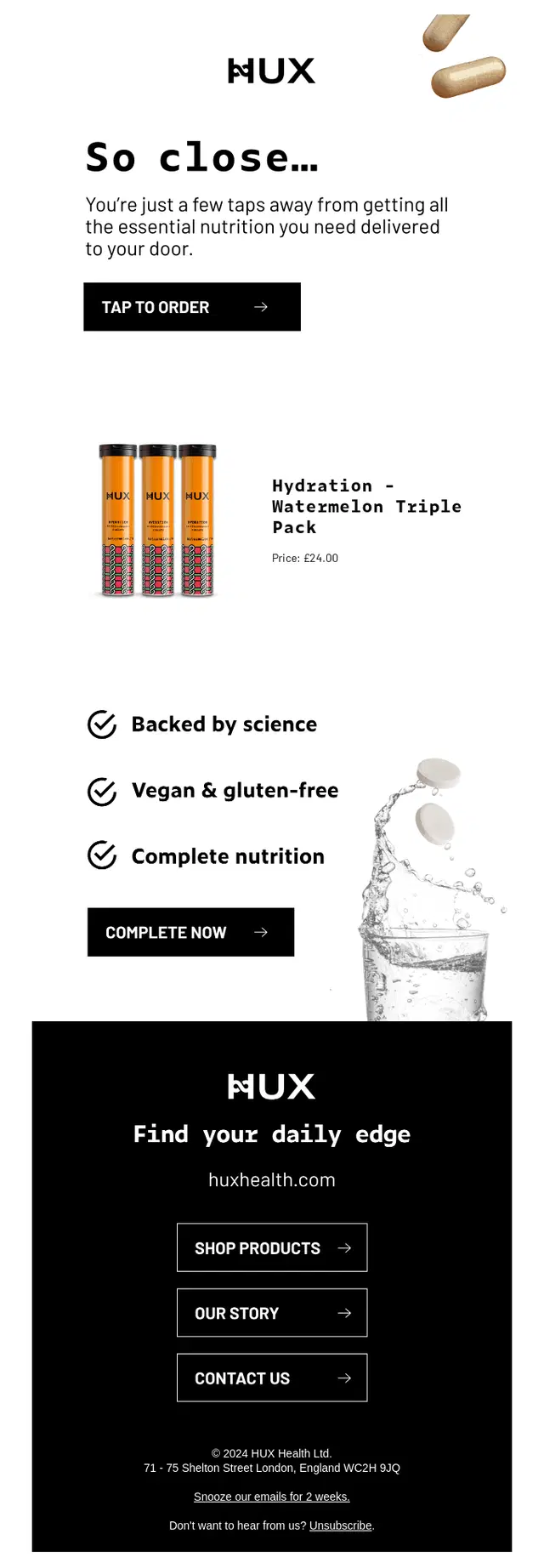
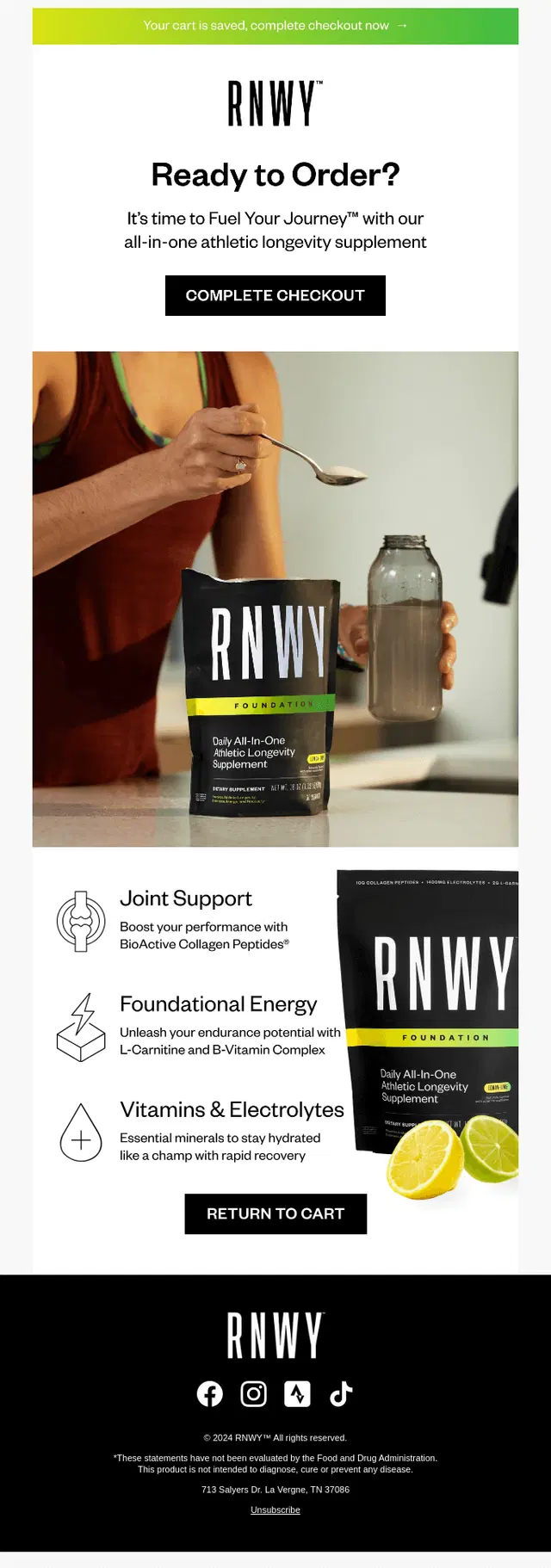
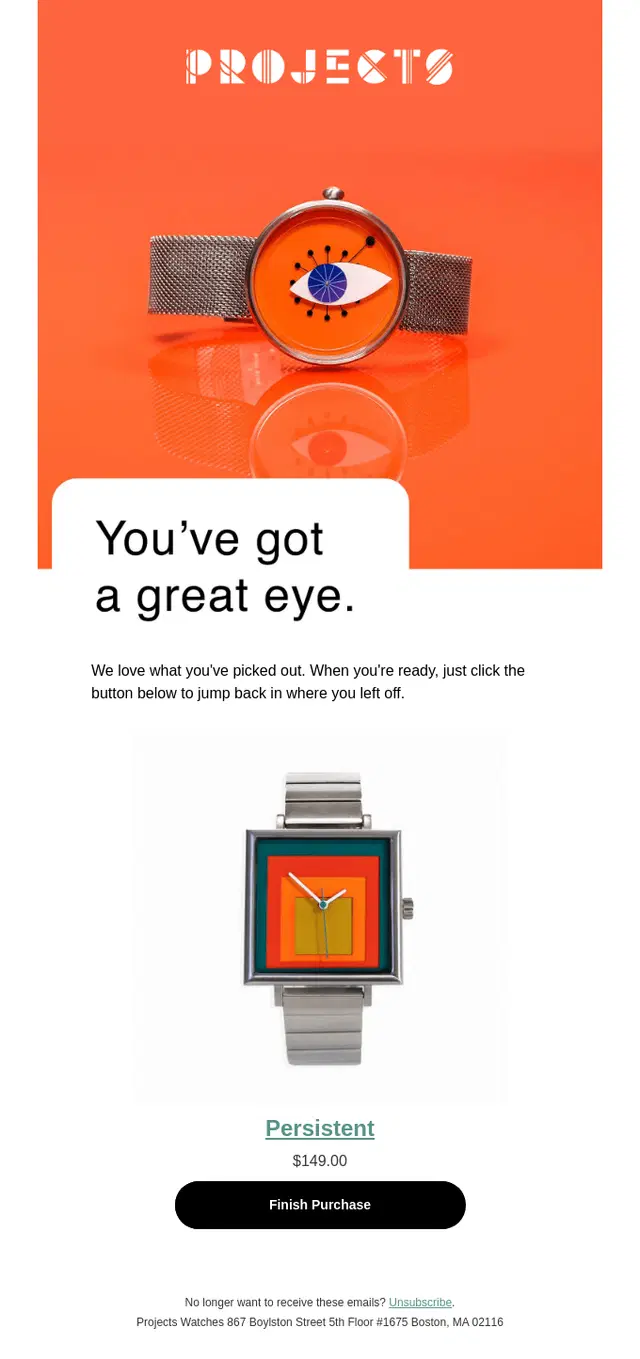
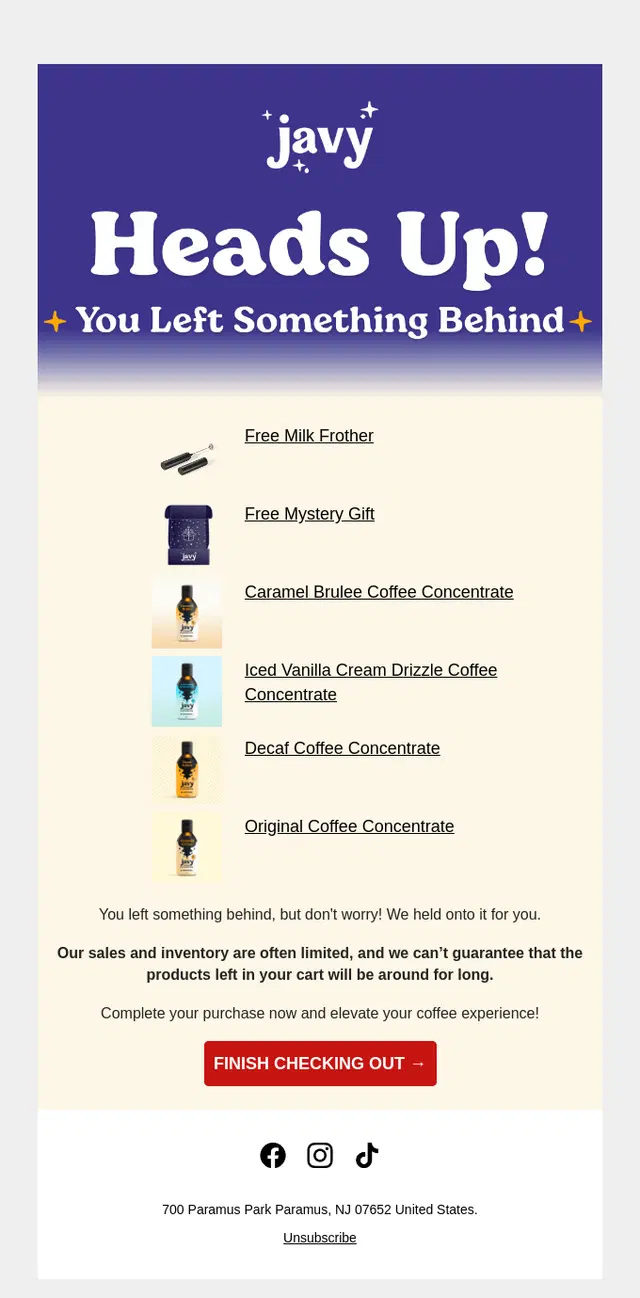
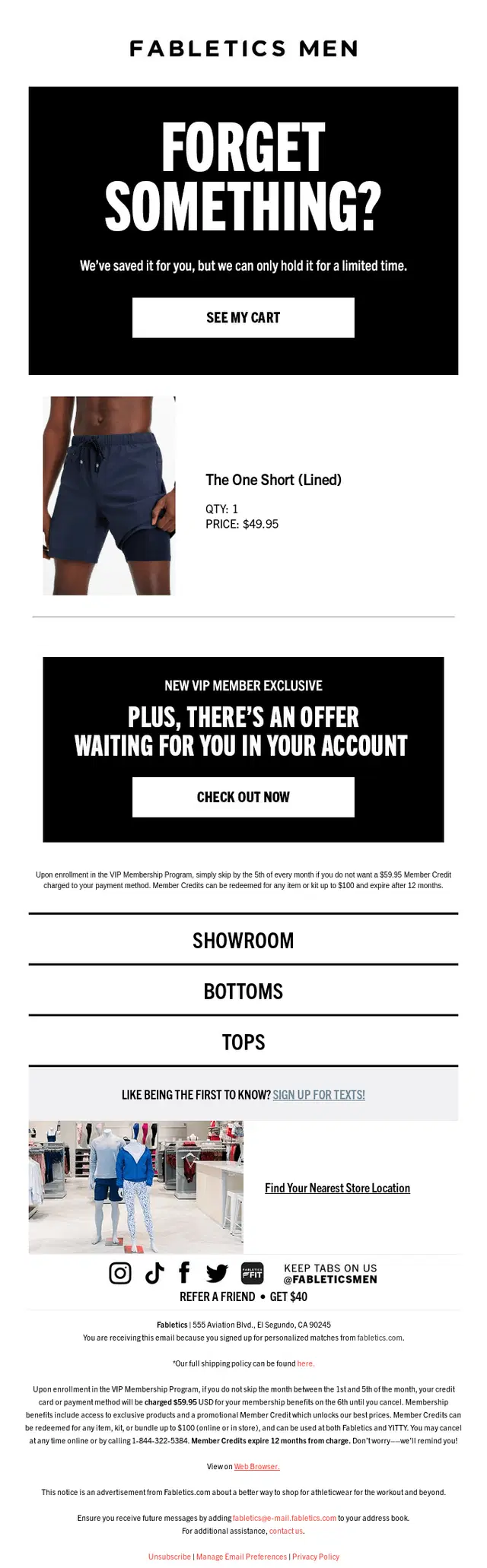
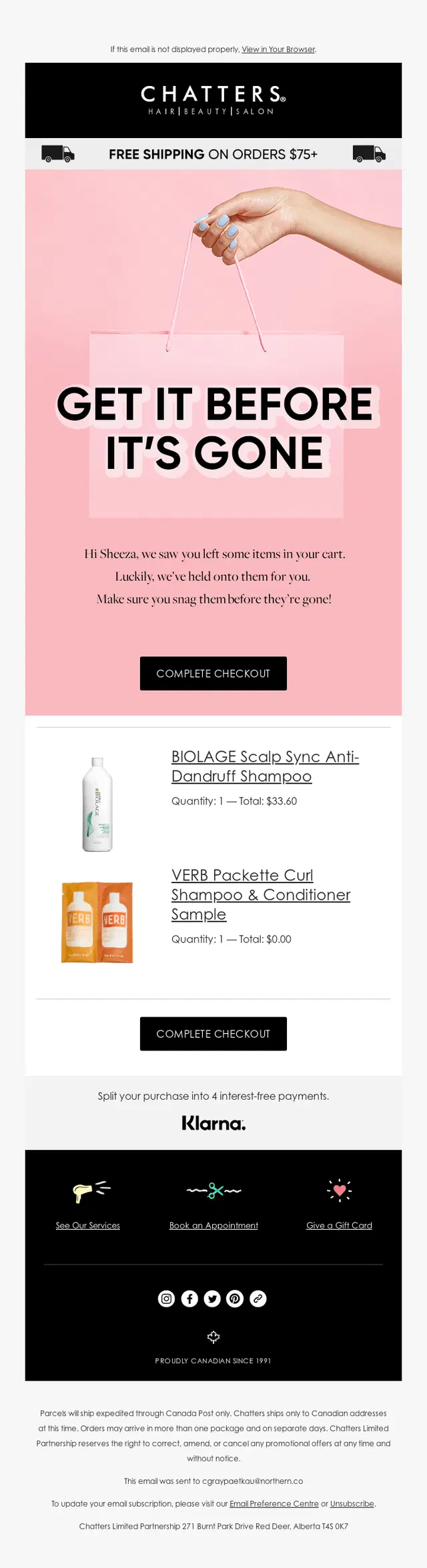
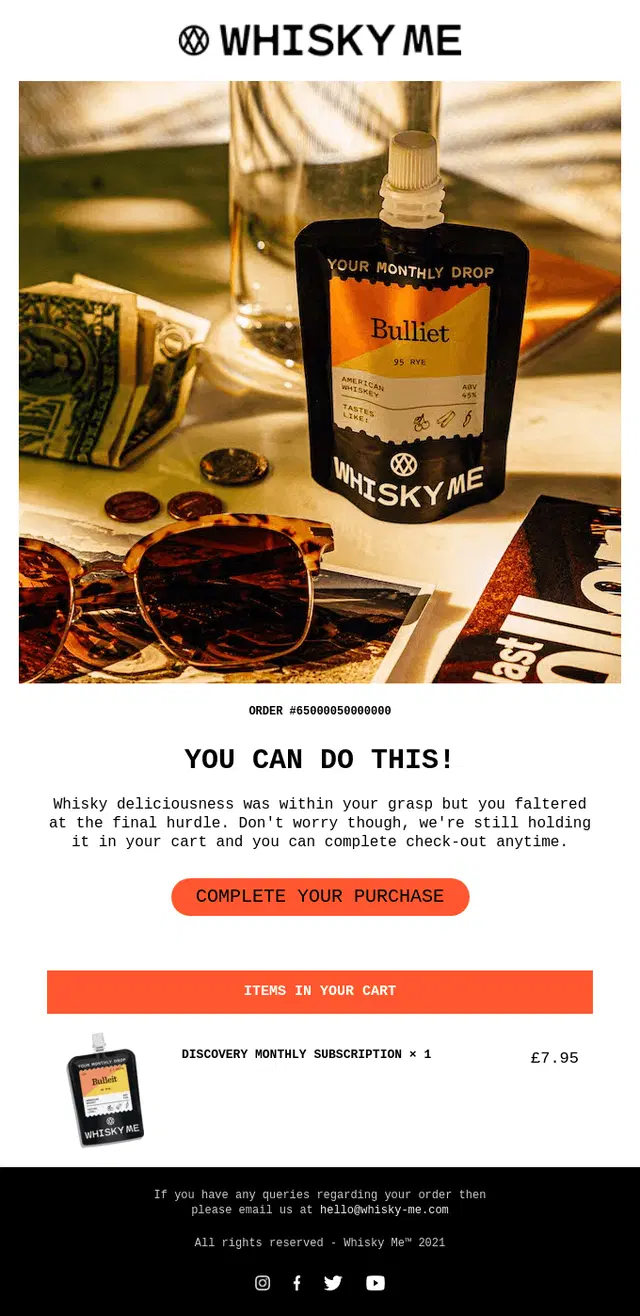
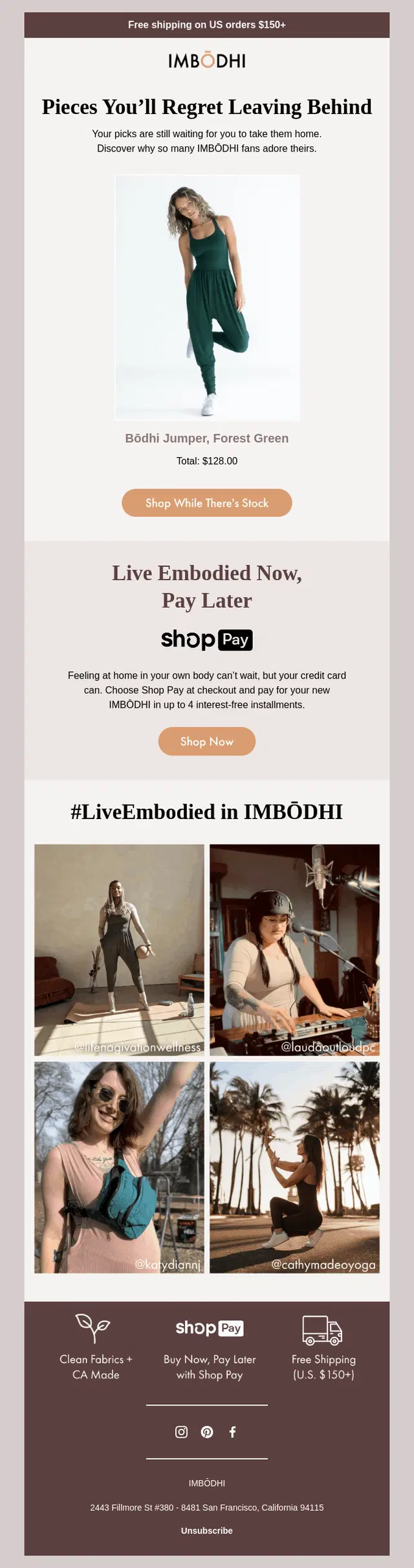
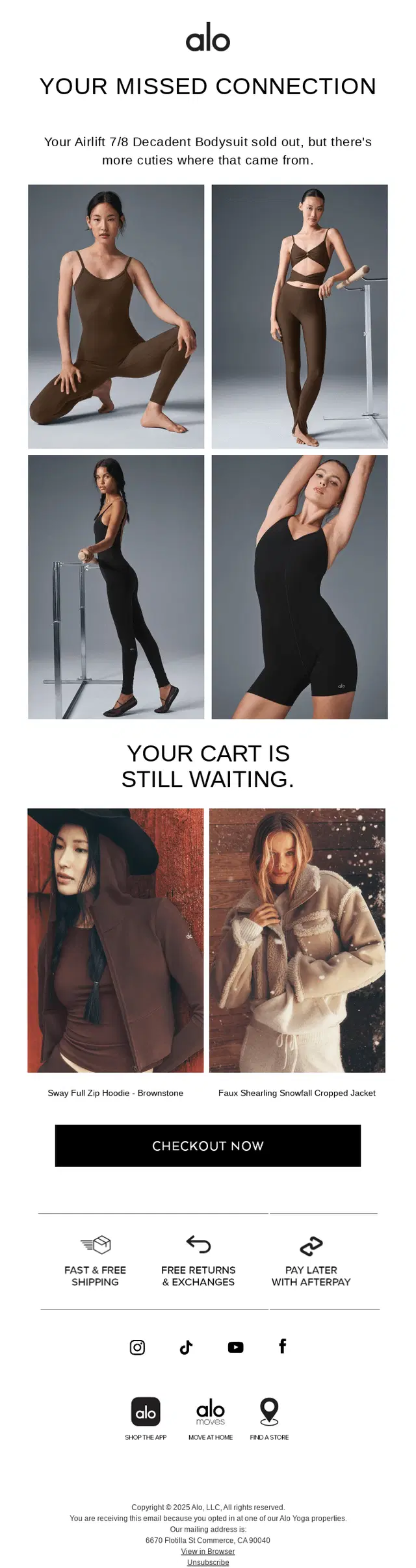
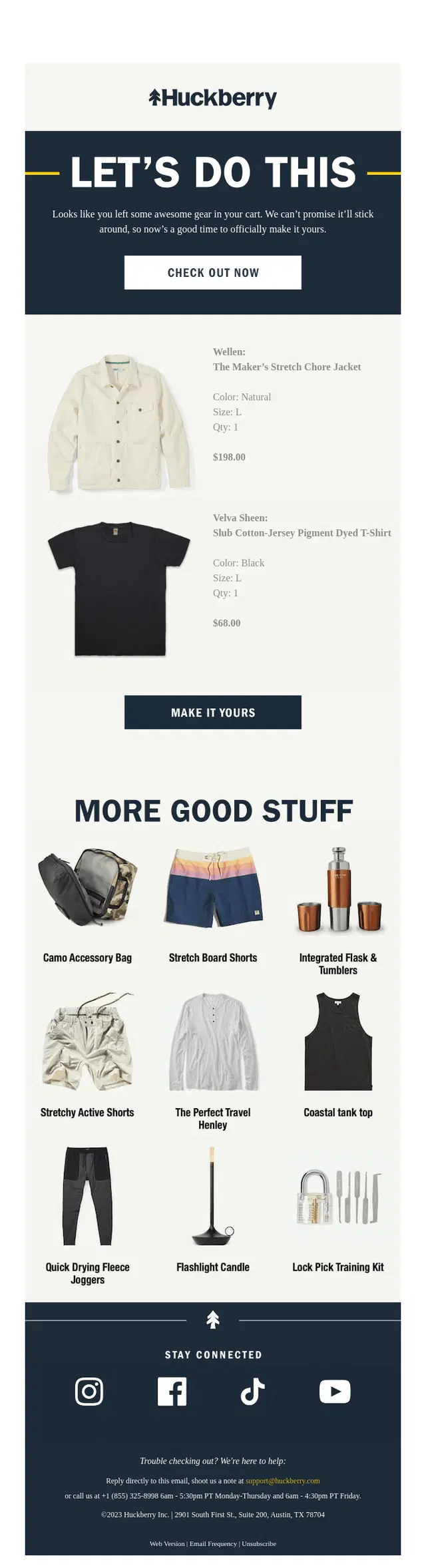
When the product already has strong appeal, it can do most of the convincing on its own. These abandoned cart emails put the shopper’s original choice front and center instead of surrounding it with layers of promotional copy.
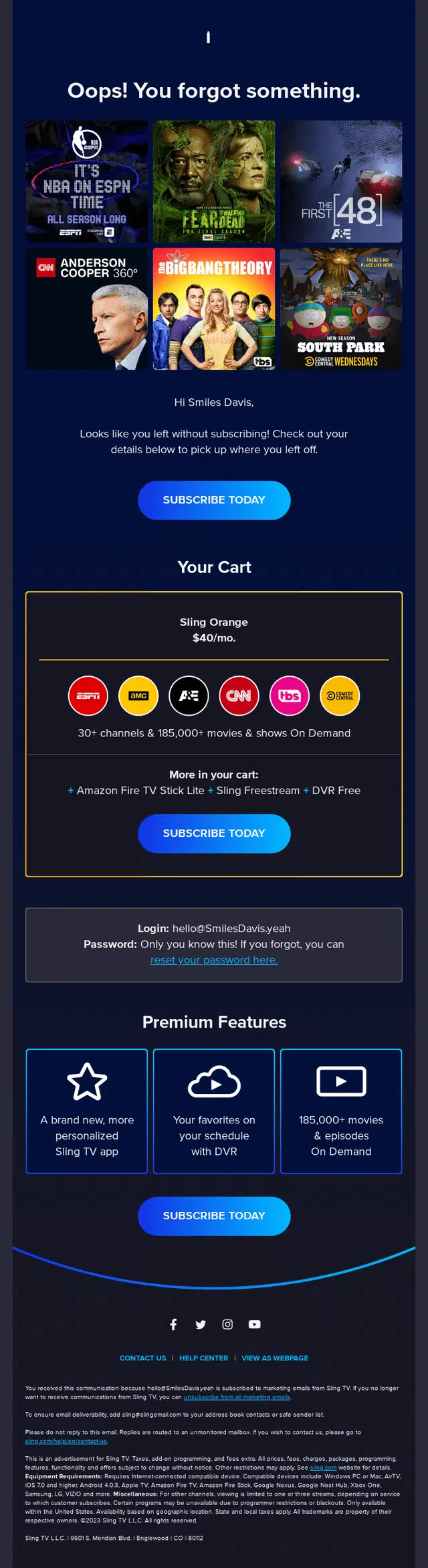
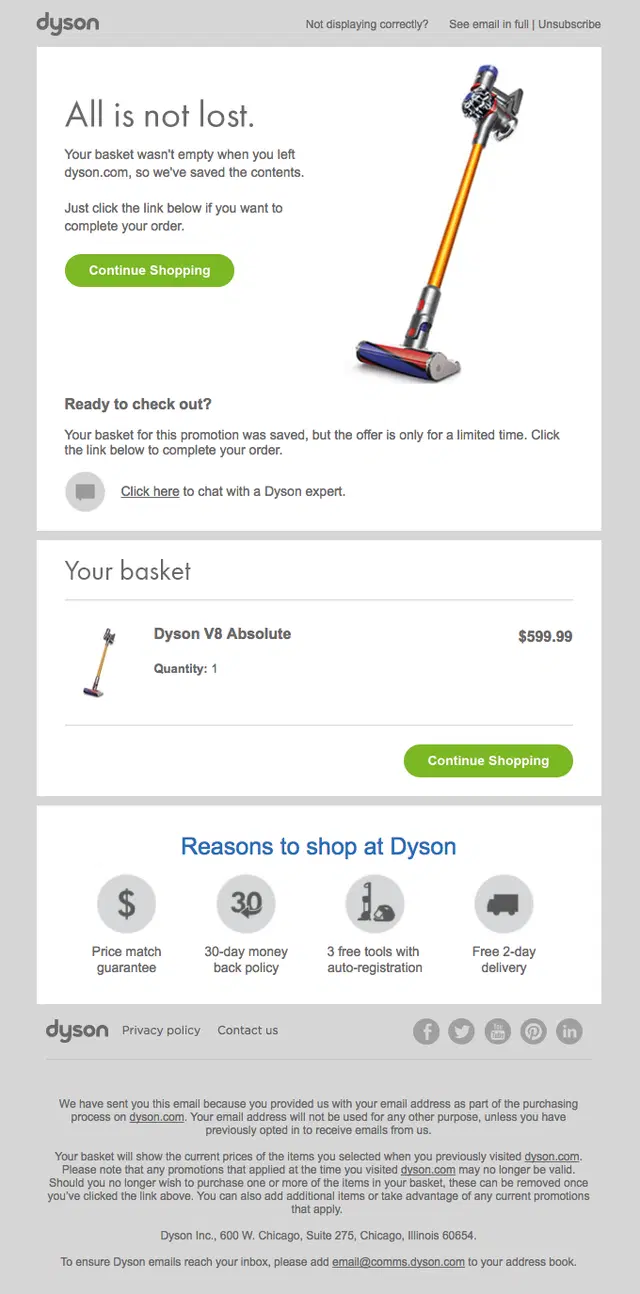
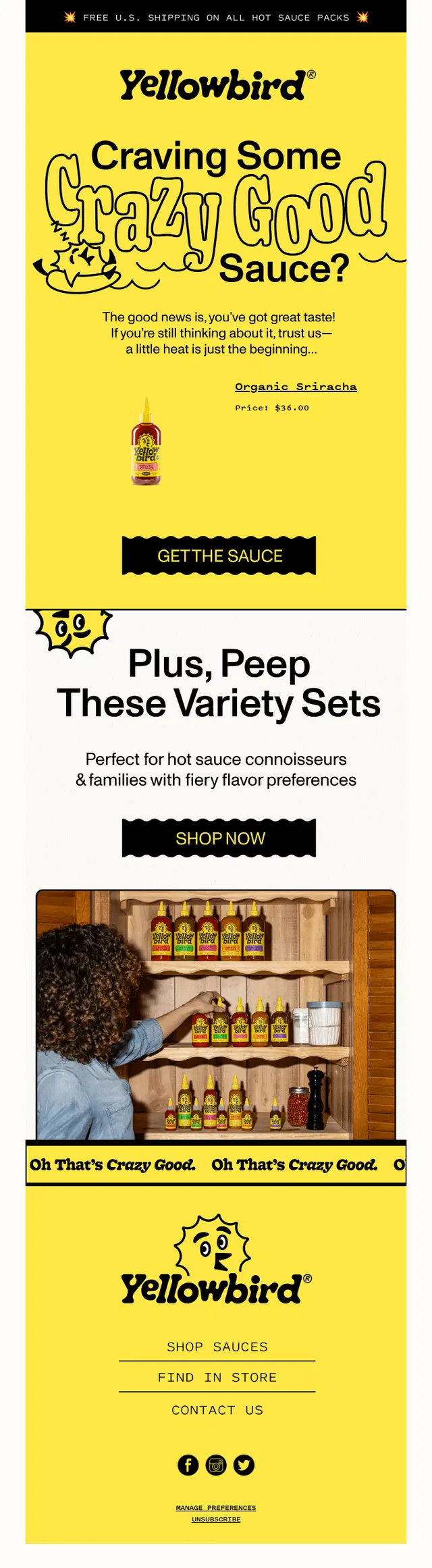
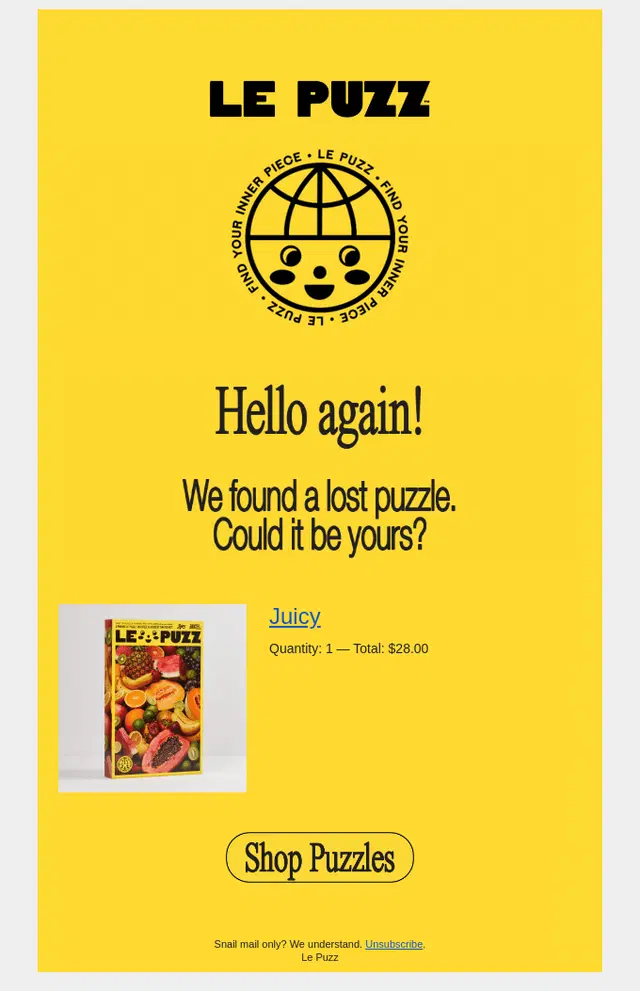
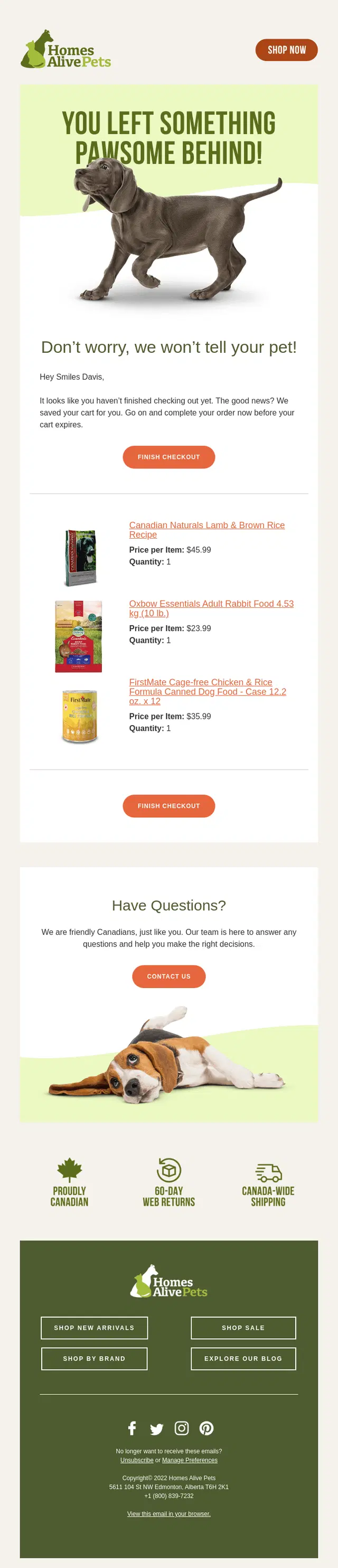
Expect large product images, names, prices, selected variants, cart summaries, and direct CTAs that make it easy to pick up where the shopping session ended.
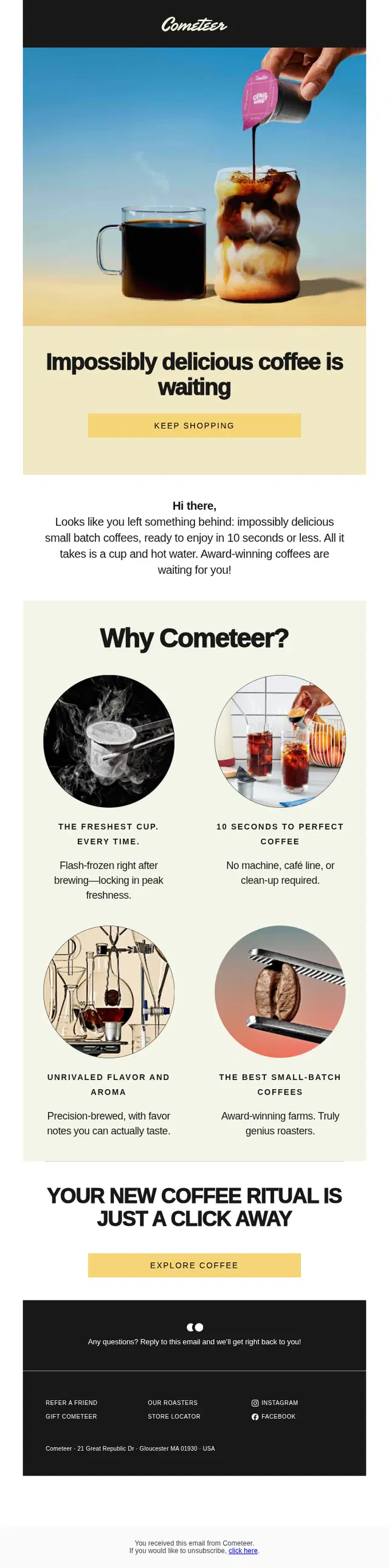
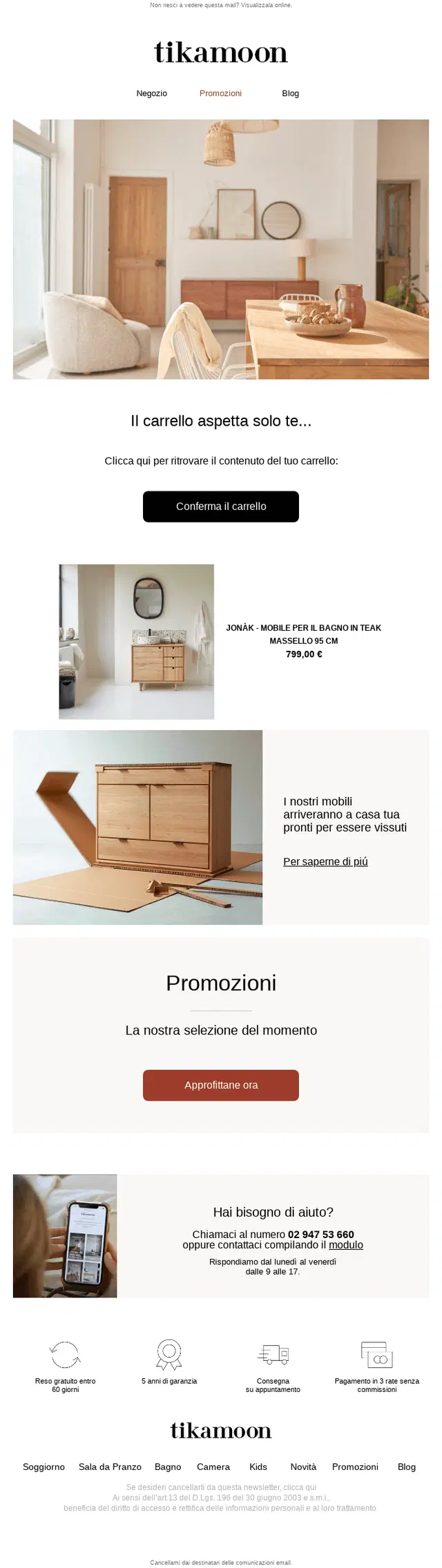
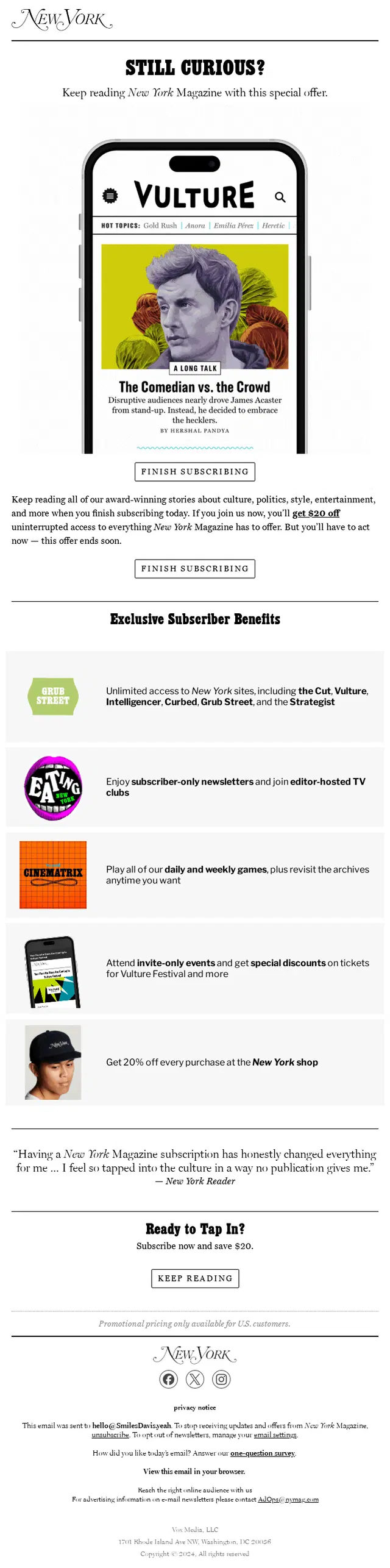

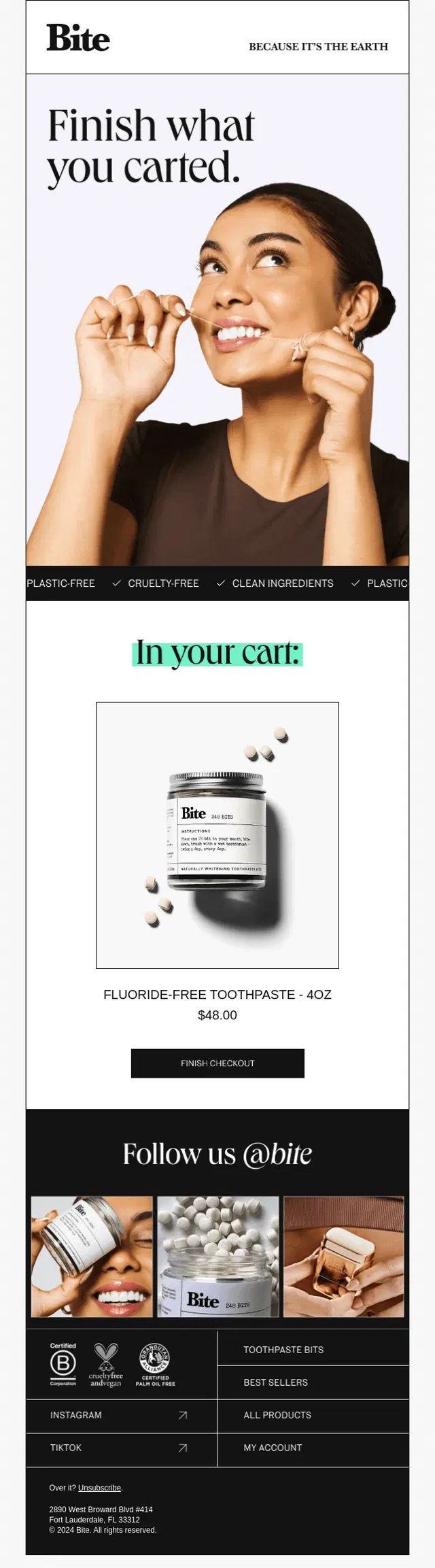




Abandoned Cart Email Examples With Discounts
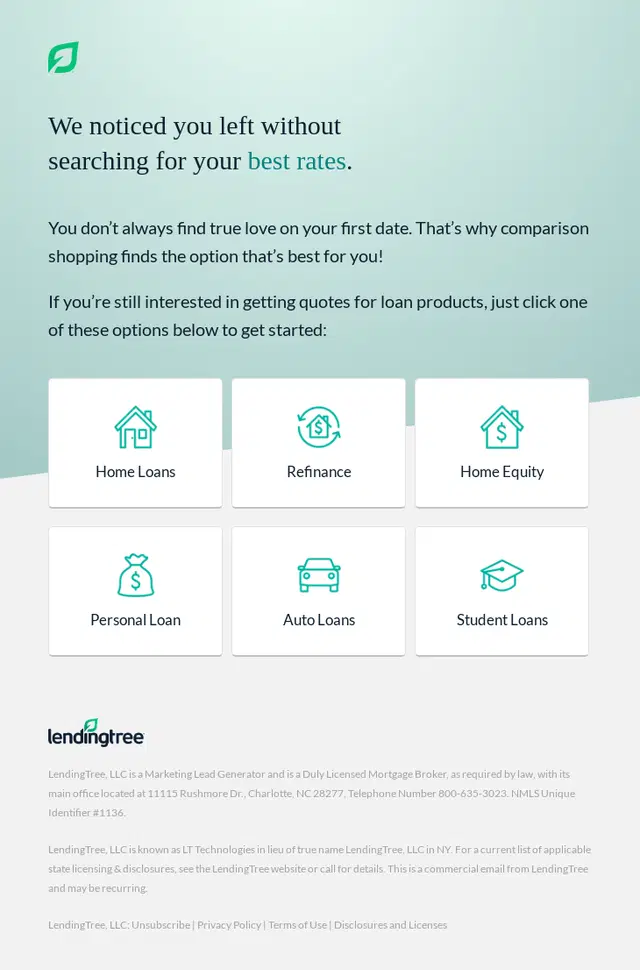
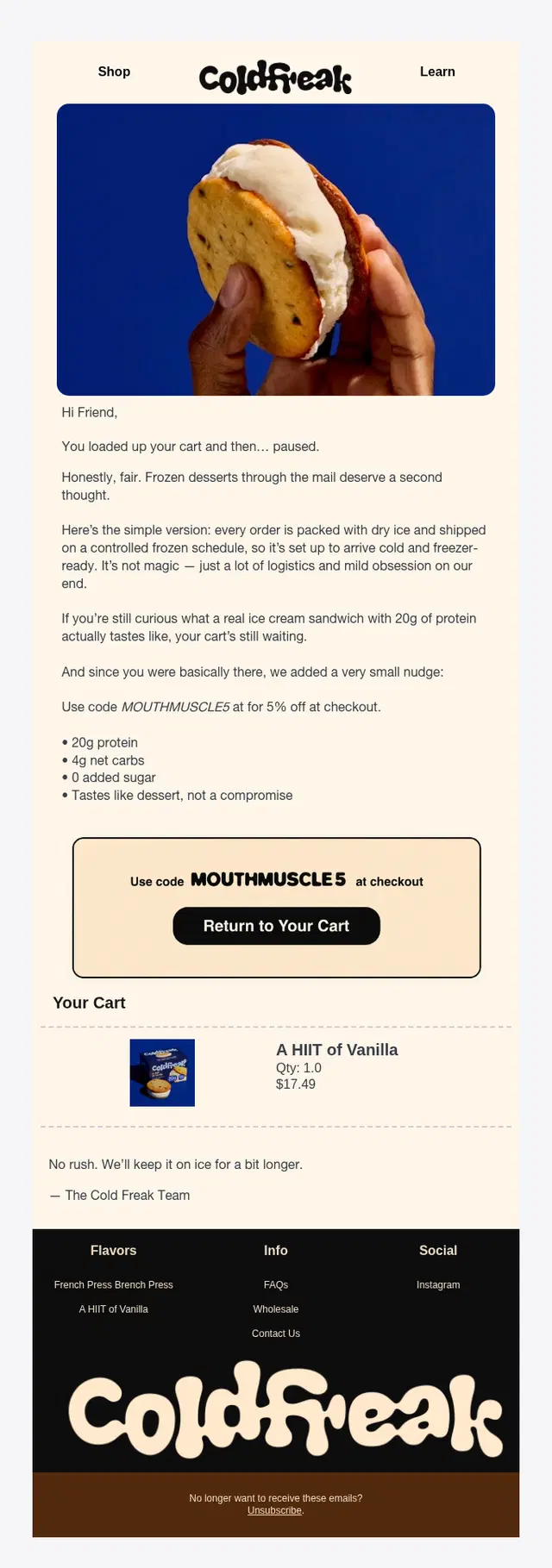
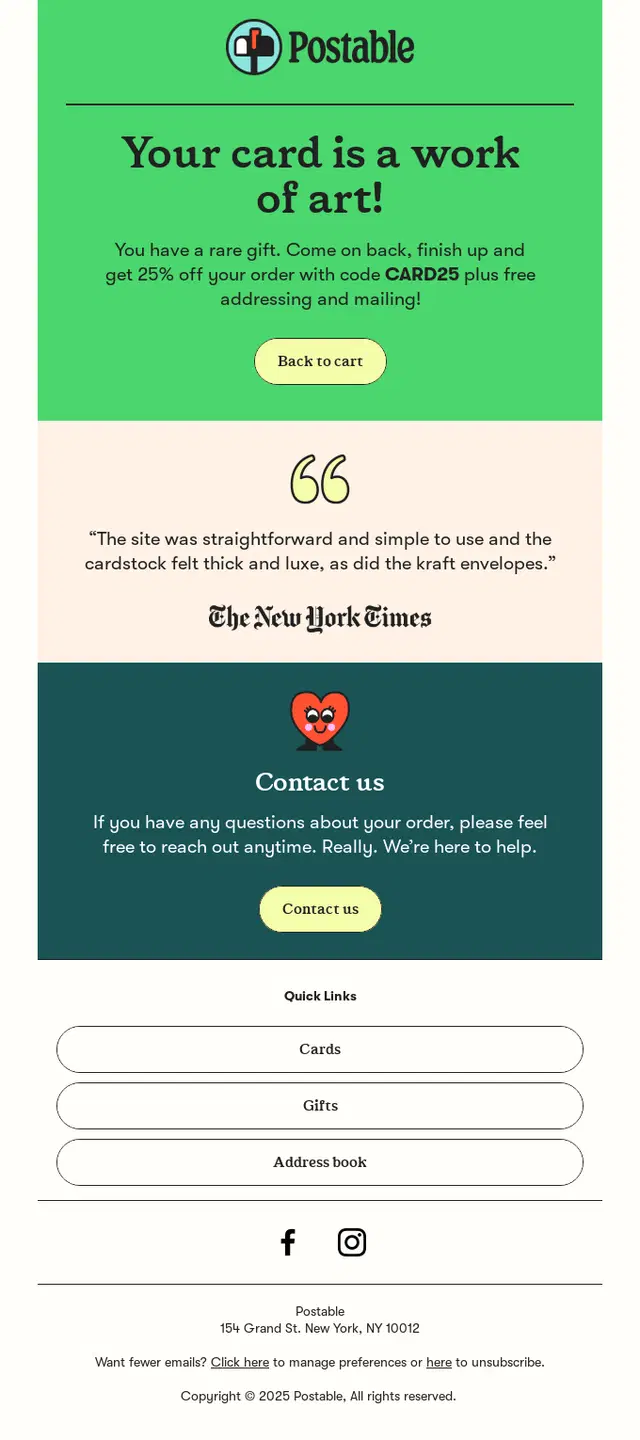
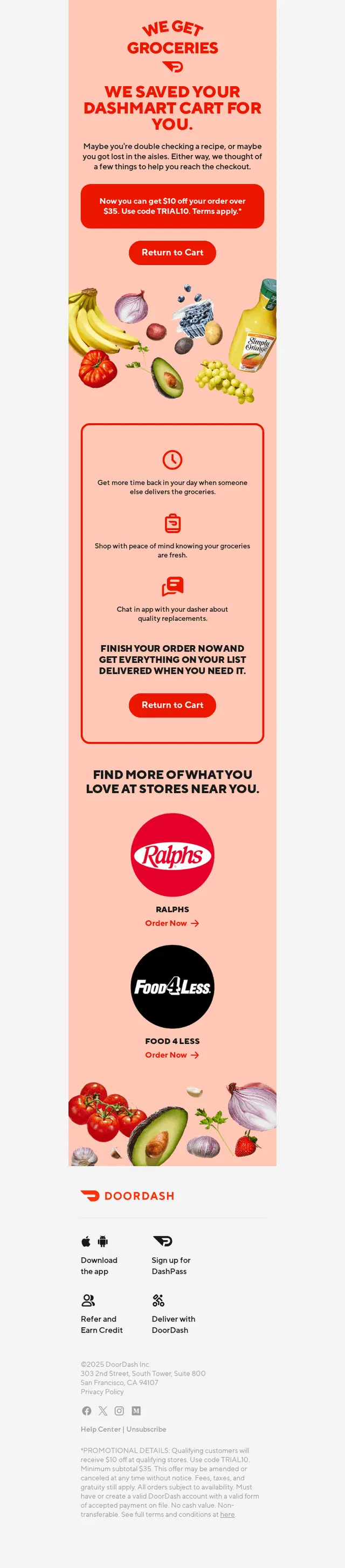
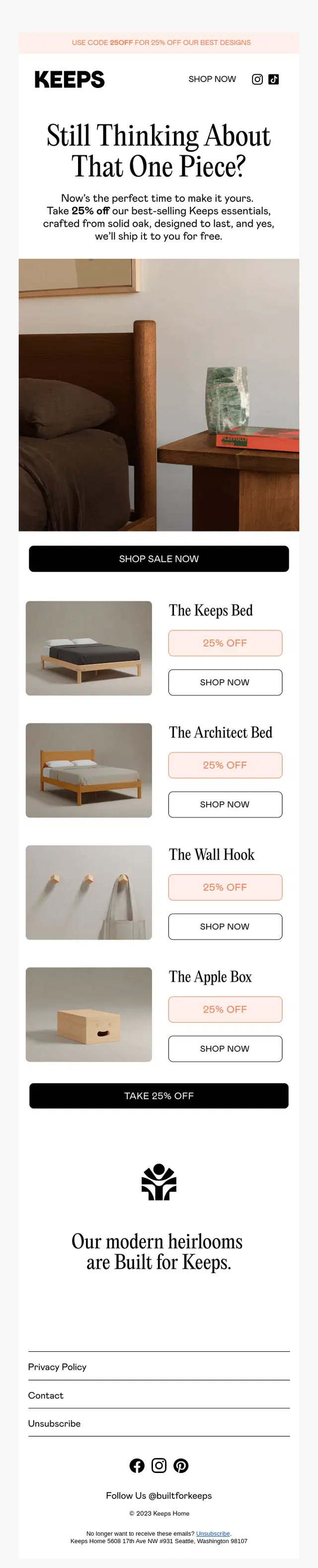
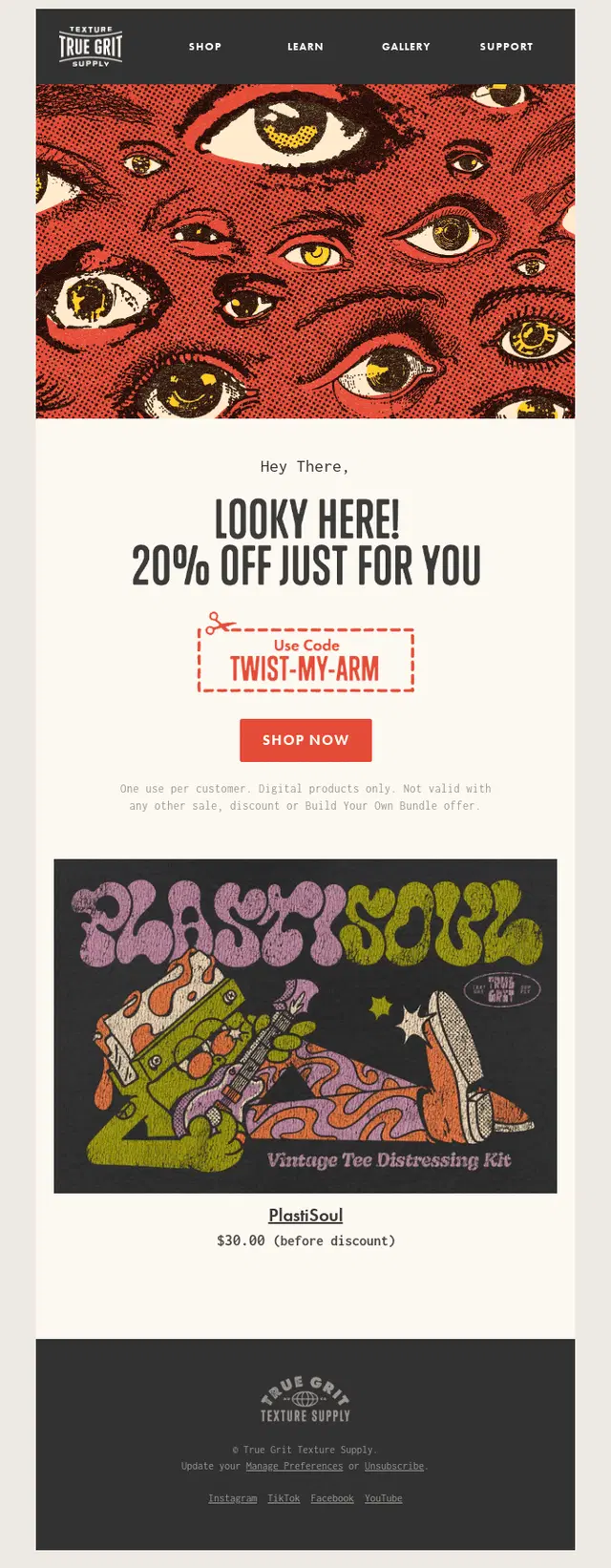
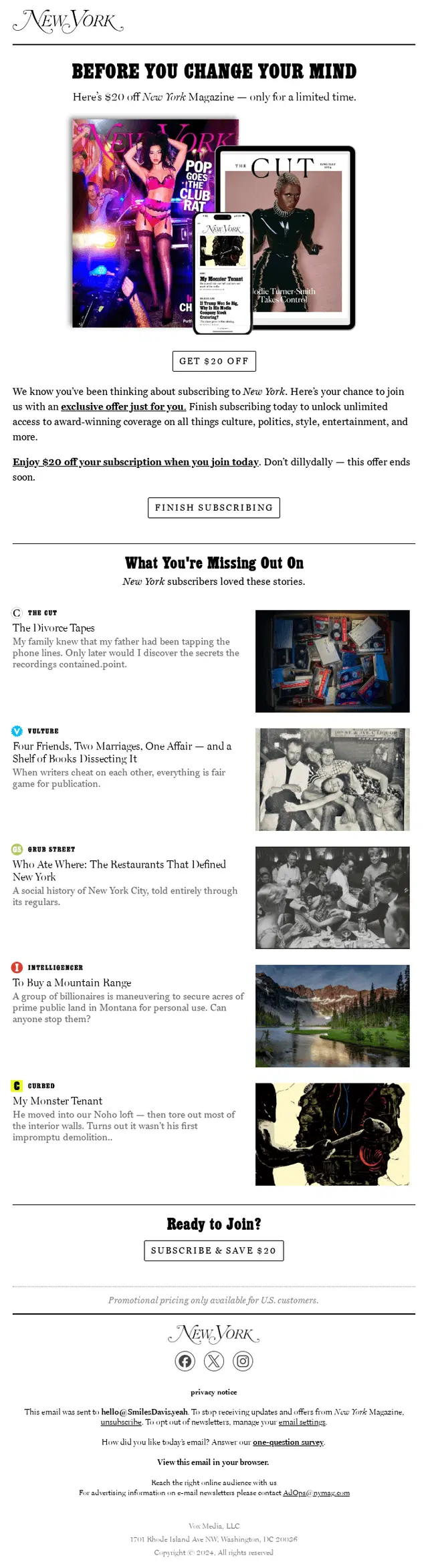
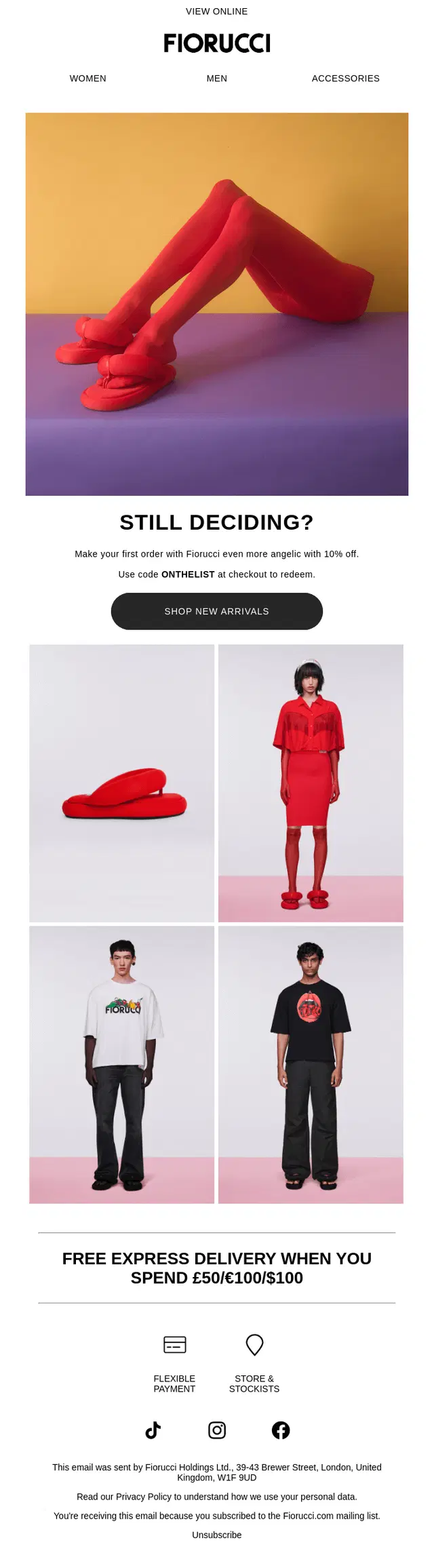
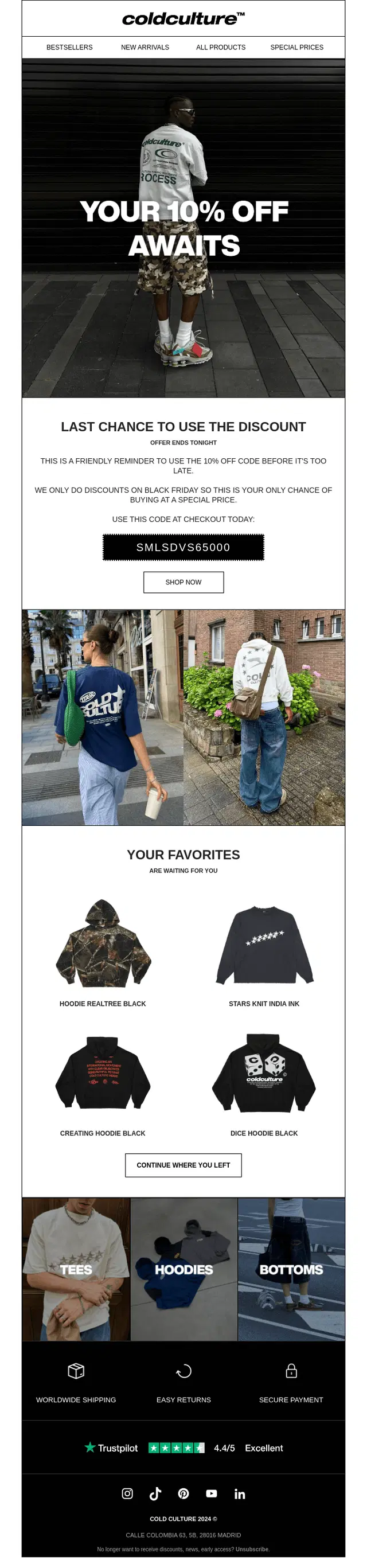
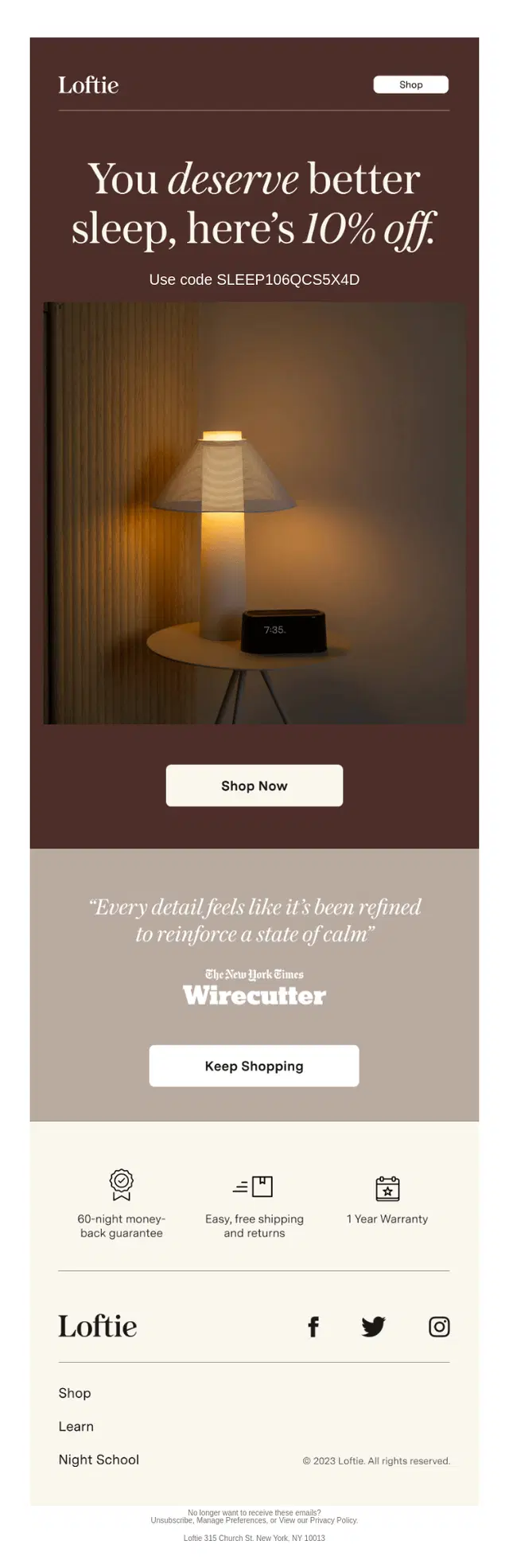
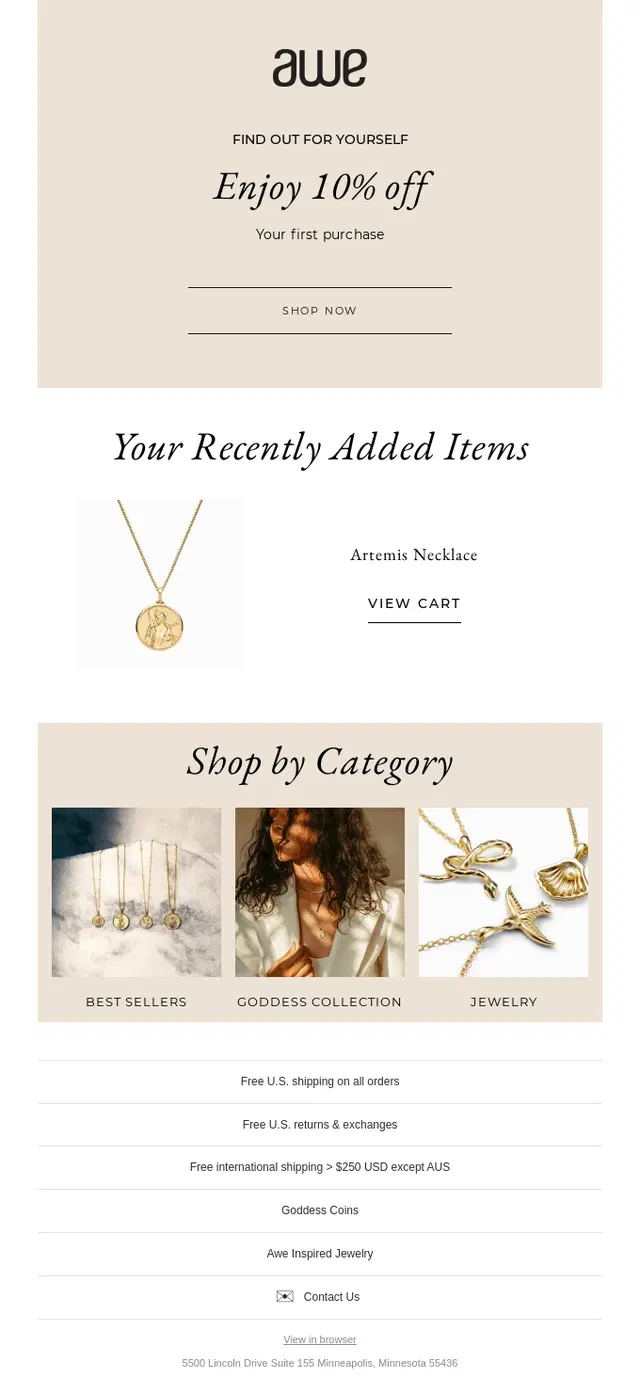
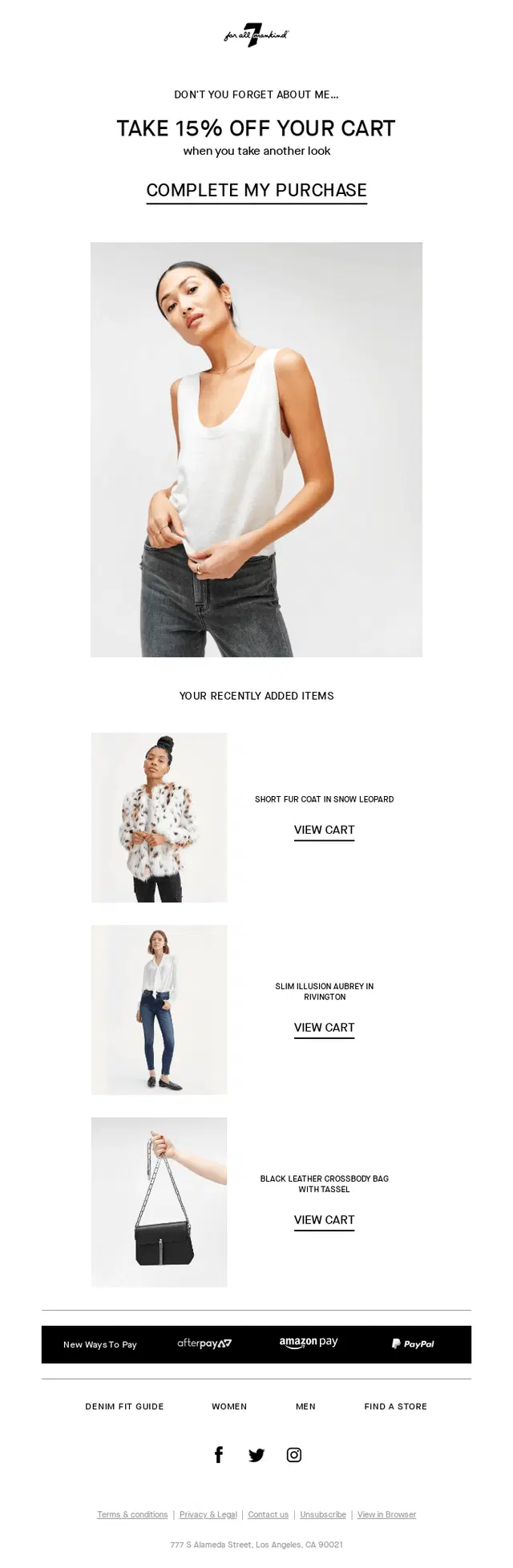
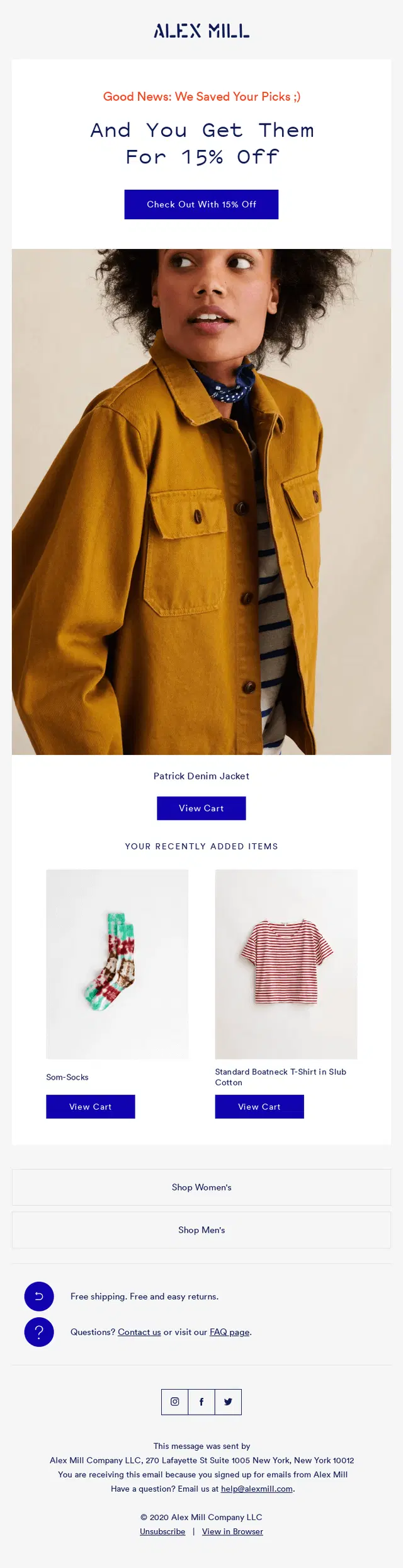
Sometimes a shopper needs more than a reminder. A well-timed discount can reopen the decision when price is part of the hesitation-but it doesn’t always have to appear in the first abandoned cart email.
These examples use percentage discounts, dollar-off offers, unique coupon codes, first-order savings, and limited-time promotions to give shoppers another reason to return.




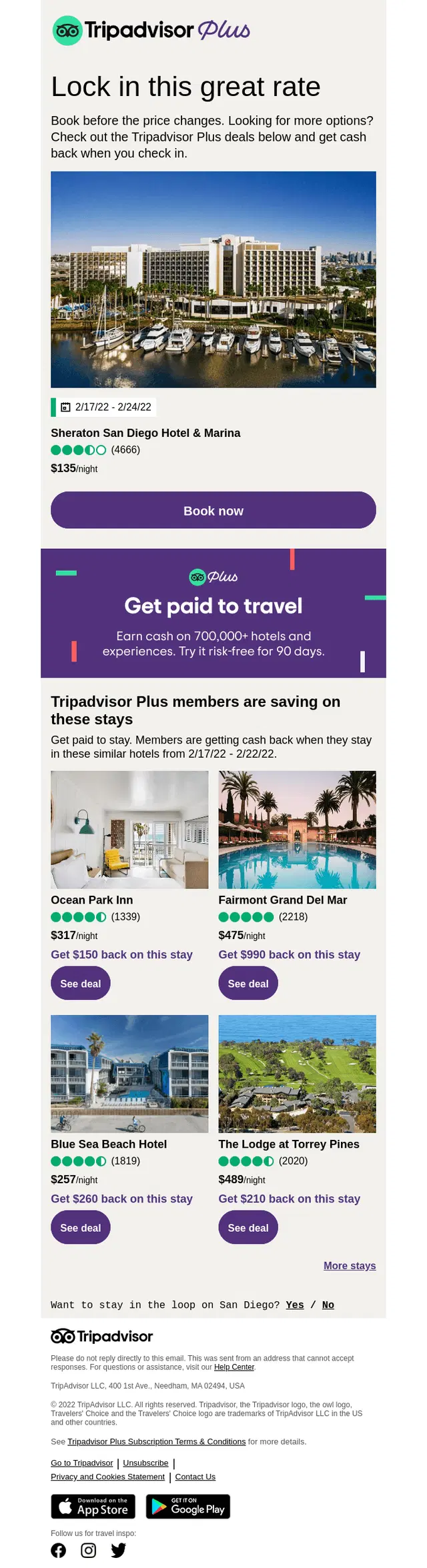
Personalized Abandoned Cart Email Examples
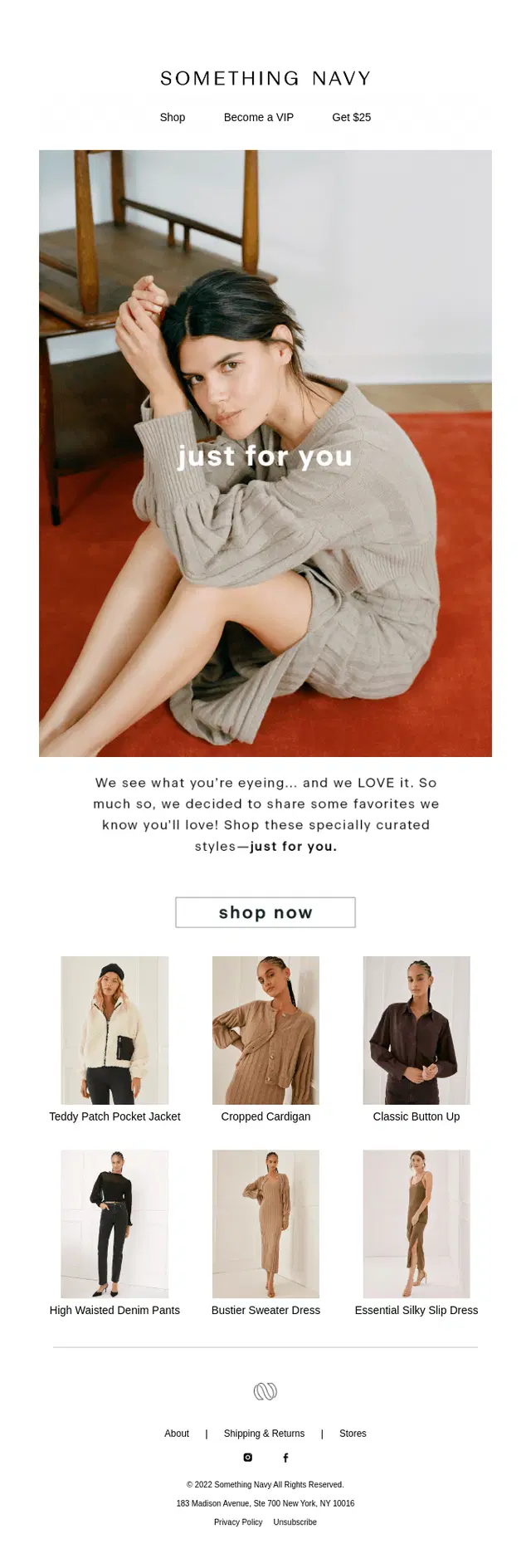
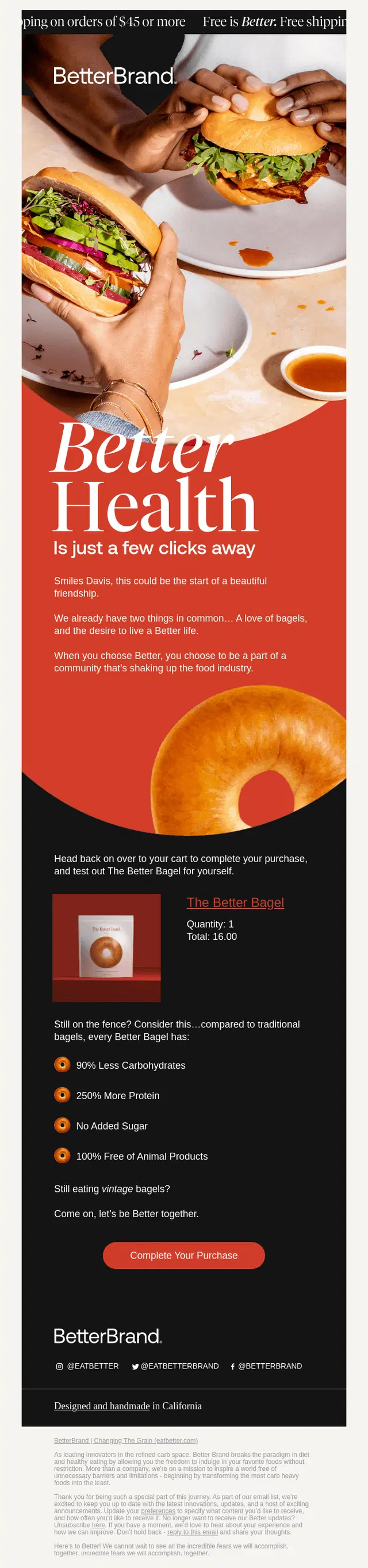
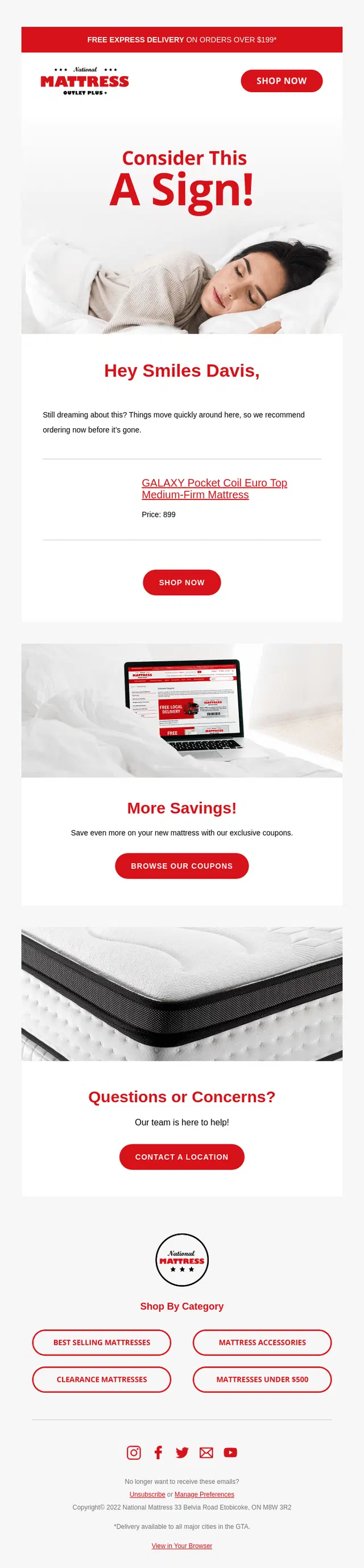
Personalization goes well beyond adding a first name to the subject line.
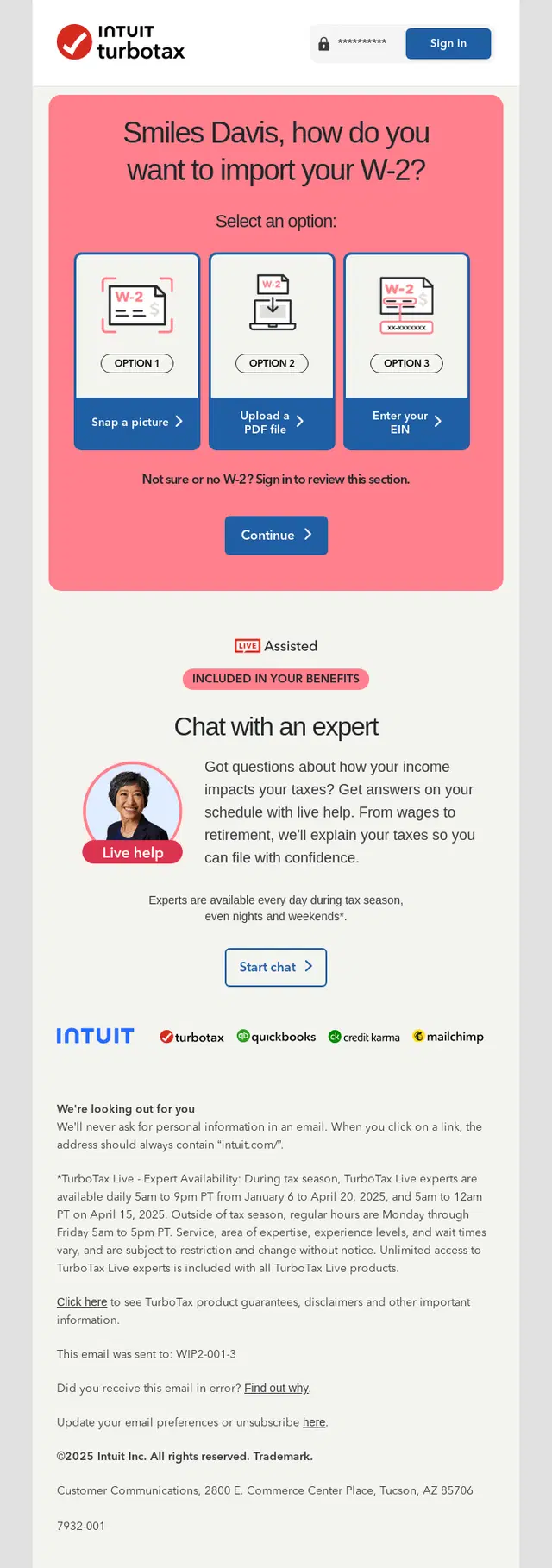
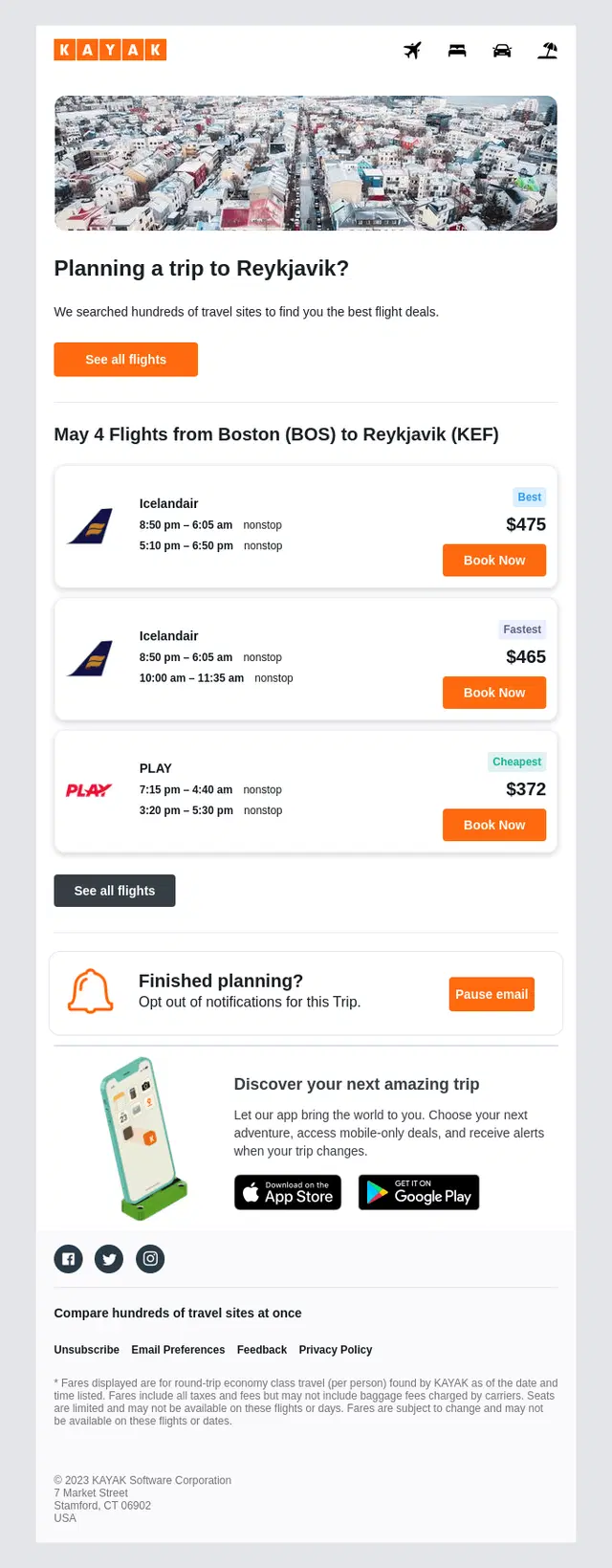
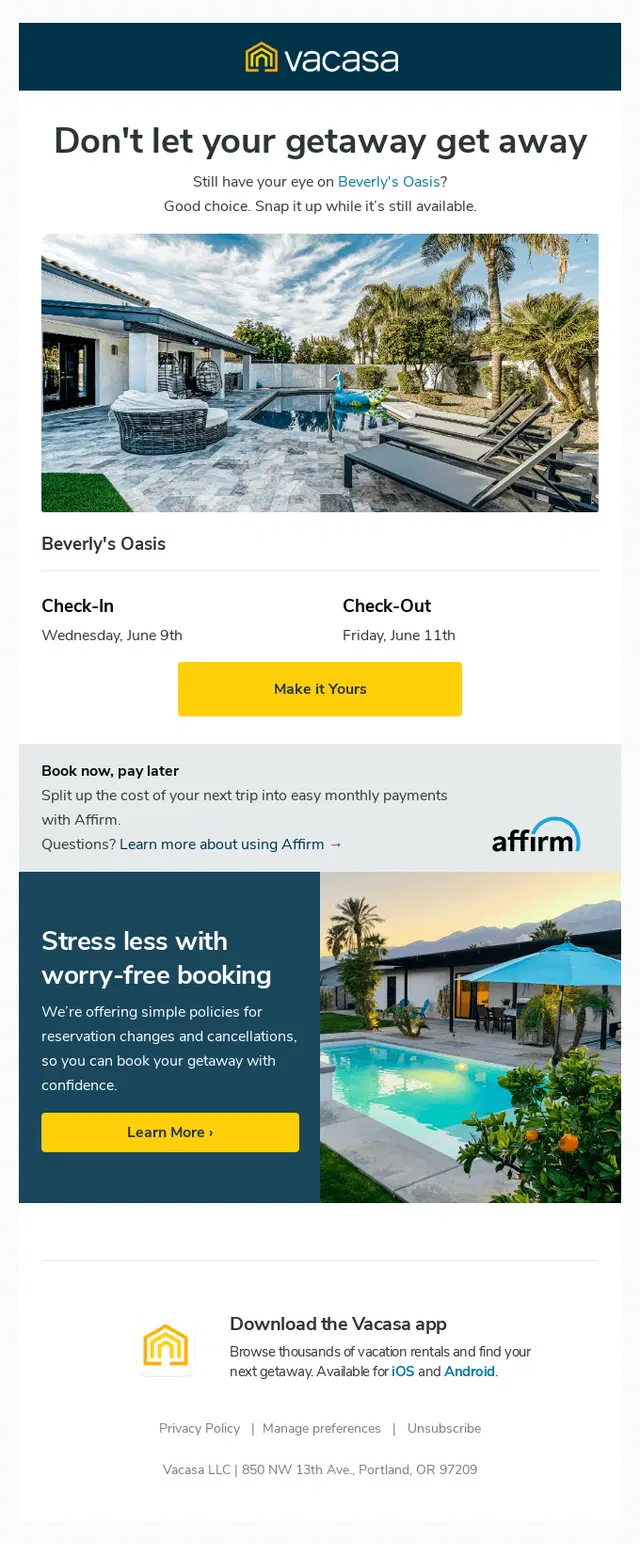
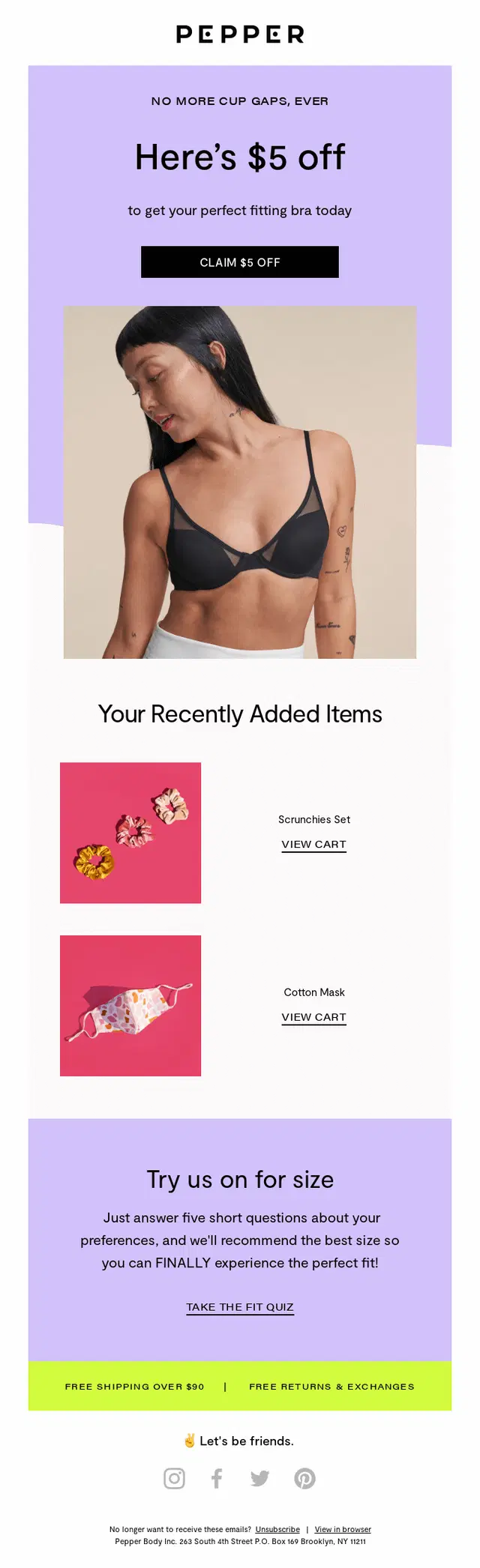
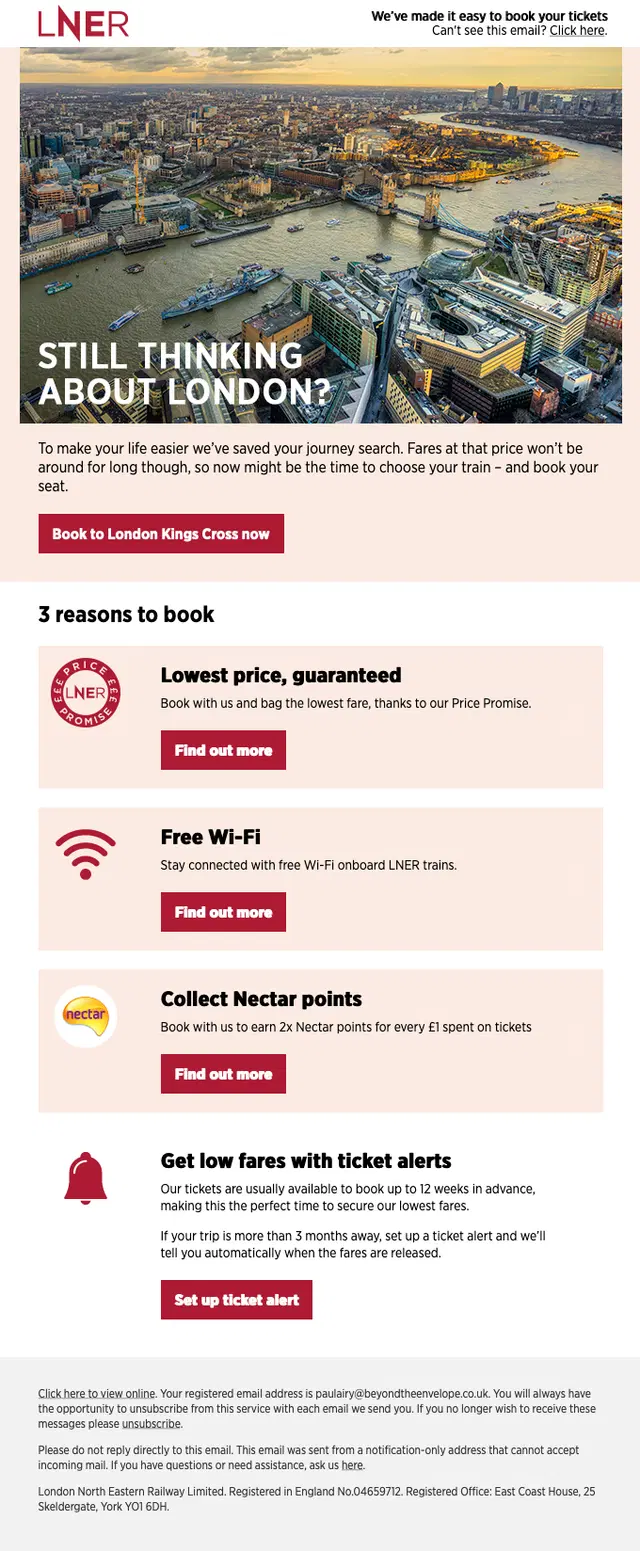
The best examples rebuild the context of the shopper’s visit: the exact products they viewed, their saved cart, selected dates or options, personalized recommendations, or copy triggered by what they did on the site. That makes the email feel like a continuation of the shopping experience rather than a generic reminder sent to everyone.
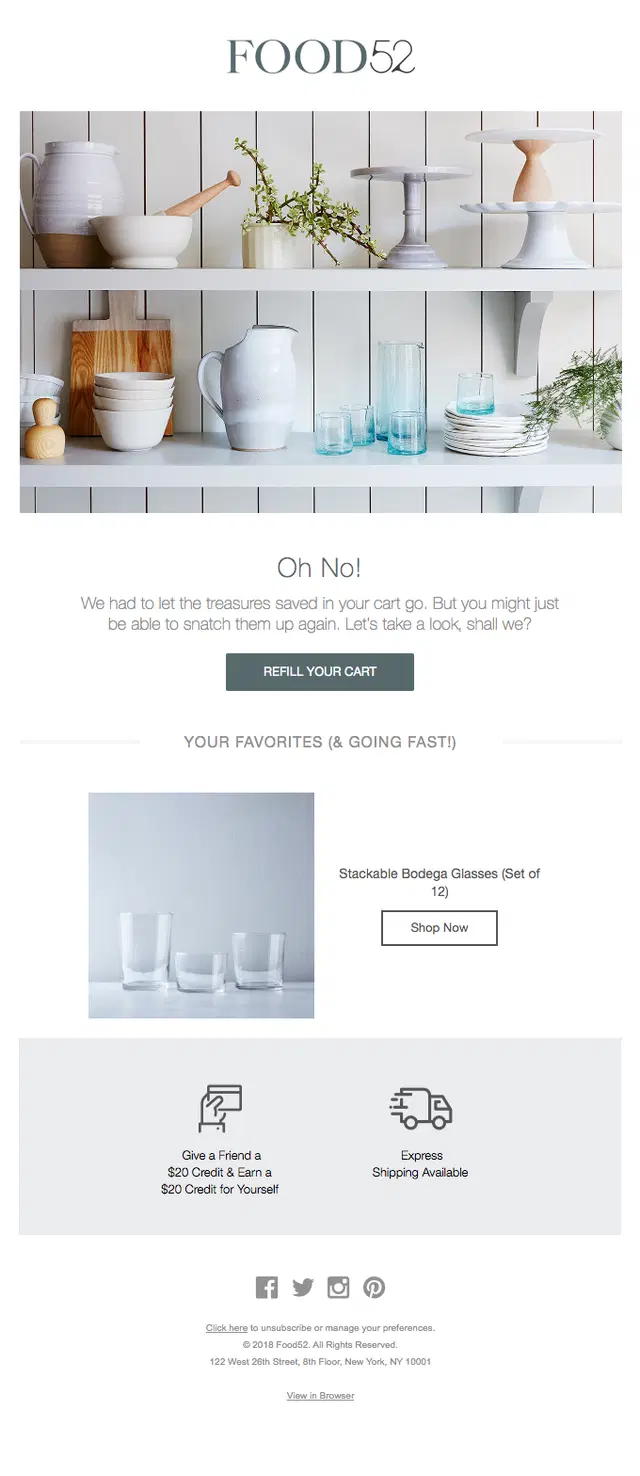
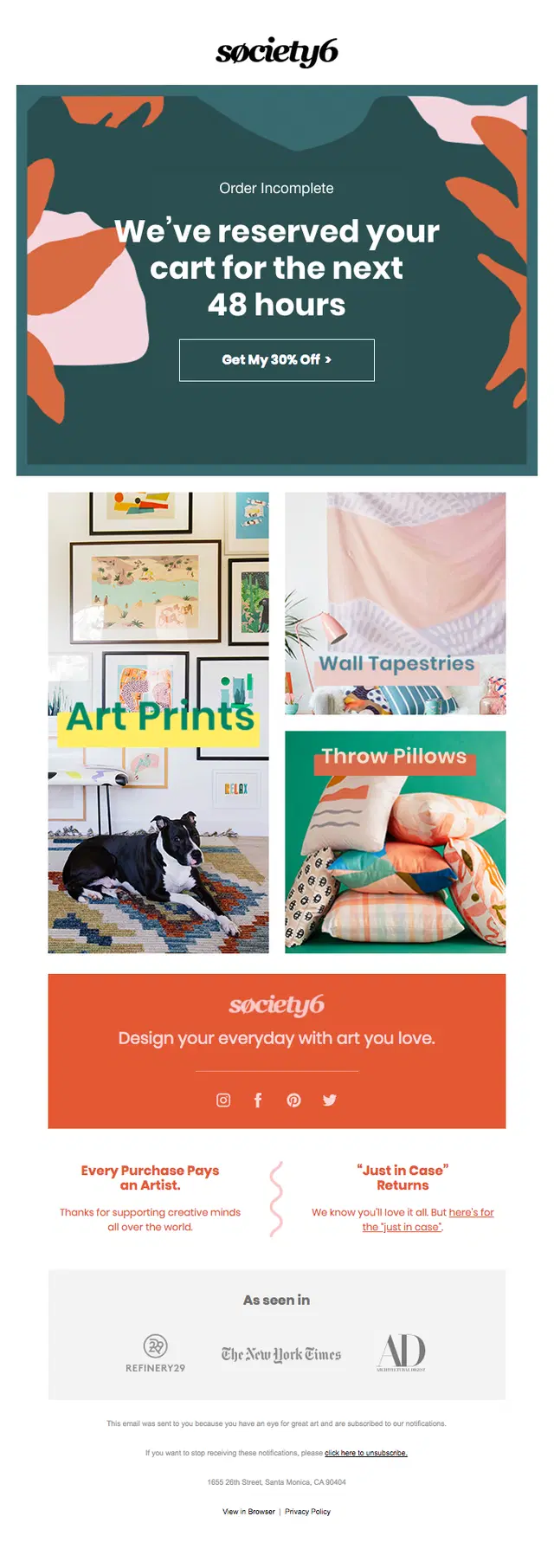
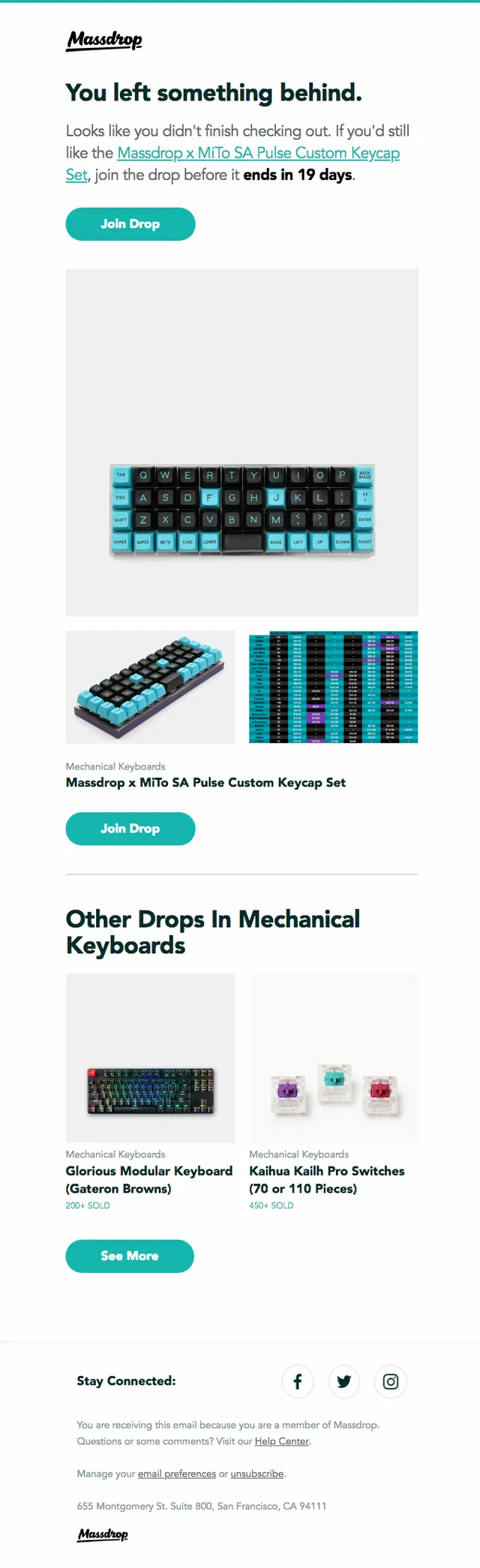
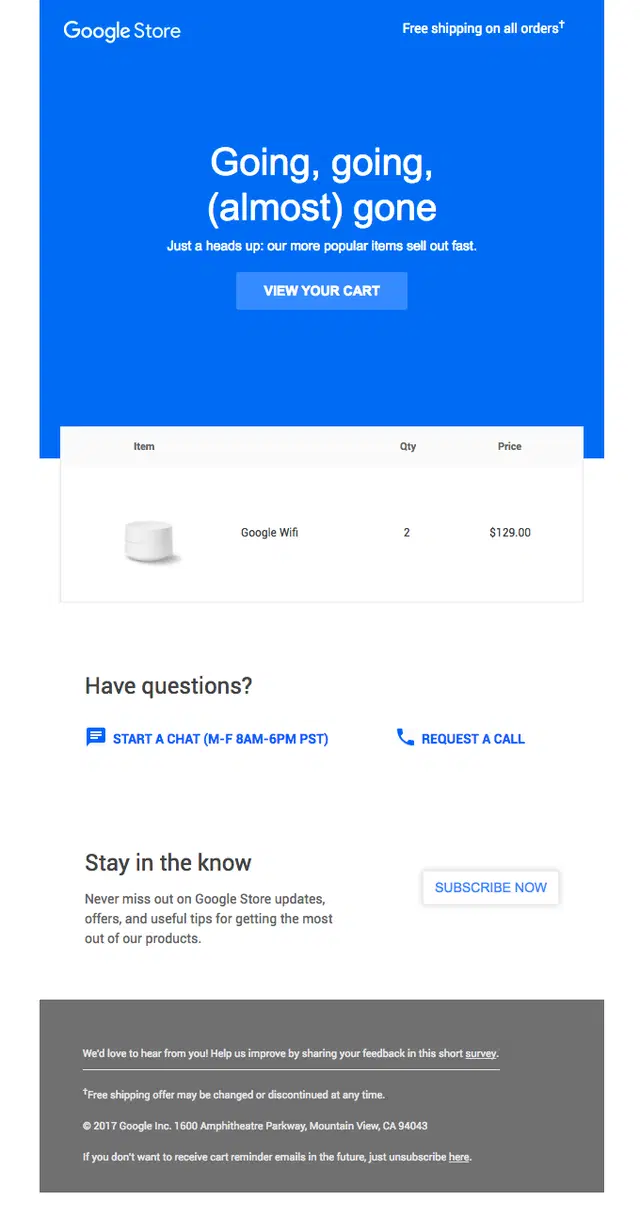
Urgency and Scarcity Abandoned Cart Email Examples
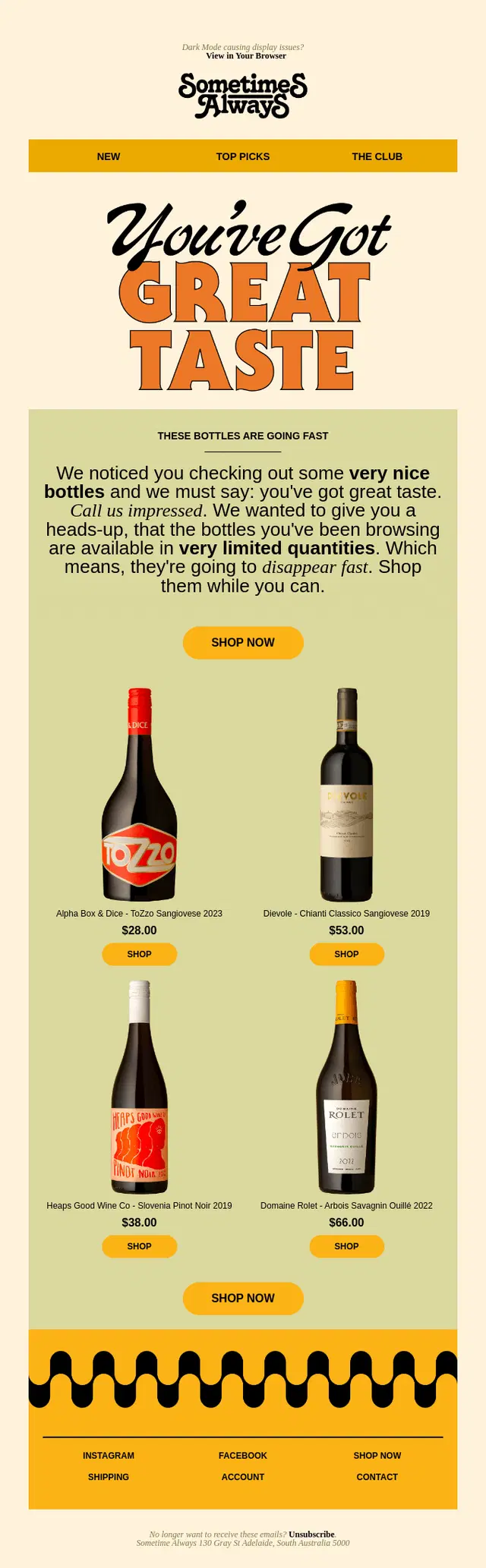
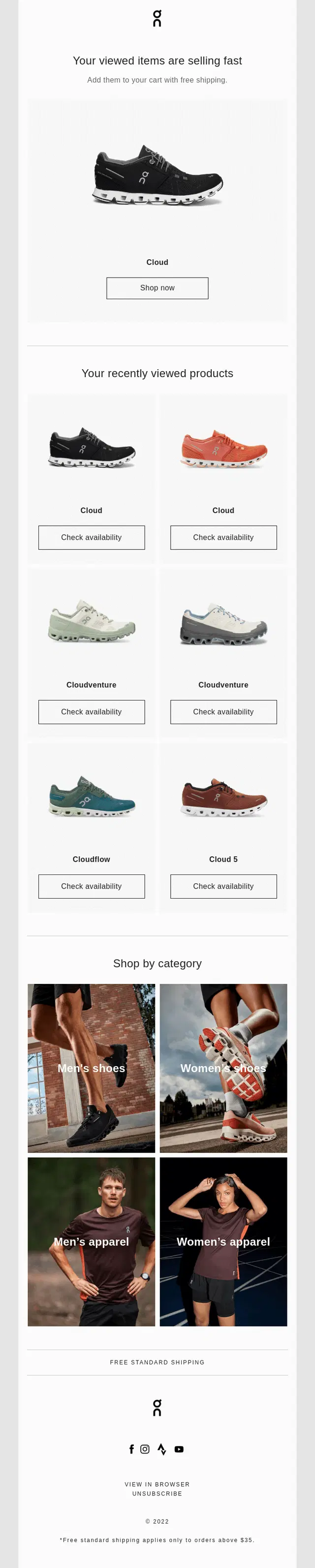
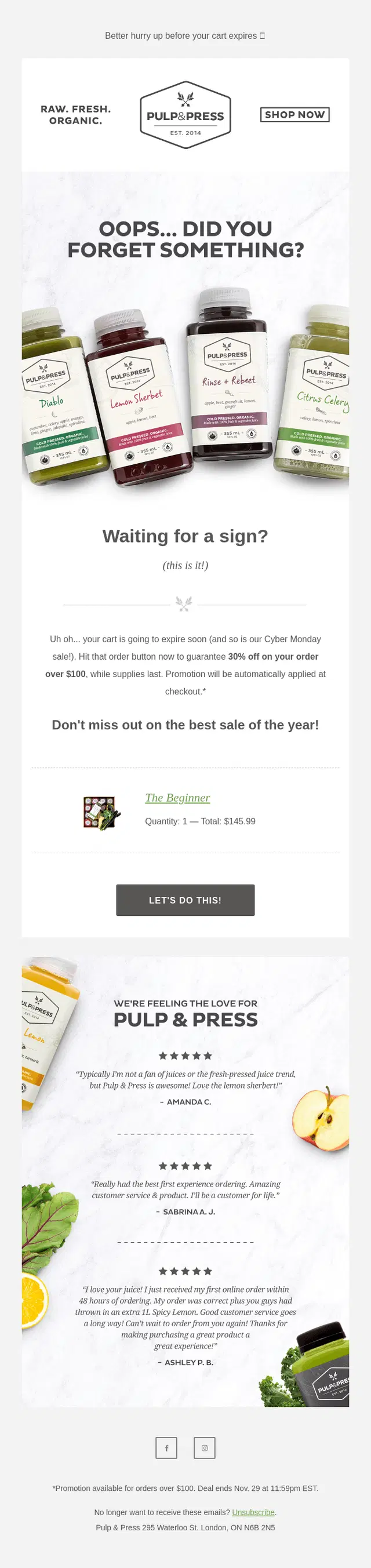
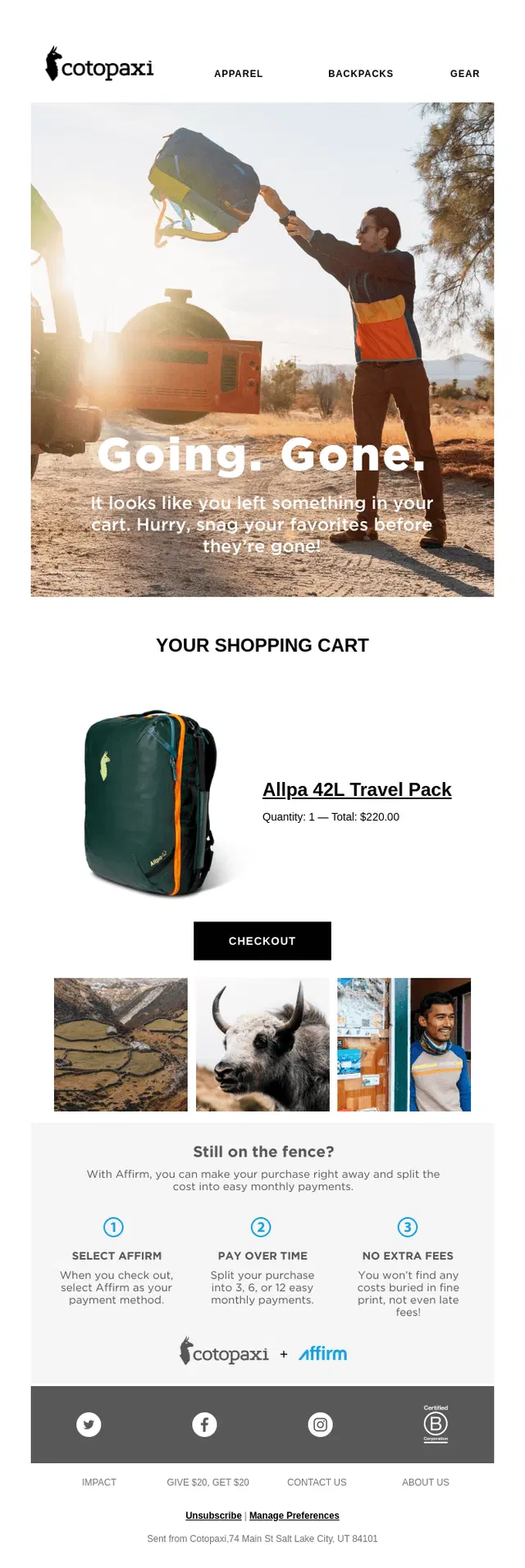
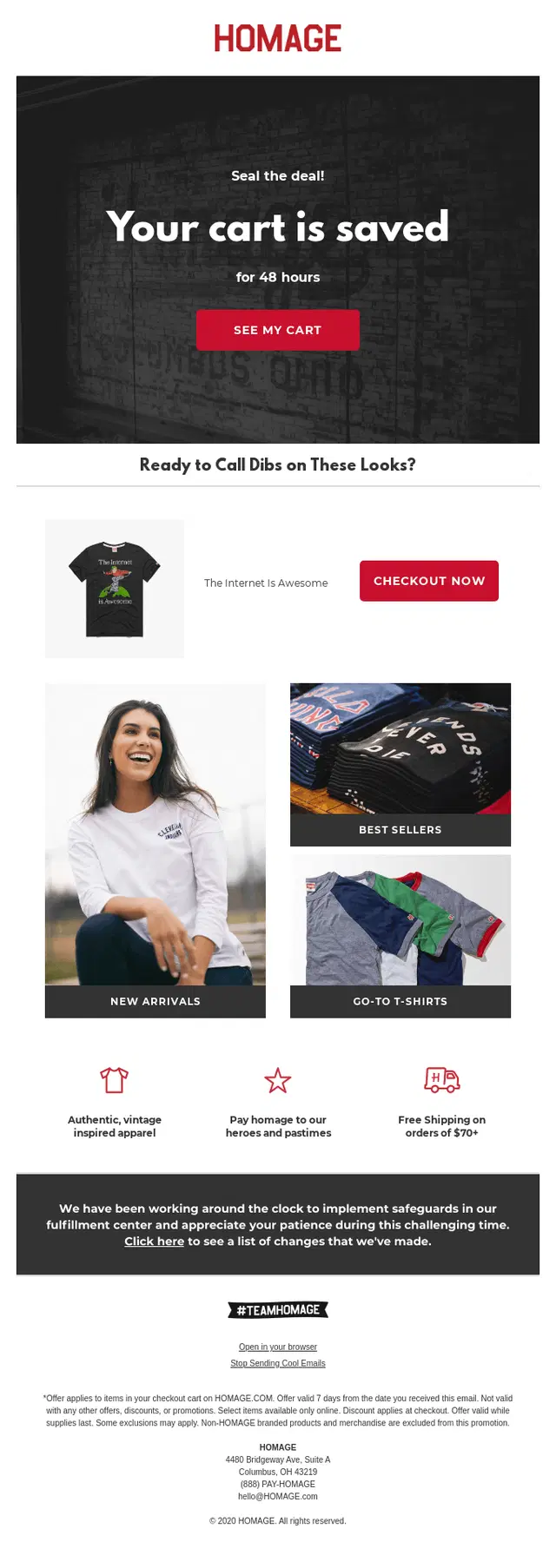
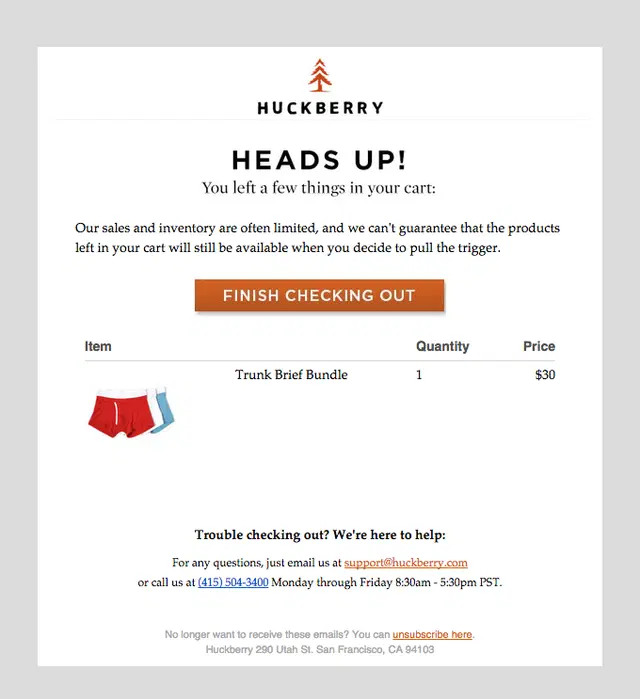
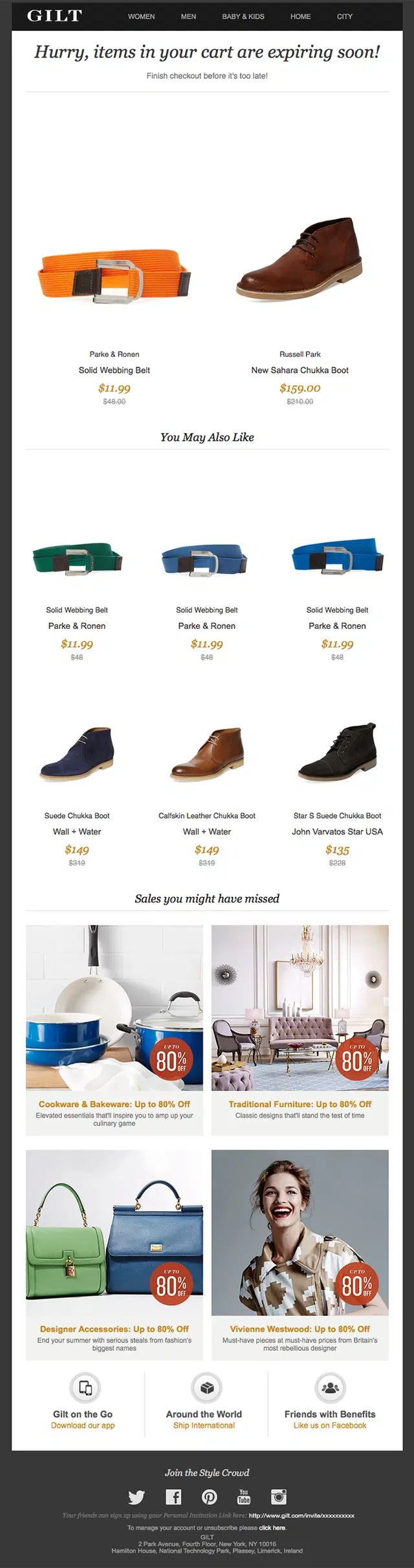
A saved cart feels more important when there is a real reason not to leave it sitting there.
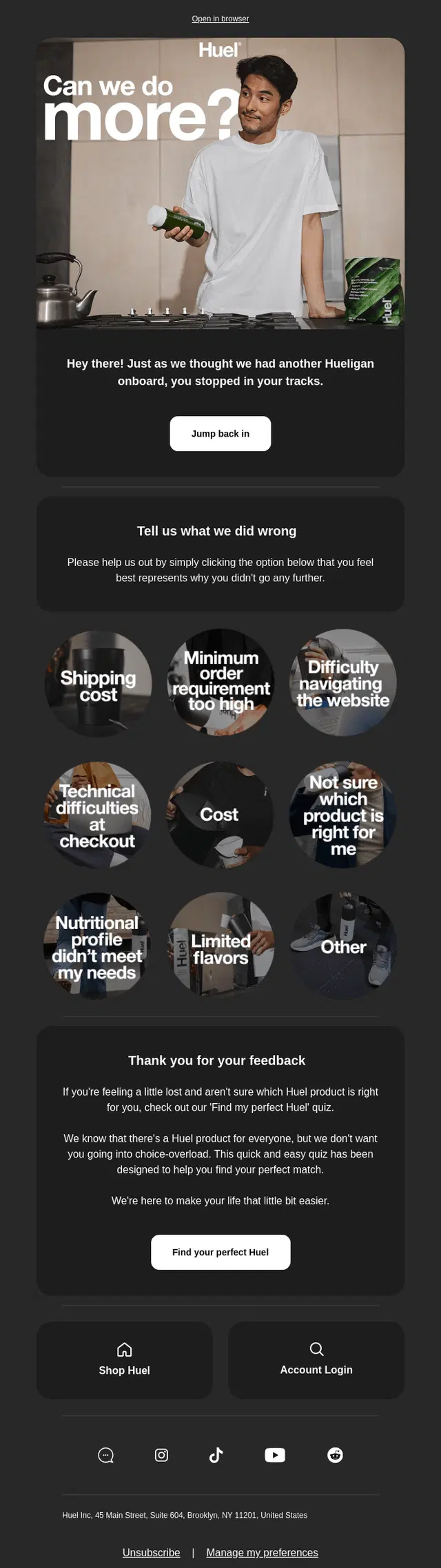
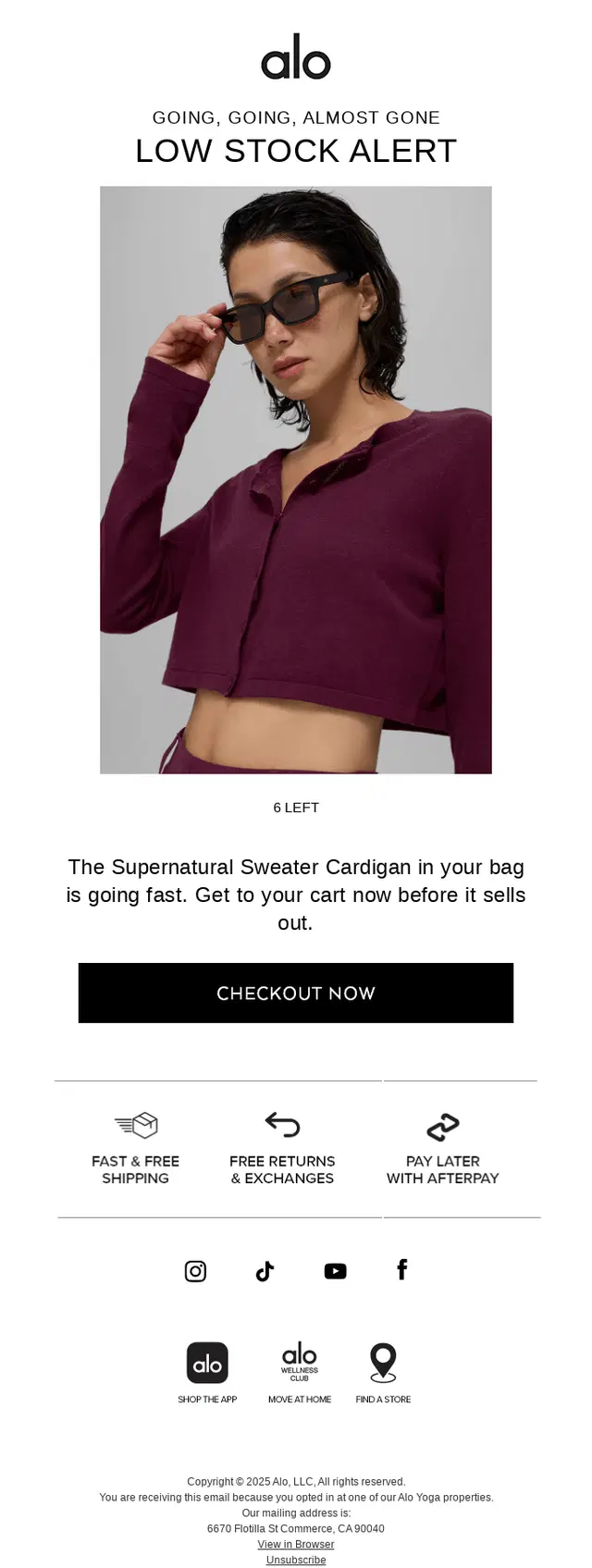
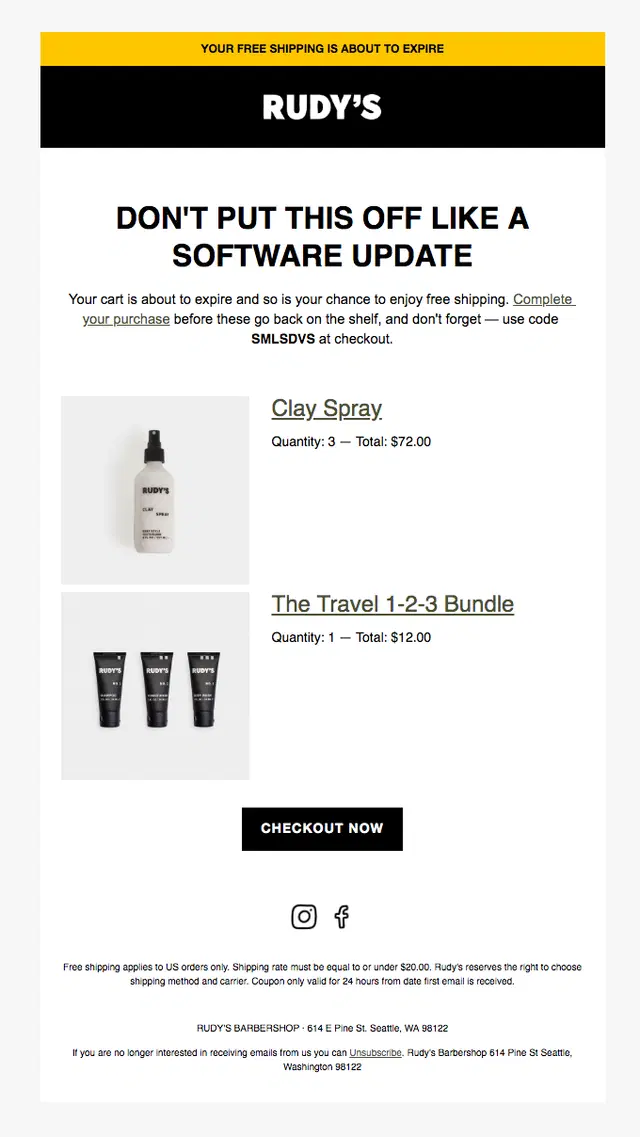
These abandoned cart emails use low-stock alerts, expiring carts, limited-time offers, reserved items, countdowns, and last-chance messaging to create urgency. The strongest examples tie that pressure to something concrete rather than relying on vague FOMO.
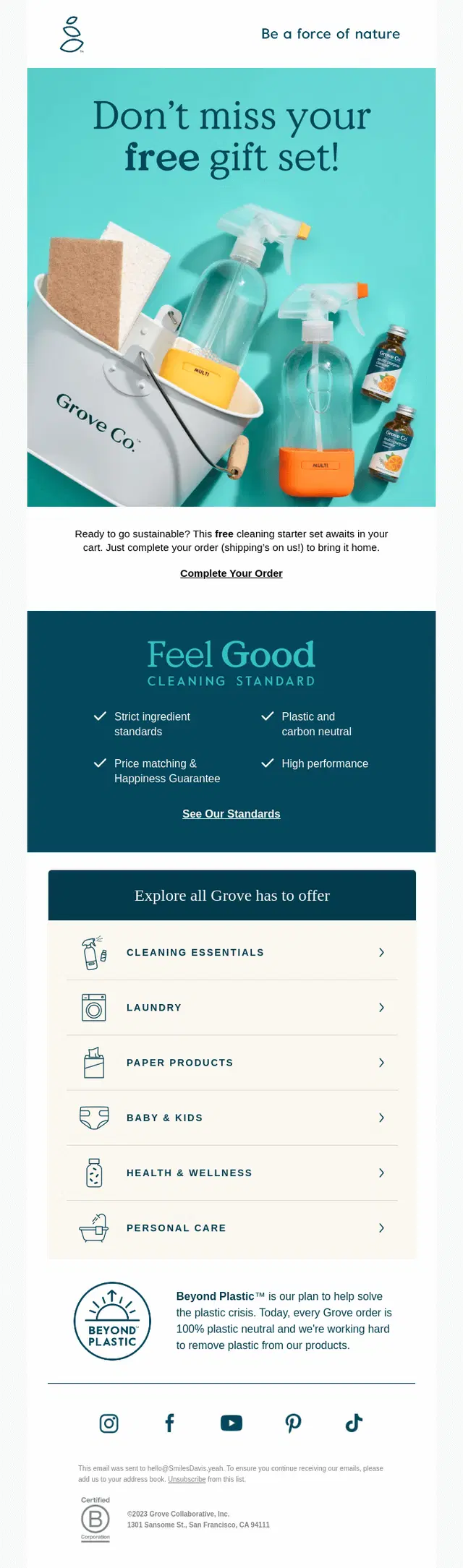
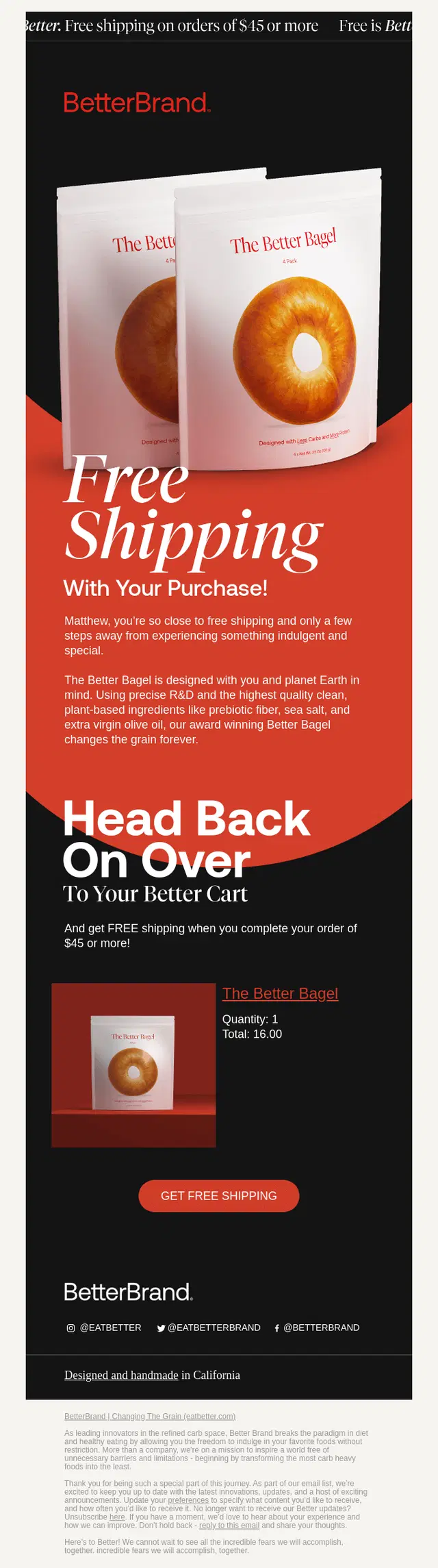
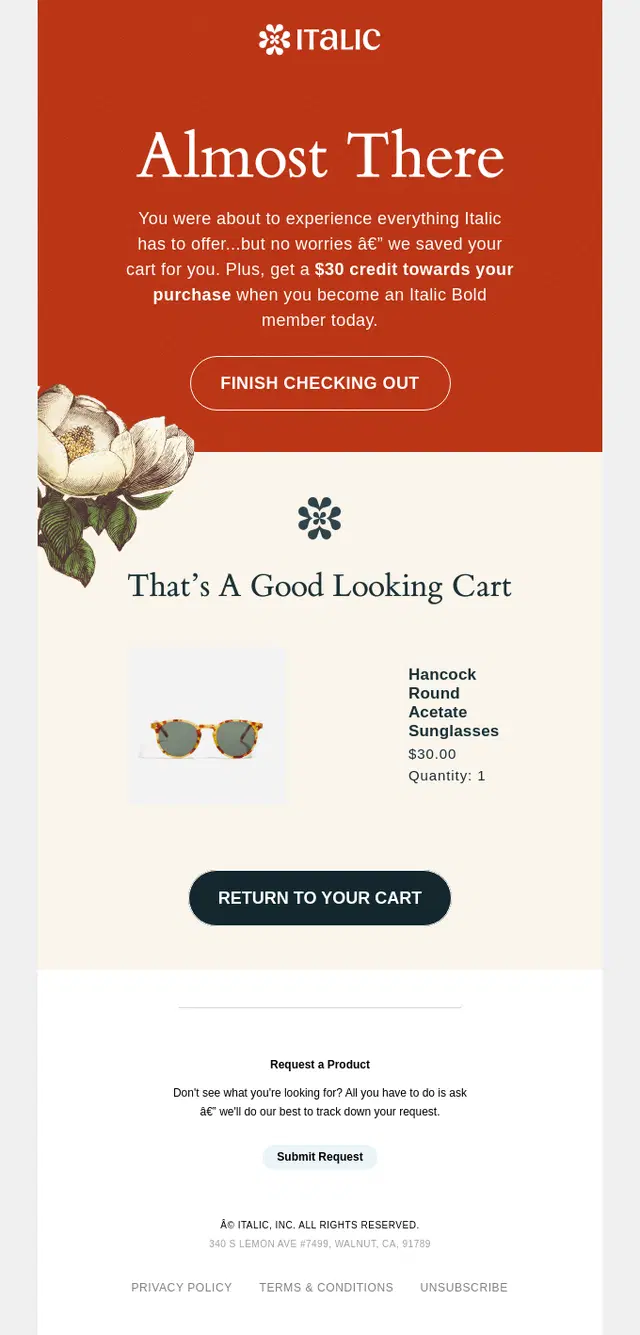
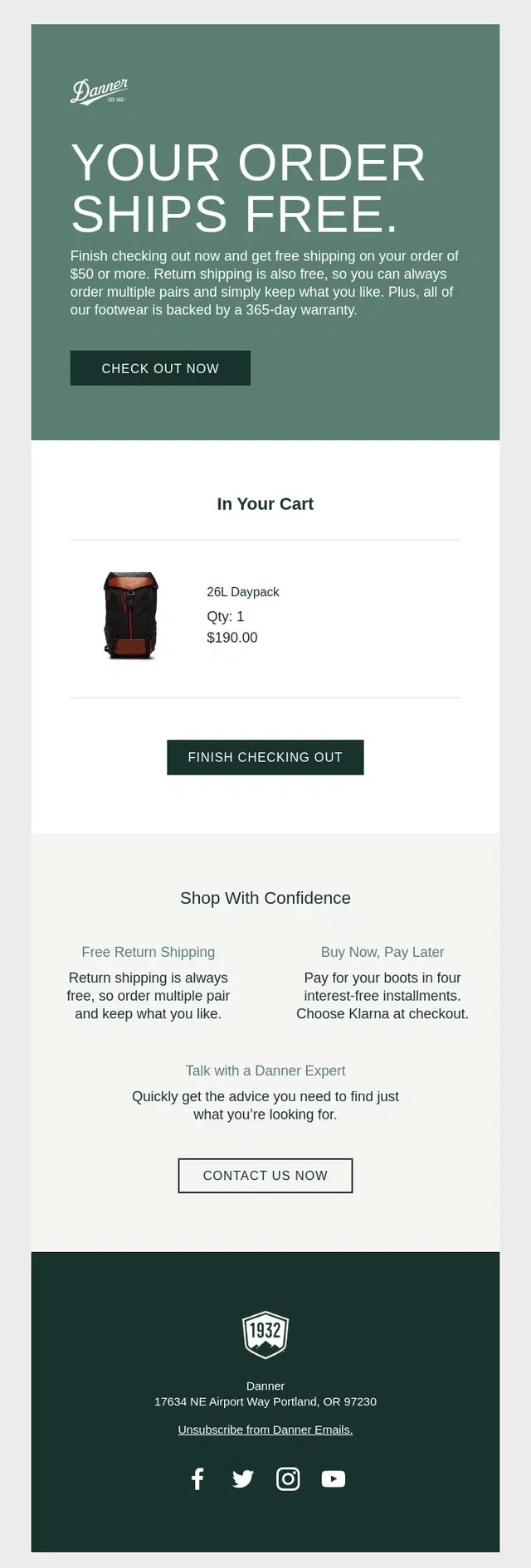
Abandoned Cart Emails With Free Shipping and Other Incentives
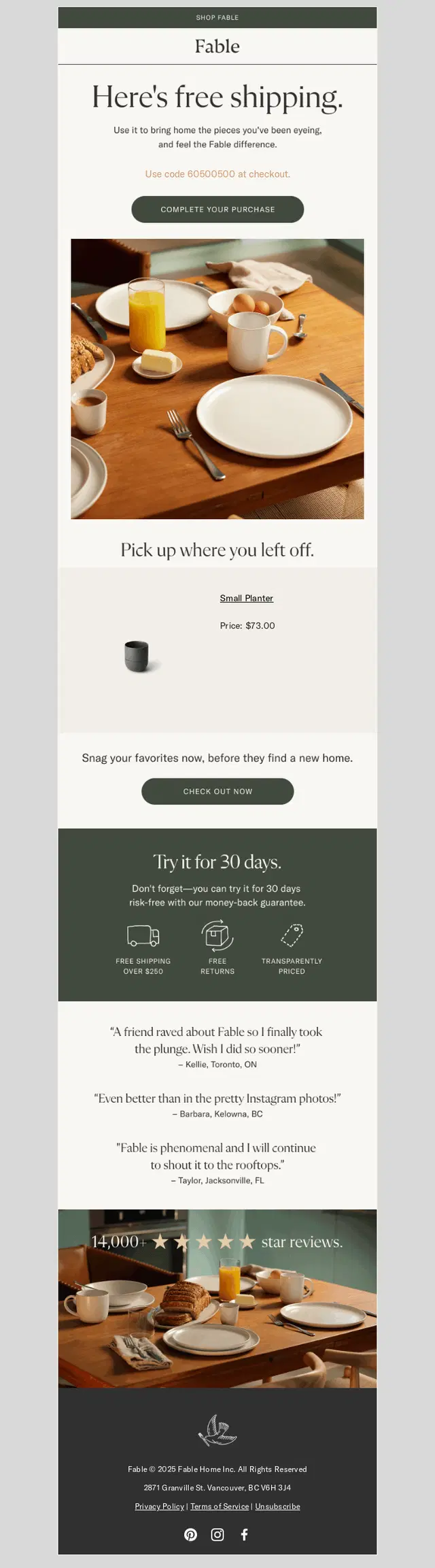
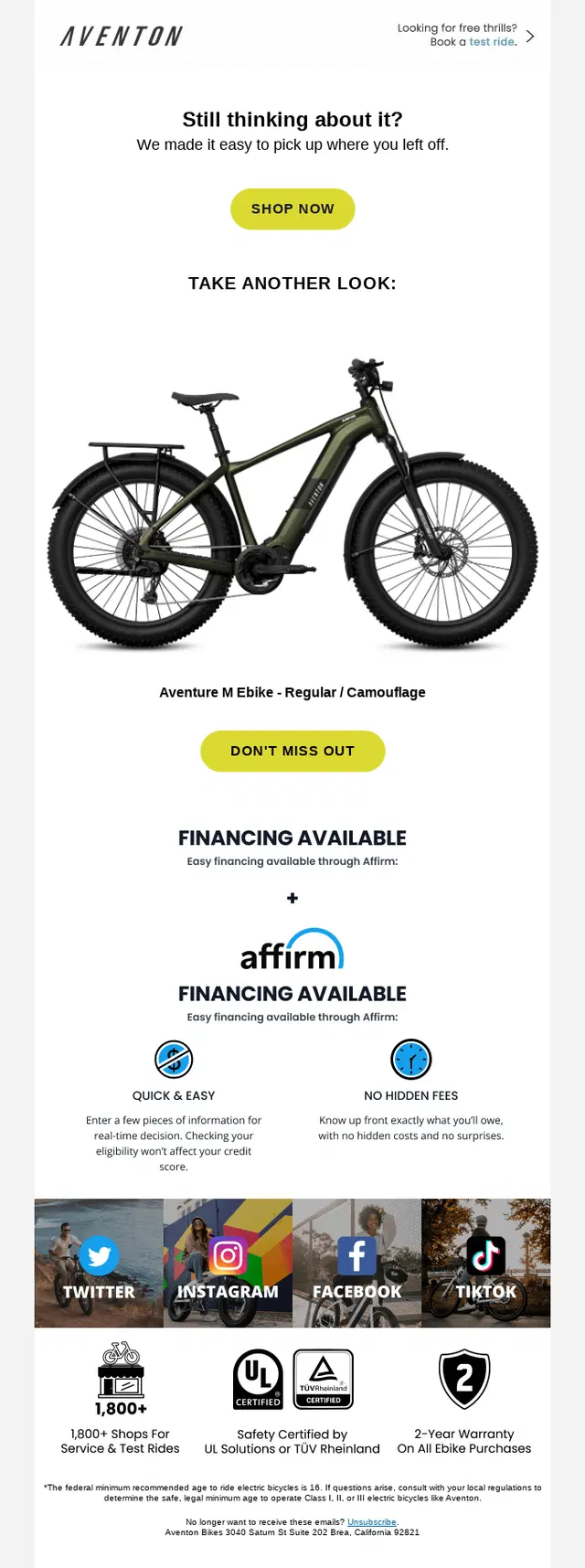
A discount isn’t the only way to make an abandoned cart more appealing. Shipping costs, perceived risk, or the feeling that an order simply isn’t valuable enough can all stop someone at checkout.
The emails in this section use free shipping and other purchase incentives, including gifts, credits, free samples, loyalty benefits, bundles, trials, and flexible payment options to make completing the order feel more worthwhile.
Social Proof and Trust-Building Abandoned Cart Emails
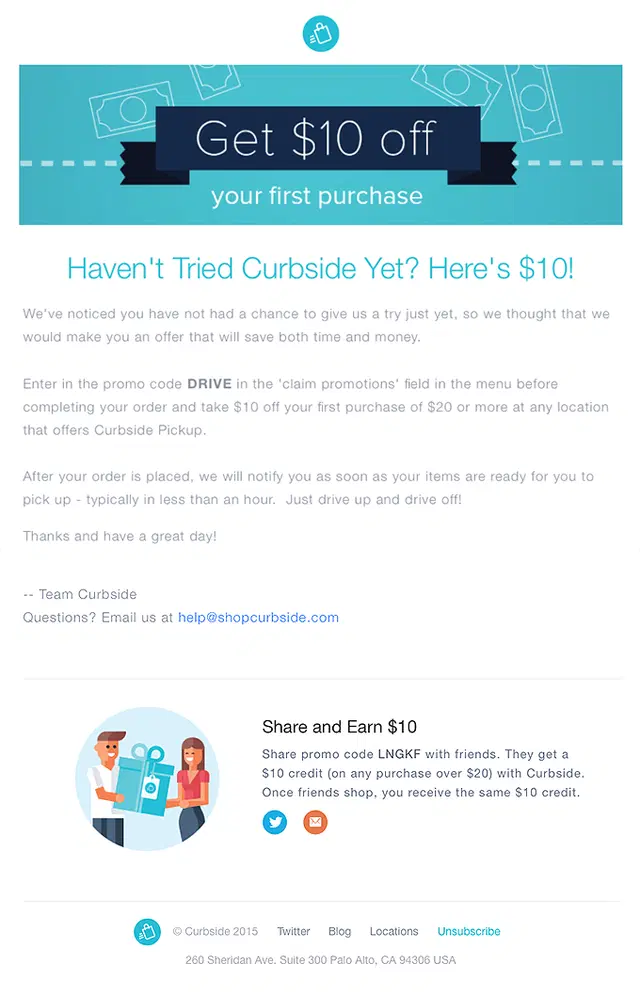
Not every abandoned cart is about price. Sometimes the shopper is still asking: Is this worth it? Will it work for me? What happens if I change my mind?
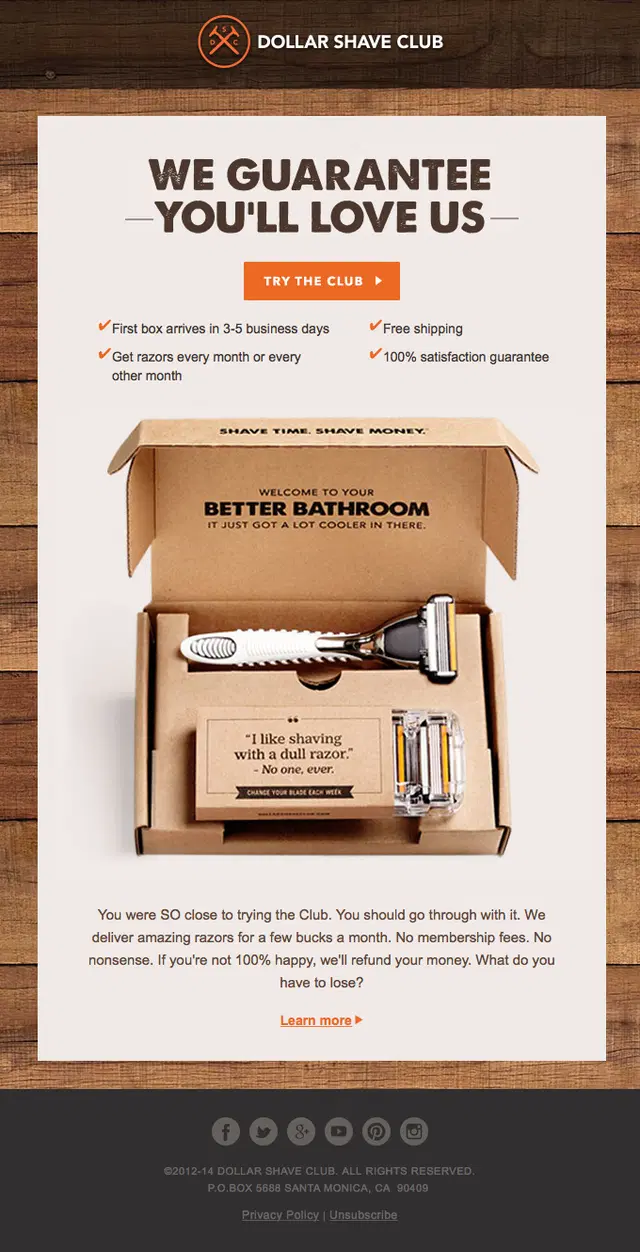
These emails answer those doubts with customer reviews, testimonials, guarantees, return policies, delivery information, product benefits, expert endorsements, and other trust signals. Instead of immediately lowering the price, they make the original purchase easier to believe in.

Creative and Funny Abandoned Cart Email Examples
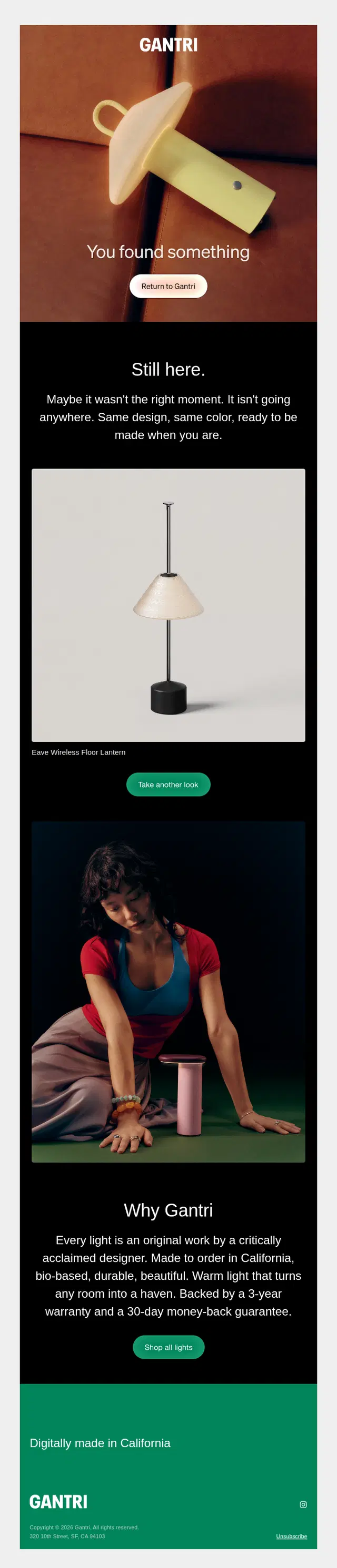
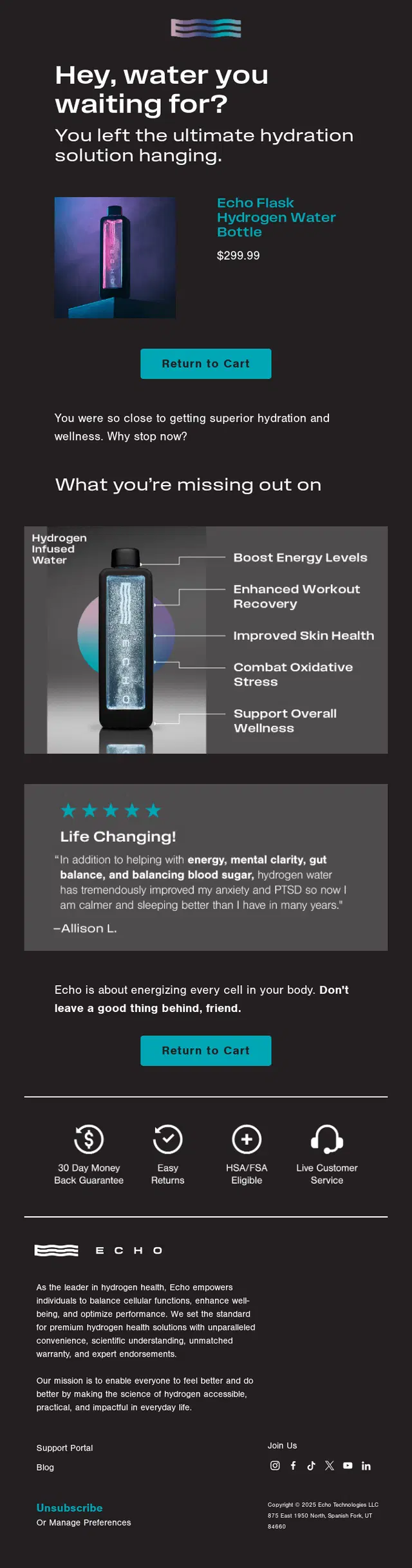
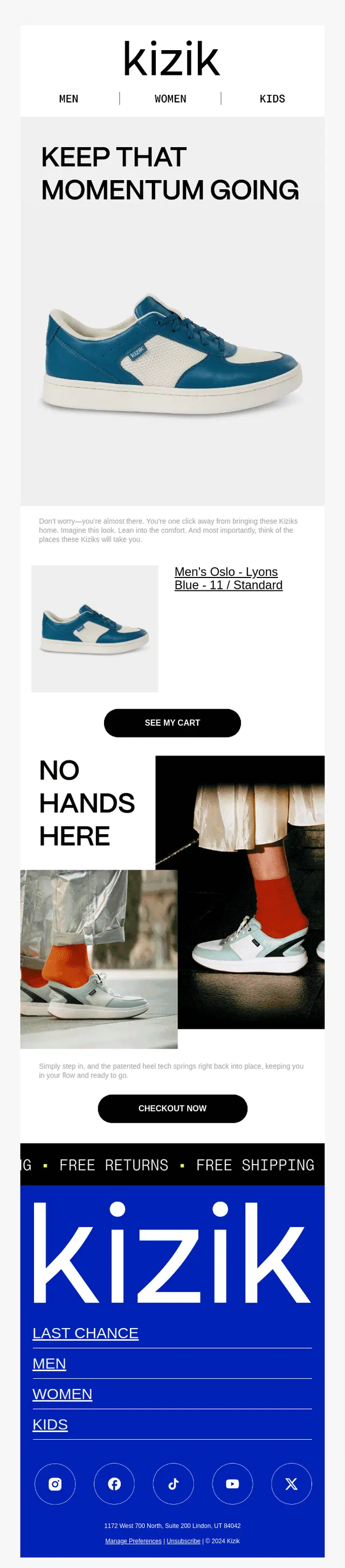
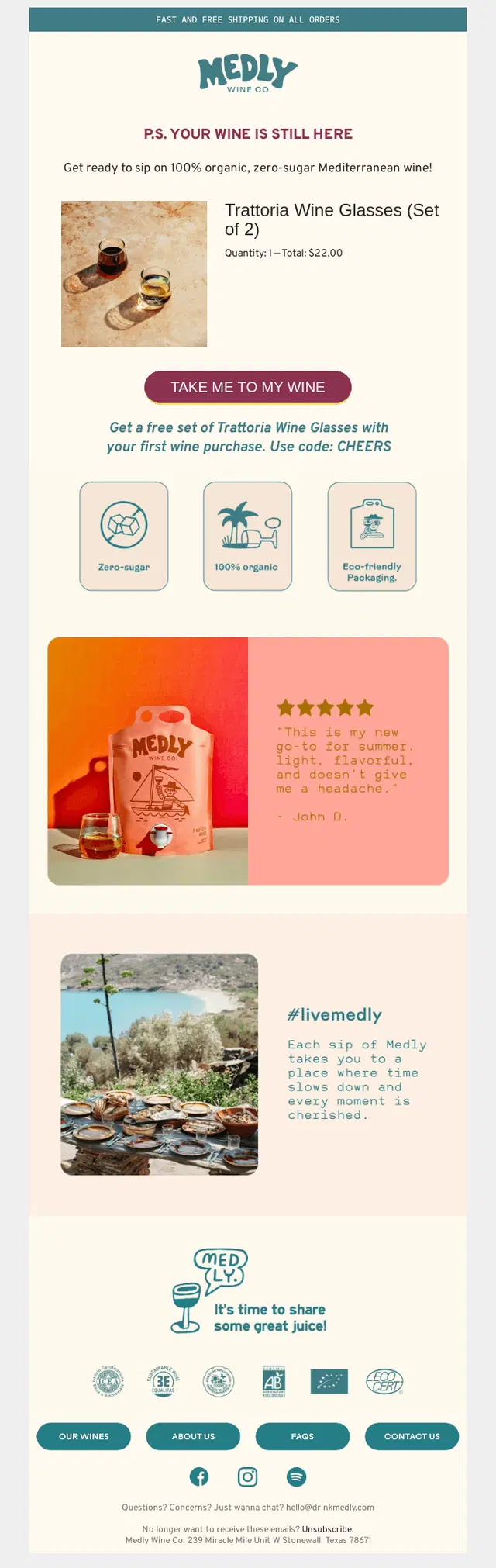
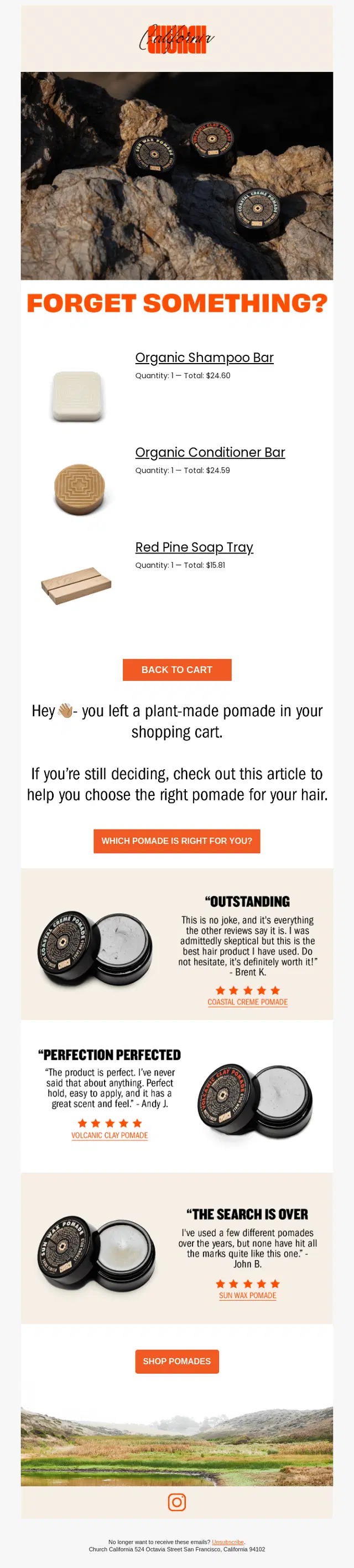
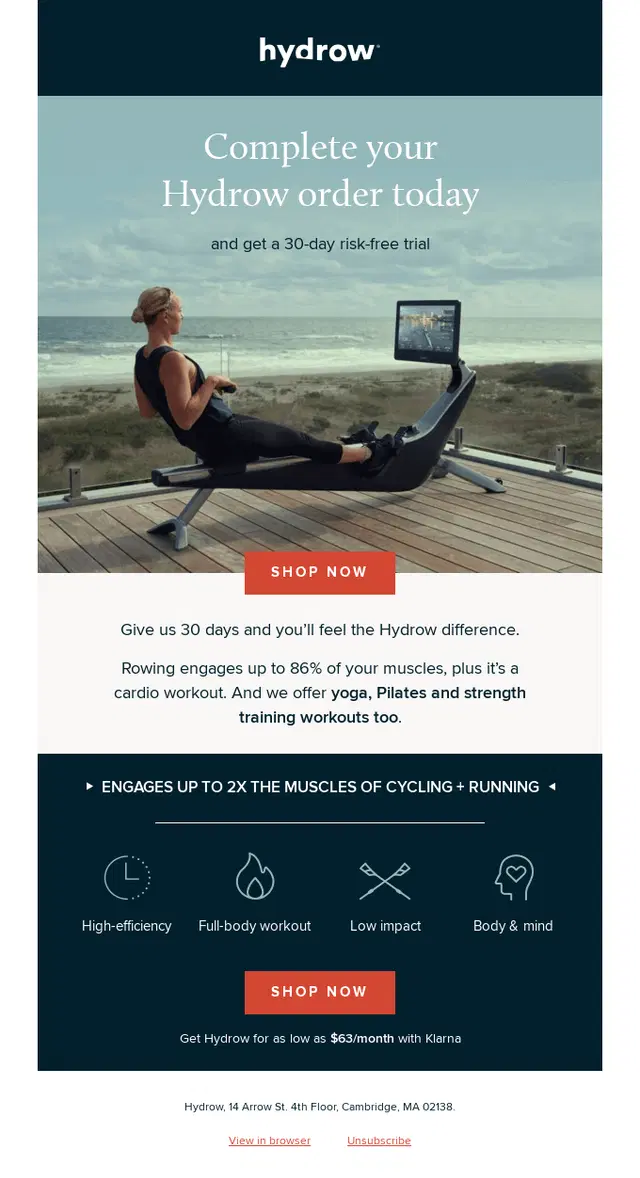
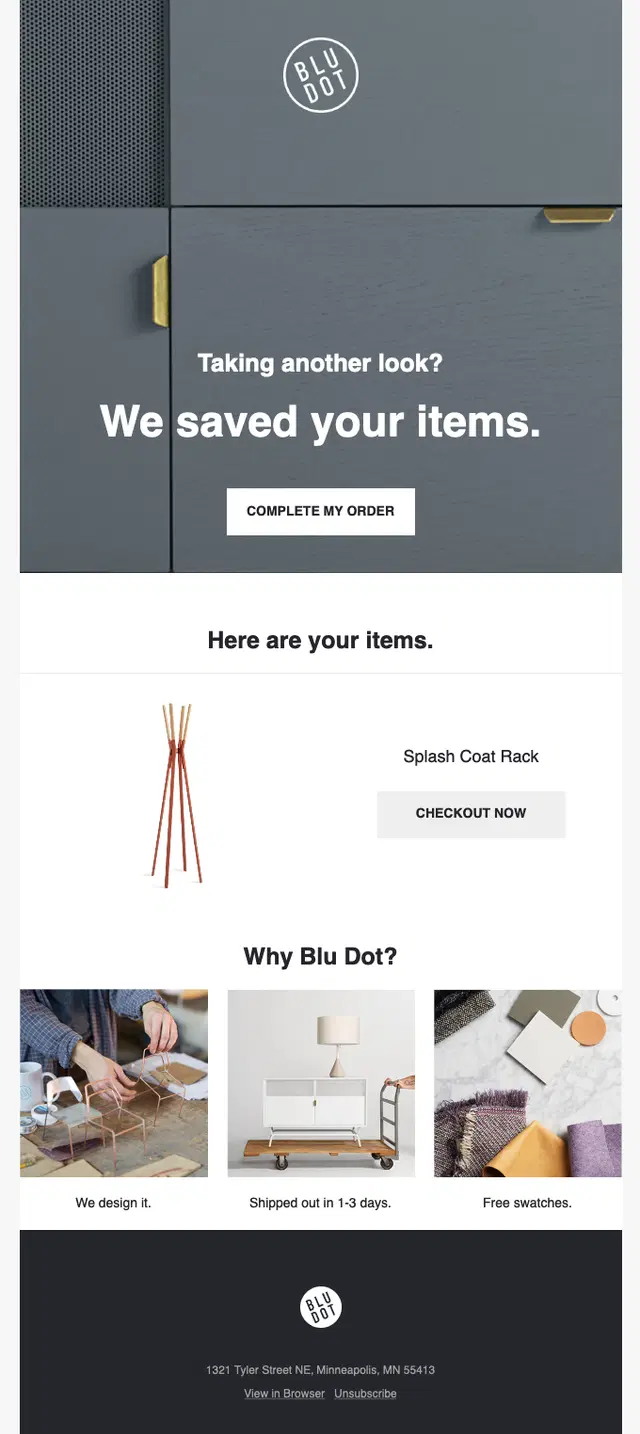
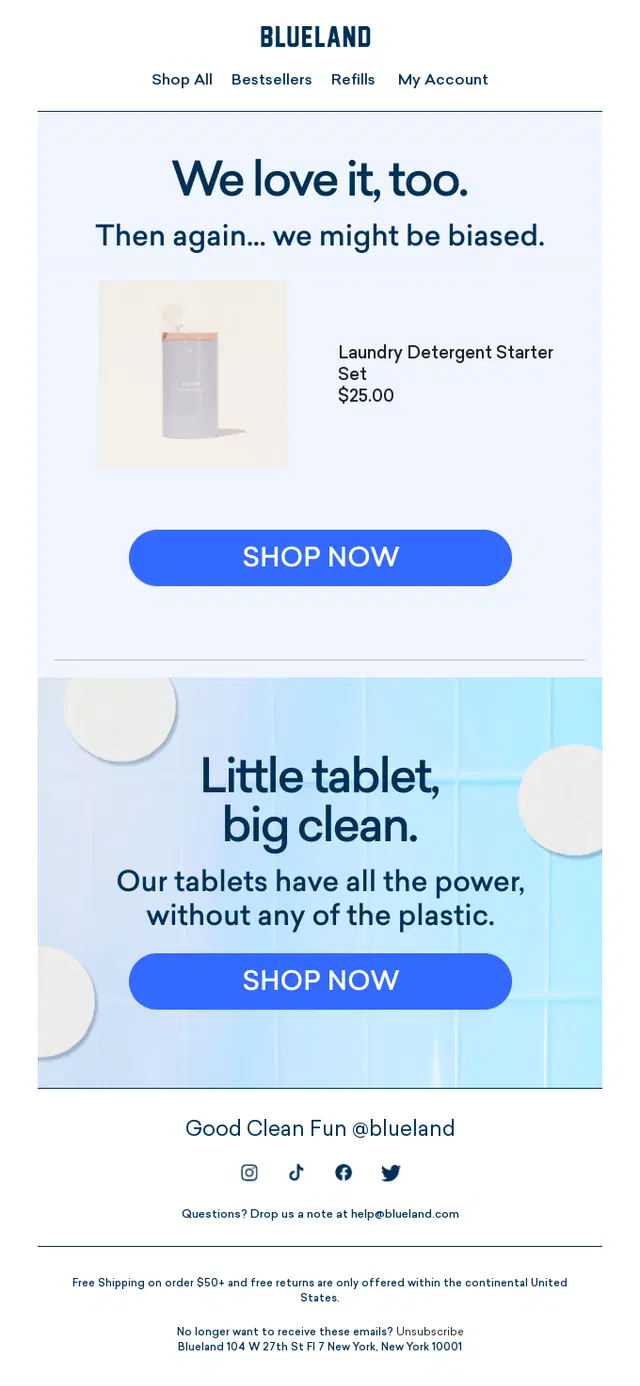
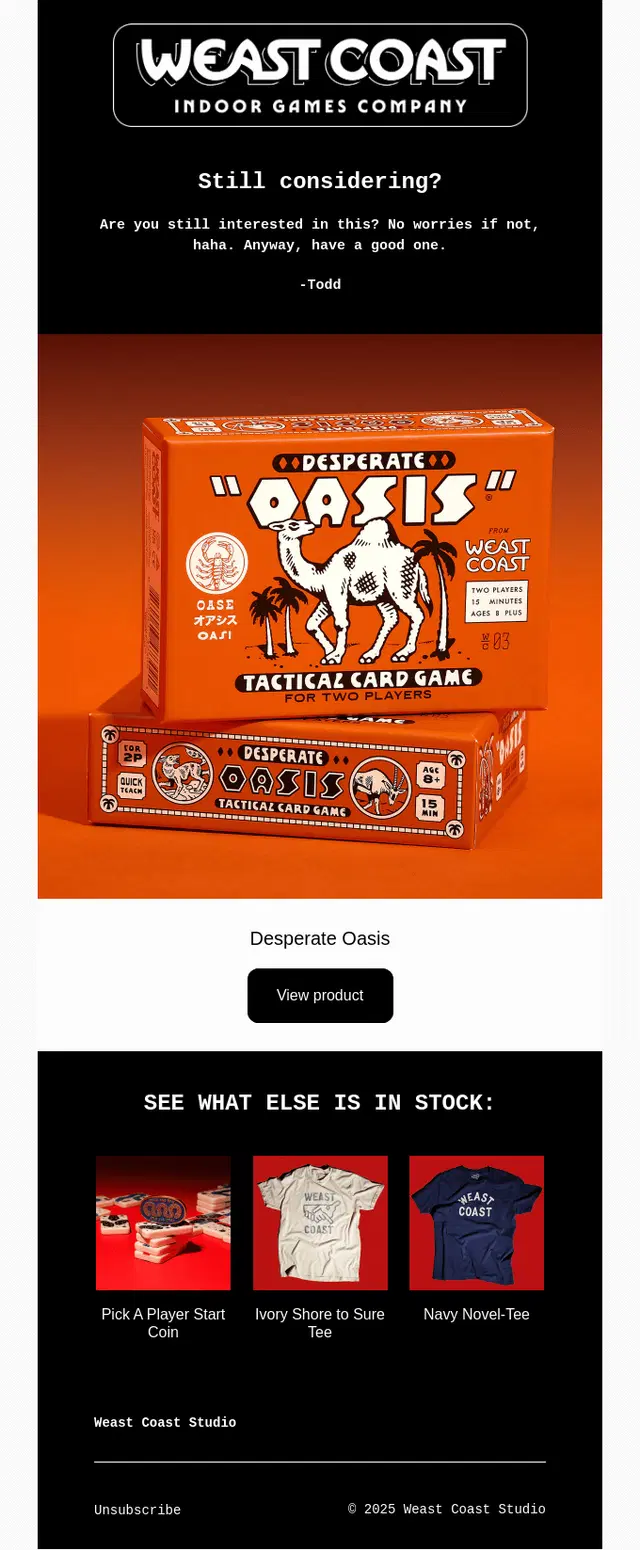
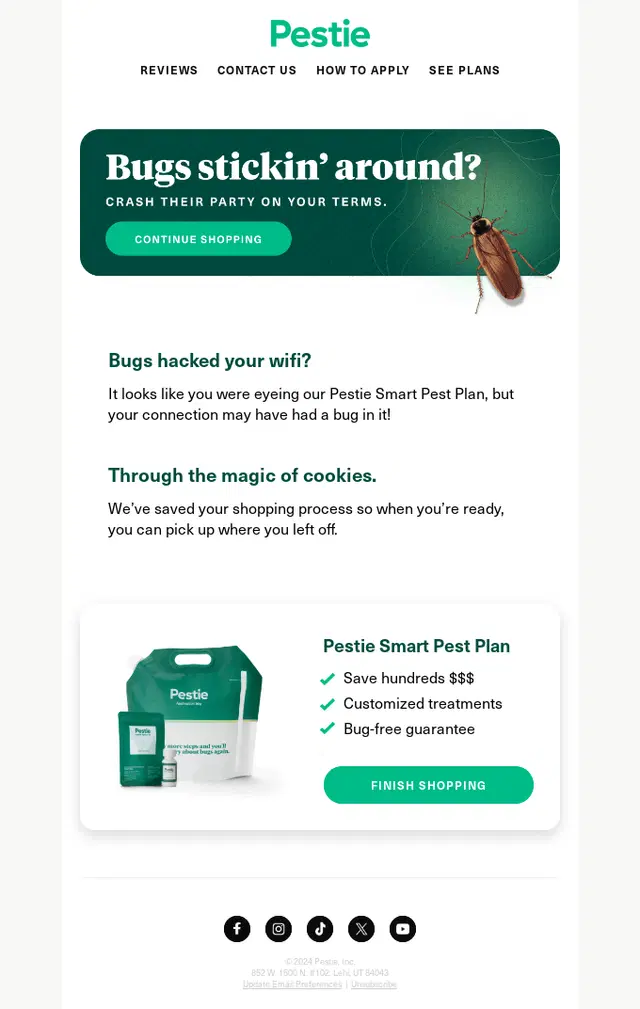
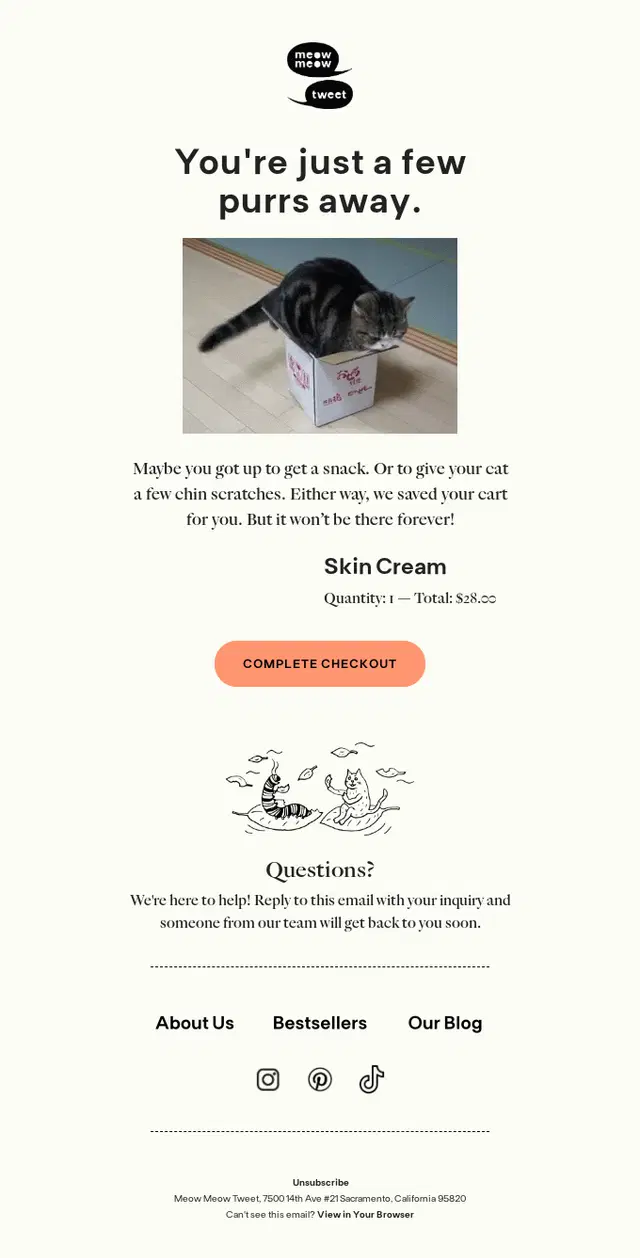
Abandoned cart emails are predictable by nature, which gives brands plenty of room to have fun with them.
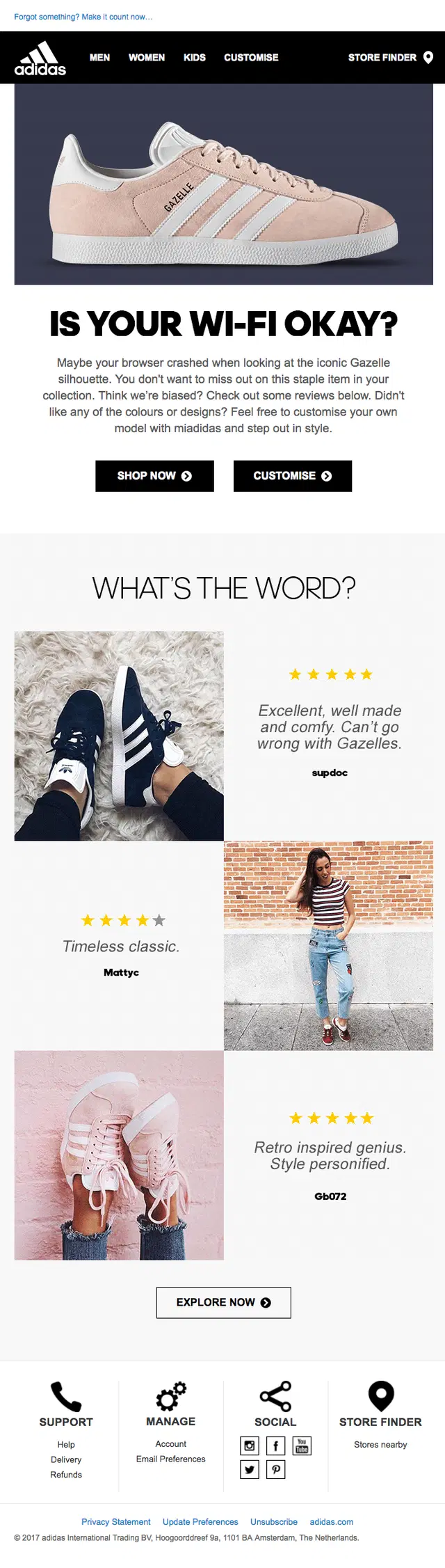
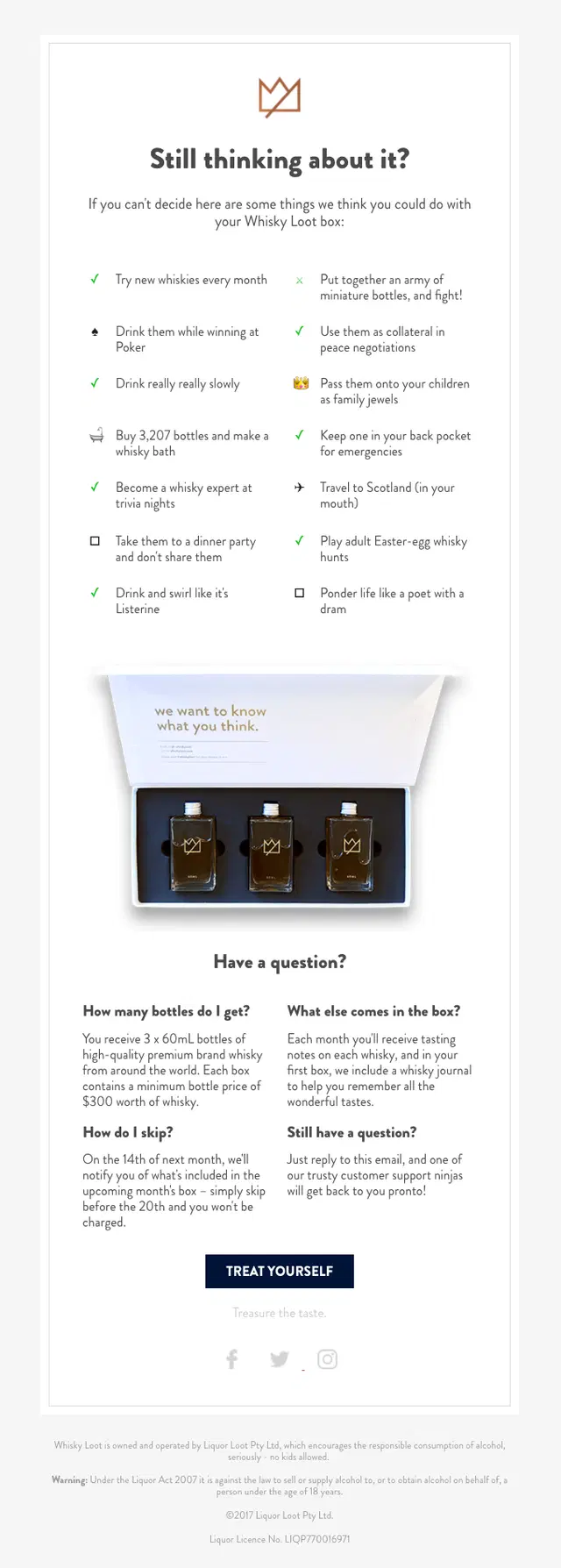
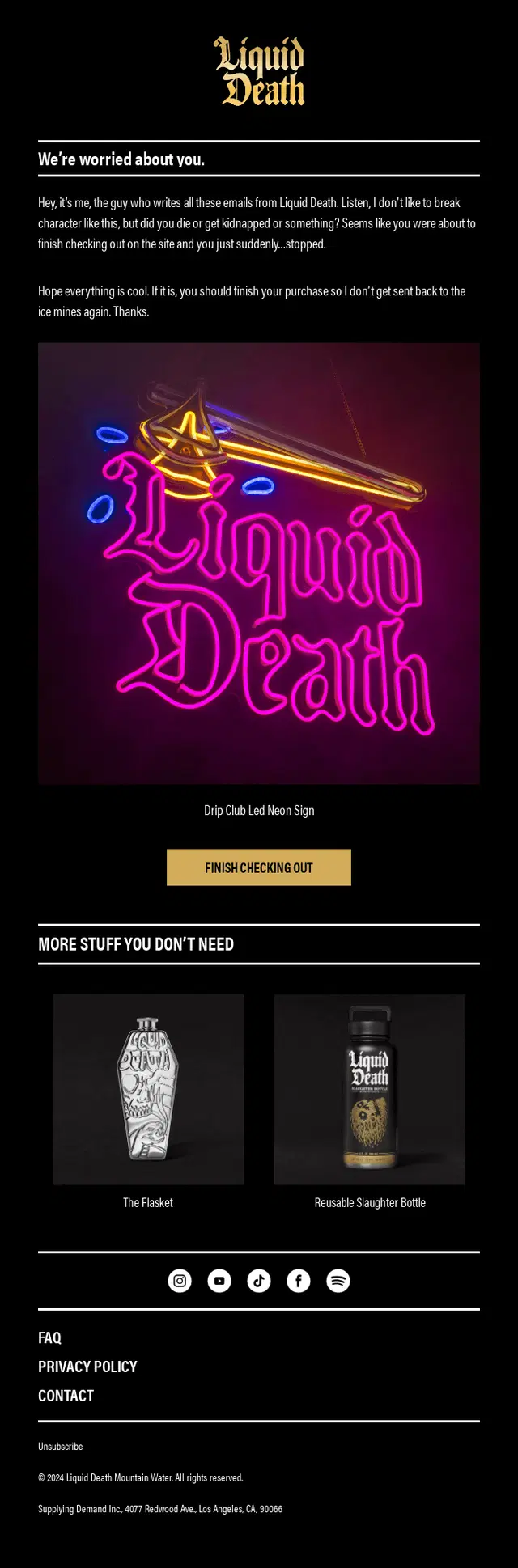
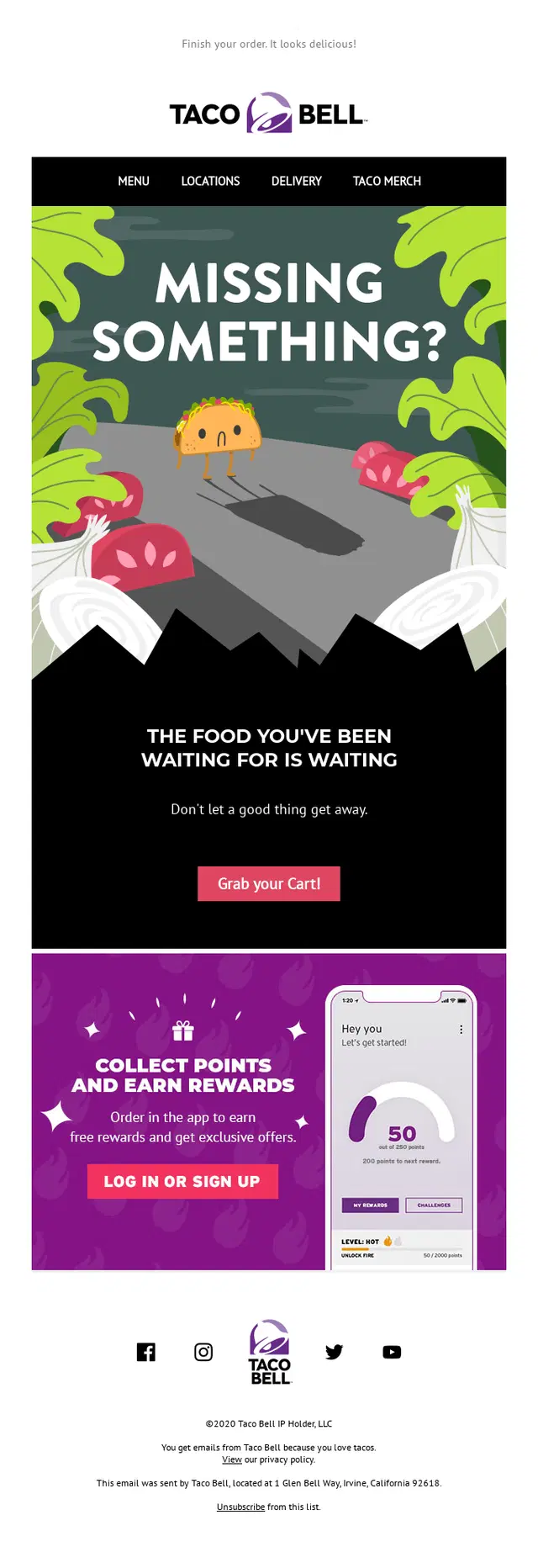
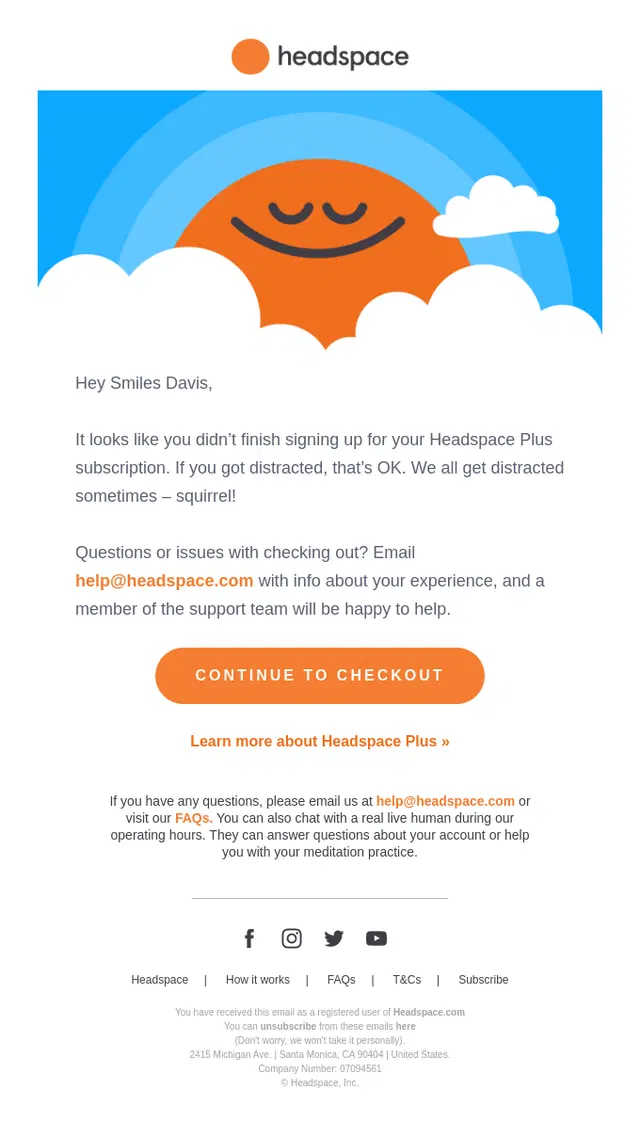
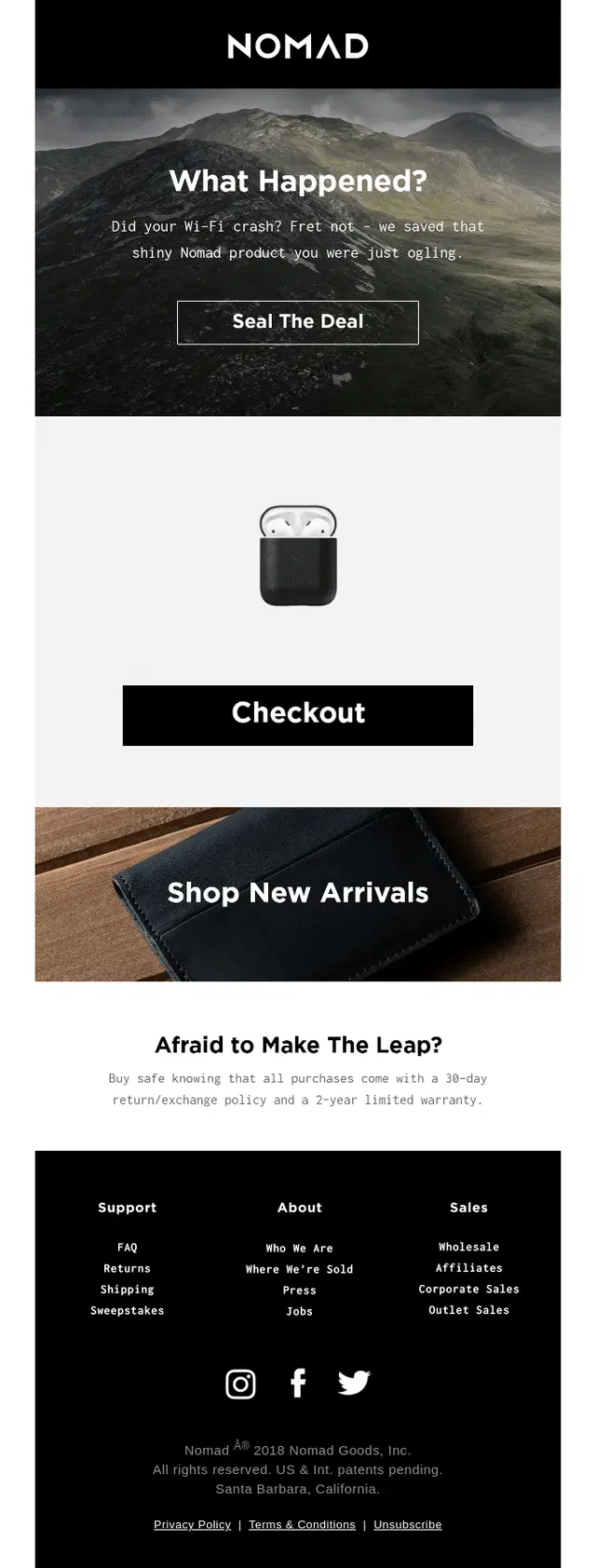
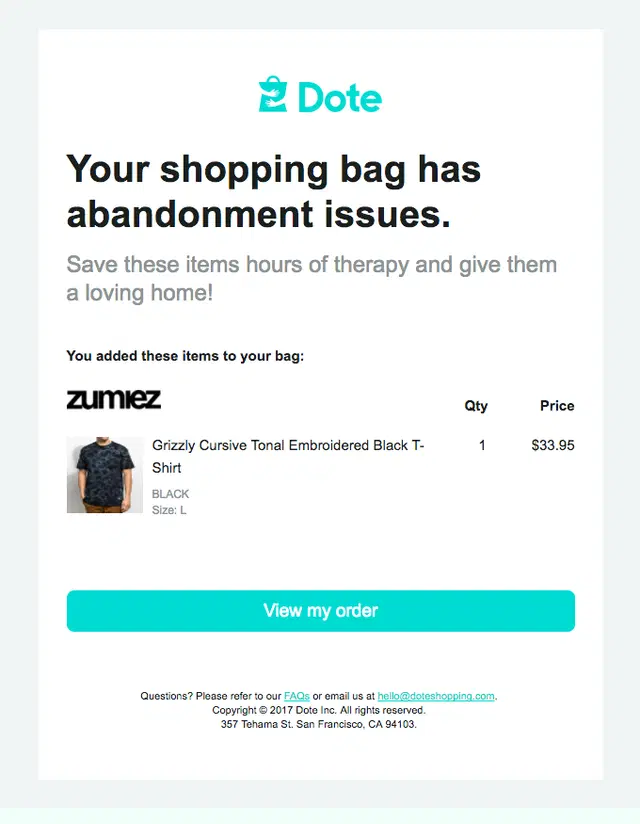
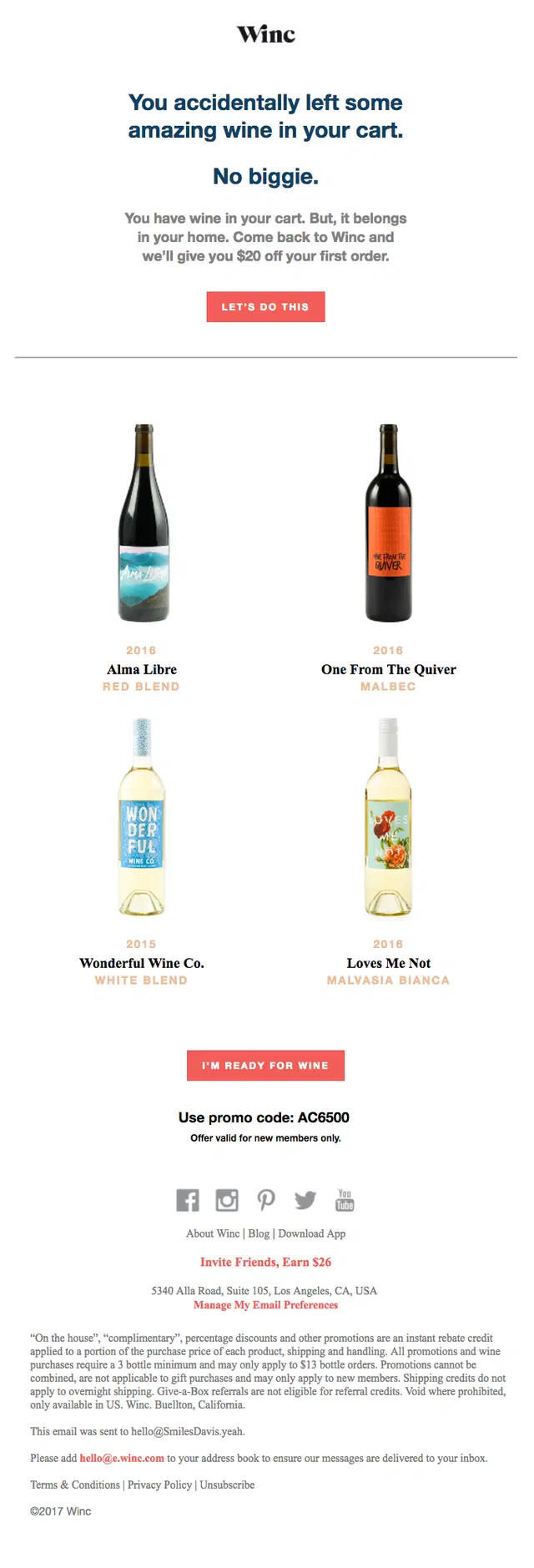
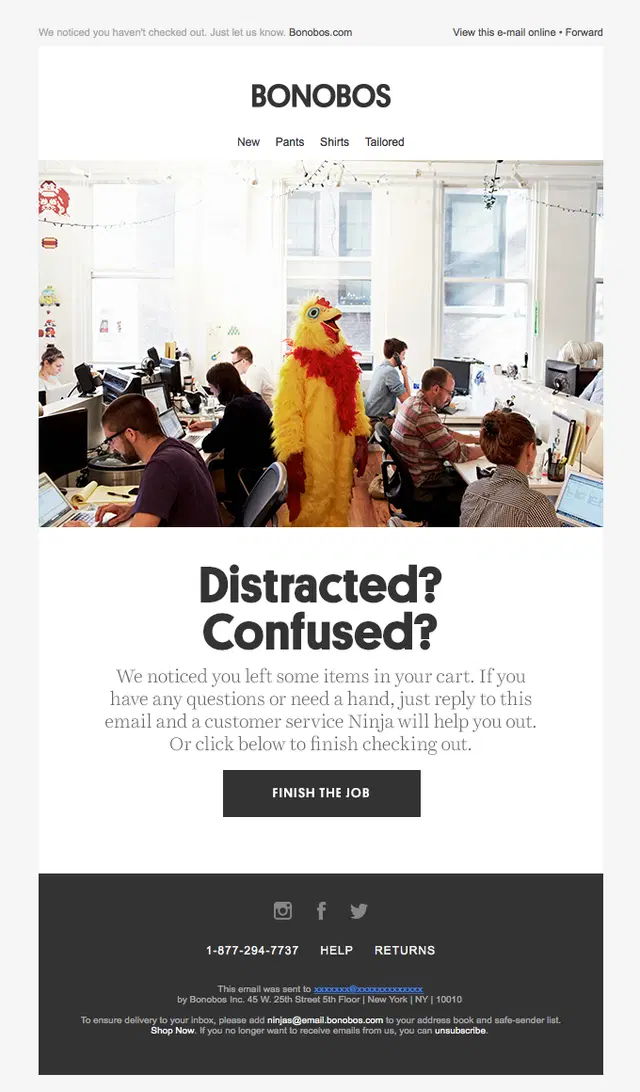
The examples here use humor, odd headlines, illustrations, GIFs, exaggerated scenarios, visual jokes, and unmistakable brand voices to turn a routine reminder into something people might actually remember. The joke still has a job, though: bring attention back to the unfinished purchase.
2-Email Abandoned Cart Flow
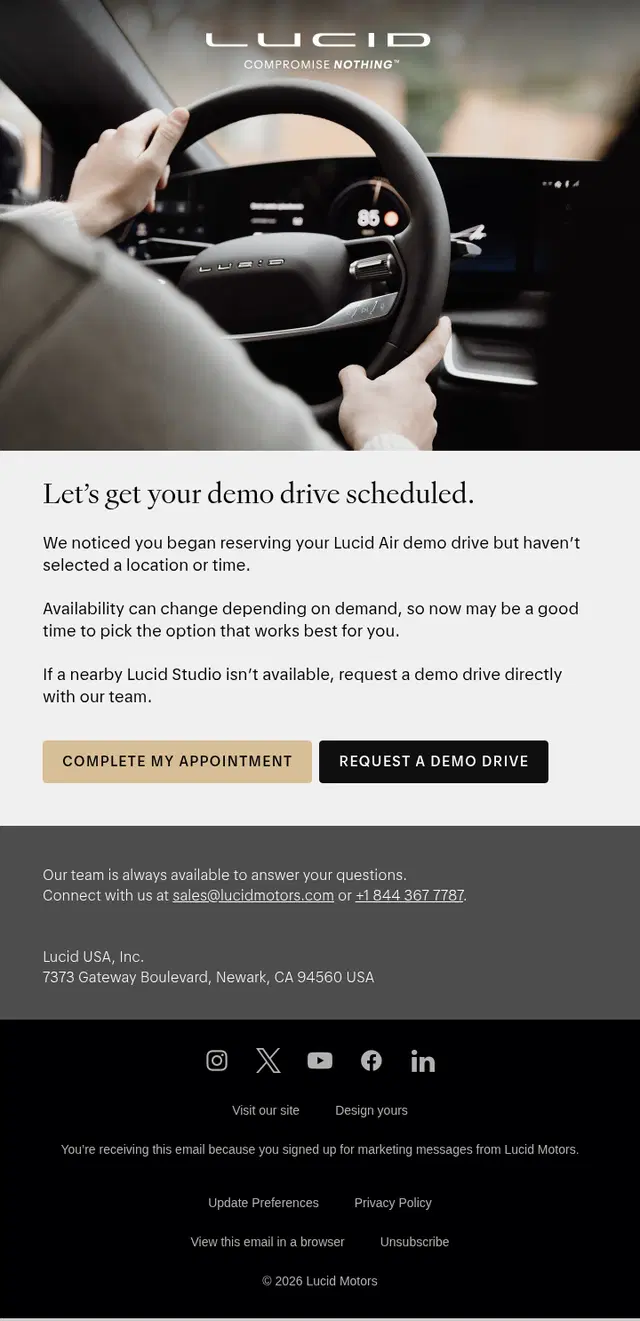
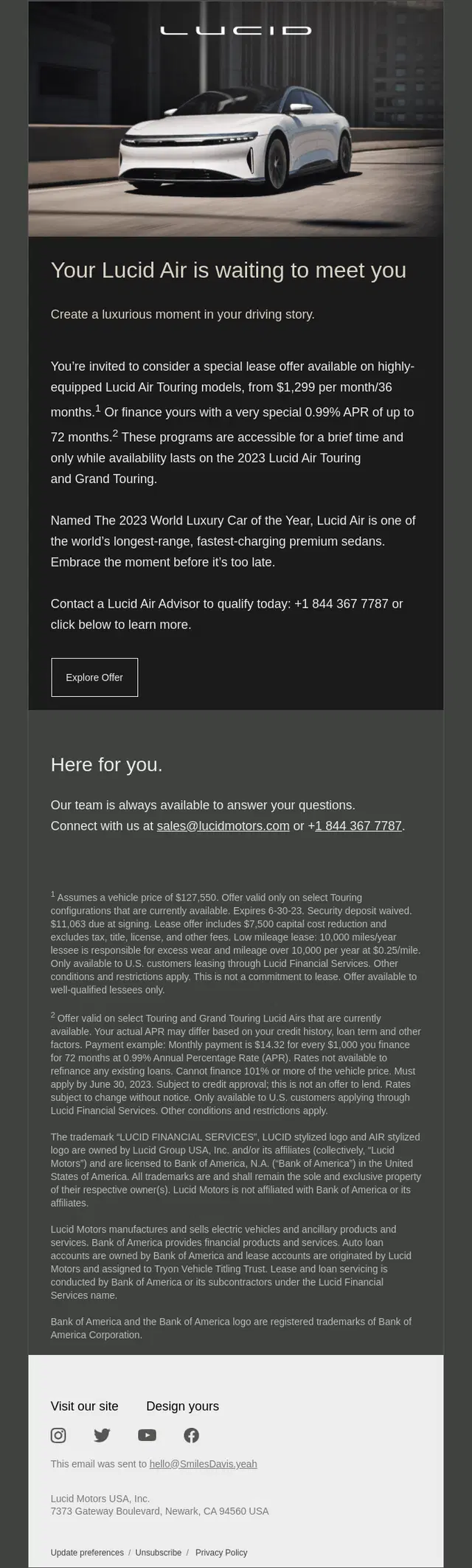
Lucid Motors uses an abandoned-cart-style recovery flow for an unfinished demo drive reservation. The first email restores the reservation and offers help, while the second adds limited-time lease and financing offers to create urgency.
- Email 1: Reservation reminder + assistance
- Email 2: Limited-time offer + urgency
3-Email Abandoned Cart Flow
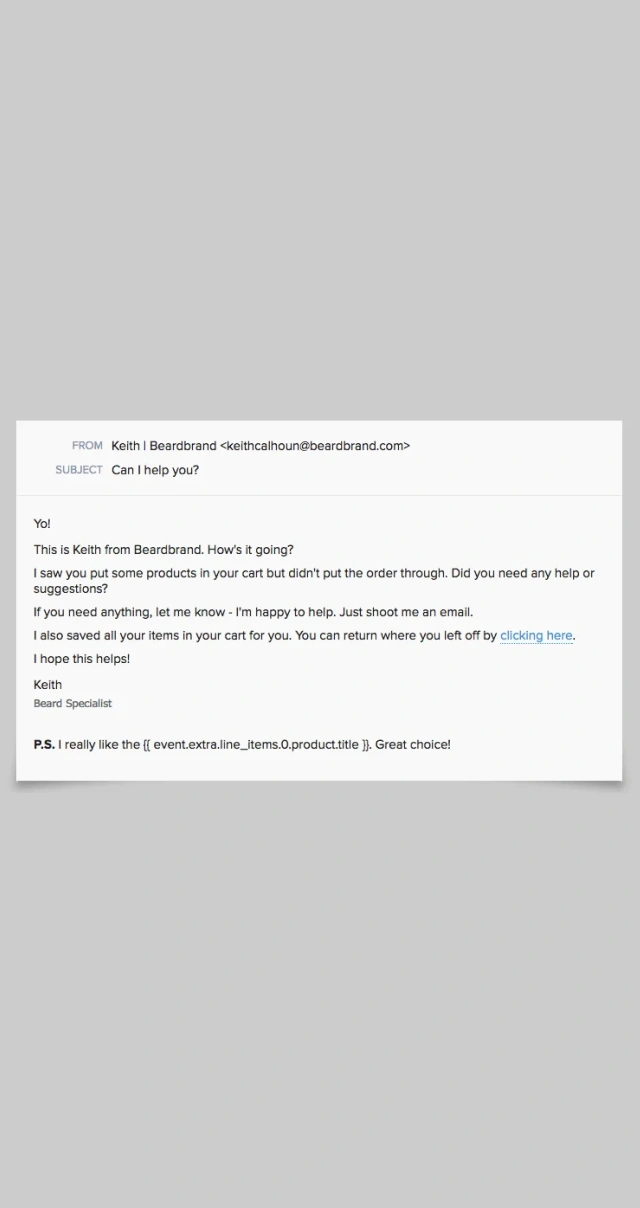
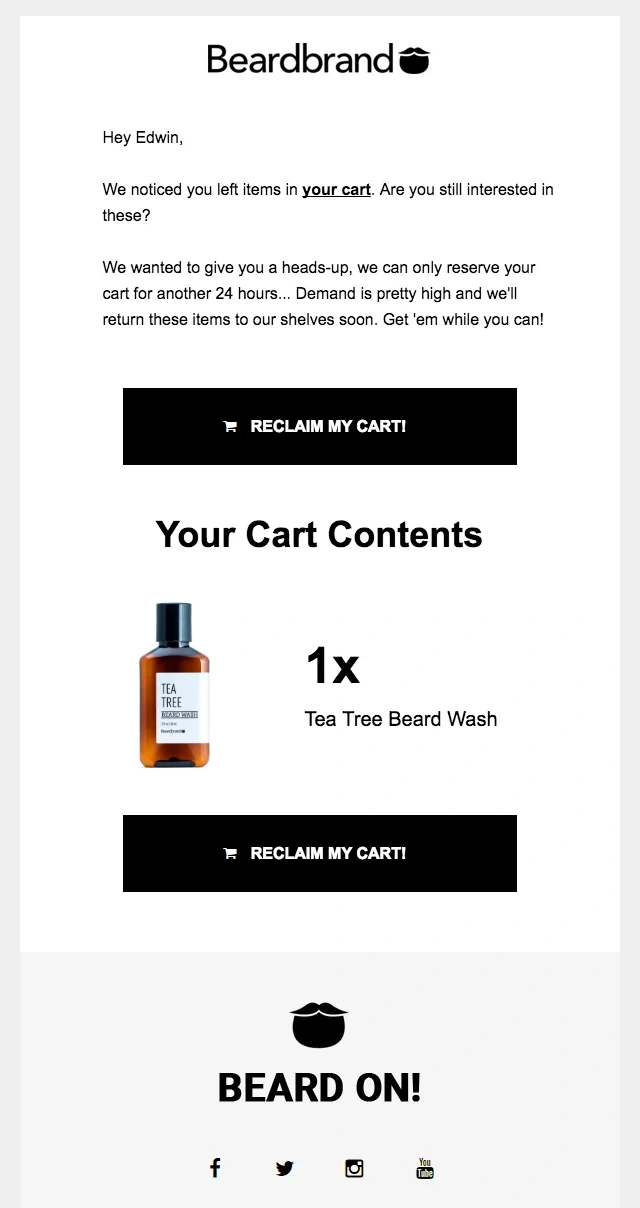
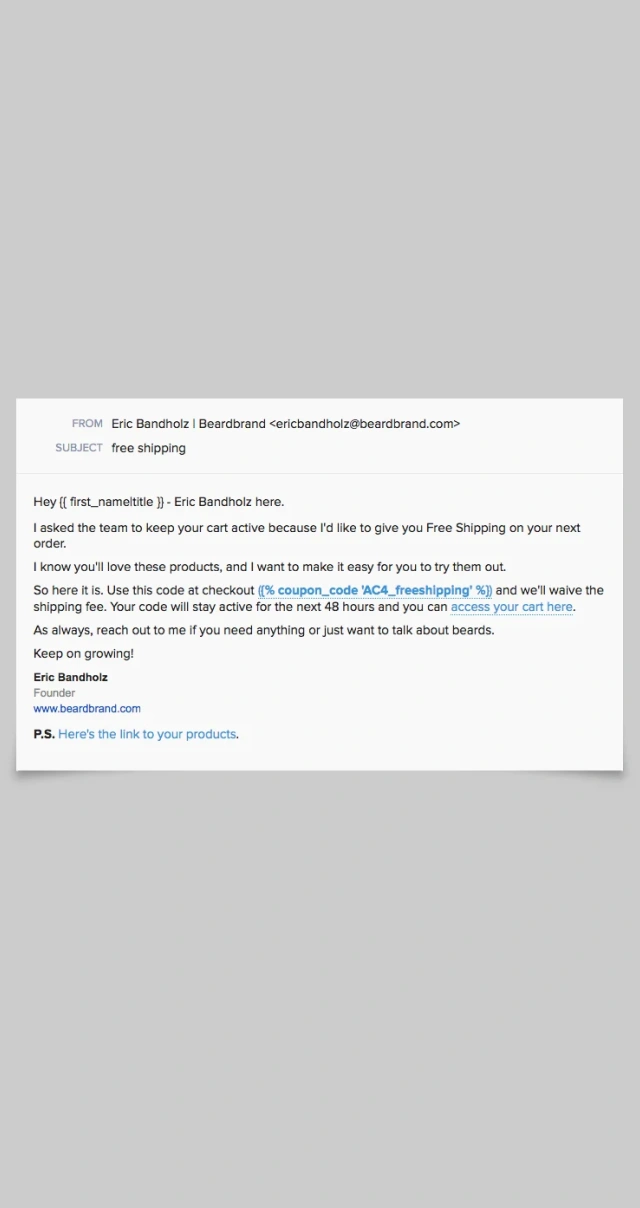
Beardbrand’s three-email flow moves from personal support to urgency and then back to a human final follow-up.
- Email 1: Personal note offering help
- Email 2: Saved cart + expiration urgency
- Email 3: CEO follow-up + objection handling
Fuel Made reports that the flow recovered 16.5% of abandoned carts, up from 7% with a single email.
Longer Abandoned Cart Email Sequence
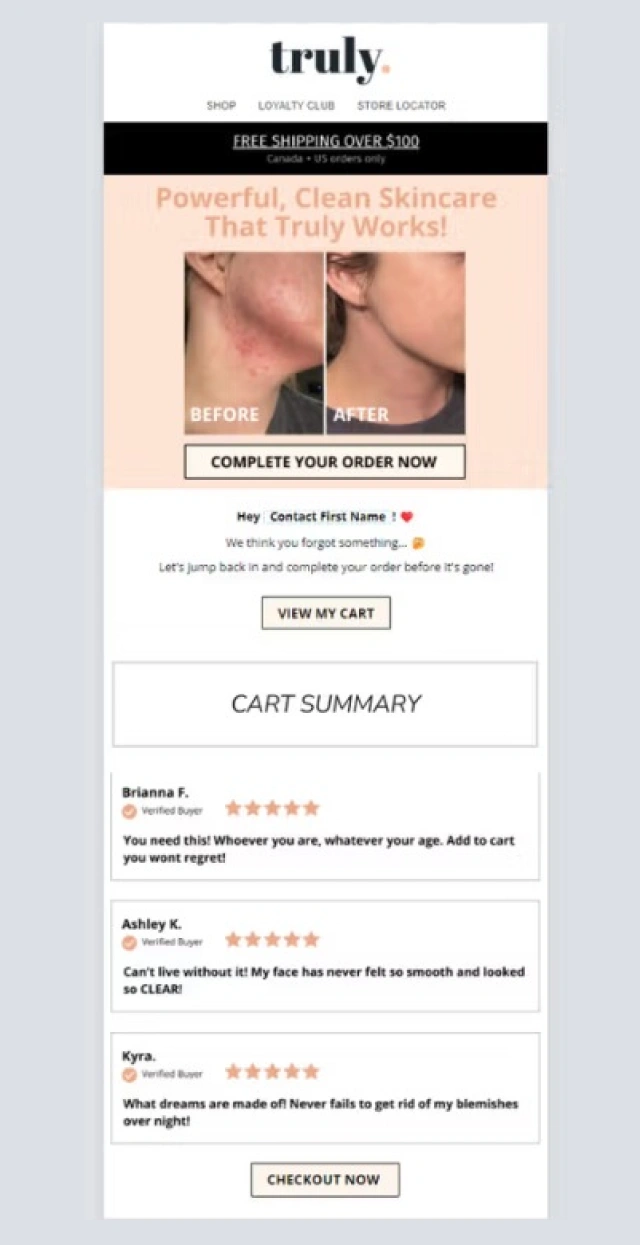
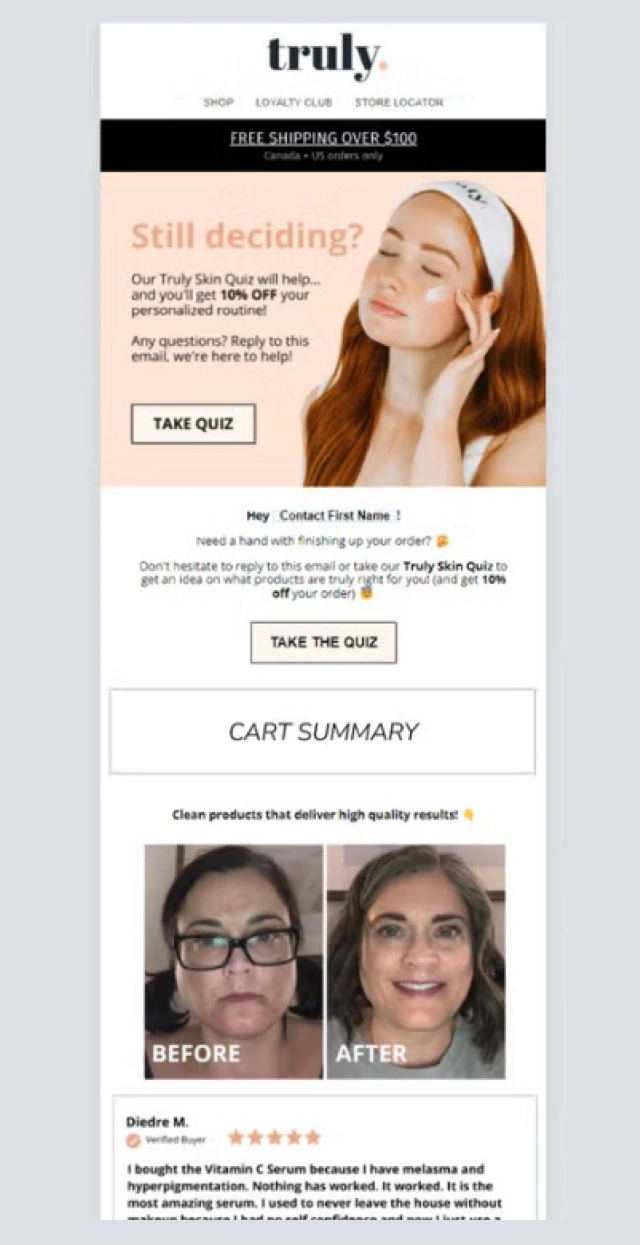
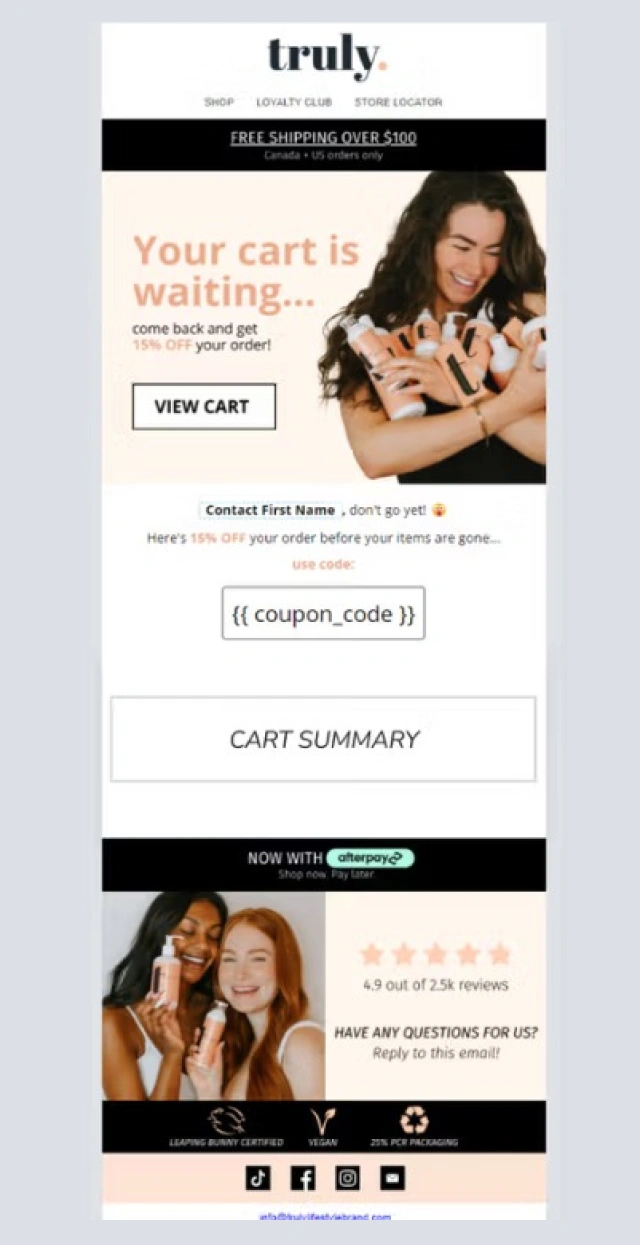
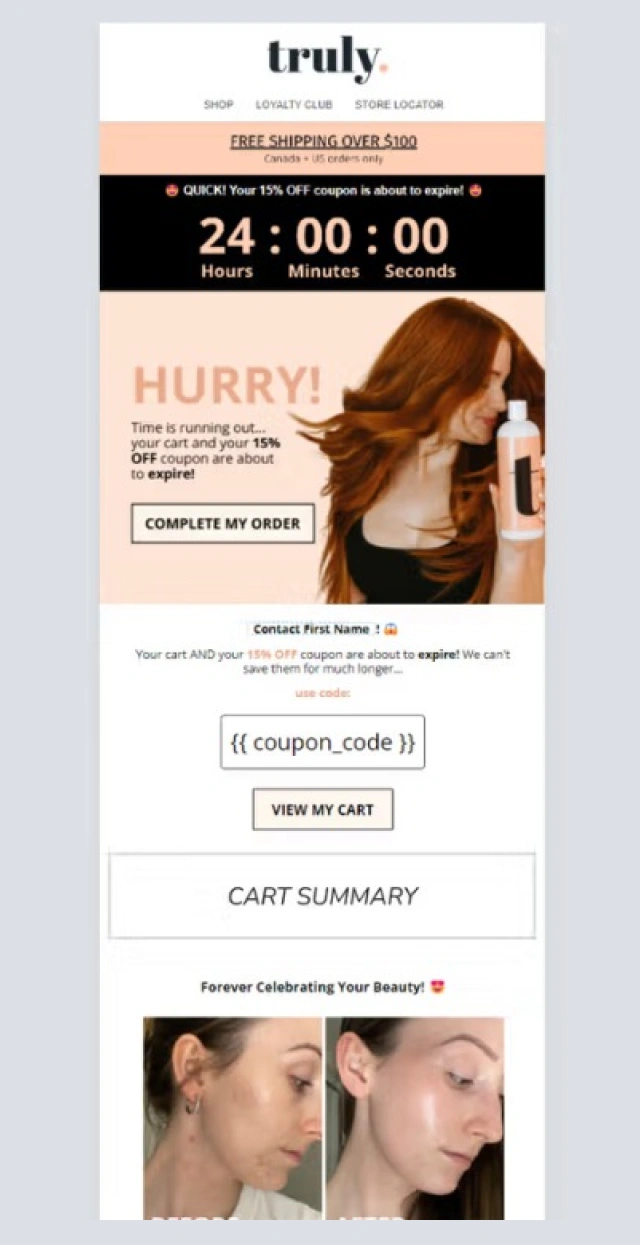
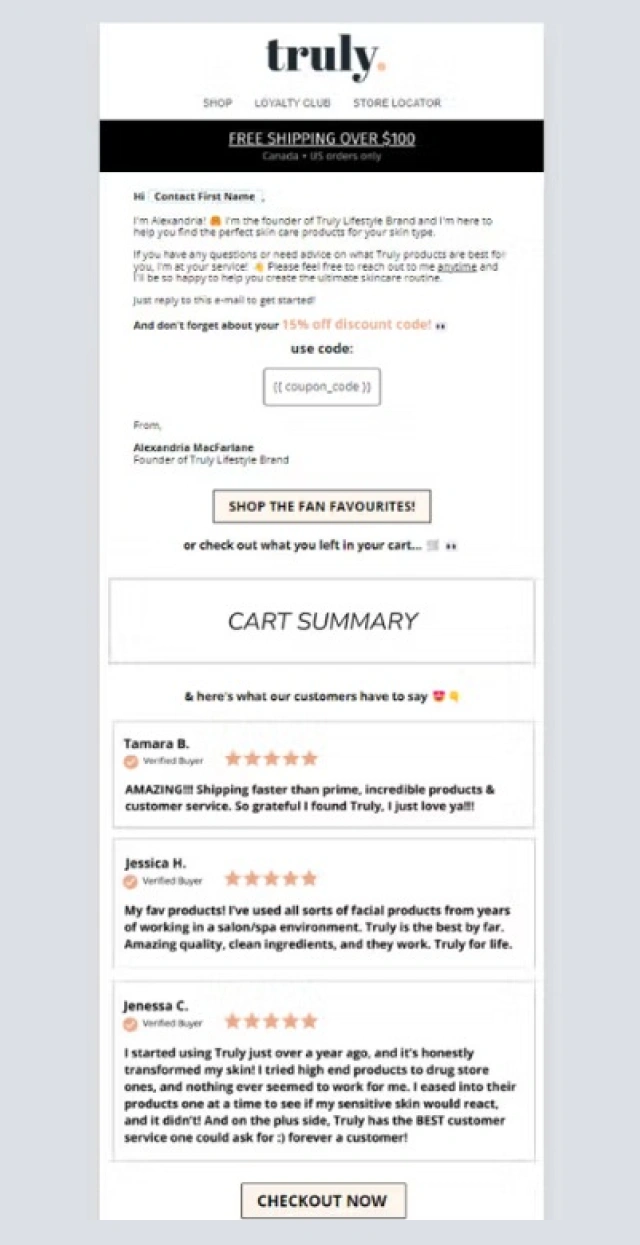
Truly Lifestyle Brand uses a five-email sequence over five days, gradually increasing the reason to return rather than repeating the same cart reminder.
- Email 1 – 30 minutes: Cart reminder + reviews
- Email 2 – Day 1: Quiz + 10% offer
- Email 3 – Day 2: Saved cart + 15% offer
- Email 4 – Day 3: 15% offer + urgency
- Email 5 – Day 5: Personal founder message
According to Privy, the flow saved 1,300 carts and generated $128K+, with 20% of its revenue coming from the final two emails.
How Many Abandoned Cart Emails Should I Send?
For most brands, 2-3 abandoned cart emails are a good starting point. Klaviyo recommends 2-3 messages based on research across thousands of ecommerce customers, although longer sequences can work when each email adds something new rather than repeating the same reminder.
A simple sequence might start with a low-pressure reminder, follow with reassurance or a stronger reason to buy, and finish with urgency, an incentive, or a final offer of help. Klaviyo currently recommends sending the first email around 2-4 hours after abandonment and a second roughly 20-48 hours later. Other platforms use slightly different starting points, so treat timing as something to test rather than a fixed rule.
The real sequences above also show why email count alone doesn’t tell you much. Lucid uses two distinct touches, Beardbrand gets three different jobs out of three emails, and Truly stretches the recovery across five emails without simply resending the same cart.
Abandoned Cart Email Best Practices
Good abandoned cart email design is less about fitting every persuasion tactic into one message and more about making the decision easier to resume.
Show What Was Left Behind
Bring the abandoned product back into view. Include the product image, name, relevant variant, and price when possible so the shopper doesn’t have to remember what they were considering.
For most ecommerce carts, the product itself should remain the visual anchor of the email.
Make Returning to the Cart Easy
Use one obvious primary CTA such as Return to Cart, Complete My Order, or Finish Checkout. Avoid surrounding it with five equally important actions that send the shopper elsewhere.
The fewer steps between the email and the original cart, the better.
Think About Why the Shopper Left
Not everyone abandons for the same reason. Someone buying a $20 product may simply have been distracted; someone considering a $1,500 purchase may need reviews, financing information, a warranty, or a conversation with support.
Match the message to the amount of reassurance the purchase actually requires.
Don’t Rush to Discount
A coupon can recover a sale, but offering one immediately can also teach repeat shoppers to abandon carts and wait for a deal.
Start with the product and the original buying intent. If the shopper still doesn’t return, a later email can introduce free shipping, a discount, a gift, or another incentive when it makes sense.
Use Urgency Only When There Is a Reason
“Only 3 left” is useful when there really are three left. A cart-expiration deadline works when the cart actually expires.
Real scarcity helps shoppers make decisions. Manufactured urgency can do the opposite and make the email feel less trustworthy.
Personalize the Shopping Context
Use the information the shopper has already given you. Their products, quantities, sizes, destination, previous browsing, or account progress are often more useful than simply dropping their first name into the headline.
The goal is to make returning feel seamless, not to prove that you have customer data.
Reduce Risk Where You Can
Returns, guarantees, delivery details, customer support, flexible payments, reviews, and FAQs can all remove reasons to hesitate.
For higher-priced or unfamiliar products, reassurance may be more persuasive than another percentage-off code.
Let the Sequence Progress
If you send several abandoned cart emails, give each one a purpose.
The first might restore context. The next can answer objections or introduce social proof. A later email might add urgency or an incentive. The sequence should move the decision forward instead of sending three versions of “You forgot something.”
Test What Your Customers Respond To
Timing, incentives, subject lines, number of emails, product imagery, and CTA copy can all affect performance.
Use benchmarks as context, then compare different versions against your own conversion and revenue data. Your customers are ultimately the better benchmark.
Abandoned Cart Email Subject Line Examples
A good abandoned cart email subject line doesn’t need to explain the entire offer. Its job is to reconnect the recipient with the purchase quickly enough to earn the open.
Some brands stay direct. Others use the abandoned product, urgency, an incentive, curiosity, or humor.
| Approach | Subject line example |
|---|---|
|
Simple |
Forgot something? Your cart is still here Still thinking it over? You left something behind
|
|
Product-led |
Your picks are waiting Still thinking about your [Product]? One more look at [Product]? We saved your favorites Your [Product] made the cut |
|
Urgency |
Your cart won’t wait forever A quick heads-up about your cart Still available, for now Last call for your cart Your saved items are going fast |
|
Discount |
A little something for your cart Here’s 10% off if you’re still deciding Your cart just got cheaper Come back for $15 off Free shipping on what you left behind |
|
Curiosity |
Did something stop you? Second thoughts? Was it something we said? Need another look? So close… |
|
Funny |
Did your Wi-Fi give up? Your cart has questions Your shopping bag misses you We’re trying not to take this personally Your cart called. It’s complicated. |
The best abandoned cart subject lines usually match the tone of the email itself. A playful subject followed by a dry, generic template creates a disconnect; a straightforward reminder followed by a straightforward email often works perfectly well.
Abandoned Cart Email Benchmarks
Abandoned cart email benchmarks are useful for context, but they shouldn’t become universal targets. Performance changes with product category, average order value, audience, incentive strategy, tracking method, and even the platform reporting the metric.
Omnisend’s current benchmark data for abandoned cart automations reports the following averages:
| Metric | Average |
|---|---|
|
Open rate |
37.12% |
|
Click rate |
4.13% |
|
Click-to-open rate |
11.12% |
|
Conversion rate |
1.72% |
|
Revenue per email |
$3.59 |
|
Unsubscribe rate |
0.45% |
Klaviyo’s latest abandoned cart guidance reports an average 6% click rate, rising to 11.3% among top-performing brands, which is a useful reminder that benchmark definitions and datasets vary between platforms.
If your numbers sit below a published benchmark, don’t immediately reach for a bigger discount. Look at the funnel: opens point toward subject line and deliverability issues, clicks tell you more about the email itself, while checkout completion can reveal problems that happen after the customer leaves the inbox.
Frequently Asked Questions
What is an abandoned cart email?
An abandoned cart email is an automated message sent after a shopper adds a product to their cart but leaves without completing the purchase. It usually restores the abandoned products and gives the shopper a direct route back to checkout.
A single reminder can be used on its own, or it can be part of a longer abandoned cart email sequence.
How do abandoned cart emails work?
An ecommerce or email automation platform tracks when an identifiable shopper adds products to a cart and leaves without placing an order. After a set delay, the workflow sends a cart recovery email using information such as the products, customer details, cart value, or browsing behavior.
If the customer completes the purchase, they should be removed from the recovery flow automatically.
When should you send an abandoned cart email?
A good starting point is within a few hours of abandonment, while the purchase is still fresh. Klaviyo currently recommends around 2-4 hours for the first message, followed by another email 20-48 hours later if the shopper still hasn’t purchased.
Your ideal timing may be shorter or longer depending on what you sell. A low-cost impulse purchase and a high-value piece of furniture rarely need the same decision window.
What should you include in an abandoned cart email?
At minimum, show what the shopper left behind and provide a clear link back to the cart.
From there, add only what helps the decision: product benefits, reviews, shipping details, returns, guarantees, customer support, availability information, or an incentive. You don’t need all of them in every email.
Should abandoned cart emails include a discount?
Not necessarily. Many shoppers leave because they were distracted, wanted more time, or needed information-not because the product was too expensive.
Try recovering the purchase without a discount first. If the shopper remains undecided, a later email can test a coupon, free shipping, credit, gift, or another incentive without making discounts the default expectation.
What is a good abandoned cart email conversion rate?
There is no universal abandoned cart email conversion rate because platforms measure conversions differently and performance varies considerably by industry and order value.
As a reference point, Omnisend’s current benchmark data puts the average abandoned cart automation conversion rate at 1.72%, alongside a 4.13% click rate. Use that as context rather than a pass-or-fail target, and compare your flow against its own historical performance as well.
Turn Abandoned Cart Ideas Into a Flow That Brings Shoppers Back
The best abandoned cart emails do more than remind someone what they left behind. They address hesitation, bring the right products back into focus, and give shoppers a clear reason to return and complete their purchase.
If Klaviyo is part of your email strategy, we can help you turn these ideas into a complete abandoned cart flow built around your customers, products, and recovery goals.