10 Re-Engagement Email Tips and Examples for Win-Back Campaigns


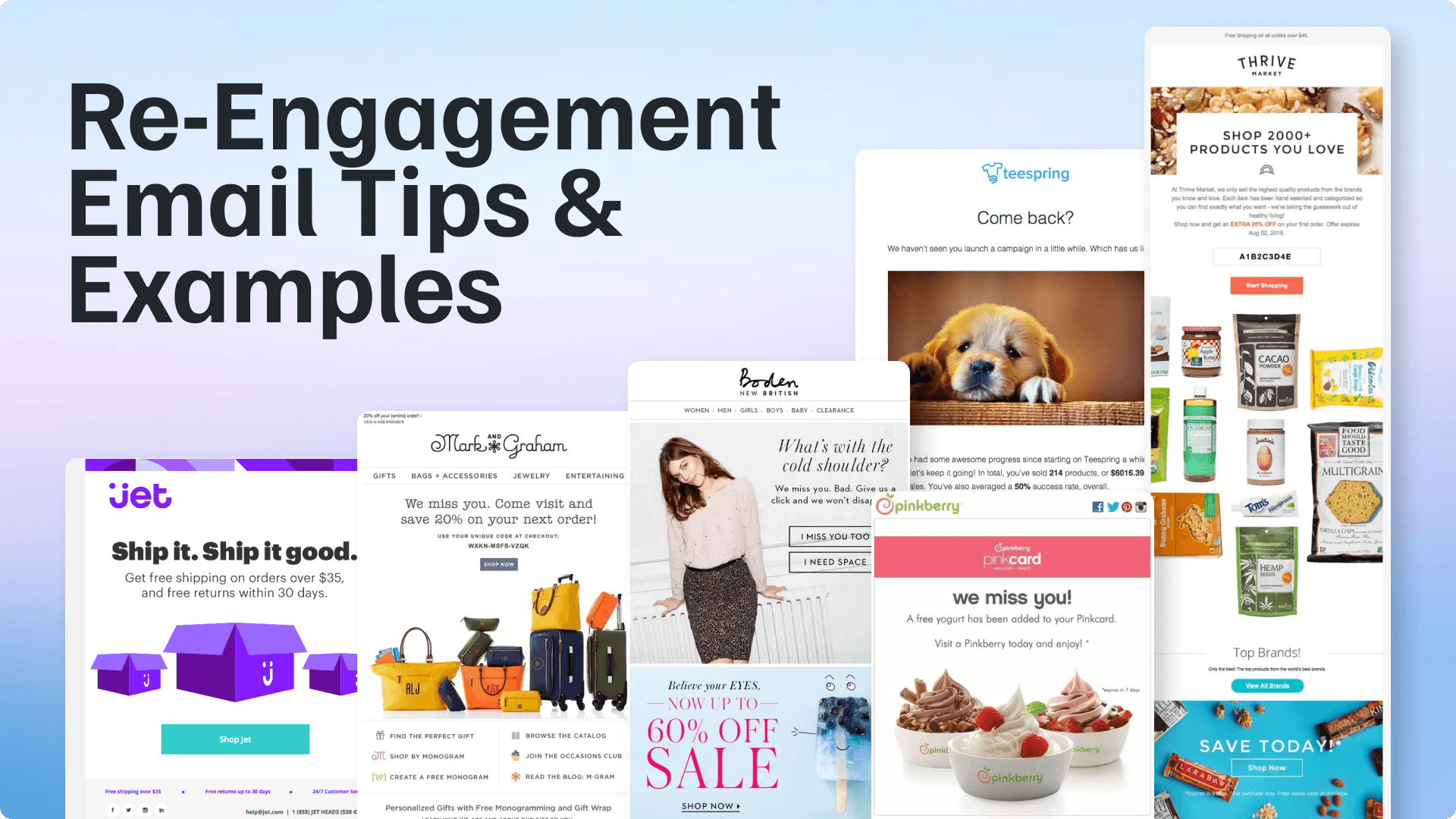
Re-engagement email campaigns are designed for subscribers, customers, or users who have stopped opening emails, buying products, logging in, or interacting with your brand. Instead of letting those contacts go cold, a good re-engagement campaign gives them a reason to come back.
That reason can be a discount, free shipping, product reminder, account update, personalized recommendation, new feature, helpful content, or simple preference check. The goal is not always to push an immediate sale. Sometimes it is to restart the relationship, learn whether the subscriber still wants to hear from you, or clean your email list before engagement drops further.
In this guide, we’ll go through 10 practical re-engagement email tips for planning a stronger win-back campaign. Each tip is paired with a real email example, so you can see how the strategy works in practice.
For more visual inspiration, you can also explore our full collection of re-engagement email examples.
What Is a Re-Engagement Email Campaign?
A re-engagement email campaign is a sequence of emails sent to inactive subscribers, customers, or users. These contacts may have stopped opening your emails, buying from your store, using your product, or interacting with your brand.
The purpose of the campaign is to bring interested contacts back before they become completely inactive. Depending on the business, a re-engagement campaign may offer a discount, remind users about product value, recommend relevant content, ask subscribers to update their preferences, or confirm whether they still want to stay on the list.
Re-engagement emails also help protect email performance. If inactive contacts never respond, you can remove or suppress them before they hurt deliverability, open rates, and sender reputation.
10 Re-Engagement Email Tips and Examples
A strong re-engagement campaign is not just one “we miss you” email. It usually works better when you think about timing, segmentation, incentives, copy, automation, and what should happen if the subscriber still does not respond.
Below are 10 practical re-engagement email tips, each paired with a real example that shows the idea in action.
1. Combine your win-back offer with reasons to return
Inactive customers may need more than a discount to come back. A good re-engagement email reminds them why they liked your brand in the first place, then supports that reminder with a clear incentive.
This can include product benefits, service advantages, new collections, customer perks, delivery options, or a short list of reasons to shop again.
Example: Astley Clarke
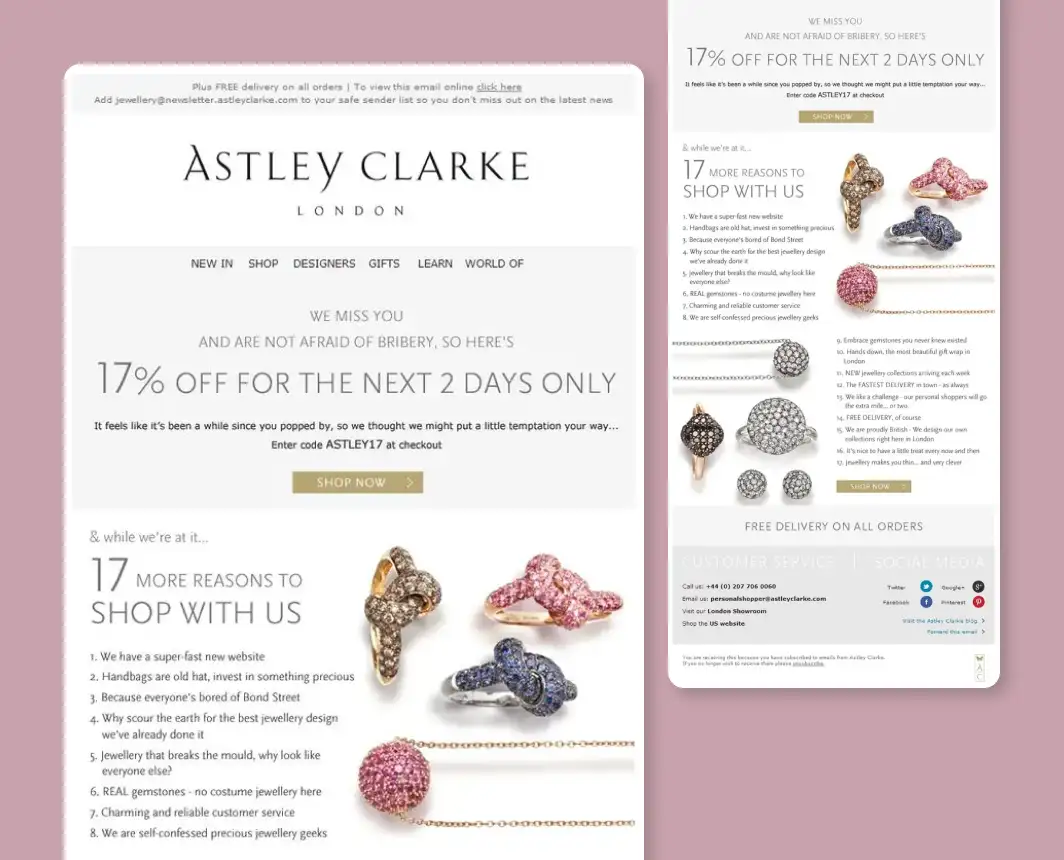
Astley Clarke pairs a 17% discount with “17 more reasons to shop with us.” The email does not rely on the offer alone. It also reminds inactive customers about the brand’s jewelry quality, free delivery, customer service, gift wrap, new collections, and personal shopping support.
Takeaway: A win-back discount works better when it is supported by clear reasons to return.
2. Use playful copy to make the message feel more personal
A re-engagement email does not have to sound serious or desperate. If it fits your brand, playful copy can make the message feel more human and less like a standard promotional email.
Relationship-style language, light humor, and simple choices can help inactive subscribers reconnect with the brand without feeling pressured.
Example: Boden
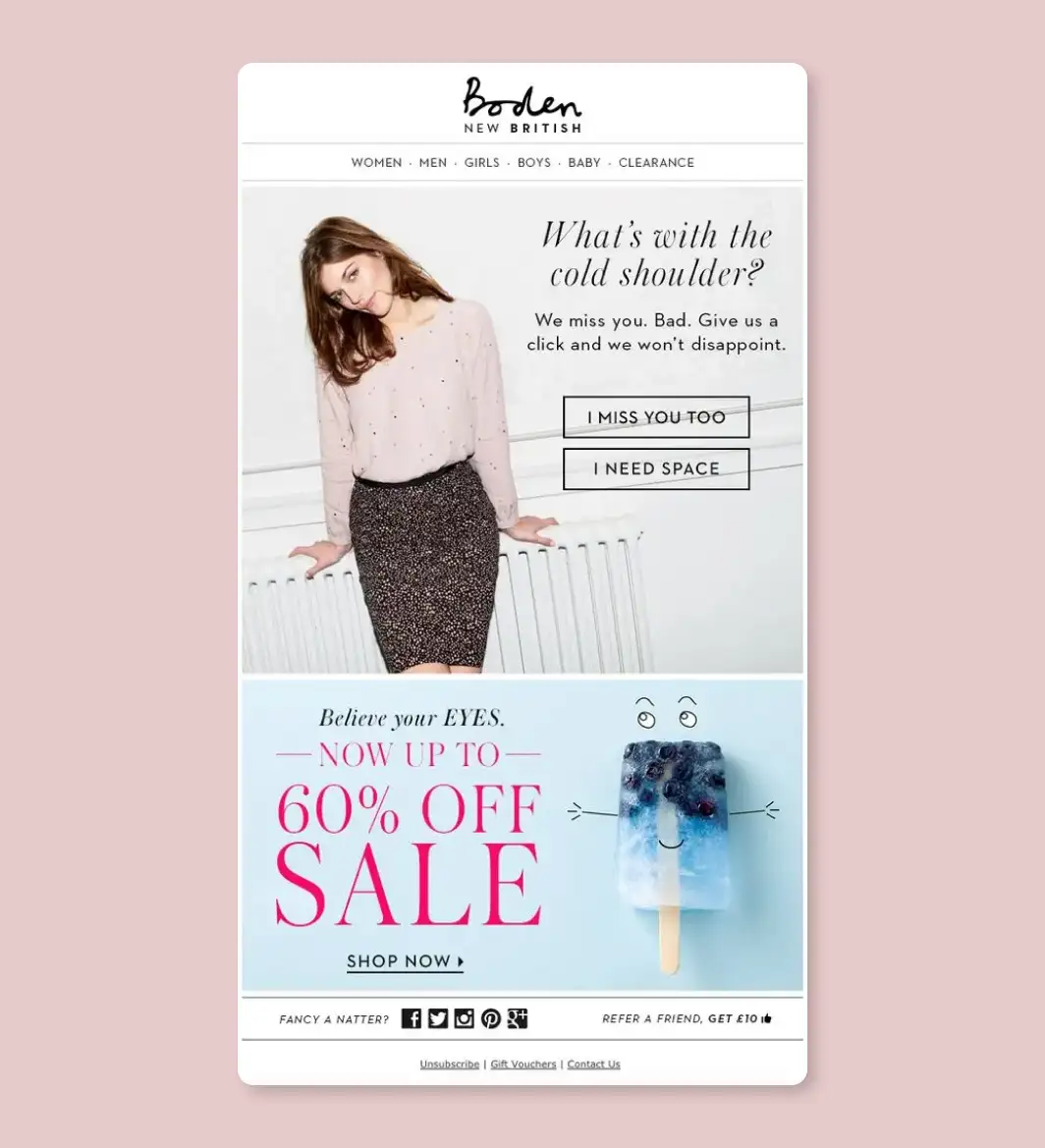
Boden uses playful relationship copy with the headline “What’s with the cold shoulder?” and two clear options: “I miss you too” and “I need space.” The email then connects the playful message to a sale offer, giving subscribers both an emotional hook and a practical reason to click.
Takeaway: Playful copy can make a re-engagement email feel more personal, especially when it still leads to a clear next step.
3. Create urgency around your win-back offer
A re-engagement offer works better when subscribers have a clear reason to act now. Limited-time discounts, expiring credits, short redemption windows, or seasonal offers can help inactive customers make a decision instead of postponing it again.
The key is to keep the urgency believable. A deadline should support the offer, not make the email feel pushy or fake.
Example: Crate&Barrel
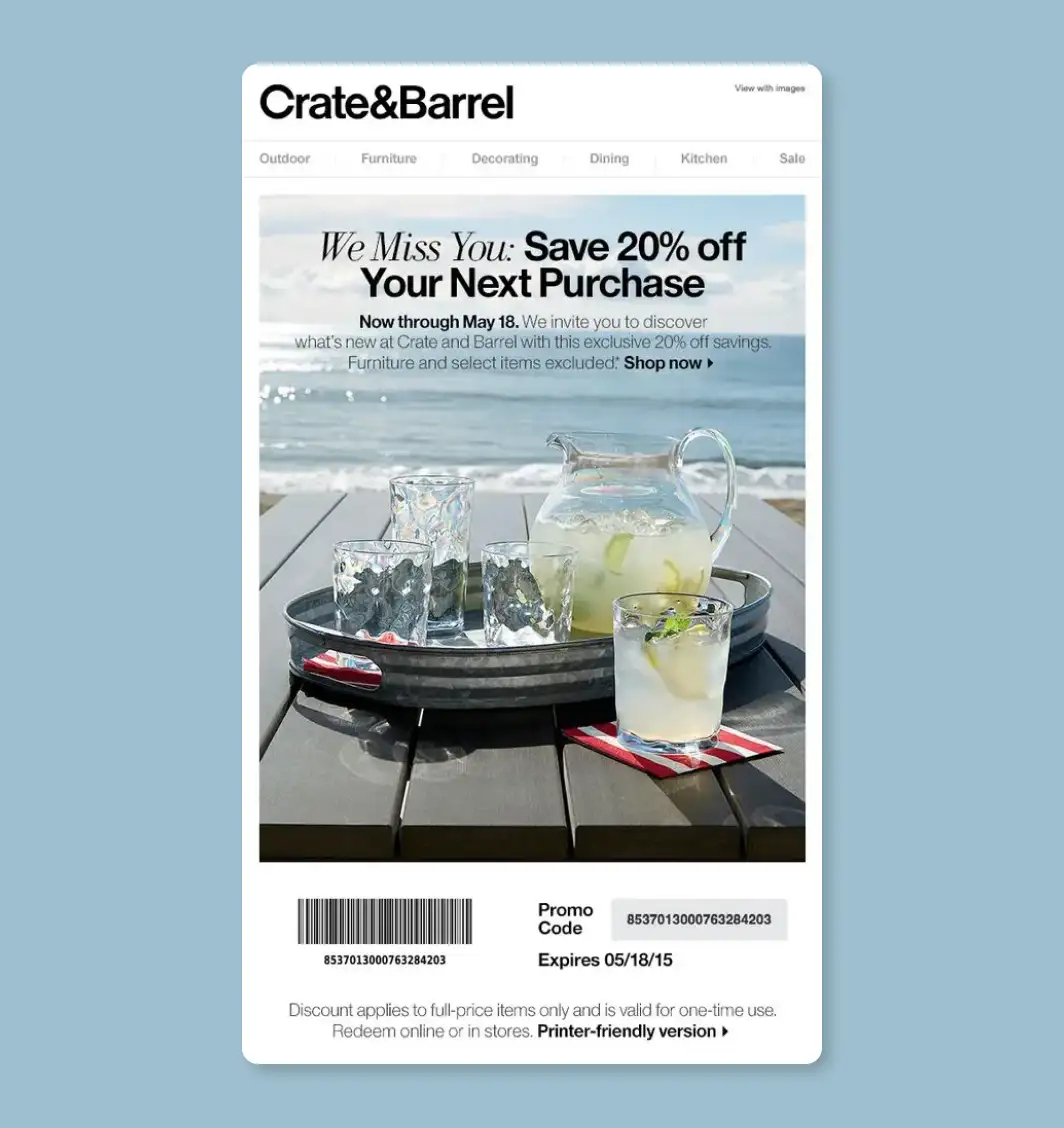
Crate&Barrel uses a “we miss you” message paired with 20% off the next purchase. The email includes a promo code, an expiration date, and a clear “Shop now” CTA, making the offer easy to understand and act on.
Takeaway: If you use a discount in a re-engagement campaign, add a clear deadline so subscribers understand why they should act now.
4. Lead with a practical benefit, not just a discount
Re-engagement emails do not always need to start with a coupon code. Sometimes the strongest hook is a practical benefit that removes friction and makes it easier for subscribers to come back.
This can be free shipping, free returns, faster delivery, easier checkout, saved preferences, flexible plans, or customer support.
Example: Jet
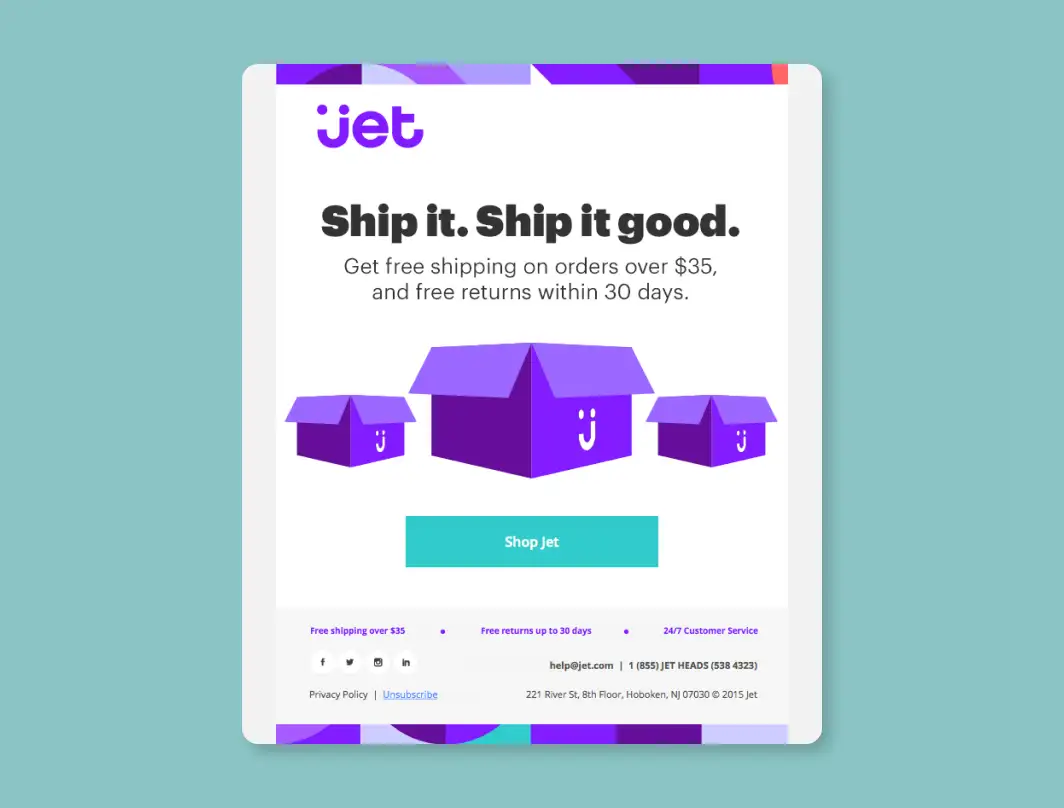
Jet leads with a simple benefit-focused message: free shipping on orders over $35 and free returns within 30 days. The email is short, direct, and built around one clear promise, supported by a simple “Shop Jet” CTA.
Takeaway: Strong re-engagement emails remind subscribers why coming back is convenient, easy, or useful — not only cheaper.
5. Remind subscribers of the value they already showed interest in
Inactive subscribers may not need a new reason to care about your product. Sometimes they need a clear reminder of the value that made them interested in the first place.
This works especially well for products with a measurable benefit, long-term payoff, or practical outcome. Instead of saying only “we miss you,” show subscribers what they can still gain by coming back.
Example: Nest
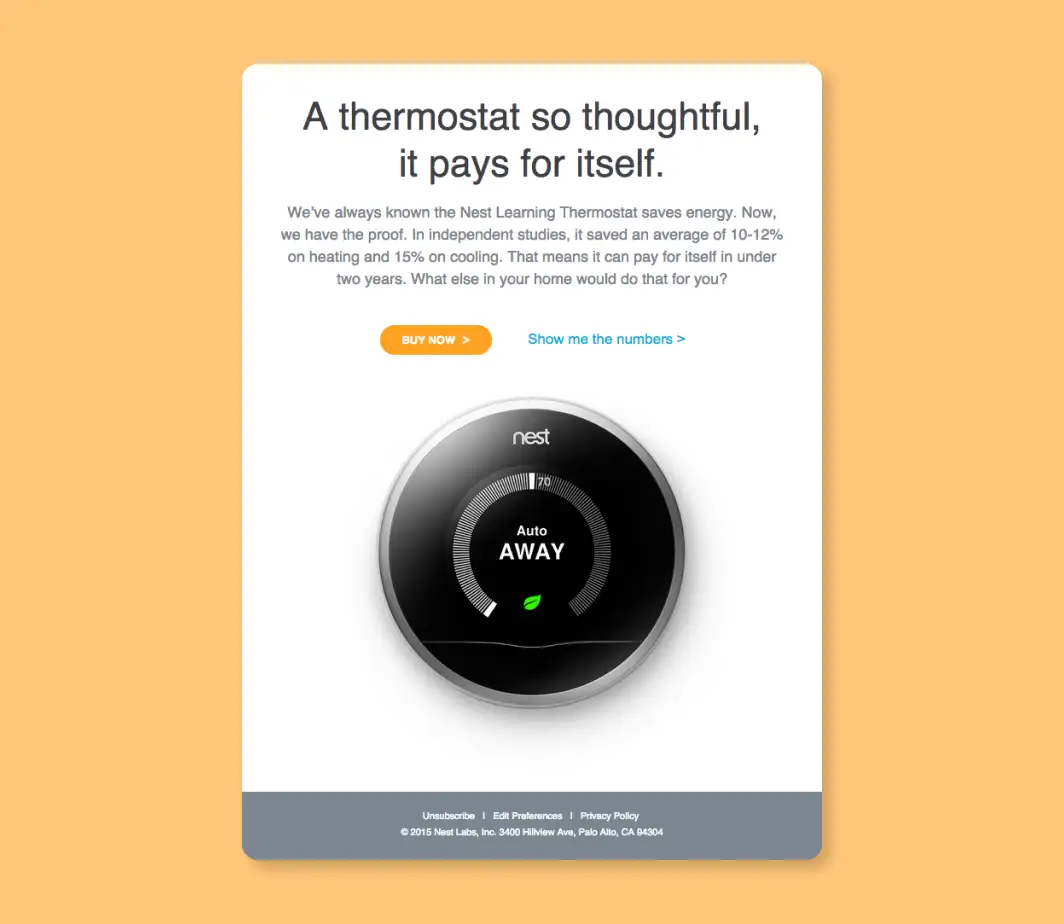
Nest focuses the email on one strong value proposition: the thermostat can help save energy and pay for itself in under two years. The message uses proof, a clear product benefit, and two CTAs: one for buyers who are ready to act and one for readers who want to see the numbers first.
Takeaway: Re-engagement emails can work by reminding subscribers of the product’s original value, especially when that value is specific and easy to understand.
6. Make your offer clear and easy to redeem
A re-engagement email should not make inactive subscribers work too hard. If you are offering a discount, credit, free trial, or special perk, make the value obvious and explain exactly how to use it.
Simple copy, a visible promo code, and one clear CTA can make the difference between “maybe later” and an actual return visit.
Example: Mark & Graham
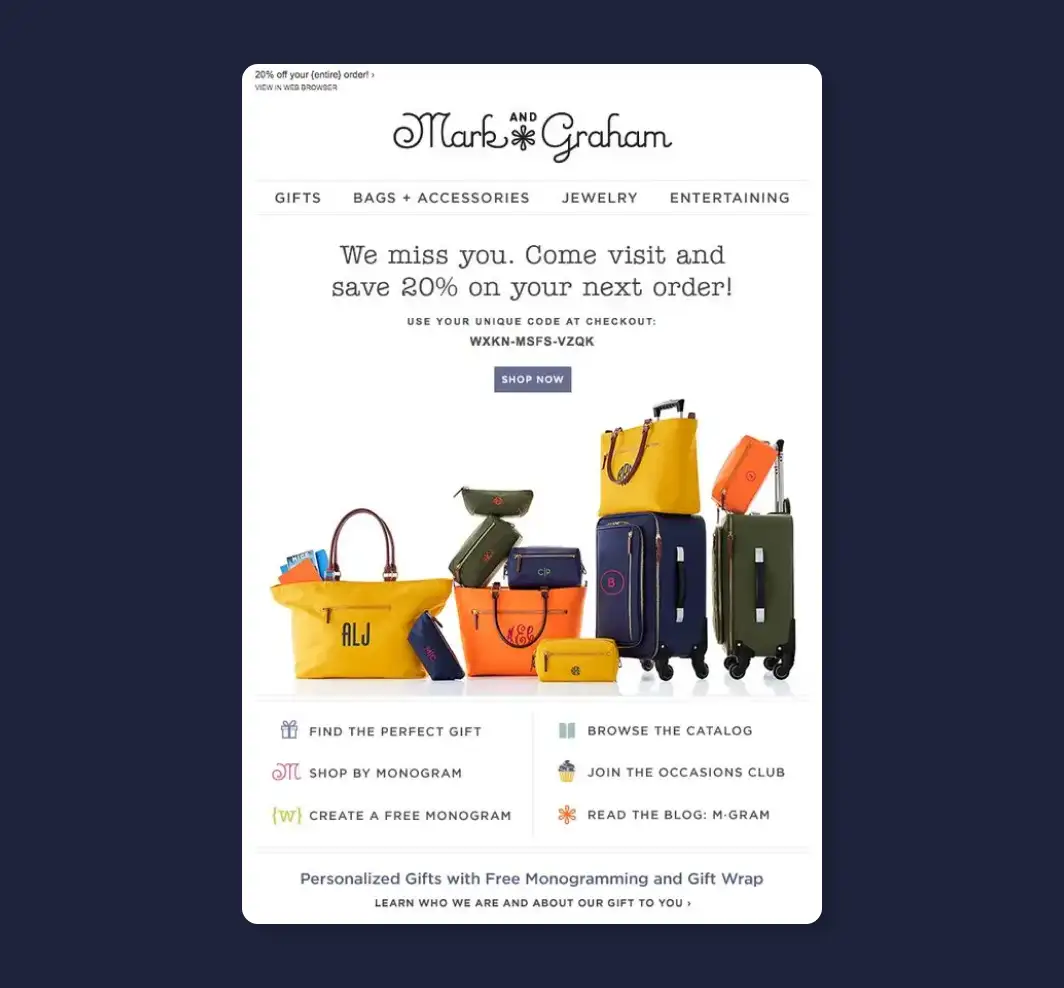
Mark & Graham uses a clean win-back email built around 20% off the next order. The message is direct, the unique checkout code is easy to spot, and the “Shop Now” CTA appears above the product imagery, so subscribers understand the offer before they start browsing.
Takeaway: If your re-engagement strategy depends on an offer, make the offer simple, visible, and easy to act on.
7. Give inactive customers a small reward to bring them back
A small reward can be enough to restart the relationship with an inactive customer. It does not always need to be a large discount. Free credit, a free item, loyalty points, or a limited-time perk can create a low-friction reason to return.
This works especially well for food, retail, subscription, and loyalty-based brands where the next action is simple and familiar.
Example: Pinkberry
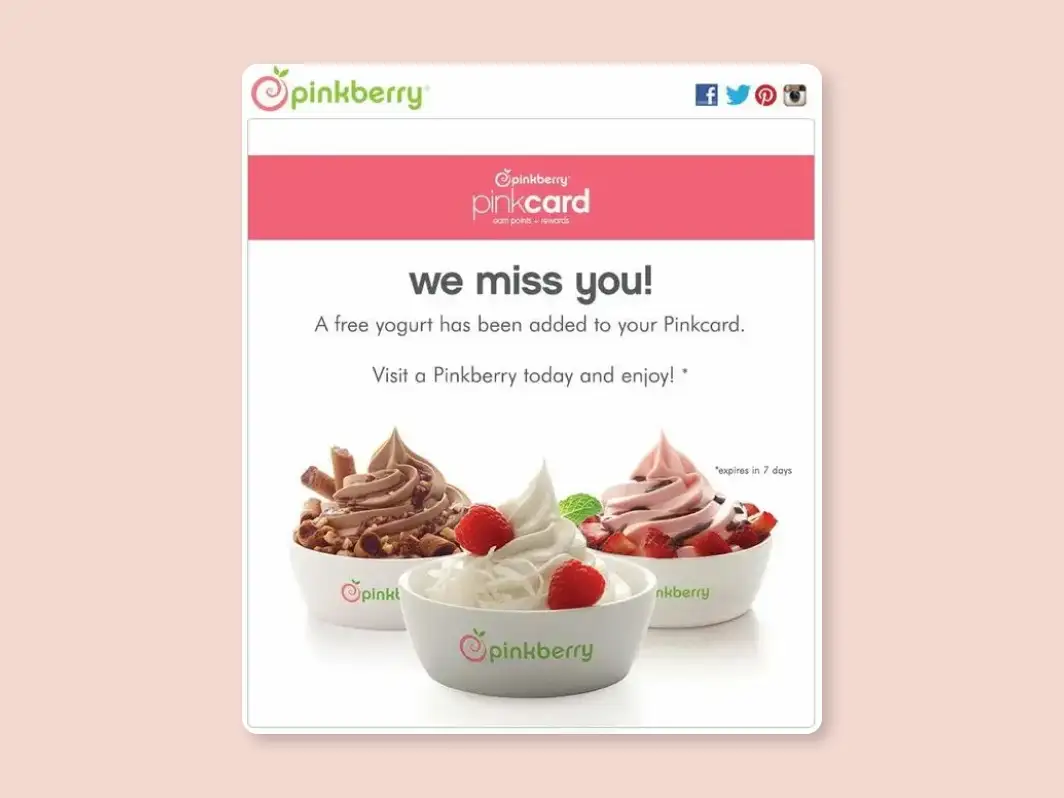
Pinkberry gives inactive customers a free yogurt added to their Pinkcard. The message feels like a small gift rather than a hard sales push, while the 7-day expiration window gives customers a reason to visit soon.
Takeaway: A small, concrete reward can make a re-engagement email feel generous, personal, and easy to act on.
8. Let inactive users experience your product again
For subscription products, courses, apps, and SaaS brands, the best re-engagement tactic may be letting inactive users try the product again. A temporary upgrade, free access, trial extension, or unlocked feature can remind users of the value they have been missing.
This works best when the product experience itself is the strongest selling point.
Example: Skillshare
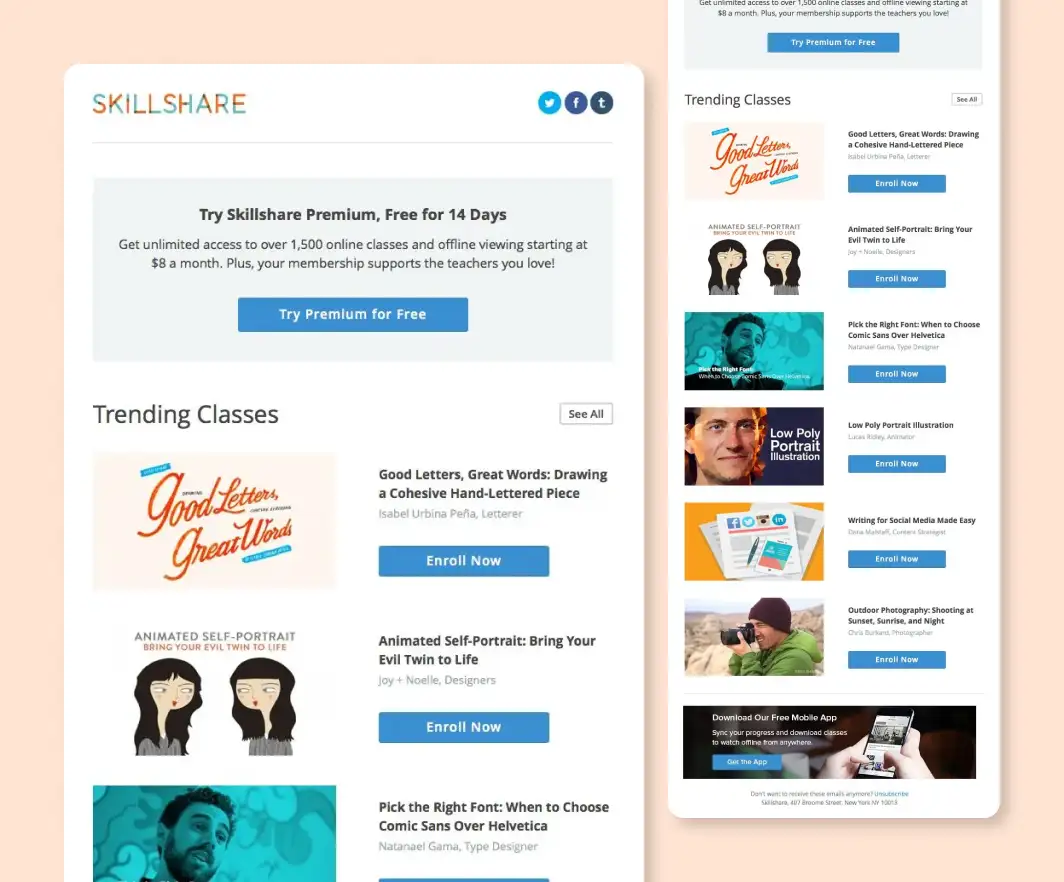
Skillshare offers 14 days of free Premium access, then supports the offer with a list of trending classes. The email does not just ask users to return; it shows them what they can start learning right away, with multiple “Enroll Now” CTAs and a mobile app reminder near the end.
Takeaway: When your product needs to be experienced to be appreciated, free access or a temporary upgrade can be stronger than a standard discount.
9. Use personalization to remind users of their past progress
Inactive users may come back when they see how much they have already done with your product or platform. Instead of sending a generic “we miss you” message, use their previous activity, results, milestones, purchases, or progress to make the email feel more relevant.
This works especially well for platforms, tools, apps, communities, and creator-based products where users have already invested time or effort.
Example: Teespring
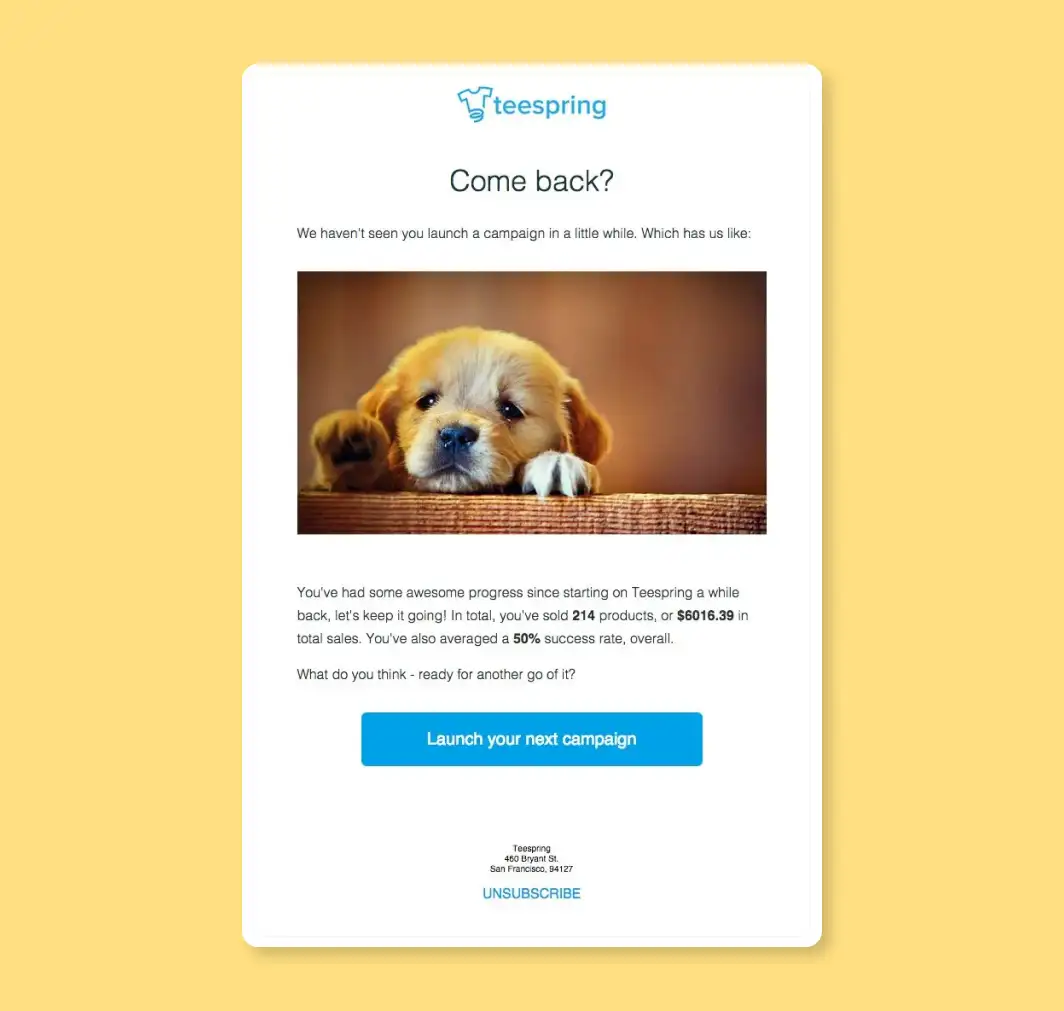
Teespring uses a personal progress reminder to bring inactive users back. The email mentions how many products the user has sold, their total sales, and their success rate, then encourages them to launch another campaign.
Takeaway: Re-engagement emails feel stronger when they remind users of what they have already achieved and give them a reason to continue.
10. Reinforce your brand value before asking for the sale
A win-back email should remind customers what makes your brand worth returning to. Before pushing the offer, explain the product selection, quality, convenience, savings, or values that make the brand relevant.
This is especially useful when your offer is tied to a first purchase, membership, or marketplace with many product options.
Example: Thrive Market
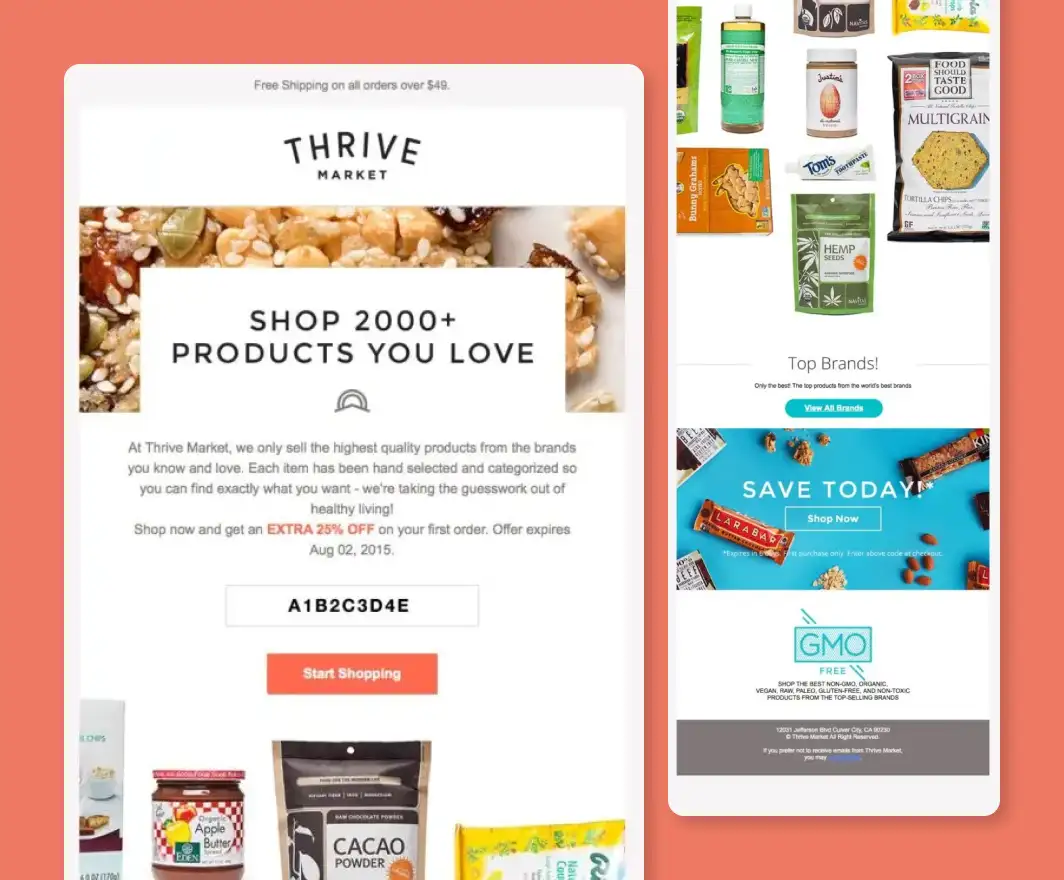
Thrive Market combines a first-order discount with a strong brand value message. The email highlights its 2,000+ products, trusted brands, healthy living focus, free shipping threshold, and GMO-free positioning before pushing the “Start Shopping” CTA.
Takeaway: A re-engagement offer works better when subscribers understand why the brand is valuable, not just what they can save today.
How to Turn These Tips Into a Re-Engagement Campaign
Once you have a few re-engagement ideas, the next step is to turn them into a campaign. A single “we miss you” email can work, but most inactive subscribers need a clearer path back. That path starts with knowing who you are trying to re-engage, why they may have gone quiet, and what action you want them to take next.
Step 1: Define inactivity
Start by deciding what “inactive” means for your business. For an ecommerce brand, it may mean no purchases in the last 90, 120, or 180 days. For a SaaS product, it may mean no logins, no feature usage, or no trial activity. For a newsletter, it may mean no opens or clicks over a specific period of time.
Step 2: Segment inactive contacts
Not all inactive contacts should receive the same email. Separate subscribers by customer type, purchase history, product usage, engagement level, and lifecycle stage. A past buyer, expired trial user, inactive app user, and newsletter subscriber may all need different reasons to return.
Step 3: Choose the right re-engagement angle
Use the reason for inactivity to choose your message. Some subscribers may respond to a discount or free shipping, while others may need a product reminder, a new feature update, free access, personalized recommendations, or a preference check. The more relevant the angle, the better the chance of bringing them back.
Step 4: Build a short sequence
Instead of relying on one email, create a short sequence of two to four messages. You can start with a soft reminder, follow with a value-focused email, add an incentive if needed, and finish with a preference update or last-chance message.
Step 5: Decide what happens after the campaign
Before sending the campaign, decide what you will do with contacts who still do not engage. Subscribers who open, click, buy, log in, or update preferences can stay in your active audience. Contacts who ignore the full sequence may need to be suppressed or removed from regular campaigns to protect deliverability.
Re-Engagement Campaign Checklist
- Define the inactivity window.
- Choose the audience segment.
- Pick one clear campaign goal.
- Decide whether to use an incentive.
- Choose the right re-engagement angle.
- Write one clear CTA.
- Build a short 2–4 email sequence.
- Test subject lines, offers, and timing.
- Track opens, clicks, conversions, unsubscribes, and spam complaints.
- Suppress contacts who do not respond.
Need More Re-Engagement Email Inspiration?
Use the tips above to plan the strategy behind your campaign, then look at more real examples before you design the emails themselves. Seeing how different brands handle win-back offers, app reactivation, product updates, “we miss you” messages, and last-chance emails can help you choose the right angle for your own audience.
For more visual inspiration, explore our full collection of re-engagement email examples.