21 High-Performing B2B Email Marketing Examples to “Steal” Ideas From


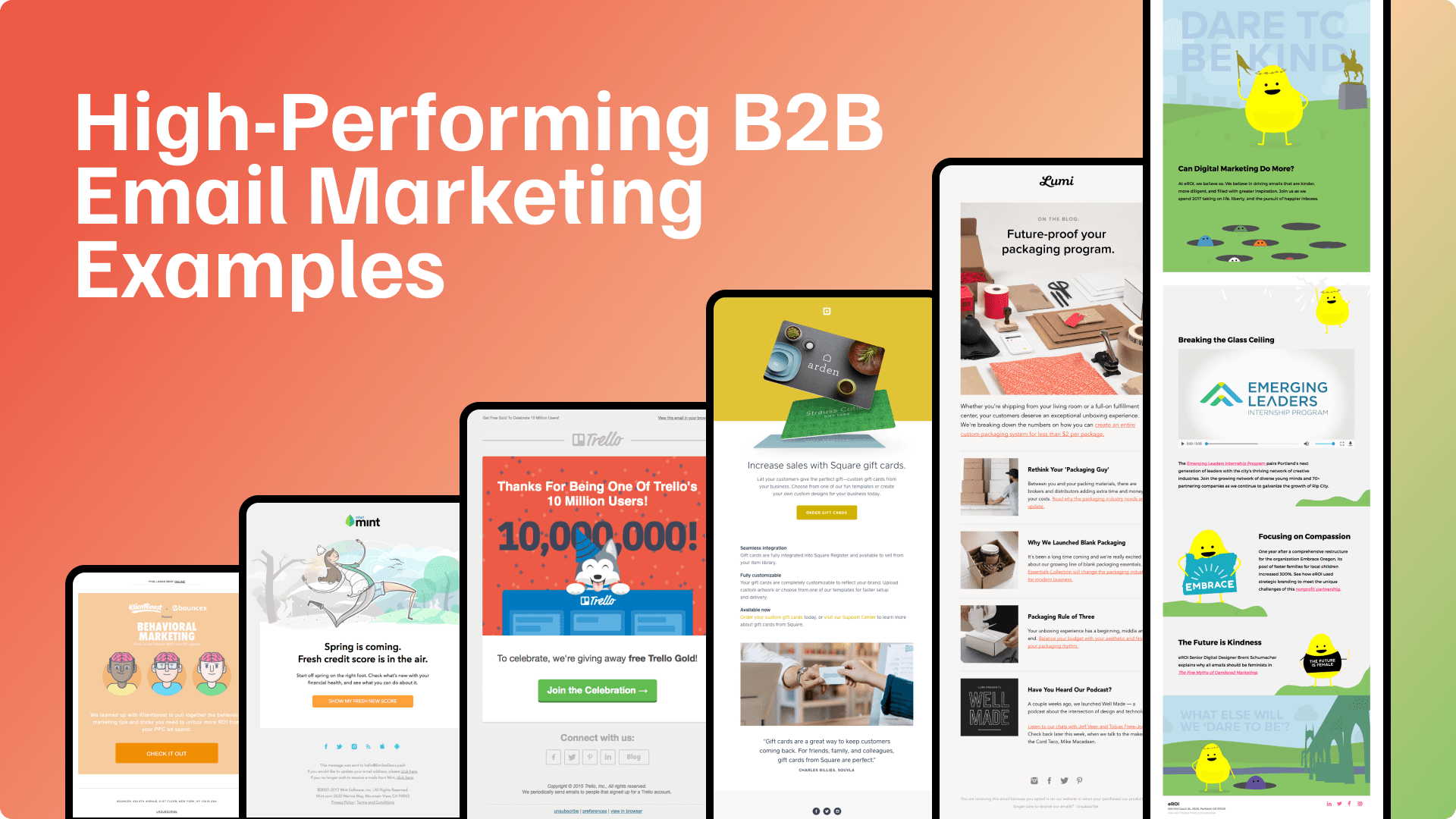
B2B email marketing is not only about cold outreach or sales follow-ups. Some of the most effective B2B emails help users get started, explain product updates, promote events, share useful content, announce partnerships, build trust, or bring customers back to a product they already know.
That is why strong B2B email campaigns need more than a good-looking template. They need a clear purpose, a specific audience, useful content, and a next step that makes sense for the reader.
In this guide, we’ve collected B2B email marketing examples from SaaS companies, ecommerce platforms, marketing tools, financial services, and business service brands. Use them to see how different companies handle onboarding, product announcements, newsletters, event campaigns, relationship-building emails, and other B2B campaign ideas.
Quick links:
What makes a good B2B marketing email?
→ Onboarding & activation email examples
→ Product update email examples
→ Newsletter and lead nurturing examples
→ Events, partnerships & relationship-building examples
What Makes a Good B2B Marketing Email?
A good B2B marketing email gives the reader a clear business reason to pay attention. It should focus on one main goal, speak to a specific audience segment, explain the value quickly, and make the next step easy to understand.
The best B2B emails are also easy to scan. They use clear headlines, short sections, strong visuals, and one primary call-to-action. Whether the email is promoting a feature, sharing a blog post, inviting users to an event, or helping a new customer get started, the message should answer one simple question: why does this matter to the recipient right now?
B2B Email Marketing Examples
The examples below show different ways B2B brands use email to educate users, promote products, share updates, build relationships, and move customers toward the next step. Instead of treating every campaign the same way, it helps to look at B2B emails by purpose: onboarding, product updates, newsletters, events, partnerships, and relationship-building campaigns.
B2B Email Marketing Examples for Onboarding and Activation
Onboarding and activation emails help new users, trial users, or inactive customers take the next meaningful step. In B2B marketing, that step might be creating a project, setting up an account, inviting teammates, using a feature, or learning how to get value from the product faster.
These emails work best when they focus on one clear action instead of overwhelming users with every product feature.
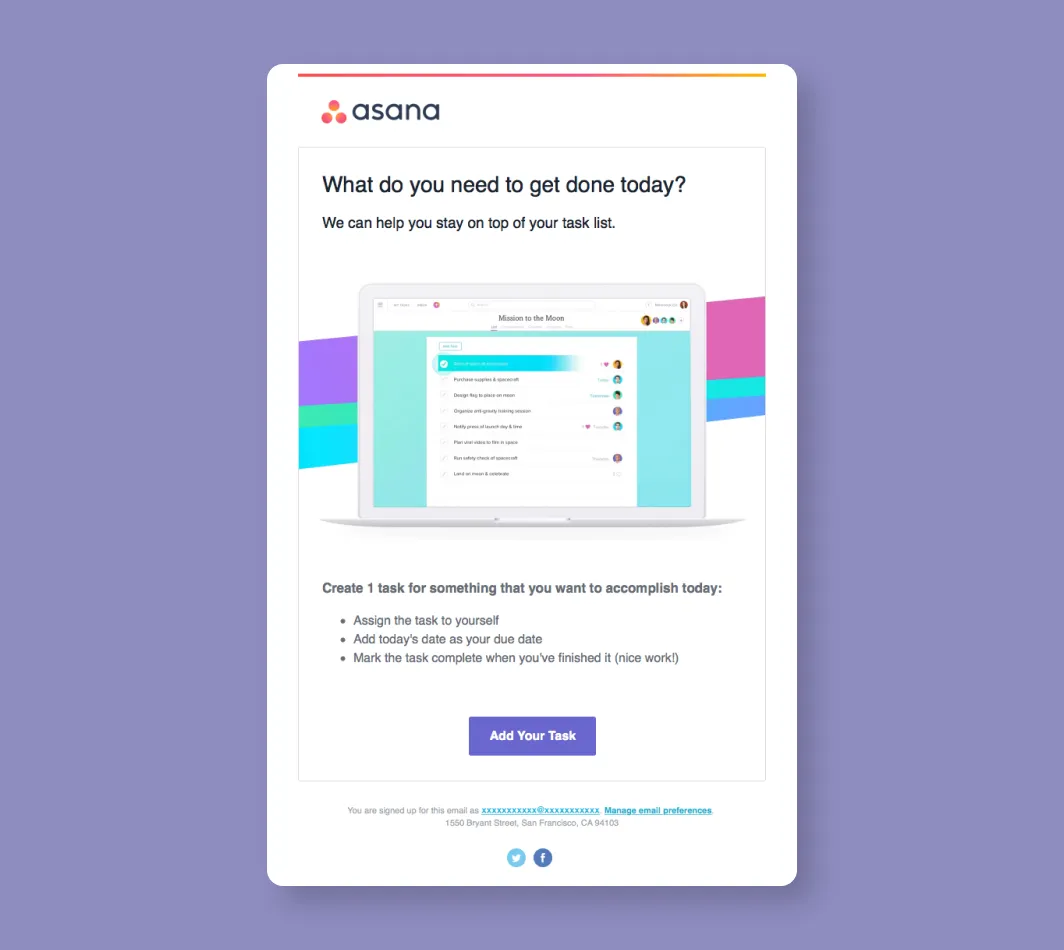
1. Asana: B2B onboarding email that helps users take the first step
Asana uses this onboarding email to show new users how simple it can be to start managing work inside the platform. Instead of explaining every feature, the email focuses on one small workflow: create a task, assign it, add a due date, and mark it complete.
This makes the email feel practical rather than promotional. The reader can immediately understand what to do next and how the product fits into everyday team collaboration.
Use this kind of email for: New user onboarding, trial activation, product education, or helping customers complete their first meaningful action.
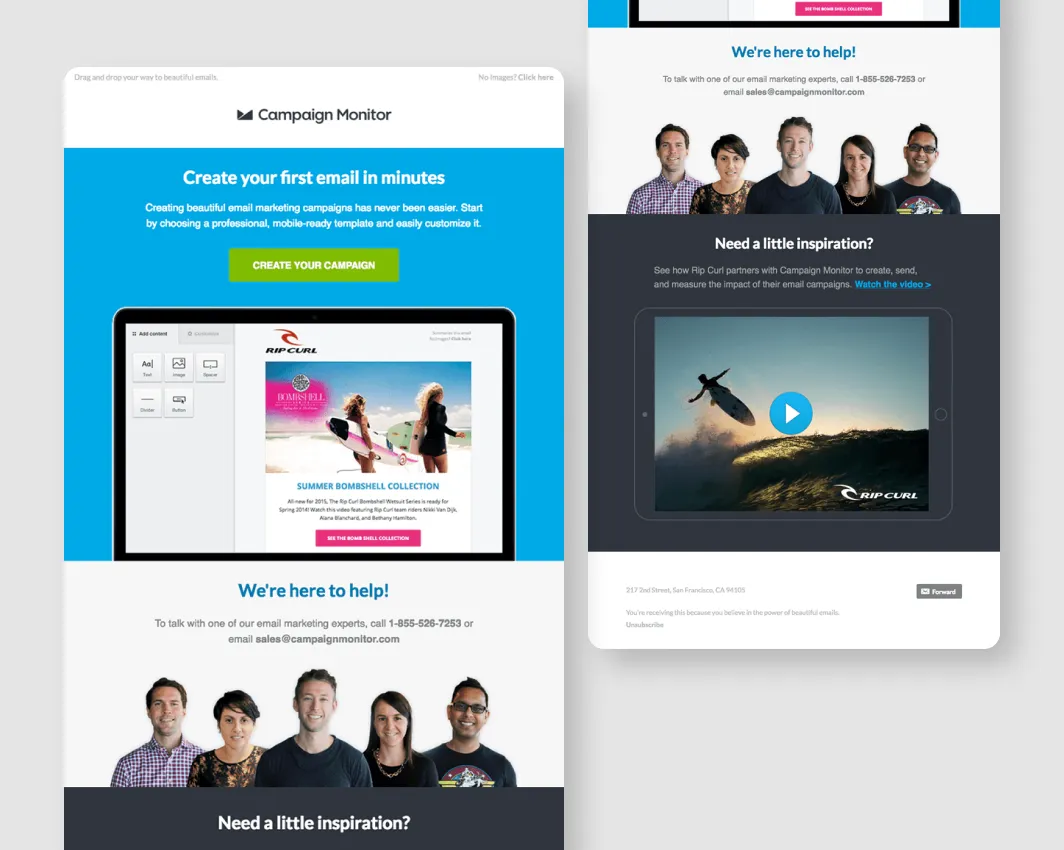
2. Campaign Monitor: B2B activation email that makes getting started feel easy
Campaign Monitor uses this email to remind users how quickly they can create their first email campaign. The message focuses on ease of use, showing that subscribers can start with a template, customize the design, and get support if they need help.
The email works because it removes hesitation. Instead of making email creation feel technical or time-consuming, it presents the first step as simple, guided, and achievable.
Use this kind of email for: Product activation, trial engagement, feature education, or encouraging users to create their first campaign.
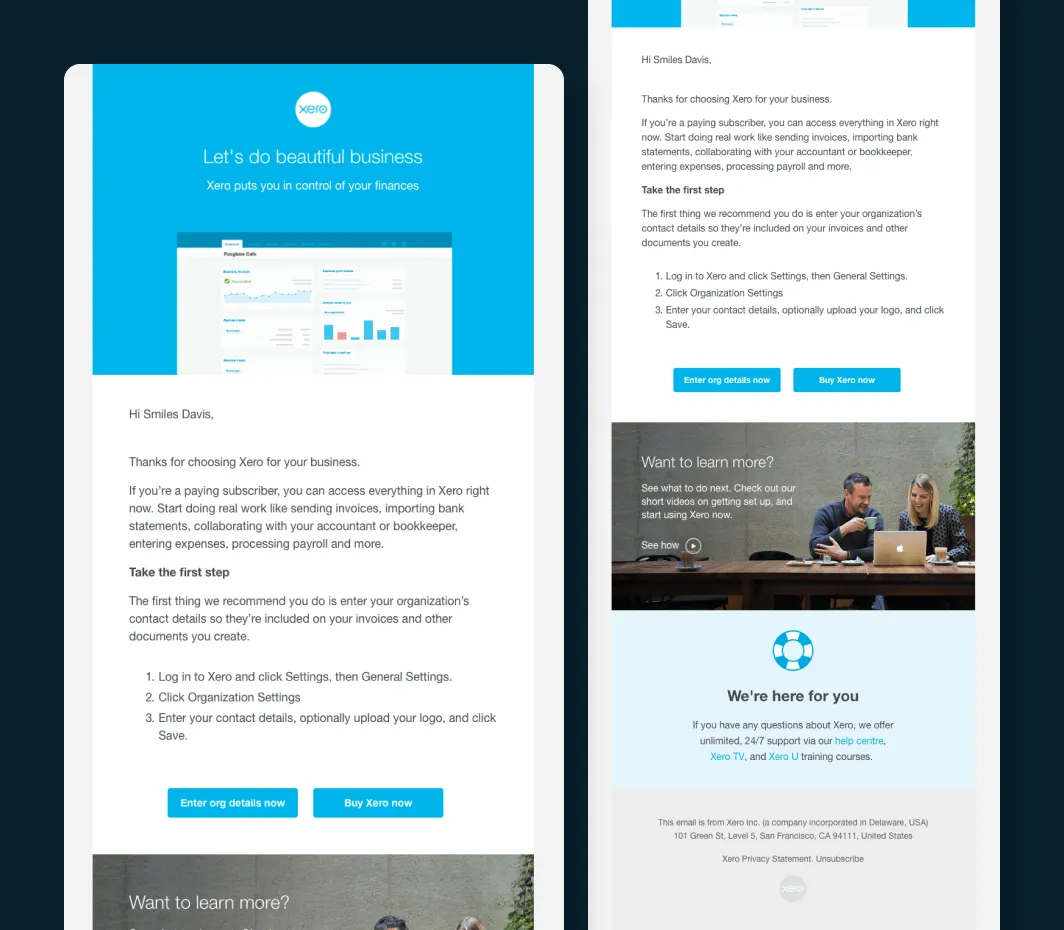
3. Xero: B2B onboarding email that walks users through account setup
Xero uses this welcome email to guide new users through the first setup step: entering their organization details. The email also supports the action with a video and help center links, giving users more context if they need it.
This is a good example of a B2B onboarding email that keeps the next step specific. It does not try to explain the full product at once. It simply helps users move forward with setup.
Use this kind of email for: Welcome emails, account setup, first-step onboarding, trial activation, or helping new users complete required setup tasks.
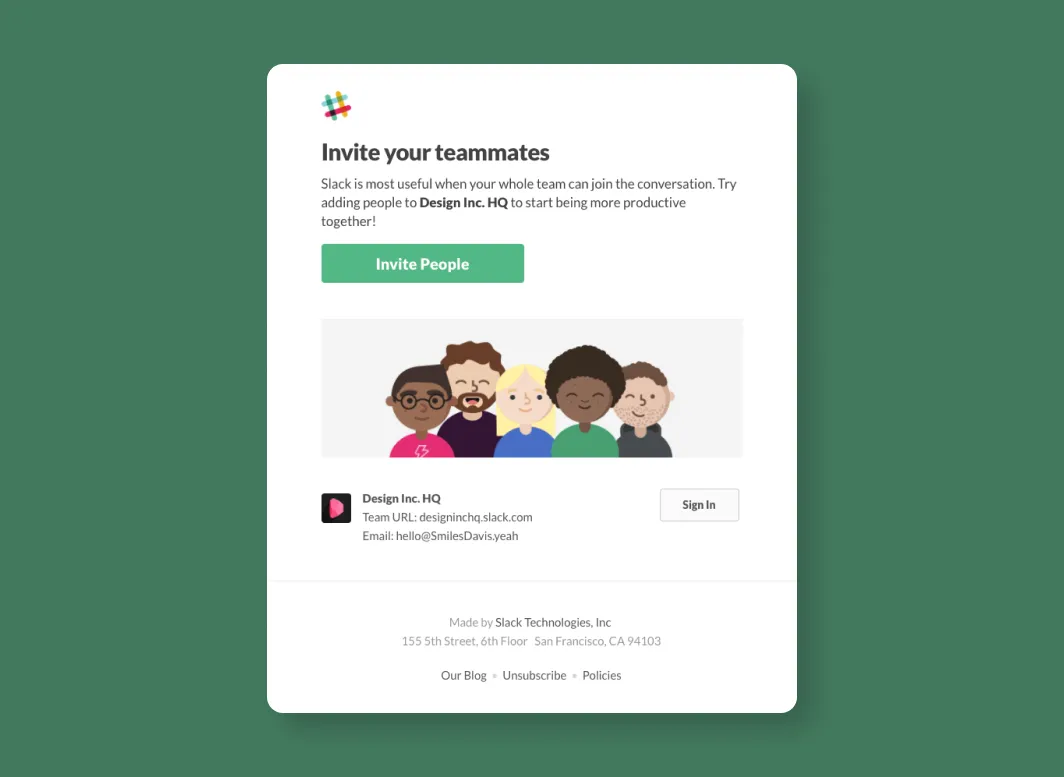
4. Slack: B2B activation email that encourages team adoption
Slack uses this email to encourage users to bring more teammates into the workspace. The message connects the invite action to product value: Slack becomes more useful when the whole team can collaborate in one place.
The email is short, visual, and focused on one action. Instead of explaining every Slack feature, it makes the next step clear: invite the team and start working together.
Use this kind of email for: Team activation, product adoption, referral-style invites, collaboration tools, or encouraging account expansion.
Need help turning your B2B email ideas into polished campaigns? Explore our email design services or see how we create custom email flows for different customer journeys.
B2B Email Marketing Examples for Product Updates and Announcements
Product update and announcement emails help B2B companies show customers what is new, improved, or available now. These emails can introduce new features, product launches, app updates, integrations, upgrades, or new services.
They work best when they do more than announce the update. A strong B2B product email connects the news to a clear business benefit, such as saving time, improving workflow, getting better data, reaching customers faster, or making the product easier to use.
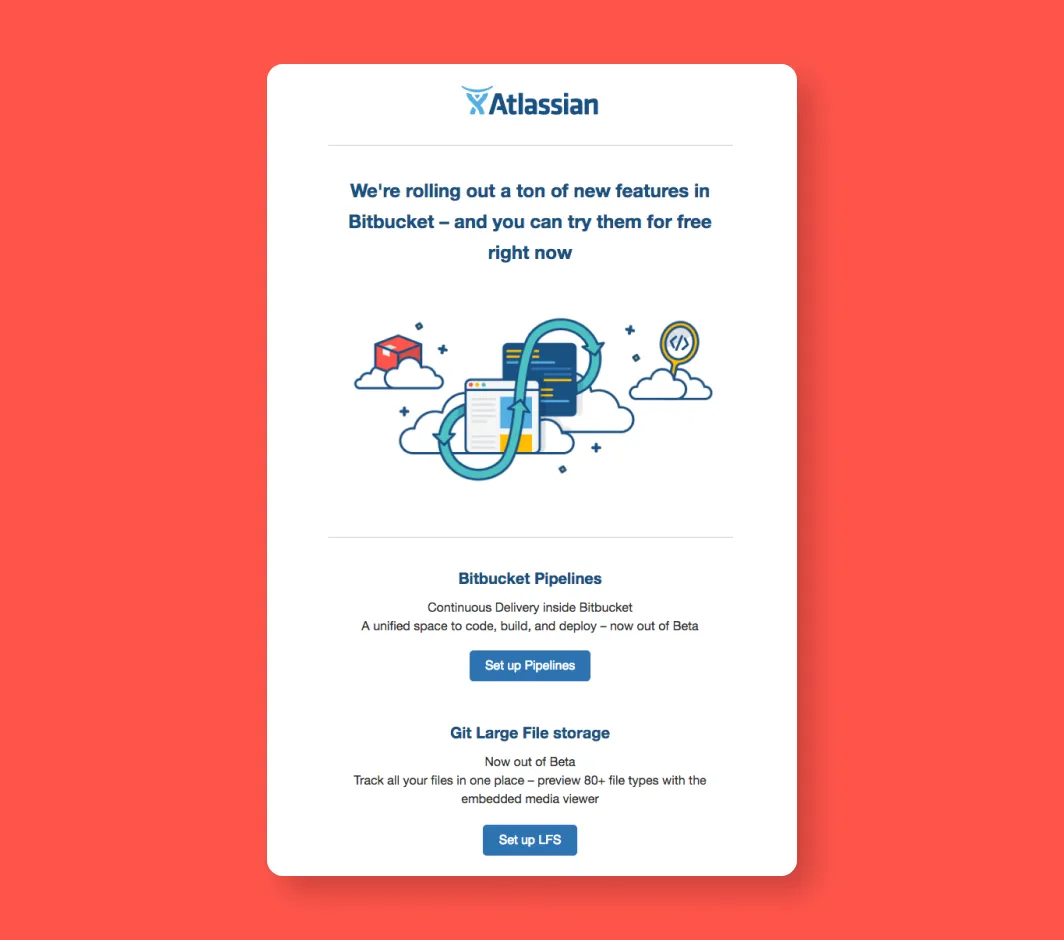
5. Atlassian: B2B product update email with clear feature-specific CTAs
Atlassian uses this email to announce several updates in one campaign. Each product improvement is presented with a short explanation and its own CTA, making it easy for users to act on the feature that matters most to them.
The email works because it keeps the update practical. Instead of listing features without context, it shows users what they can set up, improve, or try next.
Use this kind of email for: Product updates, feature announcements, platform improvements, developer tools, or campaigns with several related product changes.
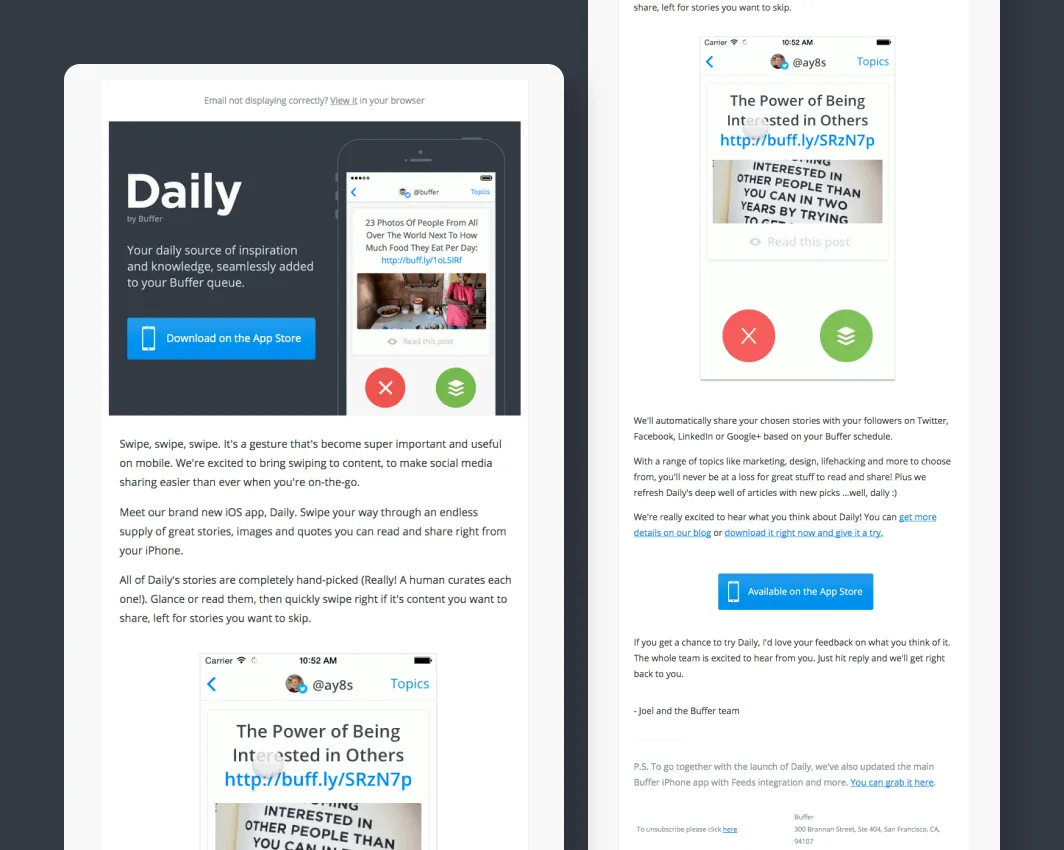
6. Buffer: B2B product launch email that explains how the new tool works
Buffer uses this email to introduce Daily by Buffer, a mobile app for discovering and sharing content. The email explains the idea behind the product, shows how the swipe-based experience works, and invites readers to try it.
This is a strong product launch email because it does not assume the reader understands the new tool immediately. It gives enough context to make the launch feel useful, then points users toward the next step.
Use this kind of email for: Product launches, app announcements, new tools, beta releases, or introducing a new way to use your product.
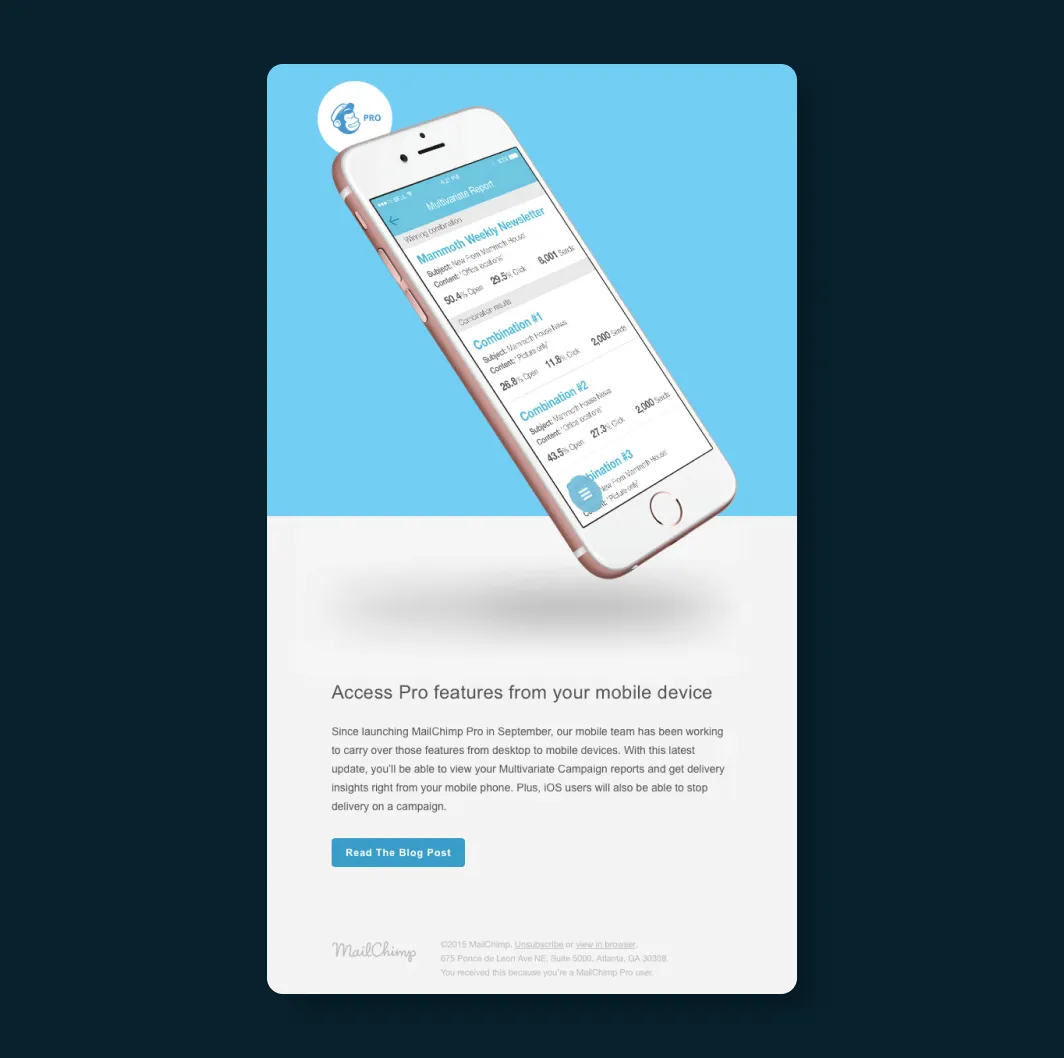
7. Mailchimp: B2B product update email focused on mobile convenience
Mailchimp uses this email to announce that Pro features are now available in the mobile app. The message connects the update to a practical benefit: users can manage campaigns, view reports, and track performance from their phone.
The email works because it frames the update around convenience, not just availability. For busy marketers and business owners, the value is being able to check important campaign data and take action while away from the desktop.
Use this kind of email for: Mobile app updates, feature rollouts, product upgrades, reporting tools, or announcements that make an existing product easier to use.
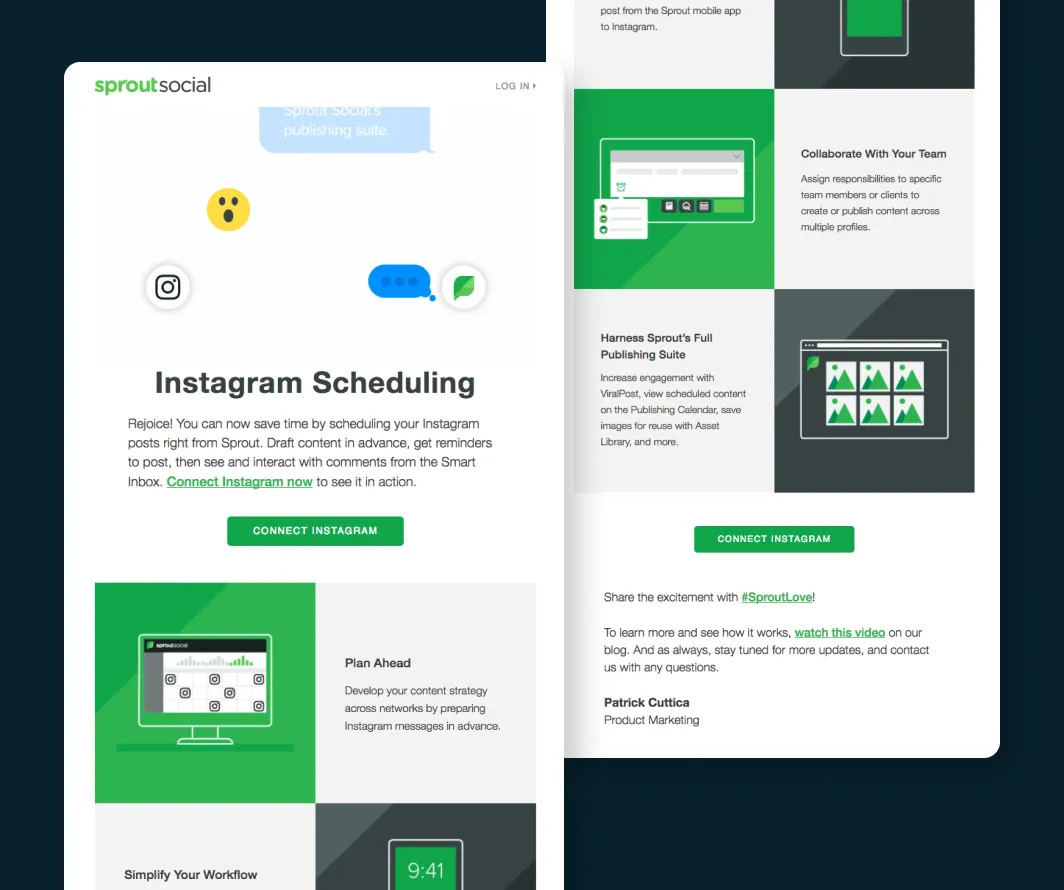
8. Sprout Social: B2B feature announcement email tied to workflow benefits
Sprout Social uses this email to announce Instagram scheduling and publishing features. The message focuses on the workflow benefits behind the update: planning ahead, collaborating with the team, saving time, and managing social content more easily.
This makes the feature feel immediately relevant. Instead of simply saying that scheduling is available, the email shows how the update can improve the user’s daily work.
Use this kind of email for: Feature announcements, workflow improvements, social media tools, productivity features, or updates that help users save time.
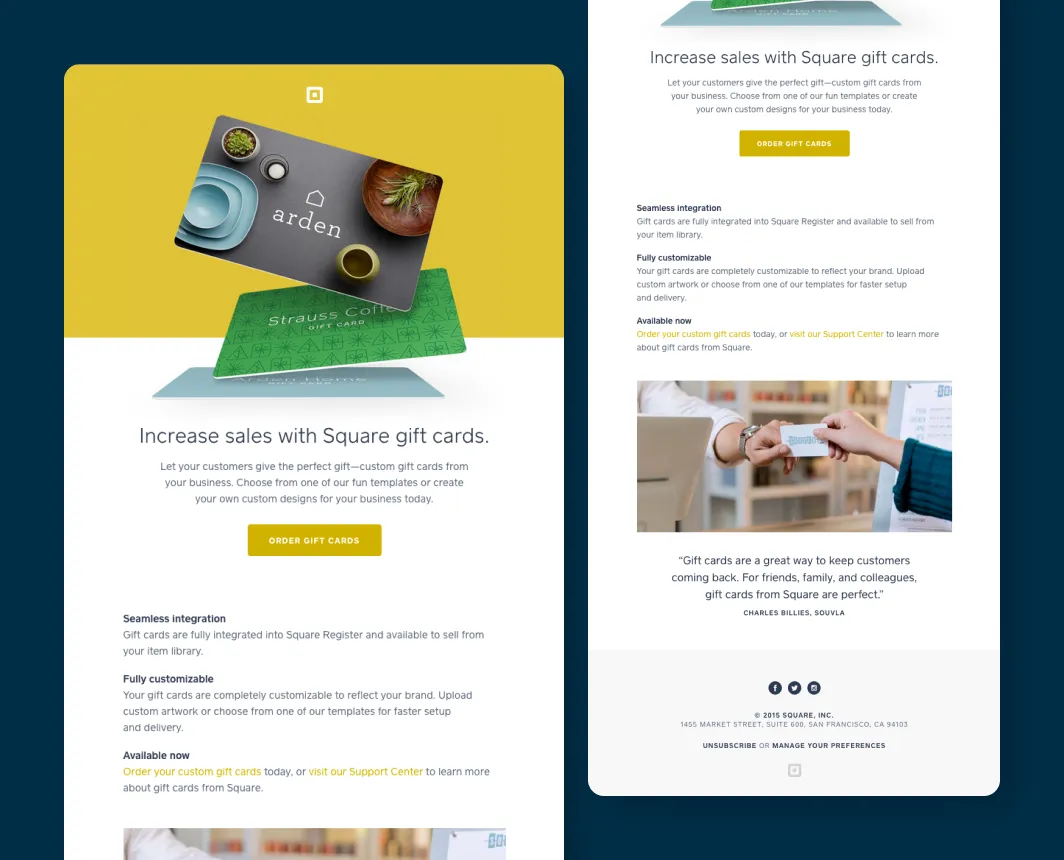
9. Square: B2B product promotion email that explains business benefits
Square uses this email to promote gift cards to business customers. The email explains why gift cards can help merchants, highlights the setup process, and supports the message with practical benefits and a customer quote.
The email works because it sells the business outcome, not just the product. It helps readers understand how gift cards can bring in sales, encourage repeat purchases, and fit into their existing Square setup.
Use this kind of email for: Product promotions, service add-ons, merchant tools, ecommerce features, or business growth campaigns.
B2B Email Newsletter Examples for Content and Lead Nurturing
B2B newsletters and content emails help companies stay useful between product updates, sales conversations, and major announcements. They can share blog posts, customer stories, educational resources, industry insights, product tips, or curated content that helps the reader do their job better.
These emails work best when the content is organized around a clear theme or audience need. Instead of sending a random list of links, strong B2B newsletters give readers a reason to keep opening future emails.
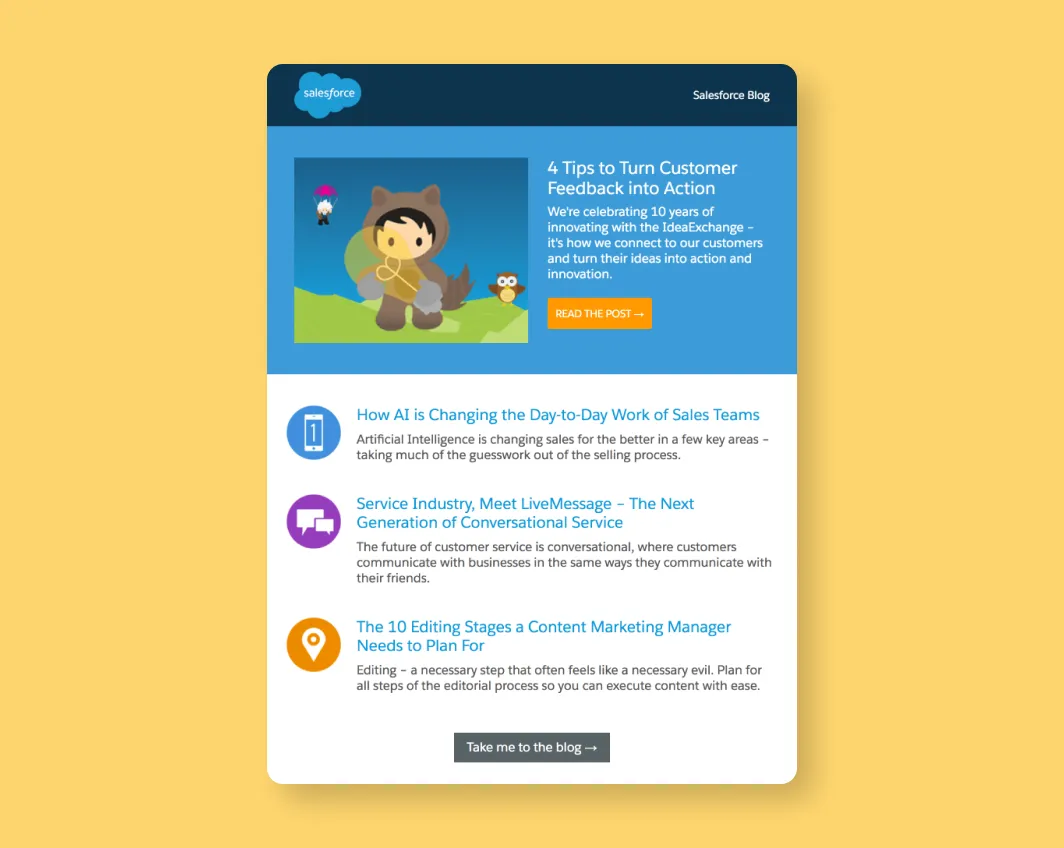
10. Salesforce: B2B content newsletter that drives readers back to the blog
Salesforce uses this email to promote a featured blog post, then supports it with several related articles. The layout gives the main story the most attention, while the smaller content blocks offer additional reading options for subscribers who want to explore more.
The strength of this email is its clear content hierarchy. Readers can quickly understand the main topic, scan the supporting articles, and choose the resource that is most relevant to them.
Use this kind of email for: Blog newsletters, content promotion, educational campaigns, lead nurturing, or sharing multiple resources with one audience.
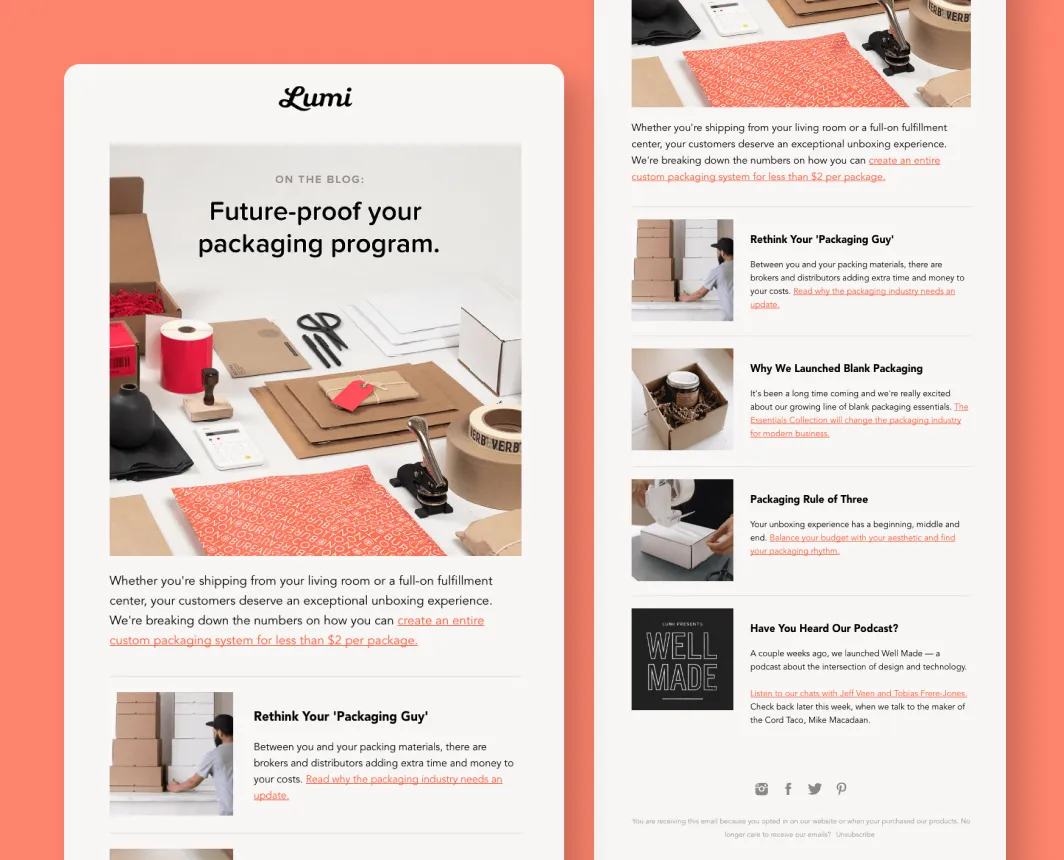
11. Lumi: B2B educational newsletter built around useful industry content
Lumi uses this email to share educational packaging content with ecommerce and product-based businesses. The email includes a main article, supporting blog posts, and a podcast feature, giving readers several ways to engage with the brand’s expertise.
This type of newsletter is useful because it keeps the brand visible without making every email feel like a sales pitch. By focusing on practical content, Lumi positions itself as a helpful resource for businesses thinking about packaging, production, and operations.
Use this kind of email for: Educational newsletters, blog digests, podcast promotion, content-led lead nurturing, or industry resource emails.
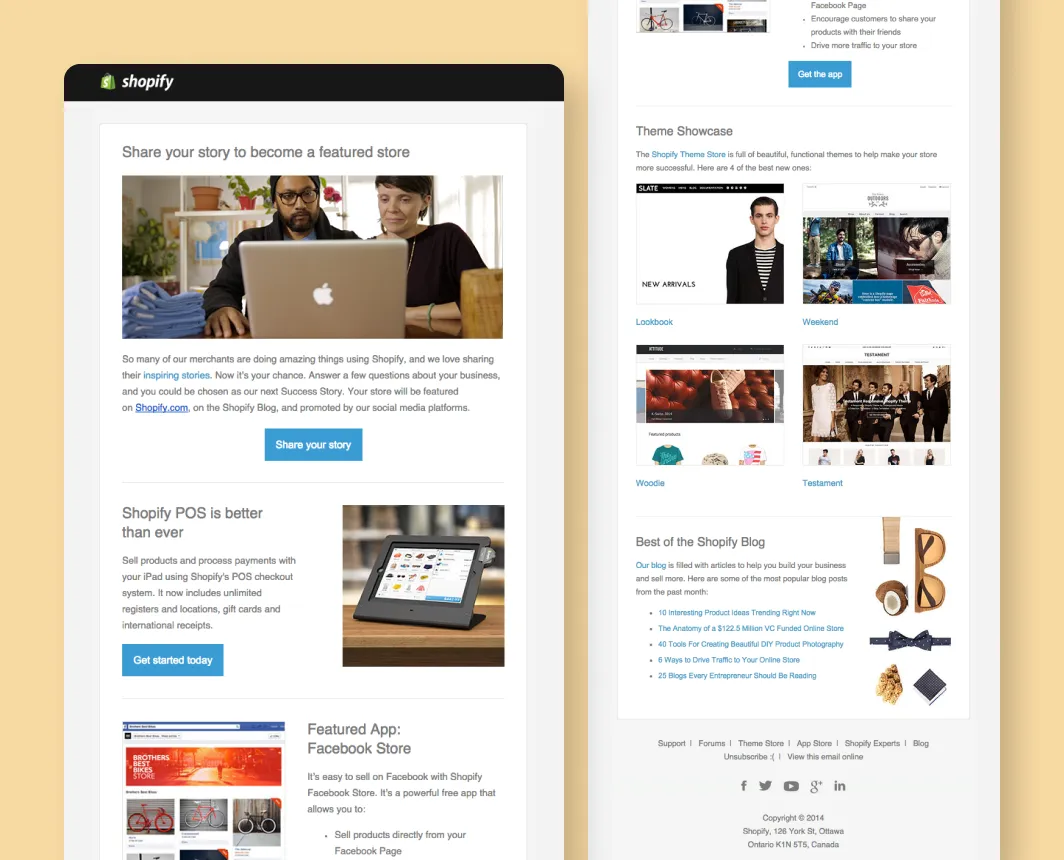
12. Shopify: B2B newsletter that mixes stories, updates, and resources
Shopify uses this email as a multi-topic customer update. It combines a featured merchant story, product news, app recommendations, themes, and blog content in one newsletter.
The format works well for a broad B2B audience because not every reader needs the same thing. Some may be interested in inspiration, others in product updates, and others in tools that help them improve their store.
Use this kind of email for: Monthly newsletters, customer updates, ecommerce education, merchant resources, product roundups, or multi-topic B2B campaigns.
13. Freelancer: B2B service discovery email that gives customers project ideas
Freelancer uses this email to show business customers different types of work they can outsource through the platform. Instead of promoting one specific service, the email presents a list of project ideas, from design and development to marketing and content.
This makes the email helpful for customers who may want support but are not sure what to start with. The content turns a broad marketplace into a more concrete set of possible next steps.
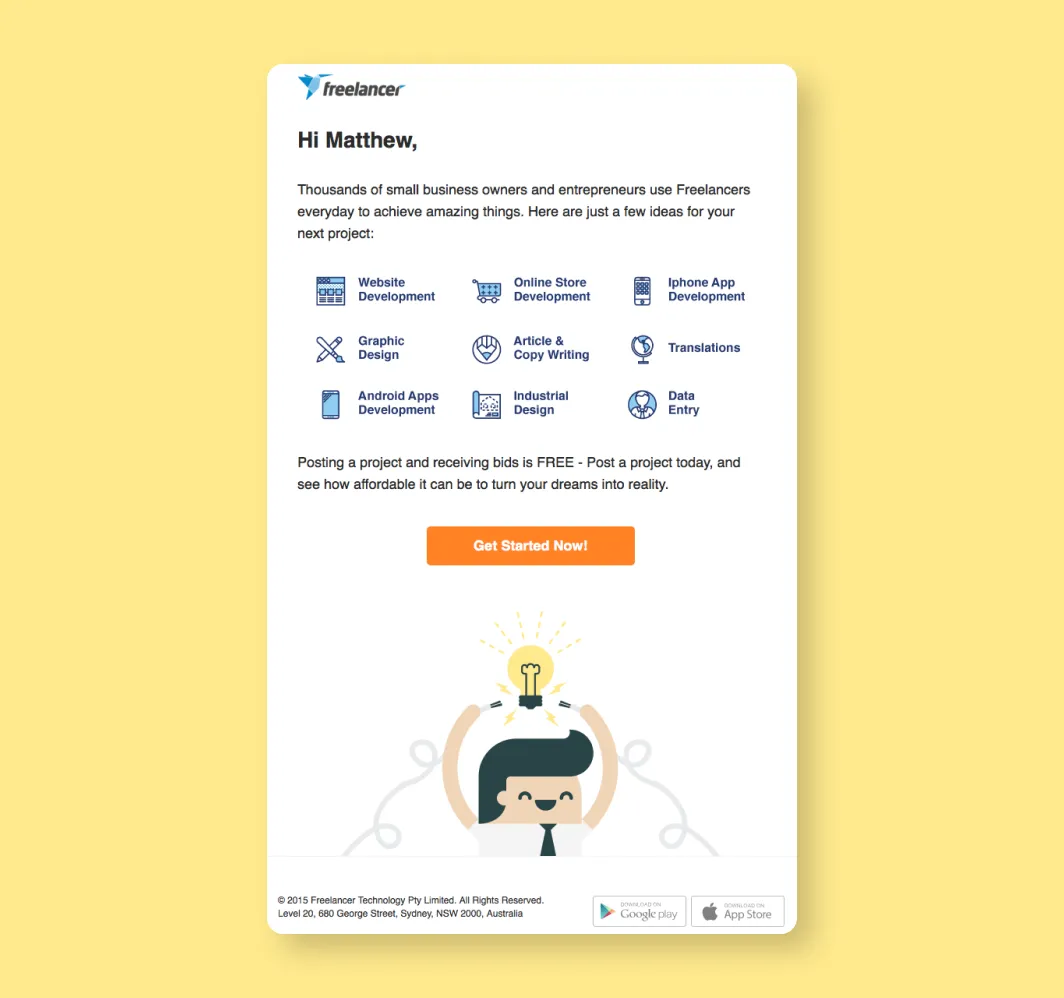
Use this kind of email for: Service discovery, marketplace education, customer activation, use-case promotion, or helping users understand what they can do with your platform.
14. Intuit Mint: Personalized update email that gives users a reason to check in
Intuit Mint uses this email to send a personalized credit score update. The message gives the recipient a specific reason to return to the product instead of relying on a generic reminder.
For B2B and finance-related brands, this kind of email can be useful when the product is built around account data, reports, dashboards, or ongoing performance tracking. A personalized update gives users a reason to check in and review what has changed.
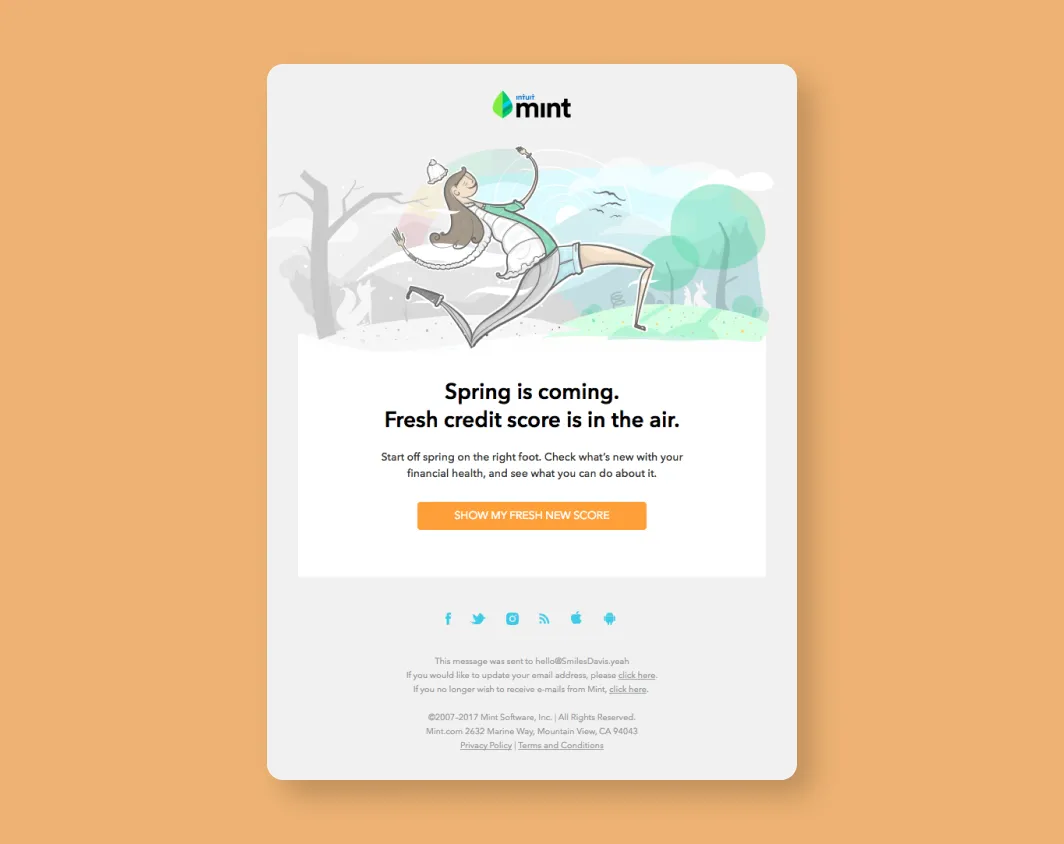
Use this kind of email for: Personalized updates, account insights, dashboard reminders, financial reports, performance summaries, or data-driven engagement emails.
B2B Email Campaign Examples for Events, Partnerships, and Relationship Building
Not every B2B email needs to push a product feature or a sales offer. Some campaigns are designed to build trust, promote events, announce partnerships, celebrate milestones, or keep the relationship active between buying decisions.
These emails work best when they give the reader a clear reason to care. That can be access to an event, a useful co-branded resource, a company milestone, a shared value, or a reminder that the brand is still relevant to their work.
15. Litmus: B2B event email that builds anticipation before the reveal
Litmus uses this email to promote its annual email design conference across several locations. Instead of sending a basic event announcement, the email creates anticipation with a location reveal, social sharing prompt, countdown-style progress, and a clear event theme.
The campaign feels more engaging because it gives subscribers something to follow before the event itself. It turns the announcement into a small campaign moment, not just a date-and-location email.
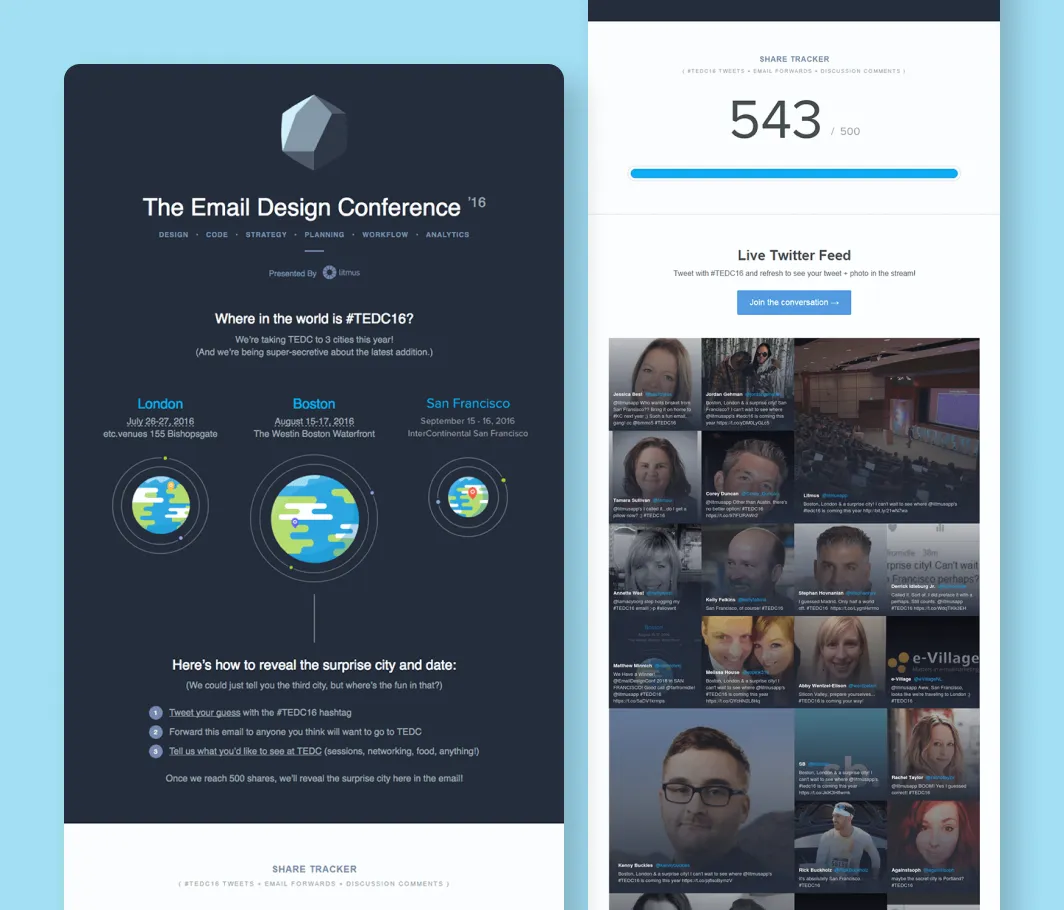
Use this kind of email for: Conference announcements, webinar promotions, event launches, community events, or campaigns where you want to build early interest.
16. KlientBoost: B2B partnership email that promotes a co-branded resource
KlientBoost uses this email to promote a co-branded resource created with BounceX. The email introduces the partnership, explains the topic, and drives readers toward one clear CTA to access the guide.
The value here is trust by association. A partnership email can make a resource feel more credible because it brings two brands, audiences, or areas of expertise together around one useful topic.
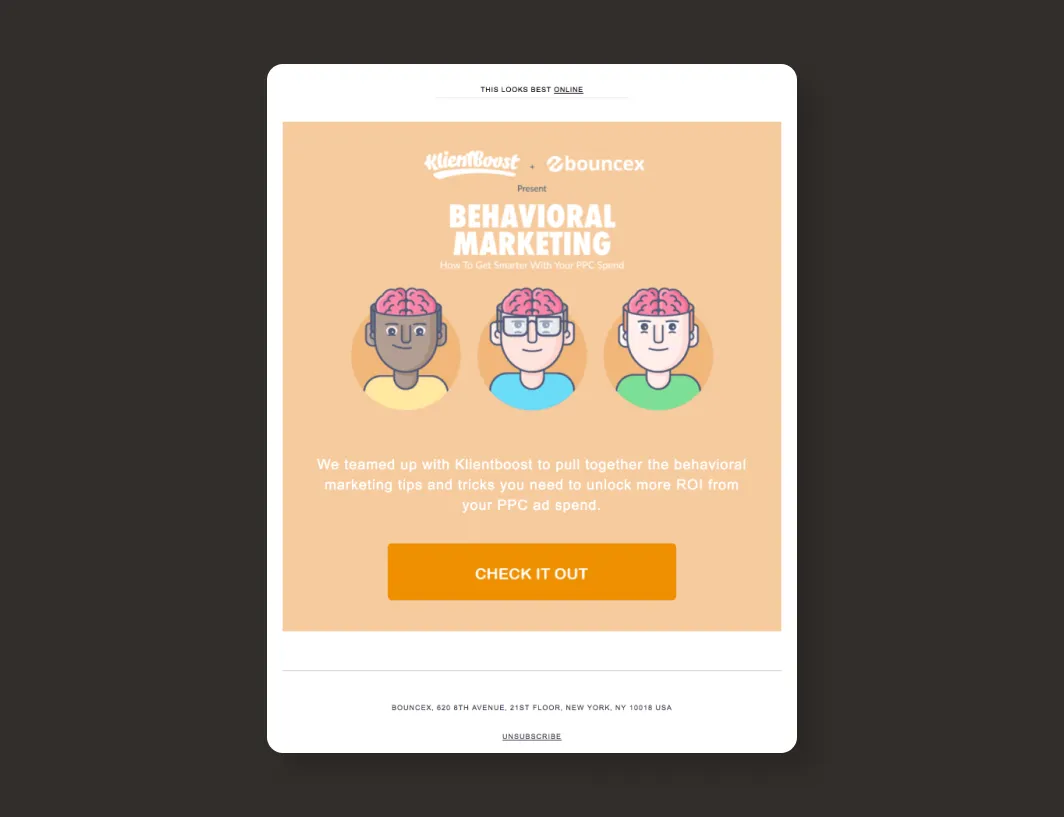
Use this kind of email for: Co-marketing campaigns, partnership announcements, joint webinars, downloadable guides, reports, or shared educational resources.
17. eROI: B2B brand values email that builds emotional connection
eROI uses this email to communicate what the company stands for. Instead of leading with a product, service, or offer, the campaign focuses on values, culture, and the kind of relationship the brand wants to build with its audience.
This type of B2B email can help a company feel more human, especially in industries where communication often becomes too technical or sales-driven. It gives subscribers a reason to connect with the brand beyond a transaction.
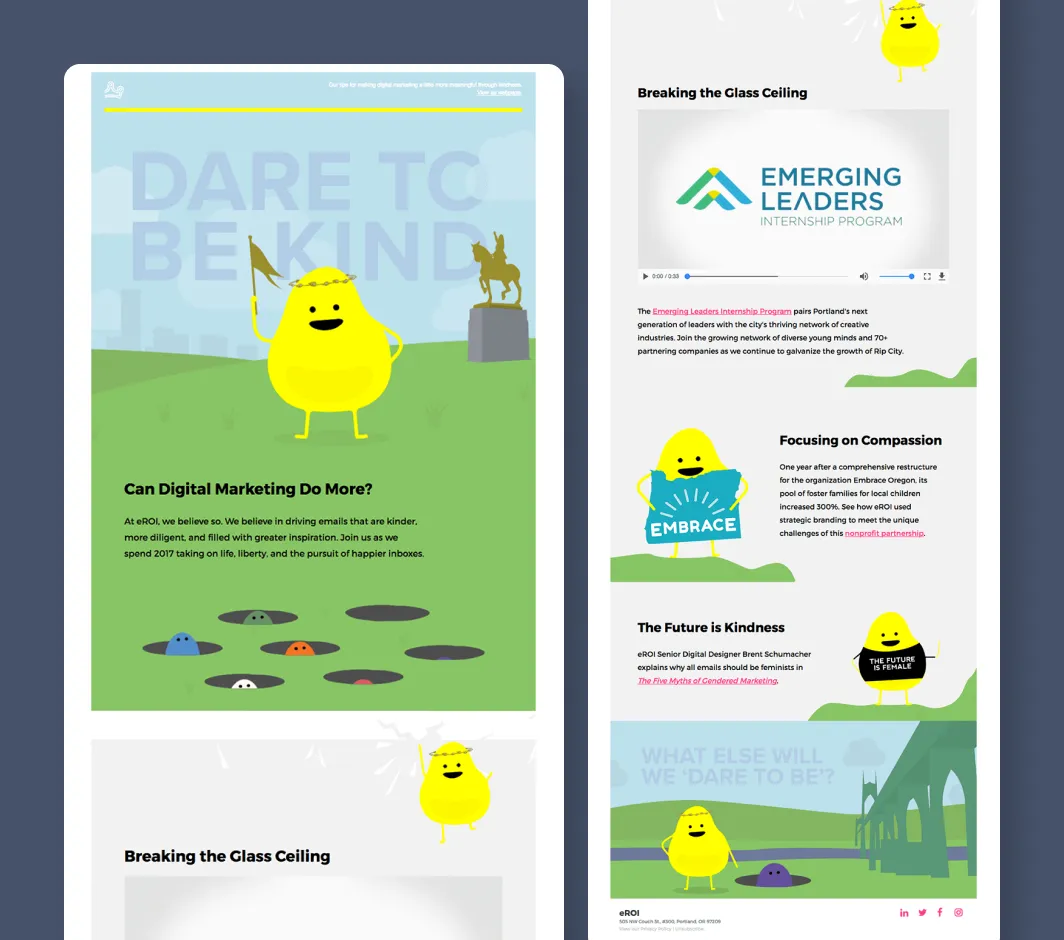
Use this kind of email for: Brand positioning, company values, culture campaigns, agency newsletters, relationship-building emails, or community-focused updates.
18. Flywheel: B2B year-in-review email that turns company updates into a story
Flywheel uses this year-in-review email to share company highlights, milestones, team moments, and community updates. The email feels energetic and personal, with a mix of business progress and brand personality.
A year-in-review email works well when it does more than list achievements. Flywheel makes the update feel like a story about momentum, people, and community, which makes the campaign more engaging for customers and subscribers.
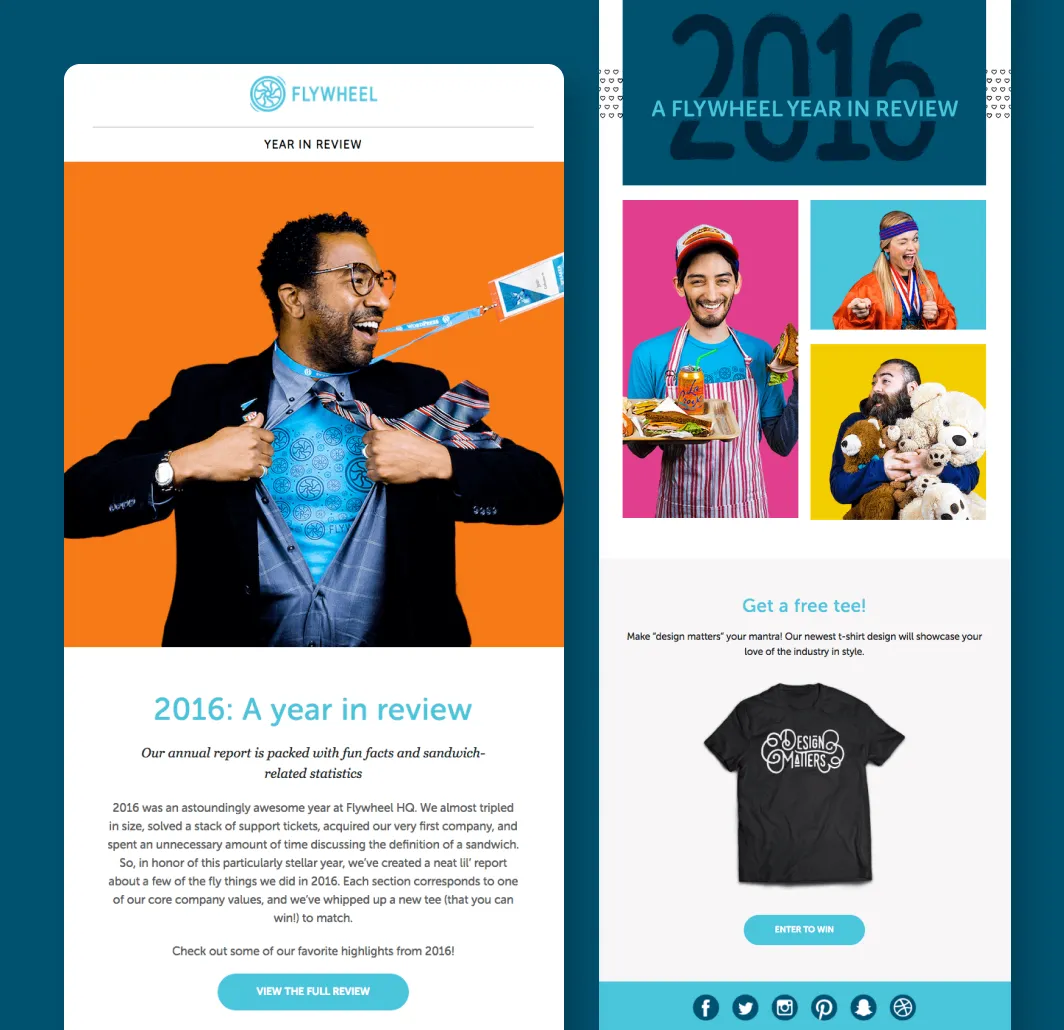
Use this kind of email for: Year-in-review campaigns, company updates, annual recaps, customer community emails, milestone content, or brand storytelling.
19. Mutual of Omaha: B2B holiday email that strengthens relationships without selling
Mutual of Omaha uses this holiday email to send a simple greeting without adding a sales message. The email keeps the focus on the seasonal moment, making it feel more like relationship maintenance than promotion.
For B2B brands, this kind of email can be useful when the goal is to stay present with clients, partners, or professional contacts without asking for anything in return.
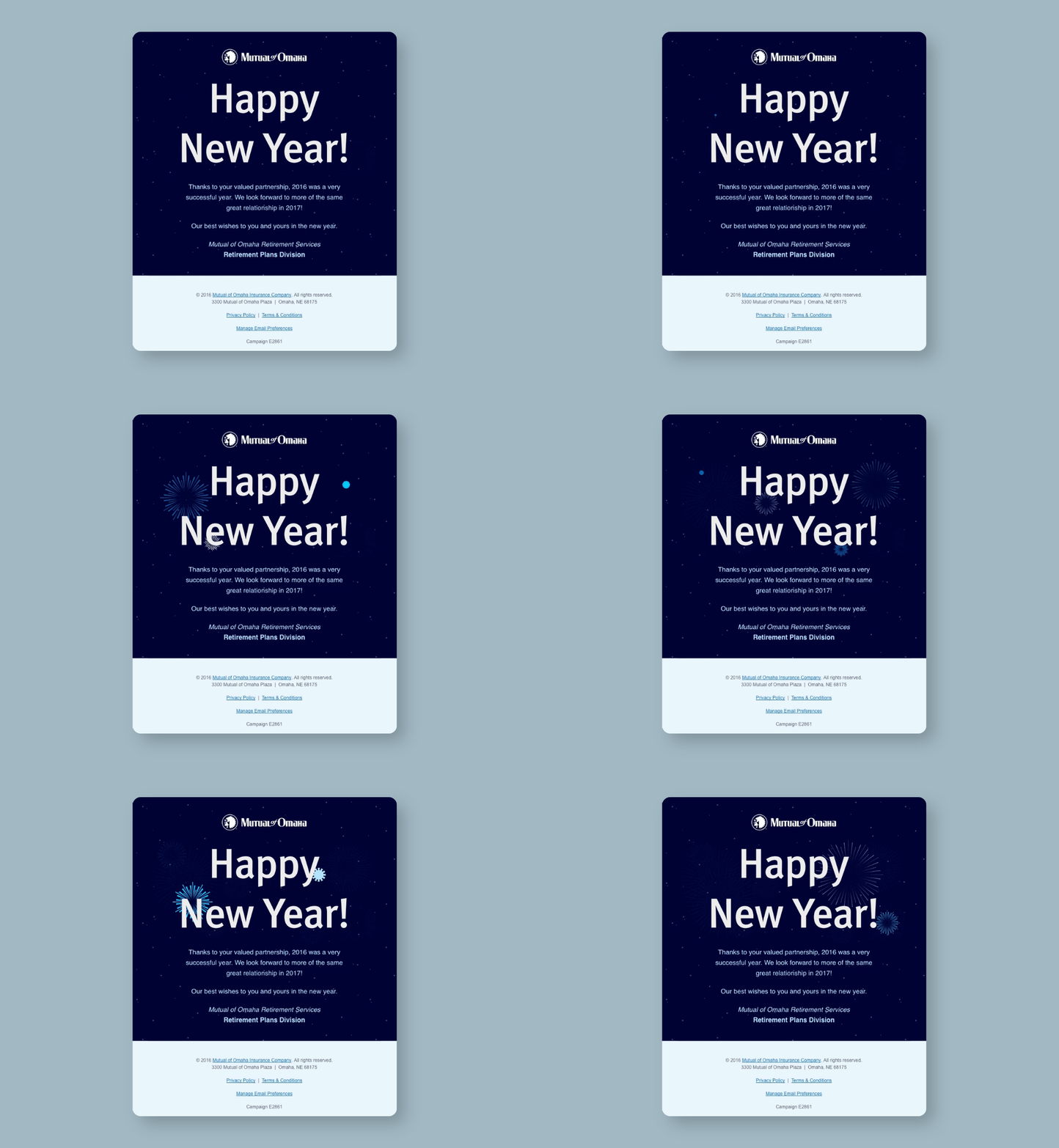
Use this kind of email for: Holiday greetings, seasonal messages, client appreciation, partner communication, or non-promotional relationship-building emails.
20. Trello: B2B milestone email that celebrates customers
Trello uses this milestone email to celebrate reaching 10 million users. Instead of making the email only about the company, the message thanks users and includes a free Trello Gold offer as part of the celebration.
That makes the milestone feel shared. The email turns company growth into a customer appreciation moment, giving subscribers a reason to feel included rather than simply informed.
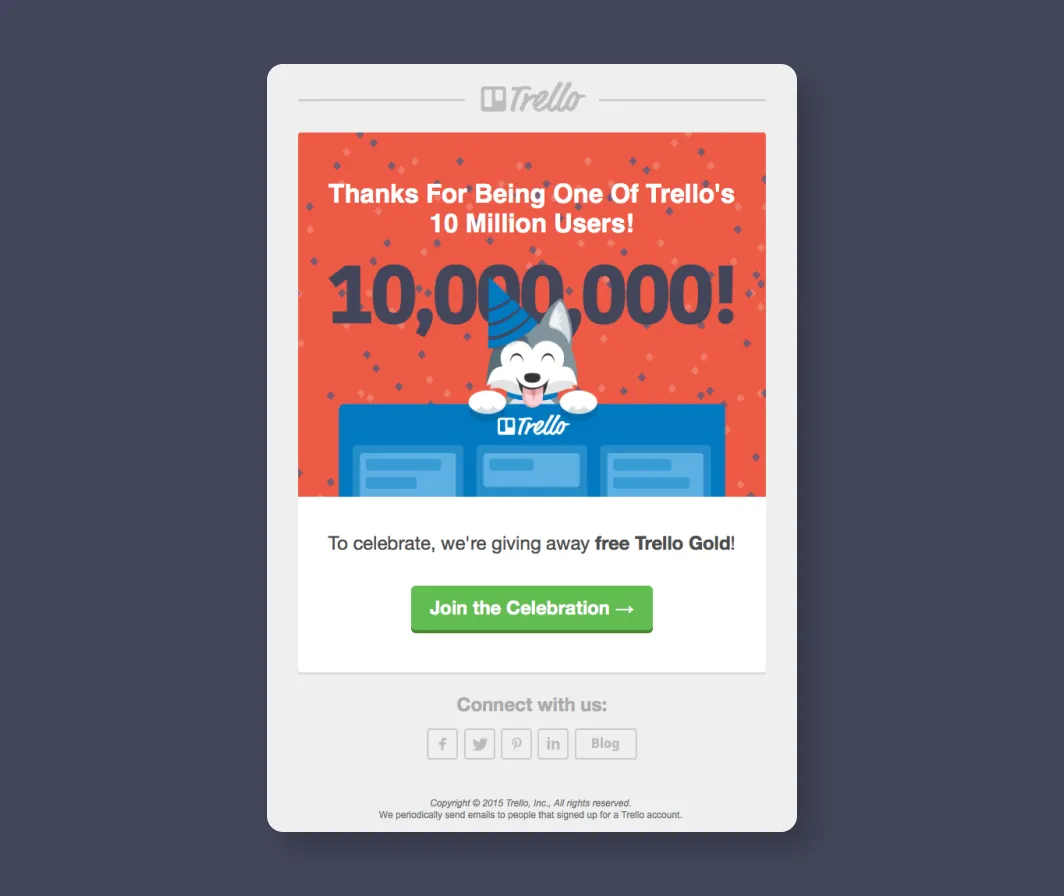
Use this kind of email for: Company milestones, customer appreciation, user growth announcements, thank-you campaigns, or celebration emails with a small reward.
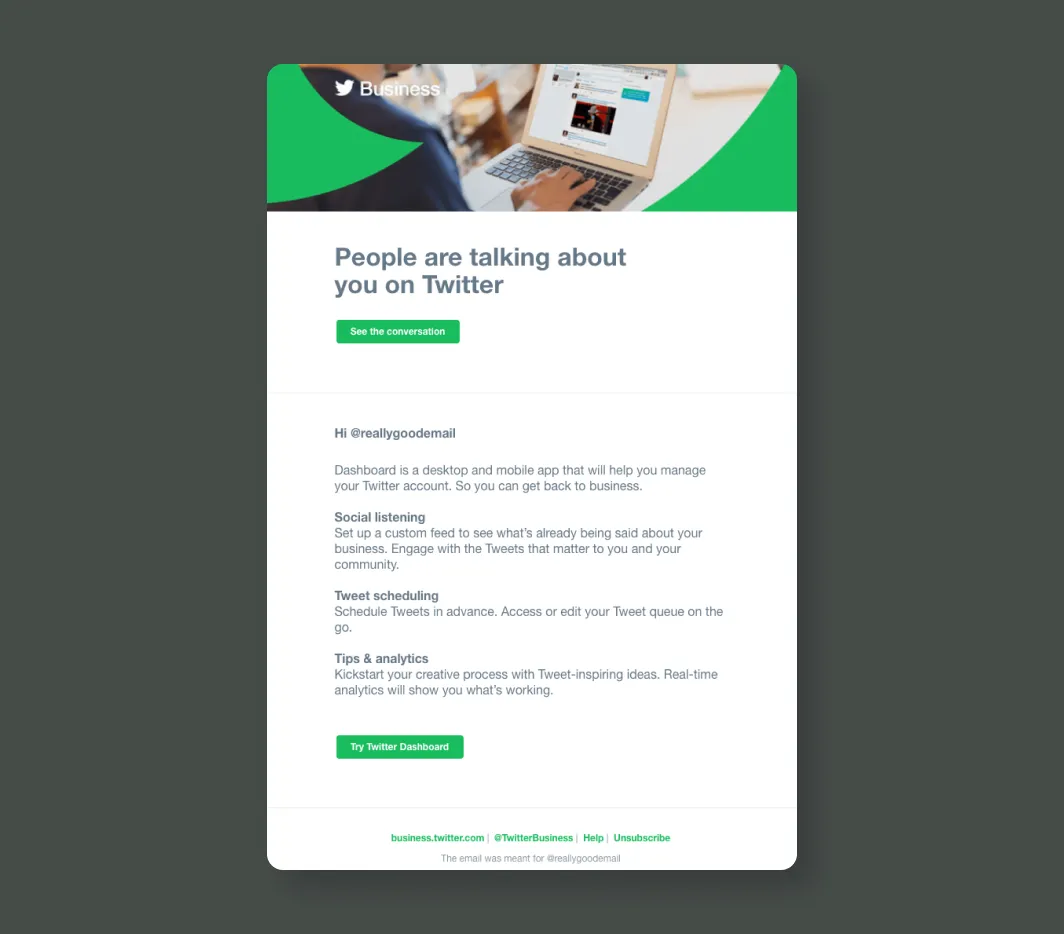
21. Twitter Business: B2B reactivation email that reminds users of product value
Twitter Business uses this email to bring users back with a curiosity-driven hook: people are talking about you on Twitter. The message then connects that hook to practical business use cases, such as monitoring conversations, publishing content, and tracking performance.
The email is useful because it gives inactive users a reason to return that feels directly tied to business value. It does not just say “come back”; it reminds users what they may be missing.
Use this kind of email for: Reactivation campaigns, product value reminders, dashboard reminders, social listening tools, account activity prompts, or bringing inactive users back to a platform.
B2B Email Campaign Ideas
B2B email marketing works best when every campaign has a clear purpose. Some emails help new users get started, while others promote product updates, share useful content, invite people to events, or keep customer relationships active over time.
Here are a few B2B email campaign ideas you can use when planning your next email:
| B2B email campaign idea | When to use it |
|---|---|
|
Welcome or onboarding email |
When a new user signs up, starts a trial, or creates an account. |
|
Product activation email |
When users need help taking the first meaningful step inside your product. |
|
Feature announcement email |
When you release a new feature, integration, or product improvement. |
|
Product launch email |
When you introduce a new product, app, service, or major update. |
|
Blog newsletter |
When you want to share educational content, industry insights, or company resources. |
|
Event invitation email |
When promoting webinars, conferences, demos, workshops, or customer events. |
|
Co-marketing email |
When promoting a joint guide, webinar, report, or partnership campaign. |
|
Customer appreciation email |
When celebrating milestones, anniversaries, or customer community moments. |
|
Holiday greeting email |
When you want to stay visible without sending a sales-focused message. |
|
Reactivation email |
When users, leads, or customers have stopped engaging with your product or emails. |
|
Referral or team invite email |
When your product becomes more valuable as more teammates join. |
|
Product usage reminder |
When customers have not used an important feature, report, dashboard, or tool recently. |
B2B Email Marketing Best Practices
Strong B2B email marketing is not about sending more emails. It is about sending more useful emails to the right people at the right moment. Whether you are writing an onboarding email, product update, newsletter, event invitation, or reactivation campaign, the same basic principles apply.
- Focus on one main goal: Every B2B email should have a clear purpose, such as activating a user, promoting a feature, driving event registrations, or sharing a useful resource.
- Write for a specific audience segment: A new trial user, active customer, agency partner, and inactive account do not need the same message.
- Make the business value clear: Explain how the email helps the reader save time, improve results, solve a problem, learn something useful, or take the next step.
- Use one primary CTA: Give readers a clear action instead of competing buttons that split attention.
- Keep the design easy to scan: Use clear headlines, short sections, strong spacing, and visual hierarchy so busy readers can understand the email quickly.
- Support claims with proof: Use customer stories, numbers, examples, product screenshots, testimonials, or clear use cases when possible.
- Optimize for mobile and email clients: B2B emails are still opened across different devices, inboxes, and email clients, so design and code quality matter.
FAQ: B2B Email Marketing Examples
What is B2B email marketing?
B2B email marketing is the use of email campaigns to communicate with business customers, leads, users, partners, or professional audiences. These campaigns can support onboarding, product education, lead nurturing, event promotion, customer retention, and long-term relationship building.
What are examples of B2B marketing emails?
Examples of B2B marketing emails include onboarding emails, product update emails, feature announcements, blog newsletters, webinar invitations, event announcements, partnership emails, customer appreciation emails, reactivation emails, and product usage reminders.
What is the difference between B2B email marketing and cold email?
B2B email marketing is usually sent to people who already know the brand, such as subscribers, leads, customers, users, or partners. Cold email is sent to prospects who may not have interacted with the company before. B2B email marketing often focuses on education, nurturing, product updates, and retention, while cold email usually focuses on starting a sales conversation.
How often should B2B companies send marketing emails?
The right frequency depends on the audience, sales cycle, and type of campaign. A newsletter may be sent once or twice a month, while onboarding emails, product updates, event reminders, and lifecycle campaigns are usually sent based on user behavior or specific timing.
How do you choose the right B2B email campaign?
Choose the campaign based on the recipient’s stage in the customer journey. New users may need onboarding emails, active customers may need product updates, leads may respond to educational newsletters or webinars, and inactive users may need reactivation emails. The best B2B email strategy connects the email type to a specific audience need and next step.
Can these B2B email examples be used as templates?
Yes. You can use these B2B email examples as starting points for your own campaigns, but they should not be copied directly. Treat each example as a structure or strategy: identify the goal, audience, message, CTA, and layout, then adapt it to your product, offer, and customer journey.
Final Thoughts
The best B2B email marketing examples have one thing in common: they are built around a clear purpose. Some help users get started, some announce product updates, some nurture leads with useful content, and others keep customer relationships active over time.
Before creating your next B2B email campaign, decide what the email needs to do, who it is for, and what next step makes the most sense for that audience. A strong B2B email does not need to say everything at once. It needs to make one useful action feel clear, relevant, and easy to take.
Need more ideas for your next campaign? These guides cover different types of emails, from full campaign inspiration to event promotions, re-engagement emails, and email design trends.