150+ Welcome Email Examples to Inspire Your First Impression


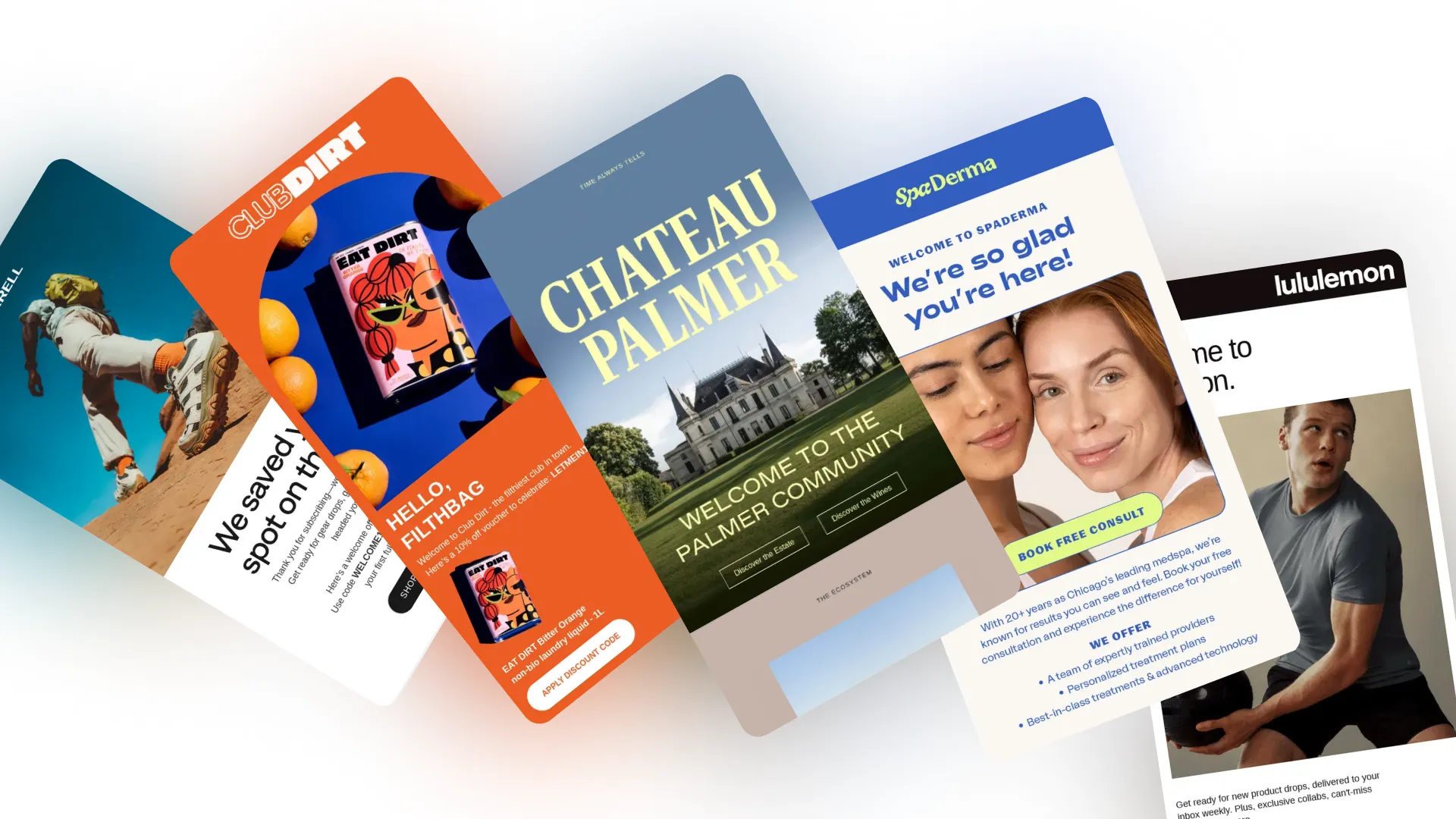
The best welcome email examples don’t all follow the same formula. Some use a welcome email to deliver a discount; others introduce the brand, help a new user take a first step, or simply explain what happens next. The welcome email design can be stripped back or packed with products, and in many cases the first message is only the beginning of a longer welcome email series.
We collected more than 150 examples across ecommerce, SaaS, newsletters, B2B, customer onboarding, memberships, product recommendations, and complete welcome flows. Use them to see how different brands handle the same small but important moment: someone has just raised their hand and said, “I’m interested.”
Quick links:
→ Ecommerce Welcome Email Examples
→ Welcome Discount and Offer Email Examples
→ New Subscriber and Newsletter Welcome Email Examples
→ Customer Welcome Email Examples
→ Product Recommendation Welcome Emails
→ Brand Story and Benefit-Focused Welcome Emails
→ Account, Membership and Registration Welcome Emails
Welcome Email Subject Line Examples
Ecommerce Welcome Email Examples
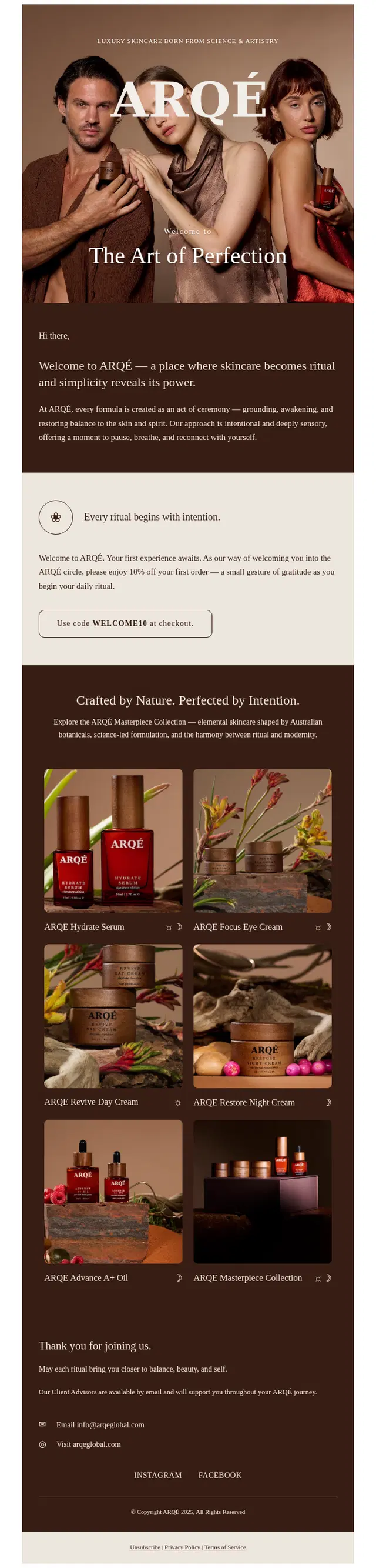
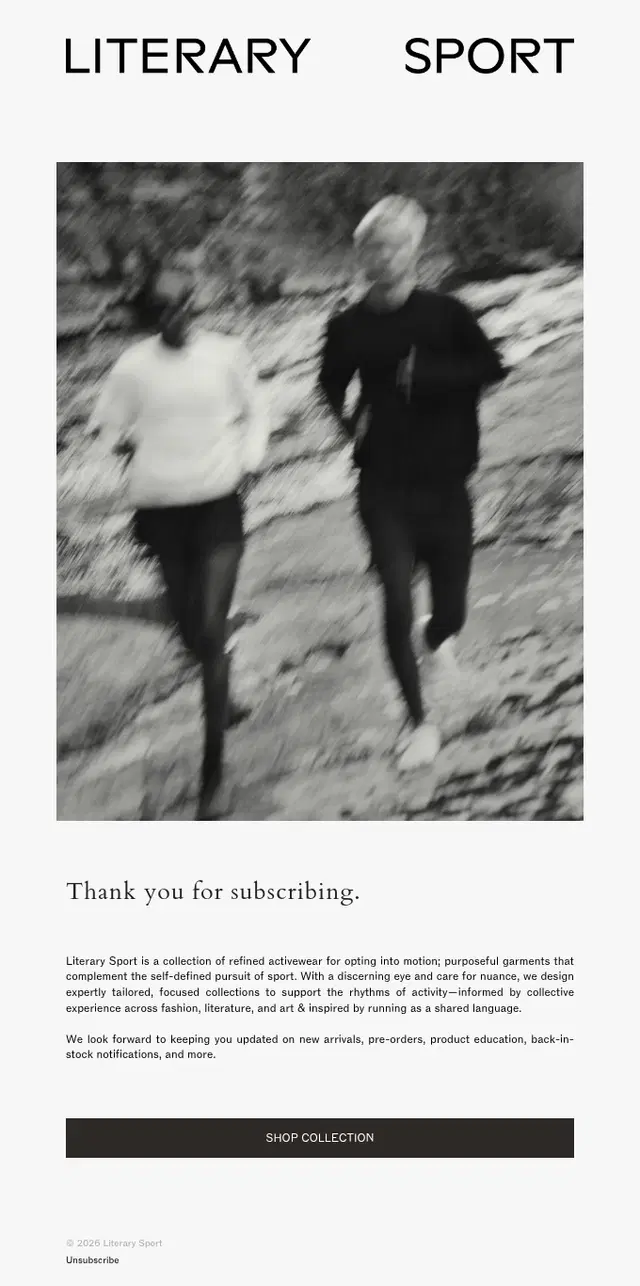
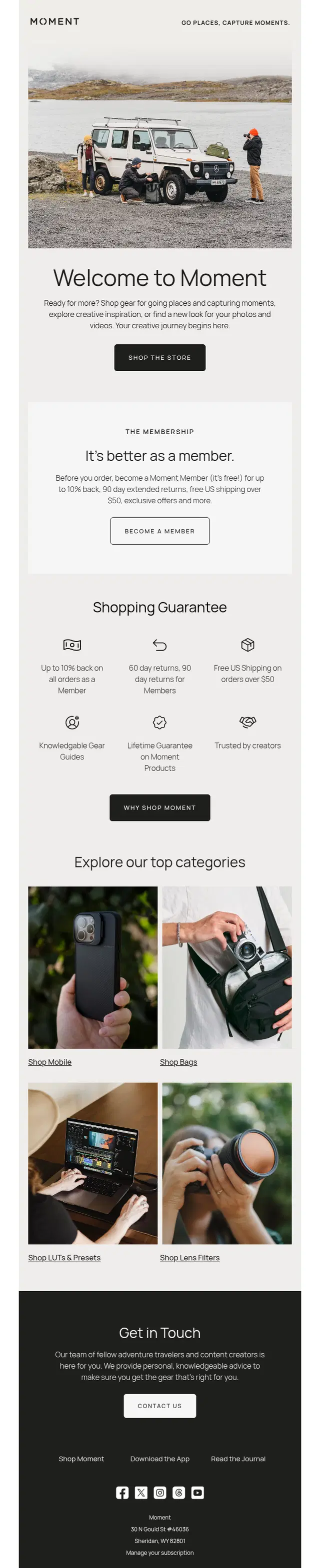
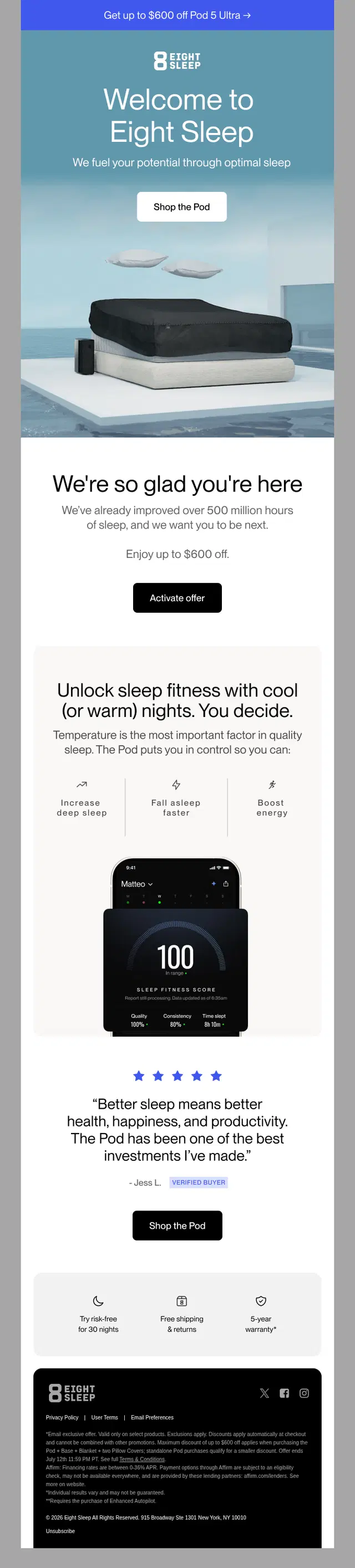
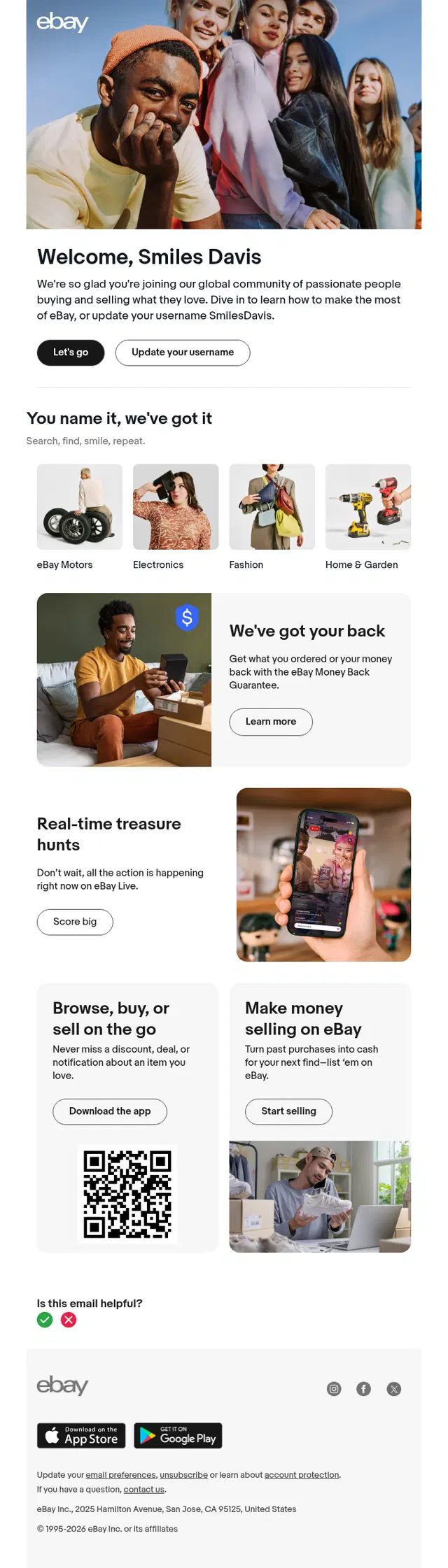
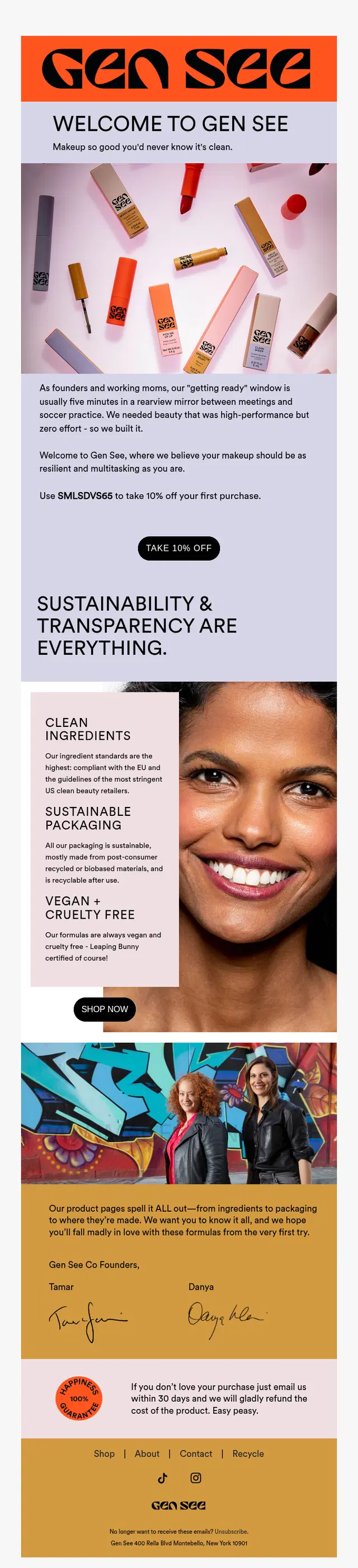
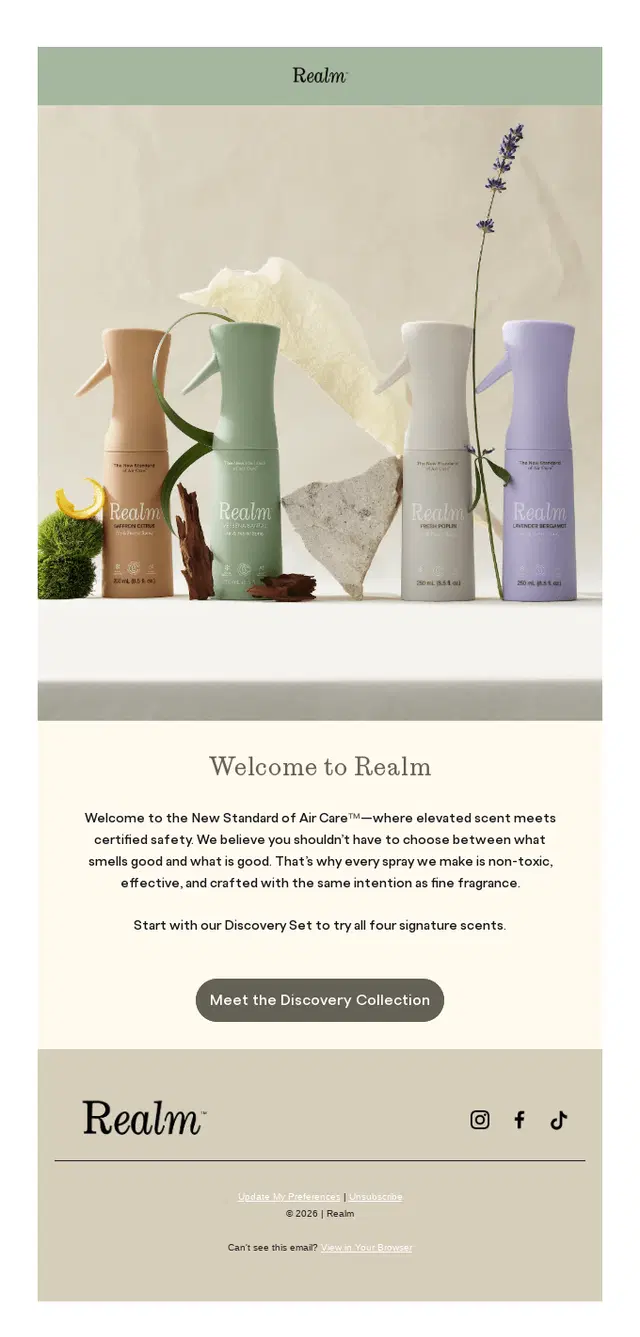
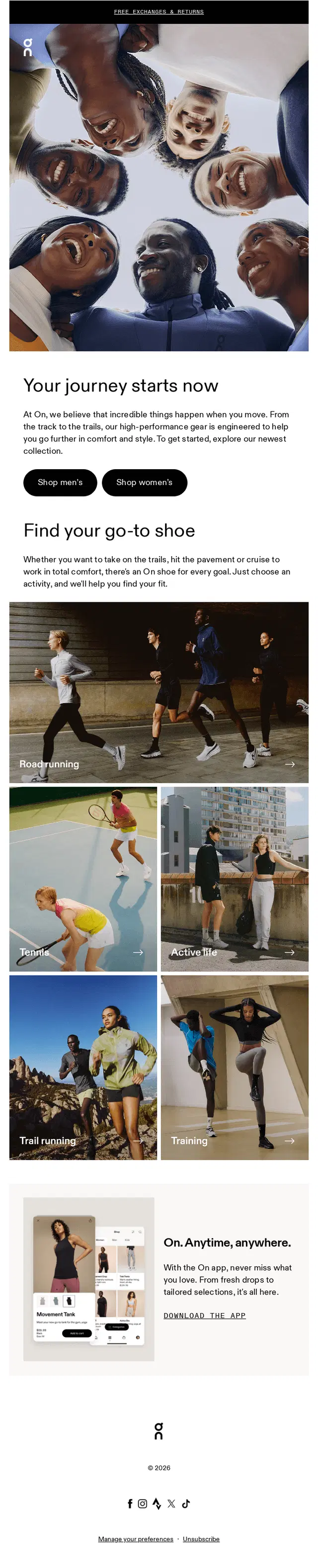
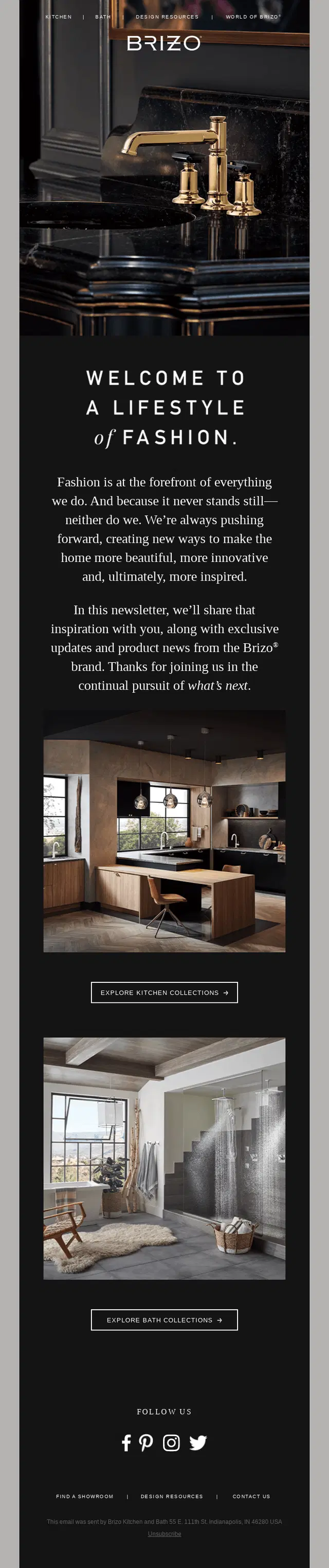
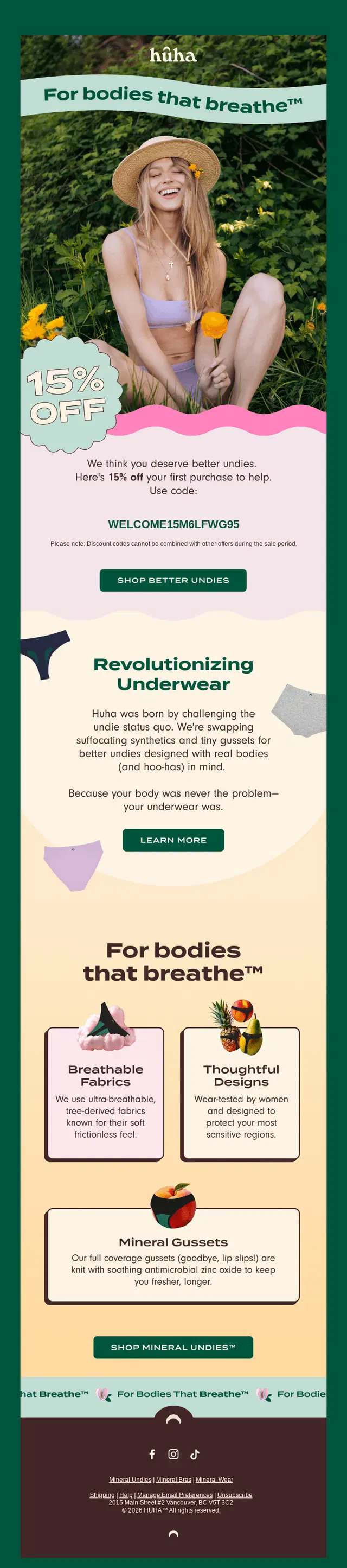
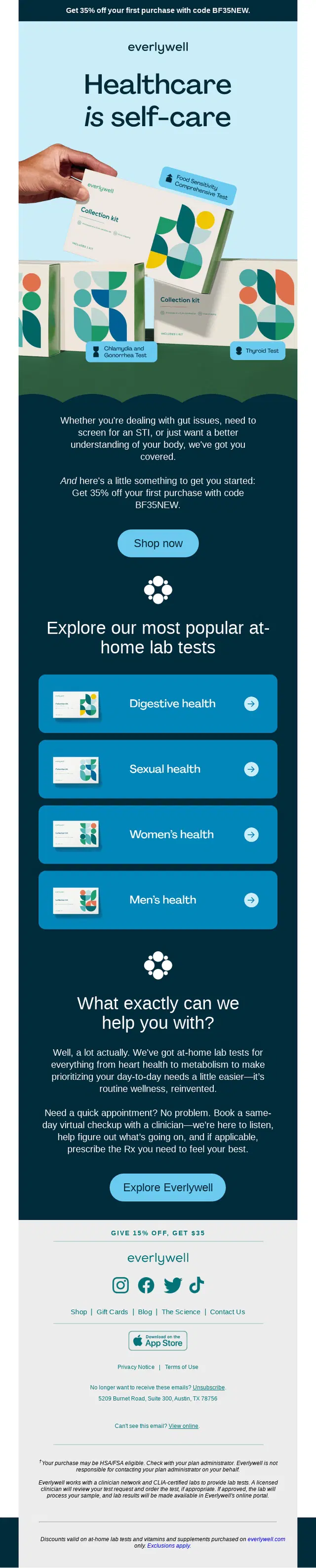
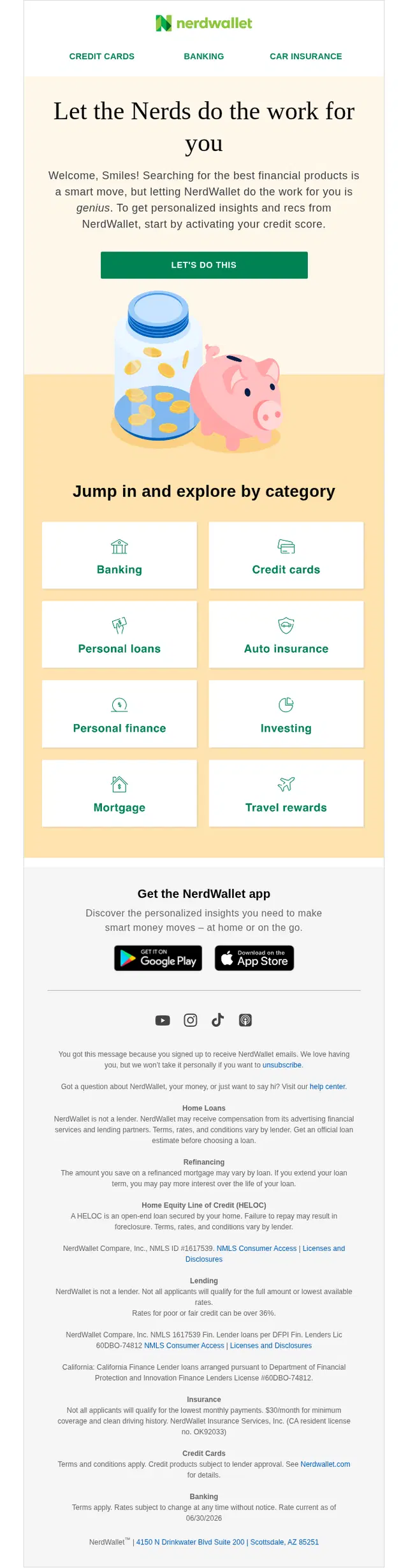
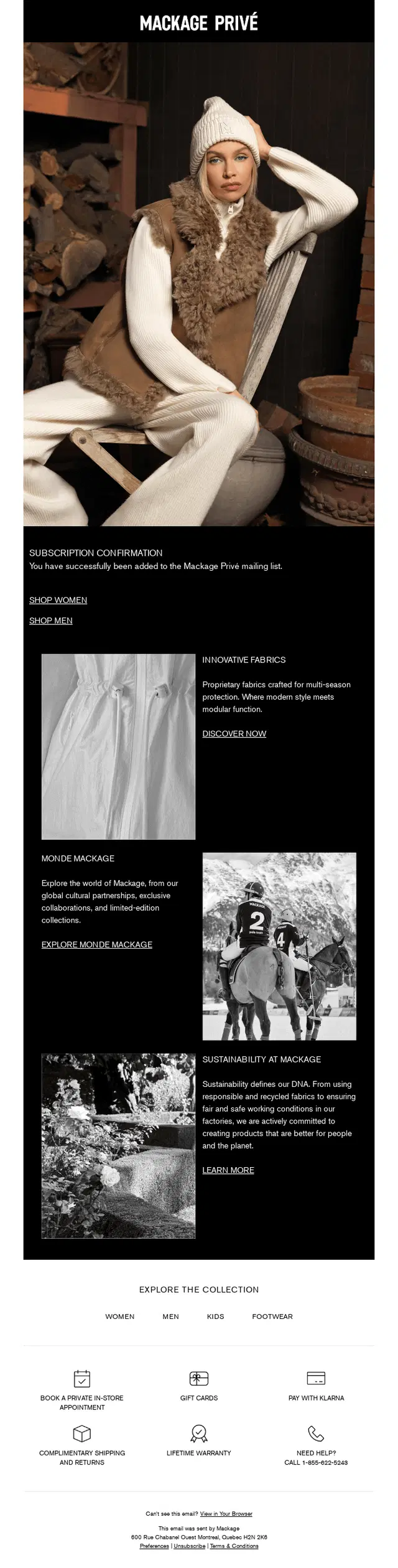
Ecommerce welcome emails have plenty of jobs to do. They can introduce the brand, get a first purchase moving, surface popular products, or show a new subscriber where to begin without making them browse an entire store. The examples below come from fashion, beauty, food, home, wellness, and other ecommerce brands, with approaches ranging from clean brand introductions to much more product-led welcomes.



Welcome Discount and Offer Email Examples
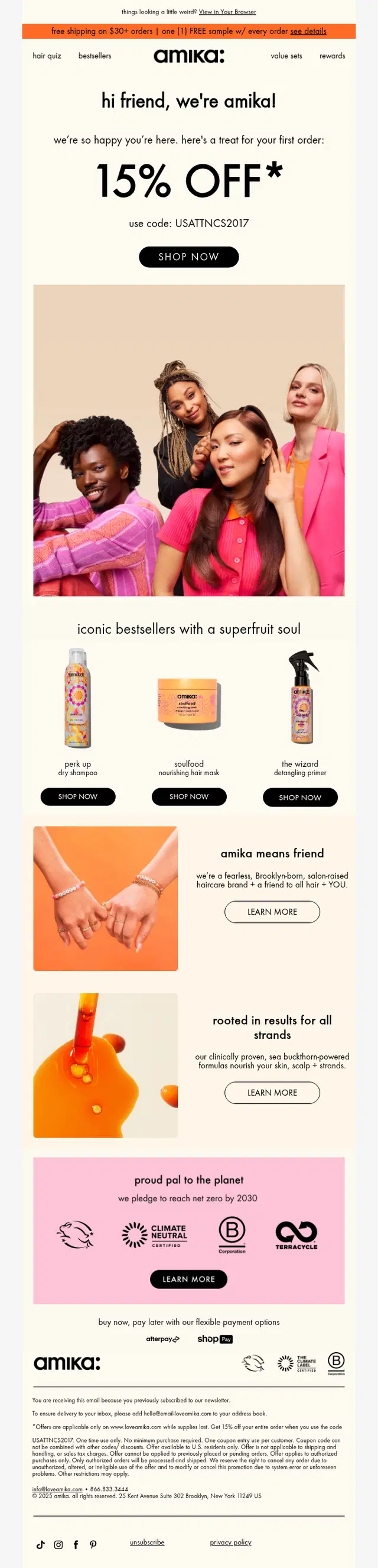
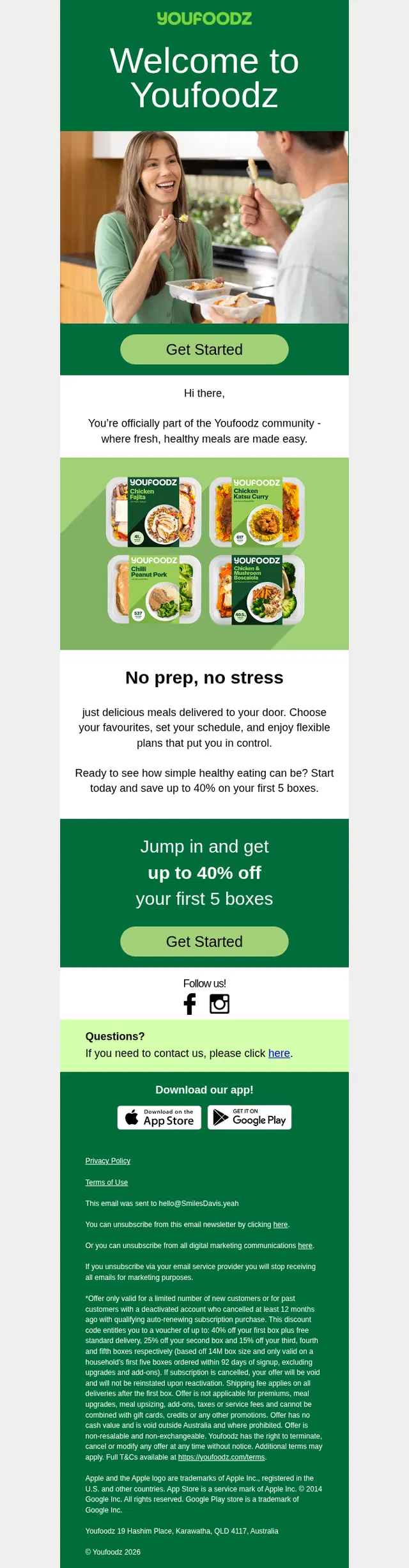
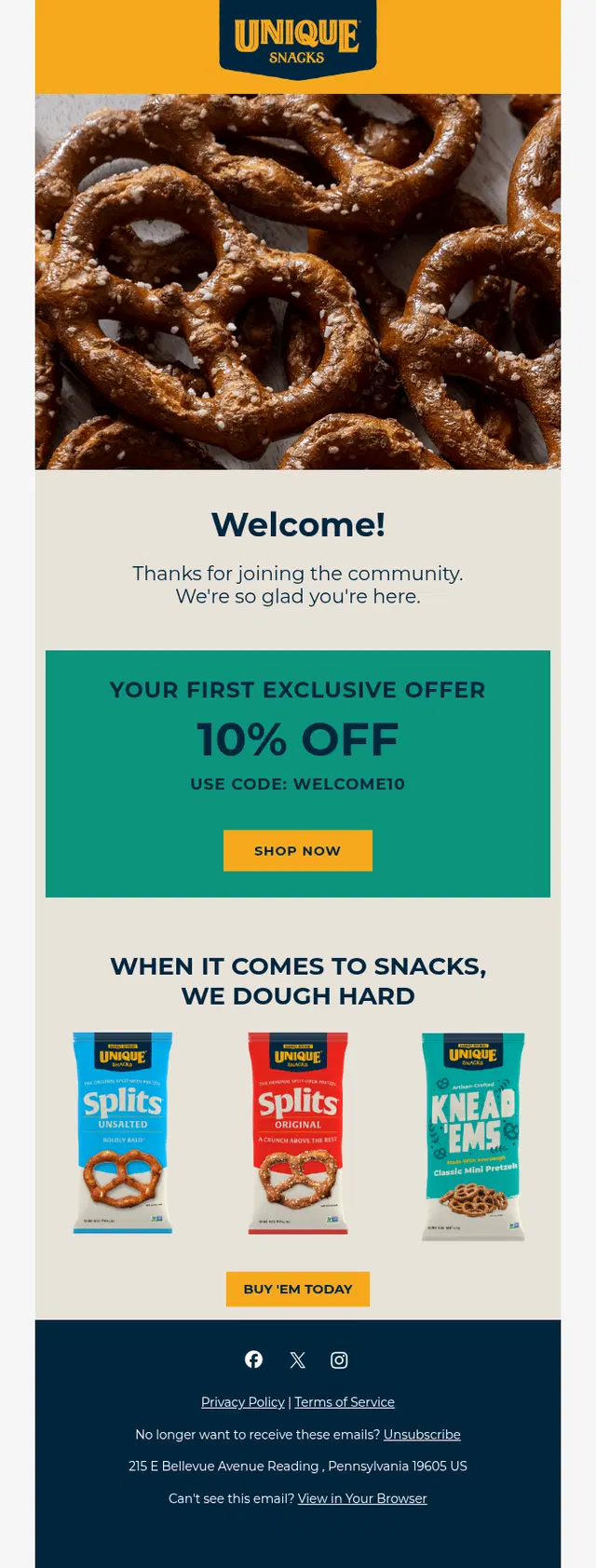
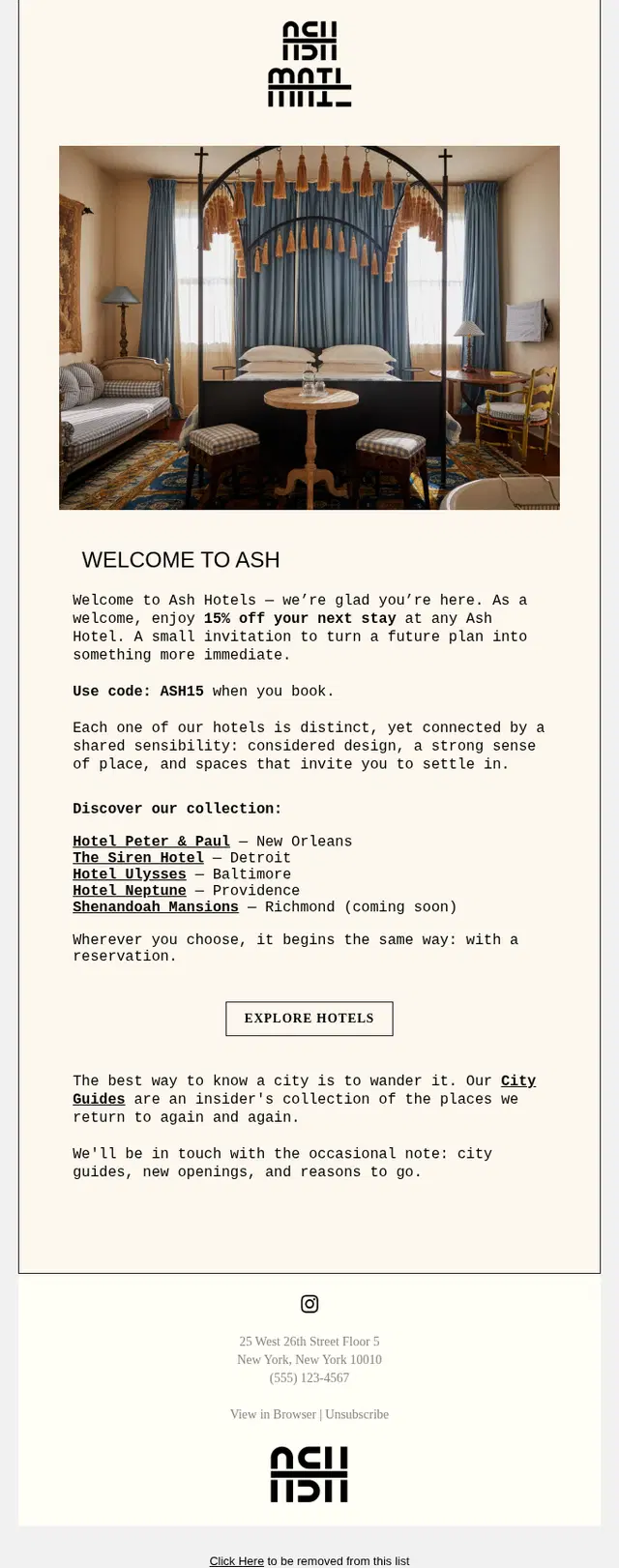
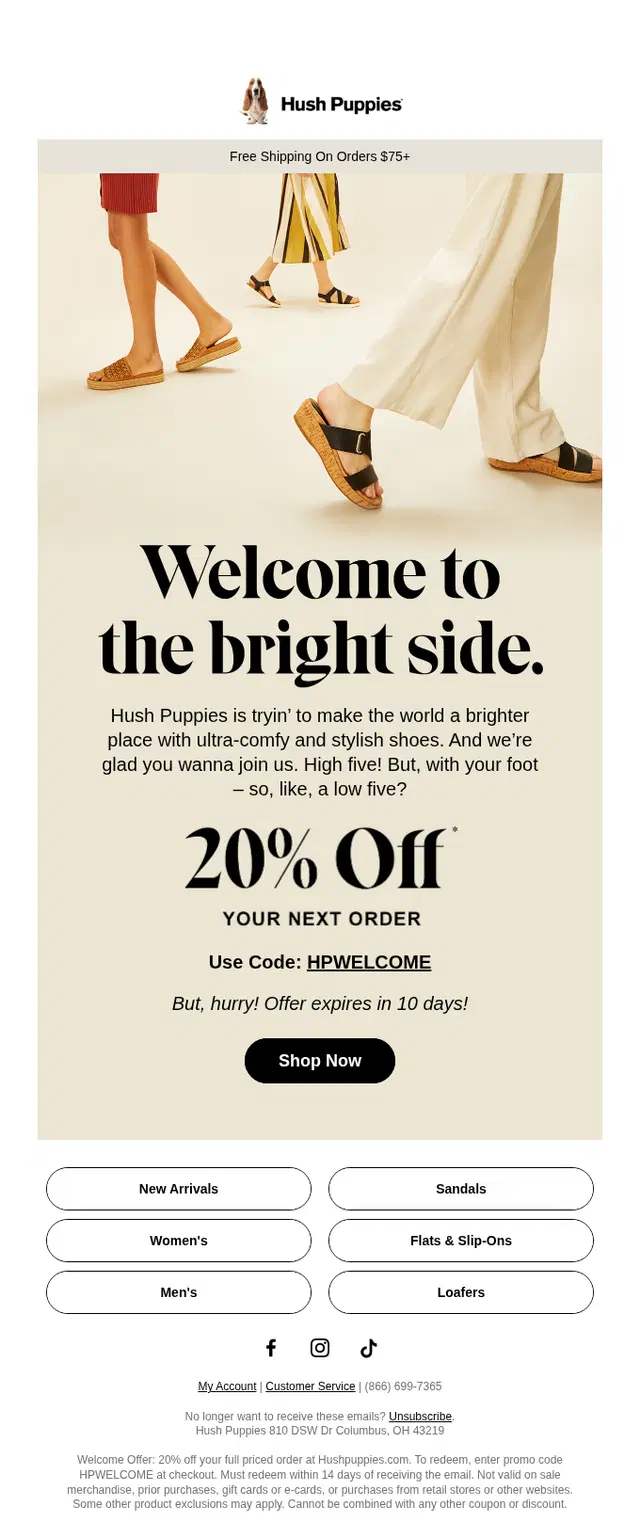
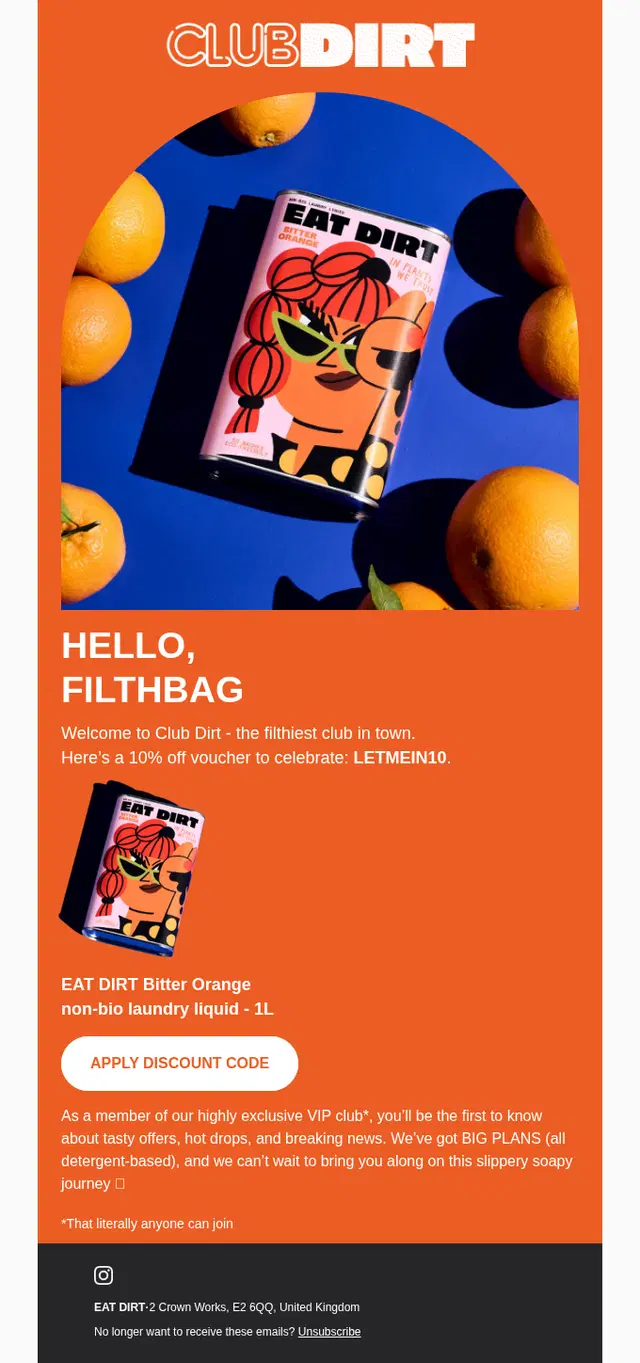
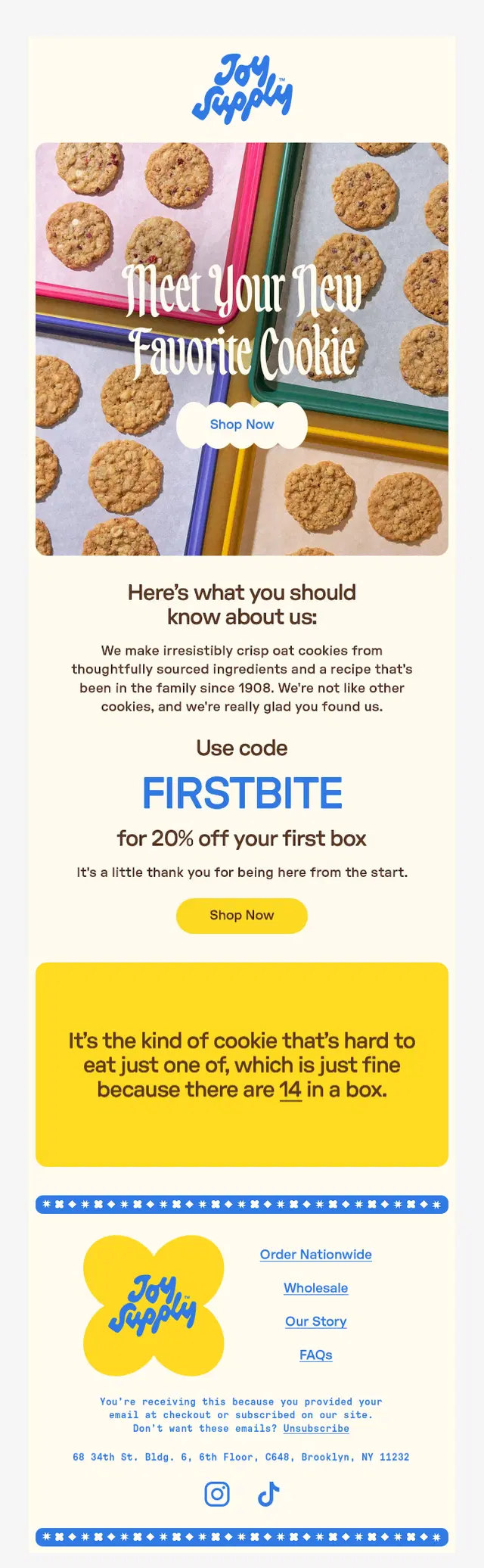
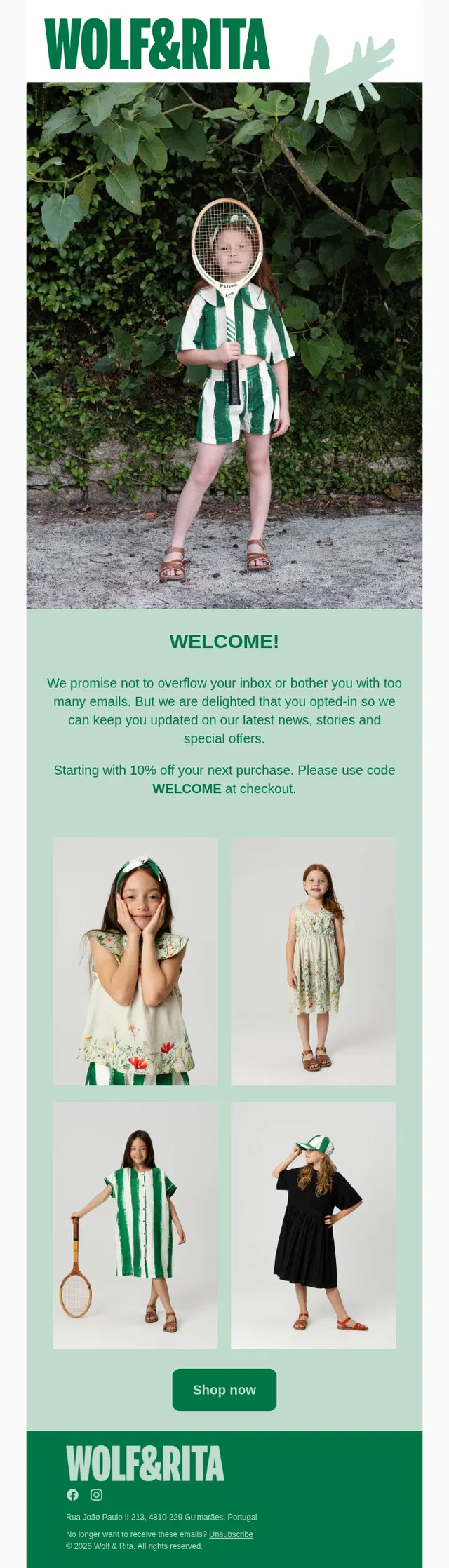
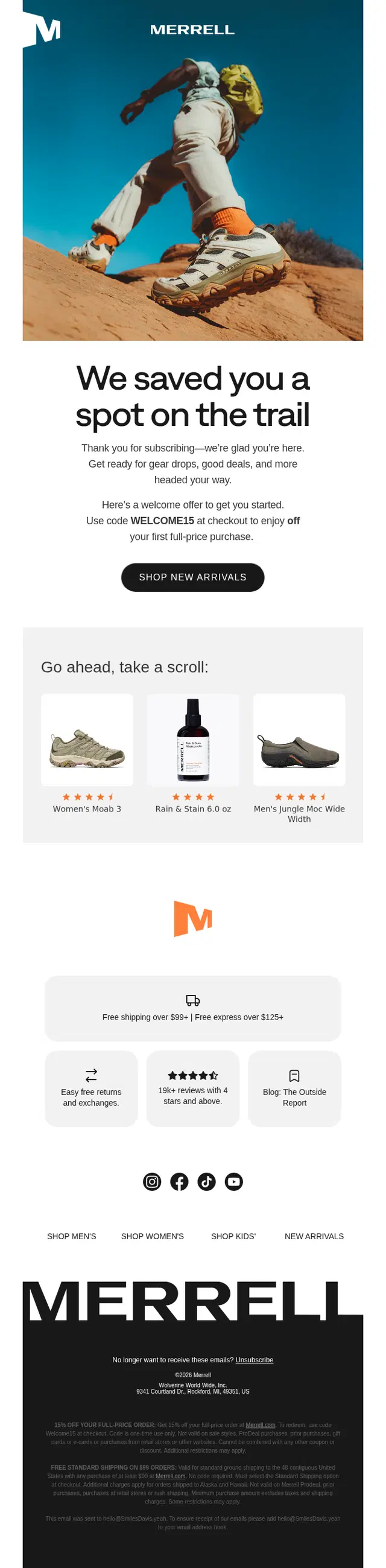
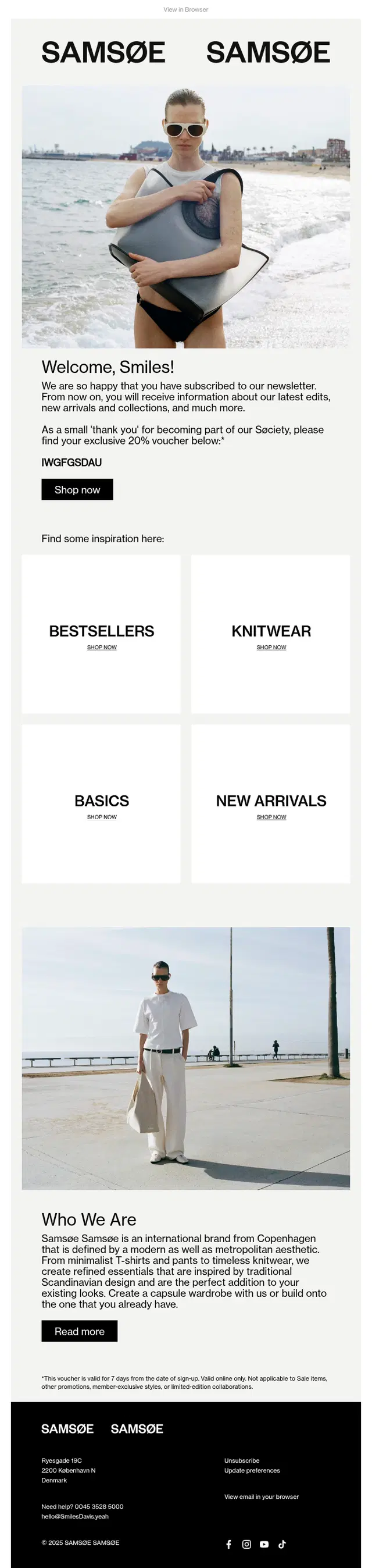
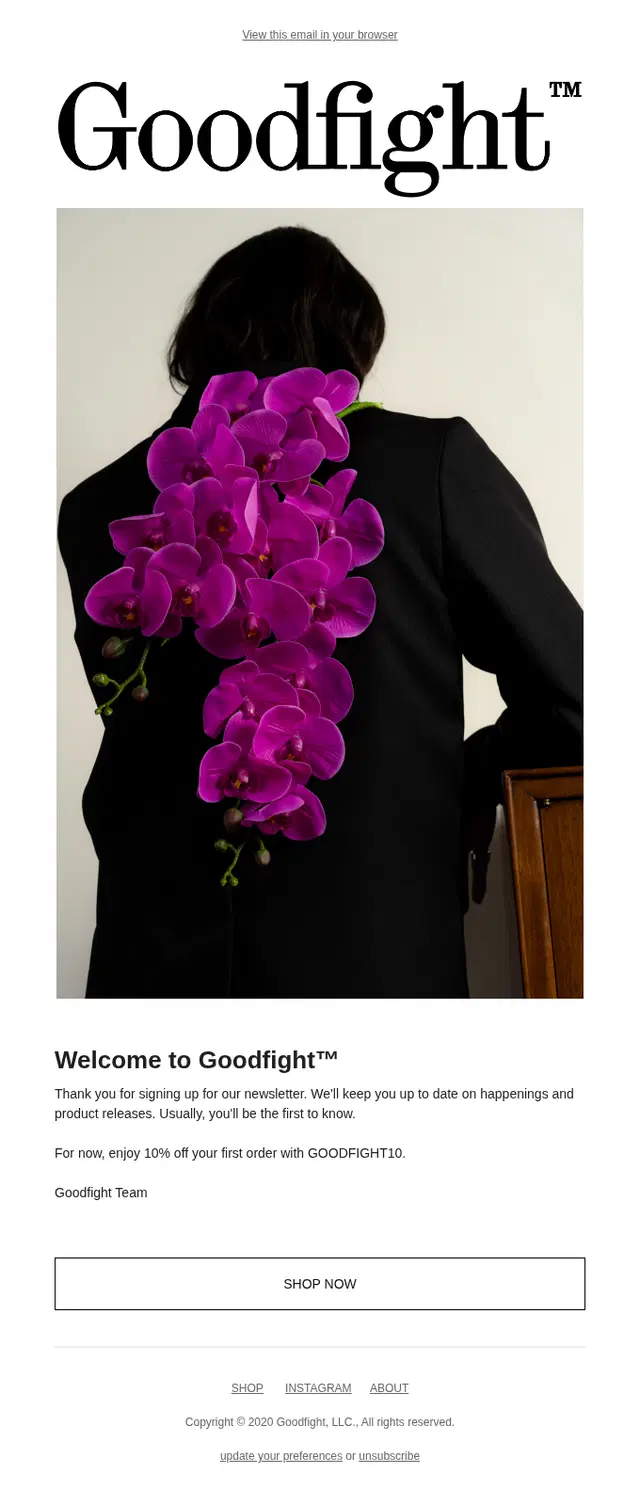
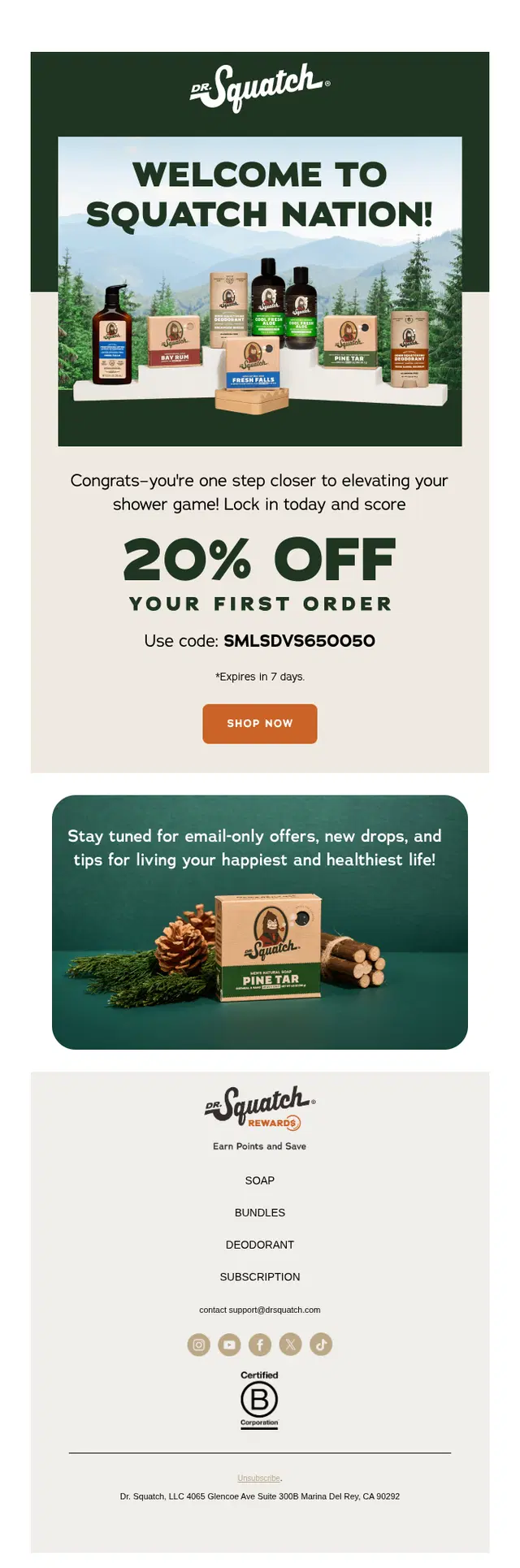
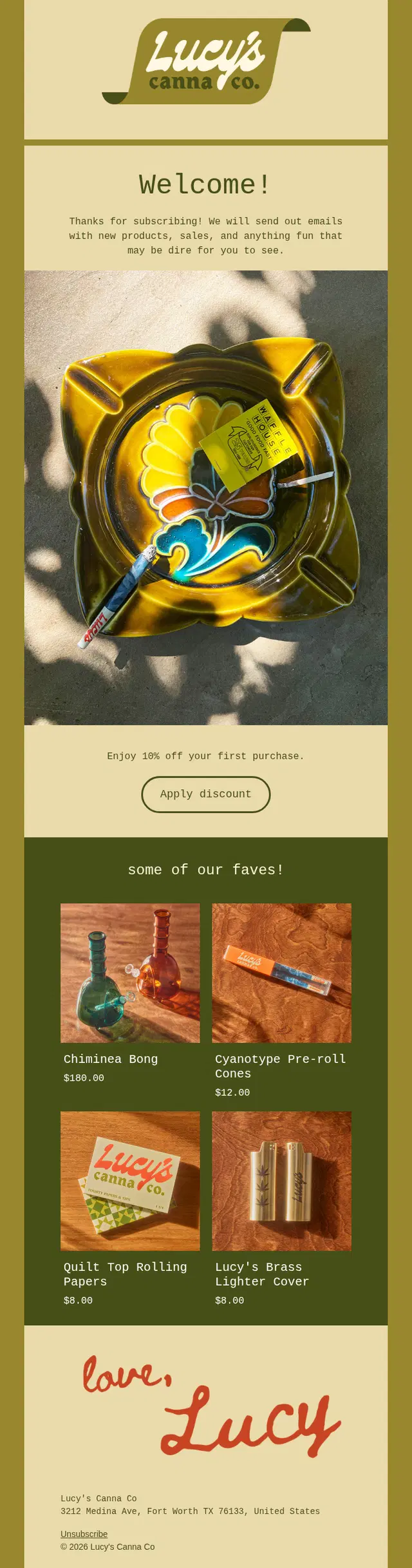
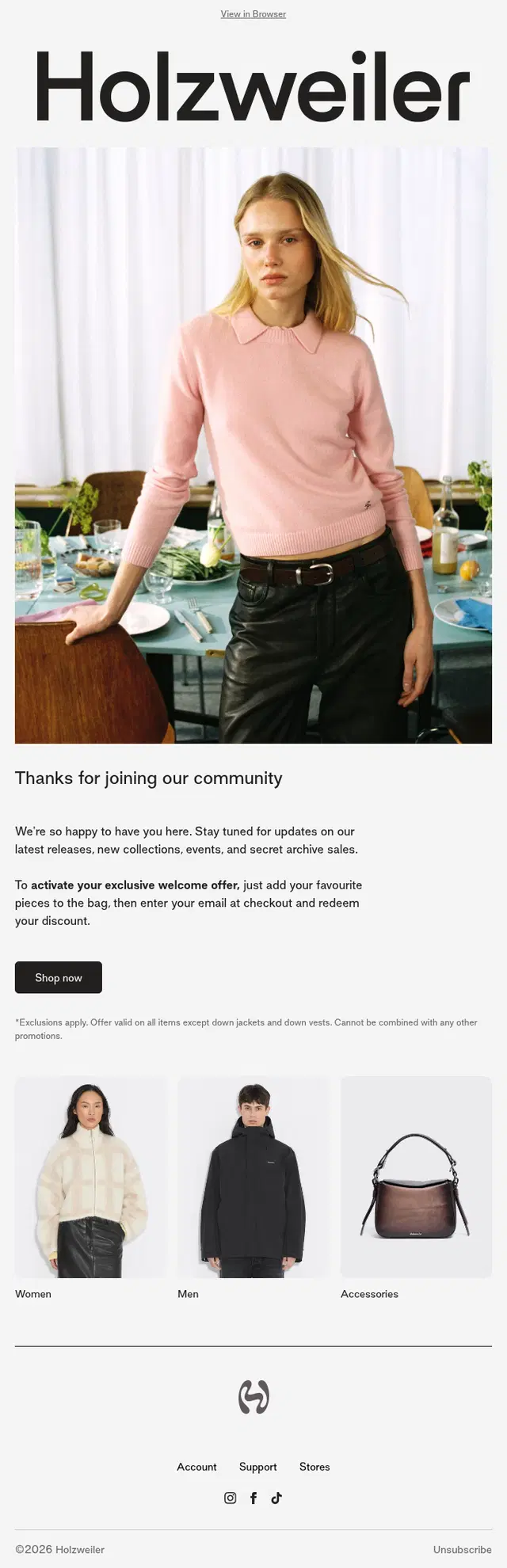
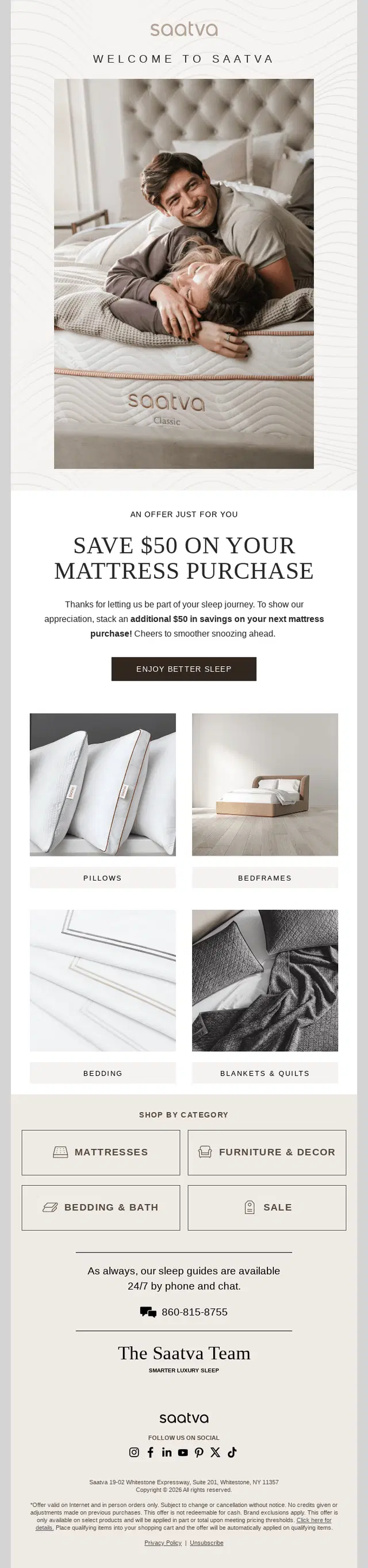
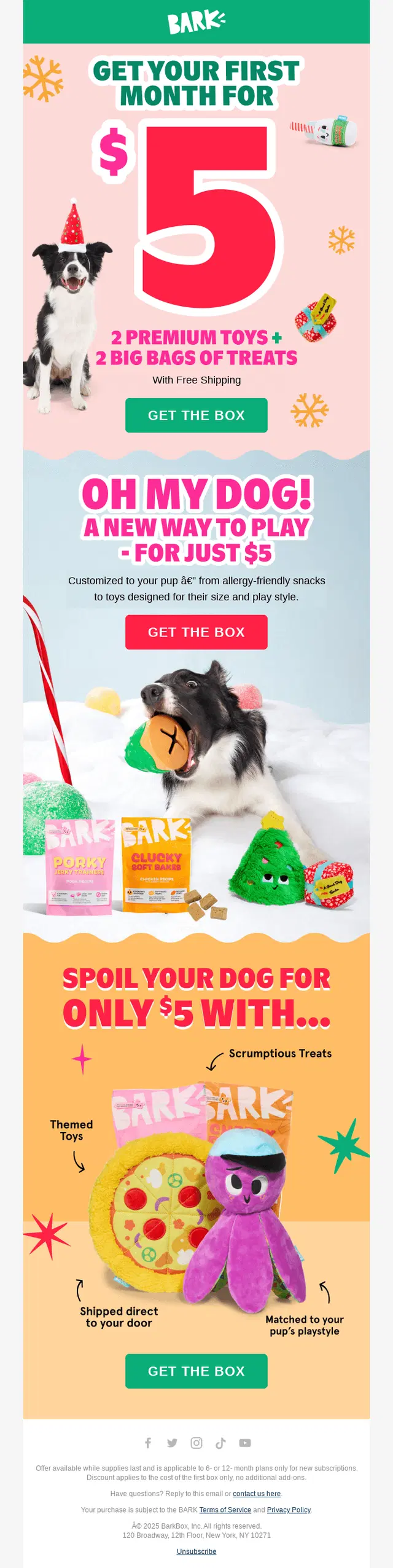
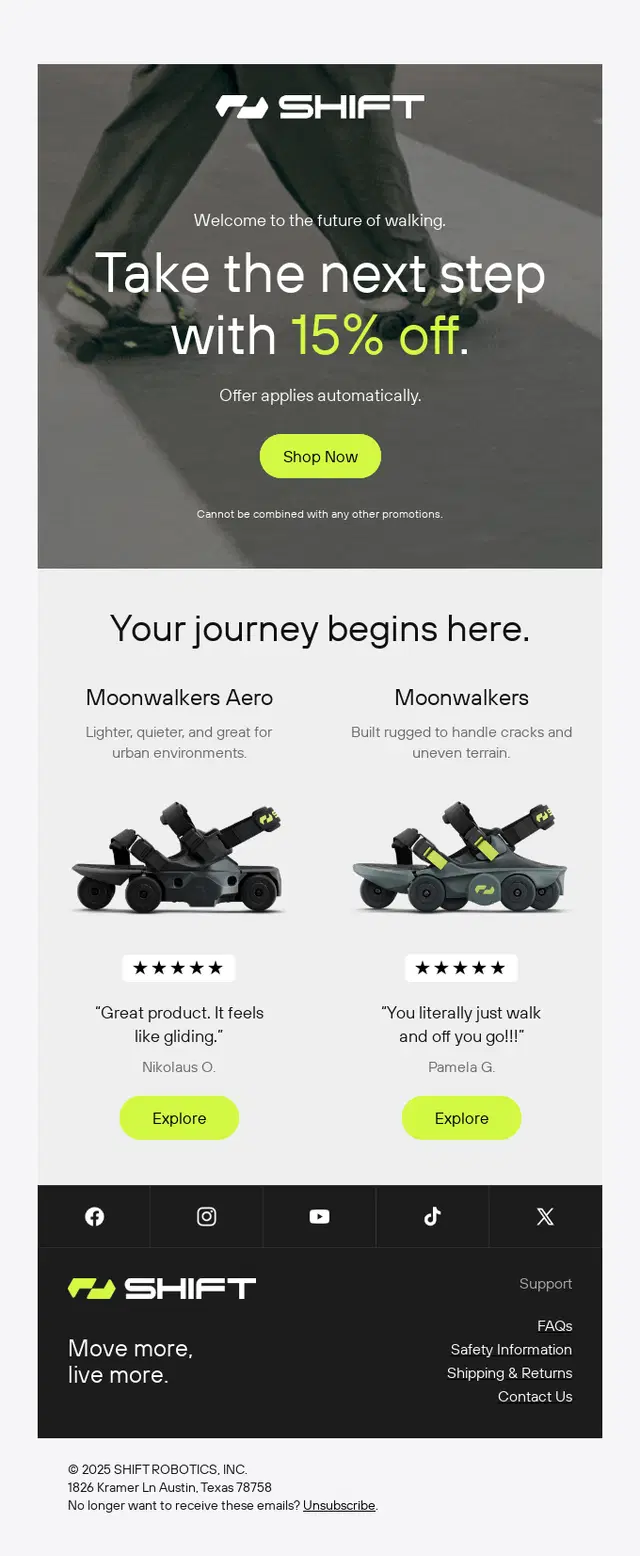
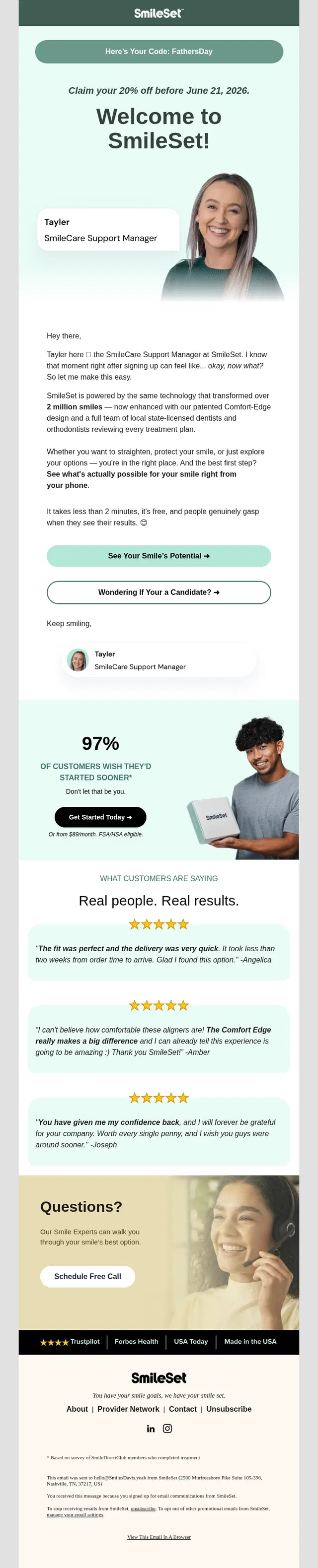
A welcome discount is one of the simplest ways to turn fresh interest into a first purchase, but the execution varies a lot. Some brands lead with 10%, 15%, or 20% off. Others use free shipping, a fixed-value credit, a gift, or a short expiry window. These examples show how the offer can be the whole message or just one part of a fuller brand introduction.


New Subscriber and Newsletter Welcome Email Examples
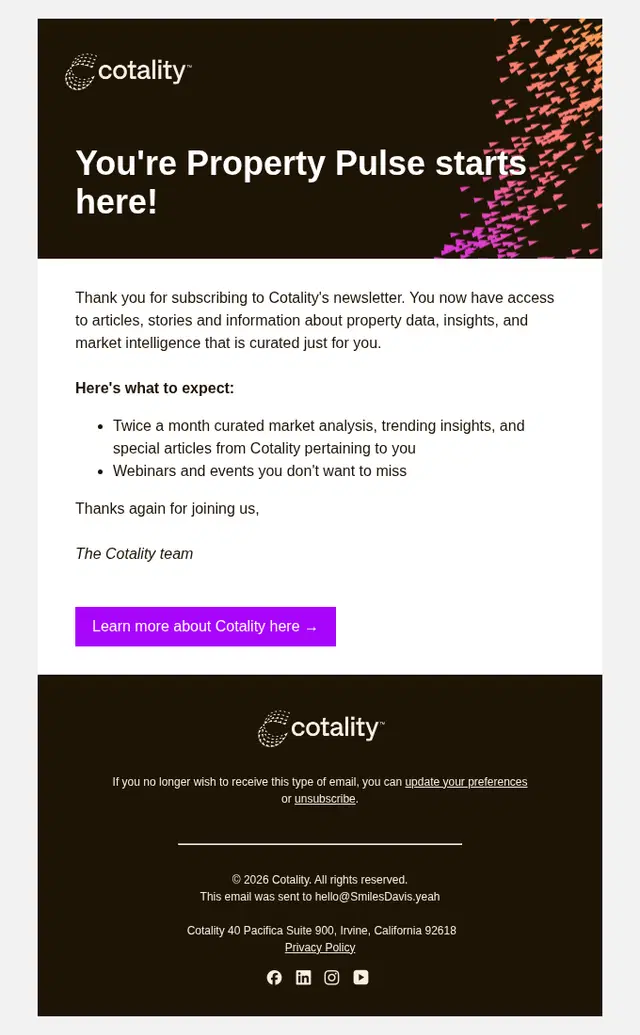
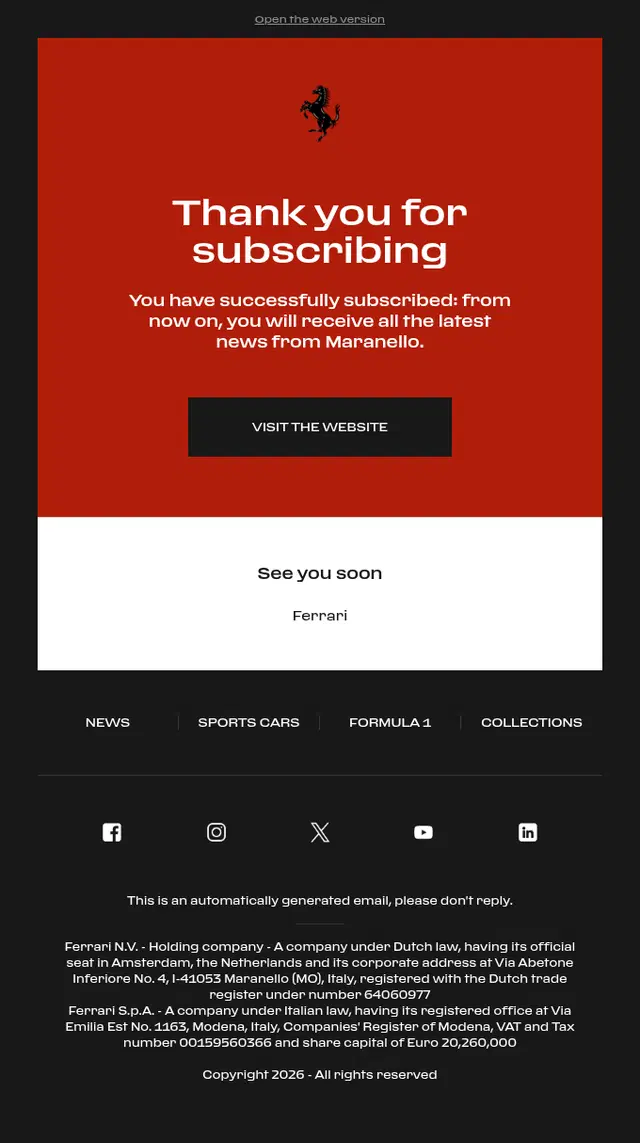
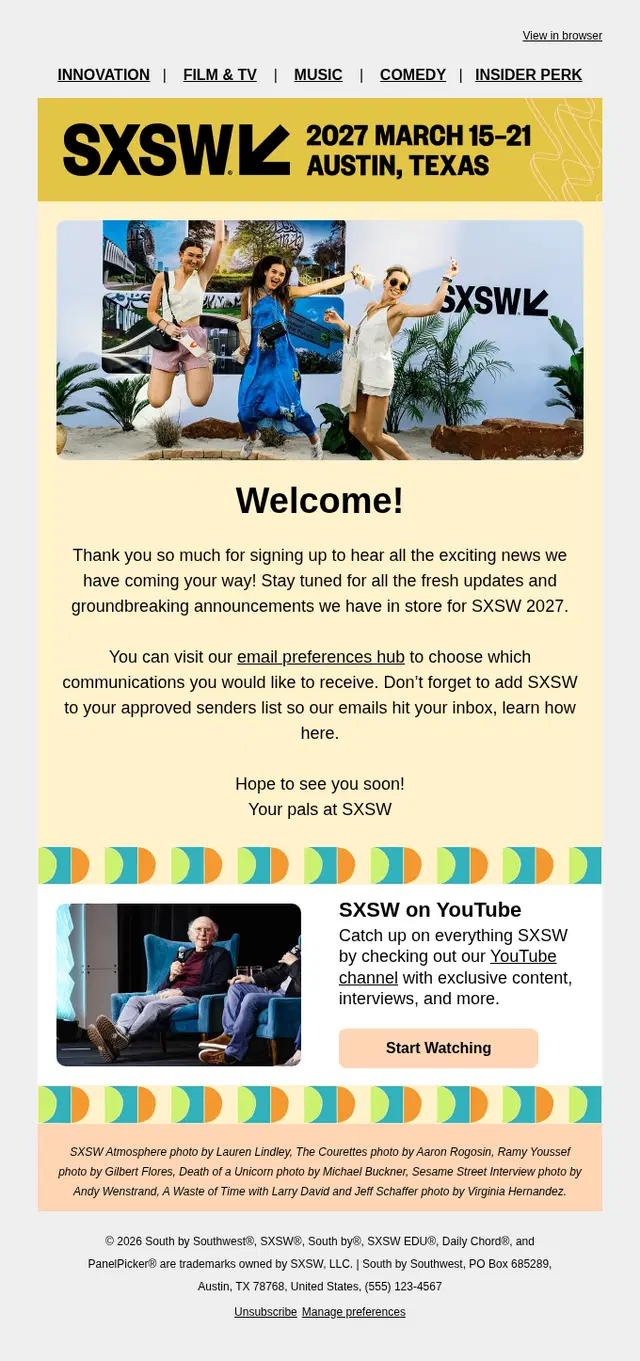
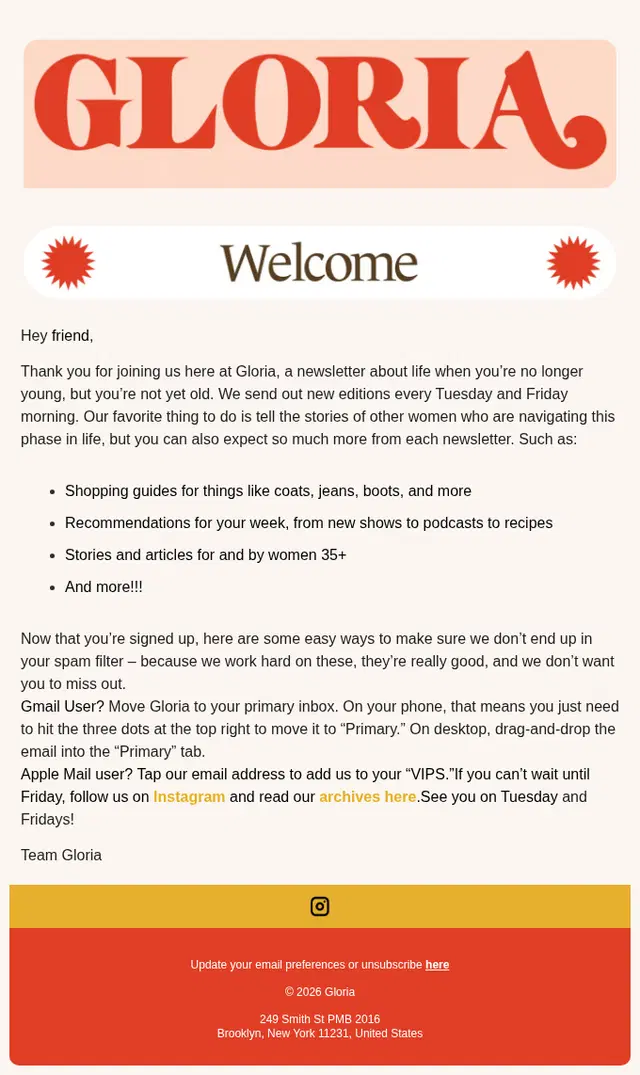
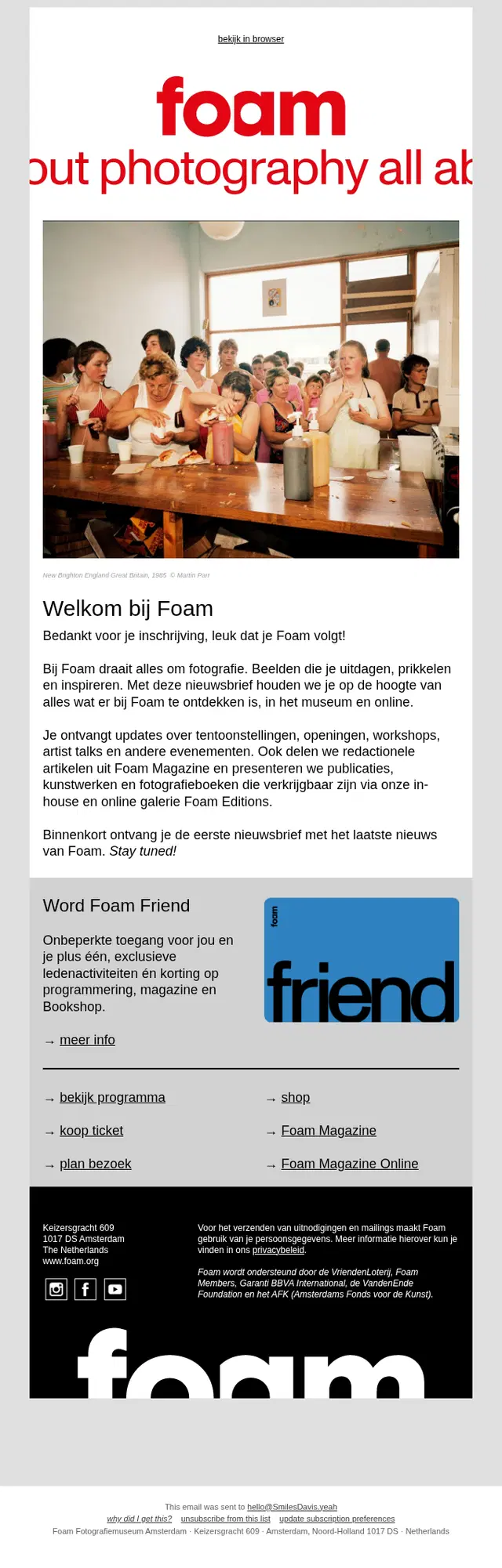
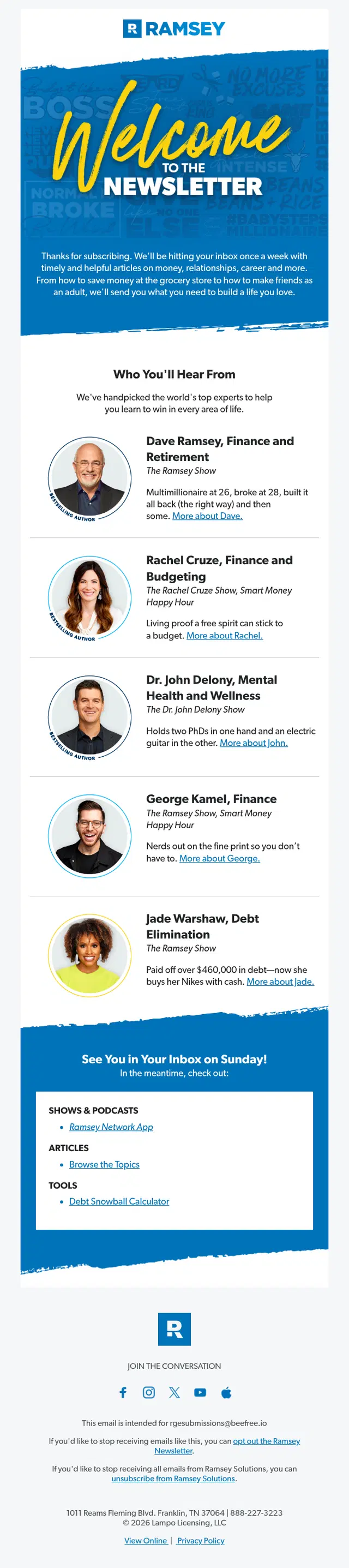
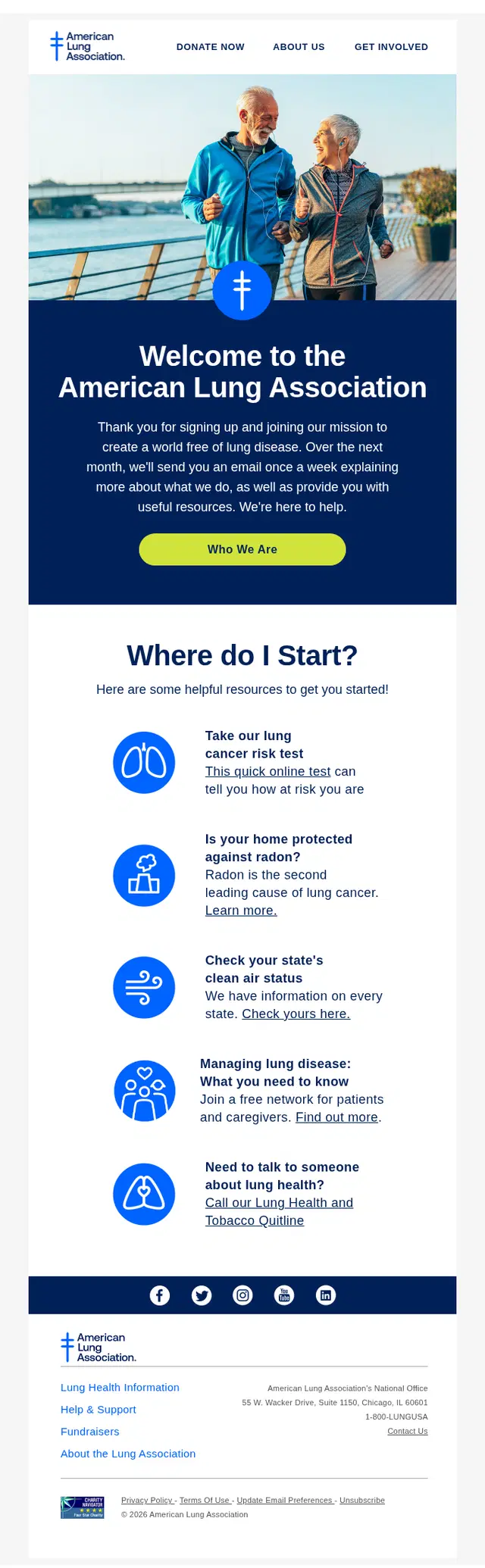
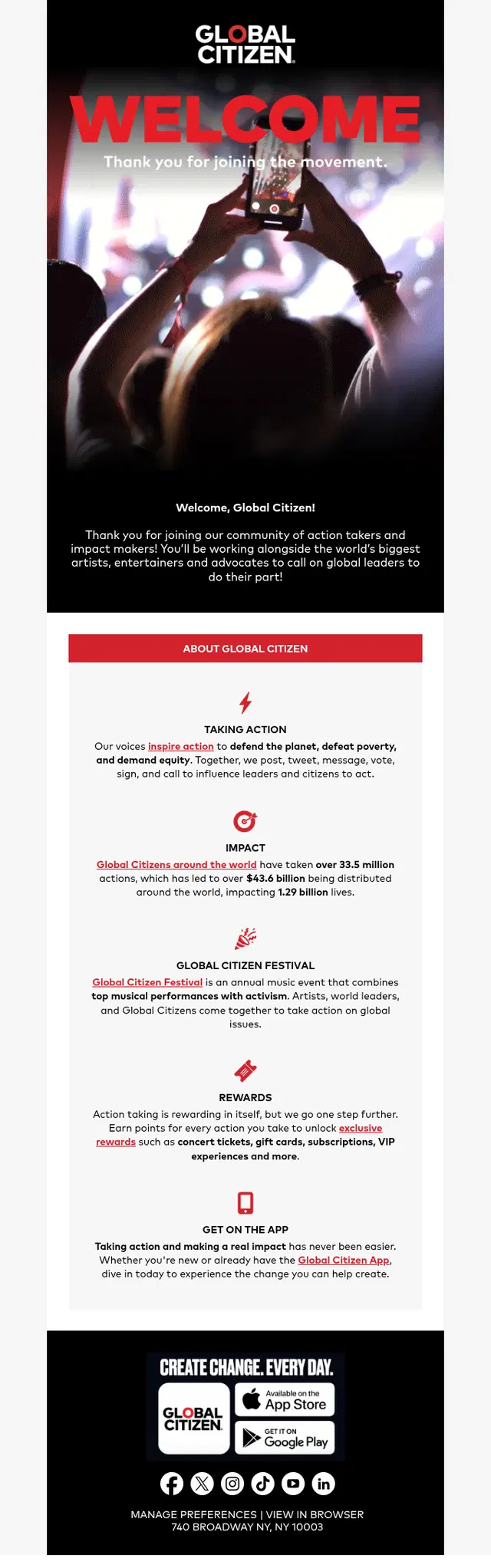
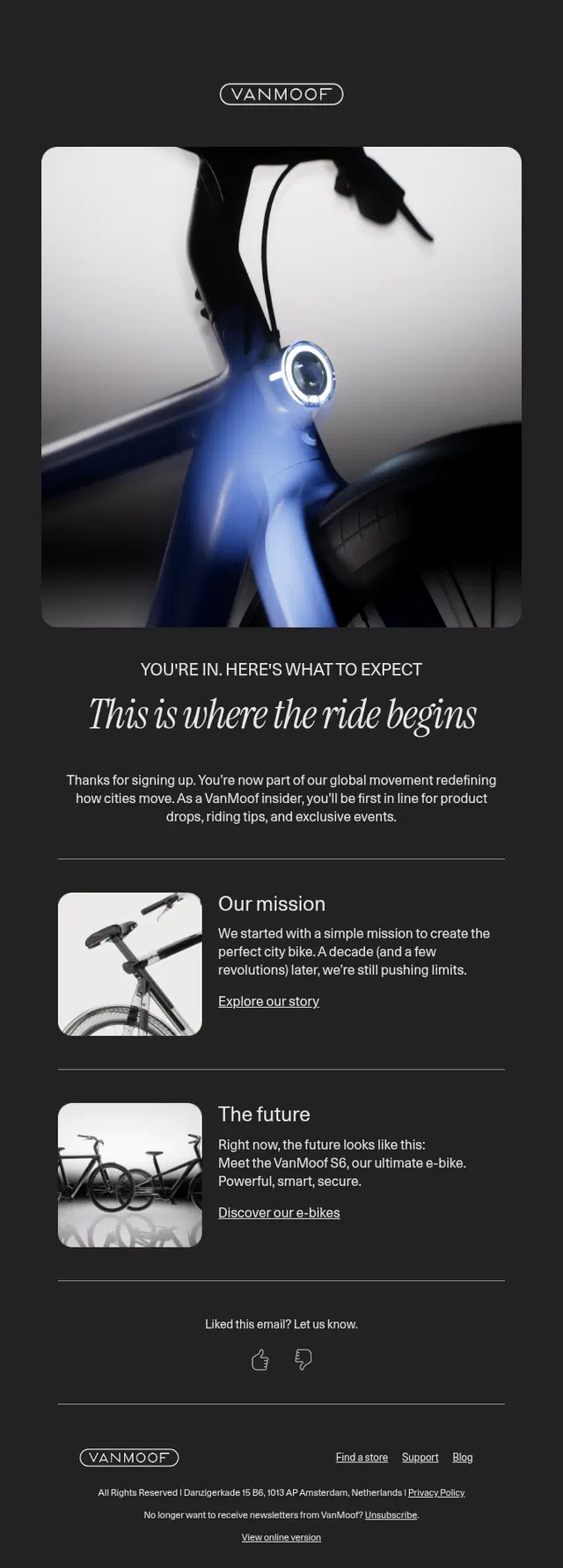
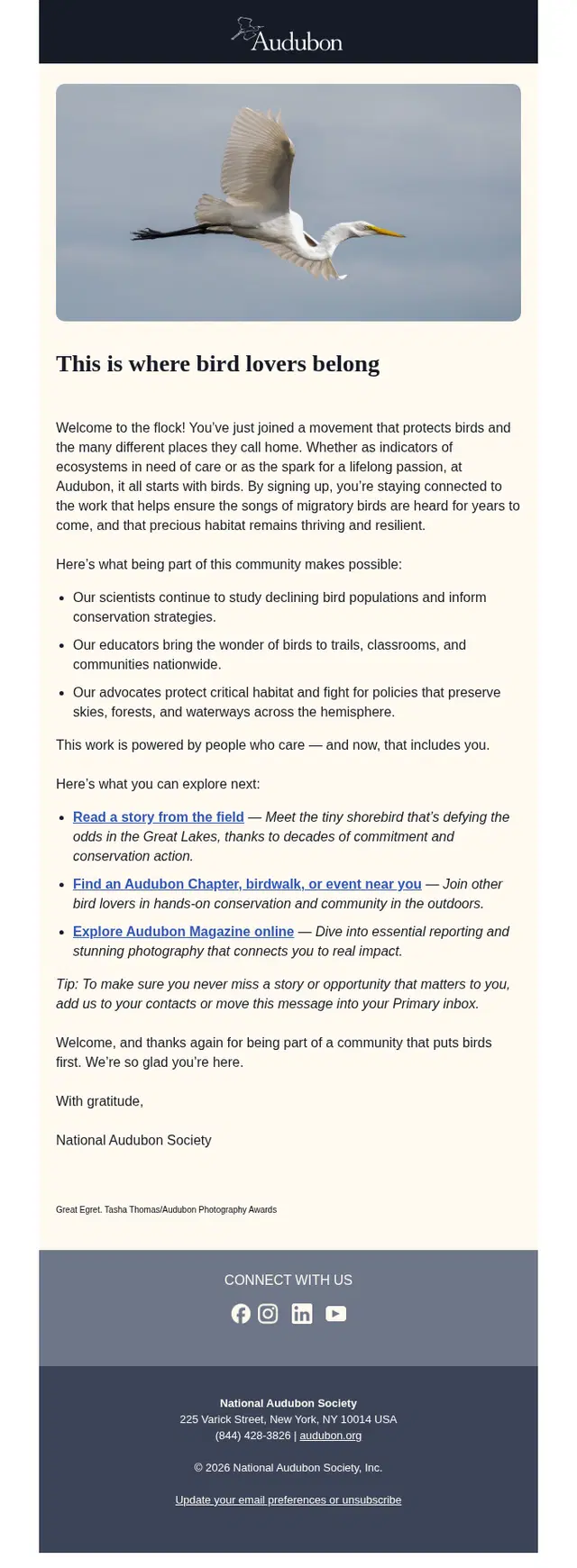
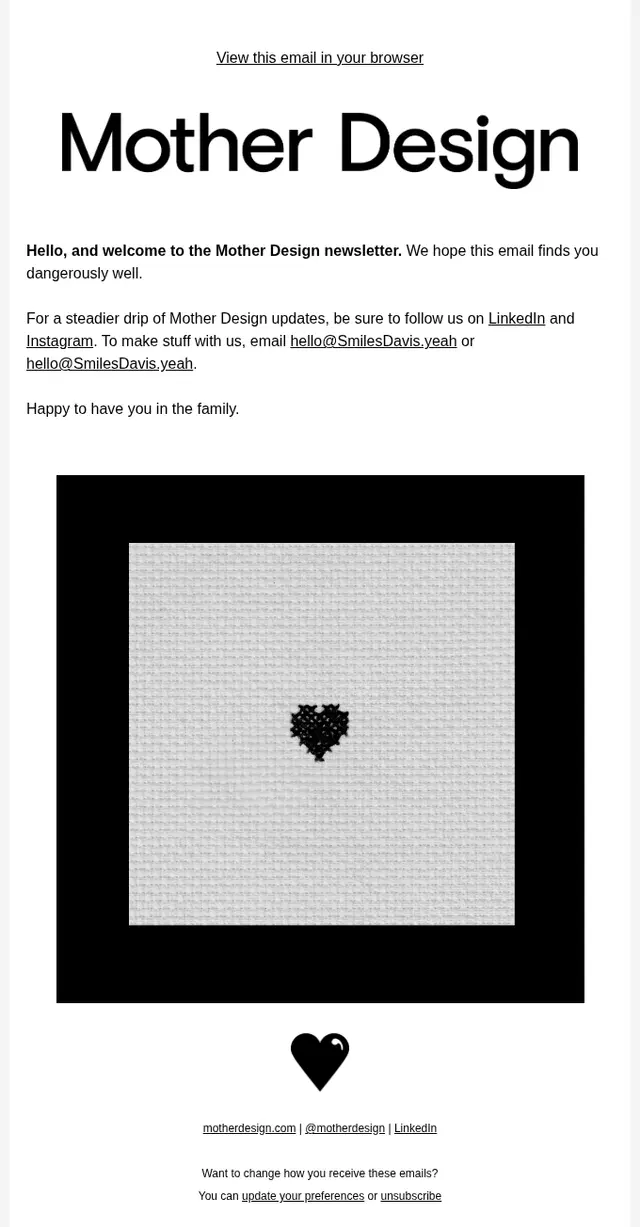
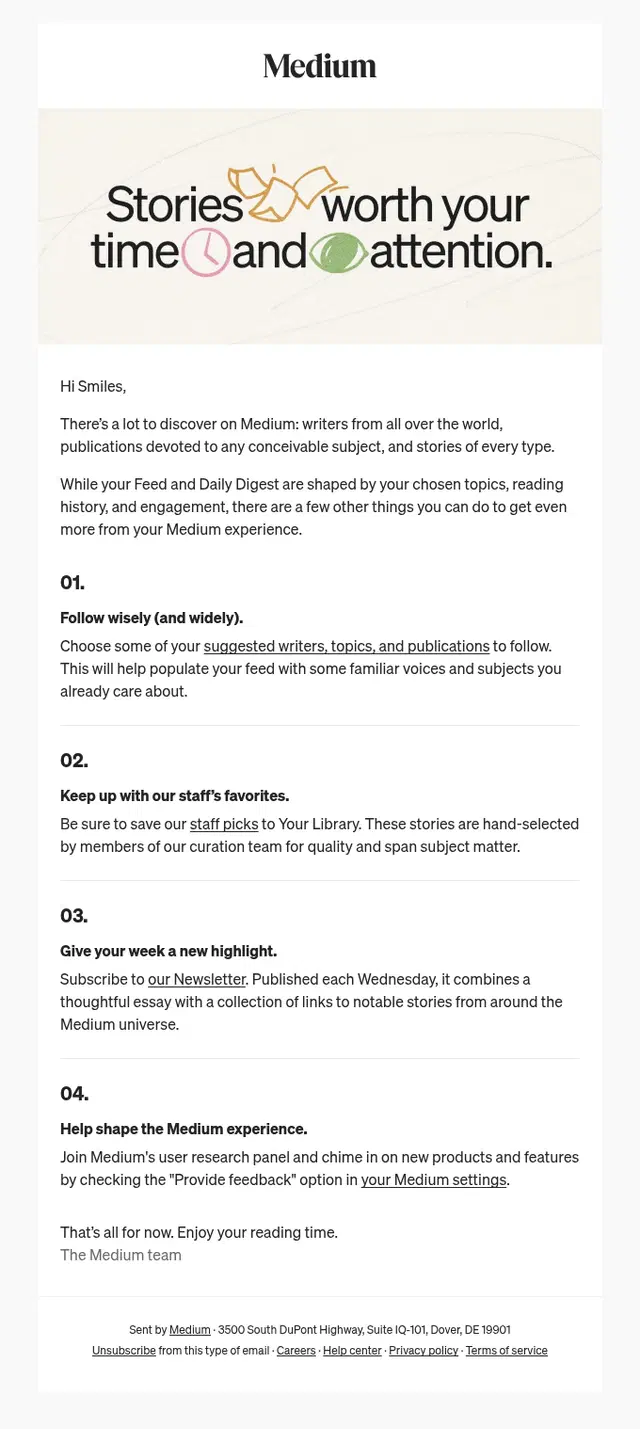
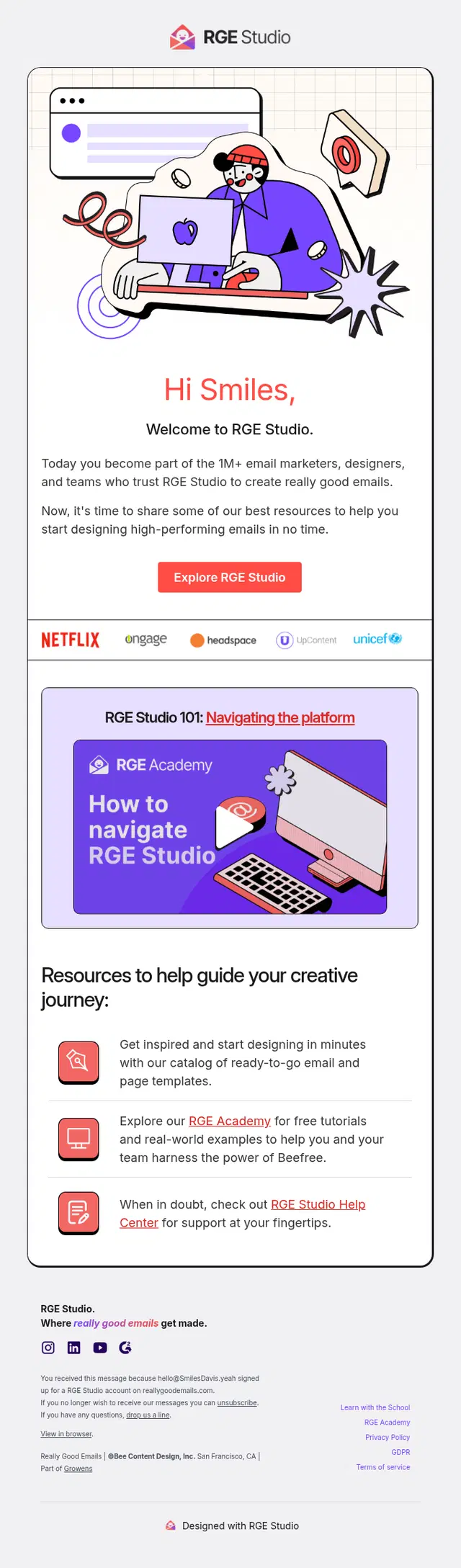
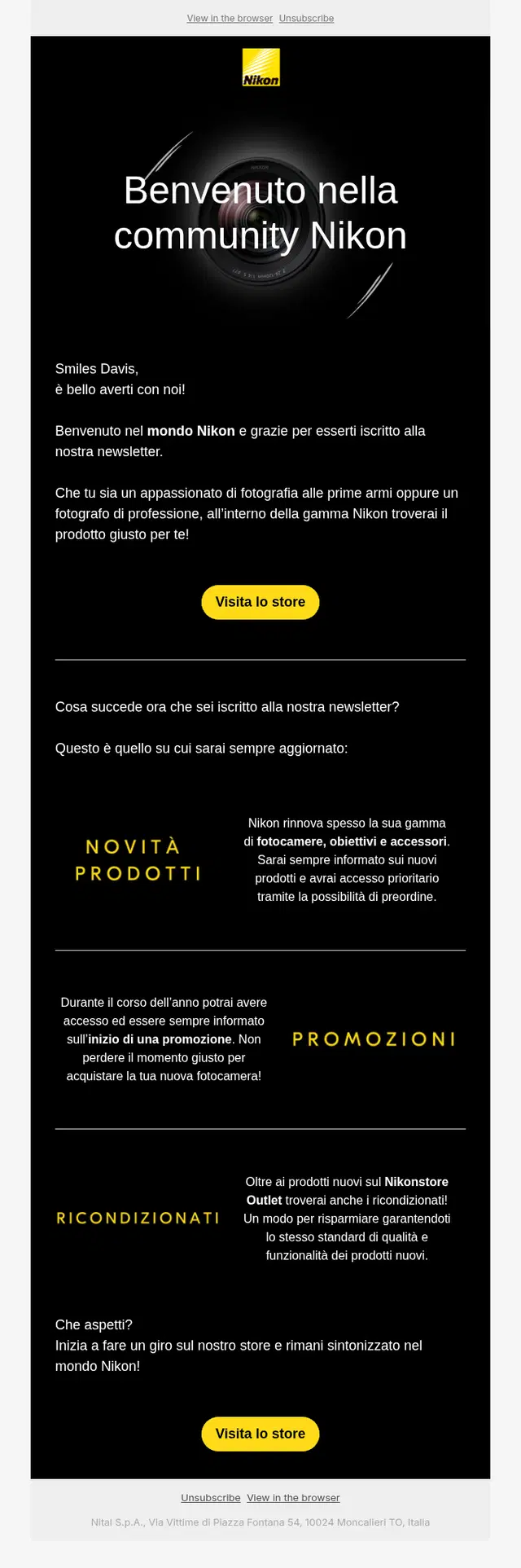
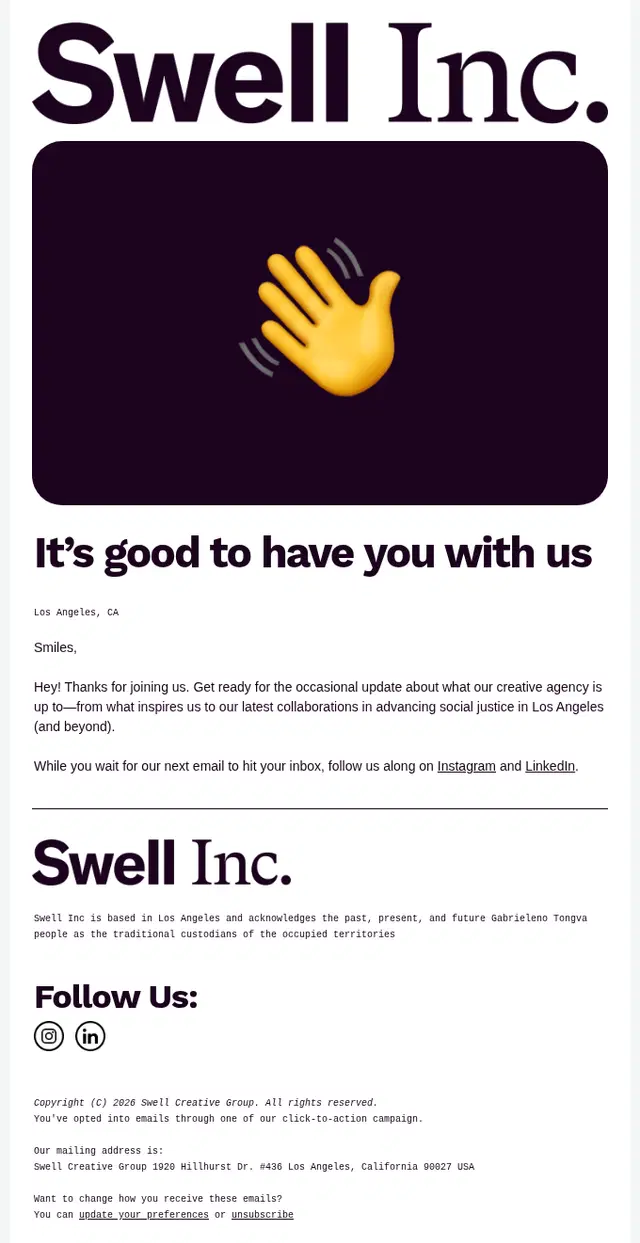
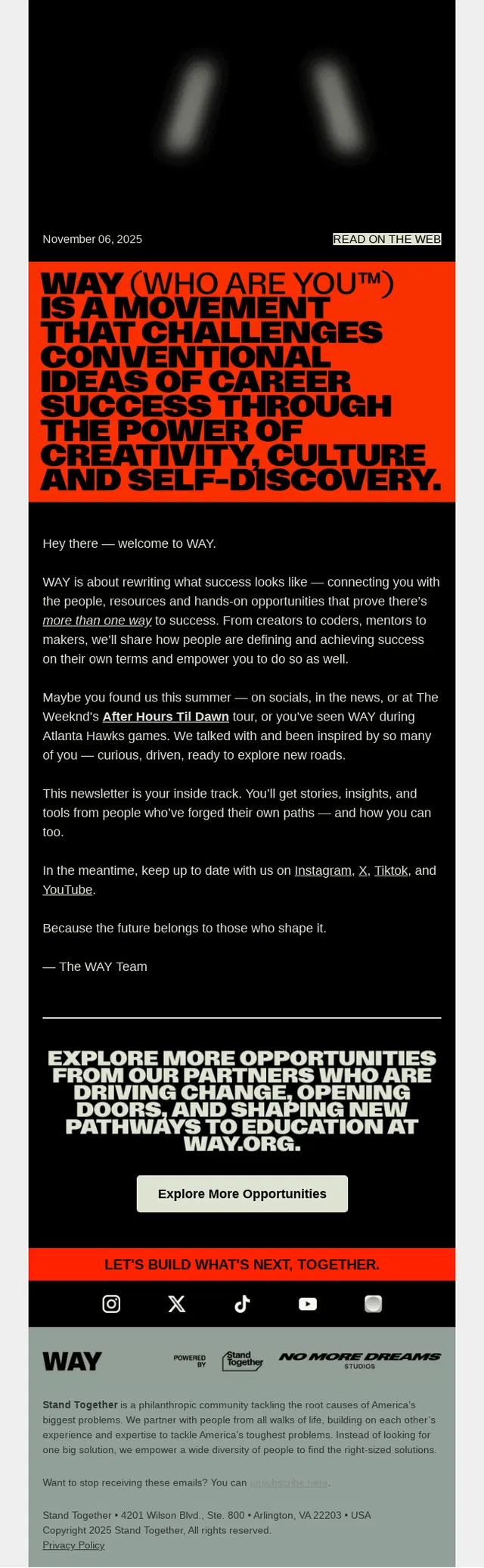
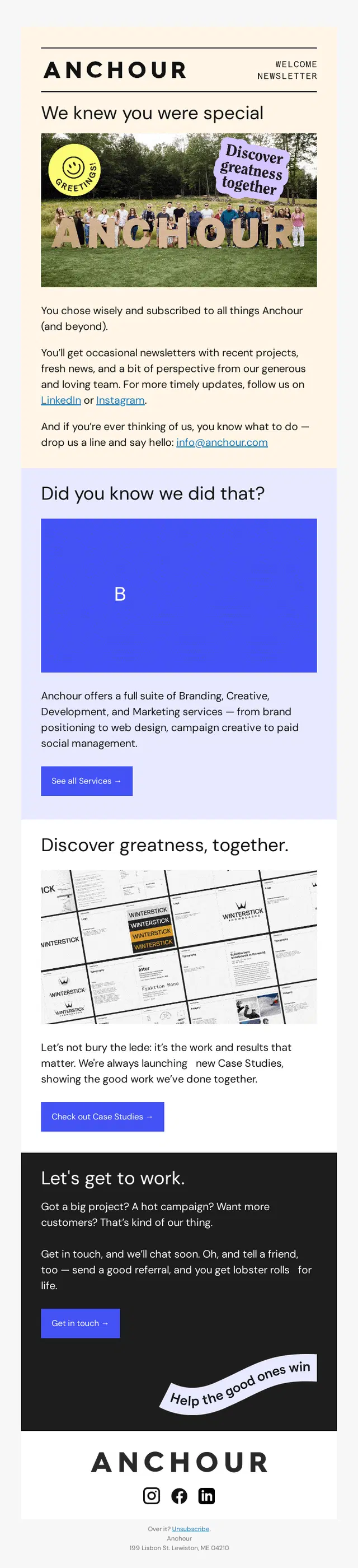
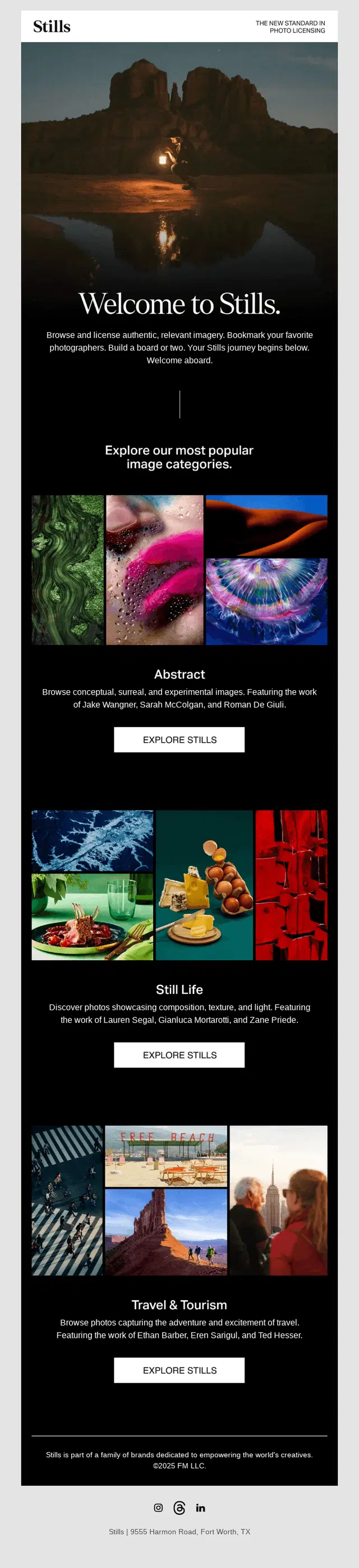
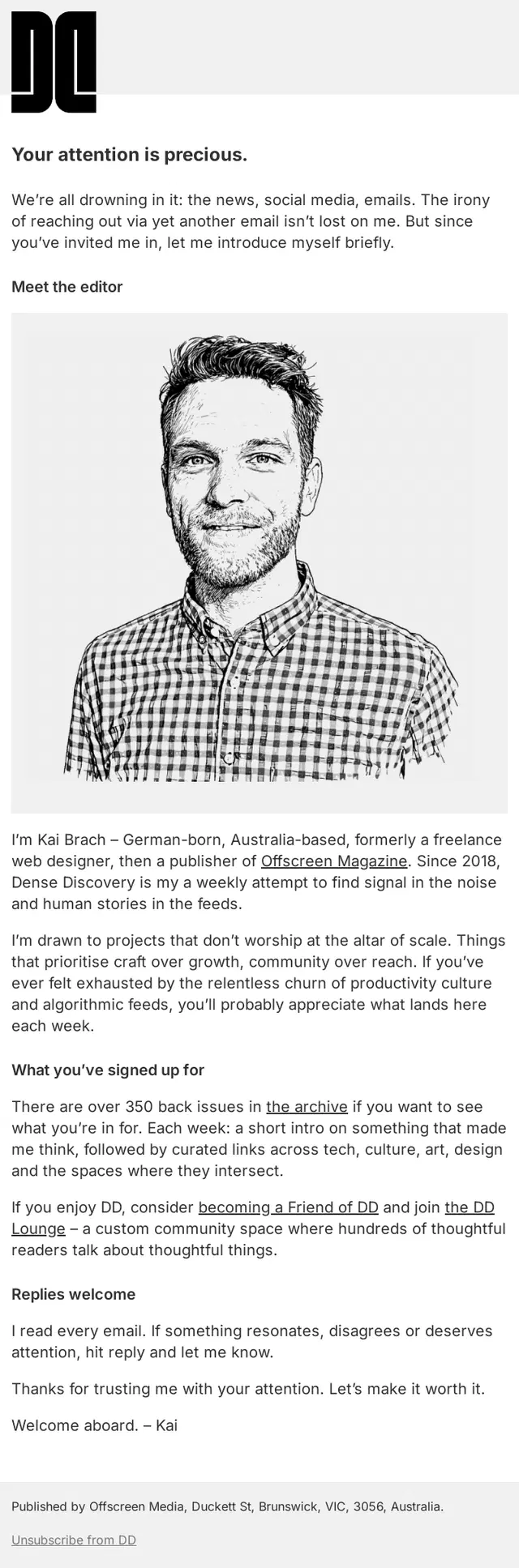
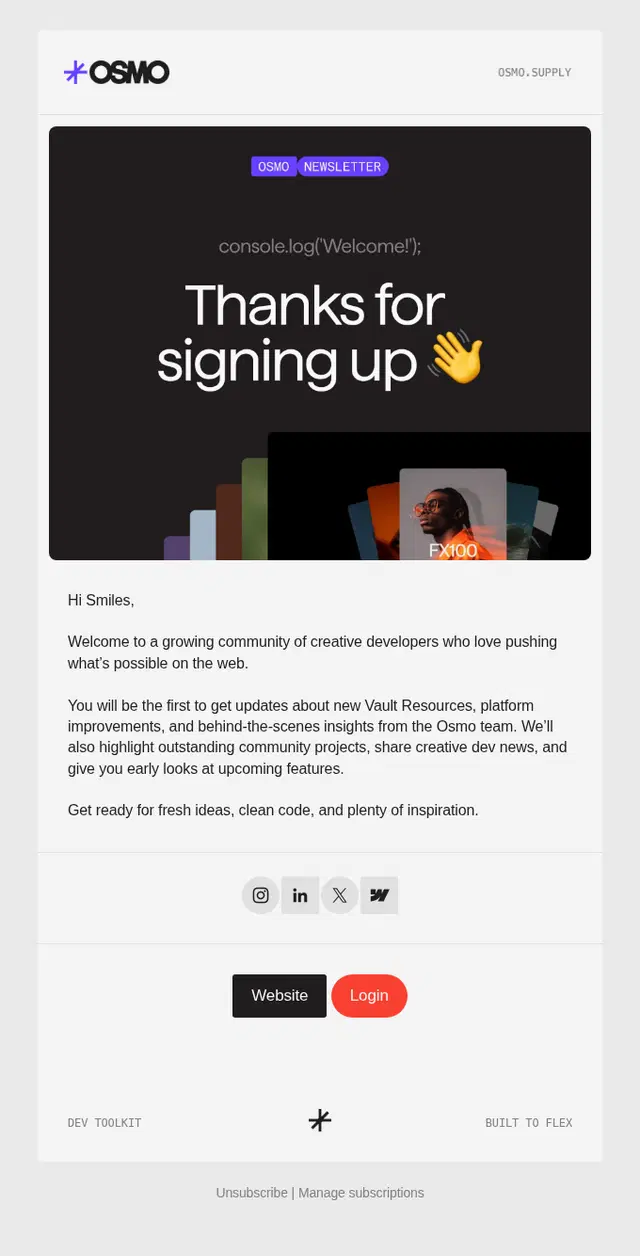
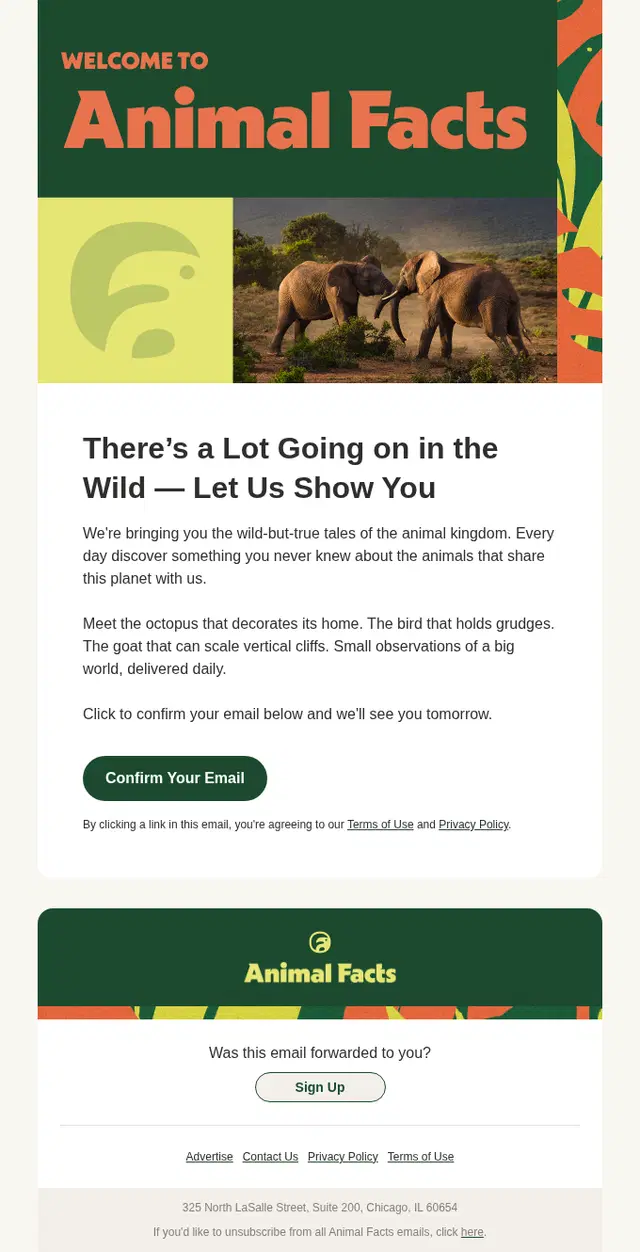
Newsletter welcome emails are less about making an immediate sale and more about answering a simple question: “What did I just sign up for?” Good ones explain what readers will receive, how often they’ll hear from the sender, and why the emails are worth opening. Publishers, creators, organizations, and content brands often use this first message to establish tone before the regular newsletter begins.
Customer Welcome Email Examples
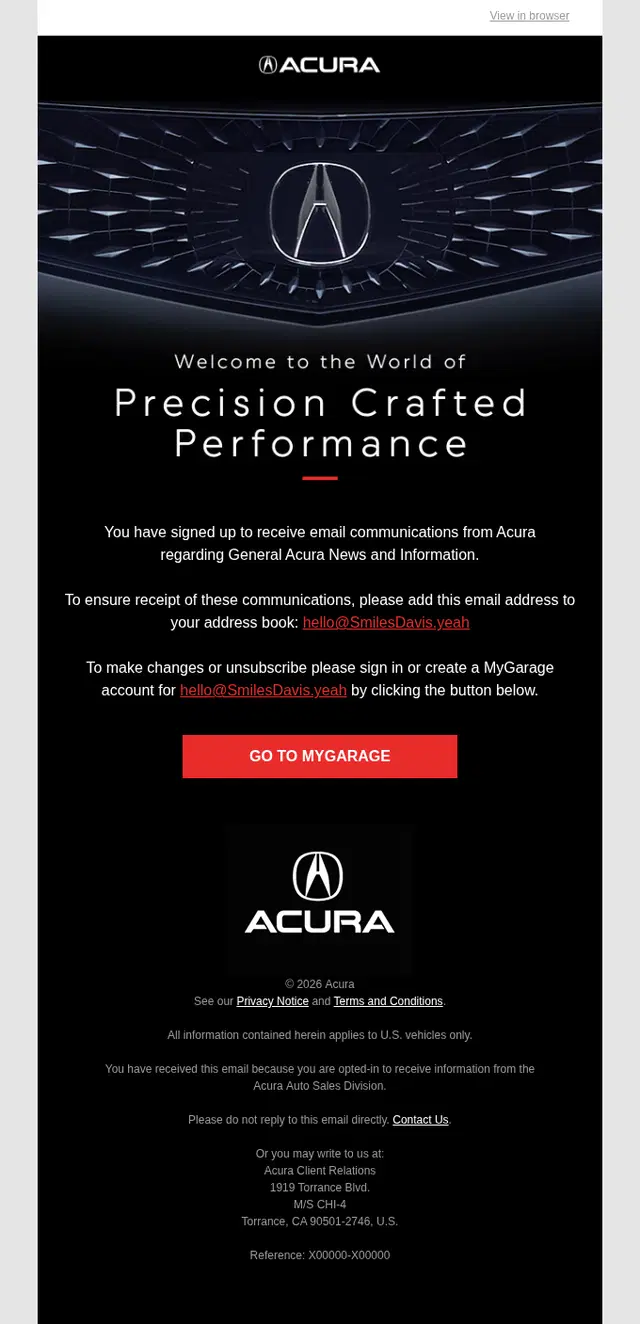
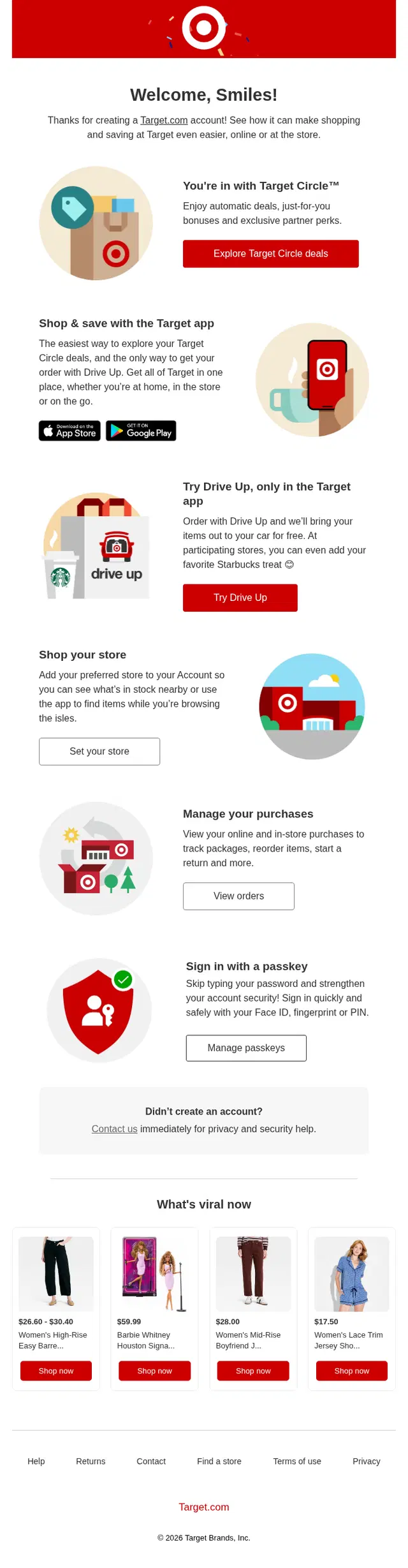
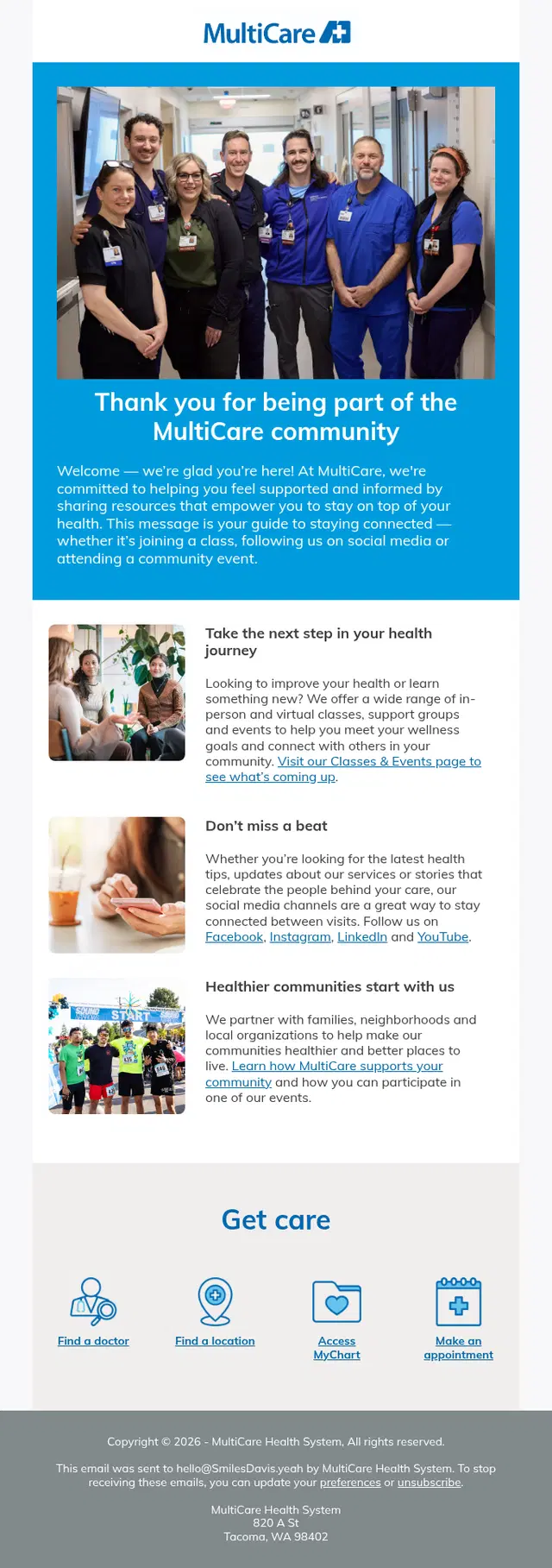
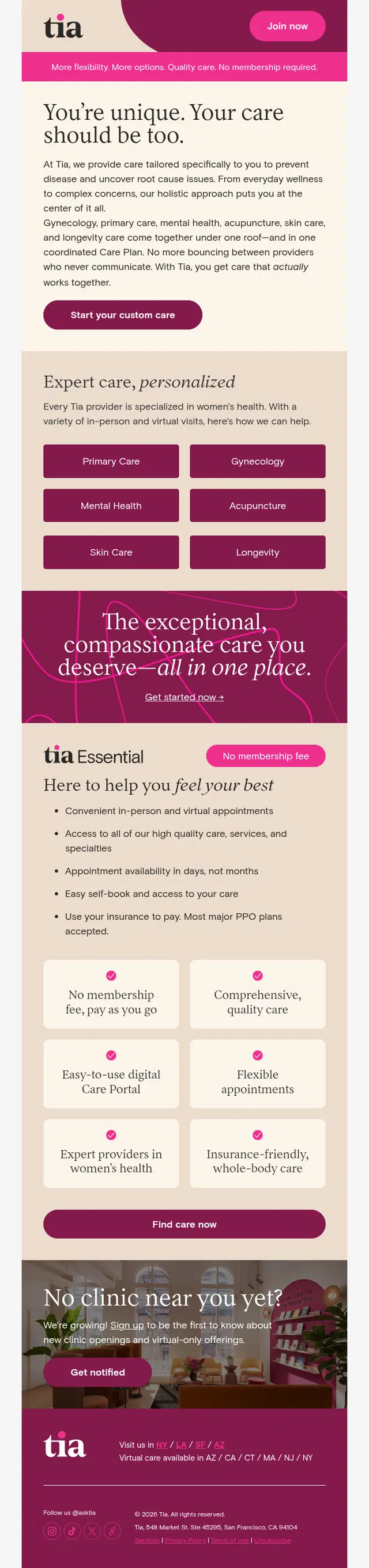
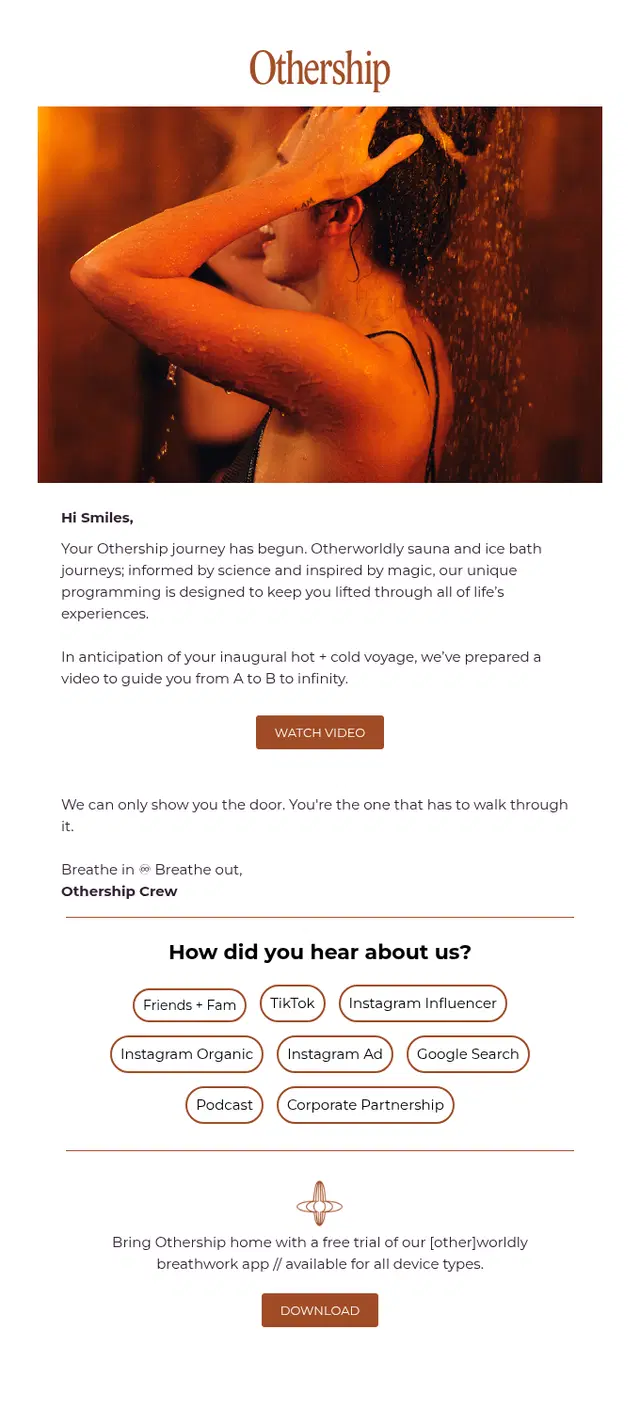
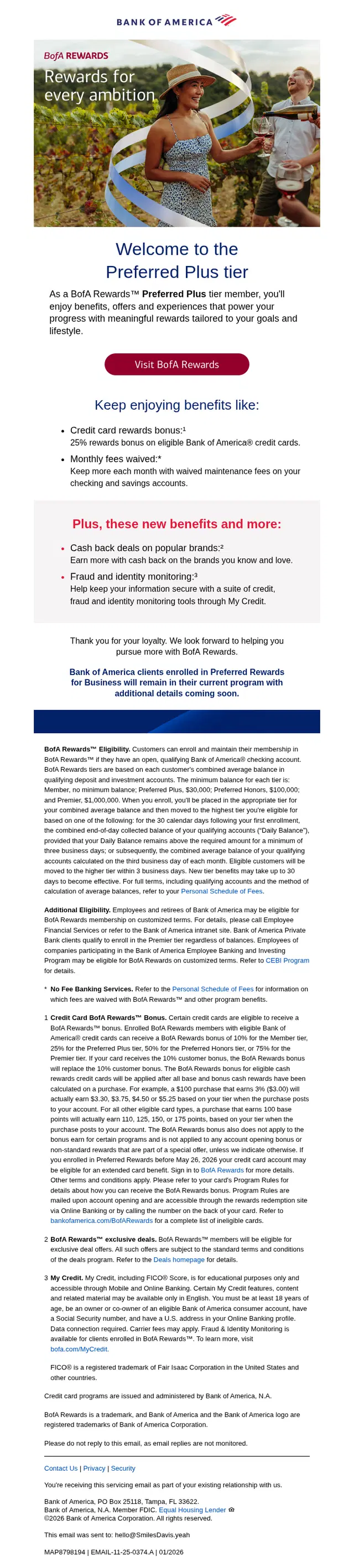
A new customer needs something different from a new subscriber. The relationship has already moved forward, so the welcome can focus on helping them get more from what they’ve joined, bought, booked, or started using. That might mean explaining account features, introducing services, showing available benefits, or pointing them toward the most useful next action.




SaaS Welcome Email Examples
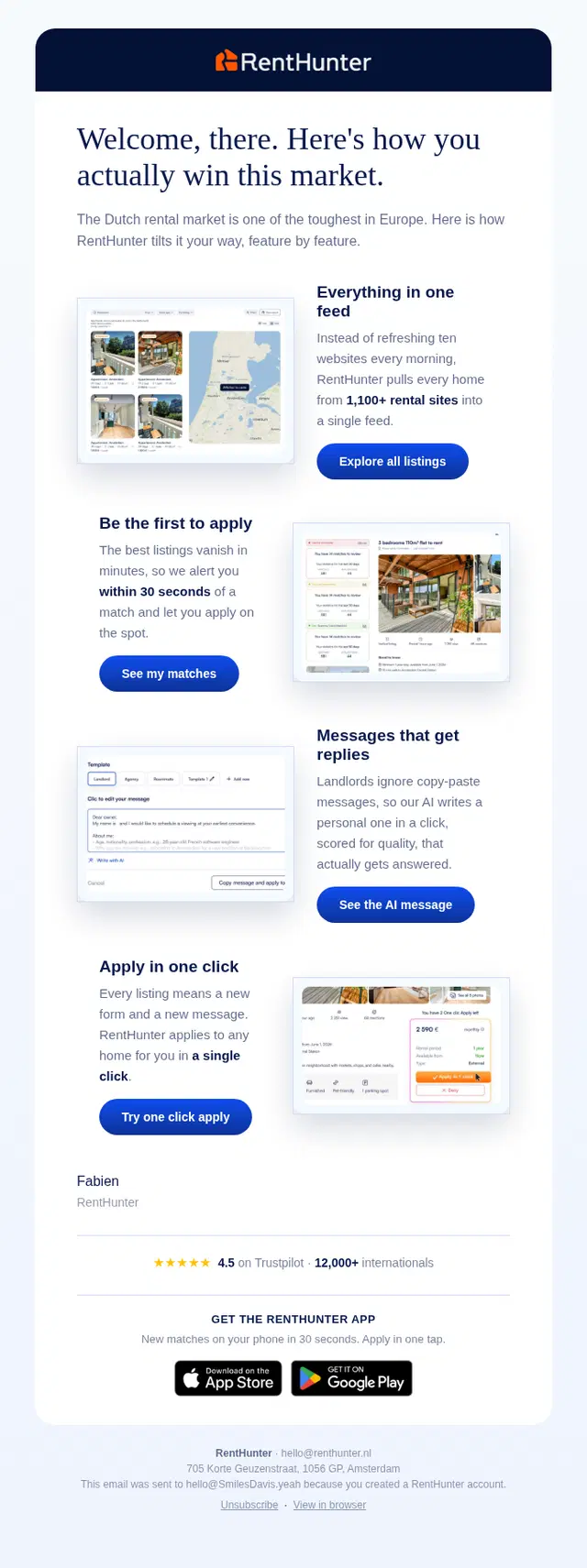
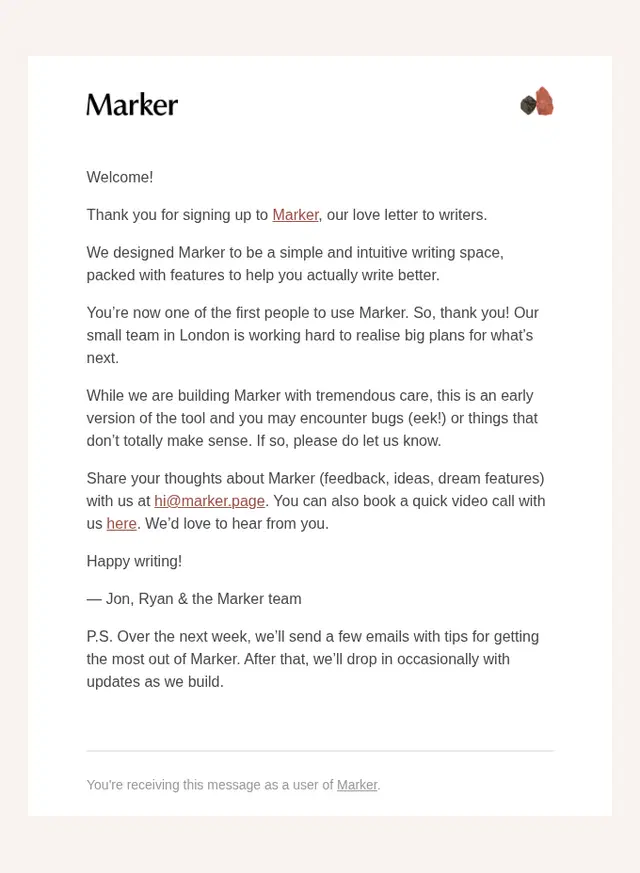
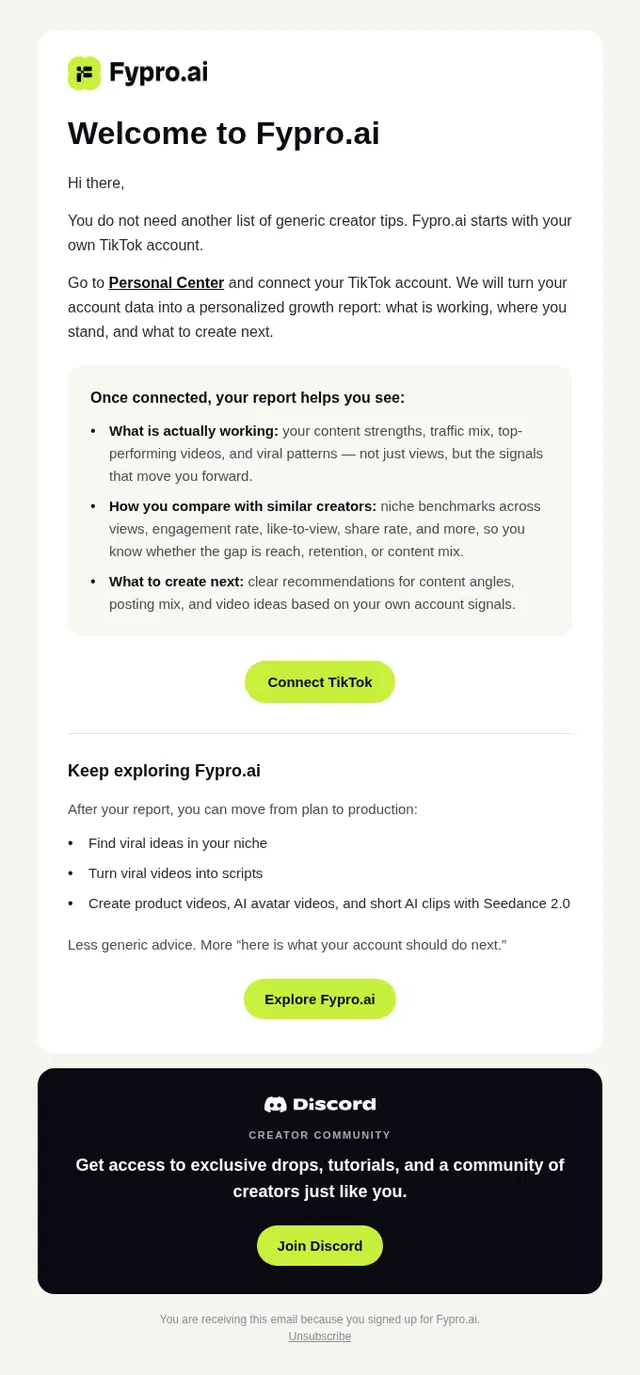
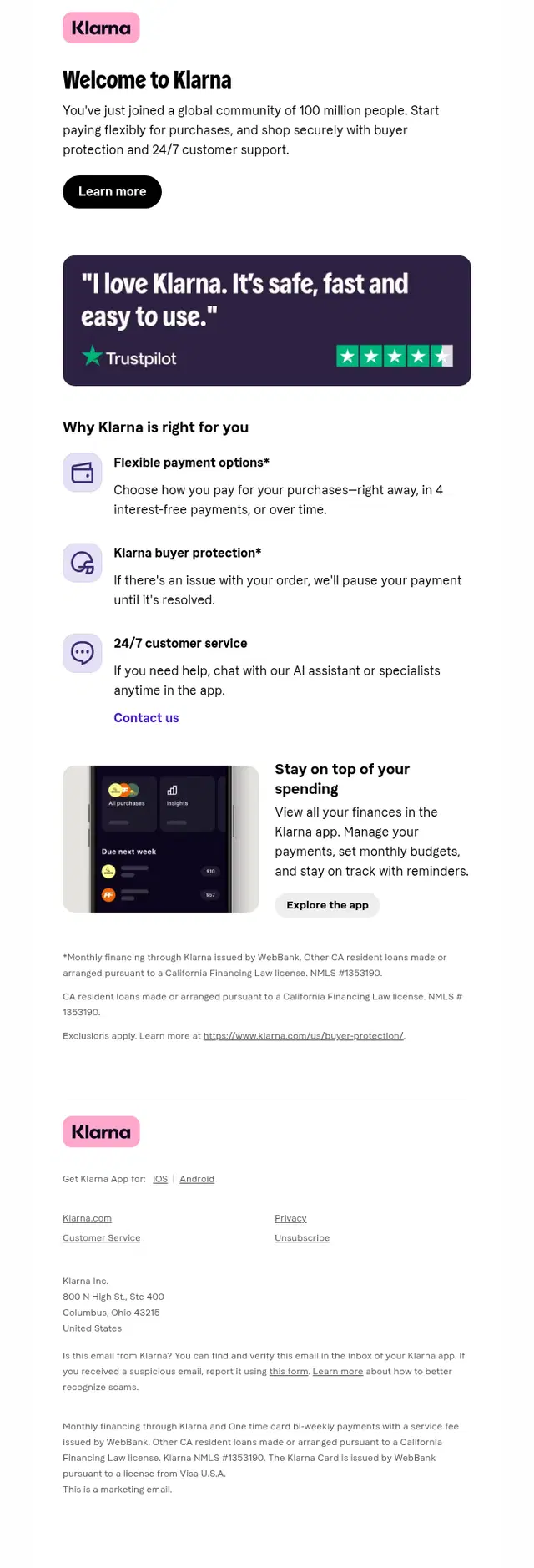
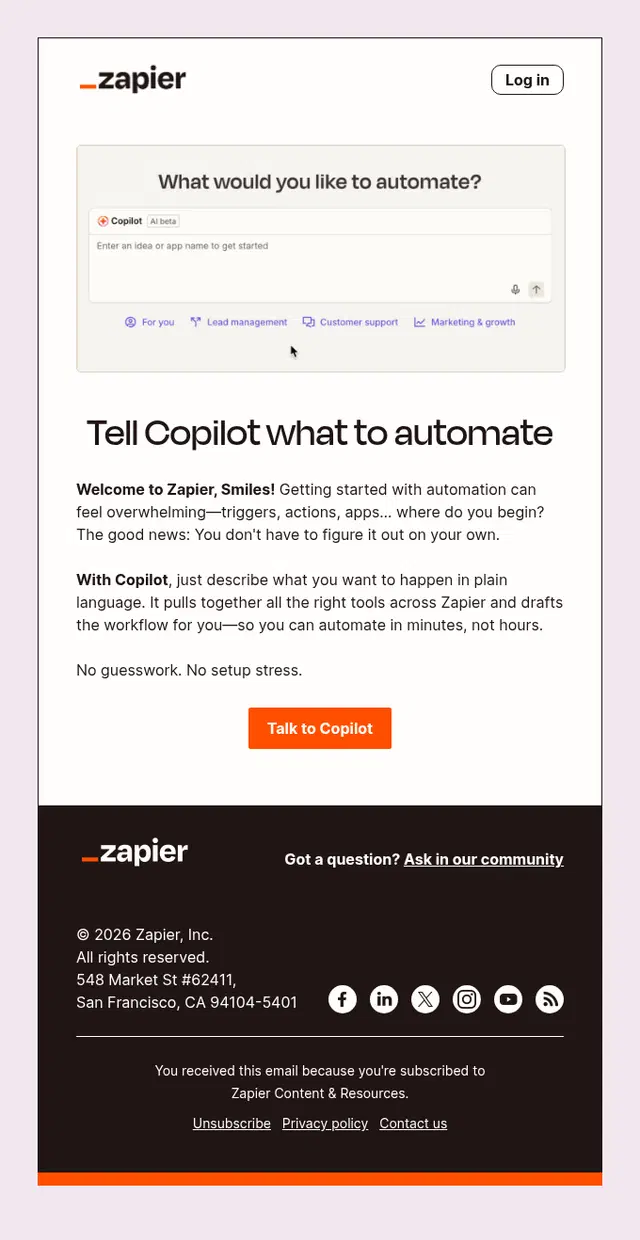
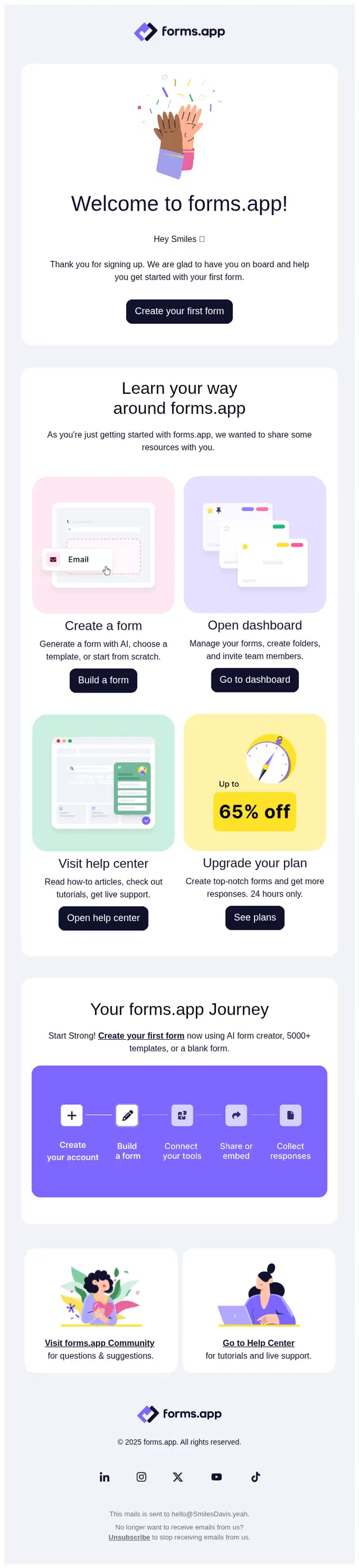
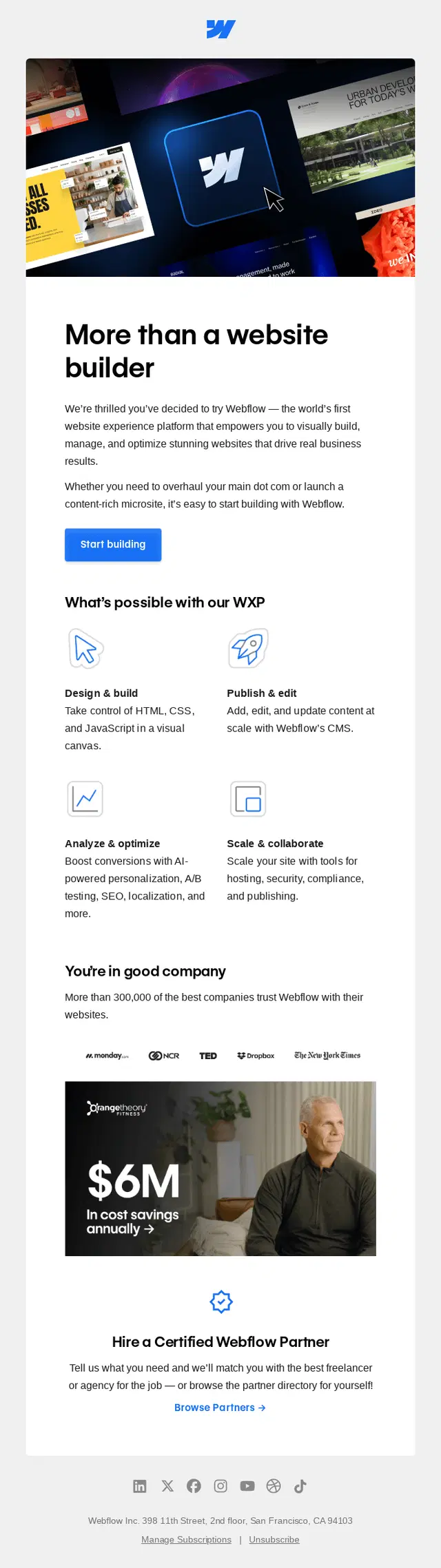
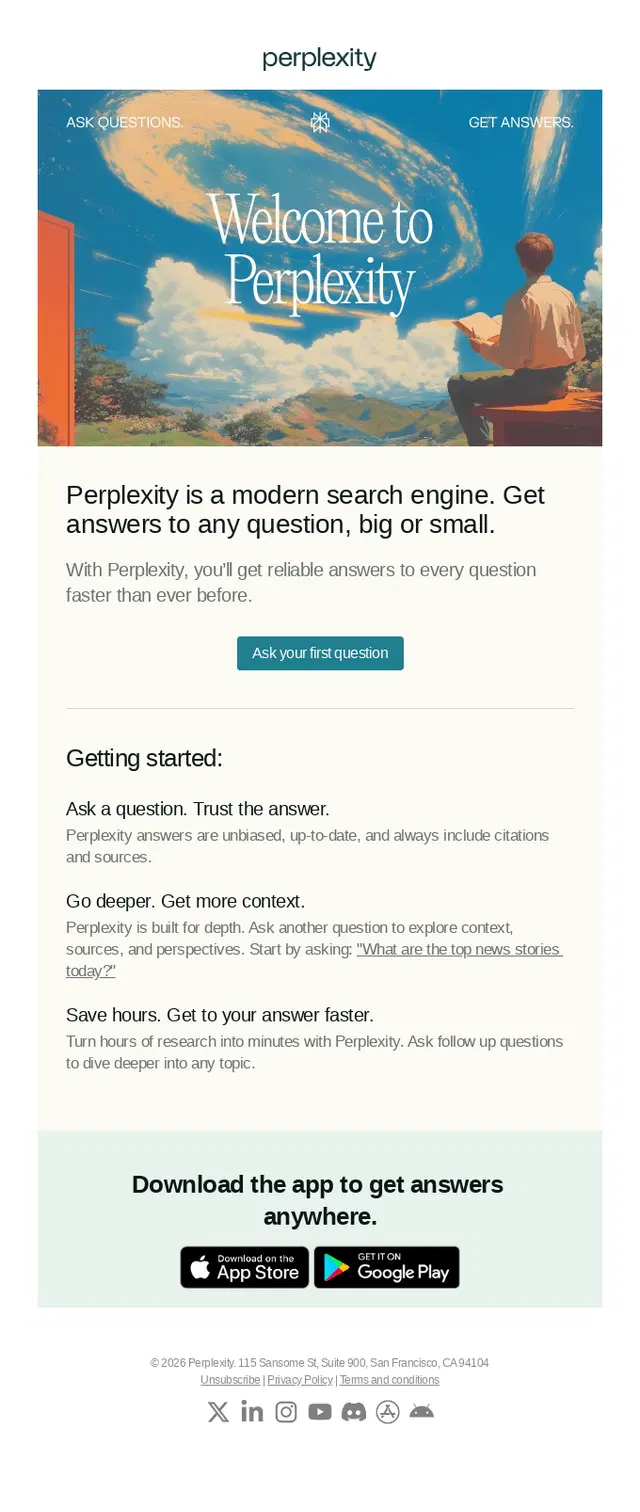
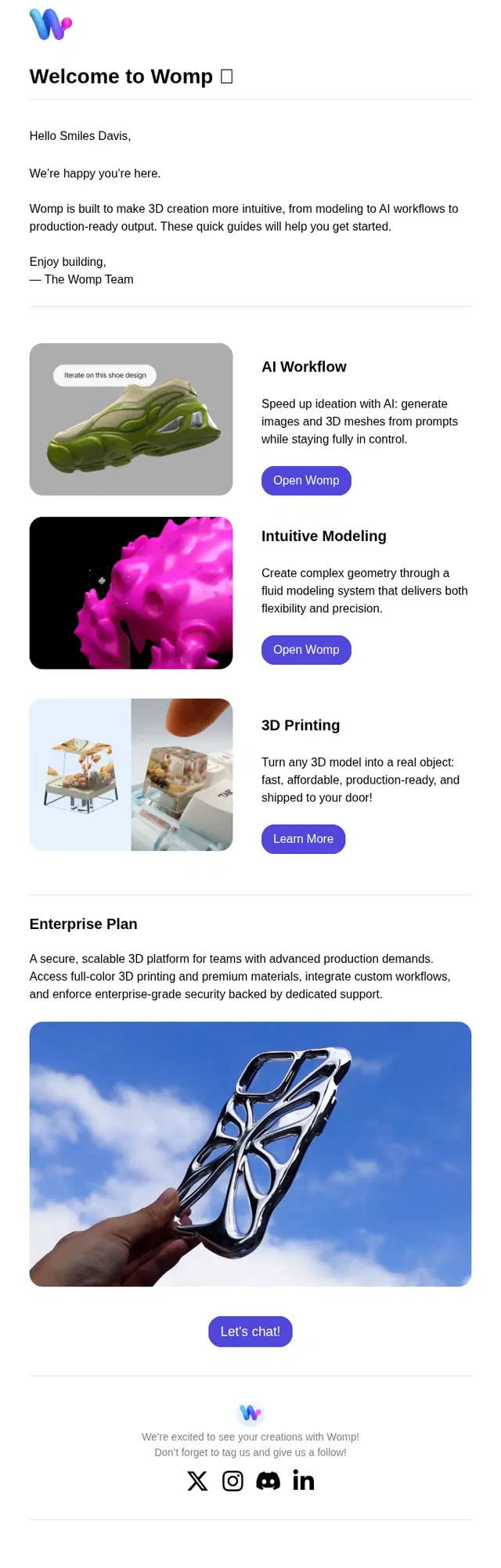
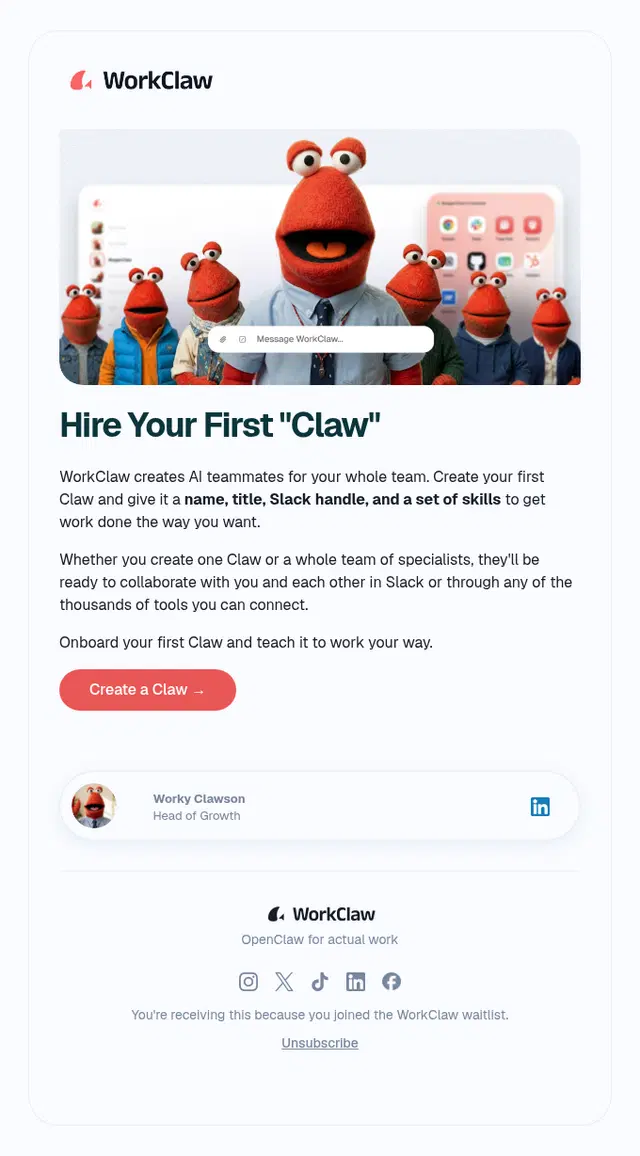
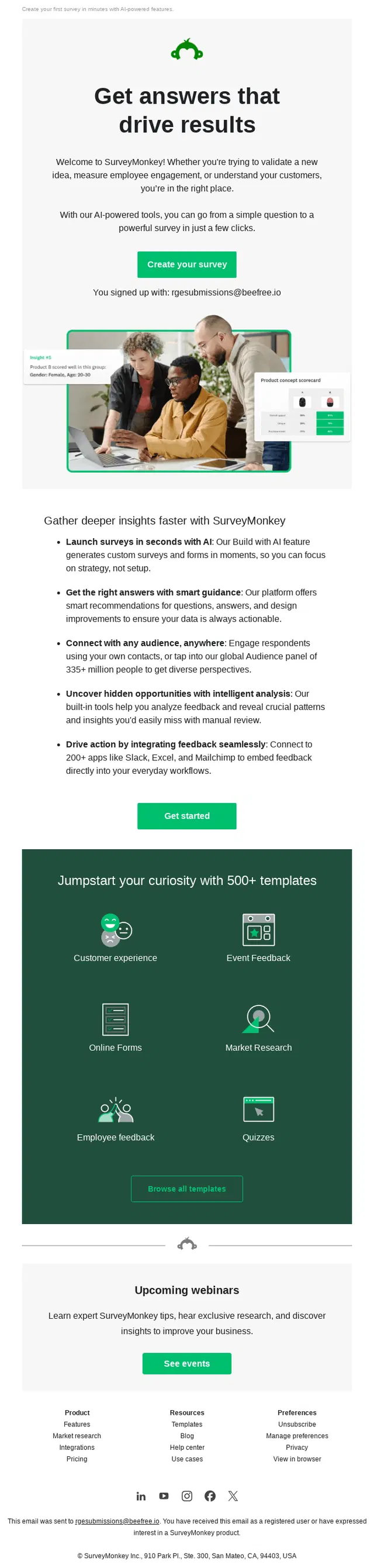
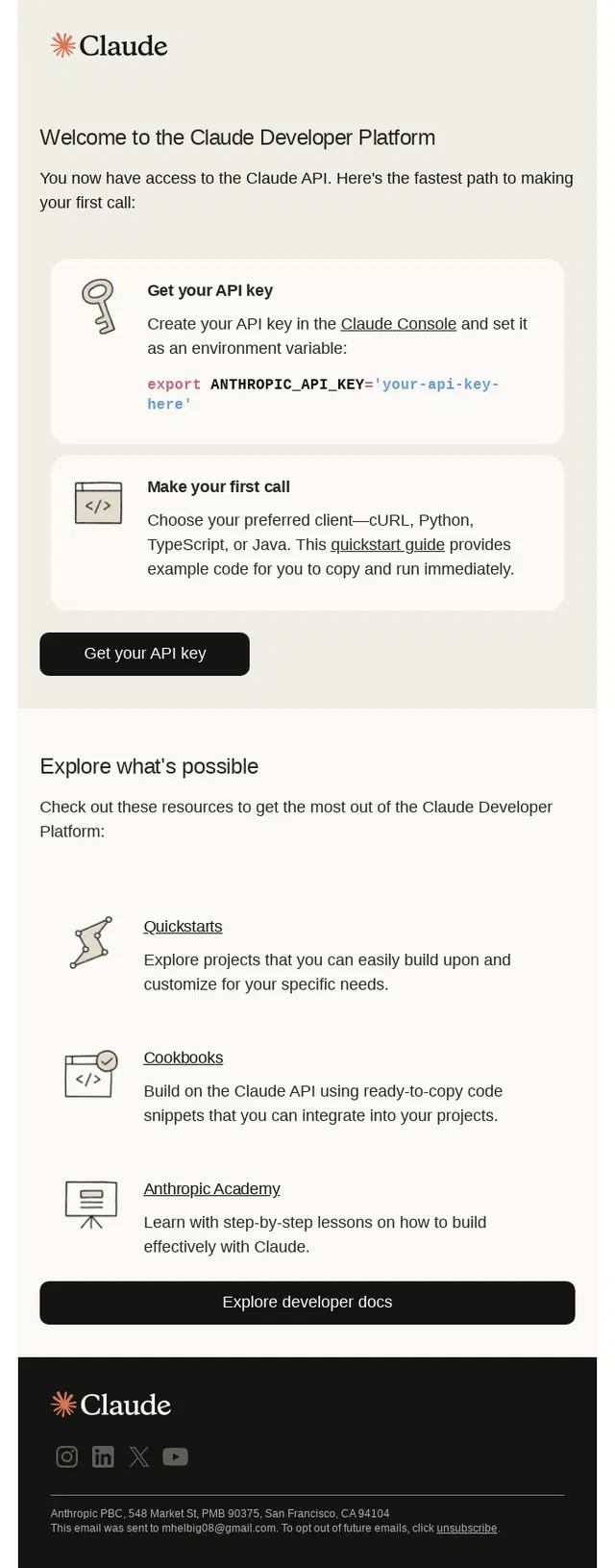
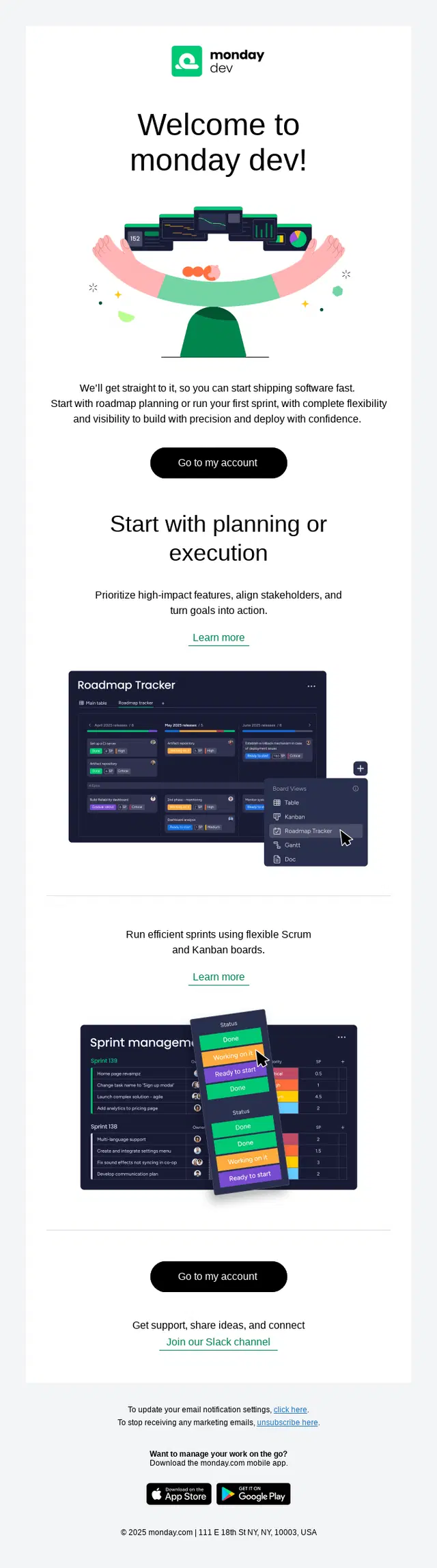
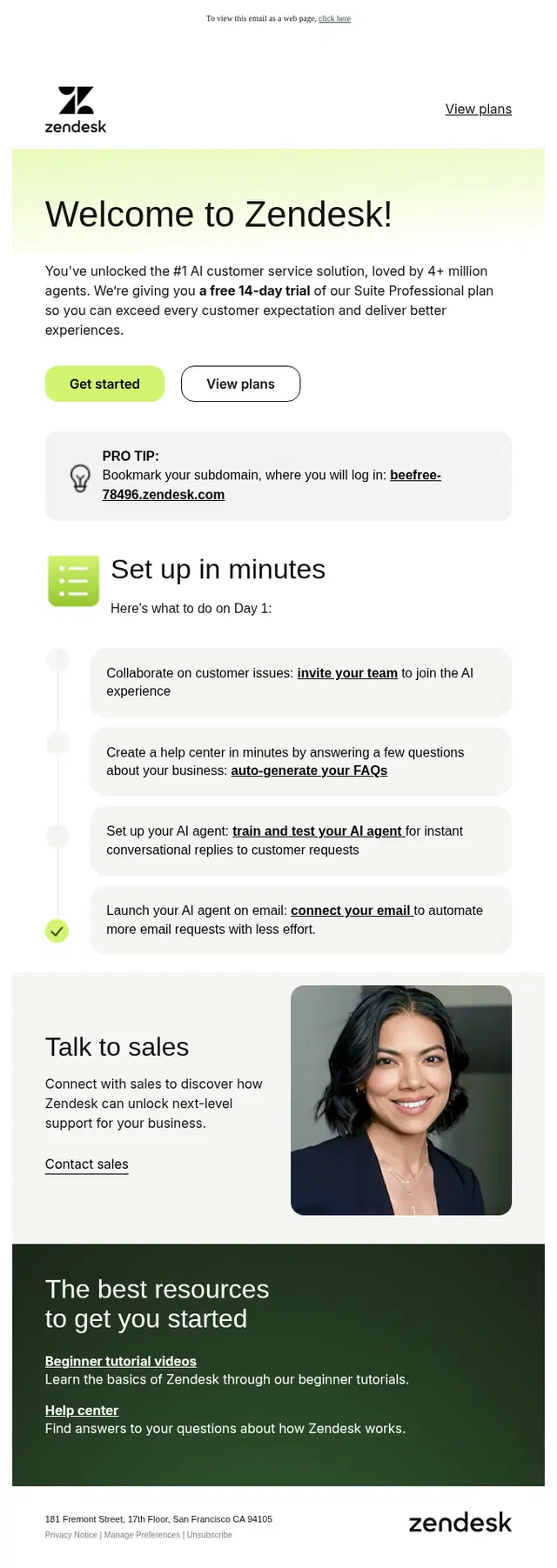
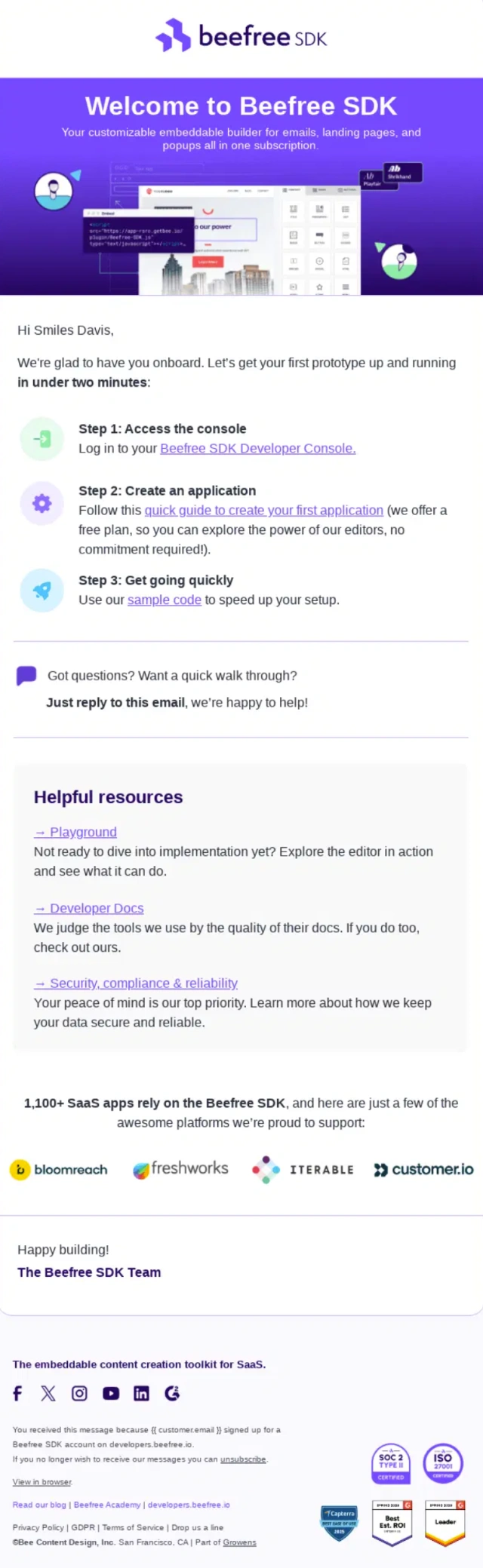
For SaaS brands, a welcome email usually has one bigger goal behind it: get the user to value faster. Instead of spending too long introducing the company, many of these emails push toward the first meaningful action-creating something, connecting an account, completing setup, exploring a feature, or learning the product. The strongest examples make that next step feel obvious rather than adding another onboarding task to the pile.


B2B Welcome Email Examples
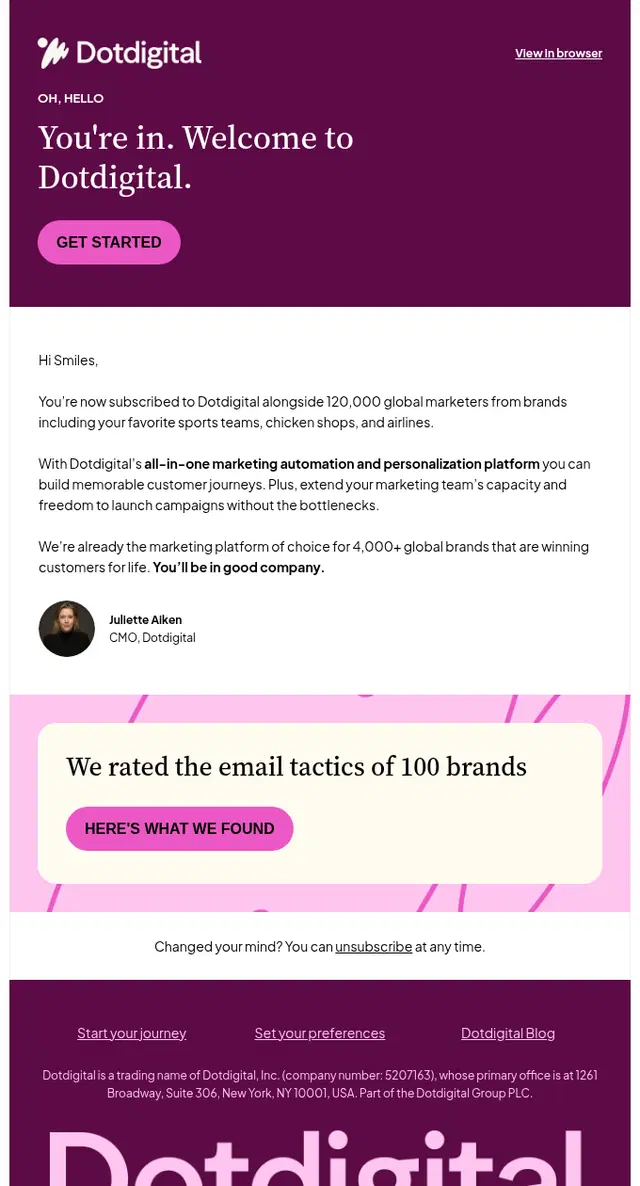
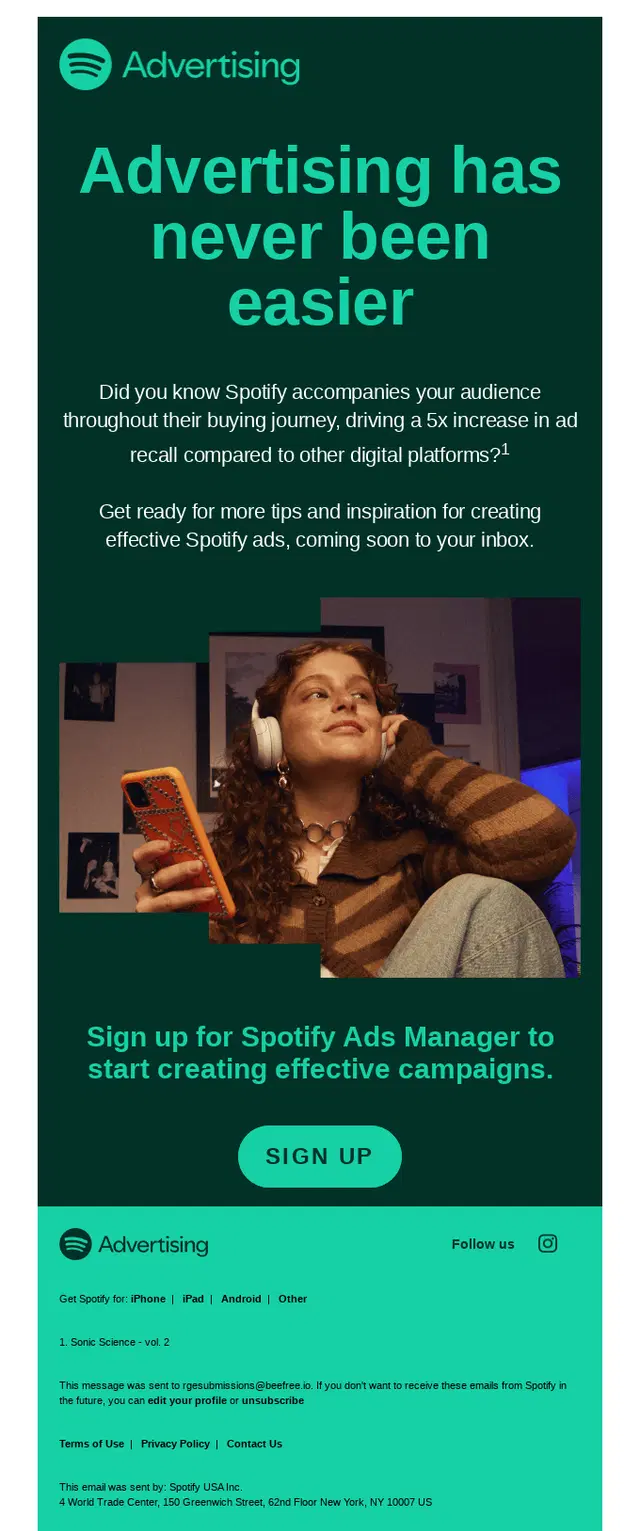
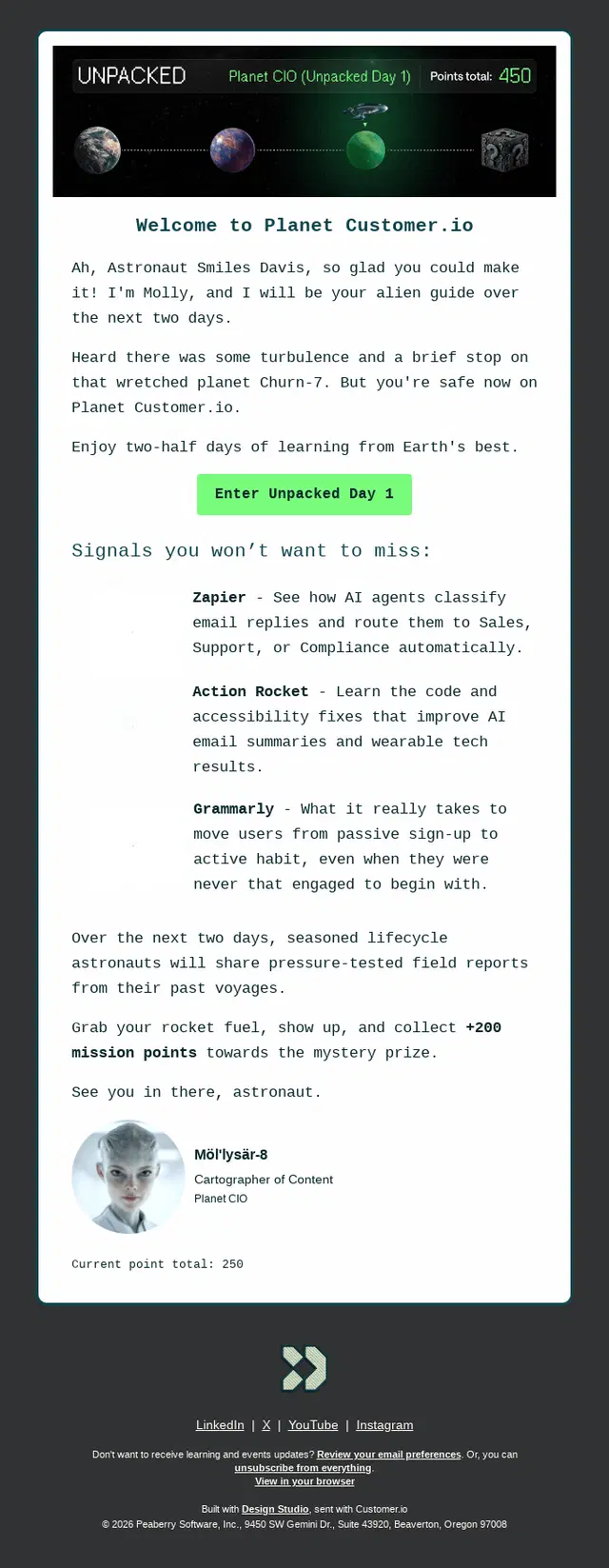
B2B welcome emails often need to establish confidence before they ask for much else. The recipient may be evaluating a tool, subscribing to an agency newsletter, starting a trial, or exploring a service on behalf of a team. These examples use product education, expertise, social proof, useful resources, and clear first actions to turn an initial signup into a more meaningful business relationship.




Product Recommendation Welcome Emails
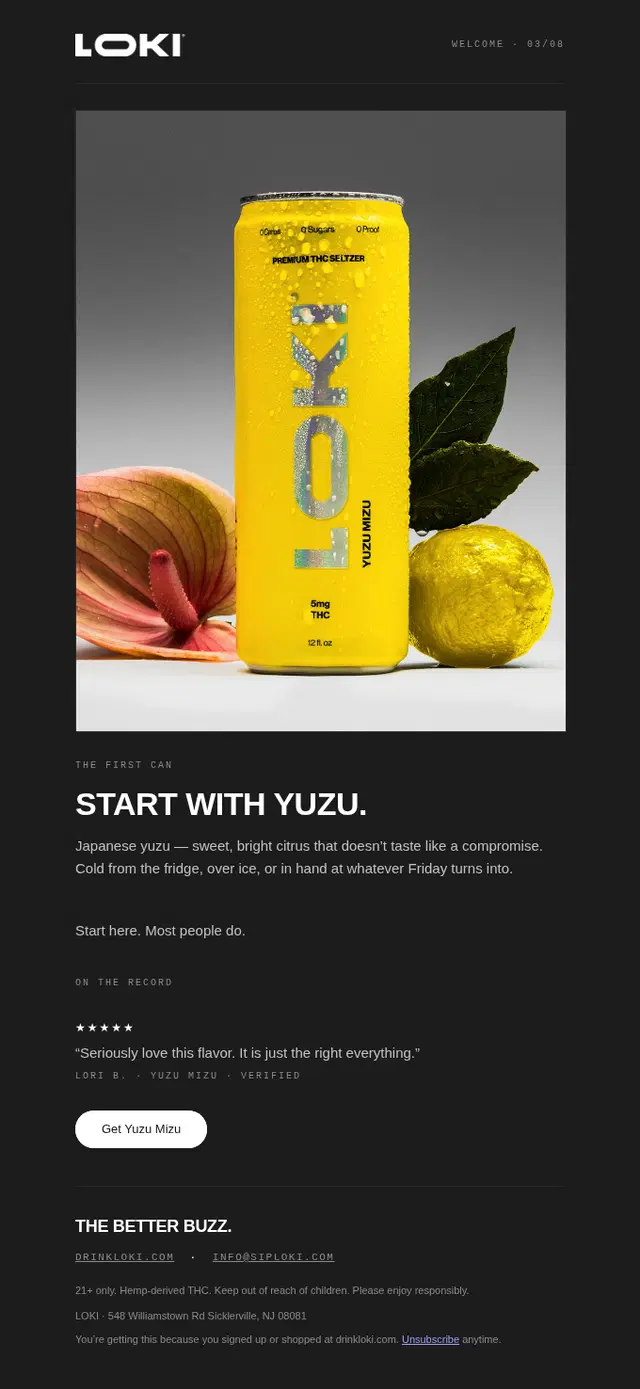
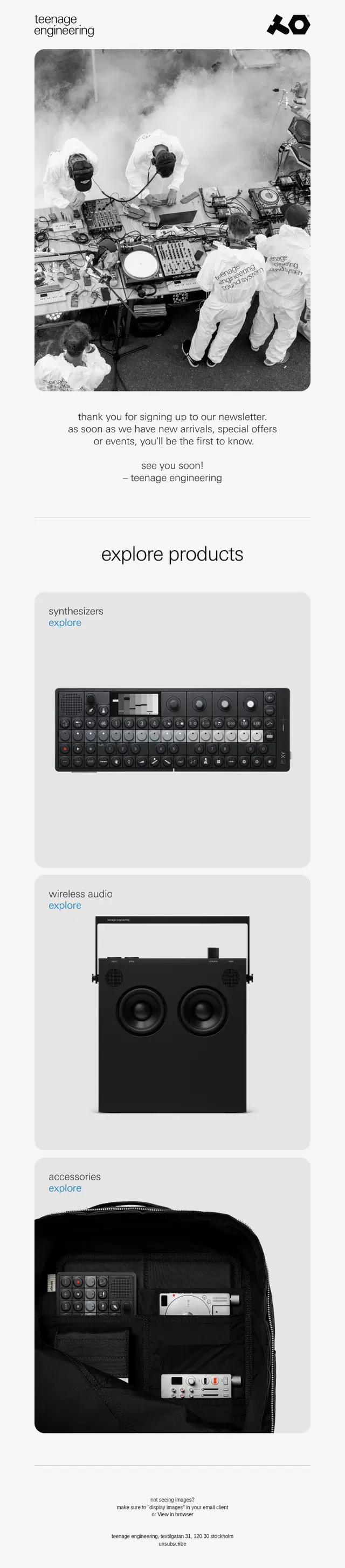
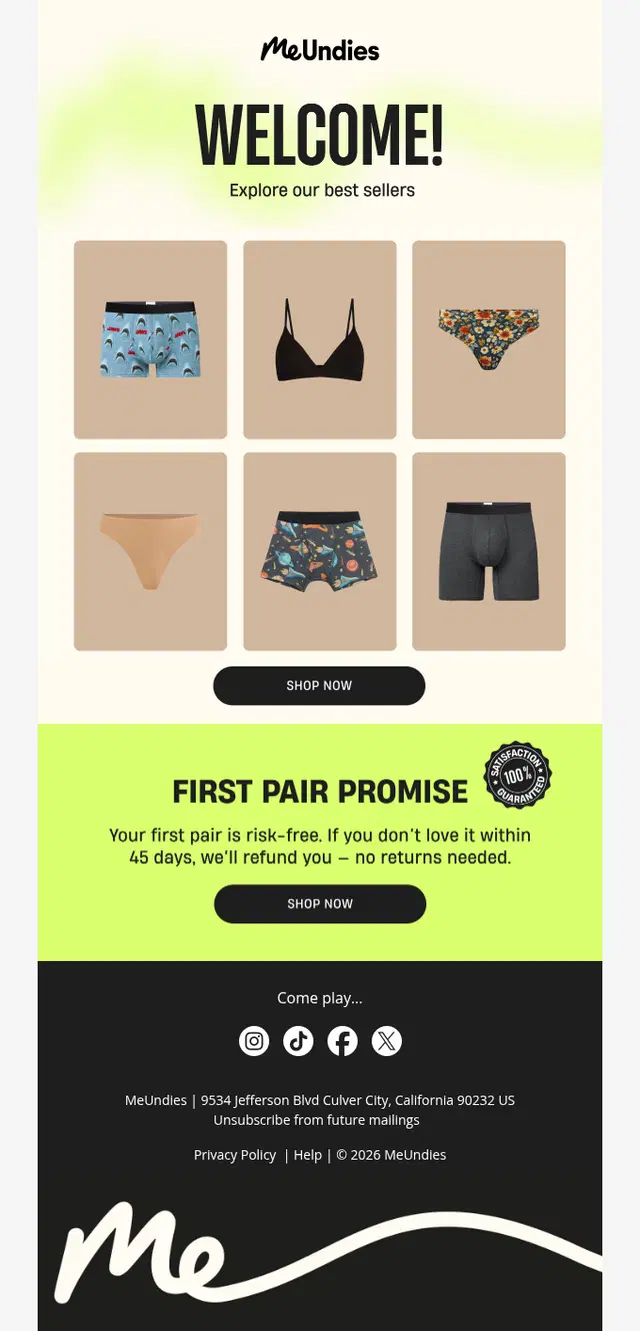
Sometimes the most useful welcome is simply: “Start here.” Product recommendation emails reduce the work of choosing by putting bestsellers, starter products, categories, or curated picks in front of someone who is still getting familiar with the range. Recommendations can be broad or highly focused, but the idea is the same-help a new subscriber find something relevant without making them hunt for it.






Brand Story and Benefit-Focused Welcome Emails
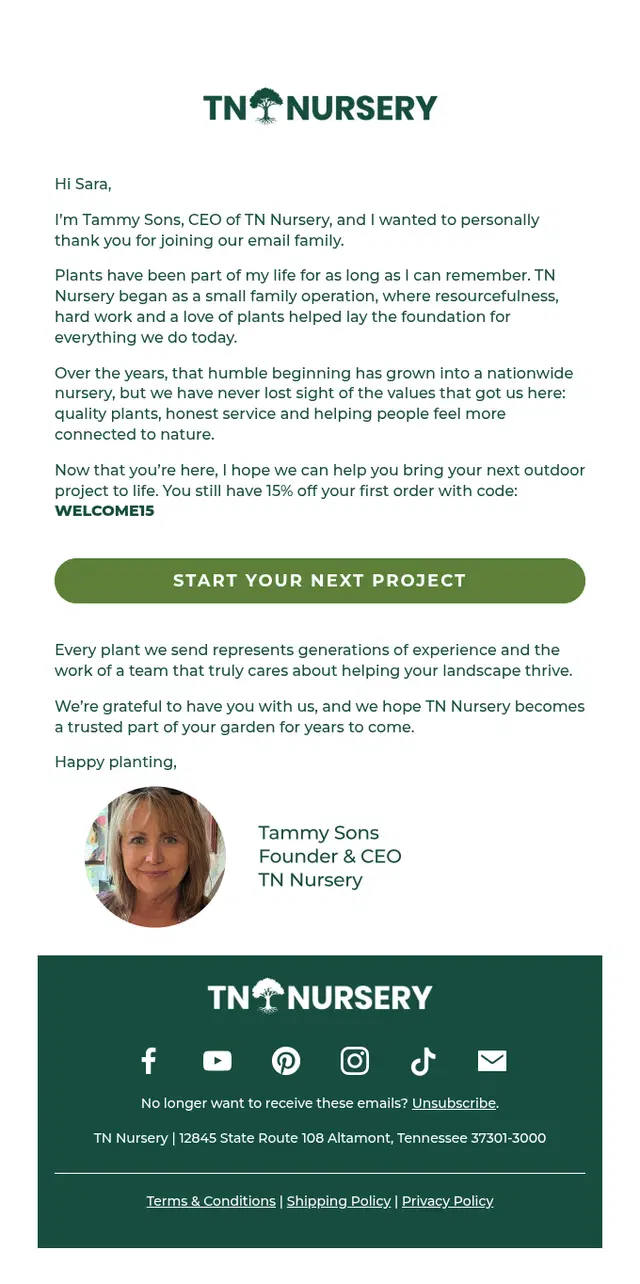
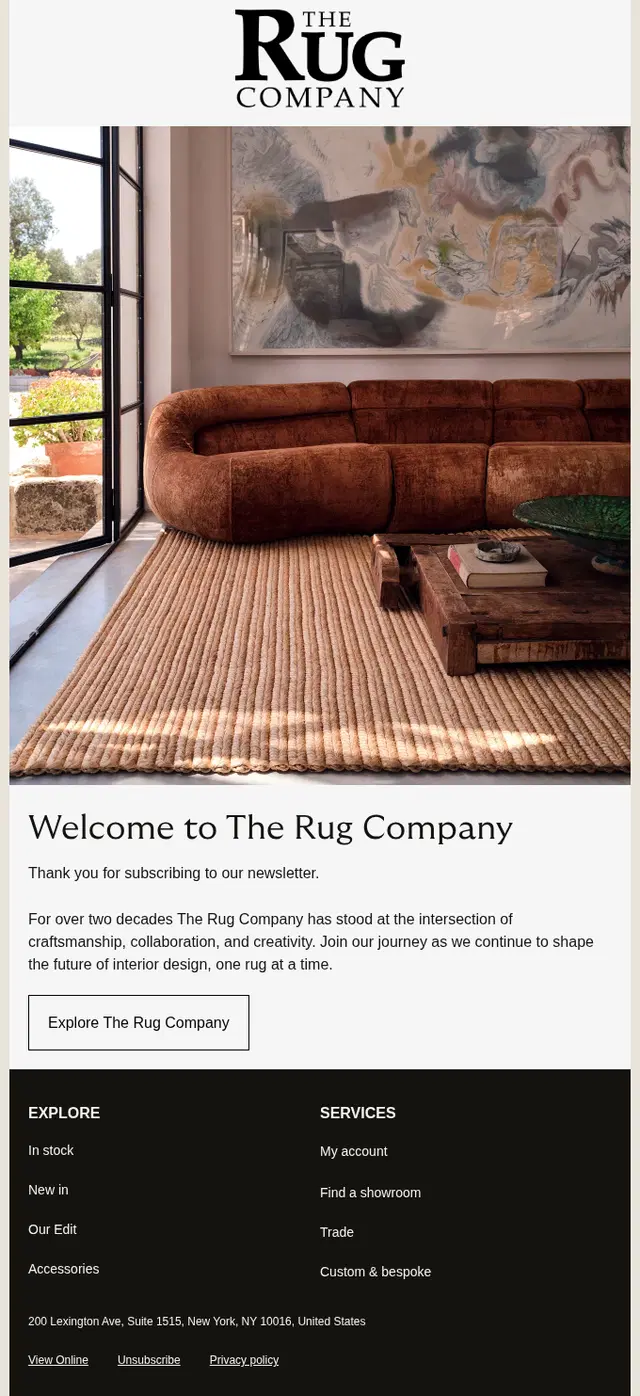
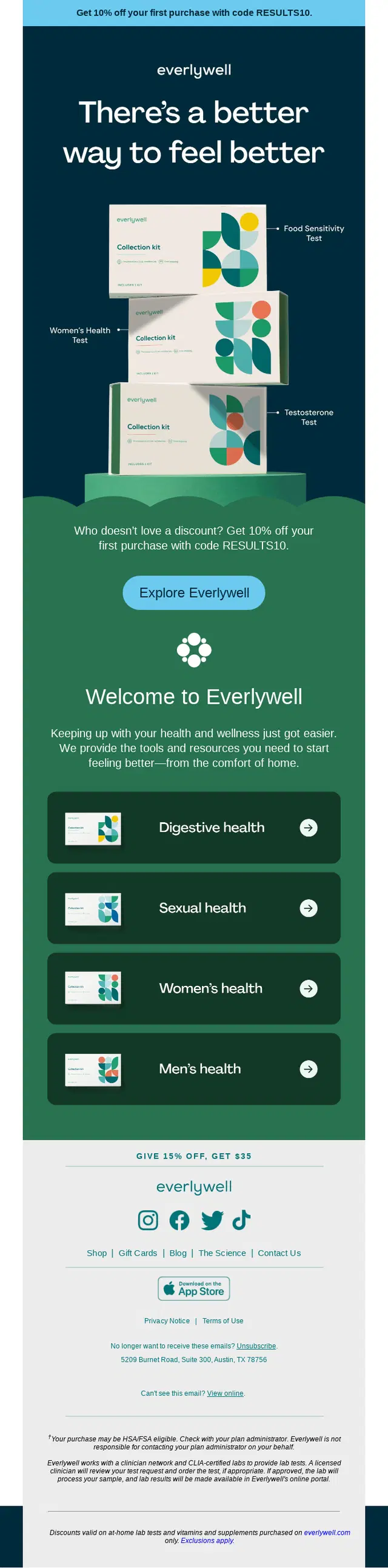
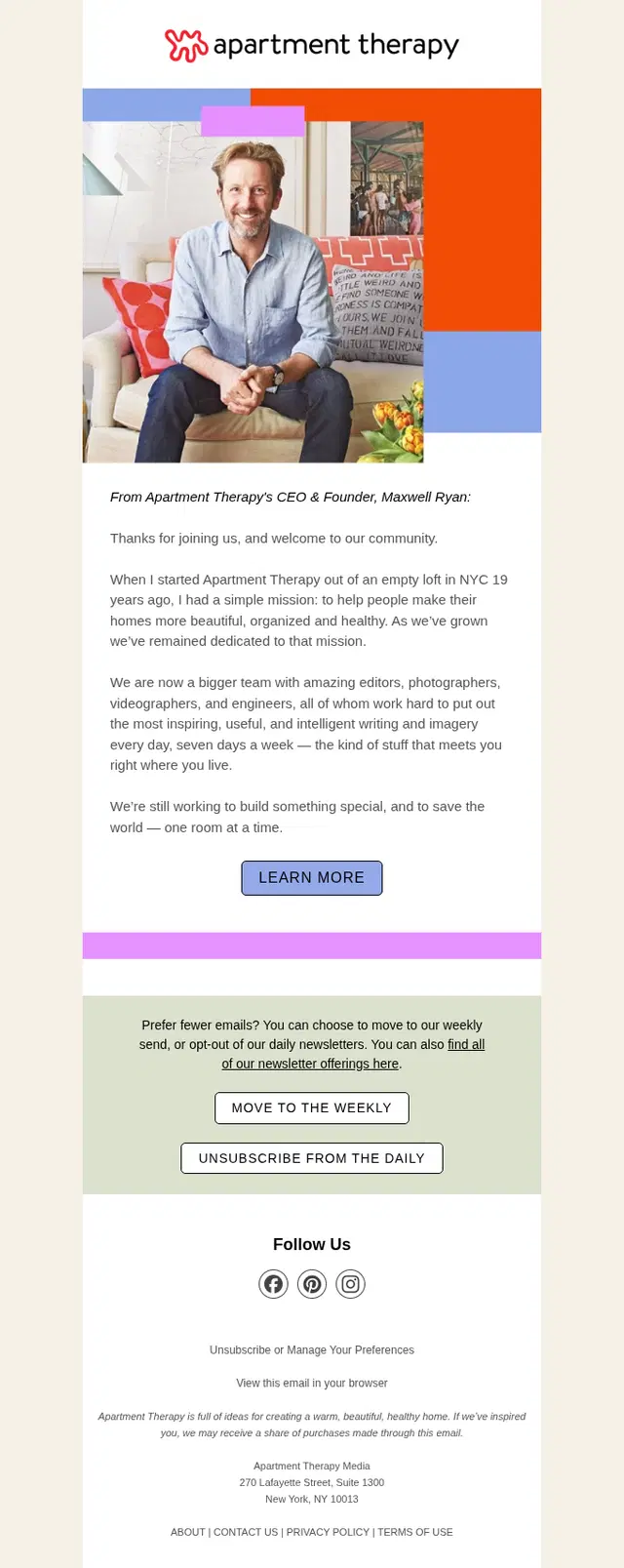
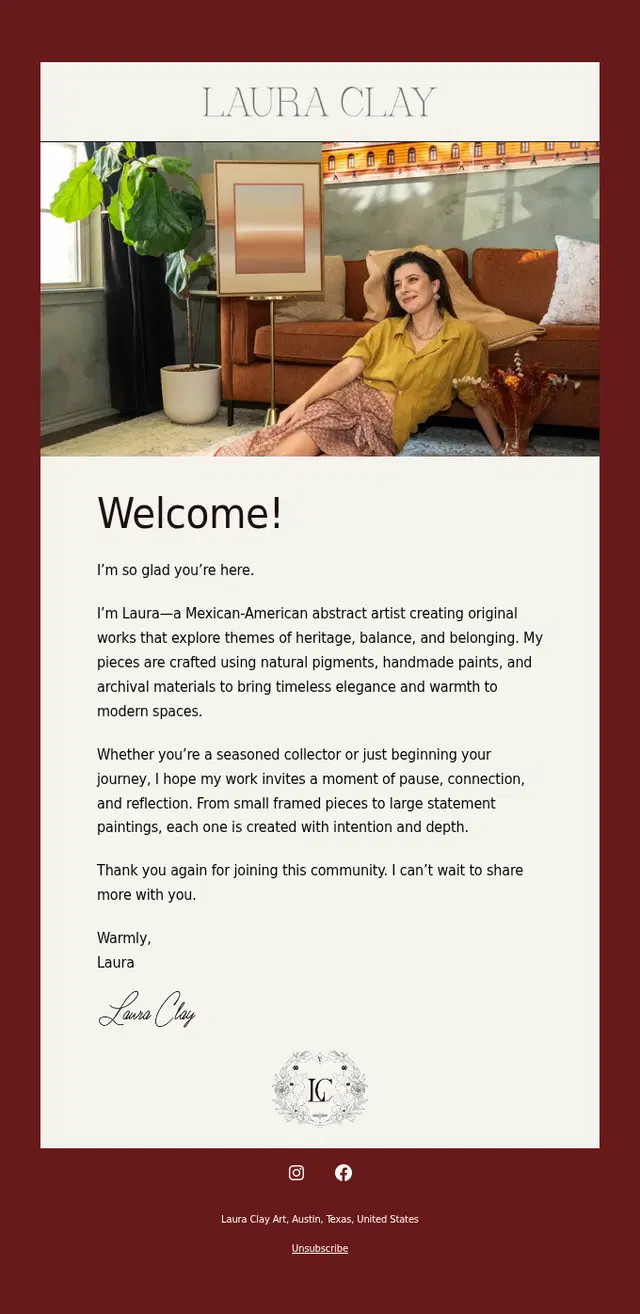
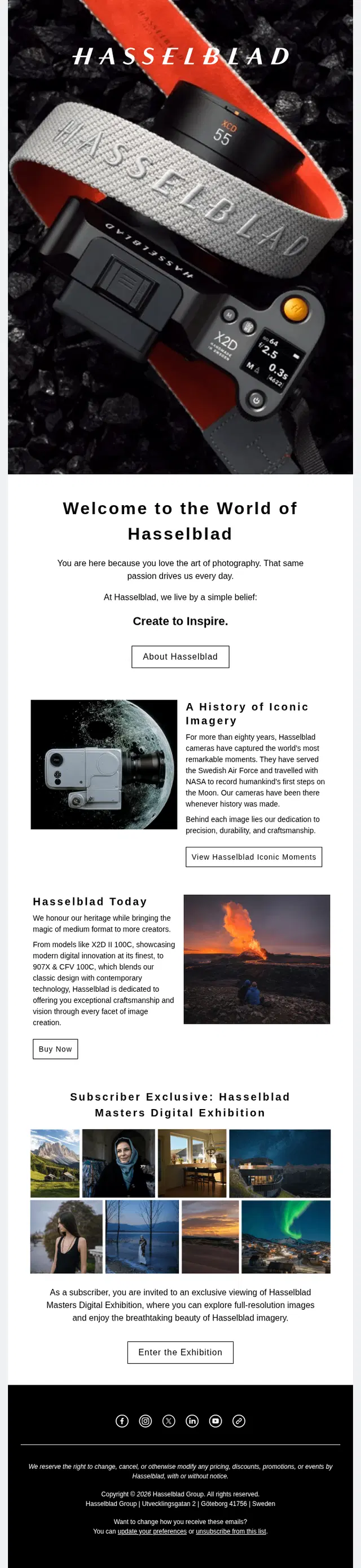
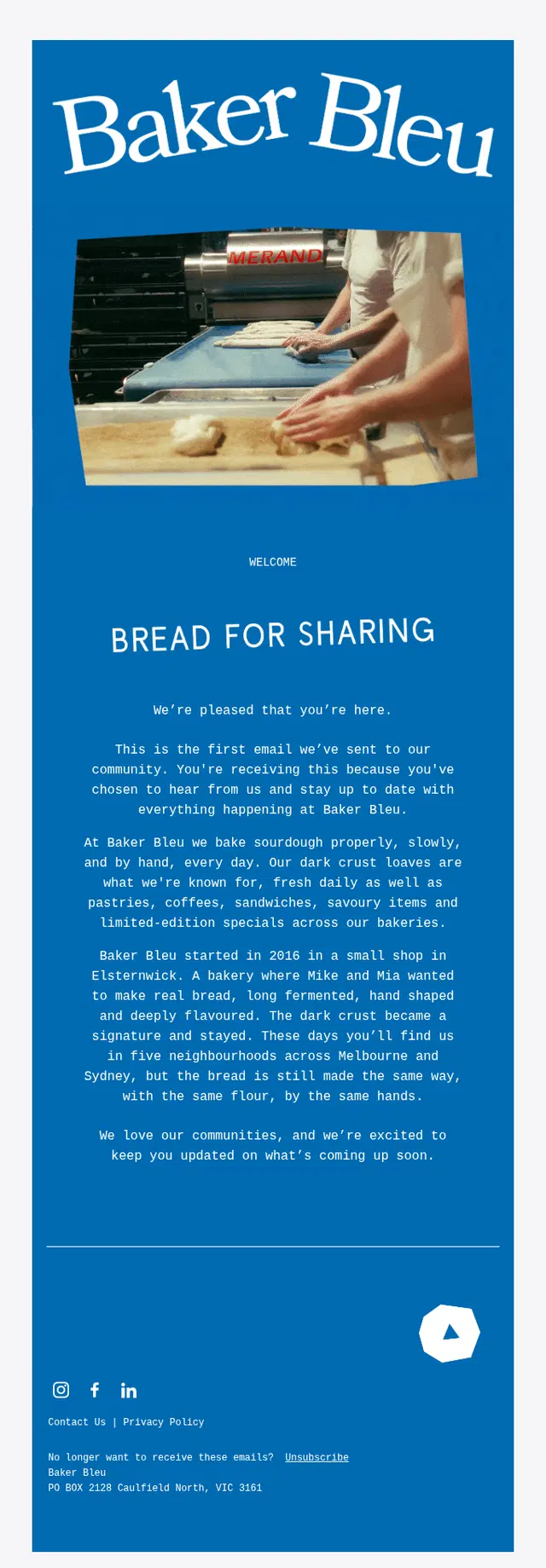
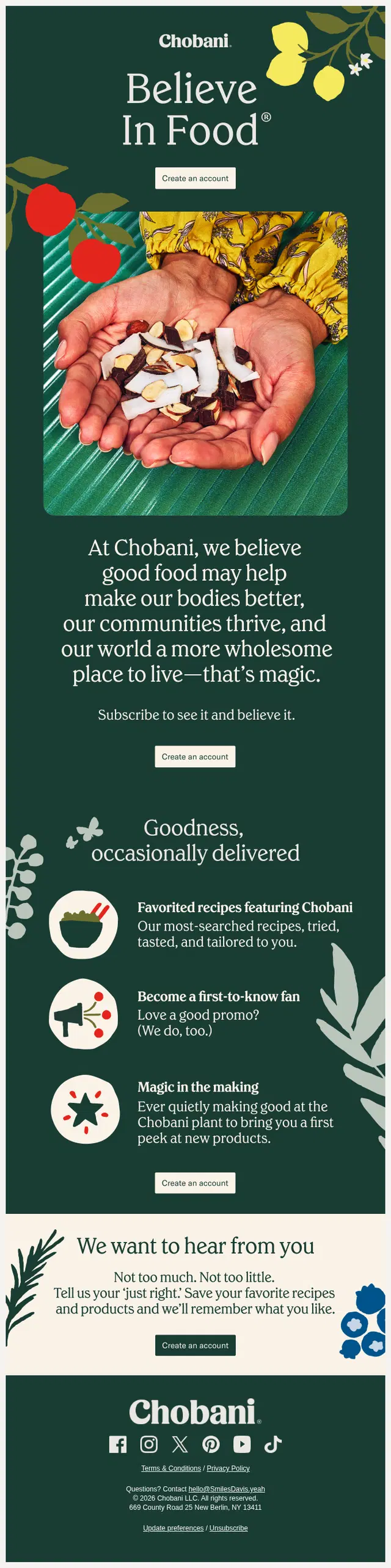
Not every welcome needs a coupon. Some brands are better served by explaining why they exist, how they started, what they believe in, or what makes their product meaningfully different. Founder stories, craftsmanship, mission, heritage, product benefits, and a clear point of view can do more to build interest than an immediate promotion. These emails show how brands use the welcome moment to give people a reason to care.








Account, Membership and Registration Welcome Emails
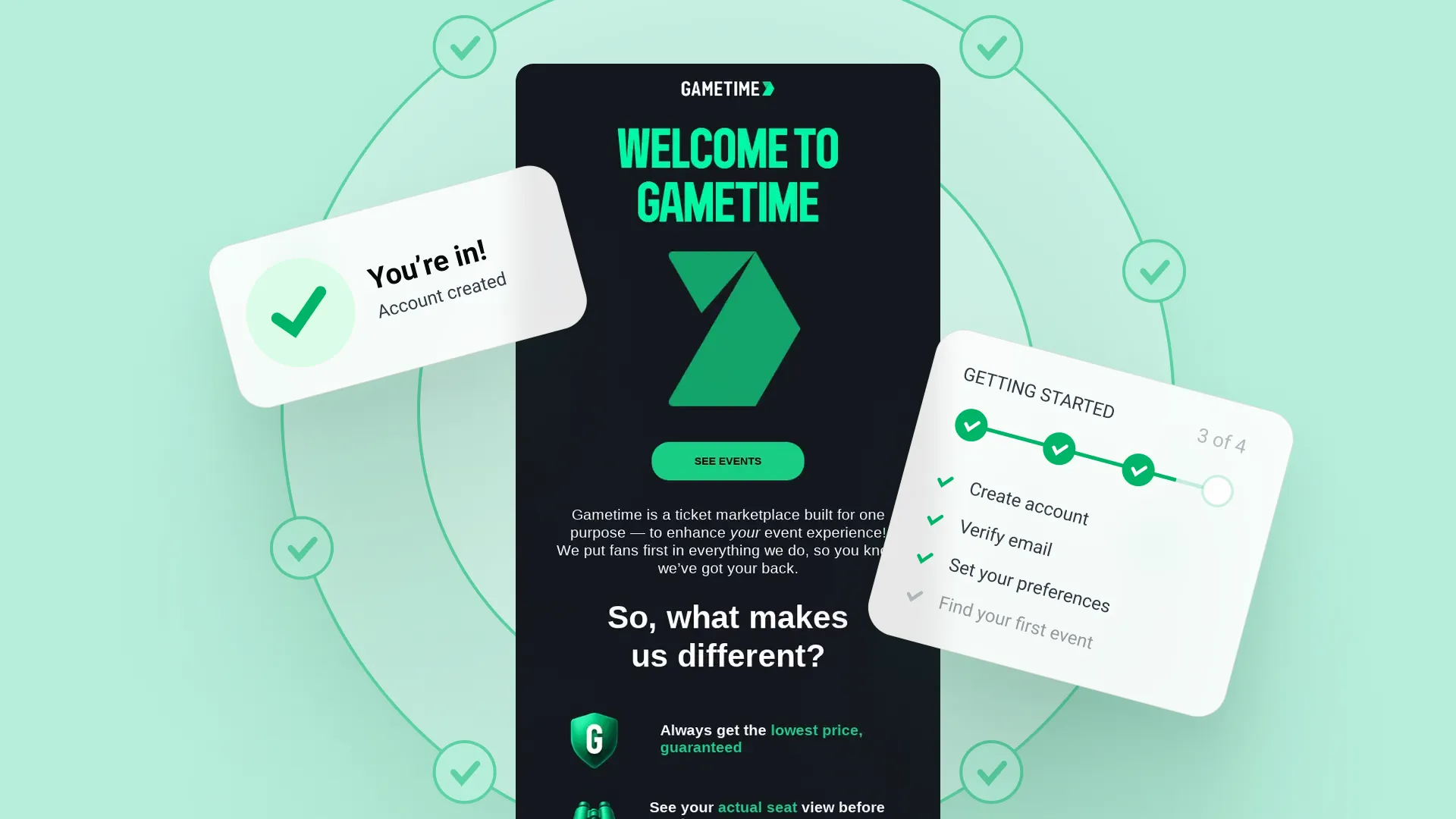
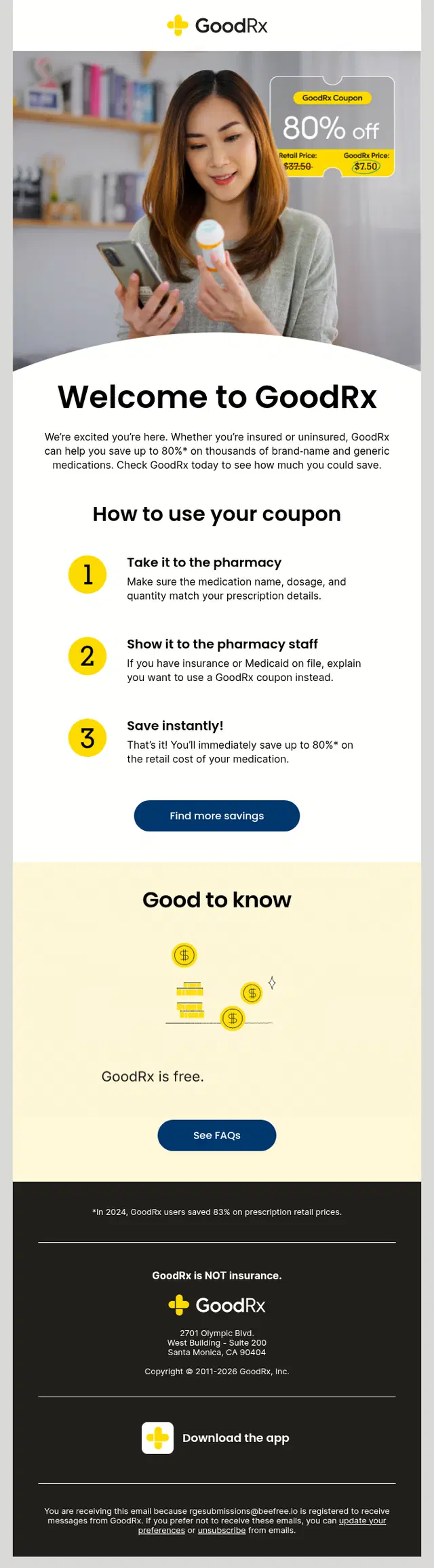
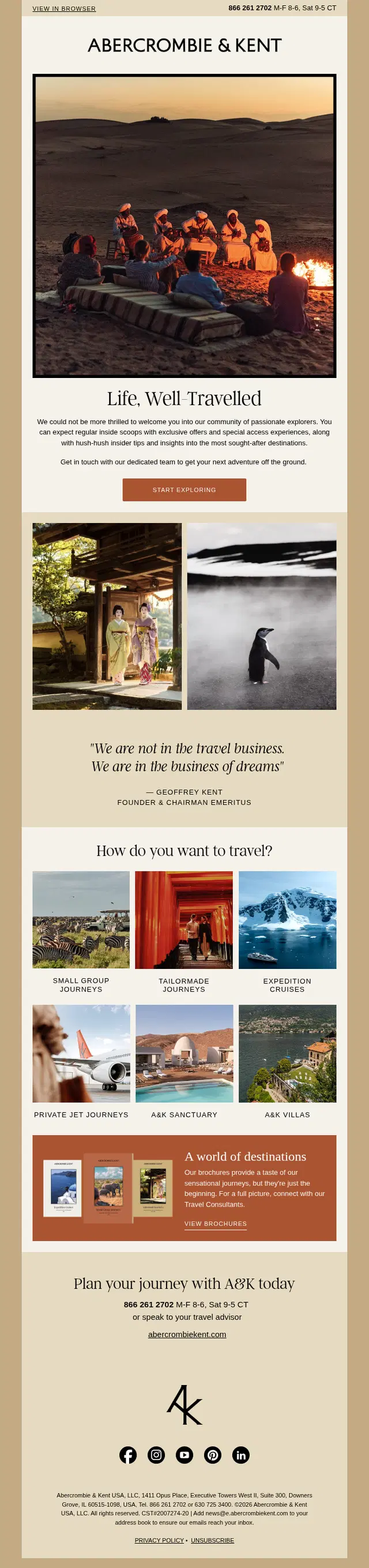
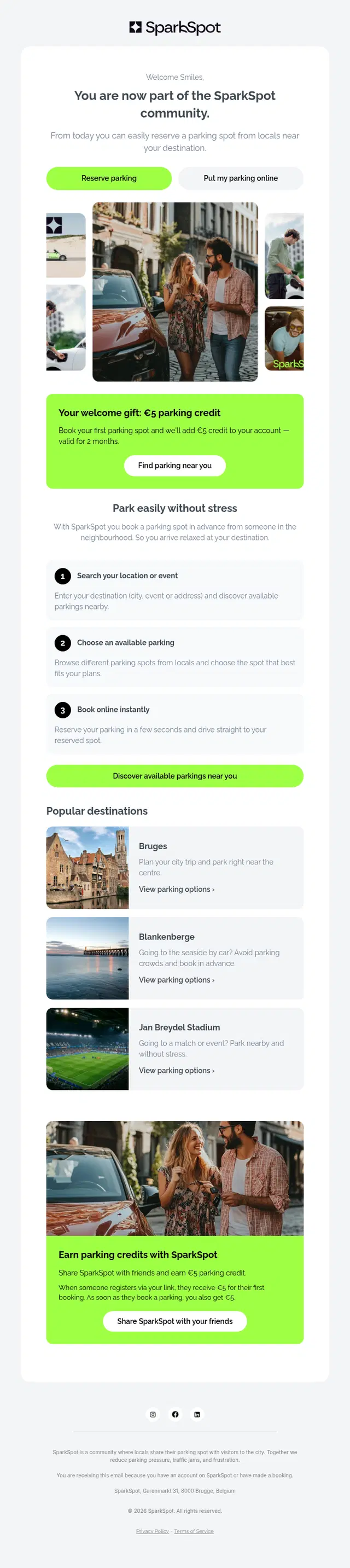
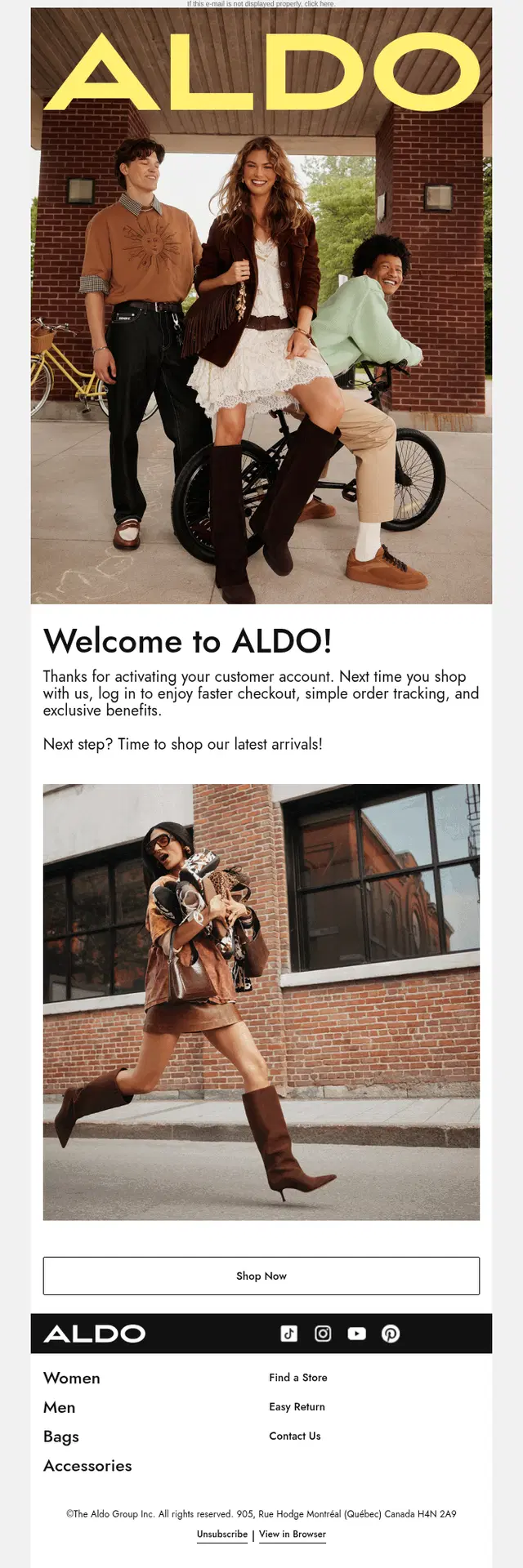
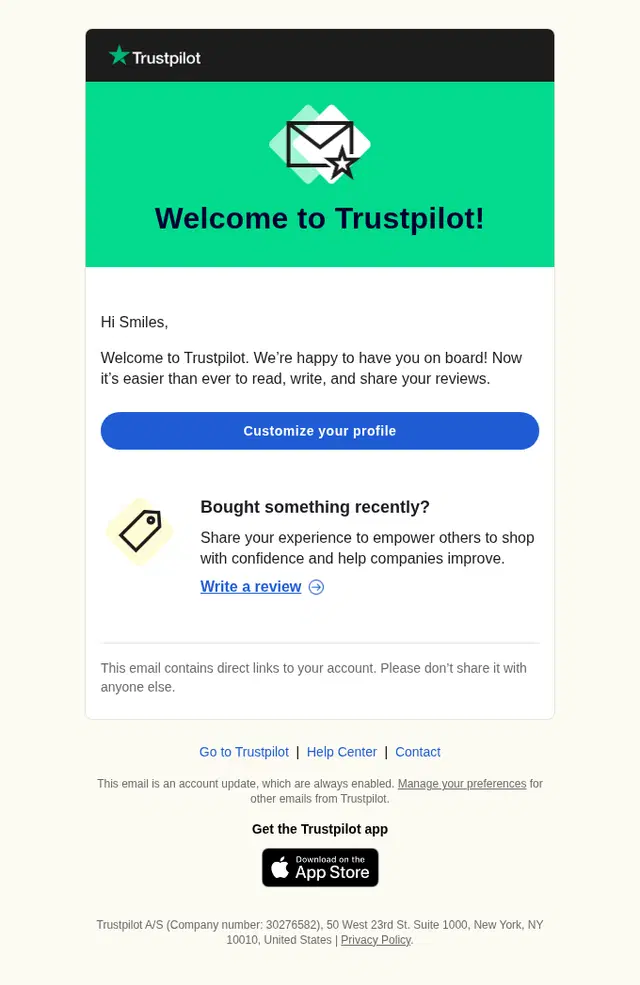
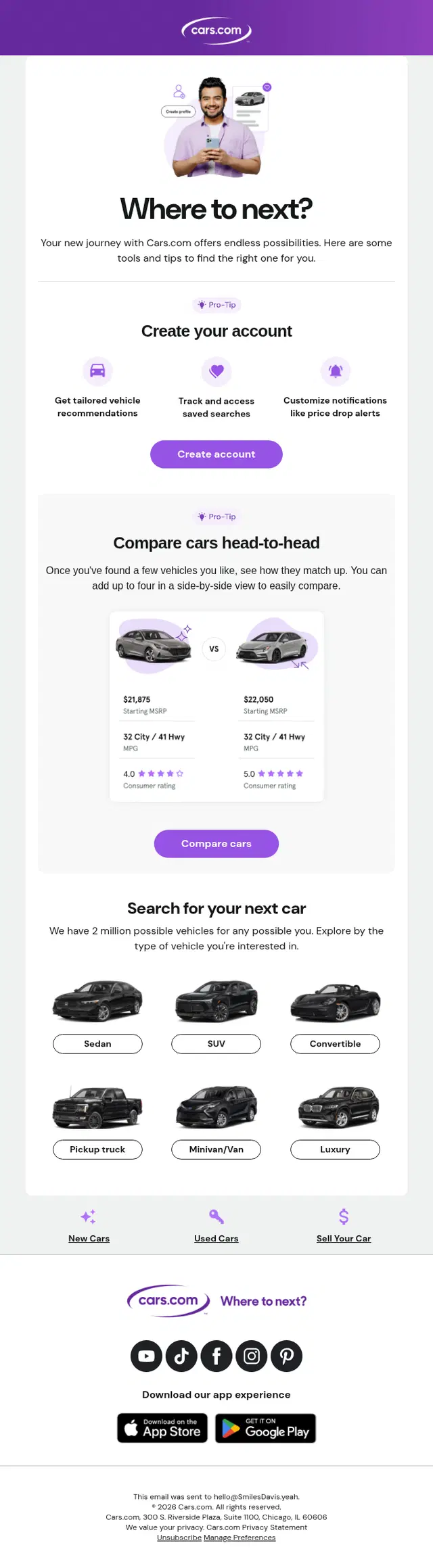
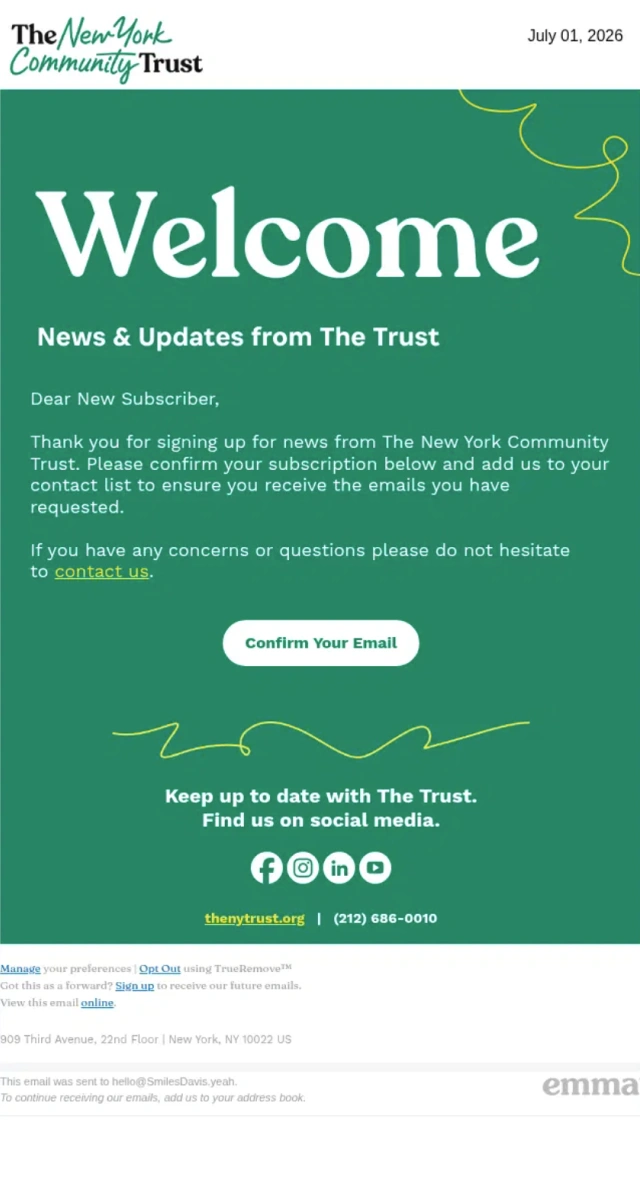
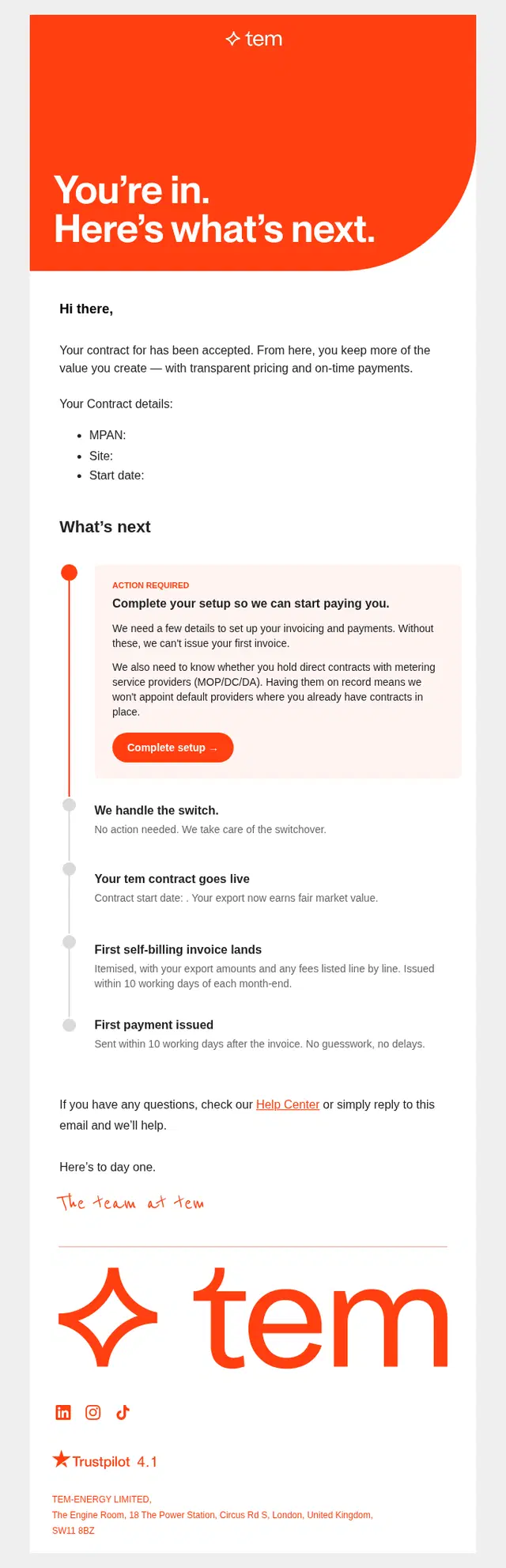
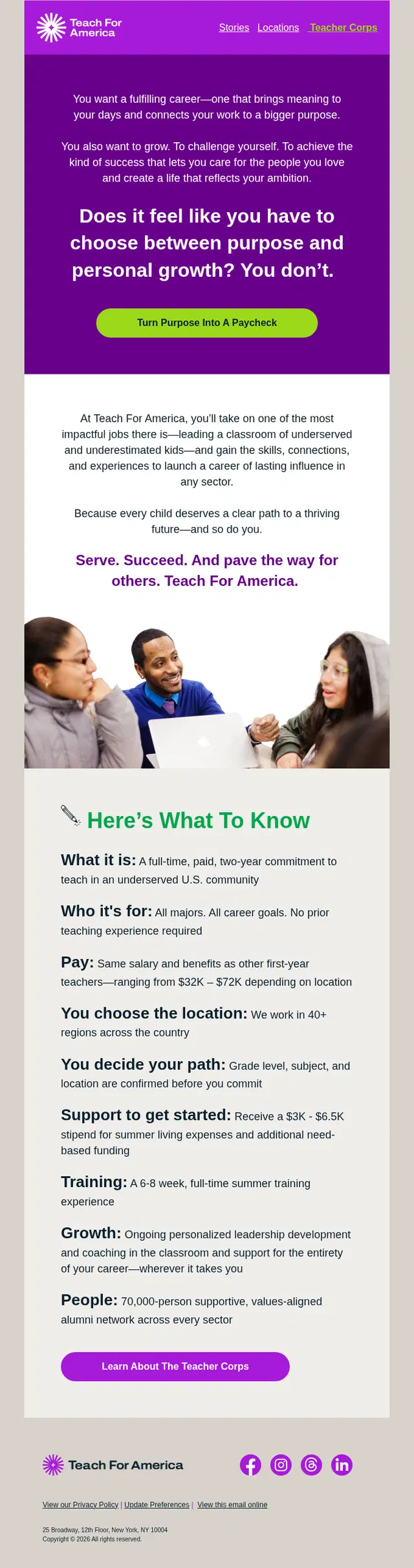
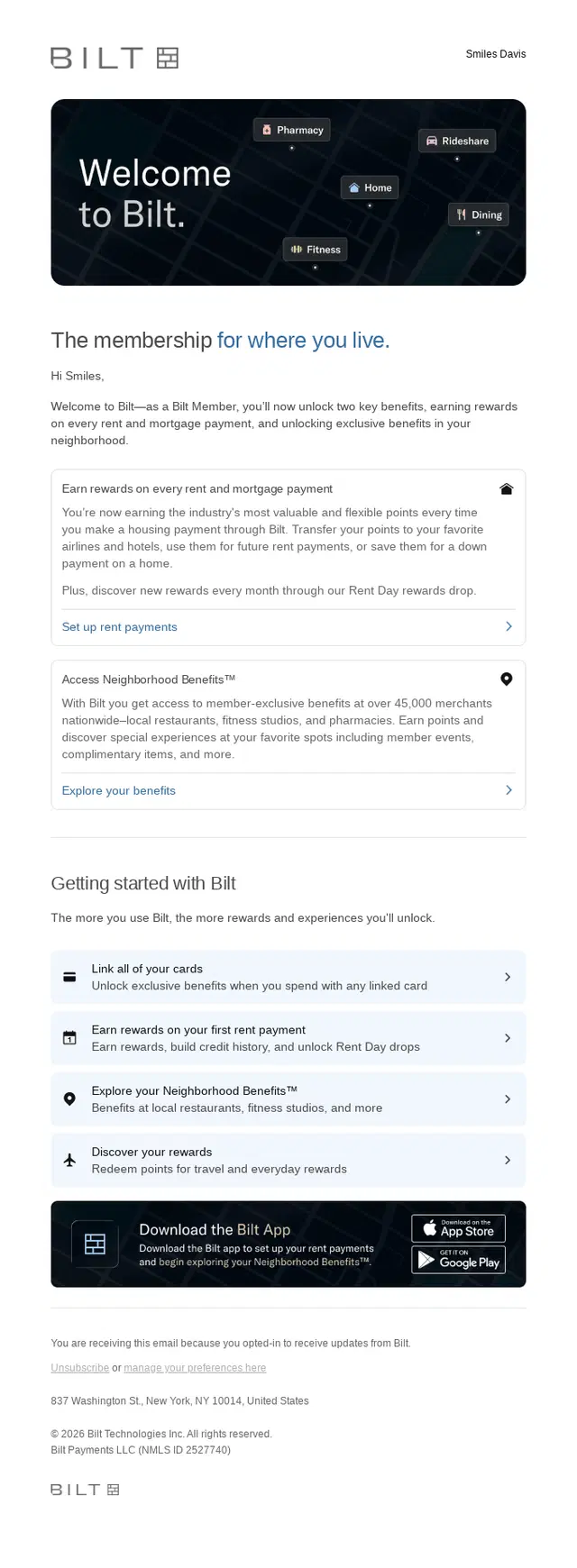
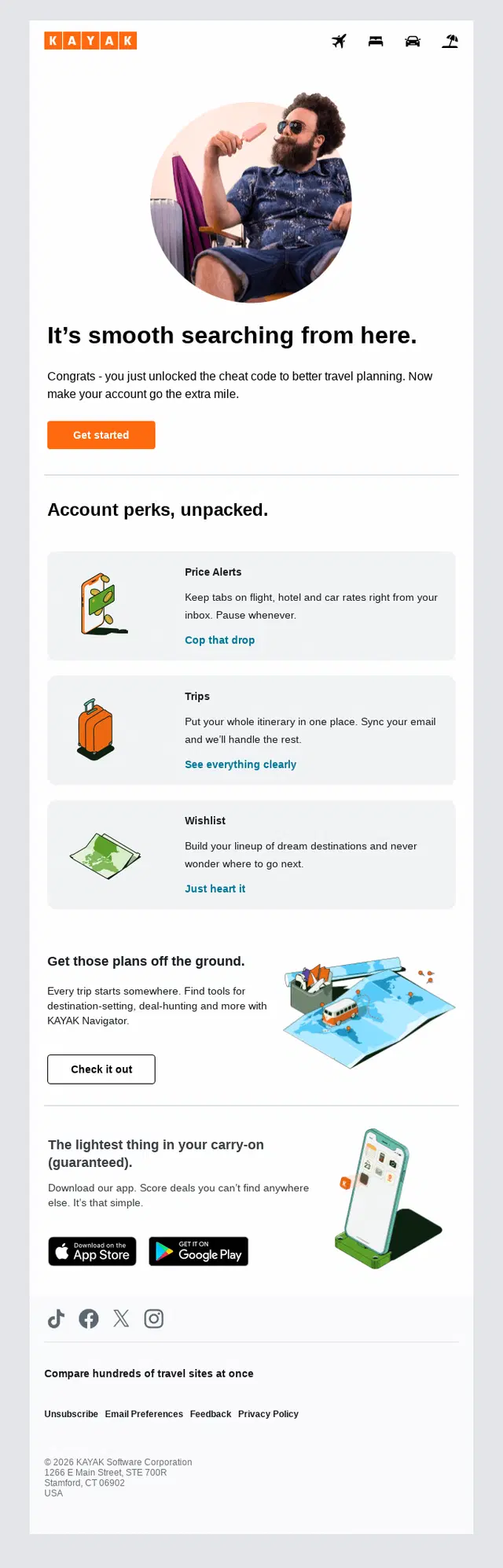
Creating an account, joining a membership, confirming a registration, and signing up for a loyalty program all trigger their own kind of welcome. These messages often sit somewhere between marketing and transactional email: they confirm that something happened, but they also need to help the recipient understand what they can now do. The best ones turn that confirmation into a useful first step instead of stopping at “You’re in.”

Welcome Email Flow Examples
A welcome email flow turns a single introduction into a sequence of messages that helps new subscribers or customers understand the brand, discover useful features, and take their next step. The welcome flow email examples below show how brands build two-, three-, and five-step sequences around onboarding, education, personalization, incentives, and activation.
2-Step Health and Wellness Welcome Flow
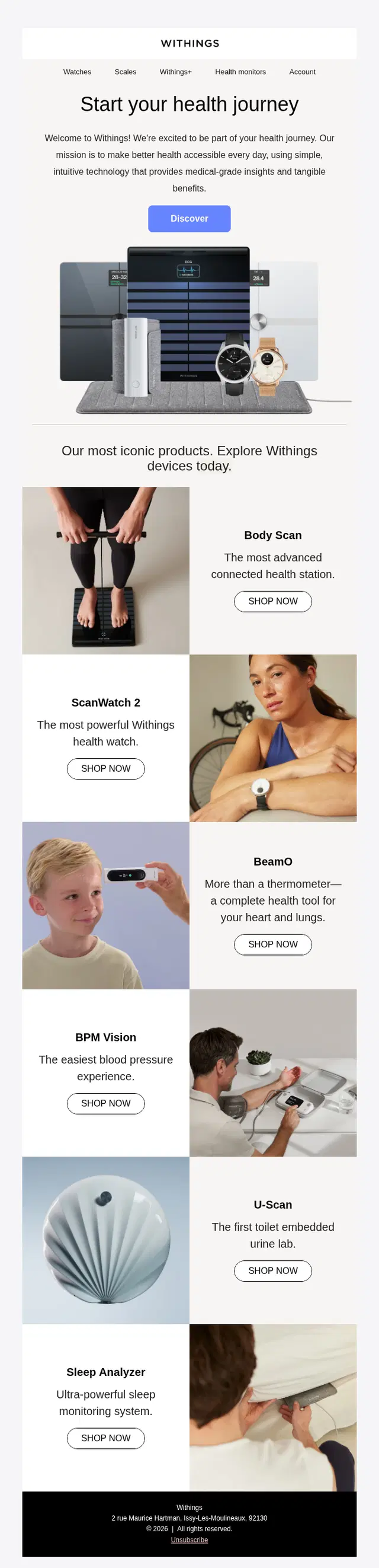
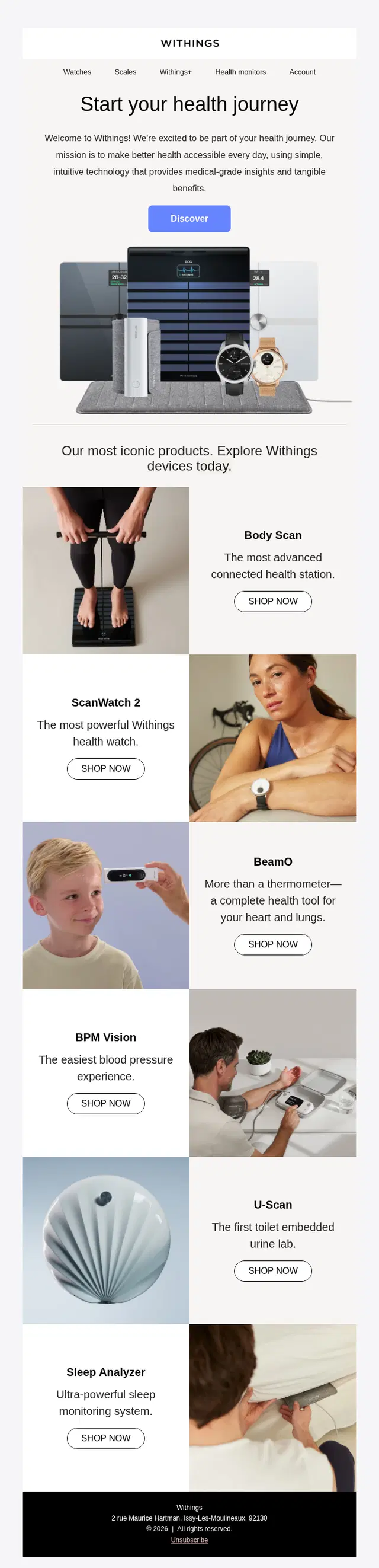
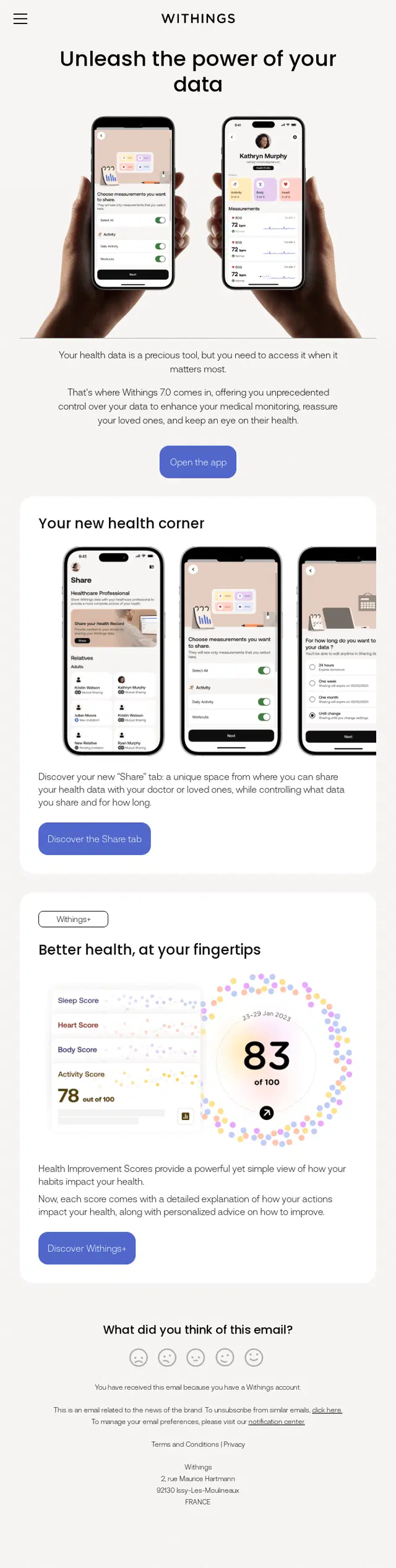
Withings starts by introducing its connected health ecosystem and flagship devices, then expands the relationship beyond hardware by showing how the app helps users understand, manage, and share their health data.
2-Step Automotive Welcome Flow Comparison
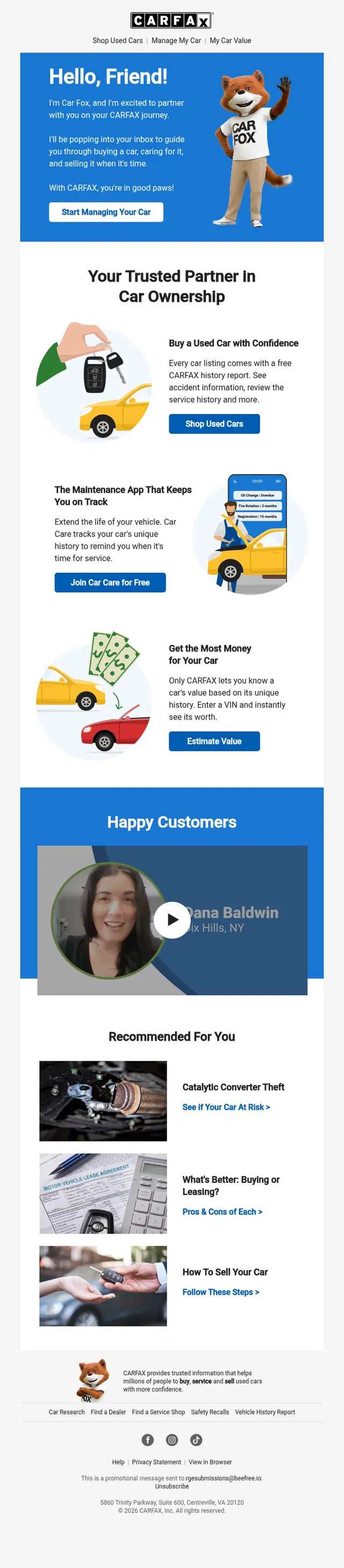
These two automotive welcome emails illustrate different ways to onboard people around car ownership, but they come from separate brands rather than one continuous automation. CarMax focuses on organizing the shopping process, while CARFAX positions itself as a companion across buying, maintaining, and eventually selling a car.
3-Step SaaS Welcome Email Sequence
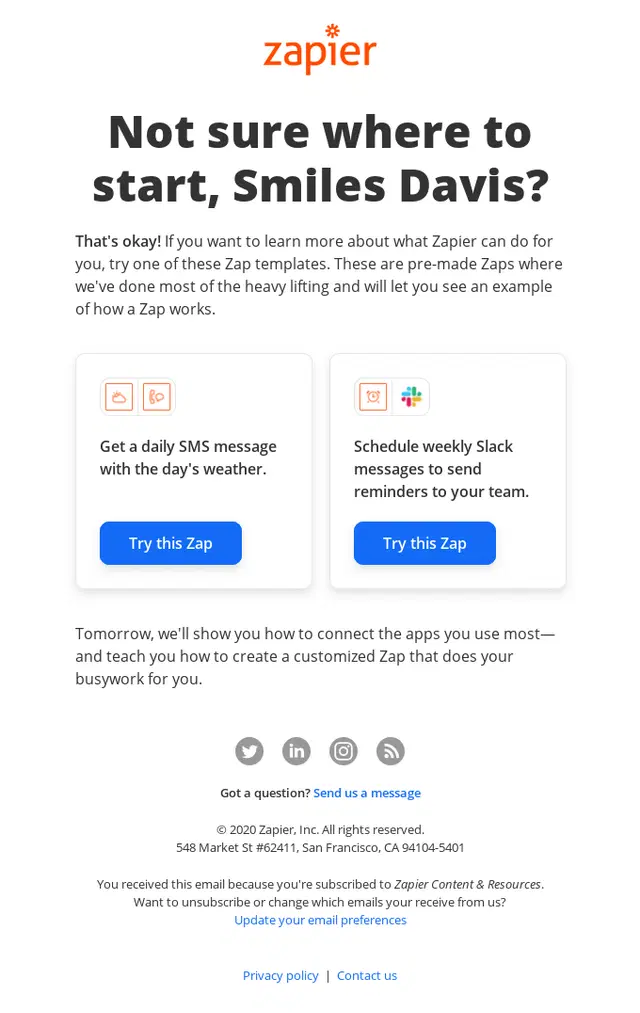
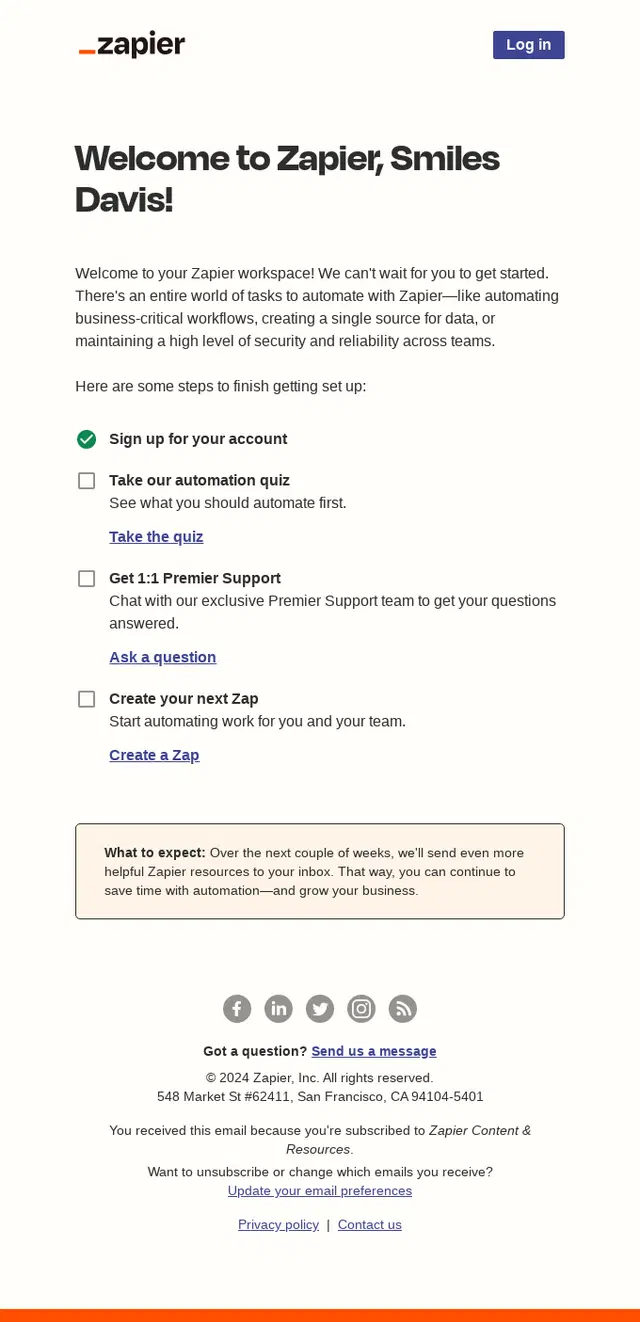
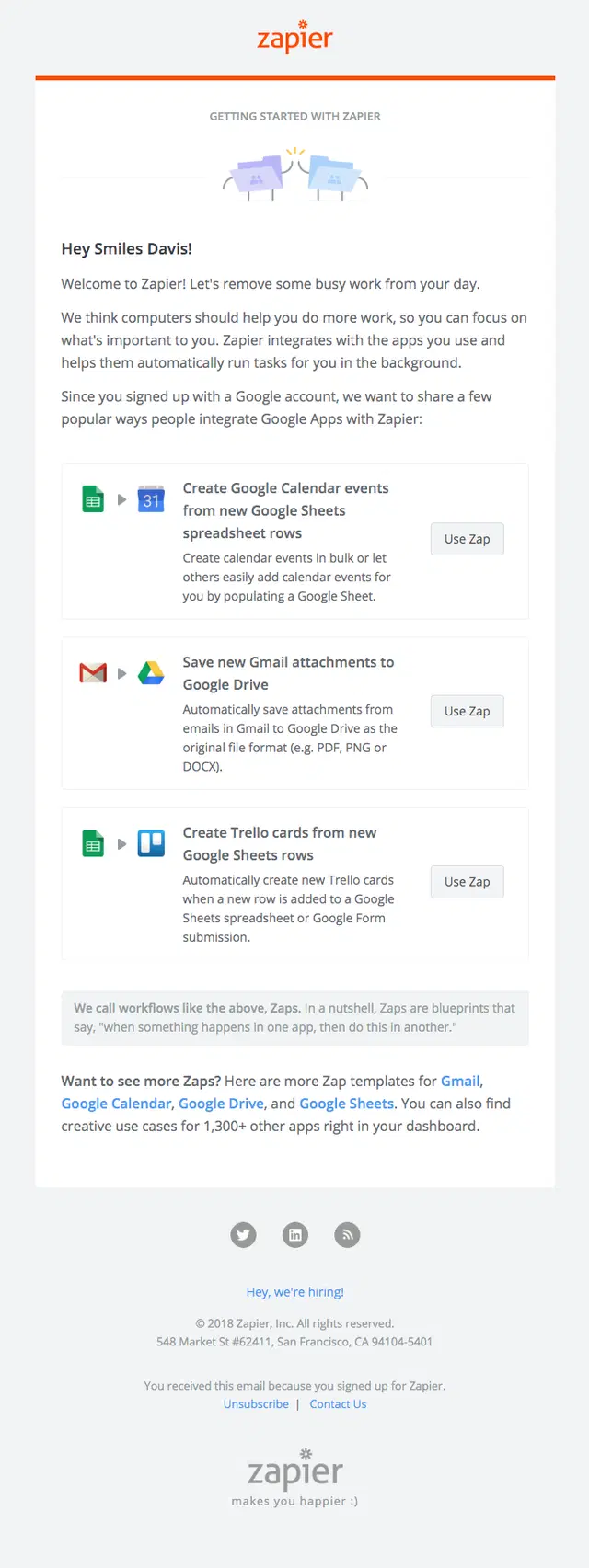
Zapier’s three-email SaaS welcome sequence moves from orientation to relevant examples and then easy activation. New users first learn what to do next, receive integration ideas connected to the way they signed up, and are then encouraged to try a ready-made automation template.
3-Step Retail Membership Welcome Flow
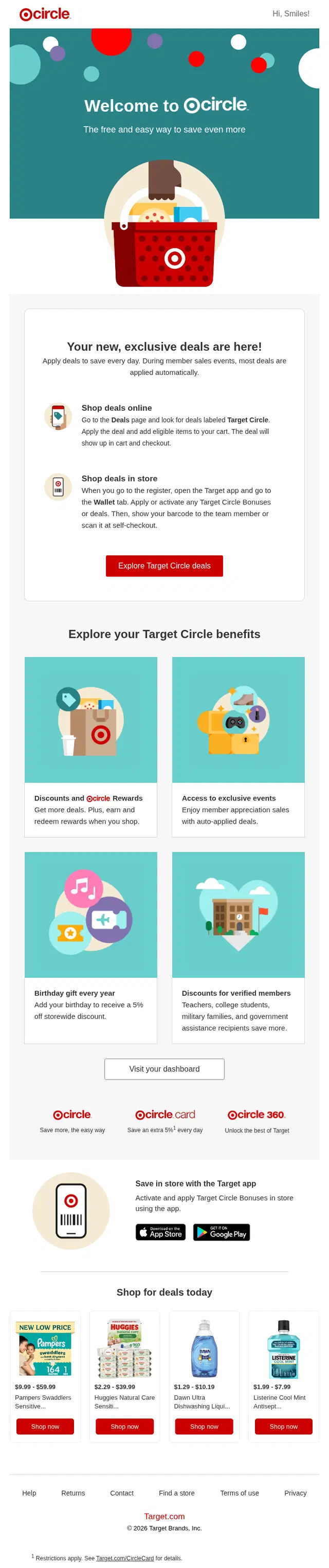
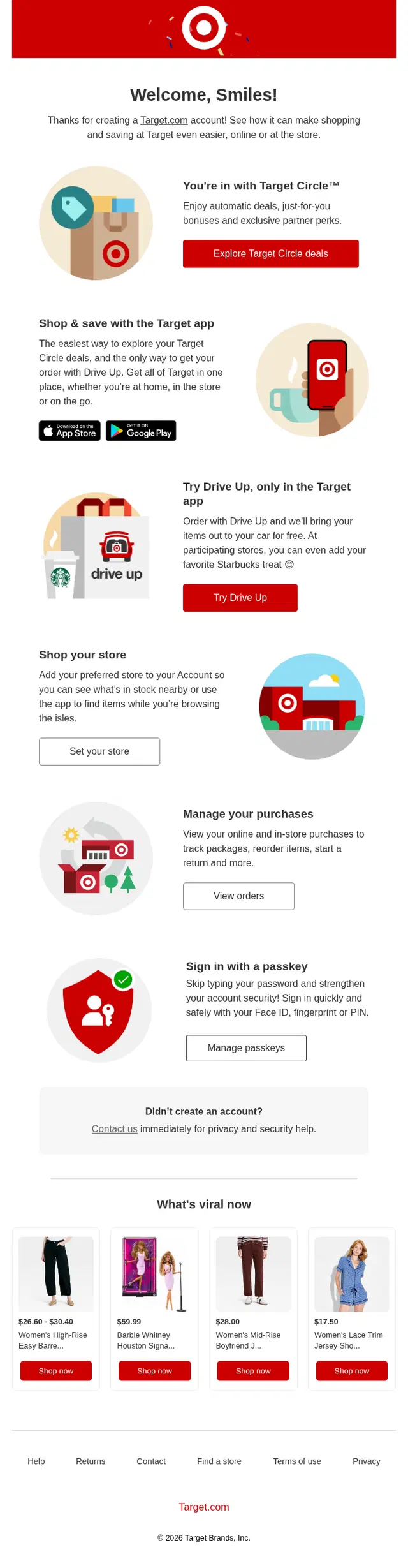
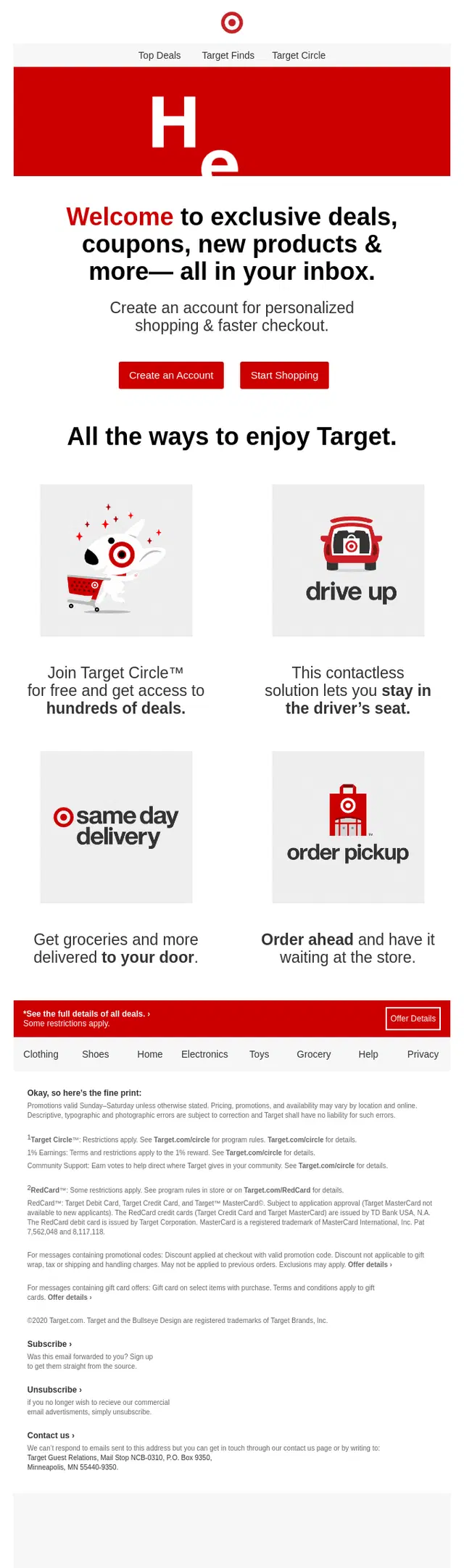
Target’s three-email welcome flow covers several layers of the customer relationship: Target Circle benefits, account and app features, and the broader shopping experience. Together, the emails show customers how membership, digital tools, and fulfillment options fit together.
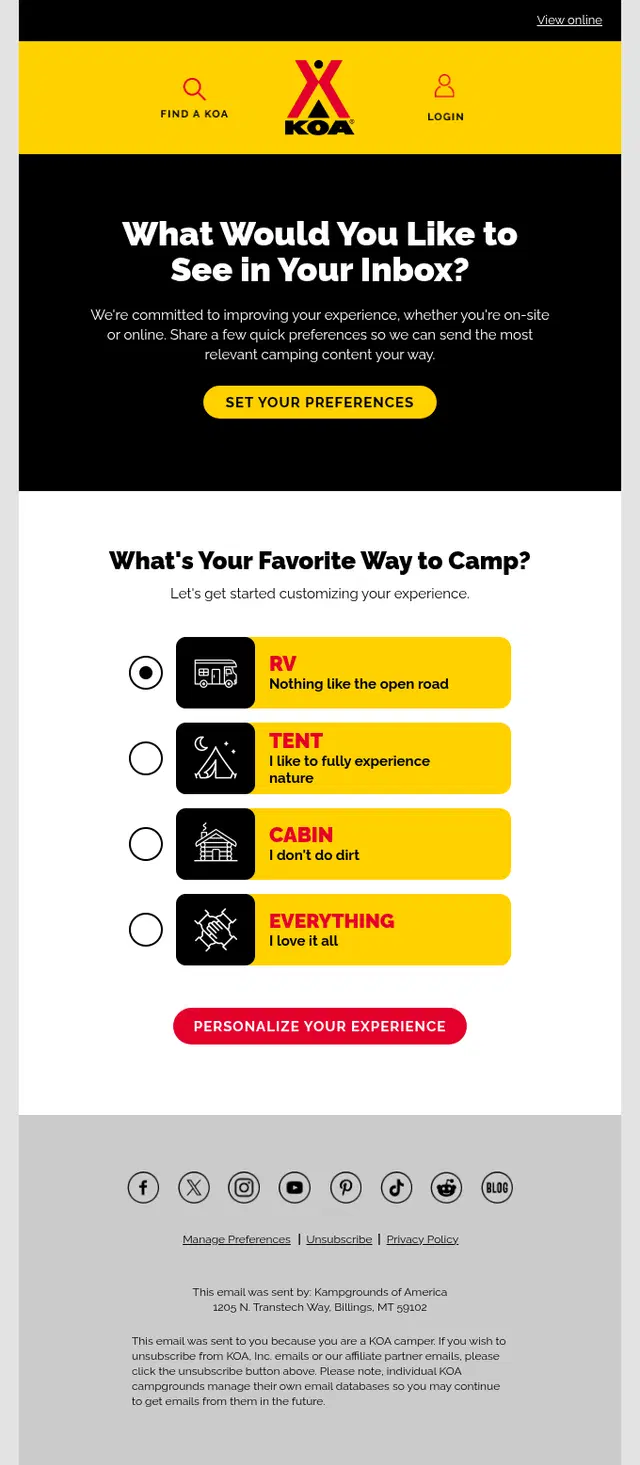
3-Step Camping Welcome Email Sequence
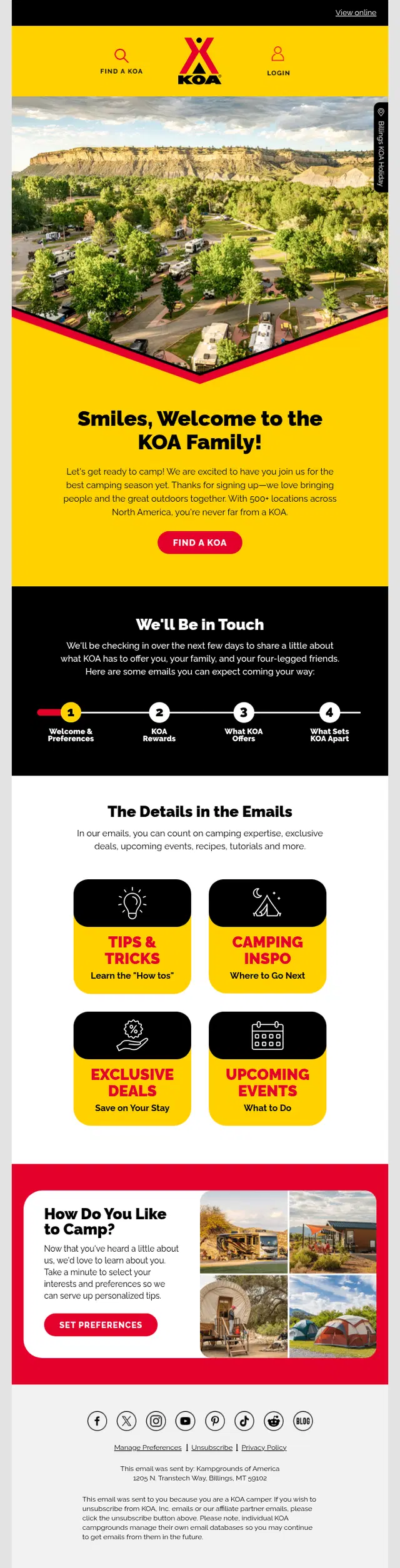
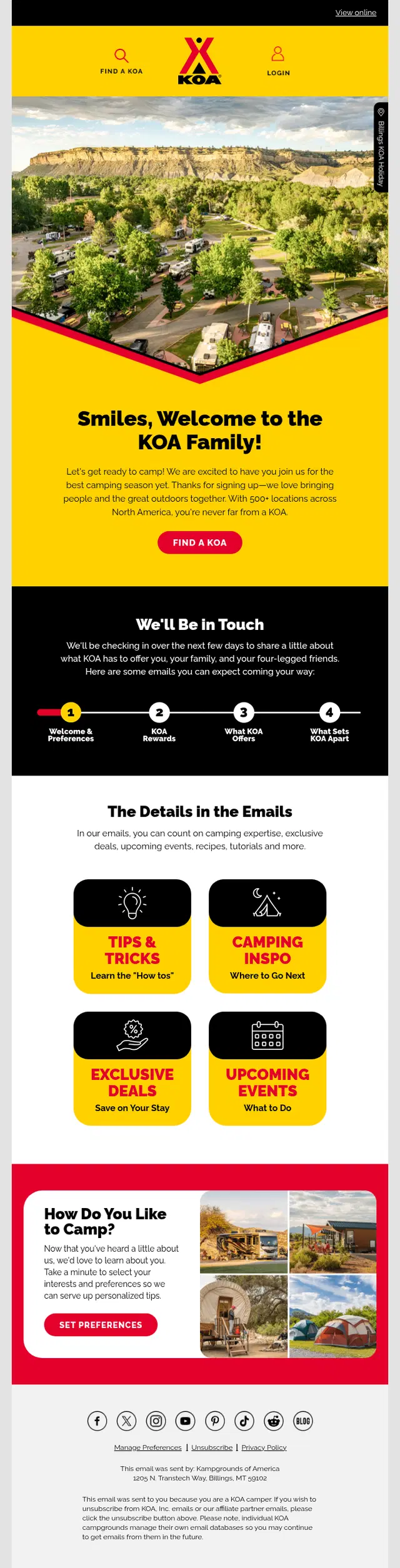
Kampgrounds of America moves from a general introduction to product education and then personalization. The sequence first explains what subscribers can expect, next shows the different ways to stay at KOA, and finally asks about camping preferences so future messages can become more relevant.

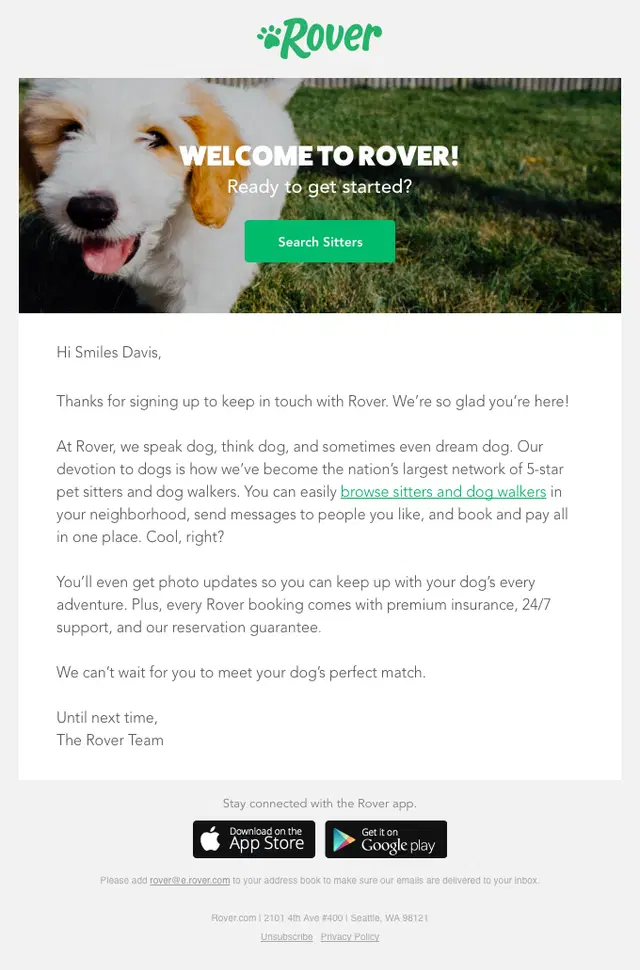
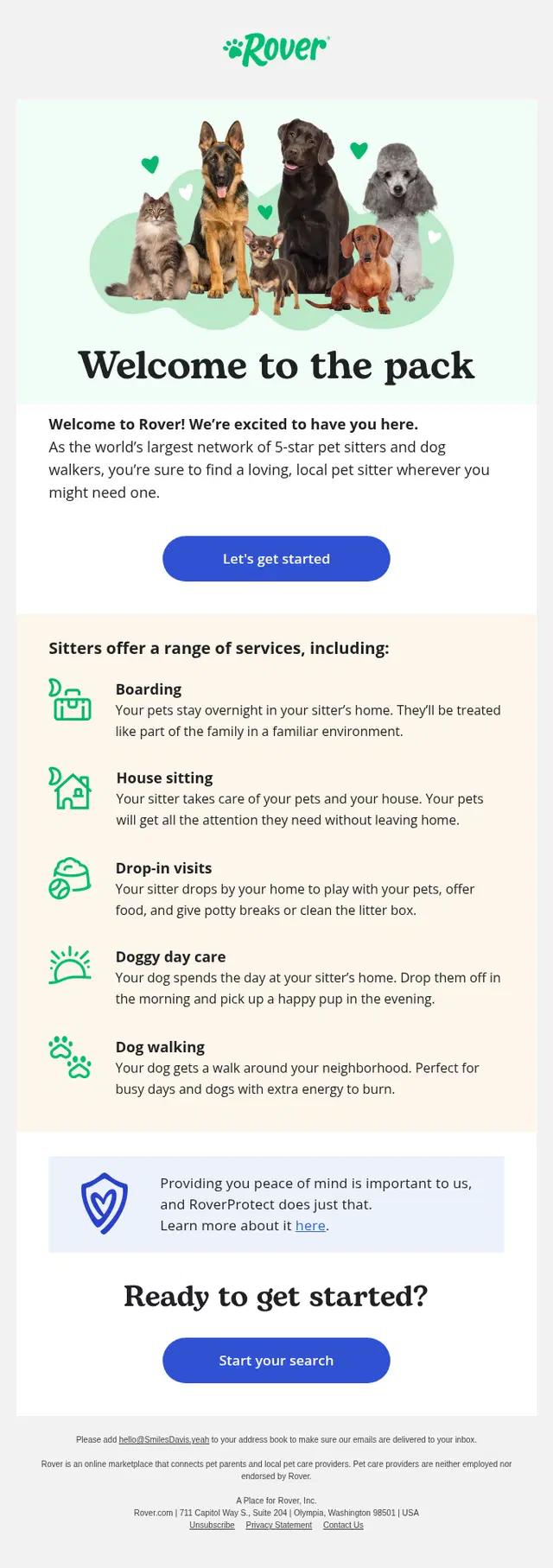
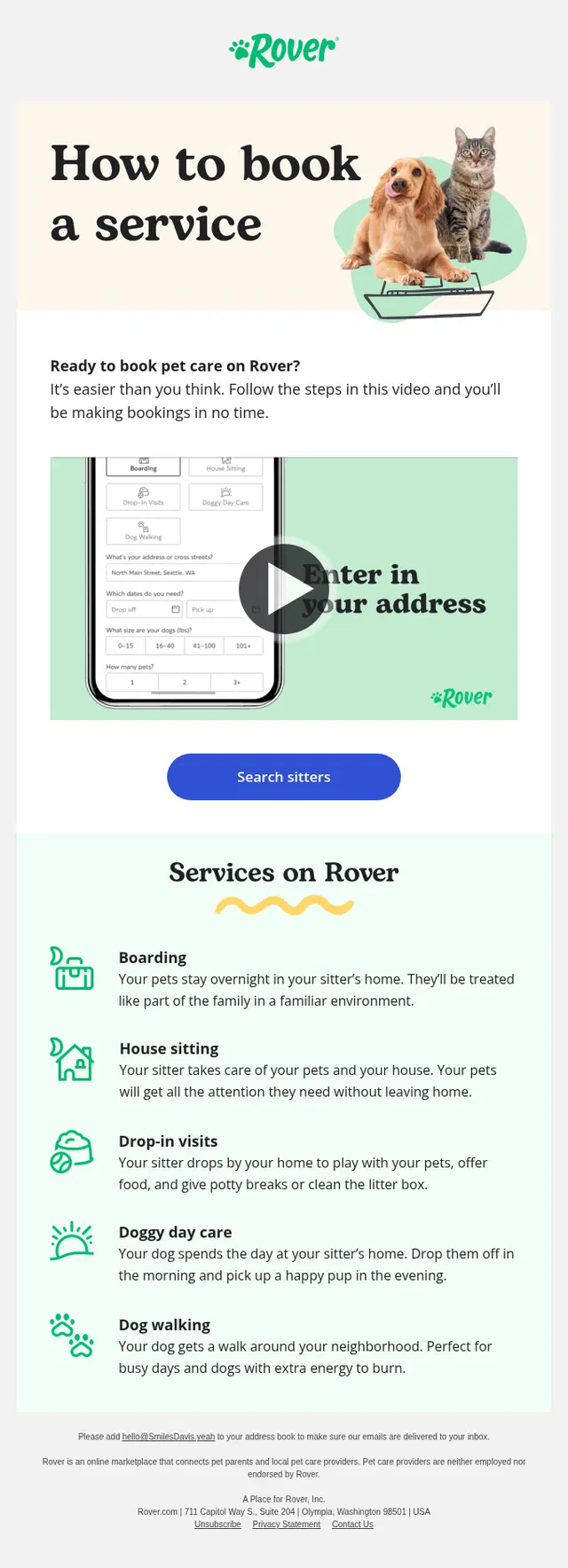
5-Step Pet Care Welcome Email Series
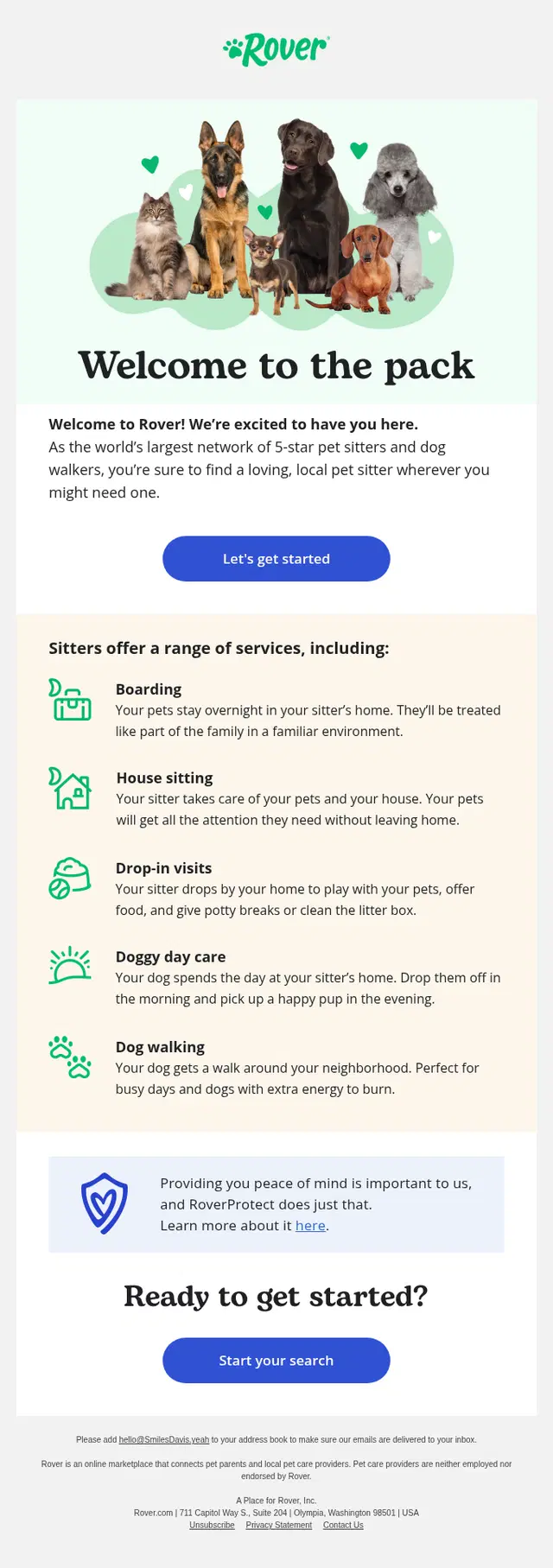
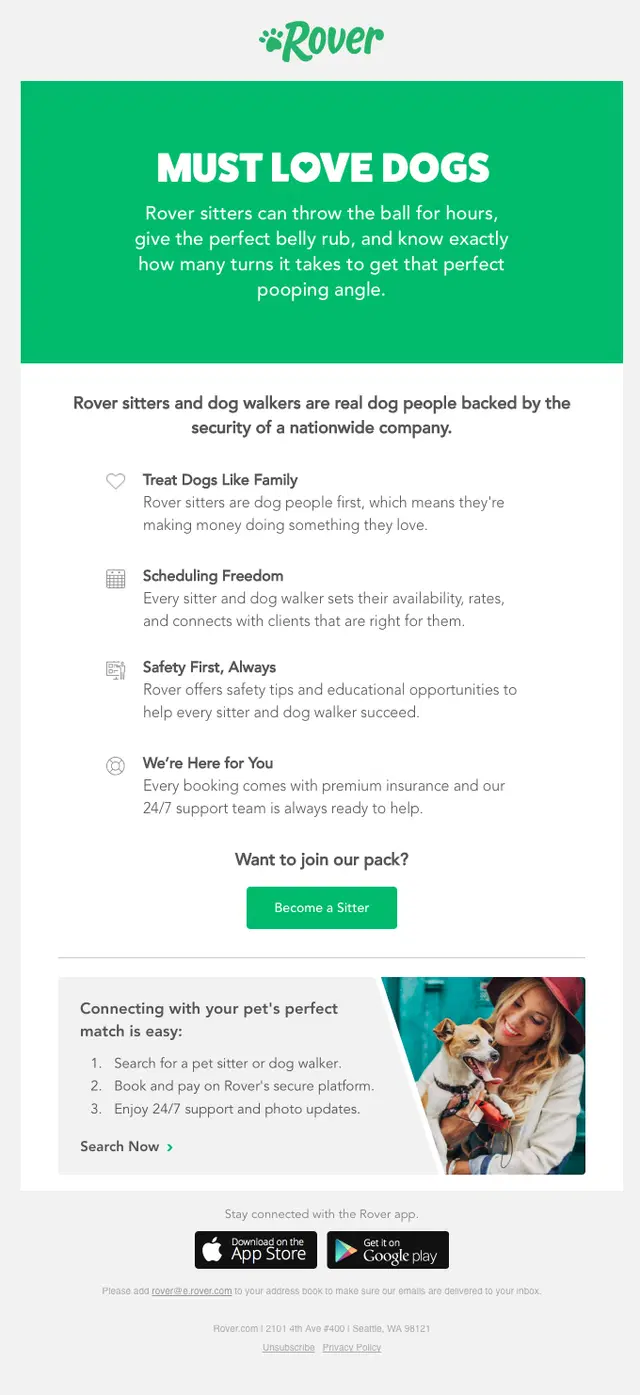
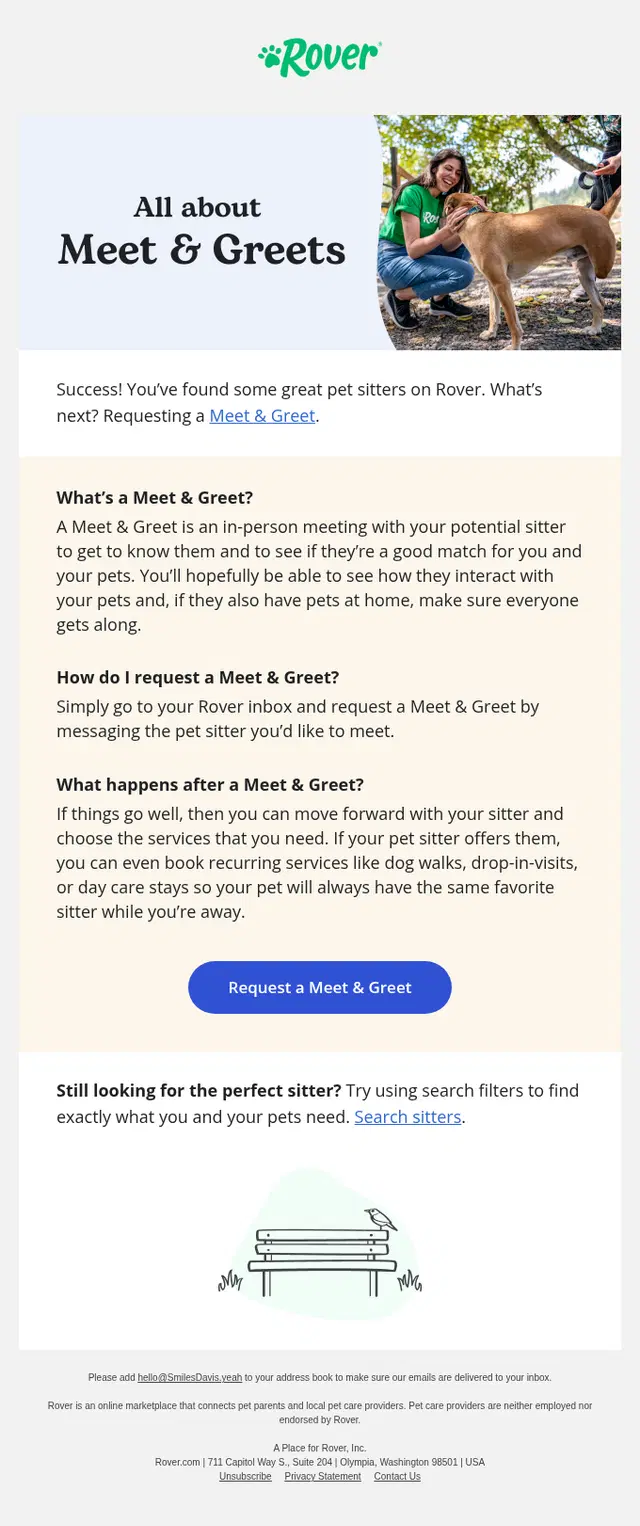
Rover’s longer welcome email series gradually reduces the uncertainty around booking pet care. It introduces the marketplace, explains available services, teaches the booking process, builds confidence in sitters, and finally walks users through the Meet & Greet stage.
5-Step Fintech Welcome Email Sequence
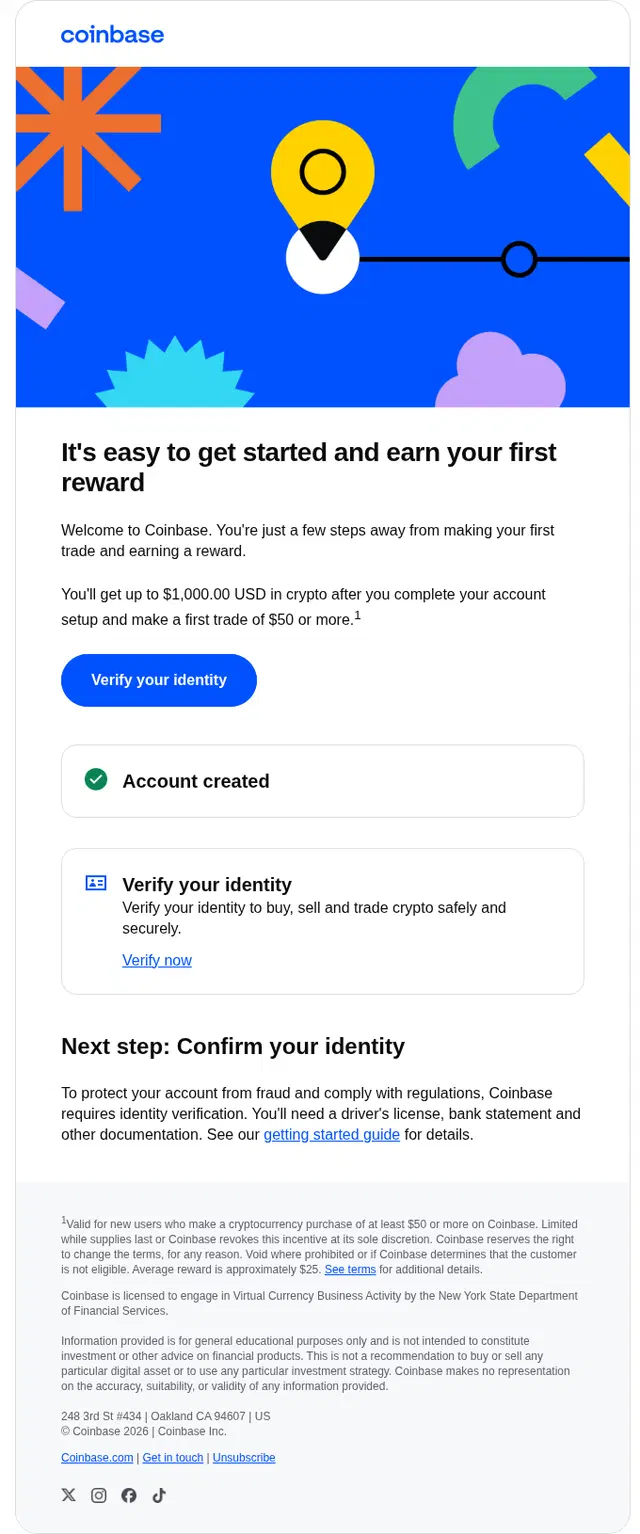
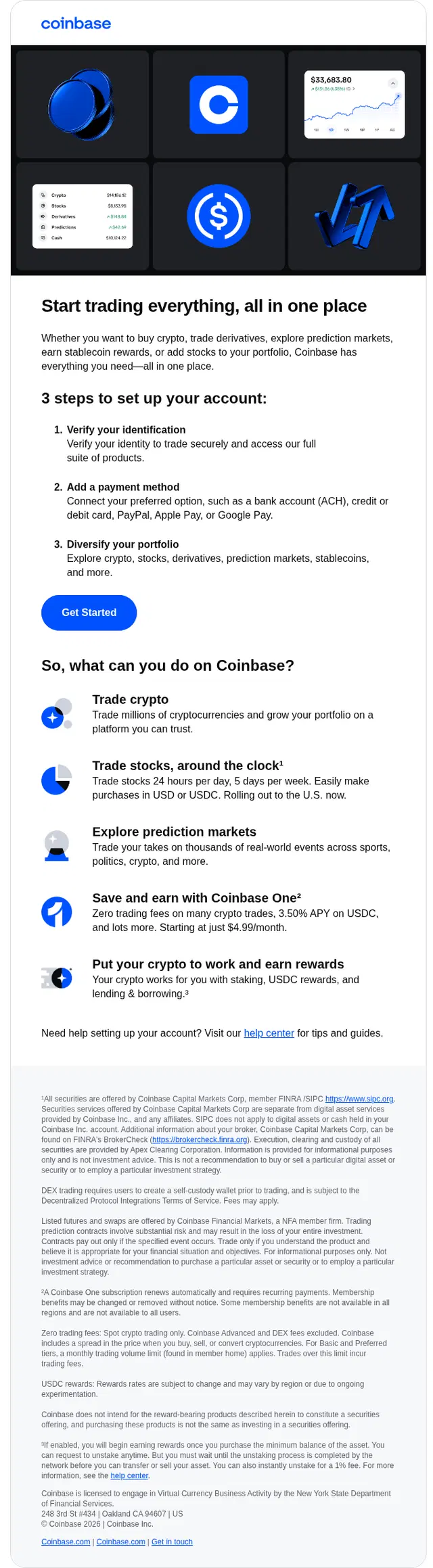
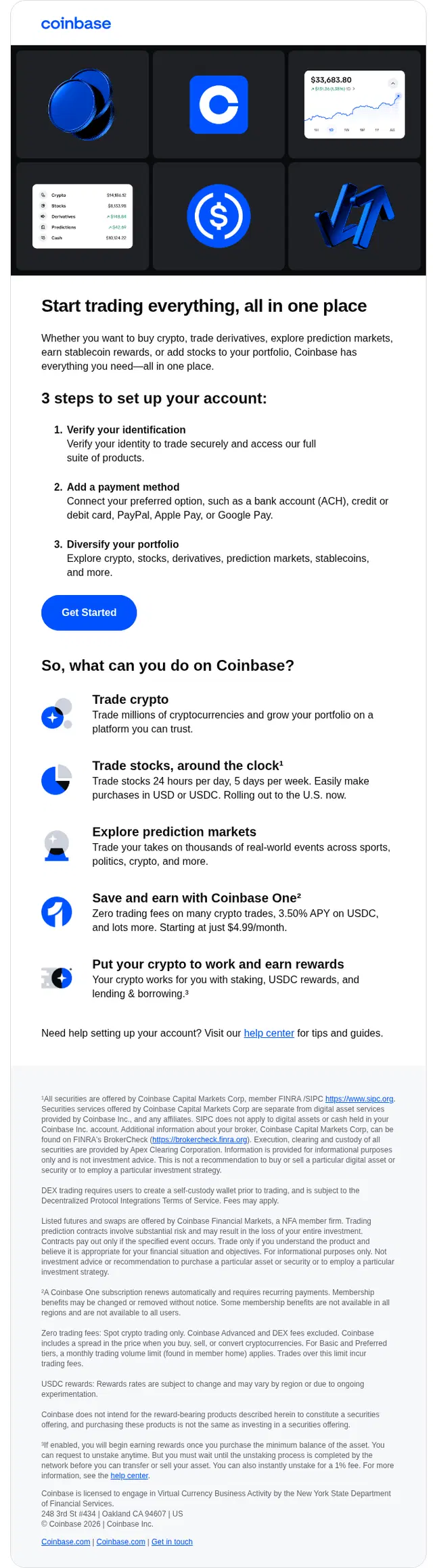
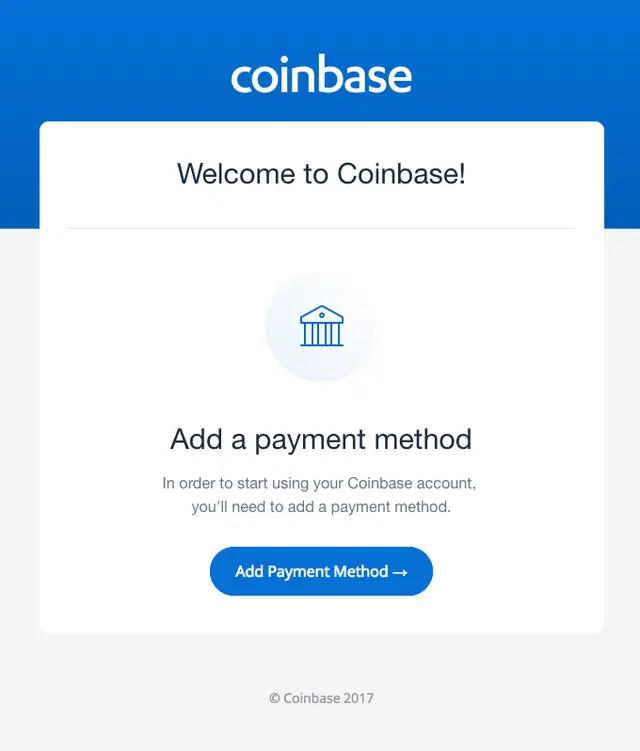
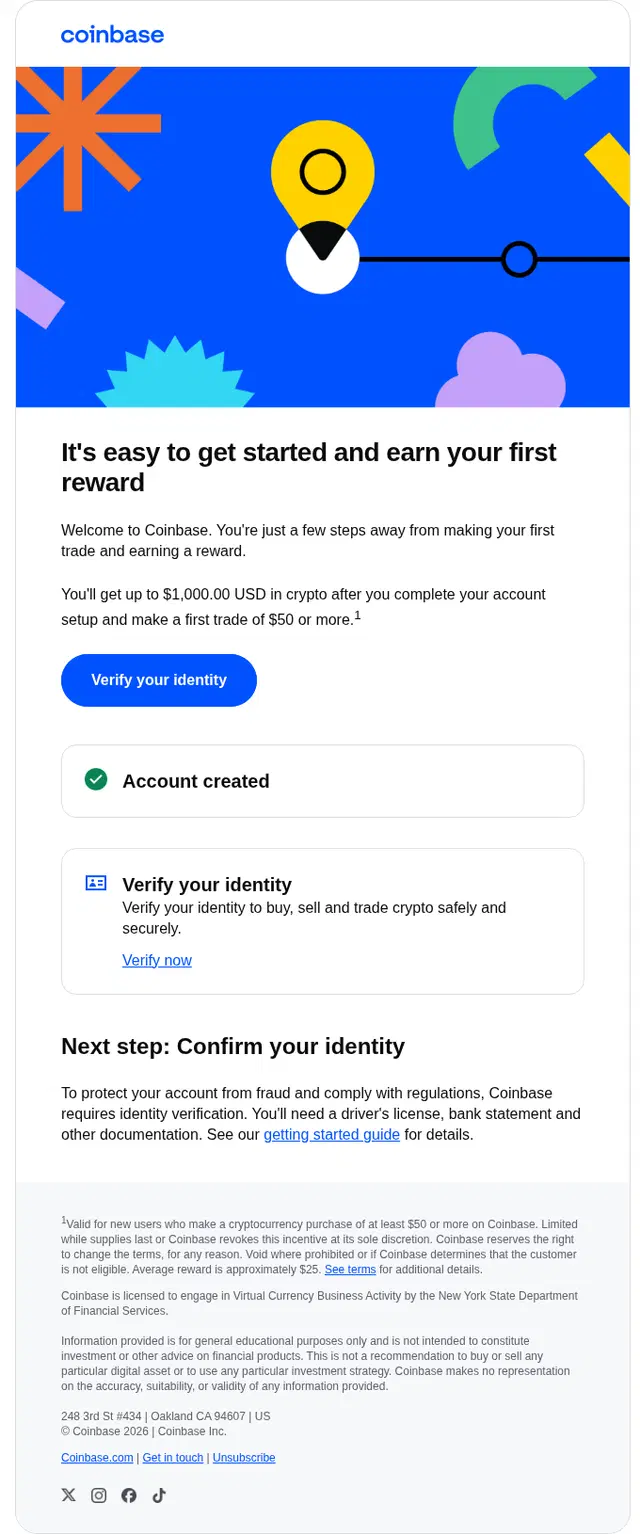
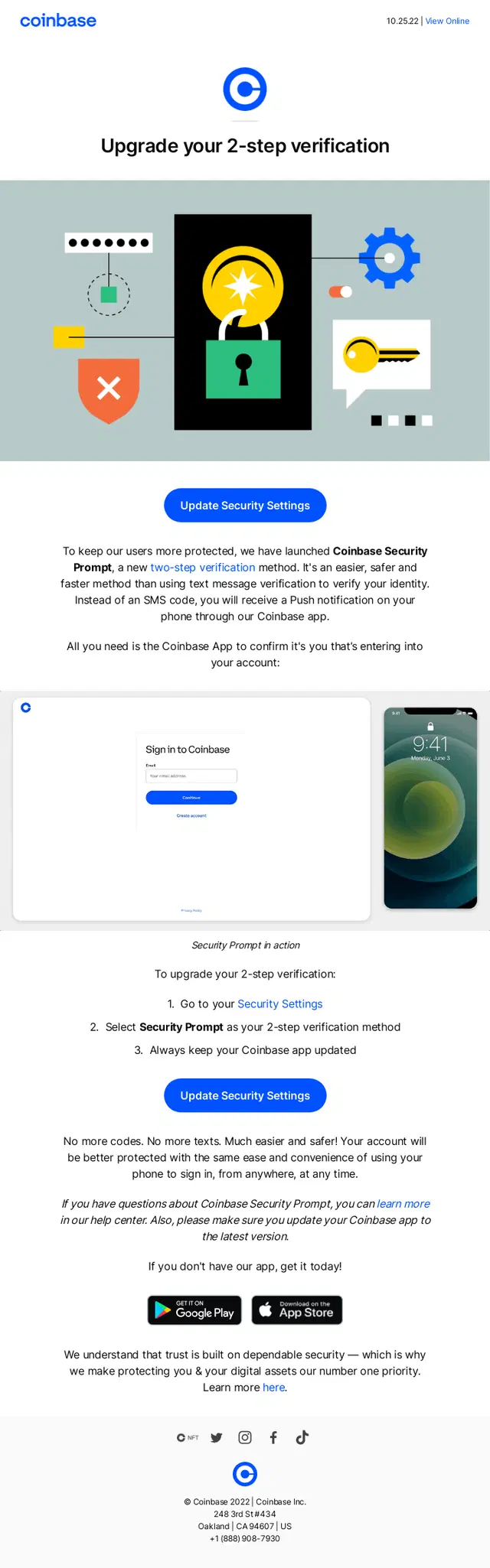
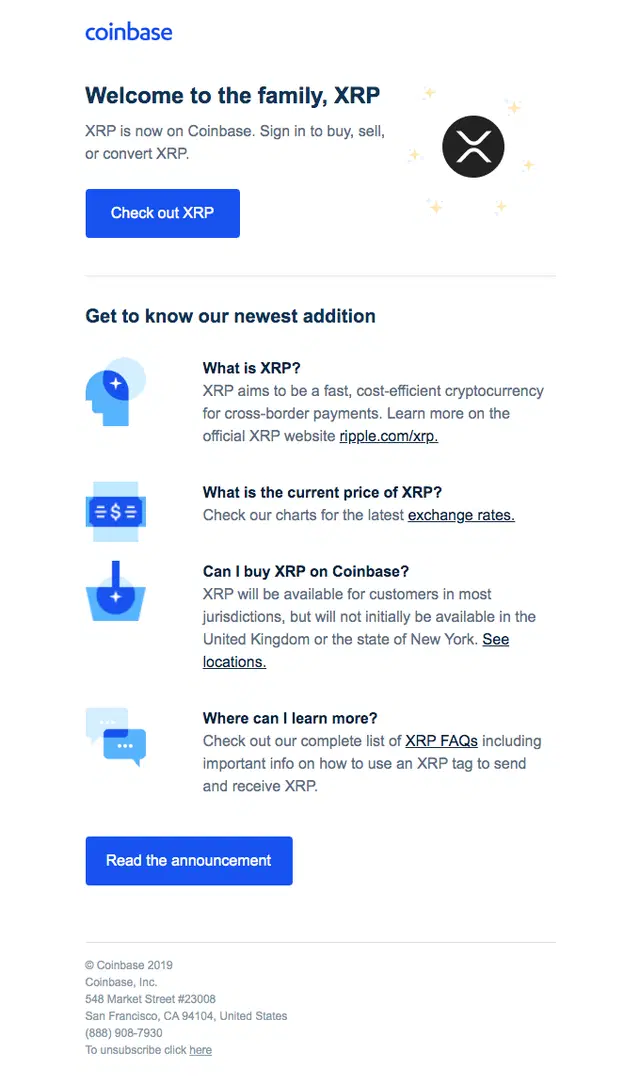
These Coinbase emails illustrate several messages that can appear across a fintech welcome and onboarding sequence: account setup, payment activation, identity verification, security education, and product discovery. Together, they show how onboarding can continue well beyond the first “welcome” message.
How to Write a Welcome Email?
A good welcome email does not need to explain everything about the brand. It needs to make the recipient feel that signing up was worthwhile-and give them a sensible place to go next.
1. Welcome the Subscriber Immediately
Send the email soon after the action that triggered it. Someone who signed up a few seconds ago knows why your message is in their inbox; someone receiving it three days later may not.
Start by acknowledging what happened. Thank them for subscribing, confirm their account, welcome them to the community, or recognize whatever action brought them there. You do not need a long introduction before getting to the point.
2. Set Expectations
If they signed up for emails, tell them what those emails will contain. Product launches? Weekly articles? Member offers? Tutorials? New collections?
You can also mention frequency when it is useful. “Every Friday” tells the reader much more than “Stay tuned for updates.” Clear expectations make the subscription feel intentional rather than like permission for unlimited marketing.
3. Deliver Whatever You Promised
If your signup form offered 15% off, a guide, free shipping, early access, or another incentive, do not make people search for it.
Put the promised benefit where it can be seen quickly and explain any important conditions without burying them. A welcome offer works best when it feels like the immediate payoff for signing up, not a reward the subscriber has to chase.
4. Introduce the Brand or Product
Once the immediate promise is handled, give the reader enough context to understand why they should stay interested.
That might be a short founder story, one clear product benefit, a set of bestselling categories, or a quick explanation of how the service works. Resist the urge to squeeze the entire About page into the email. Pick the part that matters most at this stage.
5. Give Them One Clear Next Step
Decide what you would most like the recipient to do after reading.
Shop the collection. Complete a profile. Create a first project. Choose preferences. Explore the app. Read the best article.
Secondary links are fine, especially in longer emails, but the primary action should not have to compete with five equally important buttons. A welcome email feels much easier to act on when the reader can tell what comes next without studying the layout.
Welcome Email Design Best Practices
Welcome email design has to do more than look polished. This is often the first full email someone sees from the brand, so the layout is already teaching them what future messages will feel like.
Make the Value Clear Immediately
The top of the email should answer “Why should I care?” before it asks the reader to scroll.
That could be the promised discount, the main product benefit, a welcome message, or a direct explanation of what the subscriber now has access to. Strong imagery can help, but it should support the point rather than delay it.
Keep the First CTA Easy to Find
A reader should not need to reach the footer before discovering what to do next. Place the main CTA near the key message and make its wording specific.
“Start my first project” usually carries more meaning than “Learn more.” “Use my 15% off” is clearer than “Shop now” when the discount is the reason they signed up.
Show the Promised Offer Early
If the signup form mentioned a discount, free gift, credit, or download, treat it as part of the welcome-not a surprise buried halfway down.
Make the code or offer easy to copy and keep expiry dates or exclusions close enough that people can understand the deal before clicking.
Introduce the Visual Identity
This is a good moment to establish the brand’s visual language. Typography, imagery, spacing, illustration, product photography, and tone can all make a first email recognizable without turning it into a miniature homepage.
Consistency matters more than cramming every visual brand element into one screen.
Design for Mobile First
Welcome emails are often opened quickly after signup, which means a phone is a very likely viewing environment.
Keep text readable, buttons easy to tap, images properly scaled, and important content high enough that the subscriber does not have to work through an oversized hero before reaching it.
Keep the Message Focused
More sections do not automatically create a better welcome.
If the email already has a strong introduction, an offer, three product categories, a founder story, six reviews, a loyalty pitch, an app download, and every social profile, something probably needs to move into email two.
That is exactly where a welcome series becomes useful: each message gets a job instead of the first email getting all of them.
Welcome Email Template
A welcome email template is most useful as a framework rather than a fixed script. The actual copy should change depending on whether you are welcoming a shopper, newsletter subscriber, customer, or software user, but the underlying pieces are often similar.
| Element | What to Include |
|---|---|
|
Subject line |
A clear welcome, benefit, or reason to open |
|
Opening |
Thank them or confirm the action they took |
|
Value proposition |
One concise reason the brand, product, or subscription matters |
|
Incentive |
The discount, resource, credit, or benefit promised at signup |
|
CTA |
One primary next step |
|
Expectations |
What they will receive or what happens next |
Ready-to-Use Welcome Email Template
Subject: Welcome to [Brand] – here’s [benefit]
Hi [First name],
Glad you’re here.
[One or two sentences explaining what the brand, product, or newsletter helps them do.]
As promised, here’s your [discount / resource / credit]:
[WELCOME OFFER]
[PRIMARY CTA]
Over the next [few days / week / month], we’ll send you [brief description of the useful content, onboarding, products, or updates they can expect].
See you soon,
[Brand / Name]
Welcome Email Subject Line Examples
The welcome subject line does not need to be clever for the sake of it. It needs to make sense in the inbox, match what happened just before the email arrived, and give the subscriber a reason to open.
Simple Welcome Subject Lines
- Welcome to [Brand]
- You’re in — welcome!
- Thanks for joining us
- Welcome. We’re glad you’re here.
- A quick hello from [Brand]
- Your [Brand] journey starts here
- Nice to have you with us
Welcome Discount Subject Lines
- Welcome — here’s 15% off
- Your welcome offer is inside
- You’re in. Take 20% off your first order.
- A little something for joining us
- Your first-order discount has arrived
- Welcome to [Brand] + 10% off
- Start here: your [X%] welcome offer
New Subscriber Subject Lines
- Thanks for subscribing
- Here’s what you can expect from us
- Welcome to the newsletter
- You made the list 👋
- Your first [Newsletter Name] email
- Glad you found us
- Before the next issue arrives…
SaaS Welcome Subject Lines
- Welcome to [Product] — start here
- Your workspace is ready
- Let’s get your account set up
- Ready to build your first [project/workflow/form]?
- Three steps to get started
- You’re in. Here’s what to do first.
- Welcome aboard — let’s get you up and running
Friendly and Creative Welcome Subject Lines
- Well, look who made it
- The good stuff starts here
- Come on in 👋
- A proper welcome from [Brand]
- Consider this your official hello
- We saved you a seat
- And so it begins…
How to Build a Welcome Email Series
A welcome email series gives you more room to build the relationship without turning the first message into a wall of information.
Start with the trigger. In most cases, that will be a new email subscription, account creation, or another clear opt-in event. The first message should go out immediately and handle anything time-sensitive, especially a promised incentive.
From there, each email should have its own reason to exist. One might introduce the brand. Another can answer common questions or explain the product. A later message can surface bestsellers, testimonials, or personalized recommendations.
A simple five-email welcome sequence might look like this:
| When | Main Goal | |
|---|---|---|
|
Welcome email |
Immediately |
Welcome + deliver incentive |
|
Email 2 |
1-2 days later |
Brand or product introduction |
|
Email 3 |
2-3 days later |
Education or social proof |
|
Email 4 |
3-5 days later |
Product recommendations |
|
Email 5 |
5-7 days later |
Conversion or offer reminder |
That does not mean every welcome automation needs five emails. A newsletter might need only two or three. A SaaS onboarding sequence may need more because setup happens over several stages.
The useful rule is to follow the subscriber’s progress, not a rigid email count. If someone buys after email one, stop sending first-purchase reminders. If they complete onboarding early, move them into the next lifecycle stage. And if you have useful preference data-product interest, role, use case, location-use it to make later emails more relevant rather than sending the exact same series to everyone.
FAQ
What is a welcome email?
A welcome email is an automated email sent shortly after someone subscribes, creates an account, registers, becomes a customer, or takes another first step with a brand. It usually confirms the action, introduces what comes next, and points the recipient toward a useful next step.
What should a welcome email include?
At minimum, a welcome email should acknowledge the signup or action, explain the immediate value, and include one clear next step. If you promised a discount or resource, deliver it in the first email. You can also introduce the brand, recommend products, explain membership benefits, or tell subscribers what future emails will contain.
How do you write a good welcome email?
Start with what the recipient needs rather than everything the brand wants to say. Welcome them, deliver any promised benefit, give enough context to understand the product or brand, and make the next action clear. Keep secondary information for later emails if the first message is becoming crowded.
What is a welcome email series?
A welcome email series is an automated sequence sent after a new subscriber or user joins. Instead of putting every message into one email, the series can gradually cover the welcome offer, brand introduction, product education, social proof, recommendations, onboarding, and conversion.
How do you create a welcome email sequence?
Choose the event that starts the sequence, send the first email immediately, and give every later message a specific purpose. Space the emails far enough apart that the subscriber has time to act, and use behavioral rules where possible so people stop receiving messages that are no longer relevant to them.
When should you send a welcome email?
Send the first welcome email as soon as possible after the signup, registration, or account action that triggers it. The recipient’s interest is highest at that moment, and any promised incentive or confirmation is expected immediately. Follow-up emails can then be spaced over the next several days.
How long should a welcome email be?
There is no ideal word count. A confirmation or discount email may only need a few lines, while a product onboarding email can be much longer. The better question is whether every section helps the recipient understand the value or take the next step. If several unrelated ideas are competing for space, move some of them into the welcome series.
What is a good welcome email open rate?
There is no single open-rate number that works as a universal target for welcome emails. Industry, list quality, signup source, sender reputation, and the type of welcome flow all affect performance.
Klaviyo’s 2026 benchmark data shows that automated flows outperform one-off campaigns overall, but it also recommends treating open rate as a directional metric because Apple Mail Privacy Protection can record opens that did not happen in the traditional sense.
Compare your welcome emails against similar flows in your industry and, even more importantly, against your own historical performance.
Turn Welcome Email Inspiration Into a Flow That Fits Your Brand
The best welcome emails do more than say hello. They set expectations, introduce what makes your brand different, and guide new subscribers or customers toward a clear next step.
If Klaviyo is part of your email strategy, we can help you turn these ideas into a complete welcome flow built around your audience, offer, products, and customer journey.