22 Re-Engagement Email Examples to Win Back Inactive Customers


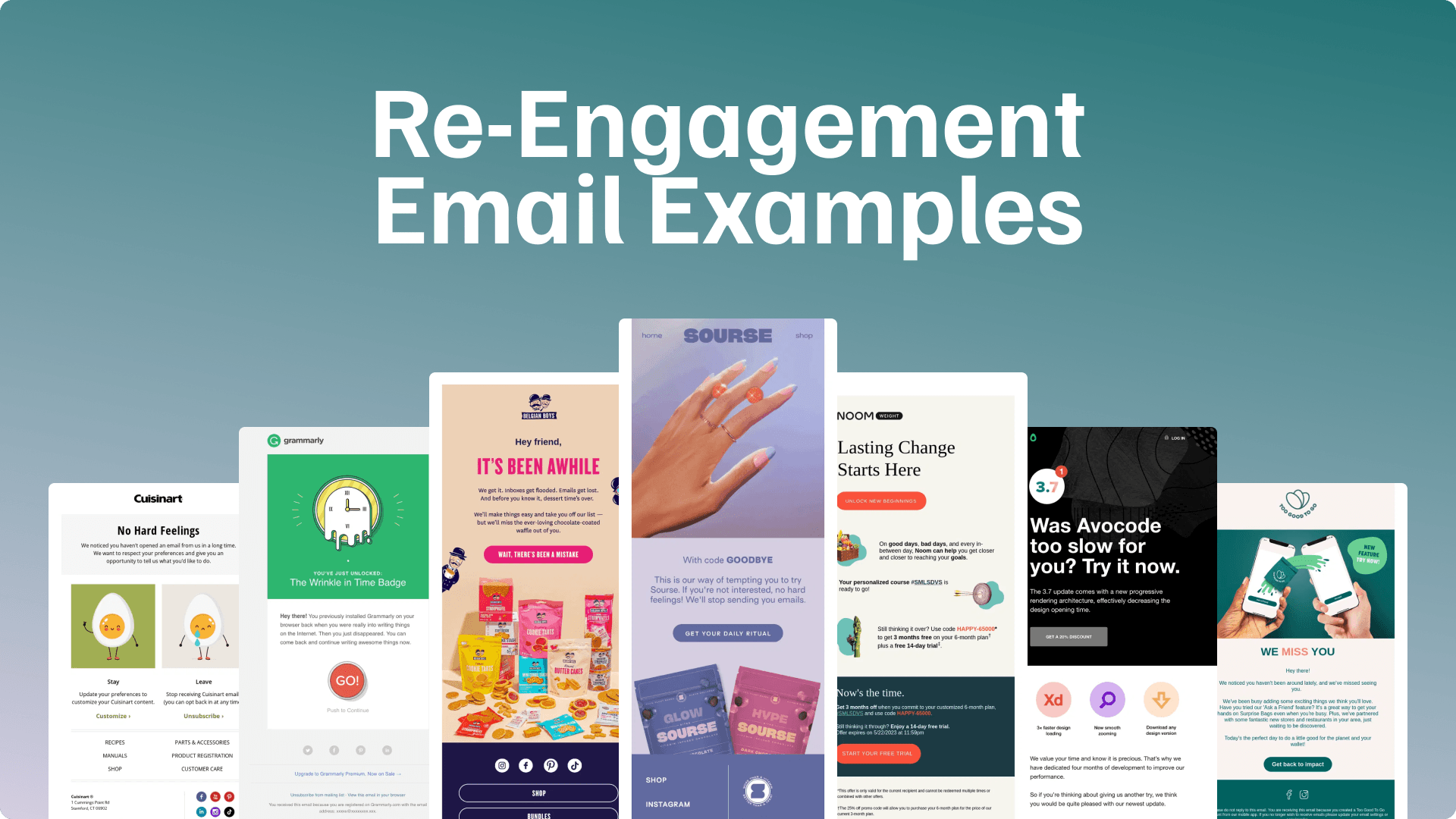
Re-engagement emails are sent to people who already know your brand but have stopped interacting with it. They may have stopped opening emails, clicking campaigns, buying products, logging into an account, using an app, or continuing a trial.
That makes re-engagement different from general retention. Retention emails keep active customers engaged over time. Re-engagement emails focus on bringing inactive subscribers, customers, leads, or users back before they churn, unsubscribe, or disappear from the customer journey completely.
A good re-engagement email gives people a clear reason to return. That reason could be a helpful reminder, a product update, a limited-time offer, an extended trial, a preference update, or a simple “we miss you” message that feels relevant rather than desperate.
What Is a Re-Engagement Email?
A re-engagement email is sent to inactive subscribers, customers, leads, or users to encourage them to return, open, click, buy, log in, renew, or update their preferences. These emails are usually used when someone has stopped engaging with your campaigns, abandoned a trial, has not purchased in a while, or is close to being removed from your email list.
In this article, we’ve collected re-engagement email examples from different brands and grouped them by campaign type, so you can see how each email uses copy, design, timing, and offer strategy to win back inactive audiences.
Quick links:
We Miss You Re-Engagement Email Examples
SaaS and App Re-Engagement Email Examples
Product and Feature Update Re-Engagement Emails
Creative Re-Engagement Email Examples
Re-Engagement Email Subject Lines
We Miss You Re-Engagement Email Examples
These emails use a friendly reminder or emotional hook to reconnect with people who have stopped engaging, without relying only on a discount.
Belgian Boys: A Playful “We Miss You” Email With Clear Product Appeal
Subject line: “We miss you”
Belgian Boys uses a bright, friendly re-engagement email to remind inactive customers what they liked about the brand in the first place. The copy feels casual and warm, while the product imagery brings the focus back to the food instead of making the message feel like a generic win-back campaign.
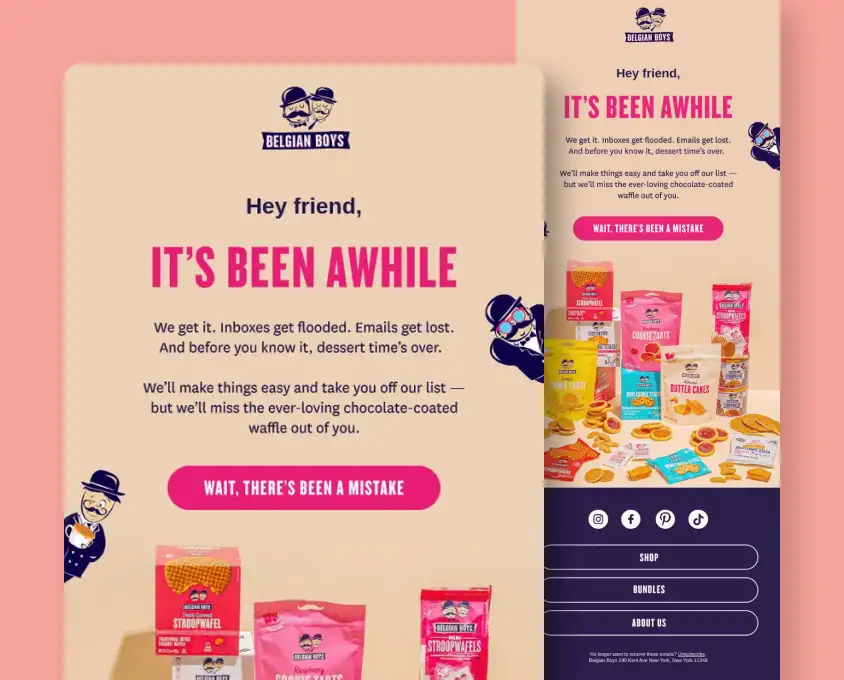
Why it works: The email uses personality without overcomplicating the message. It gives the reader a small emotional nudge, then quickly shifts attention to the product and the reason to return.
Takeaway: “We miss you” emails work best when they feel brand-specific and give customers something familiar to reconnect with.
Too Good To Go: A “We Miss You” Email Built Around New Product Value
Subject line: “Discover what’s fresh”
Too Good To Go uses a simple “we miss you” message, but gives inactive users a practical reason to return. Instead of relying on nostalgia alone, the email highlights the app’s “Ask a Friend” feature and new partner stores, making the comeback feel useful and timely.
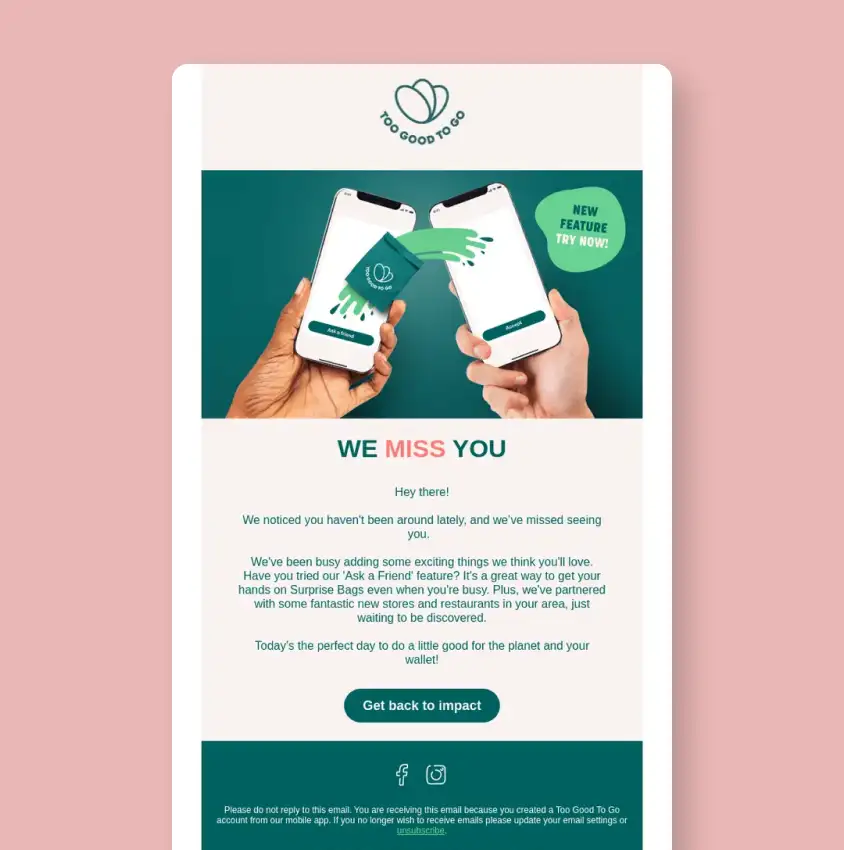
Why it works: The email combines a friendly emotional hook with clear product value. The message reminds users that the app has changed since they were last active, while the CTA connects the return to the brand’s larger mission around saving food and reducing waste.
Takeaway: A “we miss you” email is stronger when it gives people a fresh reason to come back, not just a reminder that they have been inactive.
Win-Back Offer Email Examples
These emails give inactive customers a clear incentive to return, such as a discount, promo code, free shipping, reward, or limited-time offer.
A win-back campaign doesn’t have to rely on a discount. Explore our collection of 100+ winback email examples to see how brands use product recommendations, loyalty rewards, replenishment reminders, subscription offers, and multi-email sequences to bring customers back.
Lyft: A Personalized Win-Back Offer for the Next Ride
Subject line: “You have an offer. It’s ready to claim.”
Lyft uses a direct win-back offer to encourage an inactive rider to book again. The email leads with a clear discount, adds a deadline, and then reminds the user of different ride options they can use for commutes, airport pickups, or special occasions.
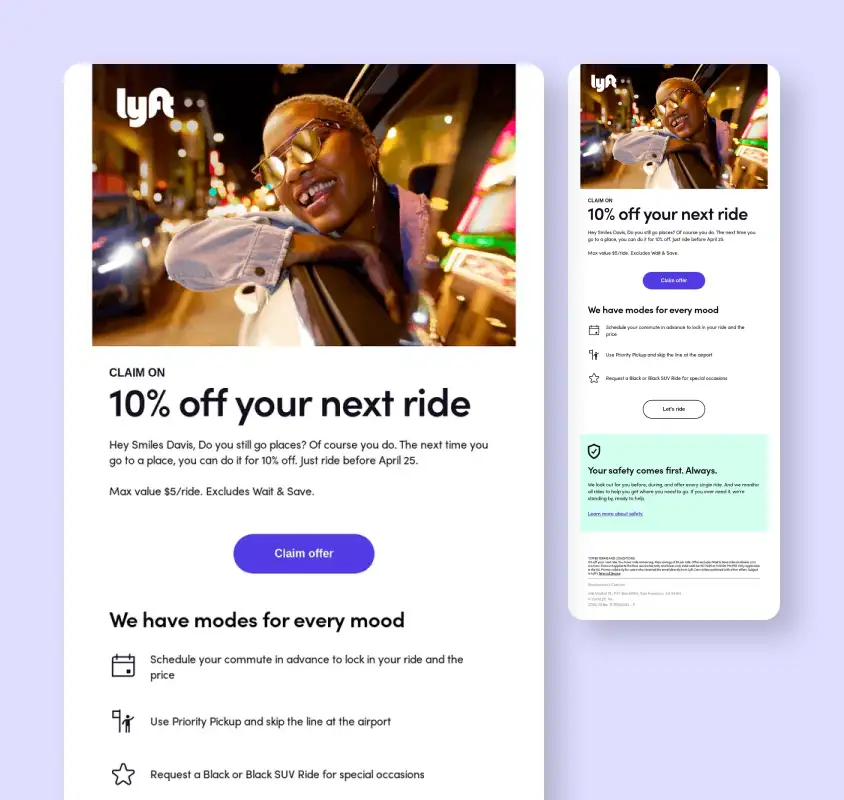
Why it works: The offer is simple and time-sensitive, but the email does not stop at the discount. It also reminds the reader how Lyft fits into different real-life moments, making the next ride feel easy to justify.
Takeaway: Win-back offer emails work best when the incentive is clear, limited, and connected to a specific action the customer can take right away.
Sourse: A Goodbye Offer With a Soft Last Chance
Subject line: “We’ll give you 25% off to open this email”
Sourse uses a last-chance re-engagement email built around the code “GOODBYE.” The message is direct but not pushy: it gives inactive subscribers one more reason to try the product, while making it clear that the brand will stop sending emails if they are no longer interested.
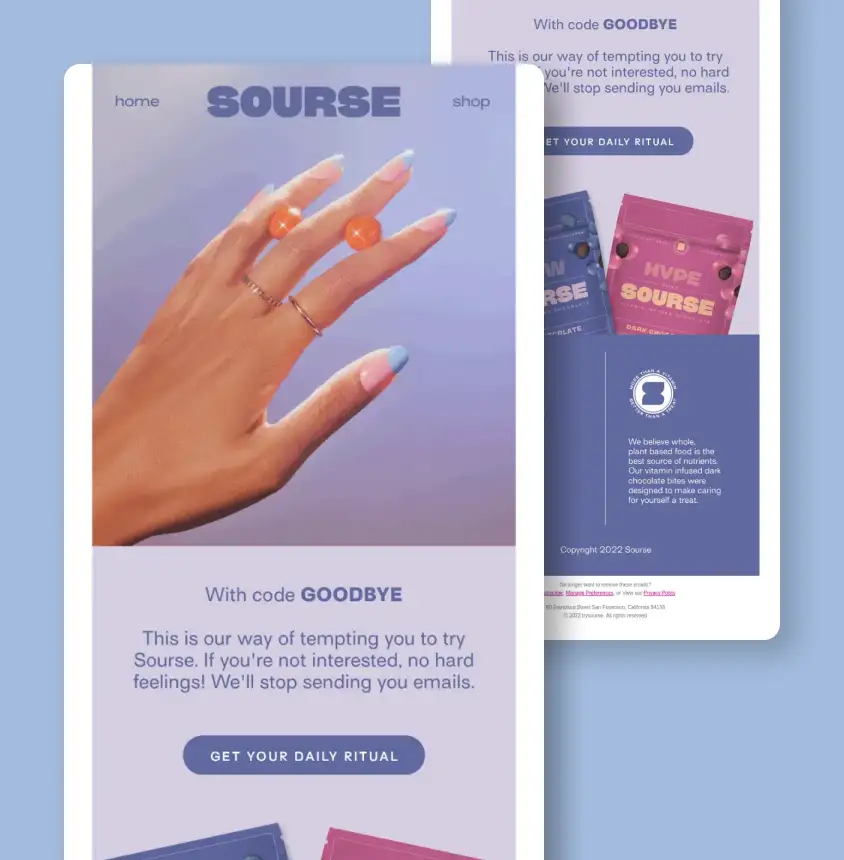
Why it works: The email turns a final reminder into a branded campaign moment. The offer gives people a reason to act, while the tone respects the subscriber’s choice instead of using pressure or guilt.
Takeaway: Last-chance win-back emails work best when they combine a clear offer with a respectful exit.
Max: A Subscription Reactivation Email Built Around a Timely Viewing Moment
Subject line: “Don’t leave now…USMNT is live!”
Max uses a sports-focused re-engagement email to encourage former subscribers to resume their subscription. The message connects the reactivation CTA to a live event, making the offer feel timely instead of generic.
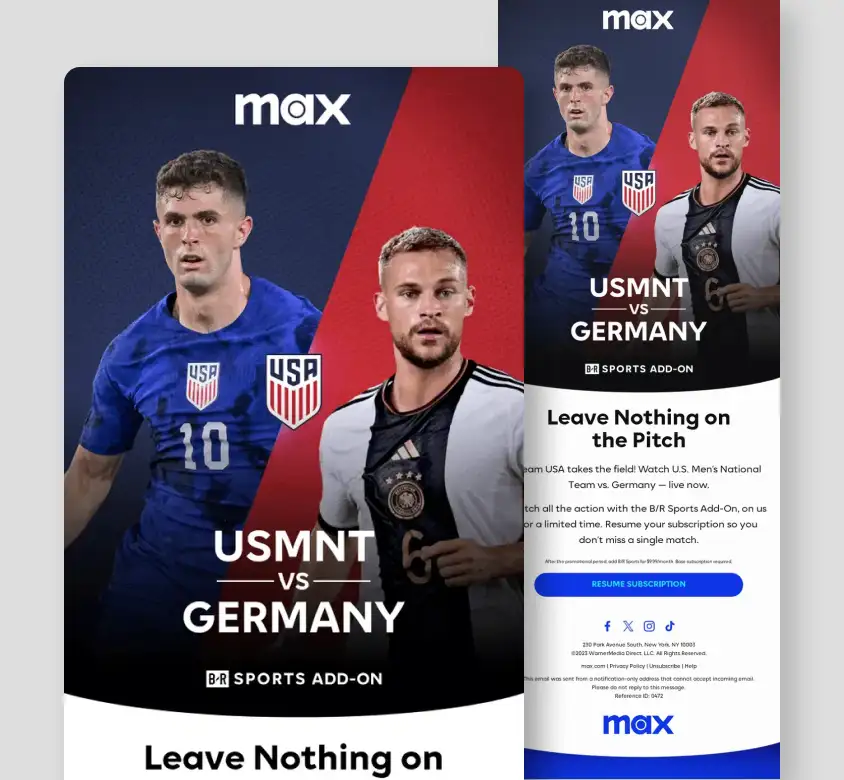
Why it works: The email gives subscribers a clear reason to act now. By tying the subscription reminder to a specific match, Max turns reactivation into a moment-based decision.
Takeaway: Subscription re-engagement emails work best when they connect the comeback to timely content, events, or benefits customers do not want to miss.
YouTube TV: A Win-Back Offer Email With a Strong Sports Hook
Subject line: “Enjoy $50 off NFL Sunday Ticket with YouTube TV”
YouTube TV uses a clear win-back offer to bring former subscribers back for NFL Sunday Ticket. The email leads with a $50 discount, reinforces the value of the service, and highlights game-day features like unlimited DVR, Key Plays, multiview, and simultaneous streams.
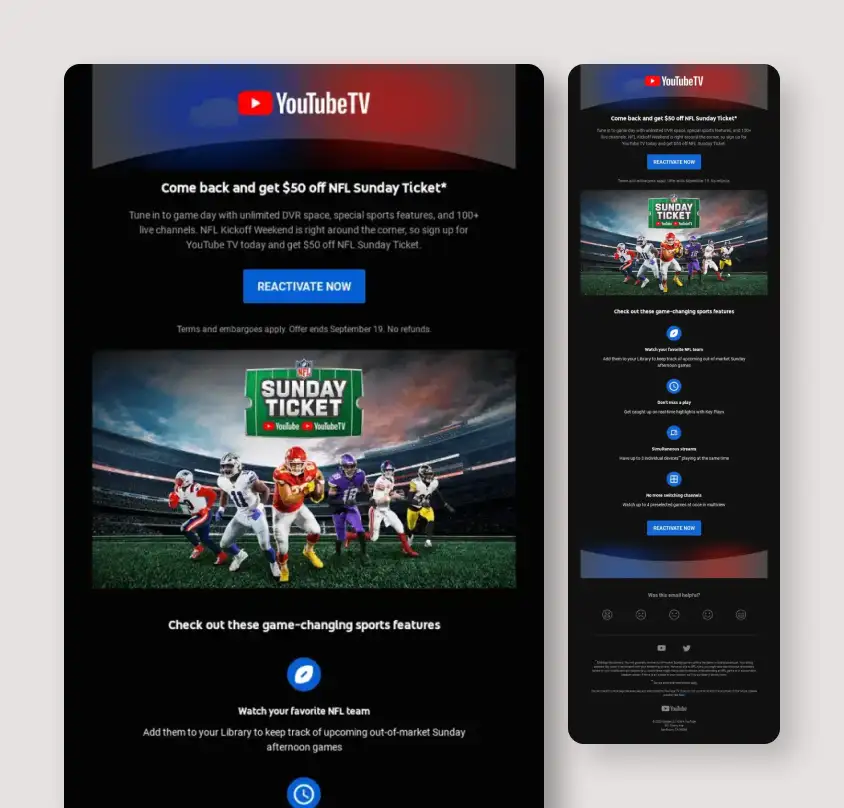
Why it works: The offer is specific, timely, and connected to a high-interest moment. The email does not just say “come back”; it shows what subscribers can watch and what features they get when they reactivate.
Takeaway: Win-back emails are stronger when the incentive is tied to a specific customer interest or seasonal moment.
Filterbuy: A Reorder Reminder Email Based on Product Timing
Subject line: “Breathe Easy with Replacement Filters”
Filterbuy uses a practical re-engagement email to remind customers when it may be time to replace their air filters. The message references the customer’s previous order, shows the exact product, and makes reordering easy with a clear CTA.
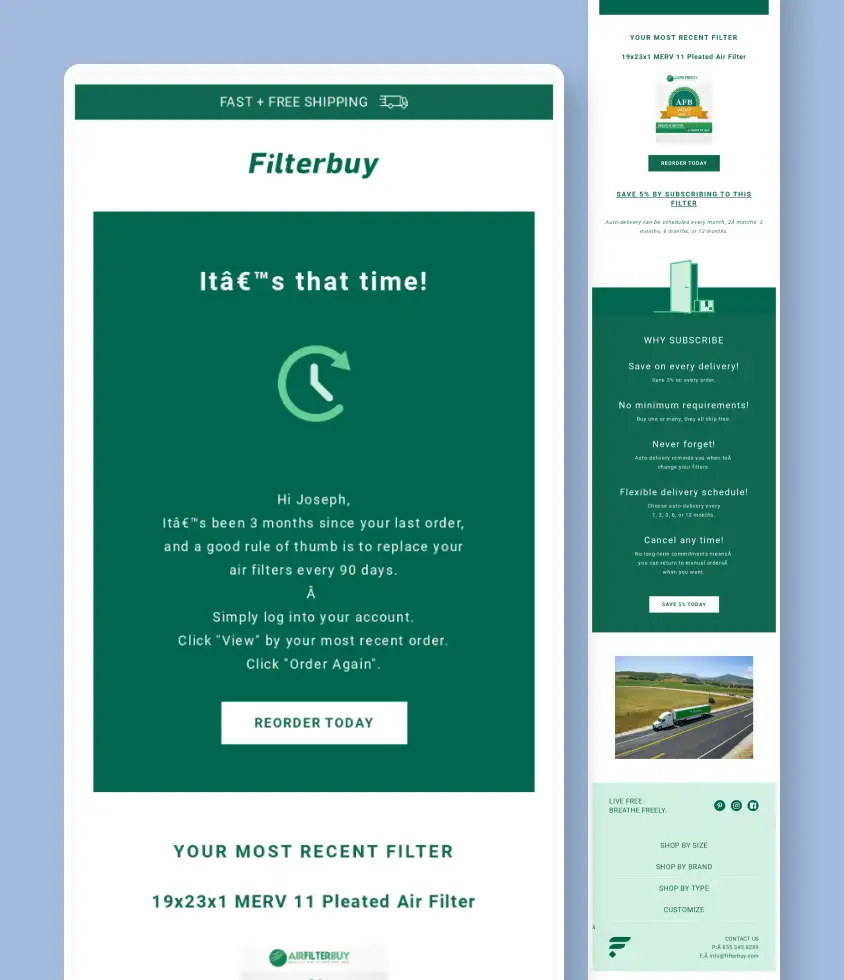
Why it works: The email is based on real product timing, not a random promotion. It reconnects with the customer at a moment when the reminder is genuinely useful.
Takeaway: Reorder and replenishment emails work best when they use past purchase context to make the next action simple and relevant.
Noom: A Goal-Based Win-Back Email With a Free Trial Offer
Subject line: “Lasting change starts here.”
Noom uses a win-back email that connects the offer to a personal goal instead of leading only with the discount. The message reminds the reader that their personalized course is ready, then adds a free trial and a limited-time plan offer as the reason to start again.
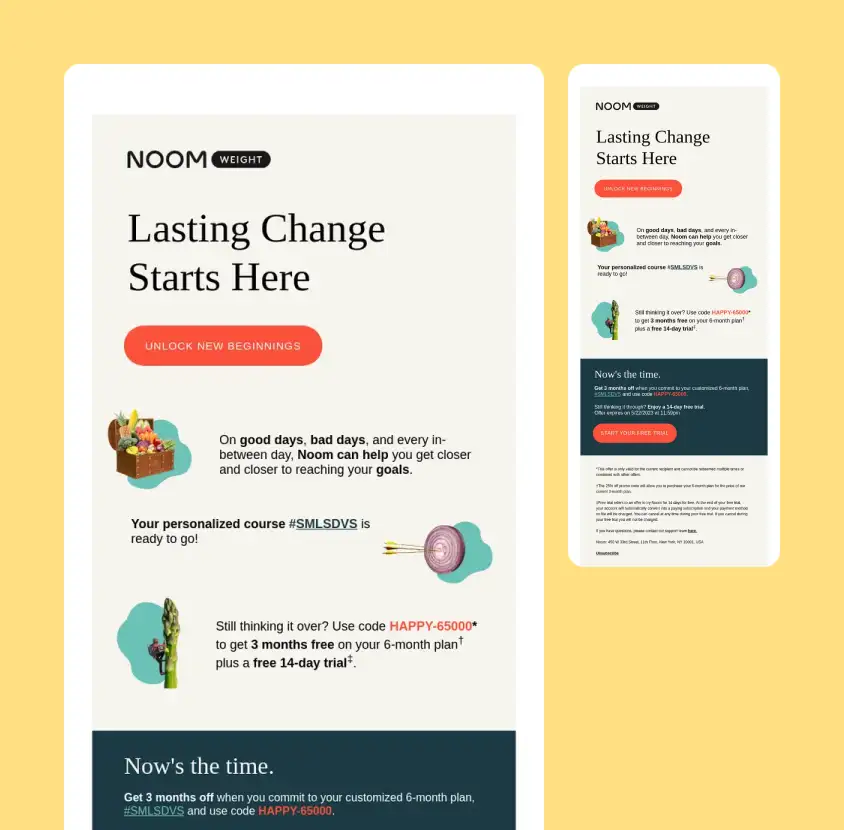
Why it works: The email makes the return feel tied to progress, not just price. The offer is clear, but the bigger hook is the promise of getting closer to a long-term goal.
Takeaway: Win-back offers work best when the incentive supports something the customer already wanted to achieve.
Need help turning re-engagement ideas into emails that work?
MailBakery designs and codes custom email campaigns, lifecycle flows, and reusable templates for brands that want polished emails without the production headaches. Explore our email flow services
SaaS and App Re-Engagement Email Examples
These emails bring inactive users back to a product, app, account, or trial by reminding them what they can do, continue, or unlock.
Duolingo: A Habit-Based Re-Engagement Email That Makes Returning Feel Easy
Subject line: “You made Duo sad”
Duolingo uses a gentle re-engagement email to bring inactive learners back into the app. The message acknowledges that the user has stopped practicing, but keeps the tone light and encouraging instead of making them feel guilty.
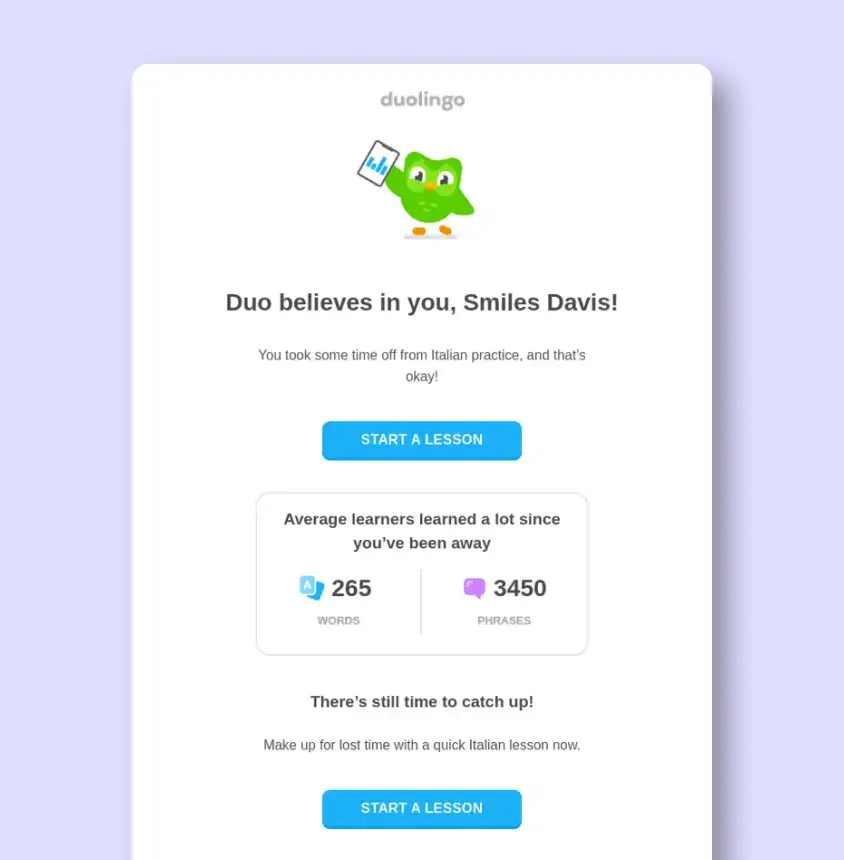
Why it works: The email lowers the barrier to return. Instead of asking users to restart a big learning goal, it points them toward one simple action: starting a lesson again.
Takeaway: App re-engagement emails work best when they make the next step feel small, easy, and positive.
Zoom: A Product Update Re-Engagement Email for Returning Users
Subject line: “Are you ghosting us? Reactivate today”
Zoom uses a re-engagement email to bring inactive users back by showing what has changed since they last used the product. The message encourages users to return to Zoom Pro and highlights newer features, making the email feel more useful than a simple “come back” reminder.
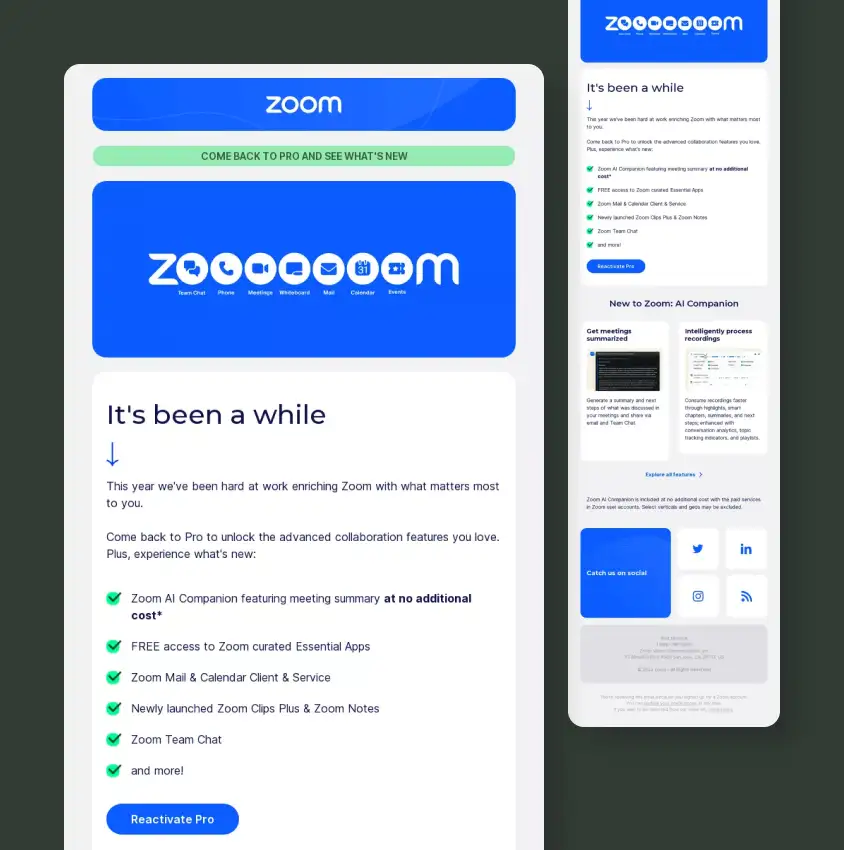
Why it works: The email gives users a practical reason to reconsider the product. Instead of relying on a discount or emotional hook, it uses new functionality and product value to restart interest.
Takeaway: SaaS re-engagement emails work well when they show inactive users what they missed and why the product may be worth trying again.
Busuu: A Learning App Win-Back Email With Urgency and a Discount
Subject line: “Hit reboot on your learning with 50% off”
Busuu uses a re-engagement email to bring inactive learners back with a clear discount and a short deadline. The message connects the offer to restarting the user’s learning journey, making the promotion feel tied to progress rather than just price.
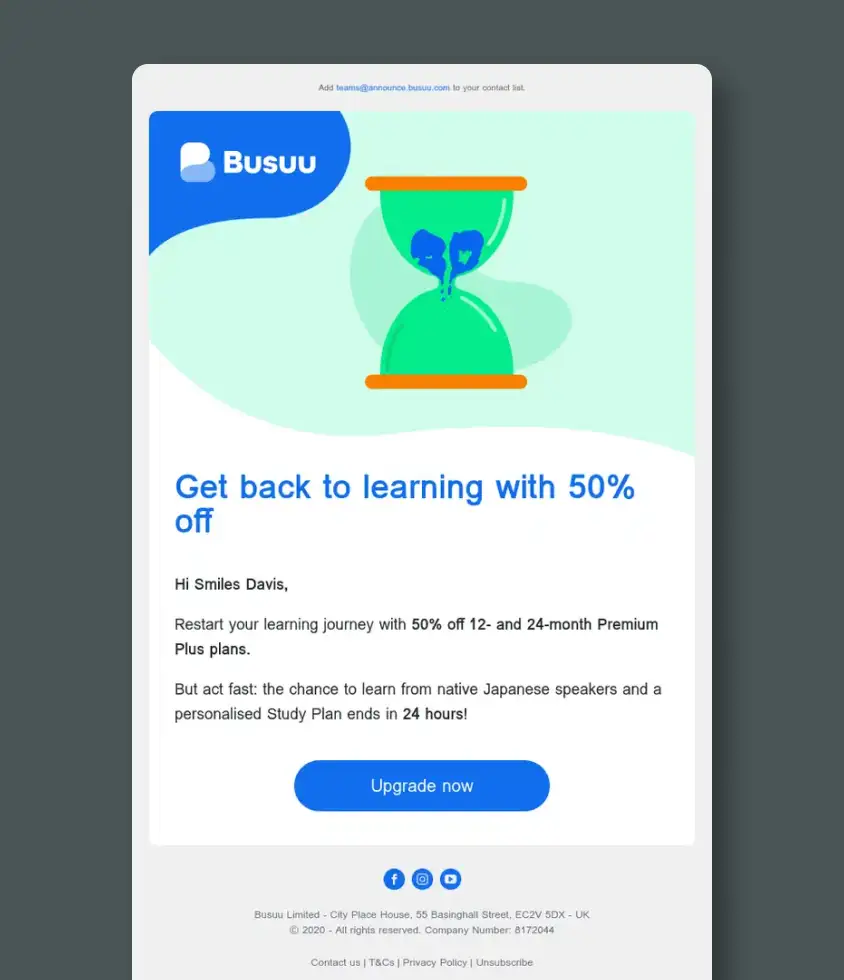
Why it works: The email combines a strong incentive with a clear action. The 24-hour deadline adds urgency, while the copy keeps the focus on returning to learning.
Takeaway: App re-engagement emails can use discounts effectively when the offer supports a clear user goal.
Dropbox Paper: A Re-Engagement Email Built Around Missed Features
Subject line: 21 reasons to give Dropbox Paper another try
Dropbox Paper uses a feature-focused re-engagement email to bring inactive users back to the product. Instead of sending a vague reminder, the email gives users a list of reasons to return, with templates and tools they may not have explored yet.
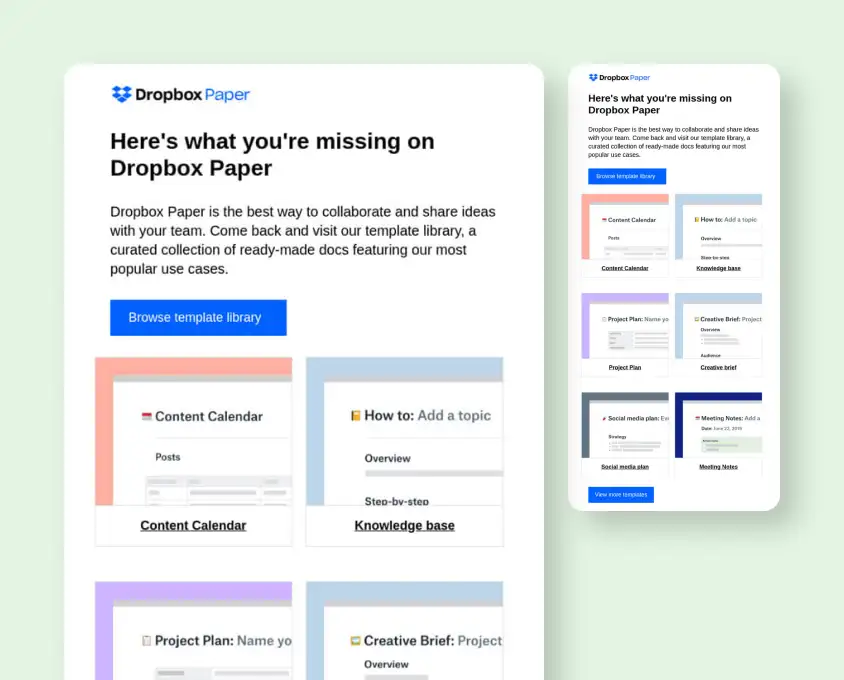
Why it works: The email turns re-engagement into product discovery. By showing specific features and use cases, Dropbox gives inactive users a clearer reason to open the product again.
Takeaway: Feature-led re-engagement emails work best when they show users what they missed and make the product feel worth revisiting.
Product and Feature Update Re-Engagement Emails
These emails use new features, improvements, product launches, or fresh value as the reason for inactive users or customers to come back.
Avocode: A Product Improvement Email That Addresses Past Friction
Subject line: Not available
Avocode uses a product update email to re-engage users who may have stopped using the tool because it felt too slow. The message directly addresses that friction, explains the performance improvement, and gives users a reason to try the product again.
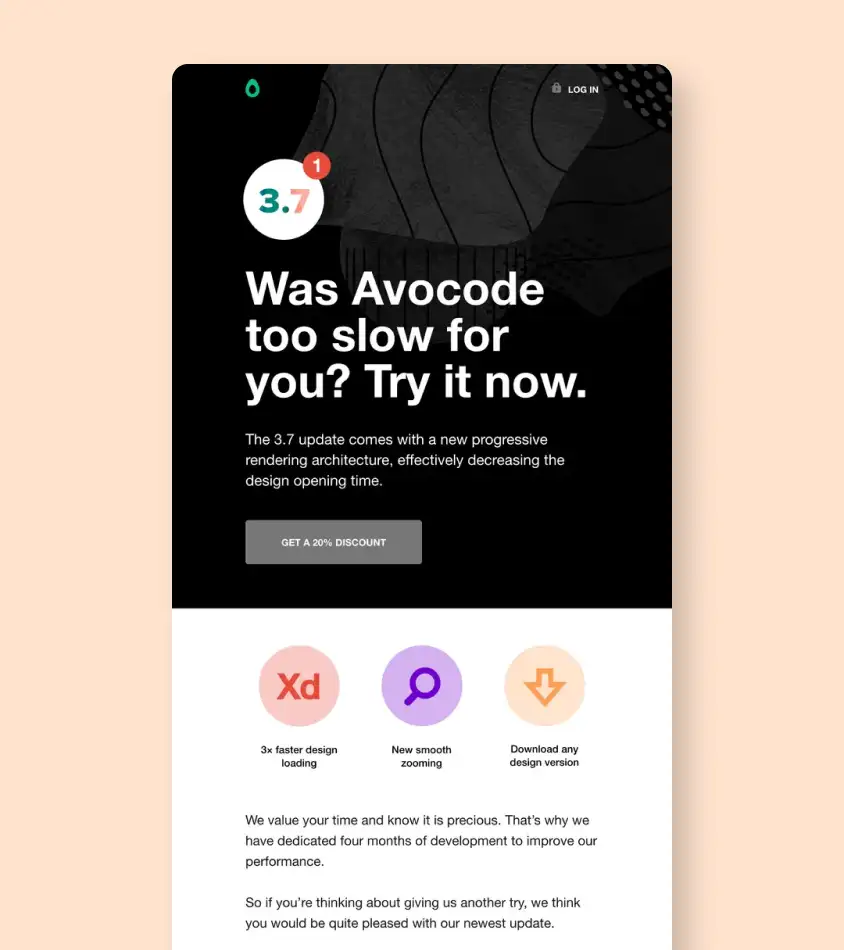
Why it works: The email does not pretend users left for no reason. It names a likely problem, shows what changed, and connects the update to a clear benefit: faster design loading and smoother use.
Takeaway: Product update re-engagement emails are stronger when they address a real reason users may have stopped engaging.
Asana: A Product Update Email That Brings Users Back With Fresh Value
Subject line: “Welcome back!”
Asana uses a re-engagement email to reconnect with users by showing what has changed since they were last active. The email opens with a friendly “since you’ve been gone” message, then highlights new product value through status reports, teamwork features, and educational content.
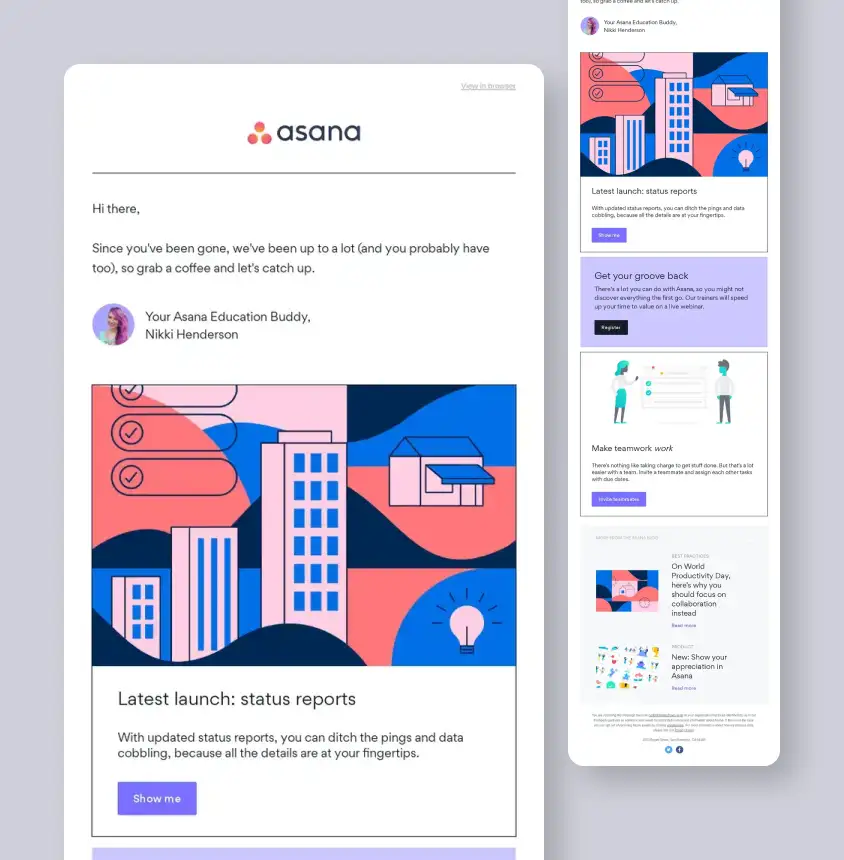
Why it works: The email gives inactive users several practical reasons to return without relying on a discount. It makes the product feel active, useful, and worth revisiting.
Takeaway: Product update re-engagement emails work best when they show users what has improved and how those updates can help them now.
Product Hunt: A “Here’s What You Missed” Email Built Around Discovery
Subject line: “Products you don’t want to miss”
Product Hunt uses a product discovery angle to re-engage users who have been away. The email shows recent products, short descriptions, and social proof signals, making the message feel like a useful catch-up rather than a generic reminder.
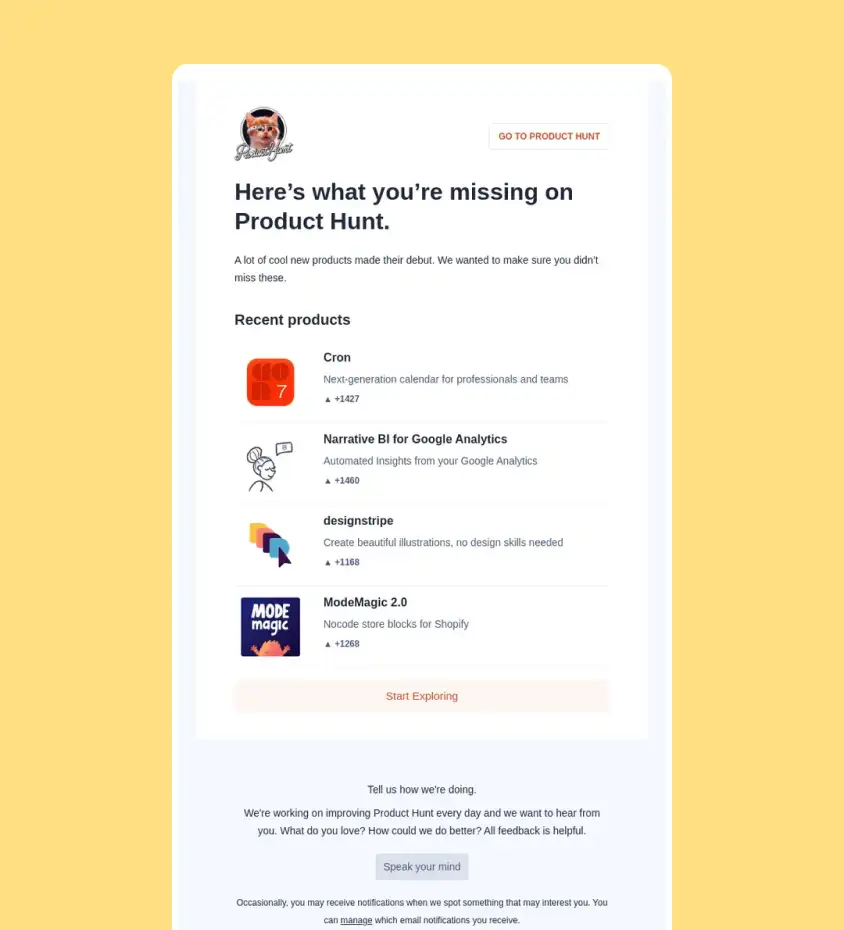
Why it works: The email matches the reason people use Product Hunt in the first place: discovering new tools and products. It gives inactive users a quick snapshot of what they missed and a simple path back into the platform.
Takeaway: Discovery-based re-engagement emails work best when they make returning feel useful, quick, and curiosity-driven.
Venmo: A Feature Update Email Built Around Fresh Product Value
Subject line: “Getting back into Venmo? Here’s a refresher.”
Venmo uses a product-led re-engagement email to show inactive users what has changed since they last opened the app. The email highlights new and improved features, making the return feel useful instead of relying on a generic “come back” message.
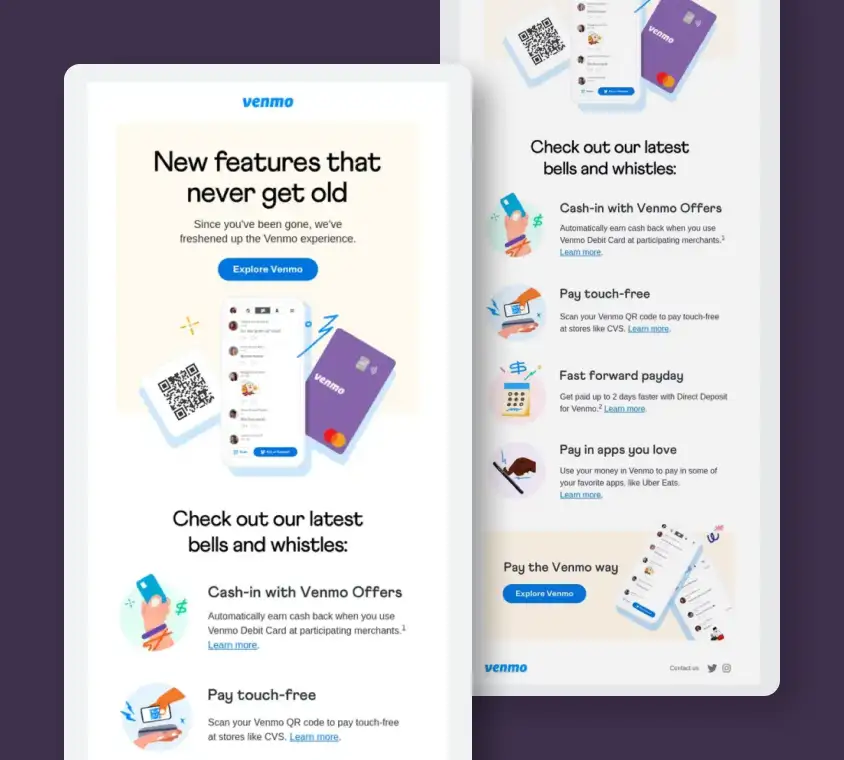
Why it works: The email makes the re-engagement reason immediately clear. The headline frames the message around fresh product value, while the feature list shows users what they can do if they return.
Takeaway: Product and feature update emails work best when they give inactive users a clear reason to revisit the product.
LinkedIn: A “See What’s New” Email With Clear Product Paths
Subject line: Caleb, see what’s new on LinkedIn
LinkedIn uses a product-led re-engagement email to show inactive users what they may have missed. The email highlights practical actions like finding a job, building a network, and staying updated, giving the reader several clear reasons to return to the platform.
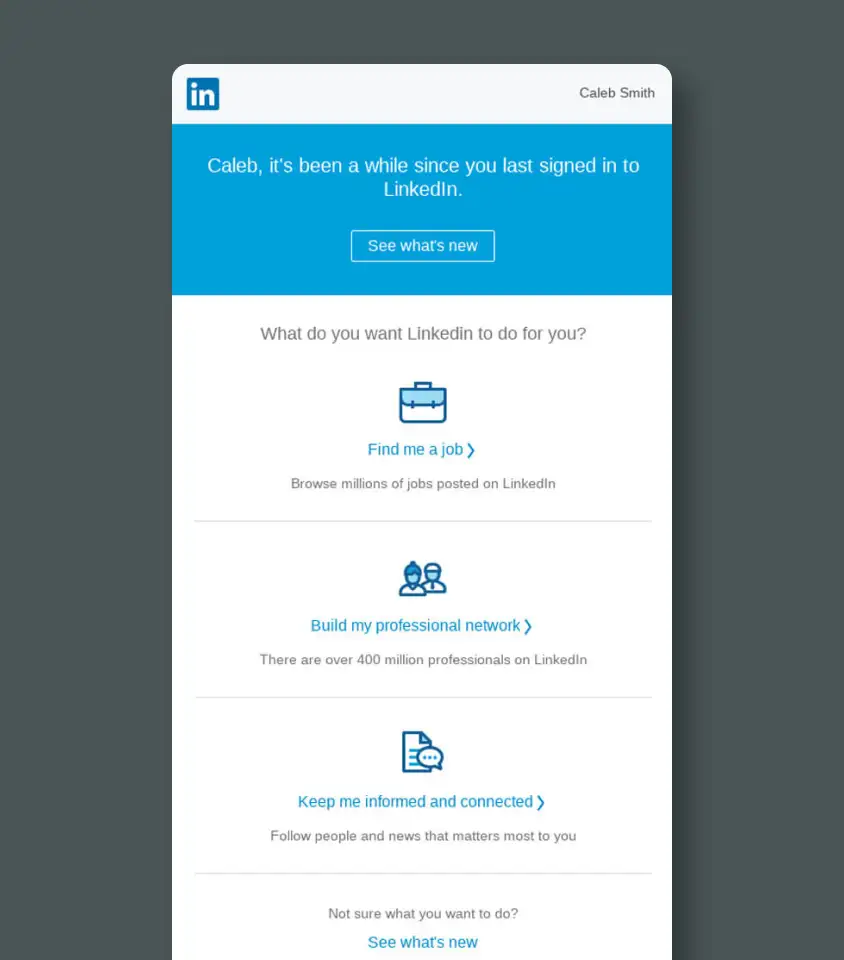
Why it works: The message connects the re-engagement CTA to specific product value. Instead of asking users to come back in a vague way, LinkedIn shows what they can do once they return.
Takeaway: Product update re-engagement emails work best when they turn “what’s new” into clear reasons to log back in.
Creative Re-Engagement Email Examples
These emails stand out through humor, unusual design, strong brand voice, or a memorable concept that makes the re-engagement message harder to ignore.
Paul Mitchell: A Visual Goodbye Email Built Around Product Personality
Subject line: We Hate Goodbyes
Paul Mitchell uses a creative re-engagement email built around a sad face made from the brand’s own products. The message is simple, but the visual idea makes the email more memorable than a standard “do you still want to hear from us?” campaign.
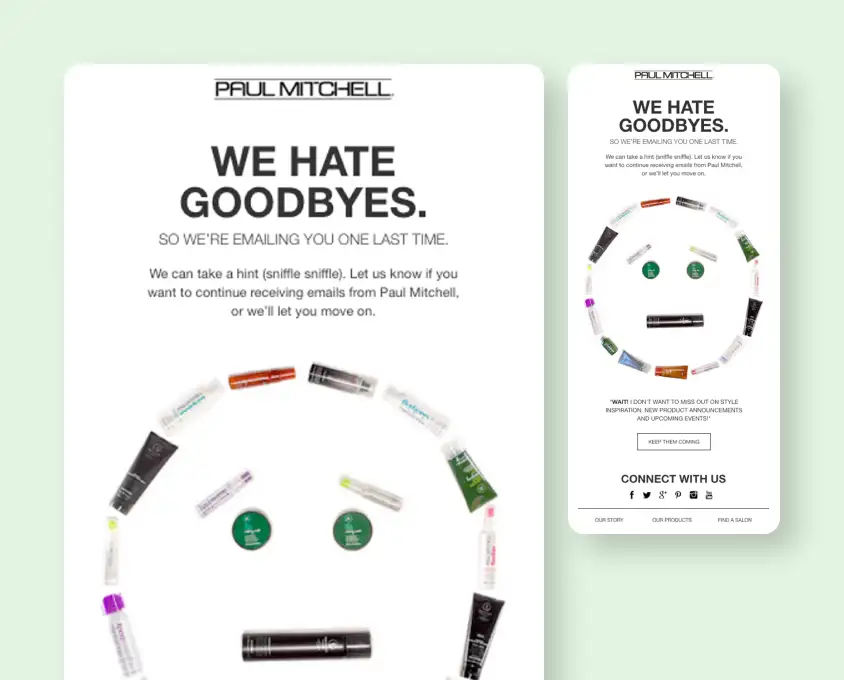
Why it works: The email turns a possible goodbye into a branded visual moment. Instead of relying on long copy or a discount, it uses product recognition and emotion to make subscribers pause before leaving.
Takeaway: Creative re-engagement emails work best when the visual idea supports the message instead of decorating it.
Who Gives A Crap: A Funny Reorder Email Built Around a Flowchart
Subject line: “Don’t fight the flow”
Who Gives A Crap uses a playful flowchart to turn a simple reorder reminder into a memorable re-engagement email. The message is funny, highly visual, and tied directly to the moment when a customer may need to buy again.
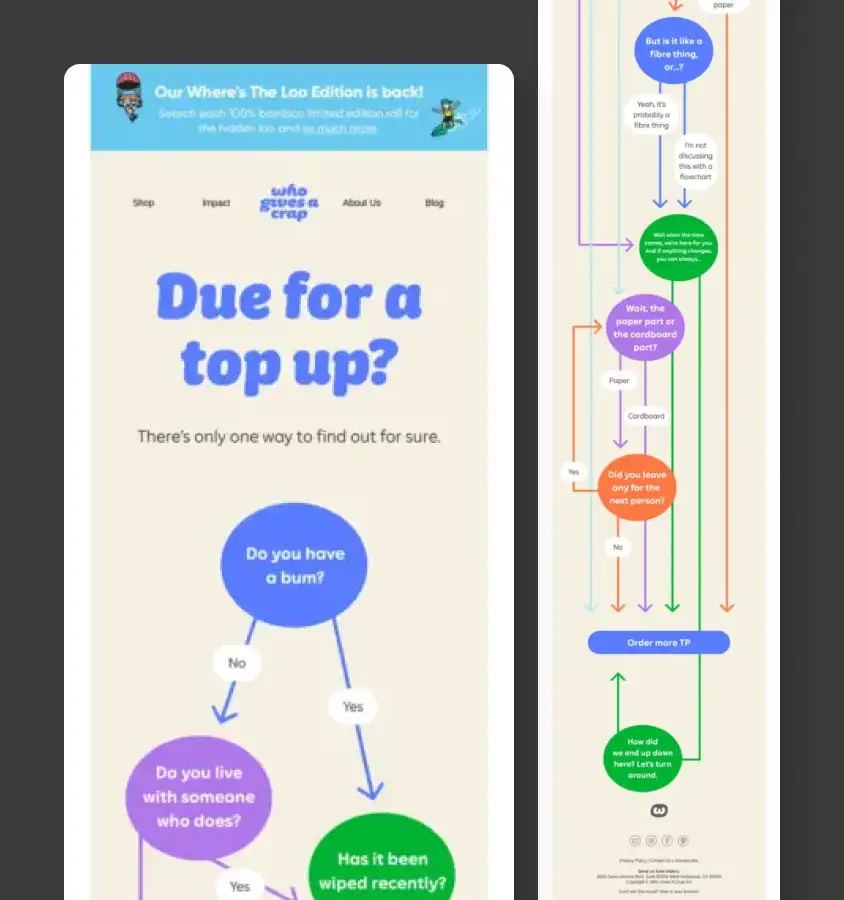
Why it works: The email makes a practical reminder feel entertaining. Instead of sending a standard “time to reorder” message, the brand uses humor and an unusual format to keep the reader engaged until the CTA.
Takeaway: Creative re-engagement emails work best when the concept makes the reminder more memorable without hiding the main action.
Urban Outfitters: A Breakup-Style Email With Strong Brand Voice
Urban Outfitters turns a standard list re-engagement message into a playful “are we breaking up?” conversation. The email uses a text-message format, casual language, and relationship-style copy to make the stay-or-leave decision feel more personal and memorable.
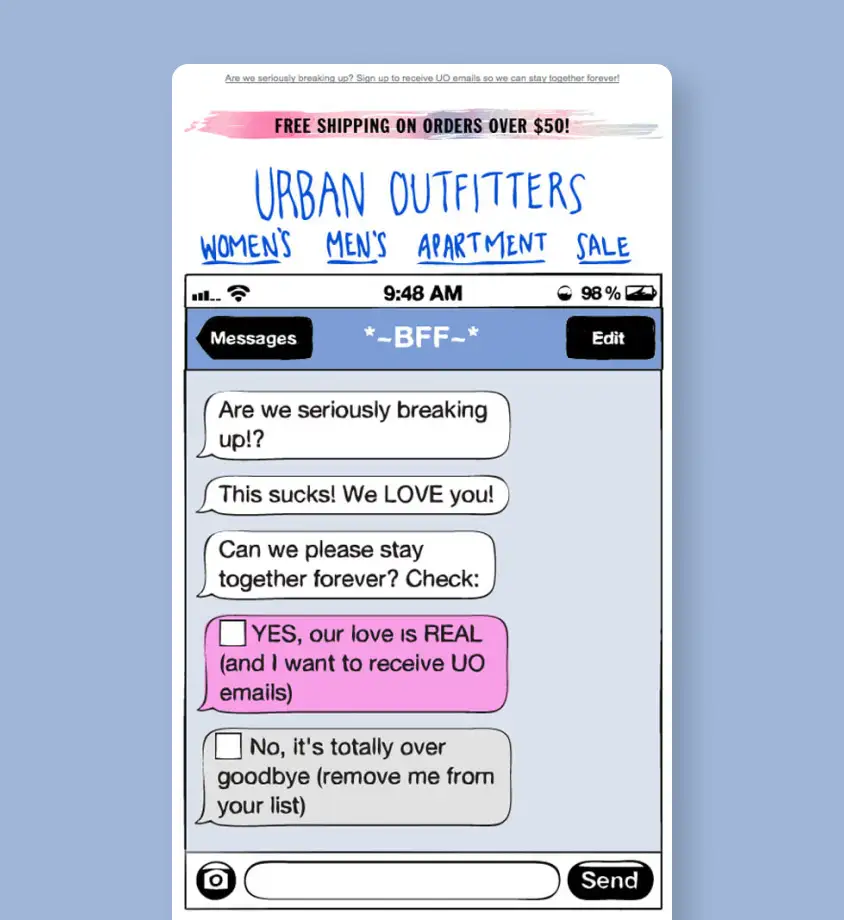
Why it works: The format does most of the work. Instead of sending a plain “do you still want our emails?” message, Urban Outfitters wraps the re-engagement choice in a concept that fits the brand’s voice and audience.
Takeaway: Creative re-engagement emails work best when the format, copy, and brand personality all support the same idea.
Grammarly: A Badge-Style Re-Engagement Email With a Playful Hook
Subject line: “You’ve Earned a New Badge!”
Grammarly uses a playful badge concept to bring inactive users back after they have stopped using the product. The “Wrinkle in Time” badge makes the message feel lighter and more memorable than a standard “come back” email.
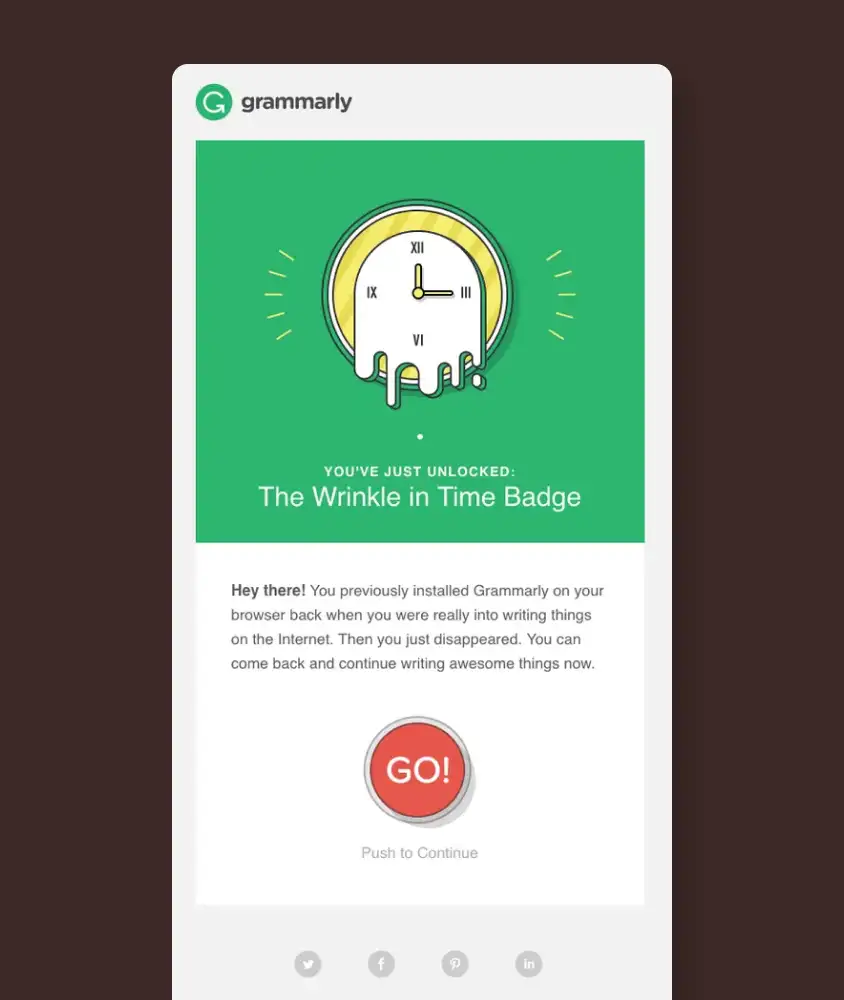
Why it works: The email turns inactivity into a small, gamified moment. Instead of using pressure or a discount, Grammarly uses humor, recognition, and a simple CTA to make returning feel easy.
Takeaway: Creative re-engagement emails work best when they give users a memorable reason to return without making the message feel heavy or forced.
Cuisinart: A Stay-or-Leave Email With a Playful Visual Choice
Subject line: “Pssst…we have a question for you”
Cuisinart turns a standard list re-engagement email into a playful visual choice. Instead of simply asking inactive subscribers whether they still want emails, the message presents two clear paths: stay and customize preferences, or leave and unsubscribe.
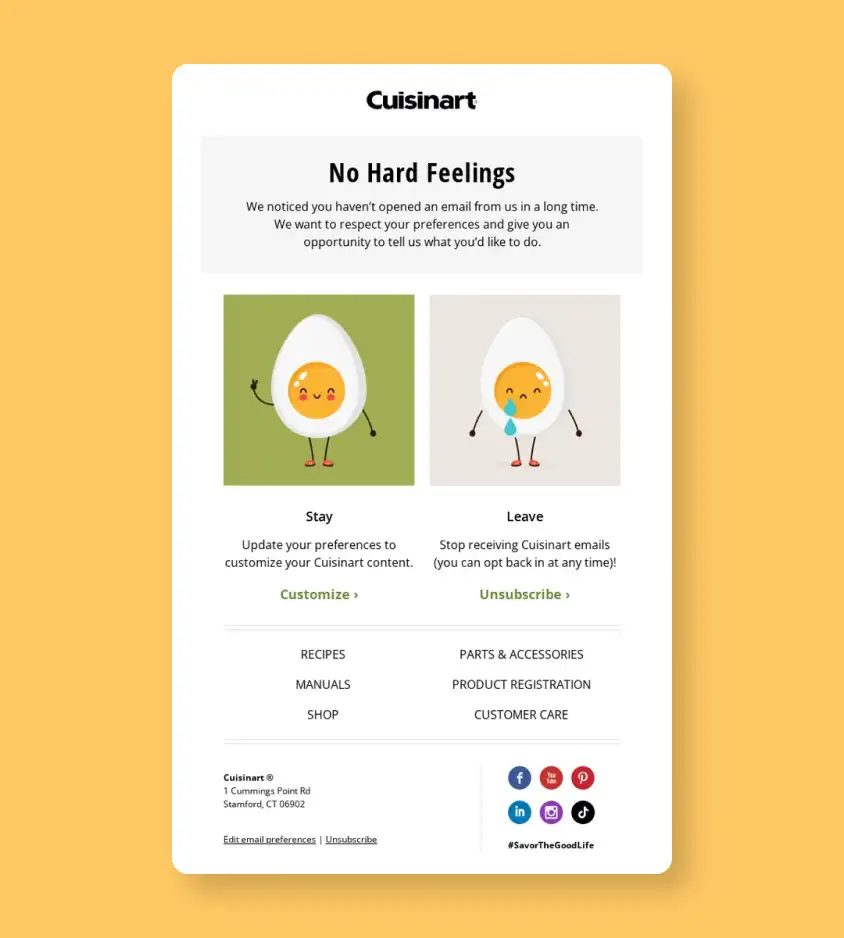
Why it works: The email makes a practical list-cleanup moment feel friendly and memorable. The illustrated “stay” and “leave” options soften the unsubscribe decision while still respecting the subscriber’s choice.
Takeaway: Creative re-engagement emails work best when the concept makes the decision clear without adding pressure.
Re-Engagement Email Subject Line Examples
A good re-engagement email subject line should give inactive subscribers, customers, or users a clear reason to open the email. The strongest examples are short, specific, and tied to the reason for returning.
| Subject Line Type | Subject Line Example | Why It Works |
|---|---|---|
| We Miss You | We miss you | Simple, familiar, and easy to understand. |
| Inactive Customer | It’s been a while | Feels personal without sounding too pushy. |
| Win-Back Offer | Come back and save 20% | Gives customers a clear reason to return. |
| Trial Reactivation | Pick up where you left off | Works well for expired trials and inactive accounts. |
| Product Update | See what’s new | Uses new value as the reason to re-engage. |
| Preference Update | Still want to hear from us? | Helps confirm interest before removing subscribers. |
| Last Chance | Last chance to stay subscribed | Creates urgency and makes the next step clear. |
Common Re-Engagement Email Mistakes
Re-engagement emails work best when they feel relevant, timely, and respectful. These are some of the most common mistakes to avoid when trying to bring inactive subscribers, customers, or users back.
- Waiting too long: The longer someone stays inactive, the harder it is to restart the relationship.
- Sending the same message to everyone: Inactive customers, trial users, subscribers, and app users often need different reasons to return.
- Relying only on discounts: Offers can help, but product updates, reminders, preference choices, and useful content can also re-engage people.
- Using guilt-heavy copy: A playful tone can work, but the message should still respect the subscriber’s choice.
- Adding too many CTAs: A re-engagement email should make the next step obvious.
- Keeping inactive contacts forever: If someone does not respond after a re-engagement sequence, it may be better to remove them from your active list.
FAQ: Re-Engagement Emails
What is a re-engagement email?
A re-engagement email is sent to inactive subscribers, customers, leads, or users to encourage them to return, open, click, buy, log in, renew, or update their preferences.
What is the difference between re-engagement and retention emails?
Retention emails are a broader category focused on keeping existing customers engaged over time. Re-engagement emails are more specific. They focus on people who have already stopped interacting with your emails, product, app, account, or brand.
What is the difference between re-engagement and win-back emails?
A win-back email is usually focused on bringing back a lost or inactive customer, often with an offer or reminder. Re-engagement emails can include win-back emails, but they can also include product updates, preference updates, trial reactivation emails, and list cleanup emails.
How do you write a re-engagement email?
Start by identifying why the person is inactive. Then give them one clear reason to return, such as a useful update, a simple next step, a limited-time offer, a preference choice, or a reminder of the value they signed up for.
When should you send a re-engagement email?
Send a re-engagement email when someone has stopped opening emails, clicking campaigns, buying products, logging into an account, using an app, or continuing a trial. The exact timing depends on your product, buying cycle, and normal customer behavior.
How many emails should be in a re-engagement campaign?
Many re-engagement campaigns use a short sequence of two to four emails. The first email can be a soft reminder, followed by a value-focused message, an offer, and a final preference update or last-chance email.
What are good re-engagement email subject lines?
Good re-engagement subject lines are clear, specific, and easy to understand. Examples include “We miss you,” “See what’s new,” “Your offer is ready,” “Pick up where you left off,” and “Do you still want to hear from us?”
Should you remove inactive subscribers after a re-engagement campaign?
Yes, if subscribers do not respond after a clear re-engagement sequence, it may be better to remove them from your active email list. This can help improve deliverability, protect sender reputation, and keep future campaigns focused on people who still want to hear from you.
Need a Re-Engagement Flow That Brings Customers Back?
Re-engagement emails work best when they are part of a clear customer journey, not a one-off message sent at random. MailBakery designs and codes custom email flow templates that help brands reconnect with inactive customers, subscribers, and users.
Whether you need a win-back email, trial reactivation sequence, preference update email, or full re-engagement flow, our team can turn the idea into a polished email that looks great and works across major email clients.
More Email Examples to Explore
Need more ideas for your next campaign? These guides cover different email moments, from first-touch welcome messages to retention, cart recovery, and full campaign inspiration.
- Retention Email Examples
- Abandoned Cart Email Examples
- Welcome Email Examples
- Welcome Email Series
- Best Email Marketing Campaign Examples
- Email Design Trends You Can’t Ignore
This article was last updated on June 24, 2026, with refreshed re-engagement email examples, updated categories, subject line ideas, common mistakes, FAQ answers, and internal resources.