The Best Klaviyo Flows Every Shopify Store Should Use


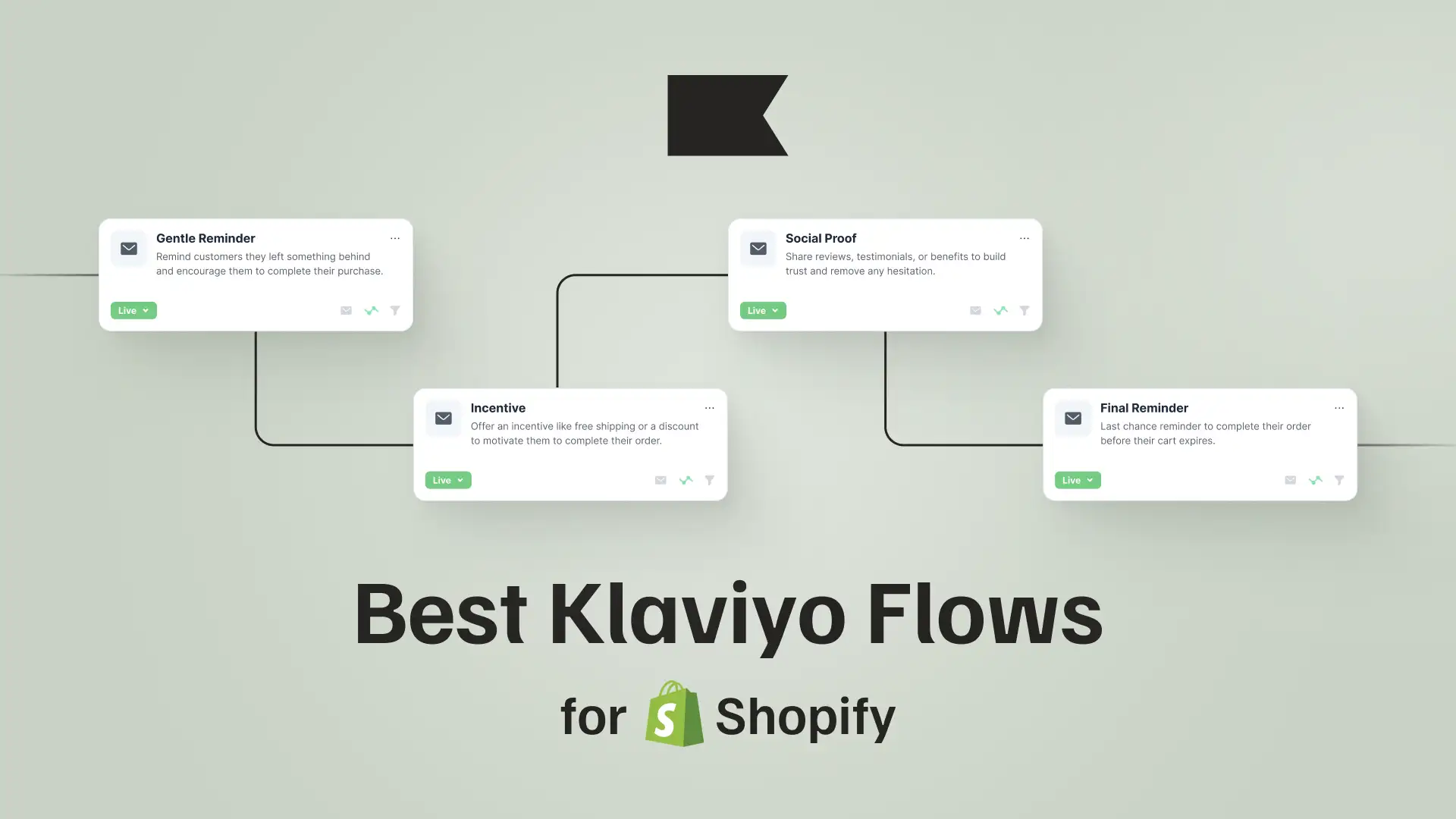
What if one automated email flow could recover revenue your Shopify store is already losing? The best Klaviyo flows help Shopify stores respond to those moments automatically.
Klaviyo flows are automated email or SMS sequences that send when a customer takes a specific action, such as joining your list, viewing a product, abandoning a cart, placing an order, waiting for a restock, or becoming inactive.
For Shopify stores, these flows can help turn new subscribers into customers, recover abandoned carts, support buyers after purchase, collect reviews, encourage repeat orders, and bring inactive customers back.
In this guide, we will cover the best Klaviyo flows for Shopify stores, what each flow does, and real Klaviyo flow examples that show how brands use them in practice.
Quick links:
Why Shopify Stores Need Klaviyo Flows
How to Prioritize Klaviyo Flows for Your Store
Best Klaviyo Flows for Shopify Stores
→ 6. Cross-Sell and Upsell Flow
What Are Klaviyo Flows?
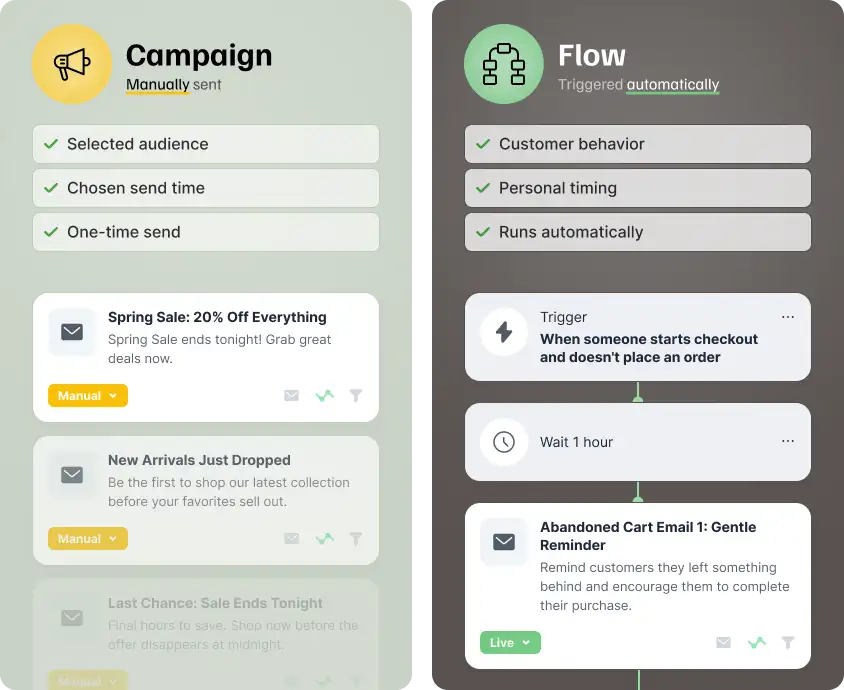
Klaviyo flows are automated email or SMS sequences that start when a customer meets a specific trigger condition.
Unlike campaigns, which are sent manually to a selected audience, flows run automatically based on customer behavior, profile data, list activity, or Shopify events.
Klaviyo’s flow documentation explains how these automations use triggers, filters, and customer actions to decide who enters a flow and what happens next.
For example, a welcome flow can start when someone joins your email list. An abandoned cart flow can start when someone adds a product to cart but does not complete the purchase. A post-purchase flow can start after someone places an order.
For Shopify stores, this matters because flows can respond to what customers are actually doing. They can be built around signup activity, product interest, checkout behavior, purchase history, repeat purchase timing, and customer inactivity.
That makes the best Klaviyo flows useful for sending the right message at the right moment, instead of waiting for the next manual campaign.
Why Shopify Stores Need Klaviyo Flows
Klaviyo flows help Shopify stores make better use of the traffic, subscribers, and customers they already have. They can follow up when someone is most likely to take the next step: after signup, after product interest, after cart activity, after purchase, or after a long gap without buying.
That matters because many Shopify stores lose revenue in small moments:
- a new subscriber never receives a strong first email;
- a shopper leaves a cart behind and does not come back;
- a first-time customer never gets a reason to buy again;
- an interested shopper misses a restock;
- an inactive customer is never re-engaged.
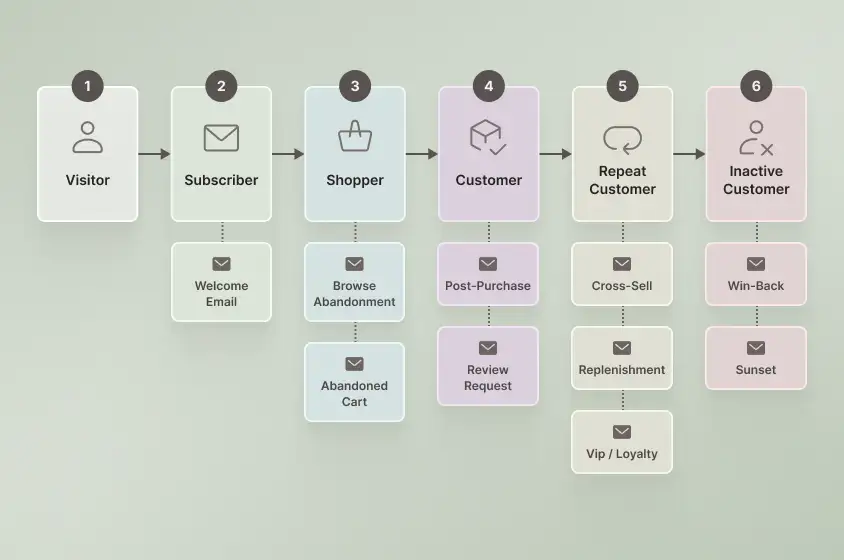
A good Klaviyo flow setup can help a Shopify store:
- turn new subscribers into first-time customers;
- recover abandoned carts and checkouts;
- guide shoppers toward relevant products;
- support customers after purchase;
- encourage repeat purchases;
- bring inactive customers back;
- reduce generic email messaging.
The key is to build flows with a clear role. Each automation should answer one question: What does this customer need next? The best Klaviyo flows make these moments easier to act on without manually sending every follow-up.
How to Prioritize Klaviyo Flows for Your Store
You do not need to build every Klaviyo flow at the same time. Start with the flows that support the most important parts of your customer journey.
The best Klaviyo flows to build first are usually the ones closest to revenue. For most Shopify stores, that usually means:
- First purchase flows
These help turn new subscribers and shoppers into customers. Examples include welcome flows, abandoned cart flows, and browse abandonment flows. - Post-purchase flows
These support customers after they buy. Examples include thank-you emails, product education, review requests, and cross-sell emails. - Retention flows
These help bring customers back. Examples include replenishment flows, win-back flows, back-in-stock alerts, and loyalty or VIP flows.
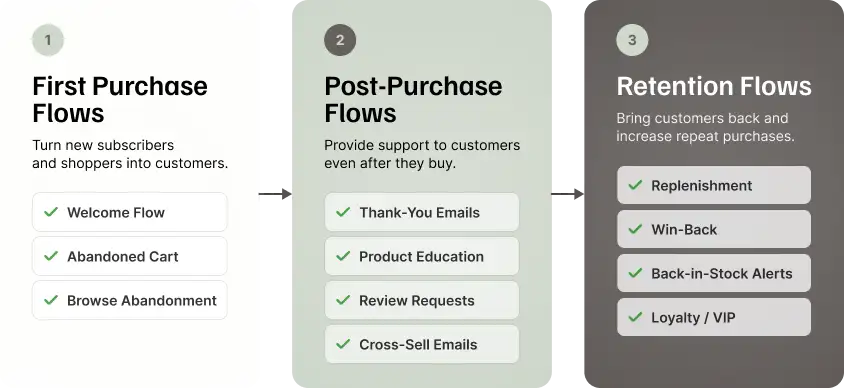
A simple rule is to build the flows closest to revenue first. If people are subscribing but not buying, start with the welcome flow. If shoppers are adding products to cart but not checking out, start with abandoned cart and abandoned checkout flows. If customers buy once and disappear, focus on post-purchase, cross-sell, replenishment, and win-back flows.
Now, let’s look at different Klaviyo flow examples across the customer journey and see how real brands use each automation in practice.
1. Welcome Flow
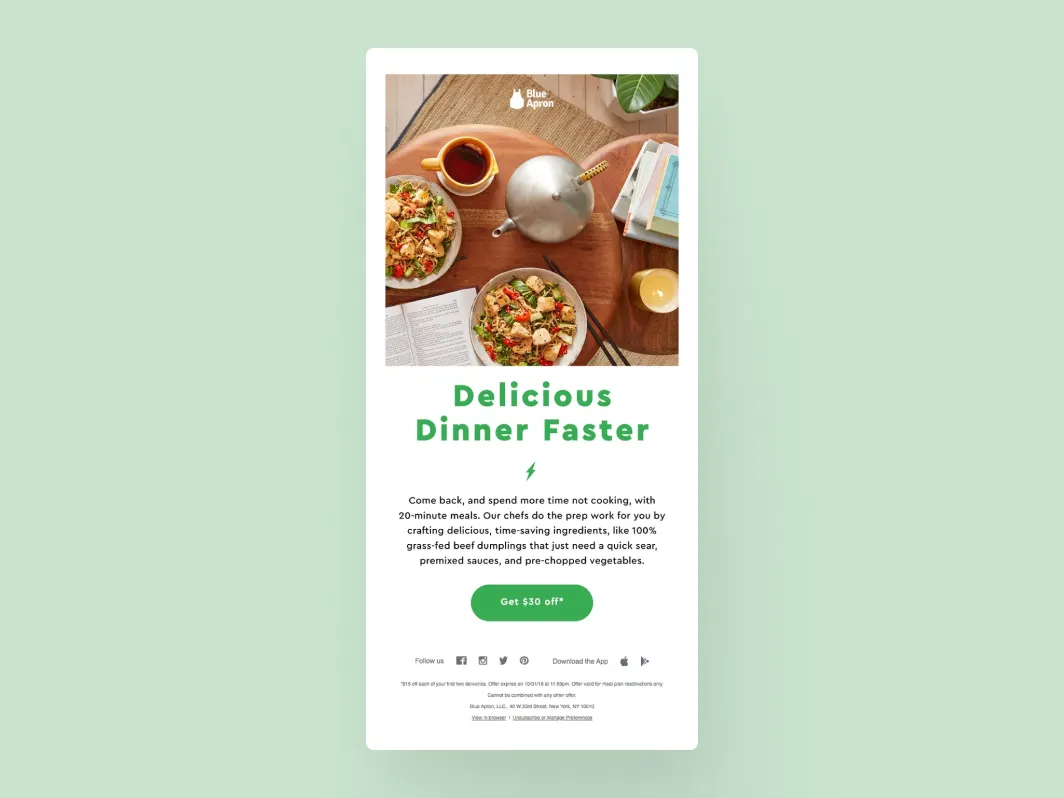
A welcome flow is usually the first Klaviyo flow a Shopify store should build.
It starts when someone joins your email list through a popup, footer form, landing page, or another signup source. The goal is to turn that new subscriber into a first-time customer, or at least move them closer to a first meaningful action.
A strong welcome flow can:
- deliver the signup offer;
- introduce the brand;
- guide subscribers toward best sellers or key collections;
- explain what makes the products different;
- build trust before the first purchase.
For many Shopify stores, the first welcome email should send immediately after signup. If the subscriber joined for a discount, the code should be easy to find and use. If they joined for updates, early access, or product education, the flow should match that expectation instead.
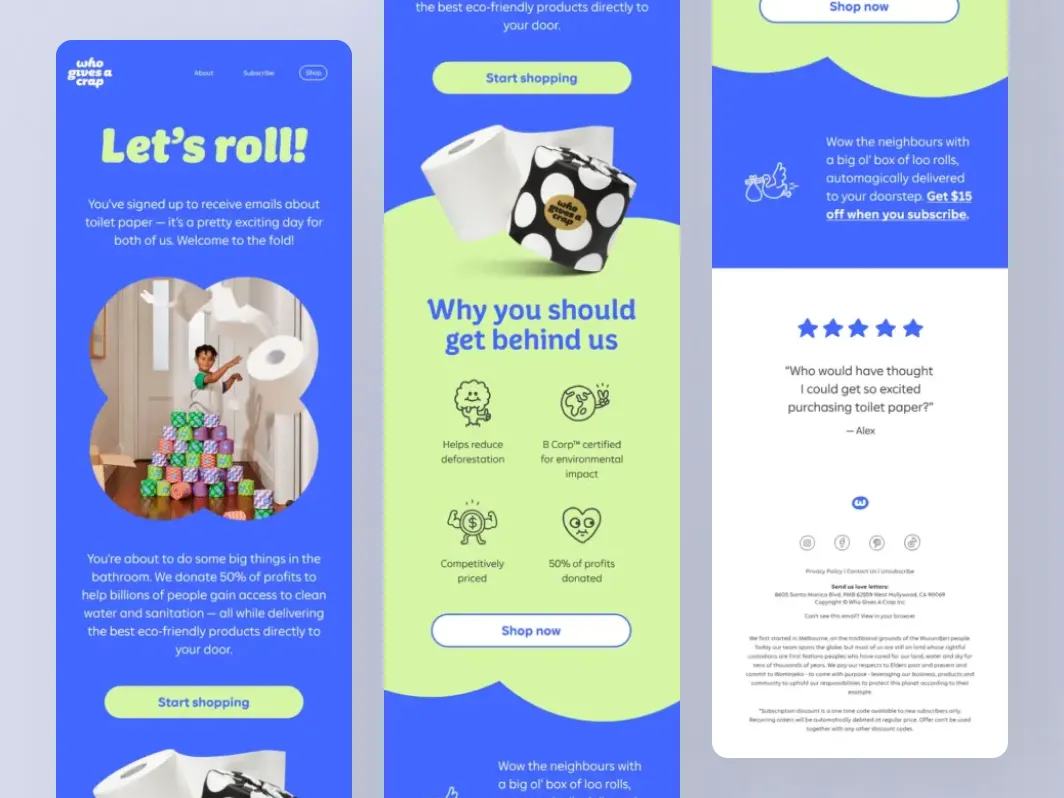
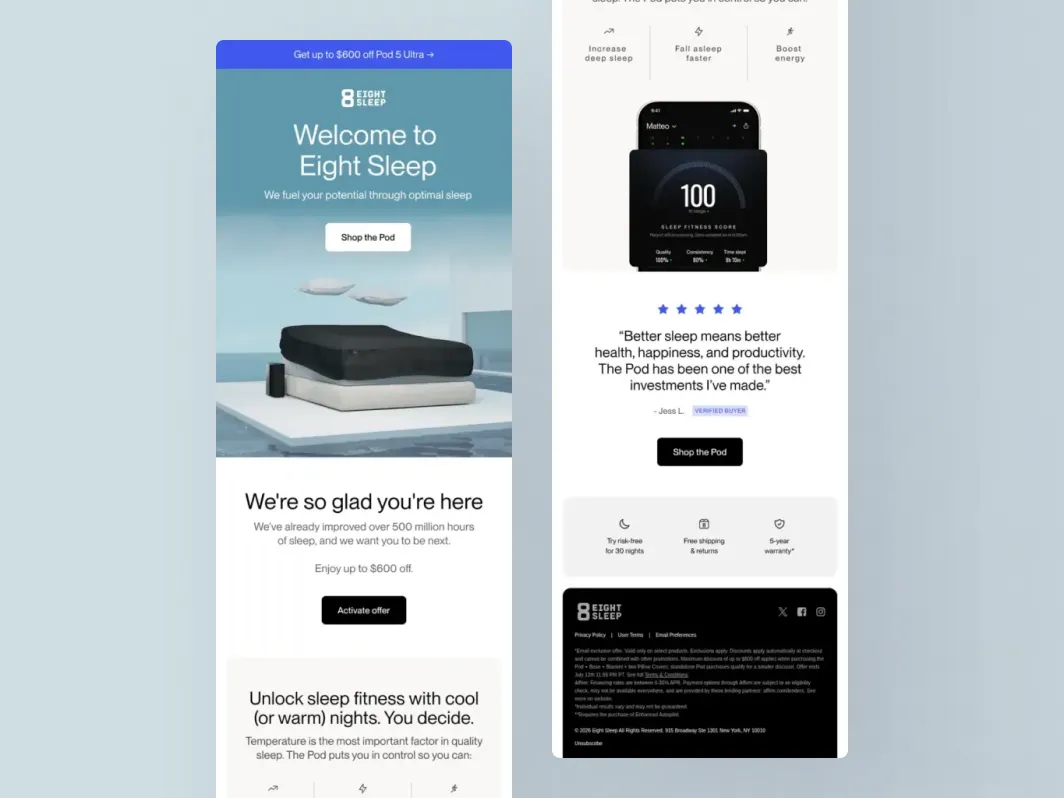
A simple welcome flow may include three to four emails: one to welcome the subscriber, one to introduce the brand or products, one to build trust, and one to remind them about the next step.
This flow is especially important if your store uses popups, first-order offers, quizzes, guides, or newsletter signup forms to capture new subscribers.
Best for: turning new subscribers into first-time customers.
Trigger: joins a Klaviyo list.
Priority: high for almost every Shopify store.
2. Abandoned Cart Flow
An abandoned cart flow helps recover shoppers who added products to their cart but did not complete the purchase.
This is one of the most important Klaviyo flows for Shopify stores because the shopper has already shown clear buying intent. They were not just browsing. They found a product, added it to cart, and then dropped off before checkout.
A strong abandoned cart flow can:
- remind shoppers what they left behind;
- bring them back to the cart;
- answer common purchase hesitations;
- highlight shipping, returns, or payment options;
- create urgency without sounding too aggressive.
The first abandoned cart email is usually sent soon after the cart is abandoned, while the product is still fresh in the shopper’s mind. Later emails can add trust, answer objections, or offer a final reminder.
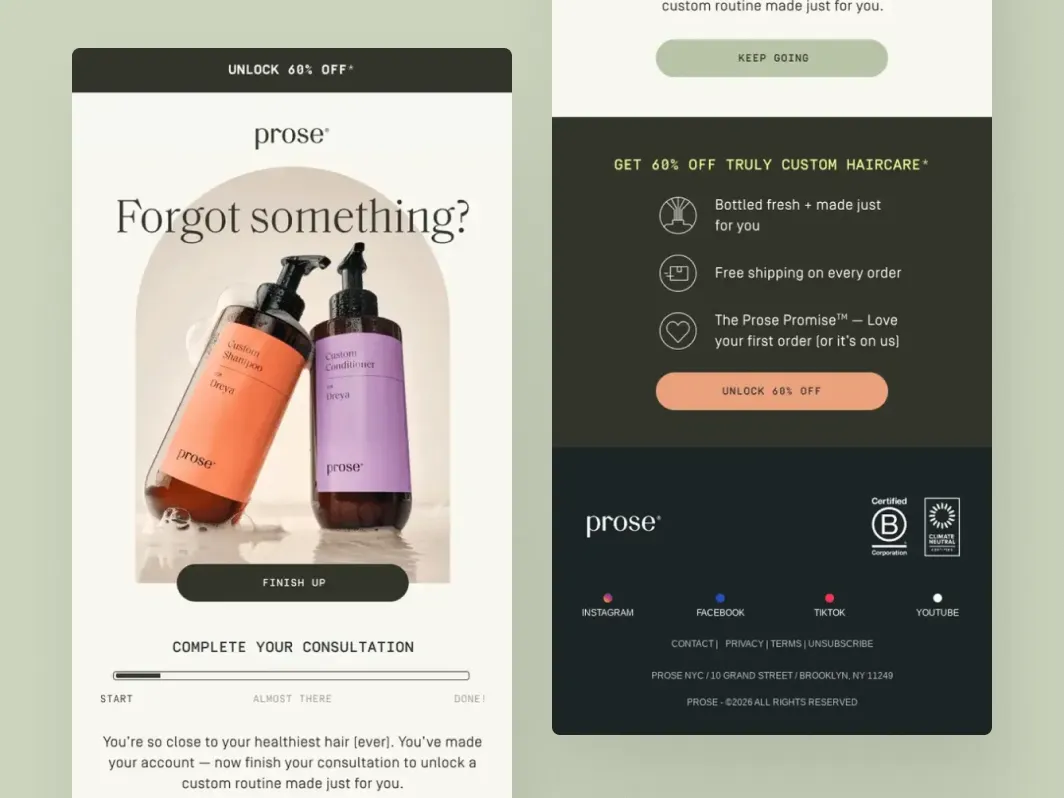
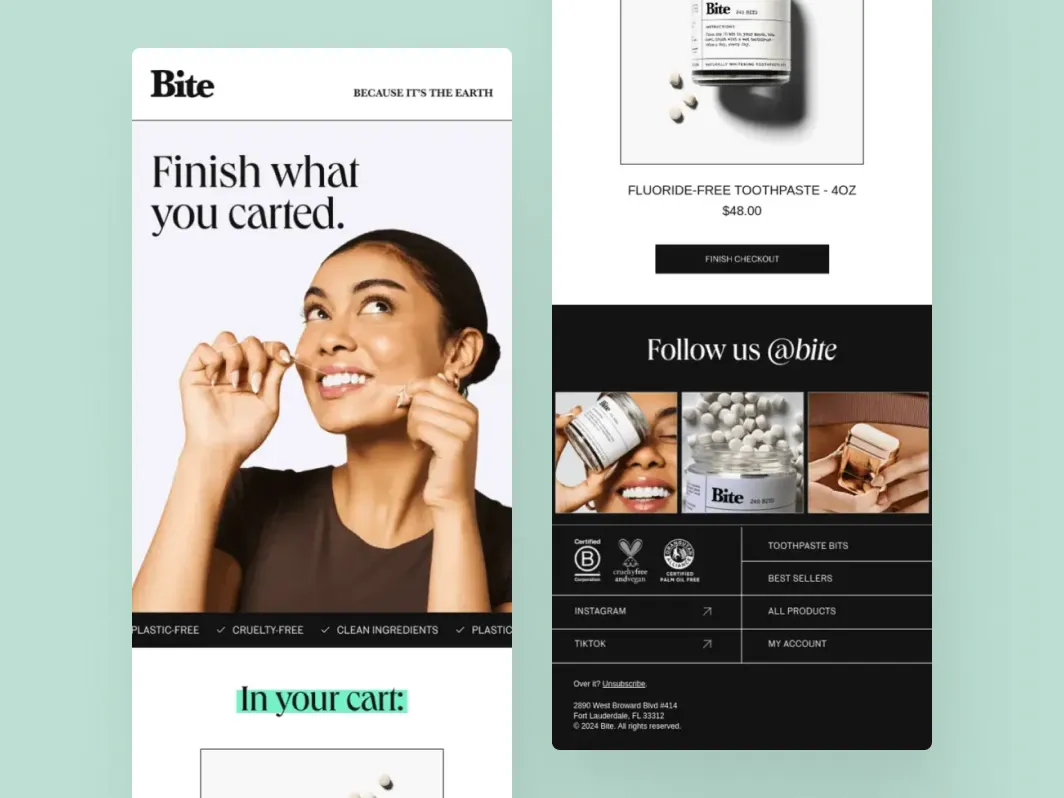
For many stores, this flow does not need to start with a discount. Sometimes a clear reminder, product image, and easy return-to-cart button are enough. If you do use a discount, it is usually better to save it for a later email rather than training shoppers to abandon carts for a code.
Best for: recovering high-intent shoppers.
Trigger: started checkout or added product to cart without purchasing.
Priority: high for Shopify stores with regular cart activity.
3. Browse Abandonment Flow
A browse abandonment flow targets shoppers who viewed a product but left without adding it to cart.
This flow is useful because not every interested shopper reaches the cart stage. Some people compare products, check prices, read reviews, or leave because they are not ready yet.
A strong browse abandonment flow can:
- remind shoppers about the product they viewed;
- recommend similar or related products;
- highlight best sellers or popular categories;
- answer early-stage questions;
- bring visitors back before they forget the product.
This flow should usually feel softer than an abandoned cart flow. The shopper has shown interest, but not strong purchase intent yet. A helpful reminder or product recommendation often works better than heavy urgency.
For many Shopify stores, browse abandonment is best used after the welcome flow and abandoned cart flow are already in place.
Best for: re-engaging product viewers.
Trigger: viewed product without adding to cart or purchasing.
Priority: medium to high, depending on traffic volume.
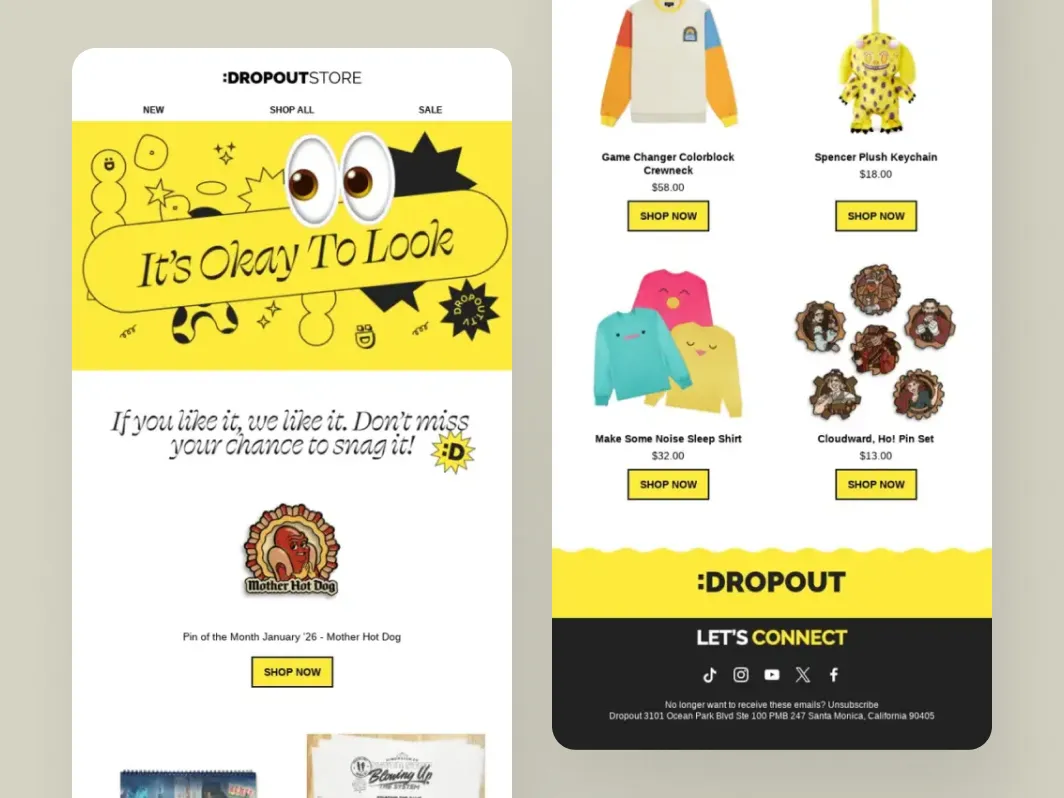
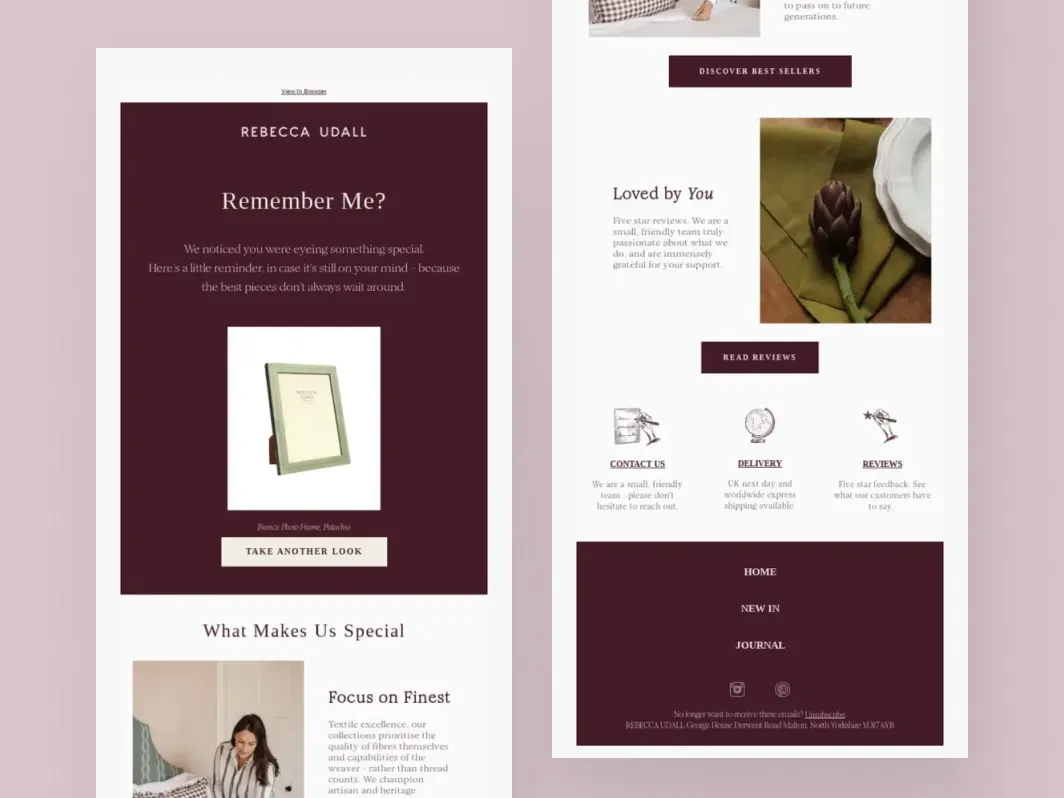
4. Post-Purchase Flow
A post-purchase flow starts after someone places an order.
This flow helps you continue the customer relationship after the sale. Instead of disappearing until the next promotion, you can use this moment to confirm the purchase, set expectations, and make the customer feel confident about buying from you.
A strong post-purchase flow can:
- thank the customer for their order;
- explain what happens next;
- share product care or usage tips;
- recommend helpful content;
- introduce related products;
- prepare the customer for a review request later.
The best post-purchase emails are not just another sales push. They should support the customer first. If someone just bought skincare, apparel, supplements, coffee, furniture, or a subscription product, they may need different information before they are ready to buy again.
This flow is also a good place to reduce support questions. You can include shipping expectations, product instructions, sizing information, care details, or links to useful resources.
Best for: improving the customer experience after purchase.
Trigger: placed order.
Priority: high for stores that want repeat purchases and fewer support gaps.
5. Product Review Flow
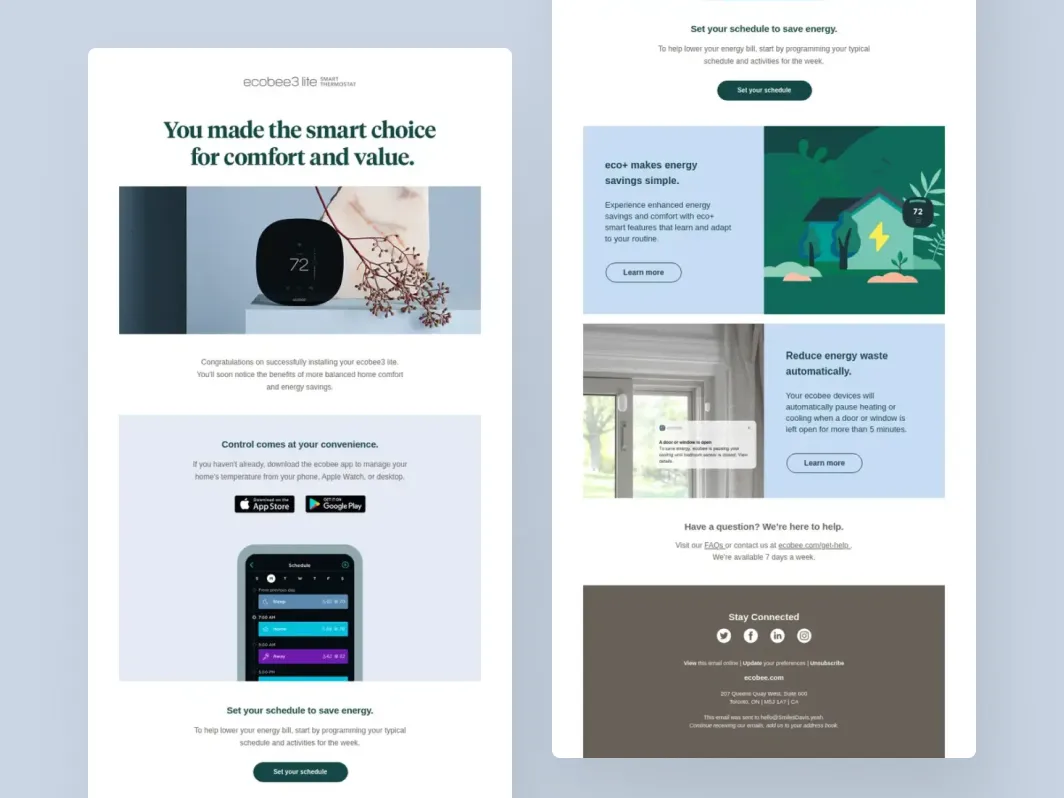
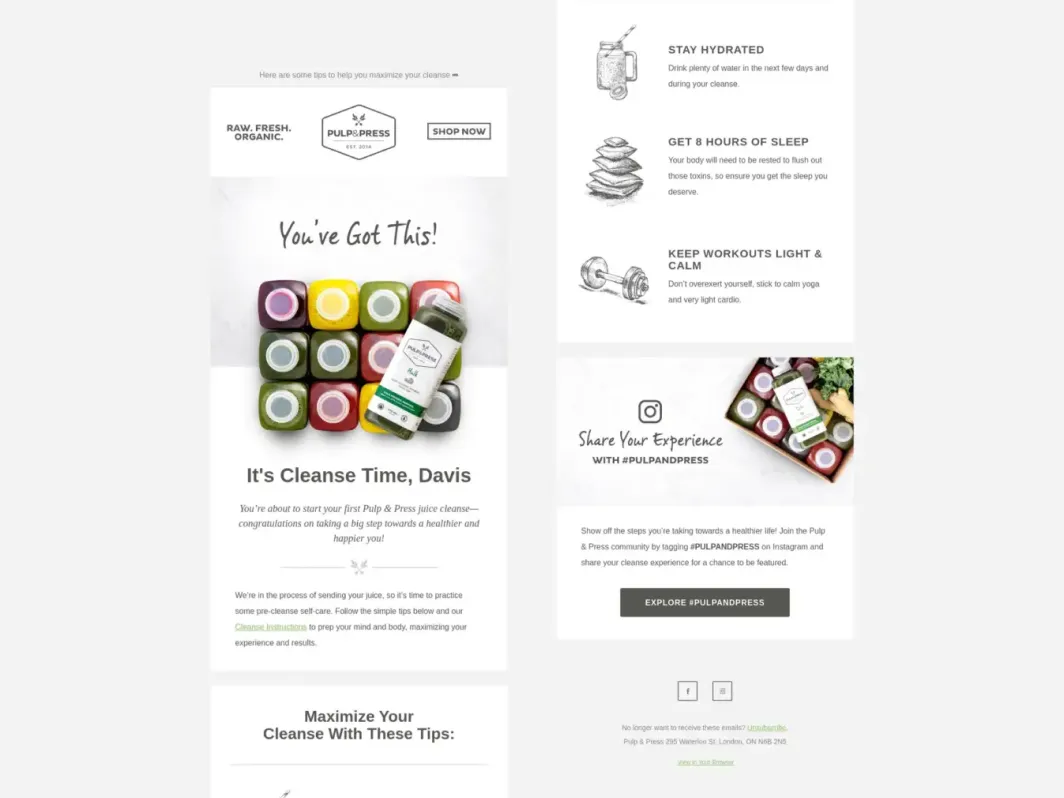
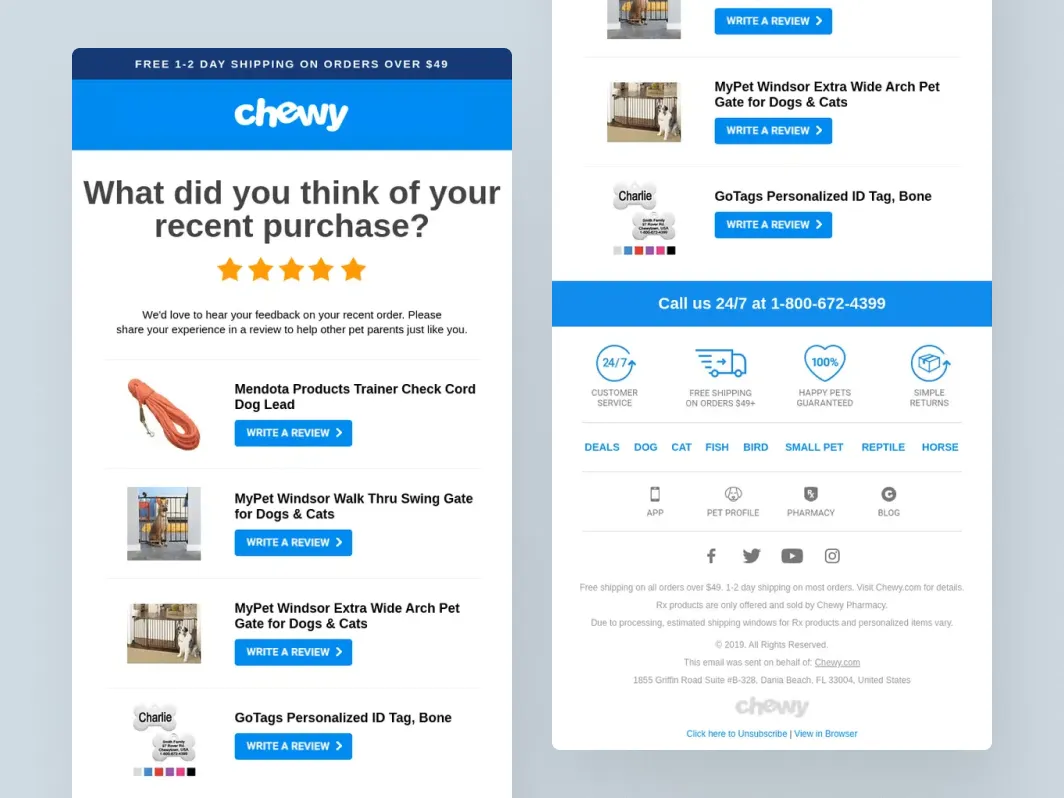
A product review flow asks customers to share feedback after they have had enough time to receive and use the product.
This flow is useful because reviews help future shoppers make a decision. They also give you direct insight into what customers like, what confuses them, and what may need improvement.
A strong review request flow can:
- ask for a review at the right time;
- make the review process easy;
- remind customers if they have not responded;
- collect product-specific feedback;
- support social proof for future campaigns and product pages.
Timing matters here. If you ask too early, the customer may not have used the product yet. If you wait too long, the purchase may no longer feel fresh.
The right delay depends on the product. A clothing brand may ask sooner. A skincare, supplement, furniture, or subscription brand may need more time before the customer can give useful feedback.
Keep the message simple. Thank the customer, ask for honest feedback, and make the CTA clear.
Best for: collecting reviews and building social proof.
Trigger: placed order or fulfilled order, usually with a delay.
Priority: medium to high for stores that rely on reviews.
6. Cross-Sell and Upsell Flow
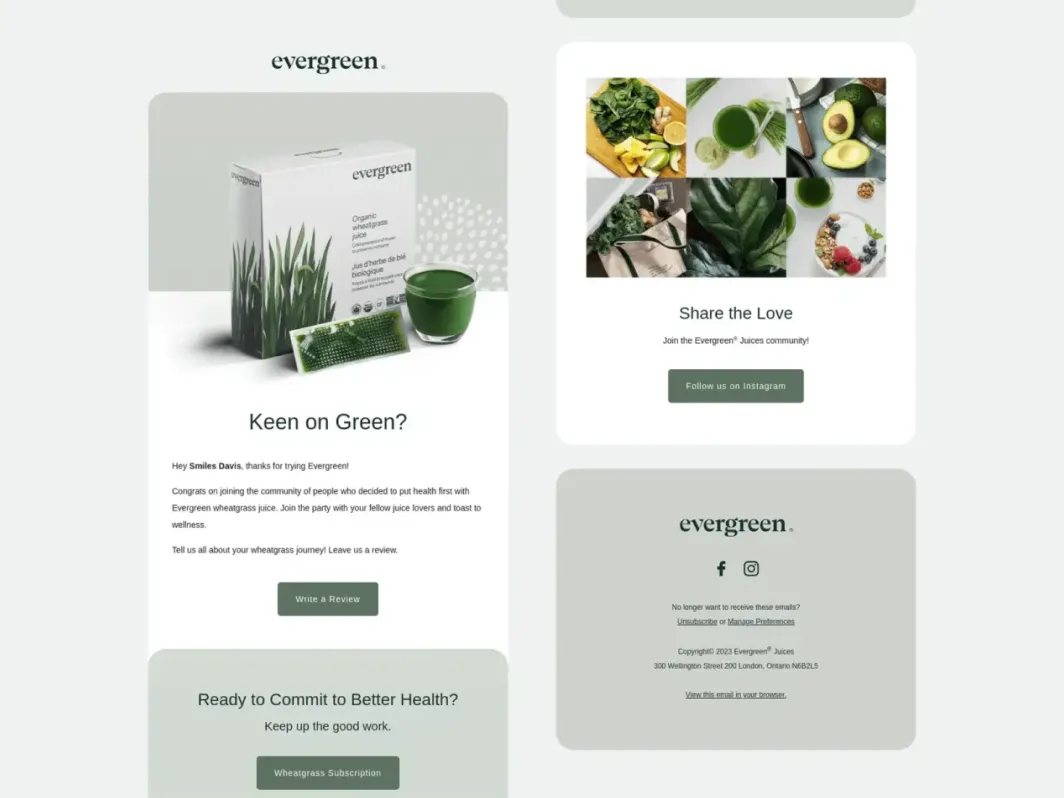
A cross-sell or upsell flow recommends related products after someone has shown interest or placed an order.
This flow works best when the recommendation feels useful, not random. The goal is to help customers find the next product that makes sense based on what they browsed, bought, or added to cart.
A strong cross-sell or upsell flow can:
- recommend products that pair well with a recent purchase;
- suggest a higher-value version of a product;
- introduce bundles or kits;
- guide customers to complementary categories;
- increase average order value without relying only on discounts.
For example, a skincare brand can recommend a moisturizer after someone buys a cleanser. A coffee brand can suggest filters, accessories, or a subscription. A fashion store can recommend styling pieces that match the item someone bought.
The key is relevance. If the email feels like a random product push, it will be easy to ignore. If it feels like a helpful next step, it can support repeat purchases and improve the customer experience.
Best for: increasing repeat purchases and average order value.
Trigger: placed order, viewed product, added to cart, or entered a product-specific segment.
Priority: medium to high for stores with complementary products or bundles.
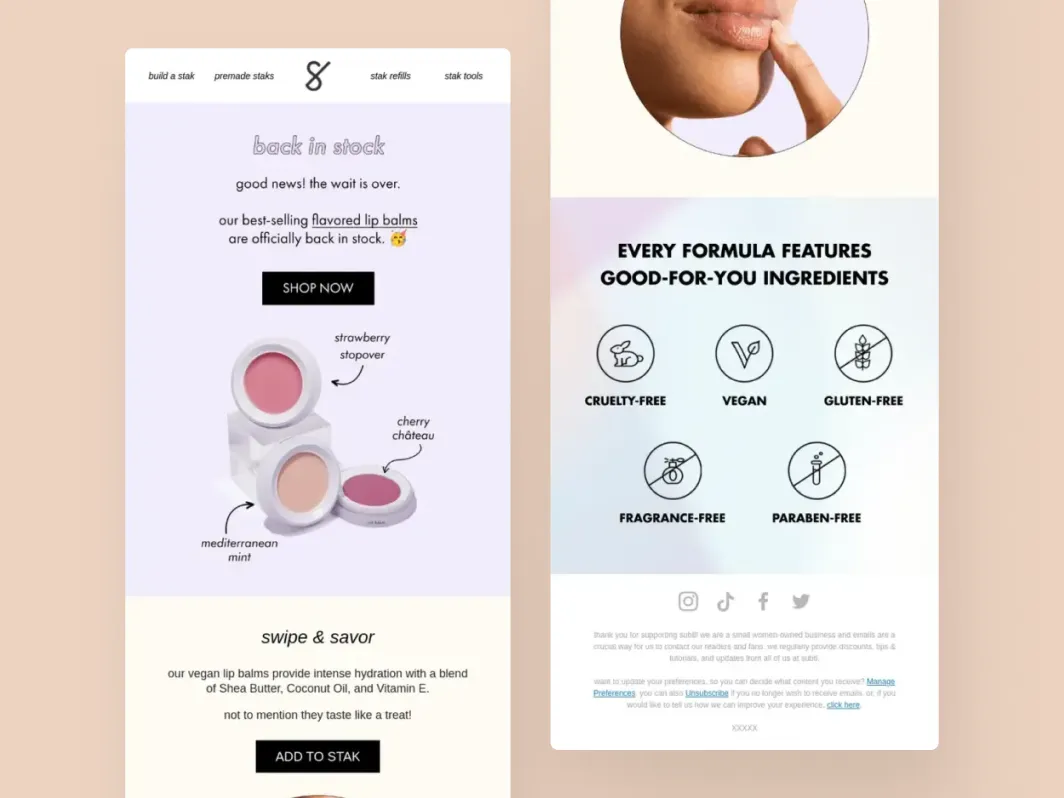
7. Back in Stock Flow
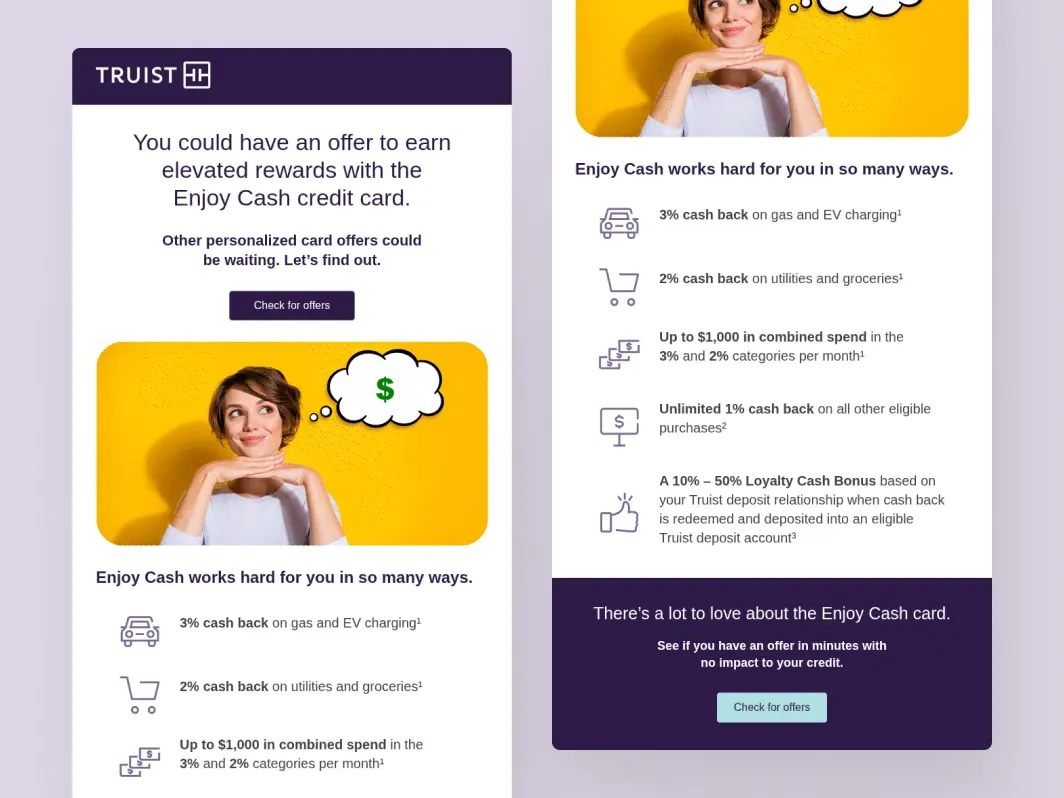
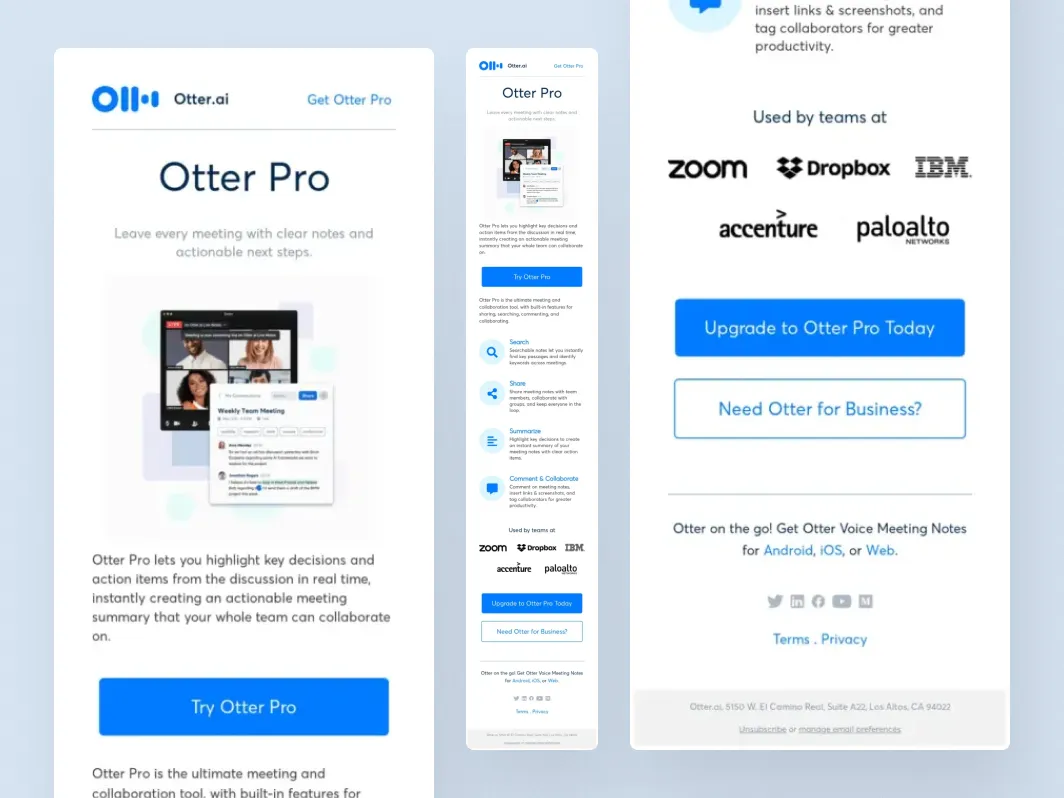
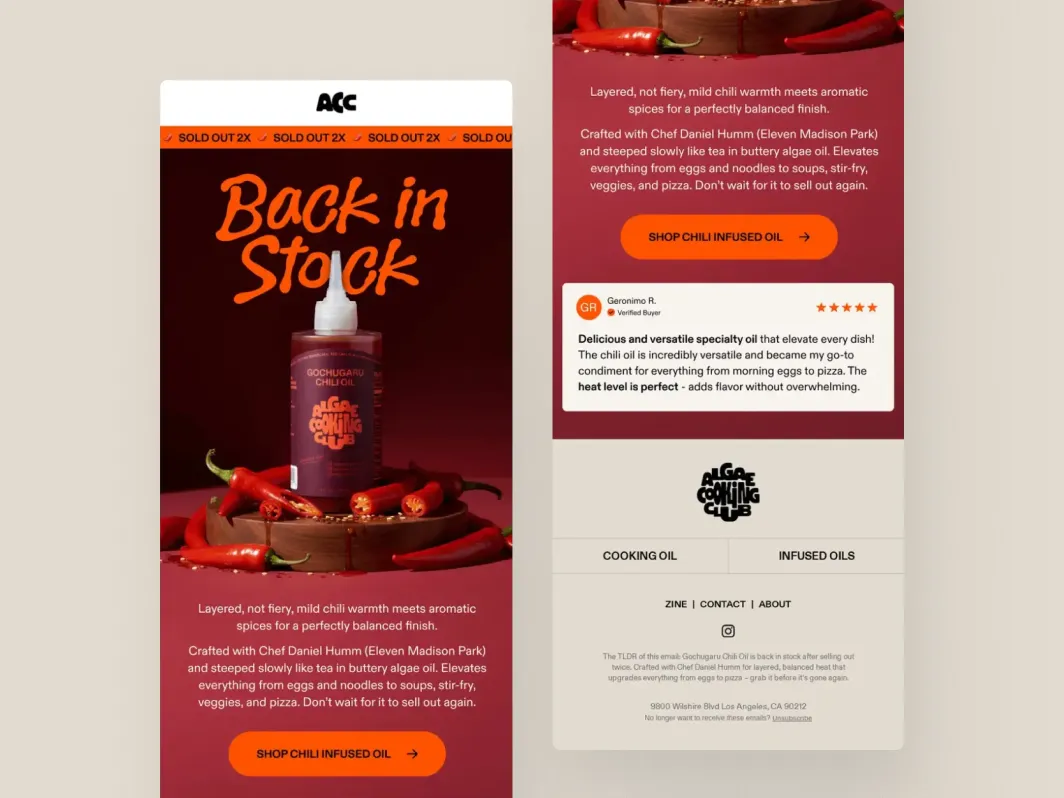
A back in stock flow notifies shoppers when a product they wanted becomes available again.
This flow is useful because out-of-stock products often mean lost demand. If someone already showed interest, a back in stock message gives them a reason to return when the product is available.
A strong back in stock flow can:
- alert shoppers when a product is restocked;
- bring high-intent visitors back to the product page;
- create urgency without overdoing it;
- recover demand that would otherwise be lost;
- help you understand which products people are waiting for.
This flow works especially well for Shopify stores with popular products, limited drops, seasonal items, sizes that sell out, or inventory that changes often.
The message should be direct. Tell the subscriber the product is back, show the product clearly, and make it easy to buy before it sells out again.
Best for: recovering demand from out-of-stock products.
Trigger: back in stock event or back in stock subscription.
Priority: high for stores with frequent sellouts or limited inventory.
8. Replenishment Flow
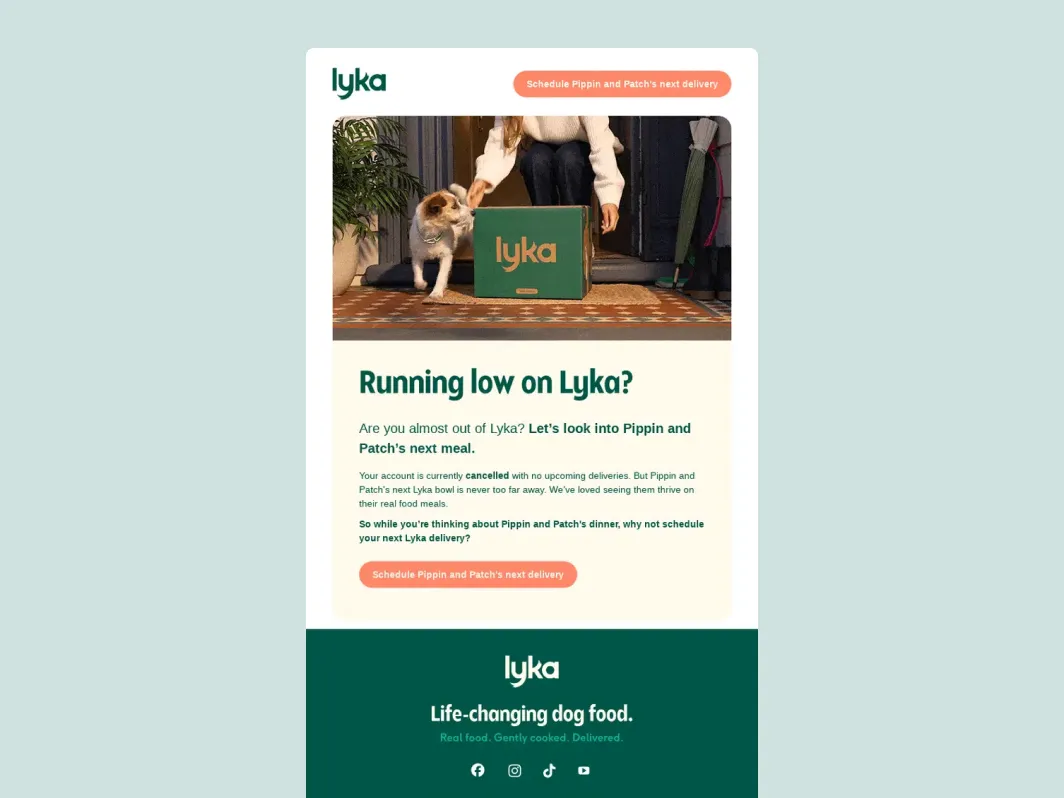
A replenishment flow reminds customers to reorder a product before they run out.
This flow works best for products people use repeatedly, such as skincare, supplements, coffee, pet products, food, wellness products, cleaning supplies, or subscriptions.
A strong replenishment flow can:
- remind customers when it may be time to reorder;
- reduce the chance they buy from another store;
- make repeat purchasing easier;
- recommend the same product again;
- suggest a subscription or bundle if it makes sense.
The timing depends on how long the product usually lasts. A 30-day supplement, a skincare serum, and a bag of coffee will not need the same delay.
The email should feel helpful, not pushy. The customer should understand why they are receiving it and why now is a good time to buy again.
Best for: encouraging repeat purchases for consumable products.
Trigger: placed order, with a delay based on expected product usage.
Priority: high for stores that sell products customers need to restock.
9. Win-Back Flow
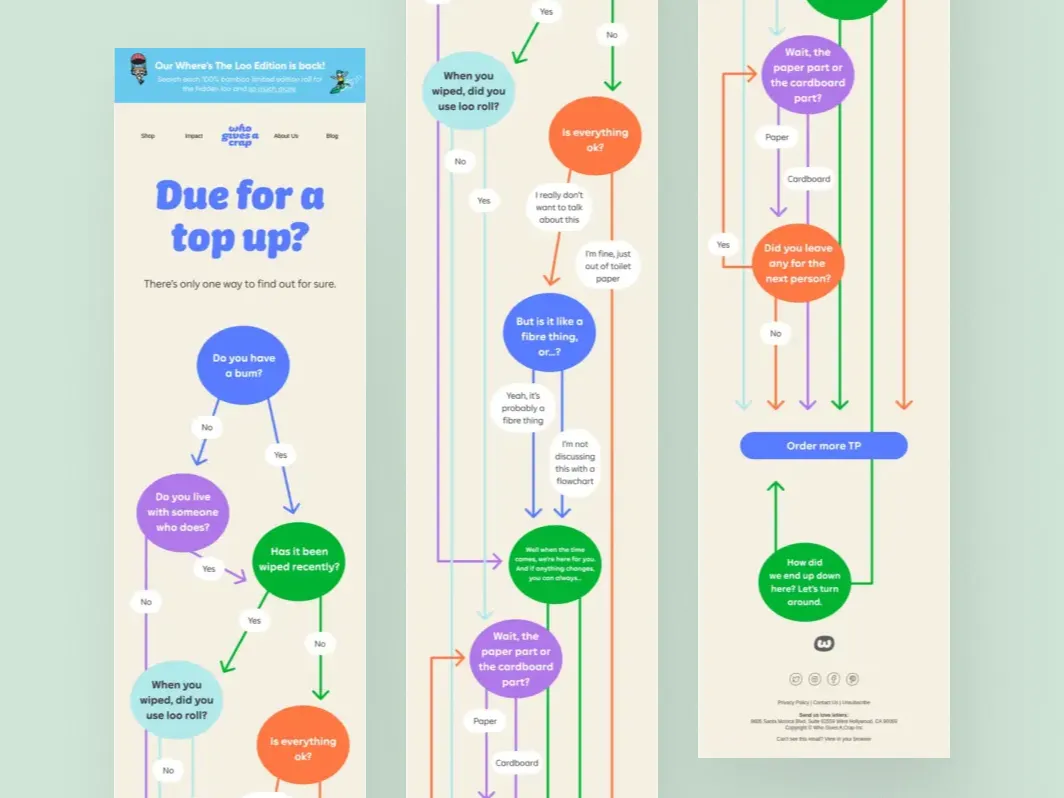
A win-back flow targets customers who have not purchased again after a certain period of time.
This flow is useful because not every customer will come back on their own. Some forget about the brand, compare alternatives, wait for a reason to return, or simply fall out of the buying cycle.
A strong win-back flow can:
- remind customers why they bought from you before;
- show new arrivals or best sellers;
- offer a reason to come back;
- recommend products based on past purchases;
- collect feedback if they are no longer interested.
The timing depends on your product and buying cycle. A coffee brand may send a win-back flow much sooner than a furniture store. A skincare brand may wait long enough for the customer to finish the product and decide whether to reorder.
This flow should not feel desperate. Start with relevance before discounts. If you use an offer, make it feel like a clear reason to return, not a last attempt to force a purchase.
Best for: bringing inactive customers back.
Trigger: no purchase after a set period of time.
Priority: medium to high for stores with repeat purchase potential.
10. Sunset Flow
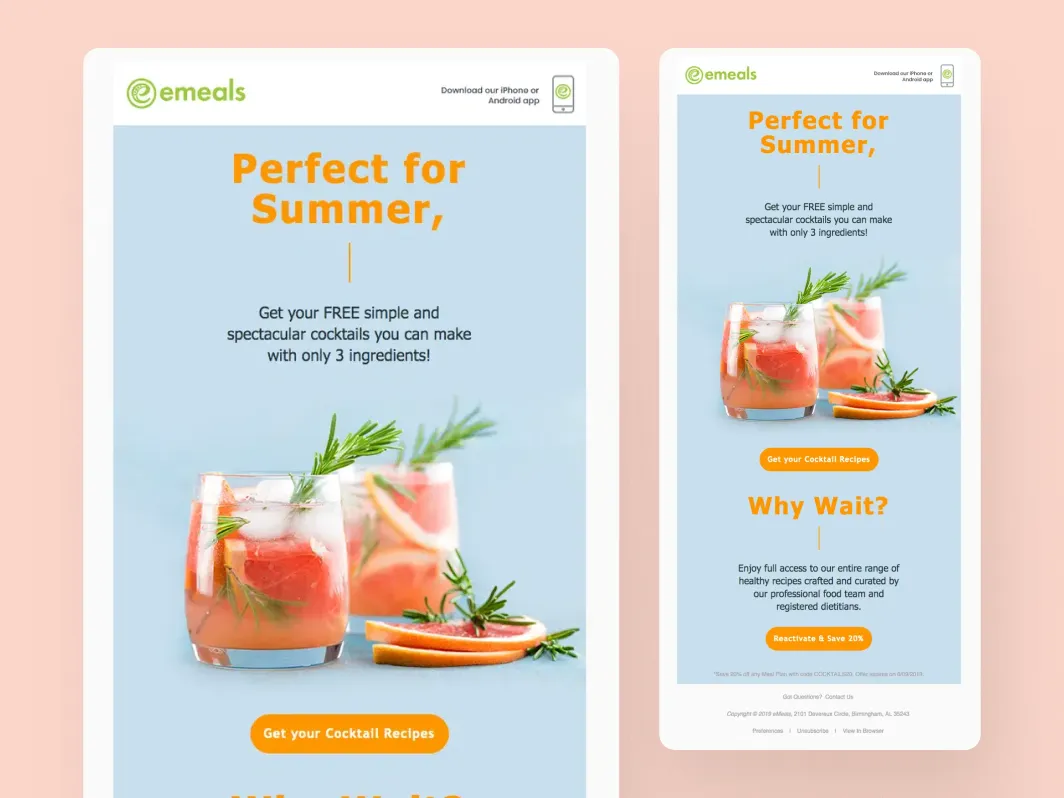
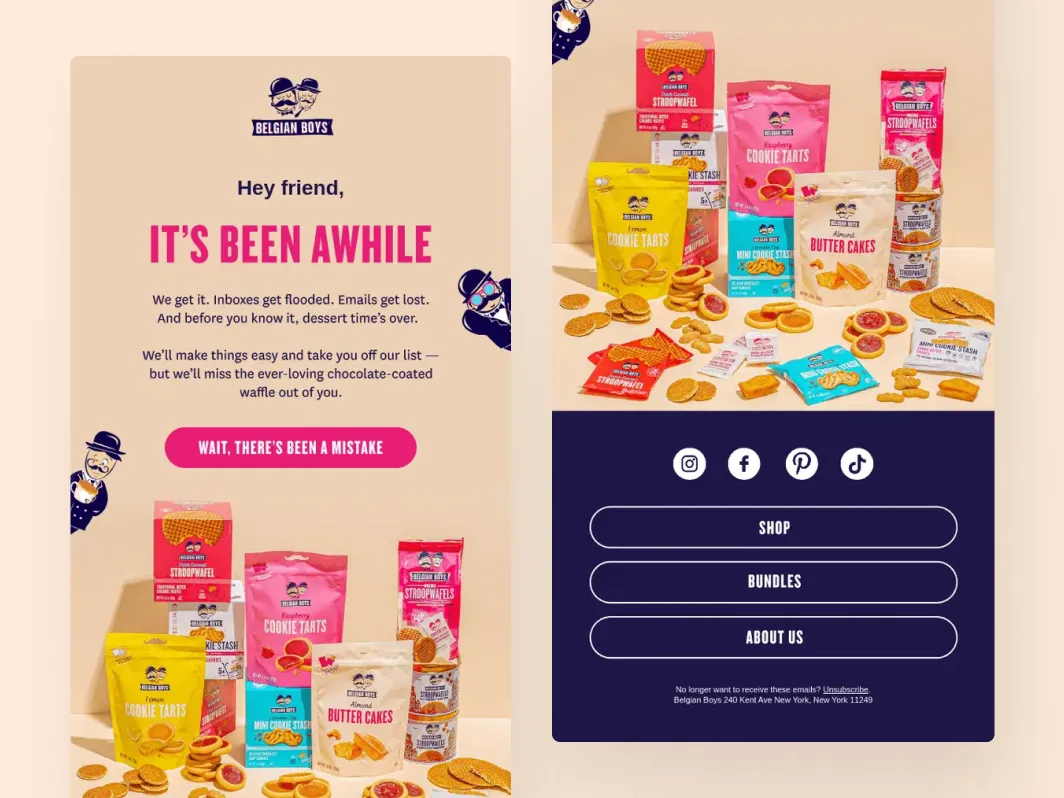
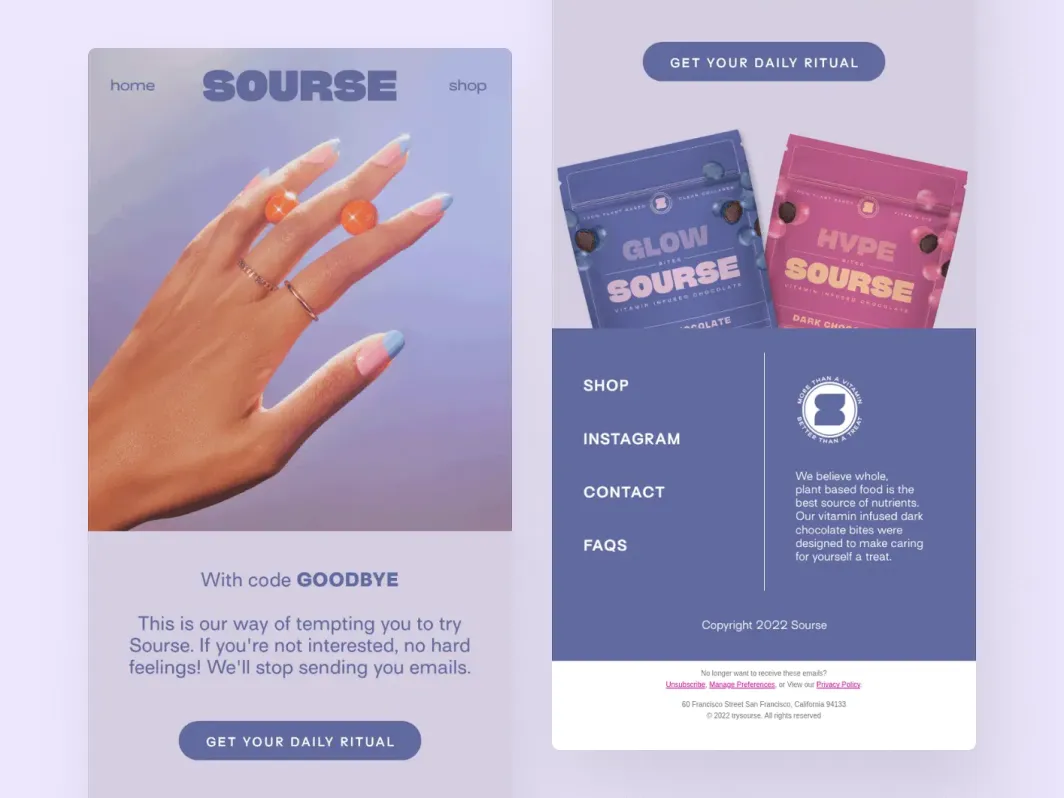
A sunset flow helps you clean your email list by identifying subscribers who are no longer engaging.
This flow is important because not every inactive subscriber should stay on your list forever. If someone has not opened, clicked, or purchased in a long time, continuing to email them can hurt deliverability and make your reporting less useful.
A strong sunset flow can:
- give inactive subscribers one last chance to stay subscribed;
- ask whether they still want to hear from you;
- reduce emails sent to people who no longer engage;
- improve list quality;
- protect email deliverability over time.
The message should be simple and honest. You can say that you only want to send emails people actually want to receive, then give the subscriber a clear option to stay on the list.
This flow is not mainly about immediate revenue. It is about keeping your email program healthy, so your campaigns and flows reach the people who are most likely to care.
Best for: cleaning inactive subscribers and protecting deliverability.
Trigger: no email engagement or purchase activity after a set period of time.
Priority: medium, but important as your list grows.
11. VIP or Loyalty Flow
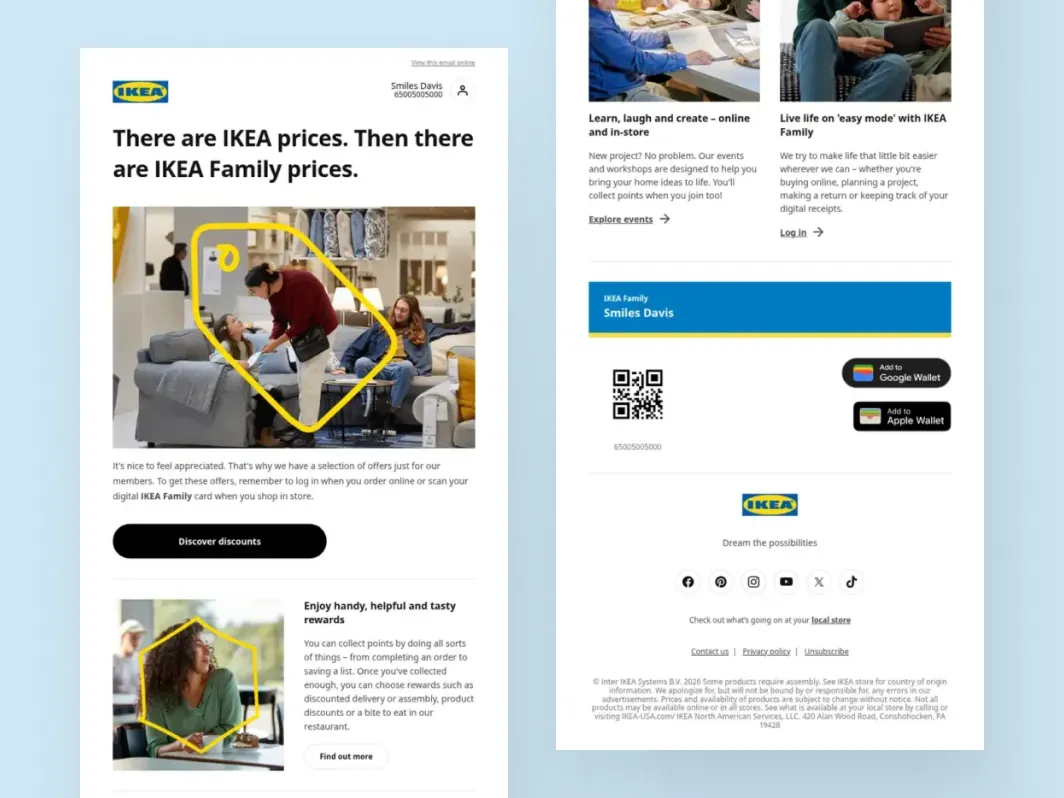
A VIP or loyalty flow is triggered when a customer reaches an important loyalty milestone.
This could mean they joined a VIP segment, reached a certain number of orders, passed a total spend threshold, or became part of your loyalty program.
This flow is useful because your best customers should not receive the same generic messages as everyone else. They already trust the brand. The goal is to recognize that relationship and give them a reason to stay engaged.
A strong VIP or loyalty flow can:
- thank customers for their loyalty;
- offer early access to new products;
- share exclusive discounts or perks;
- invite customers to a loyalty program;
- recommend products based on past purchases;
- make repeat customers feel valued.
For Shopify stores, this flow works best when the VIP criteria are clear. For example, you might create a VIP segment for customers who have placed three or more orders, spent over a certain amount, or have a high predicted customer lifetime value.
The message should feel personal and earned. If someone has become a high-value customer, do not treat the email like a regular promotion. Make it clear why they are receiving it and what makes the offer or experience different.
Best for: rewarding repeat customers and high-value buyers.
Trigger: added to a VIP segment based on purchase count, total spend, loyalty status, or customer lifetime value.
Priority: medium to high for stores with repeat buyers or loyalty programs.
Common Klaviyo Flow Mistakes to Avoid
Klaviyo flows work best when each automation has a clear role, clean logic, and a reason to exist. The goal is not to build as many flows as possible. The goal is to build flows that support the customer journey without creating confusion or overlap.
| Mistake | Why it matters | What to do instead |
|---|---|---|
|
Building too many flows at once |
It becomes harder to test, manage, and understand what is working. |
Start with the flows closest to revenue, then add retention and lifecycle flows. |
|
Using the same message for every subscriber |
New subscribers, existing customers, repeat buyers, and inactive customers need different messages. |
Use basic filters, splits, and segments to keep messaging relevant. |
|
Sending discounts too early |
Shoppers may learn to wait for a code instead of buying at full price. |
Start with reminders, product value, trust, and helpful content before offering a discount. |
|
Forgetting flow filters |
Customers may keep receiving messages that no longer make sense after they buy or take action. |
Add filters that stop or change the flow after a purchase, signup, review, or other key action. |
|
Letting flows overlap |
A customer can receive too many automated emails at the same time. |
Review active flows together and add exclusions where needed. |
|
Leaving Klaviyo templates generic |
Template copy and design may not match your brand, products, or customer journey. |
Use templates as a starting point, then rewrite and design them for your store. |
|
Not testing the full path |
A flow can look fine inside Klaviyo but fail at the form, trigger, coupon, link, or mobile rendering level. |
Test from the actual Shopify action, not only from the email preview. |
|
Never reviewing performance |
Customer behavior, products, and offers change over time. |
Review flow performance regularly and update copy, timing, filters, and offers when needed. |
A simple Klaviyo flow setup that works is better than a large automation map that no one reviews. Start clean, test carefully, and improve the flows once you have real customer data.
FAQ: Best Klaviyo Flows for Shopify
What are the most important Klaviyo flows for Shopify?
The most important Klaviyo flows for Shopify are the welcome flow, abandoned cart flow, browse abandonment flow, post-purchase flow, product review flow, back-in-stock flow, replenishment flow, win-back flow, and VIP or loyalty flow.
These flows cover the main customer moments: signup, product interest, cart activity, purchase, review collection, repeat purchase, reactivation, and loyalty. The right setup depends on your product type, order volume, customer journey, and repeat purchase potential.
Which Klaviyo flow should I build first?
Most Shopify stores should build the welcome flow and abandoned cart flow first.
The welcome flow helps turn new subscribers into first-time customers. The abandoned cart flow helps recover shoppers who added products to cart or started checkout but did not complete the purchase. After these are live, you can add post-purchase, review, replenishment, win-back, and loyalty flows.
How many Klaviyo flows does a Shopify store need?
A Shopify store usually needs three to five core Klaviyo flows to start, then more advanced flows as traffic, customer data, and repeat purchase opportunities grow.
A simple setup may include a welcome flow, abandoned cart flow, post-purchase flow, product review flow, and win-back flow. Larger stores may also need browse abandonment, back-in-stock, replenishment, sunset, cross-sell, upsell, and VIP loyalty flows.
What is the difference between a Klaviyo campaign and a Klaviyo flow?
A Klaviyo campaign is a one-time message sent manually to a selected audience. A Klaviyo flow is an automated email or SMS sequence triggered by customer behavior.
For example, a campaign might promote a seasonal sale to a segment of subscribers. A flow can start automatically when someone joins a list, views a product, starts checkout, places an order, waits for a restock, or becomes inactive.
Do all Shopify stores need the same Klaviyo flows?
No, not all Shopify stores need the same Klaviyo flows.
The best Klaviyo flows depend on your product type, buying cycle, customer behavior, and business model. A skincare brand may need replenishment flows, a fashion store may prioritize browse abandonment and back-in-stock flows, while a subscription brand may focus more on post-purchase, retention, and win-back flows.
Can Klaviyo flows include SMS?
Yes, Klaviyo flows can include email, SMS, or both, depending on your account setup and customer consent.
SMS works best when the message is timely, useful, and short. It can be used for welcome offers, abandoned cart reminders, back-in-stock alerts, shipping-related updates, or VIP messages, but only when subscribers have given the proper SMS consent.
How often should Klaviyo flows be reviewed?
Klaviyo flows should be reviewed regularly, especially after product changes, offer changes, website updates, or shifts in customer behavior.
For many Shopify stores, a quarterly review is a good starting point. Check flow performance, timing, filters, links, discounts, mobile rendering, and whether the copy still matches the customer journey.
Need help building the right Klaviyo flows for your Shopify store?
A strong Klaviyo setup is not about adding every automation you can find. It is about building the right flows for your store, your products, and the way your customers buy.
At MailBakery, we help Shopify brands plan, design, code, set up, and test Klaviyo flows that support the full customer journey — from welcome and abandoned cart to post-purchase, win-back, replenishment, back-in-stock, and loyalty automations.