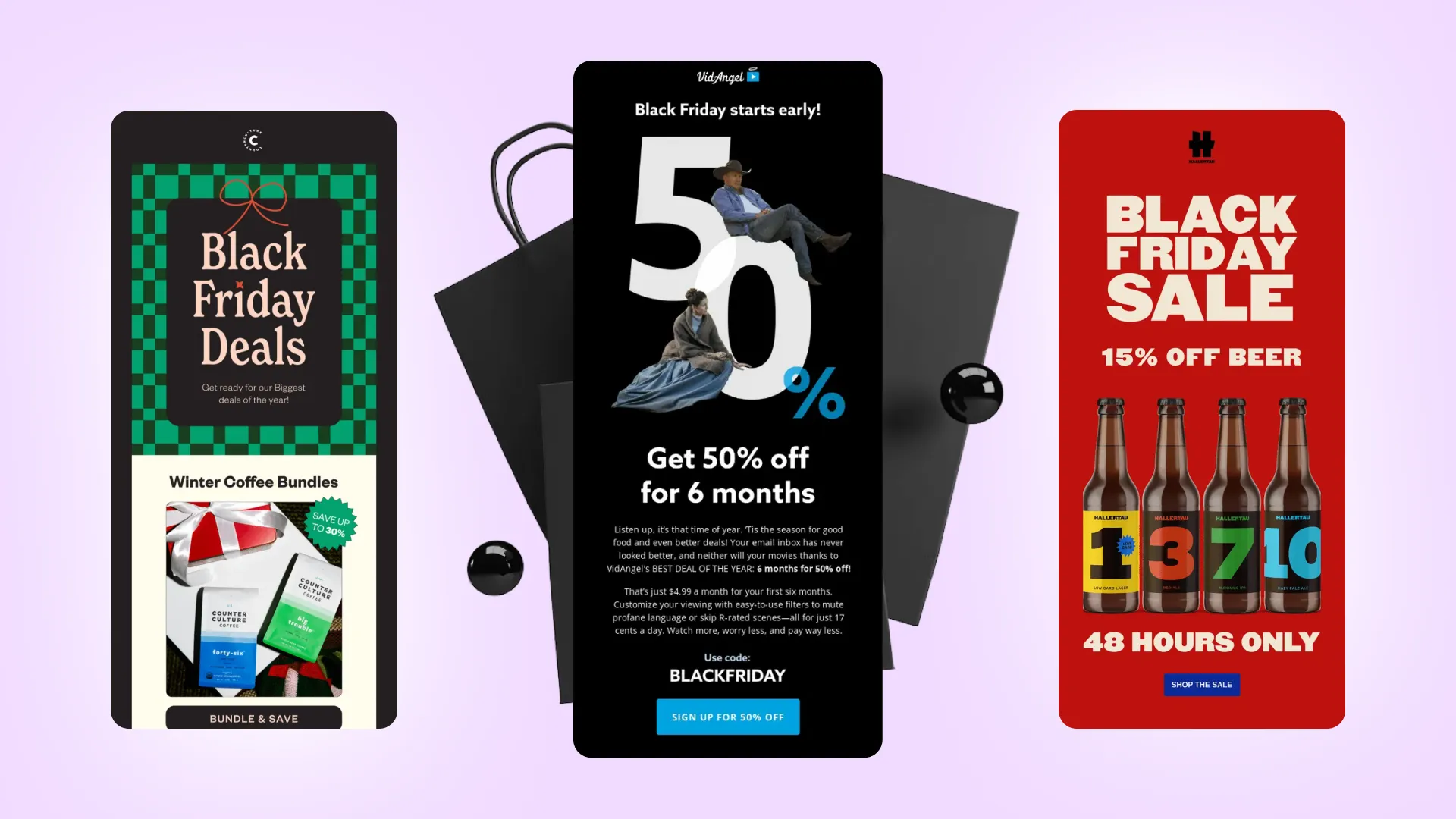
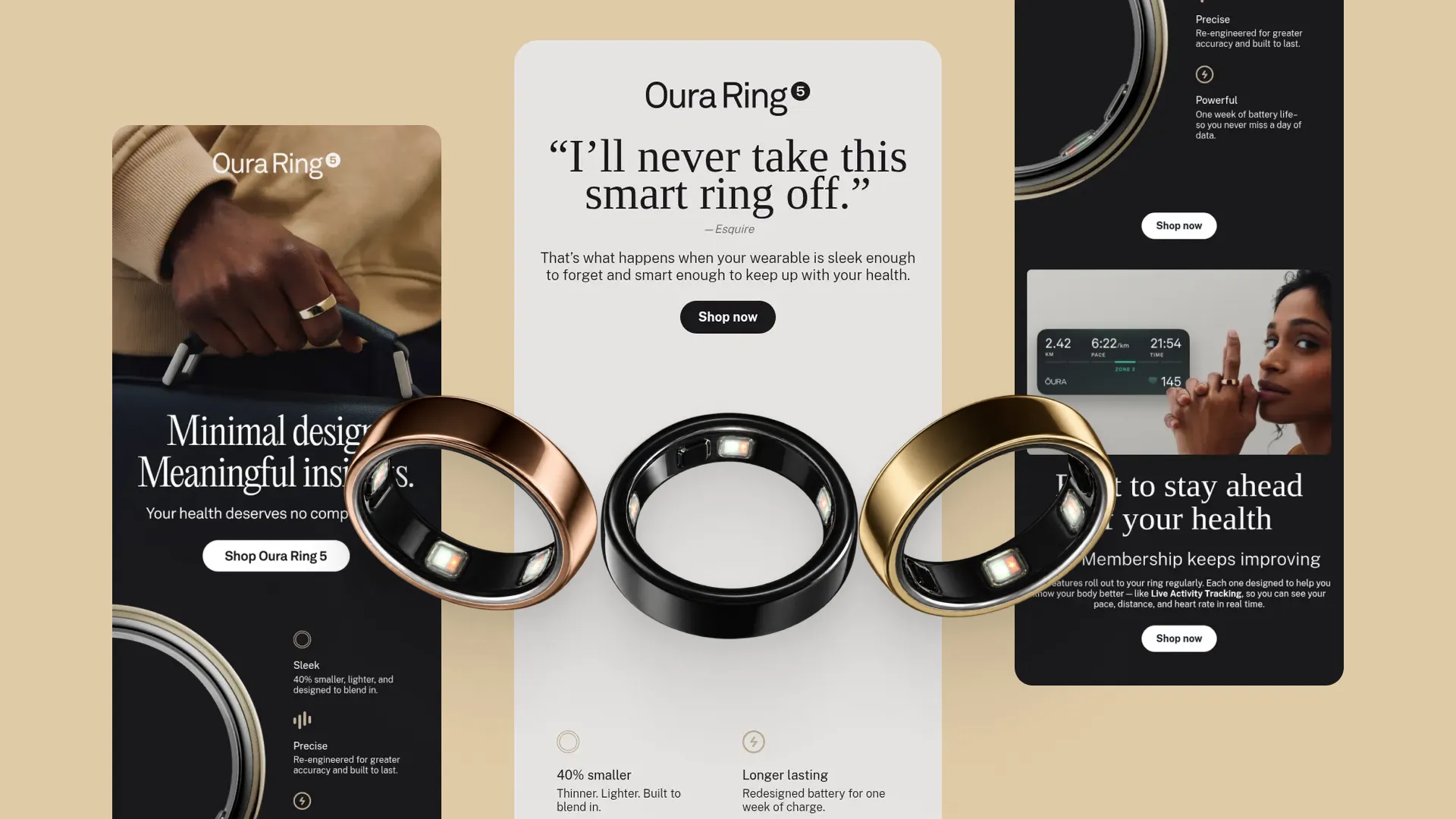
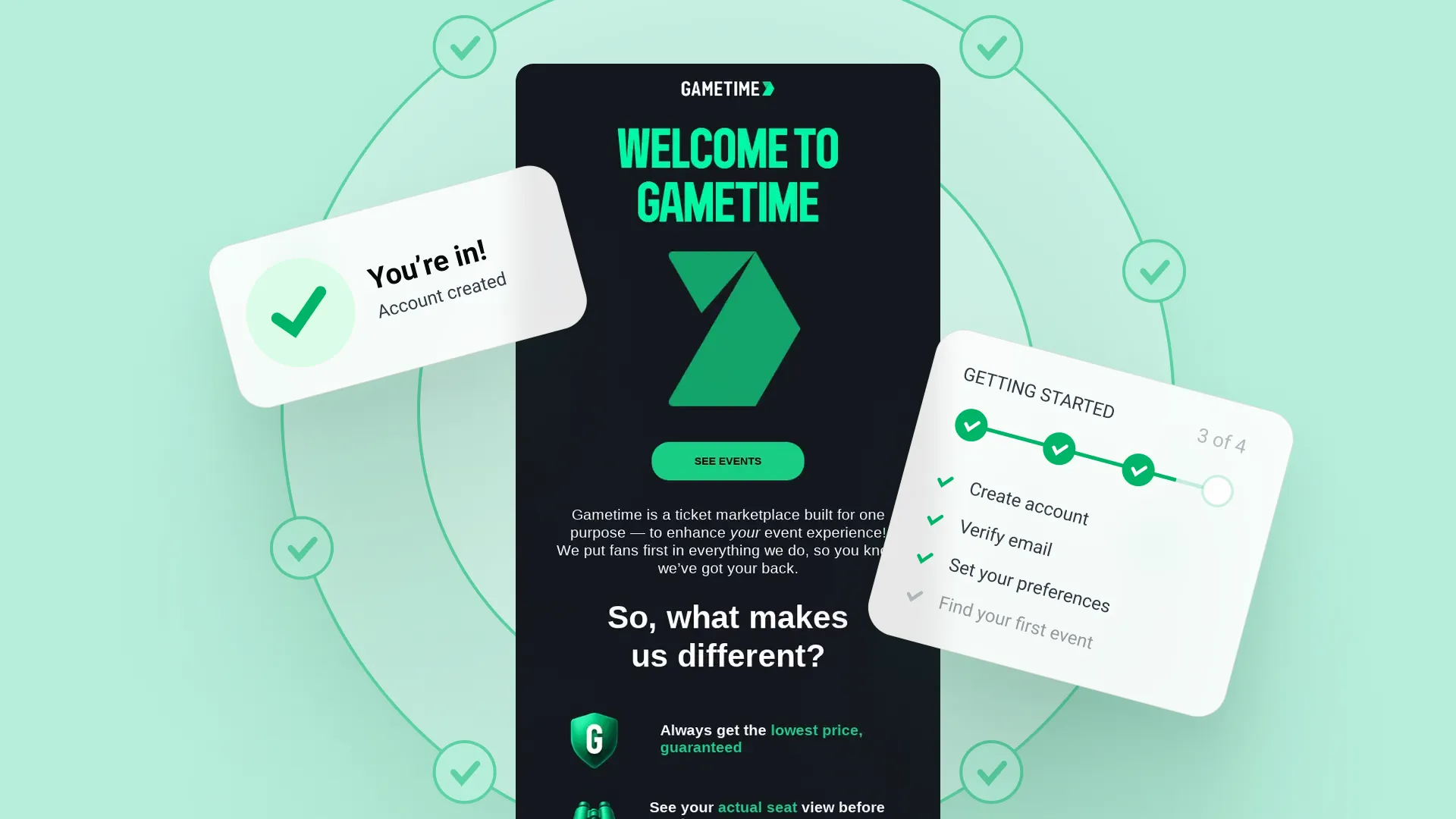
100+ Winback Email Examples That Make a Return Hard to Resist


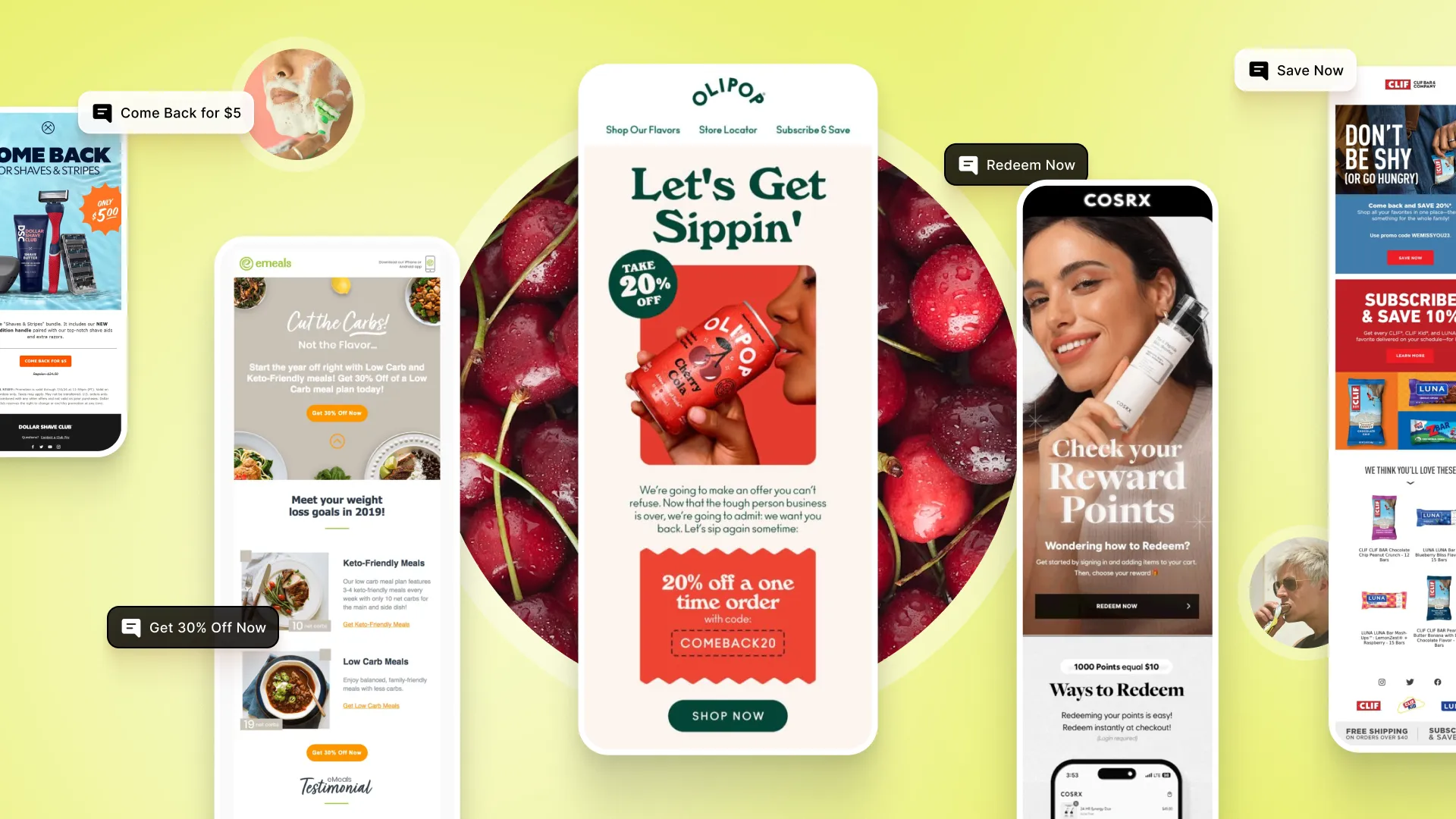
Winback emails give brands another chance to reconnect with customers who have stopped buying, canceled a subscription, or simply haven’t returned in a while. The right message can remind them why they bought in the first place, introduce something new, or give them a timely reason to come back.
In this collection, you’ll find 100+ winback email examples showing how brands use discounts, product recommendations, rewards, replenishment reminders, subscription offers, and other winback campaign strategies to bring past customers back. We’ll also look at winback email subject lines, best practices, and practical ideas you can use when planning your own customer winback campaigns.
Quick links:
→ Discount Winback Email Examples
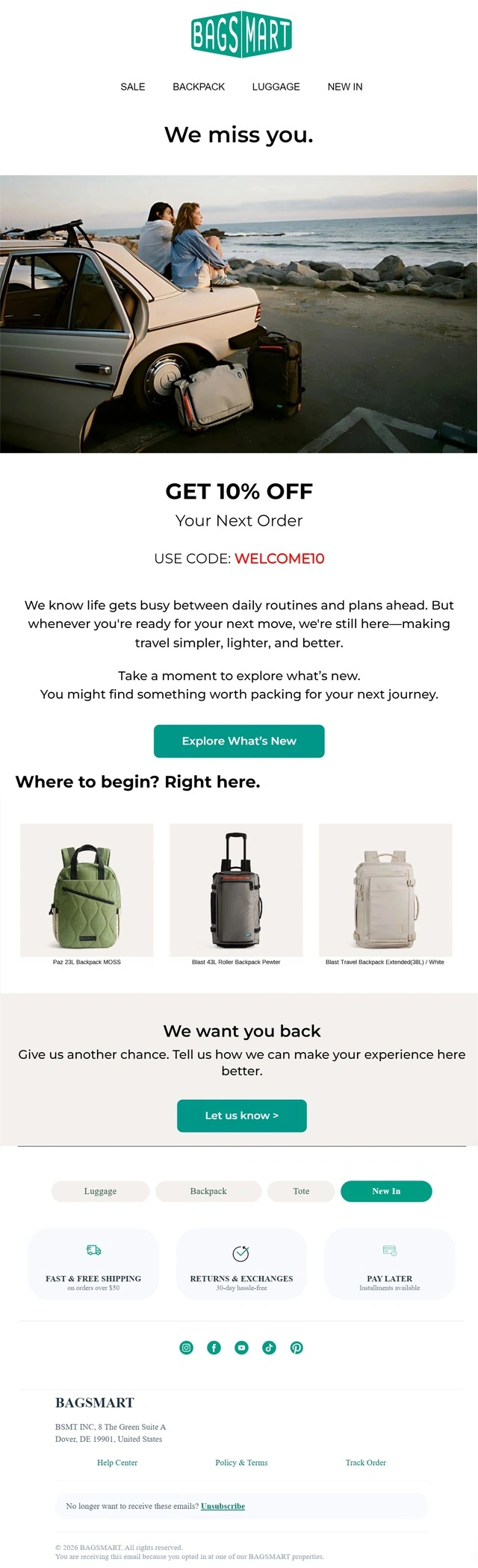
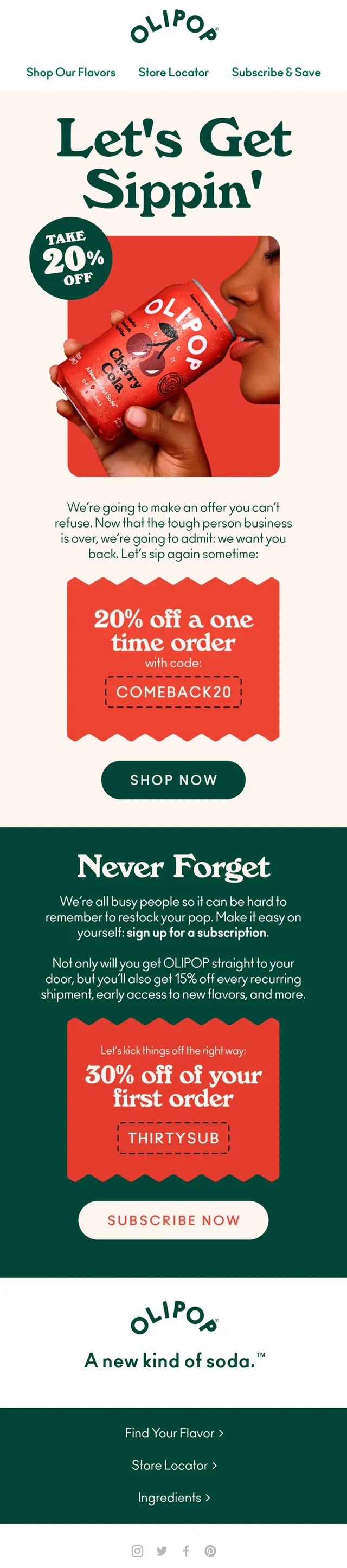
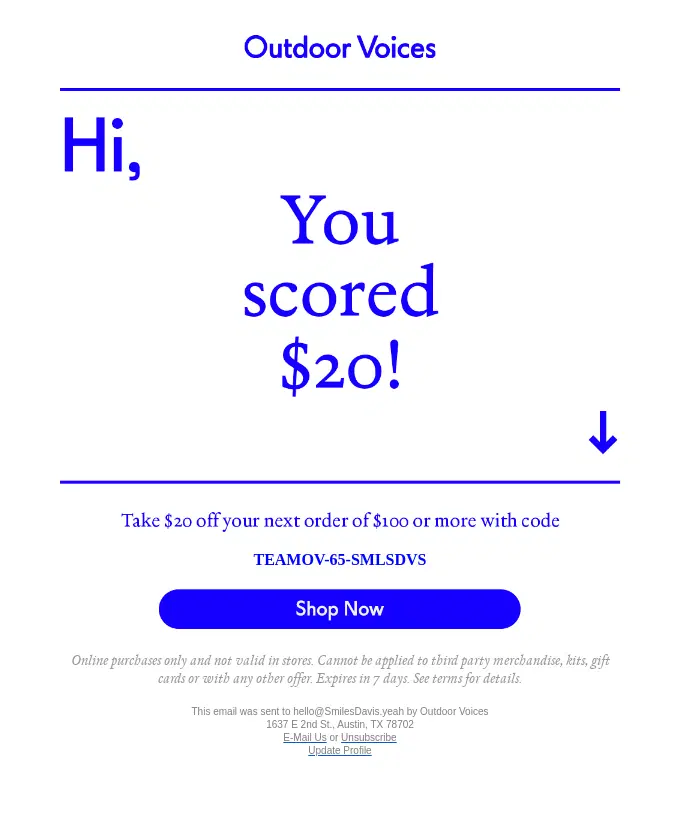
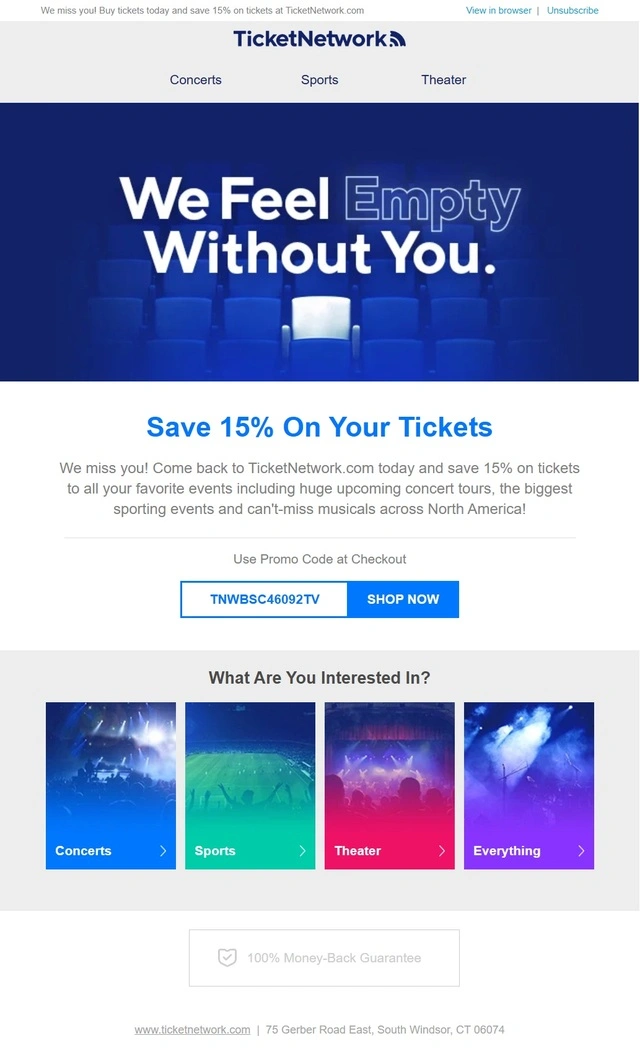
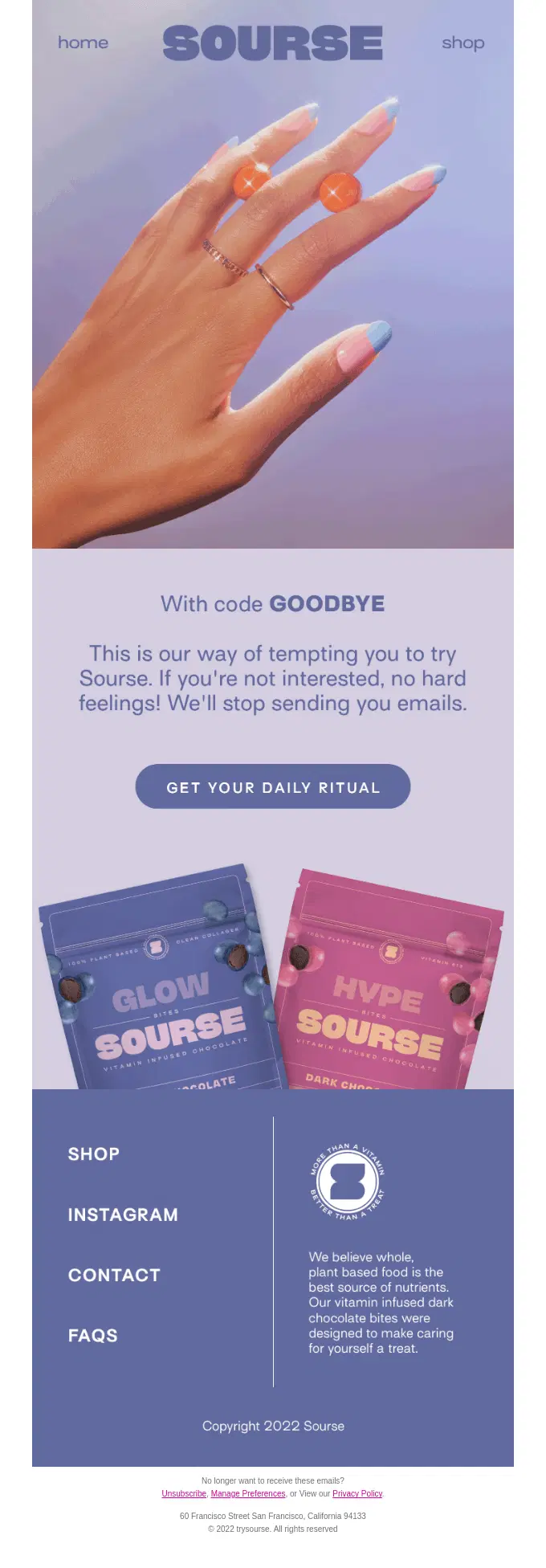
→ We Miss You and Come Back Winback Email Examples
→ No-Discount Winback Email Examples
→ Product Recommendation Winback Email Examples
→ Replenishment and Repeat Purchase Winback Emails
→ Loyalty and Reward Winback Email Examples
→ Subscription Winback Email Examples
→ Last Chance Winback Email Examples
What Is a Winback Email Campaign?
Discount Winback Email Examples
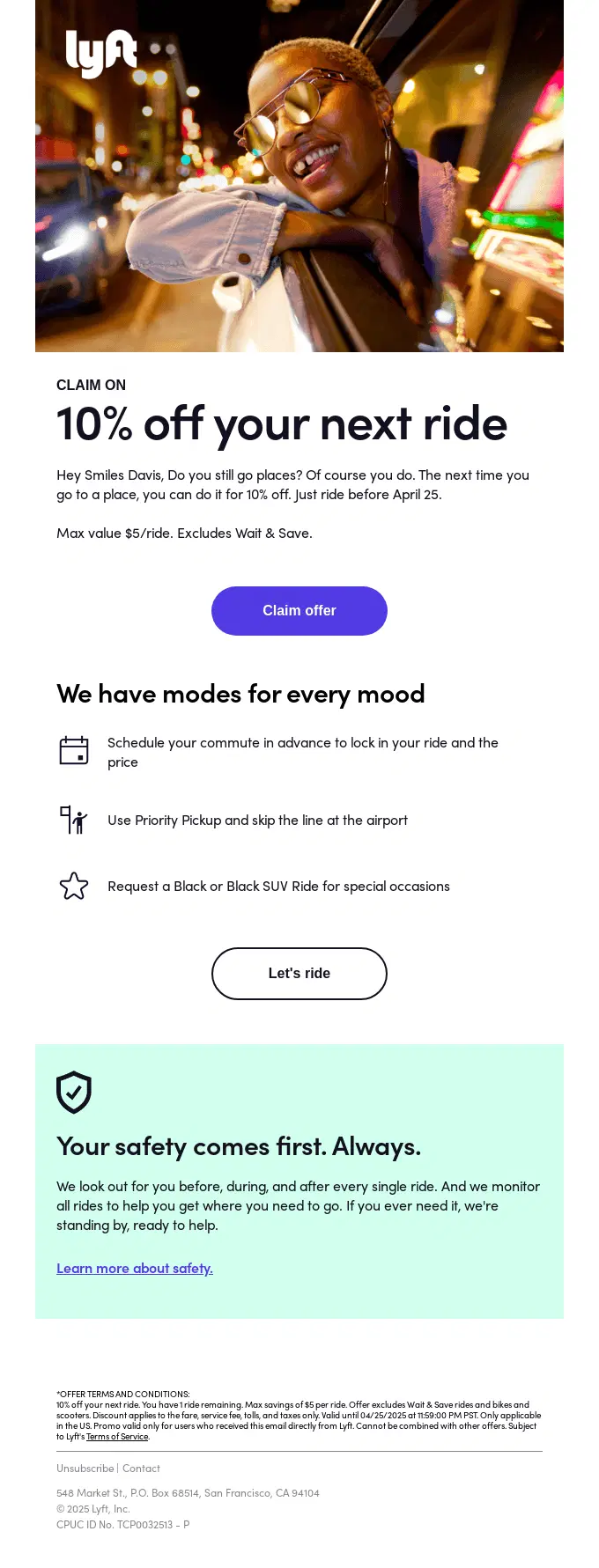
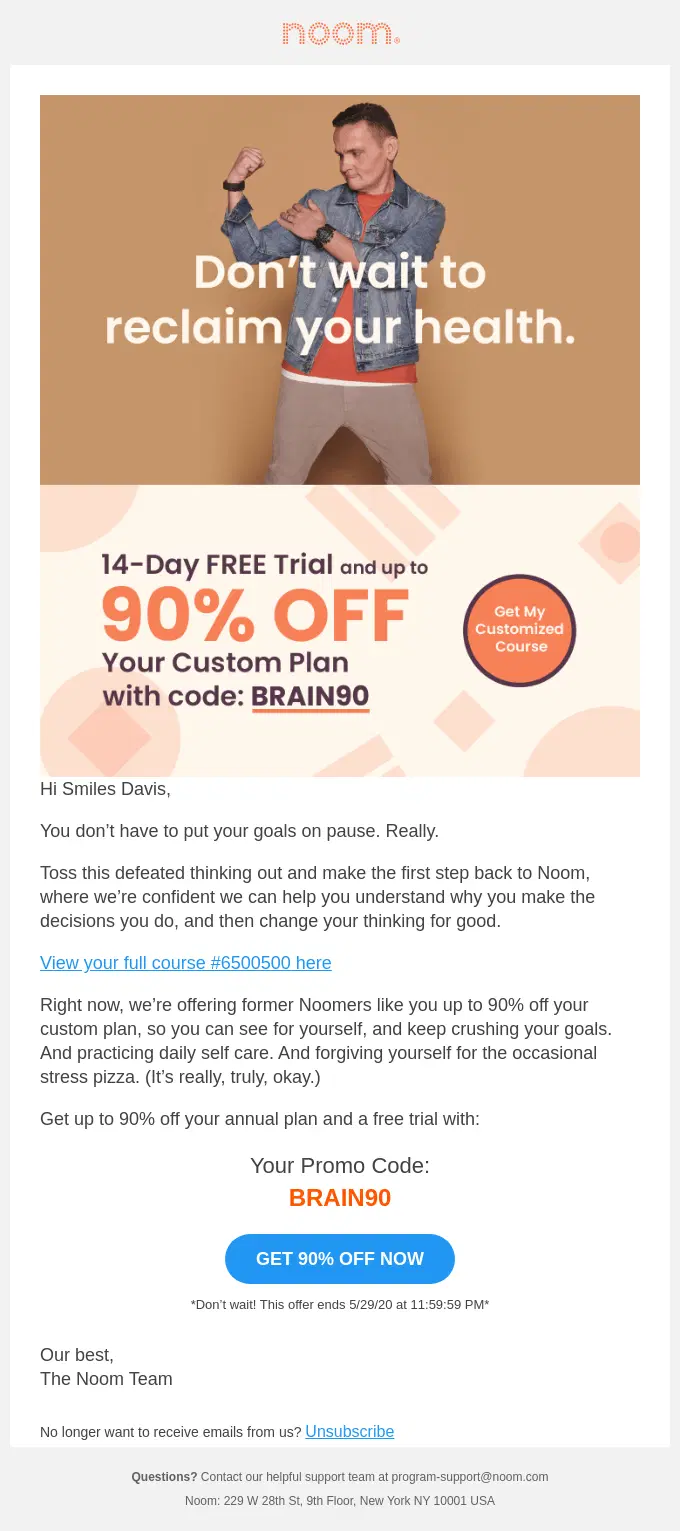
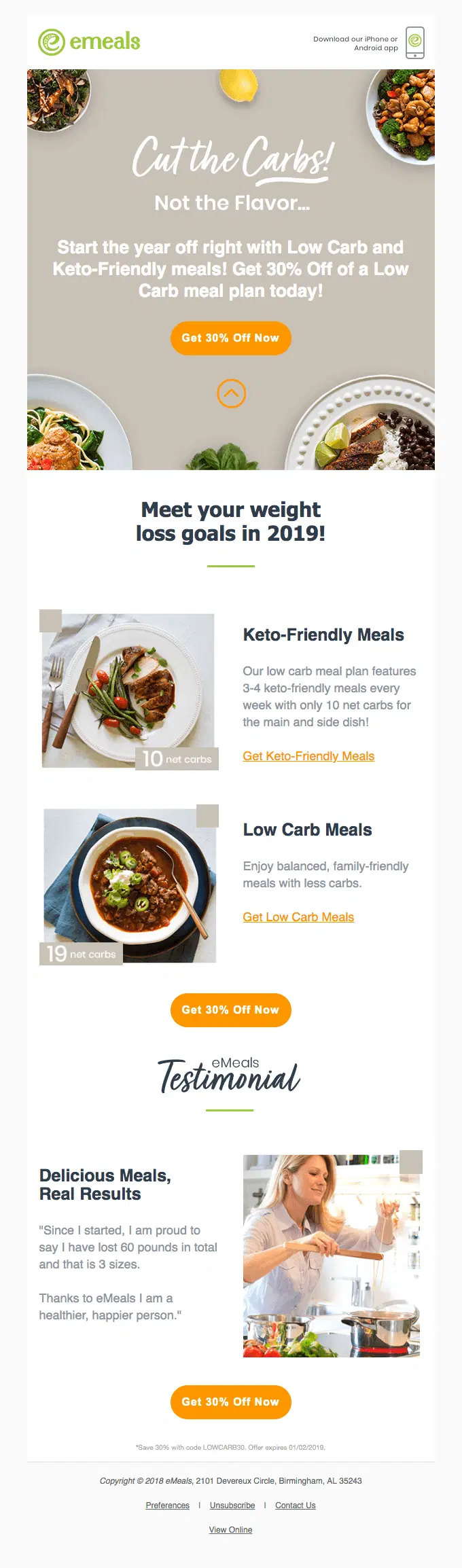
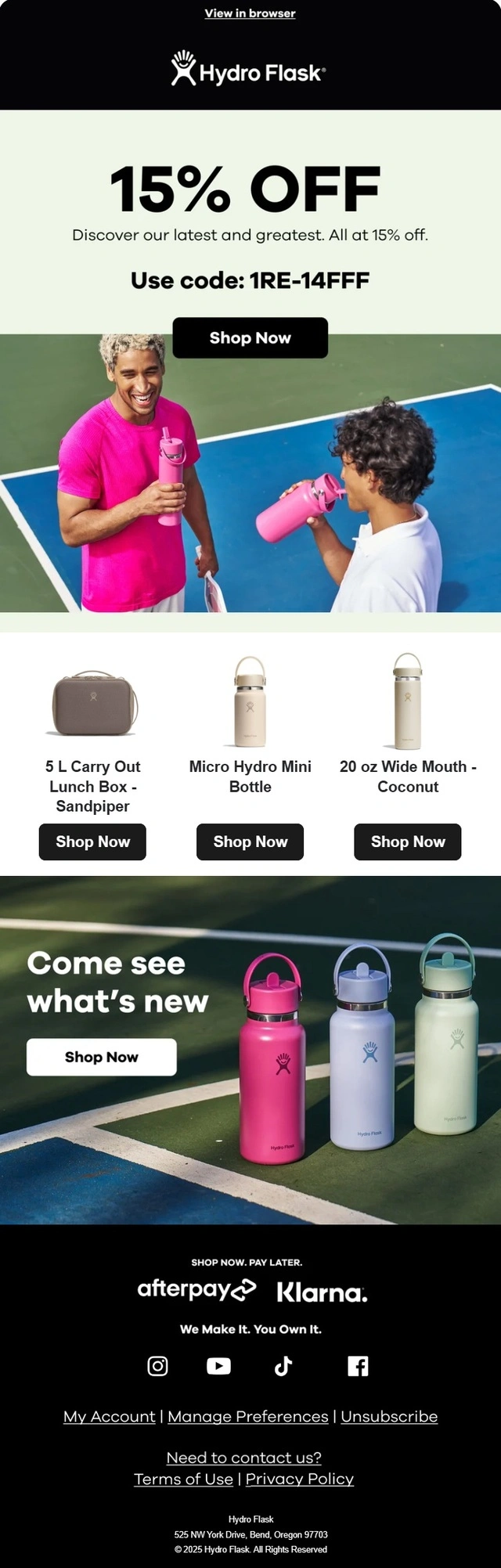
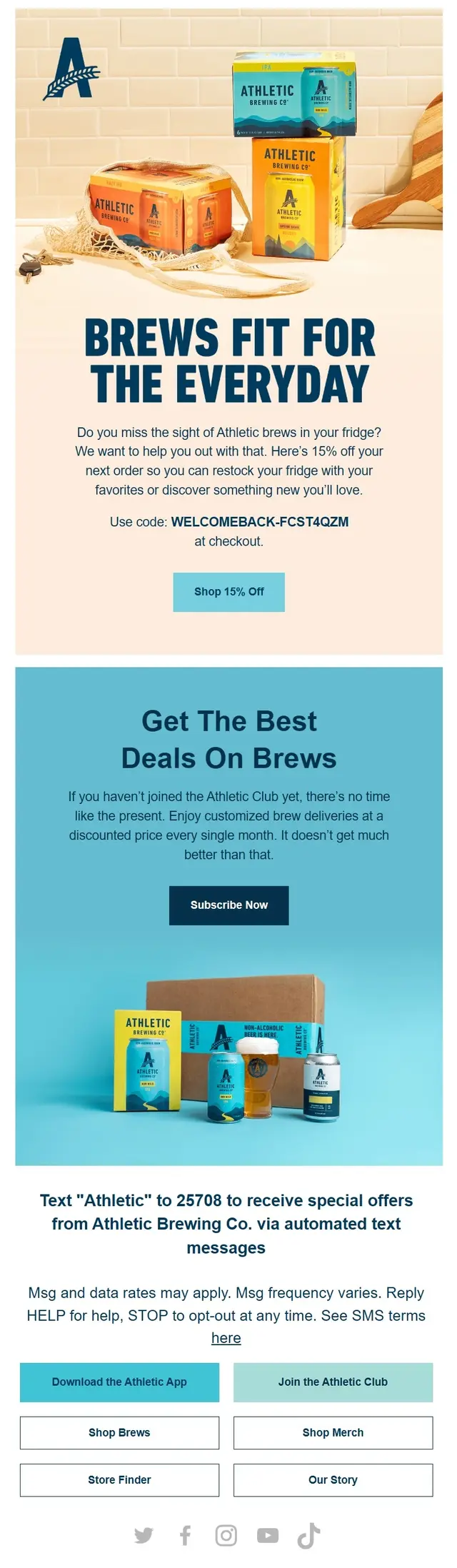
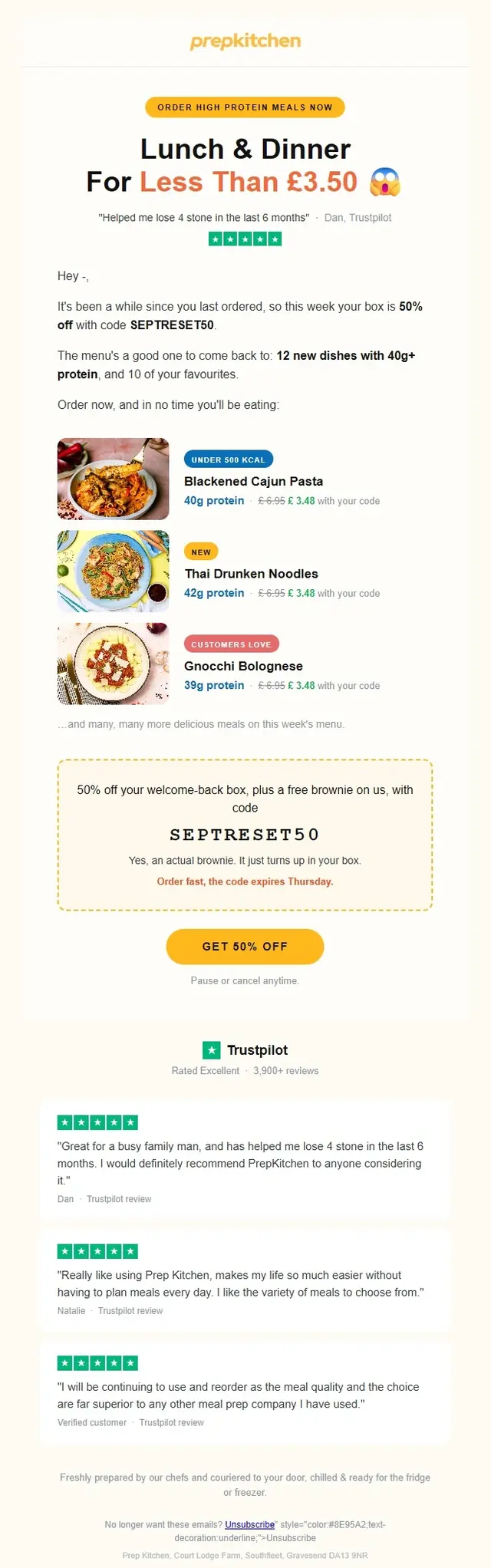
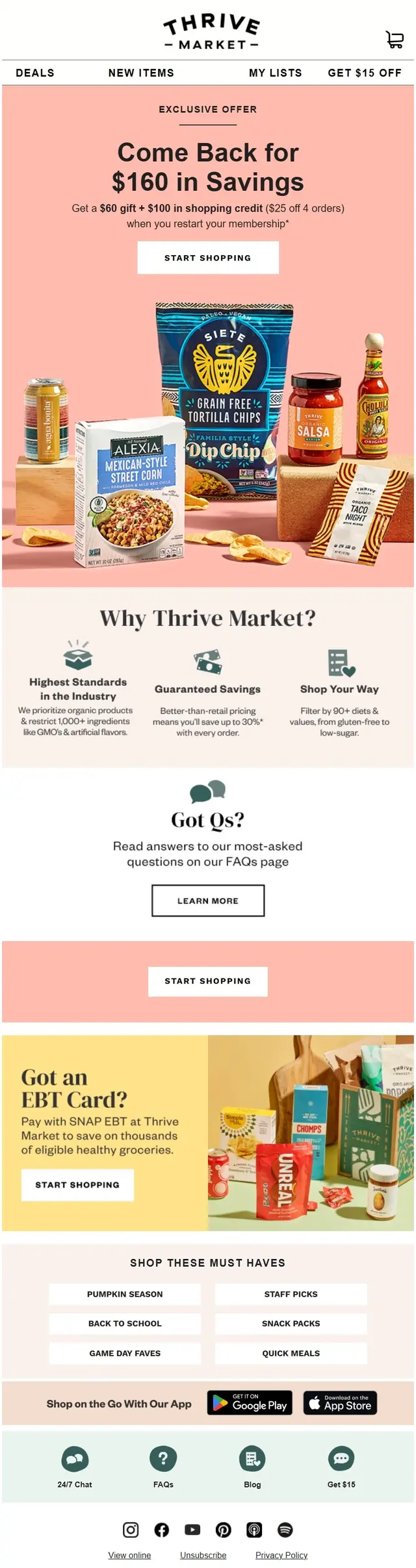
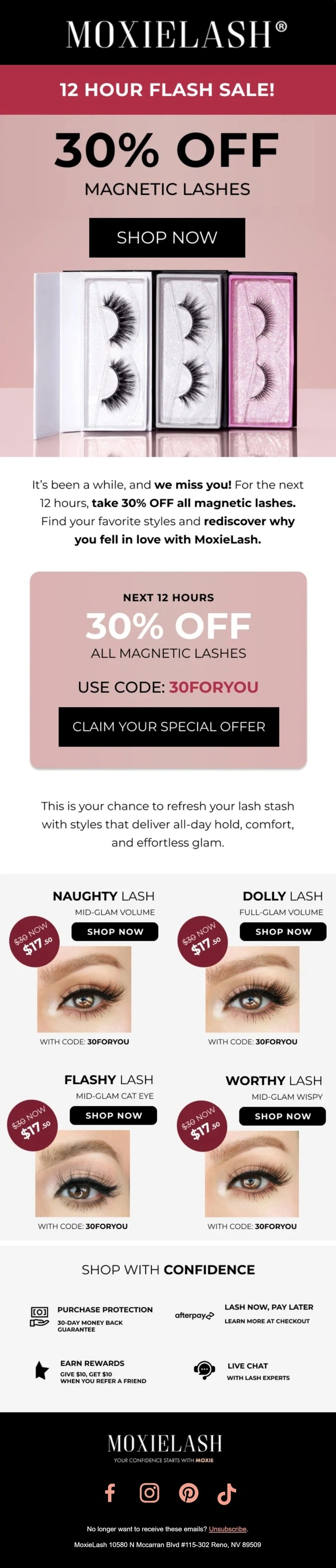
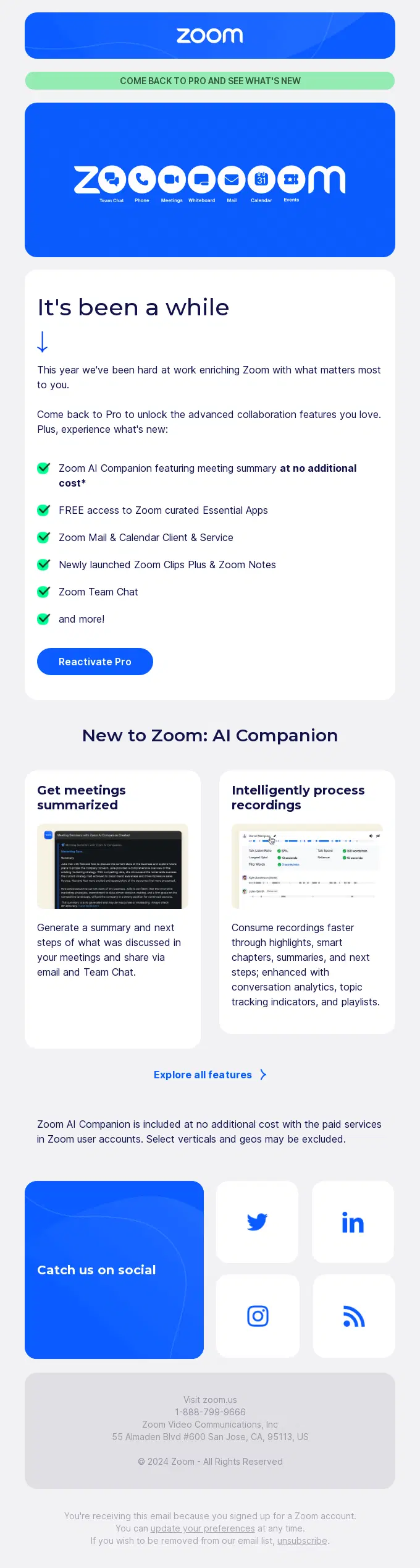
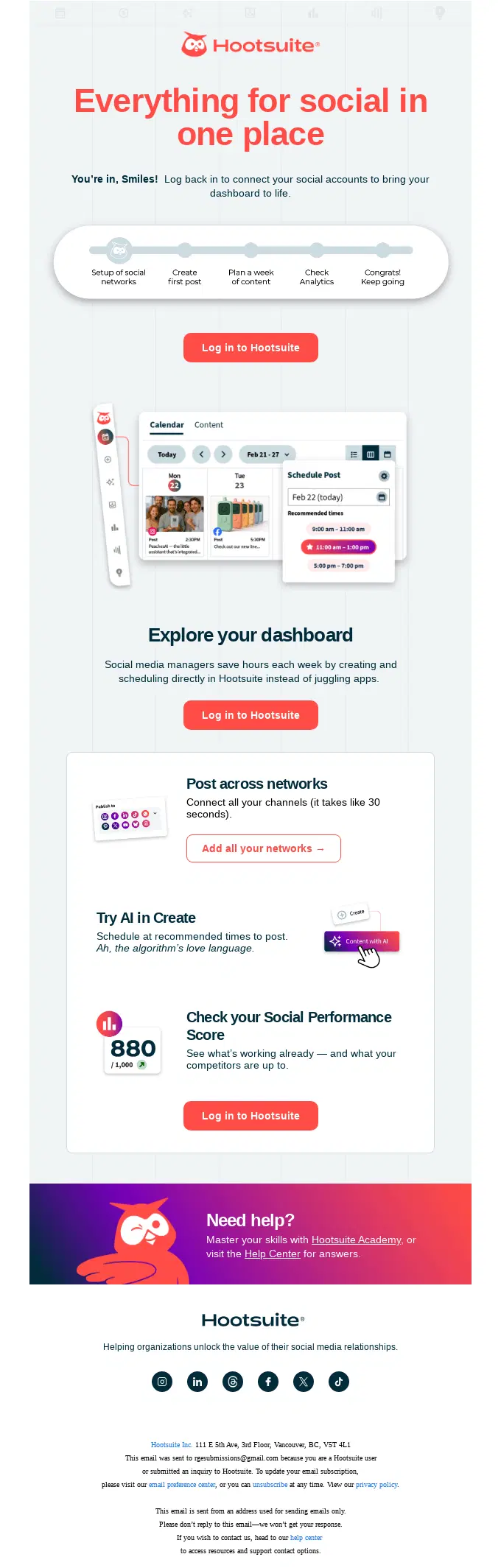
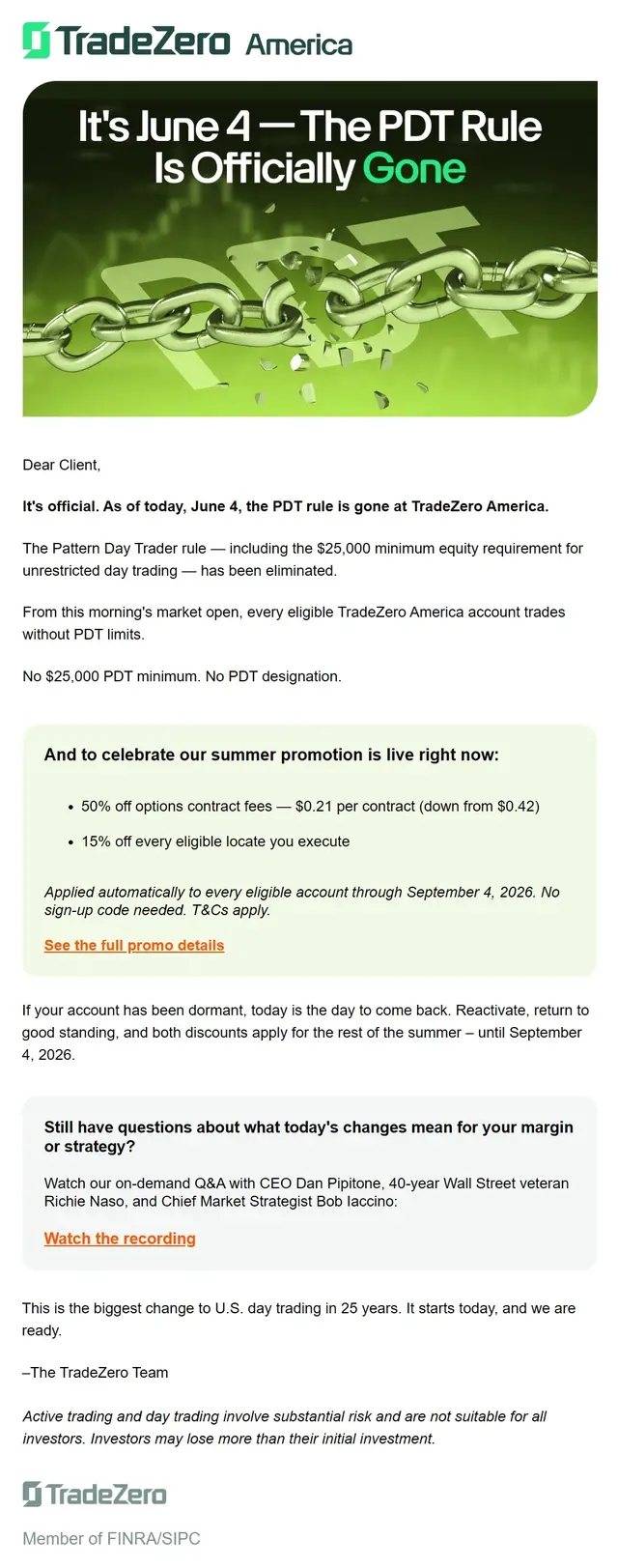
Discount winback emails use a financial incentive to make returning more appealing. Brands may offer a percentage off, fixed discount, special price, or limited-time deal to encourage a past customer to place another order.
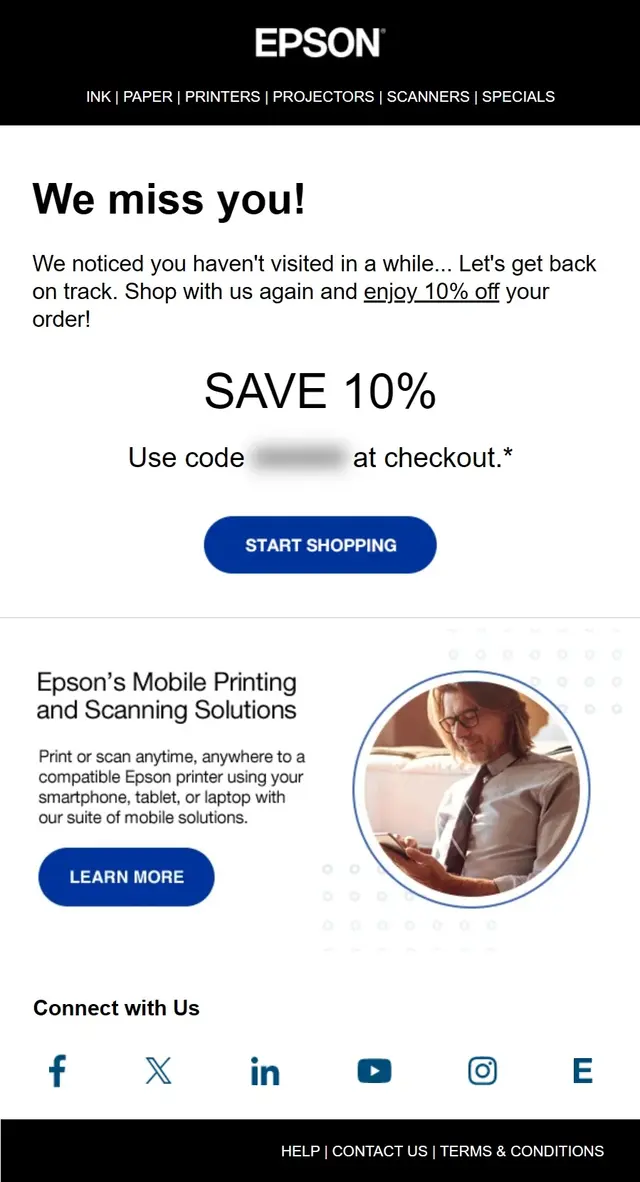
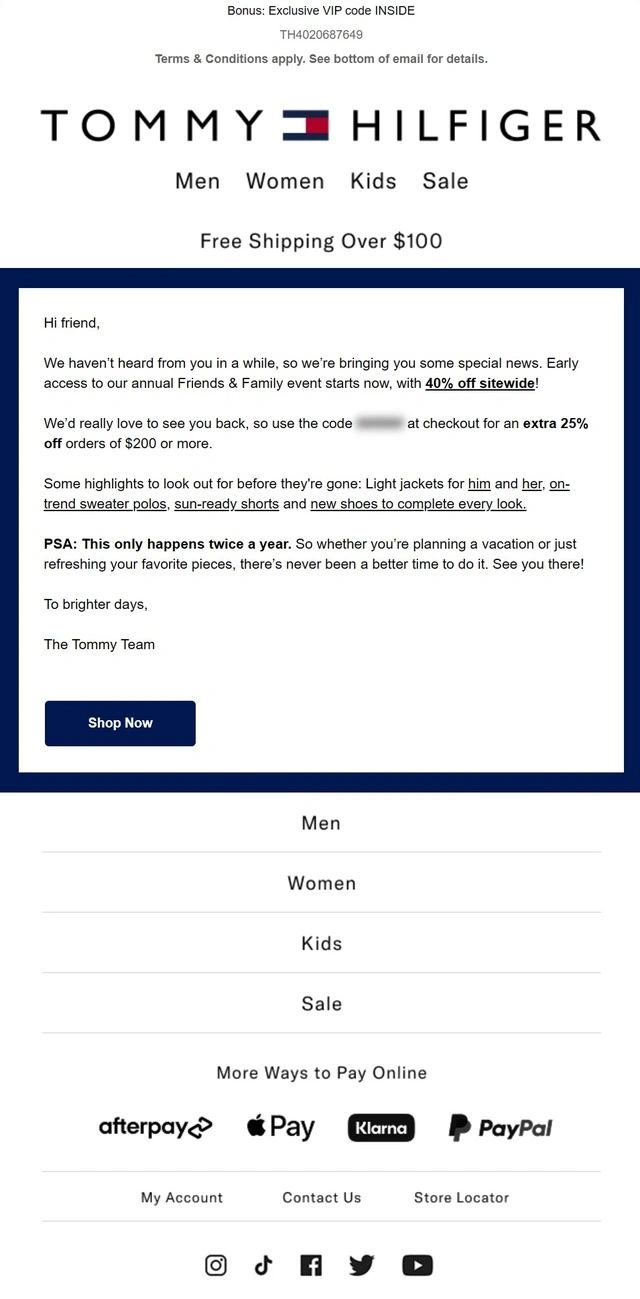
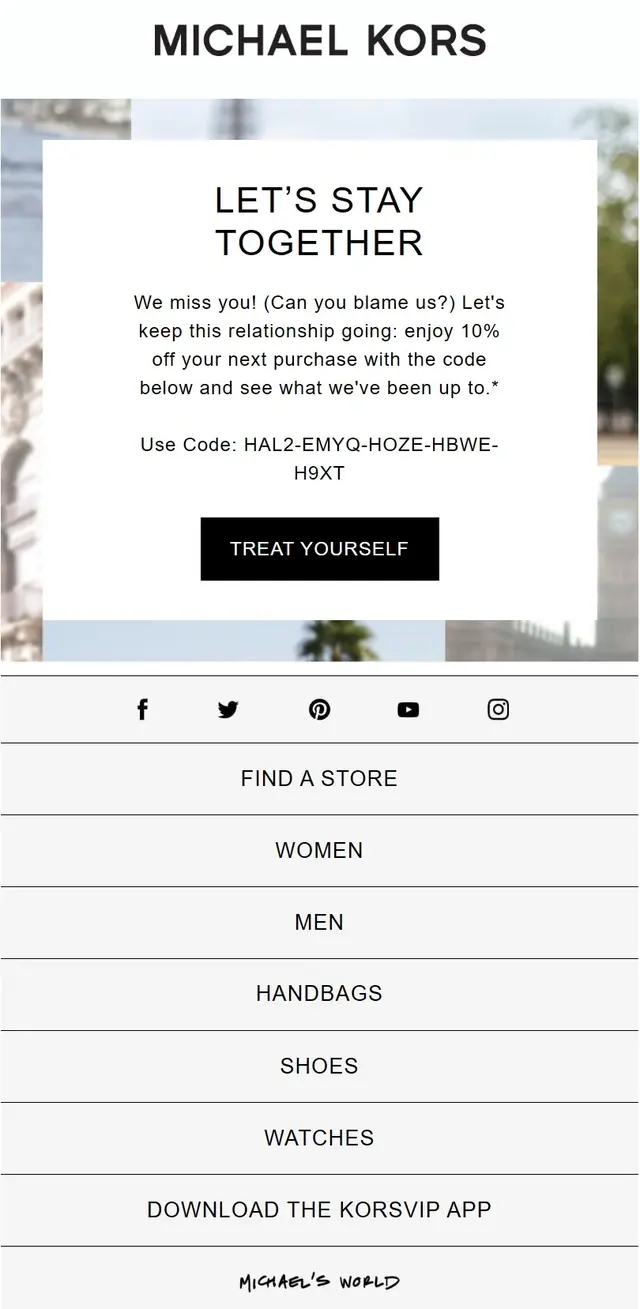
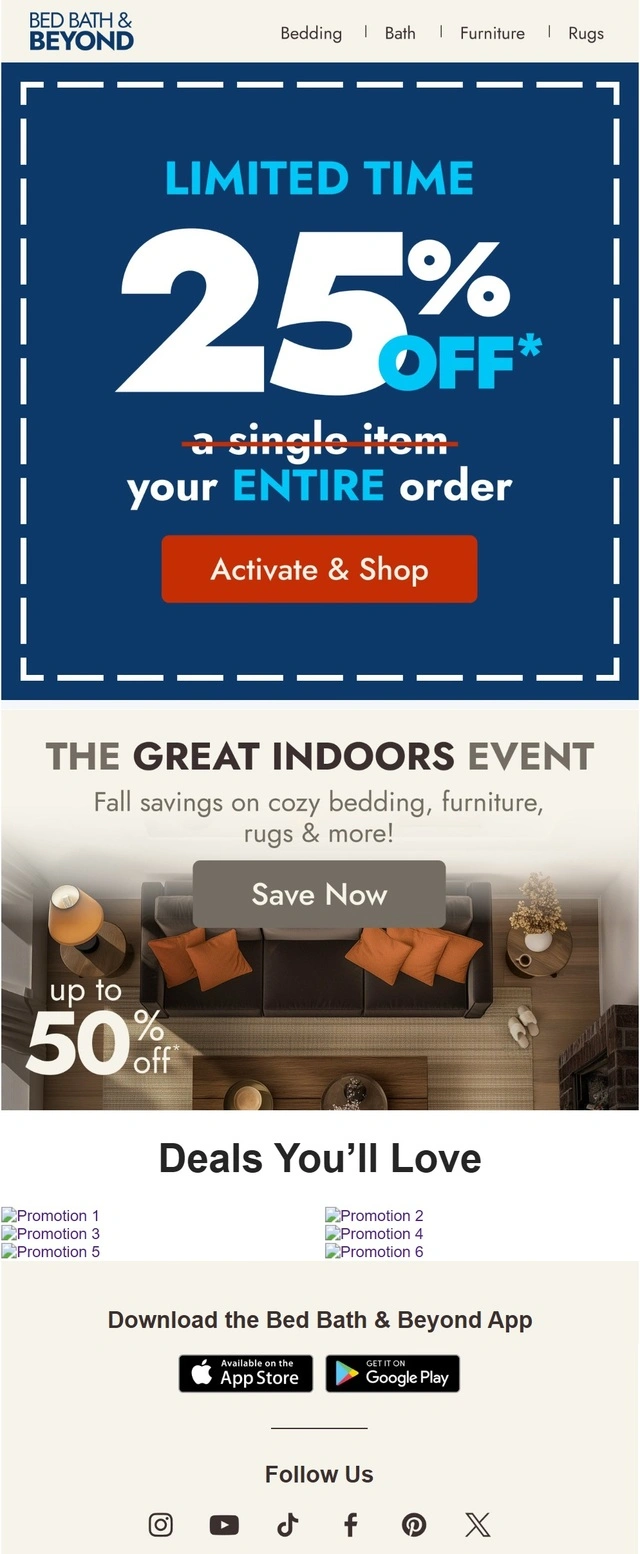
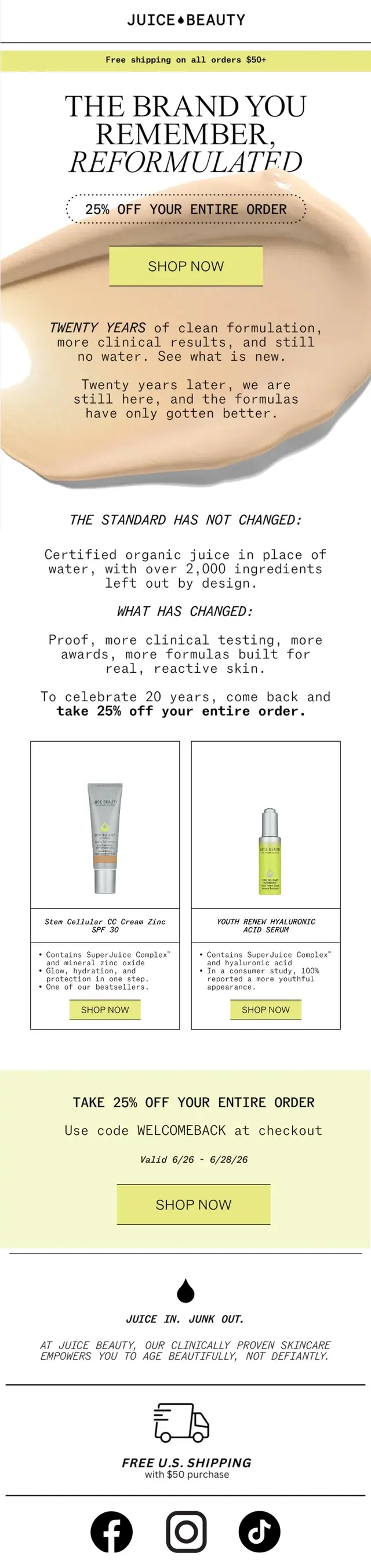
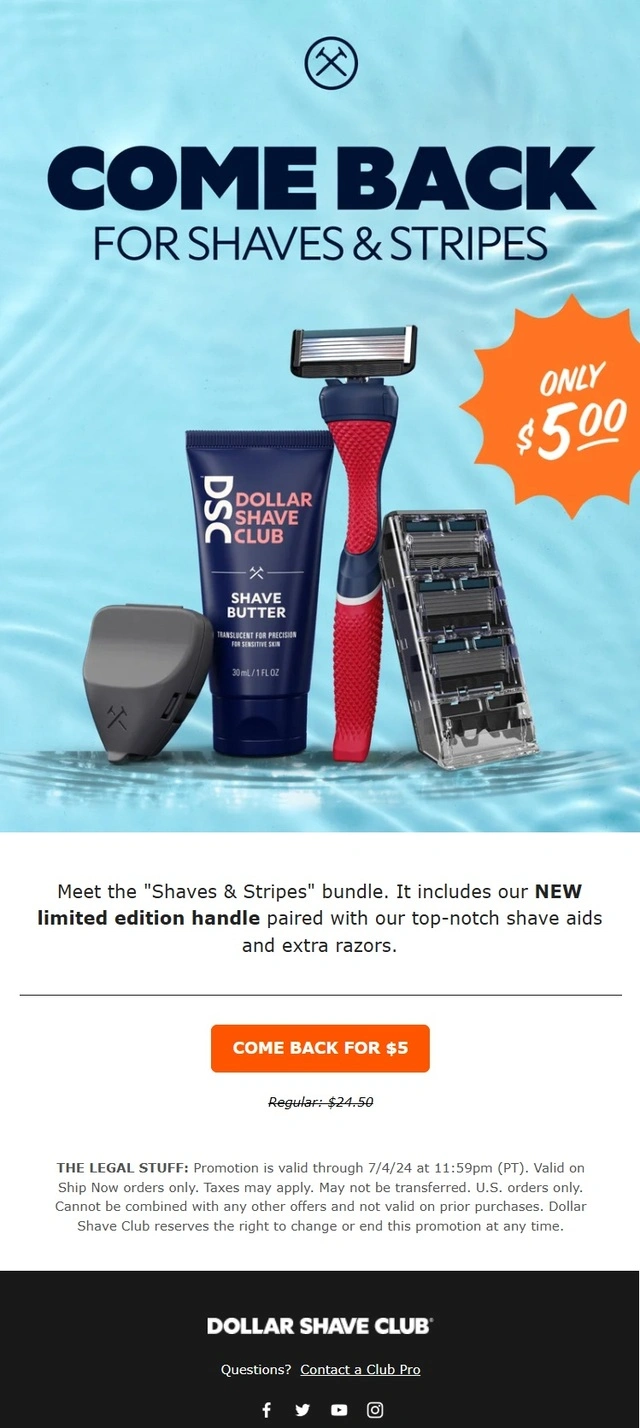
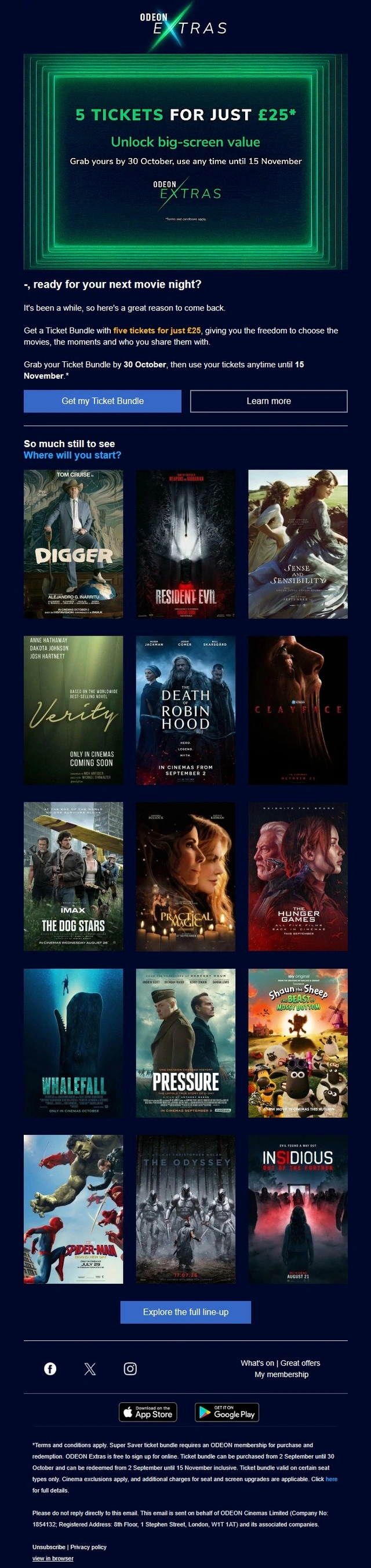
We Miss You and Come Back Winback Email Examples
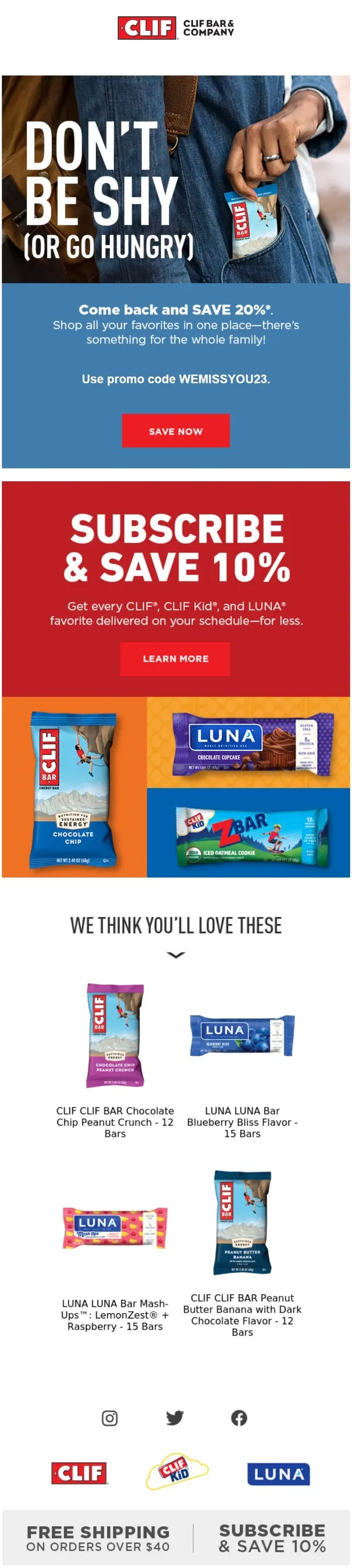

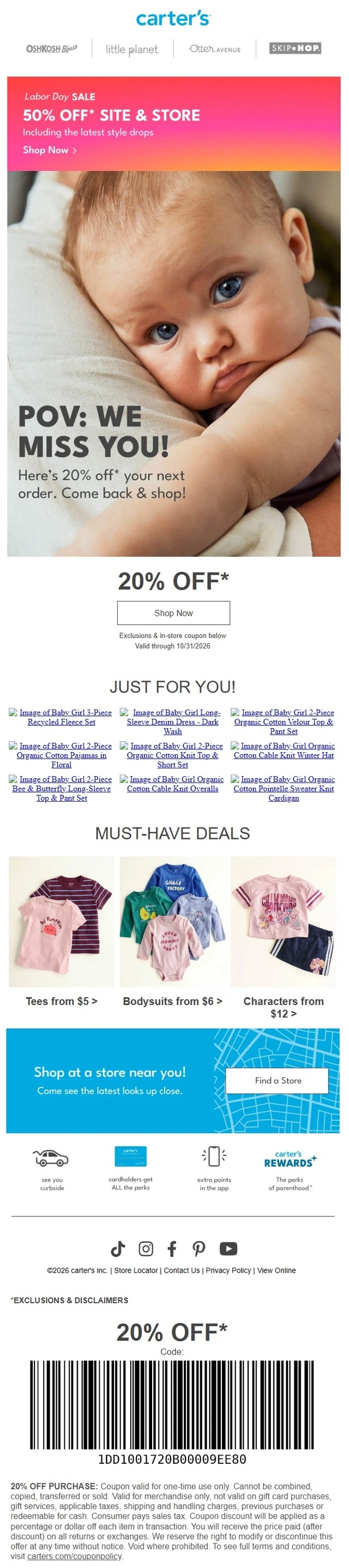
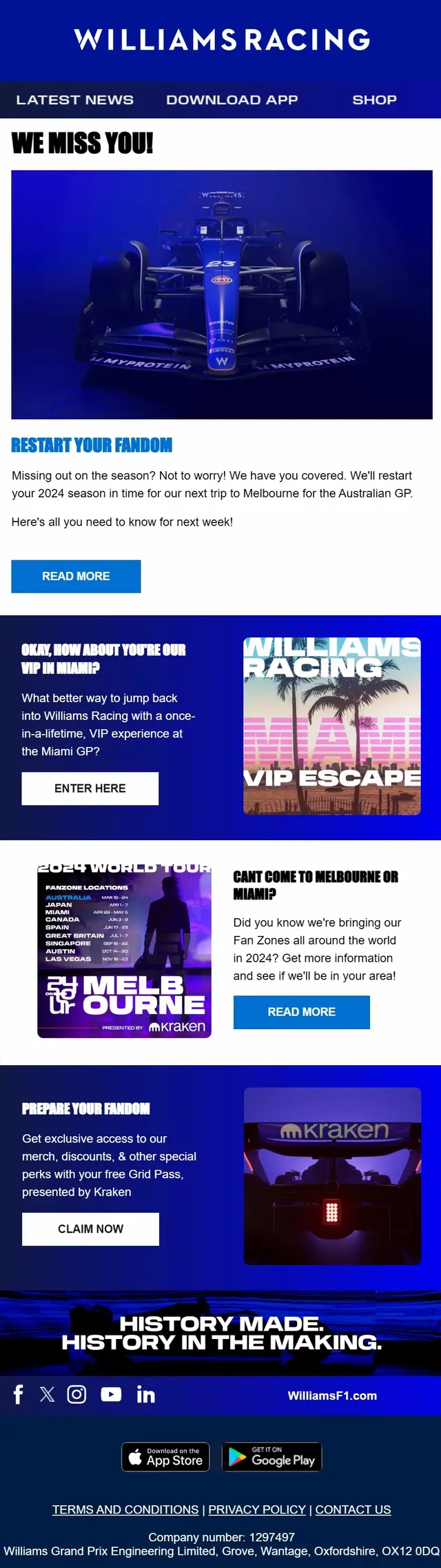
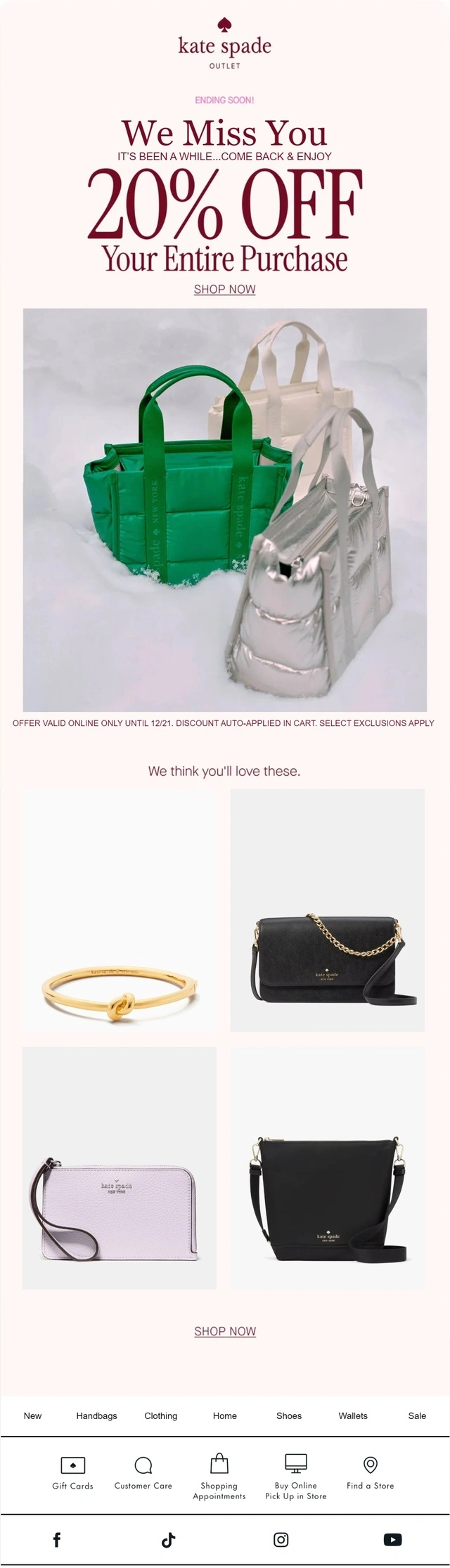
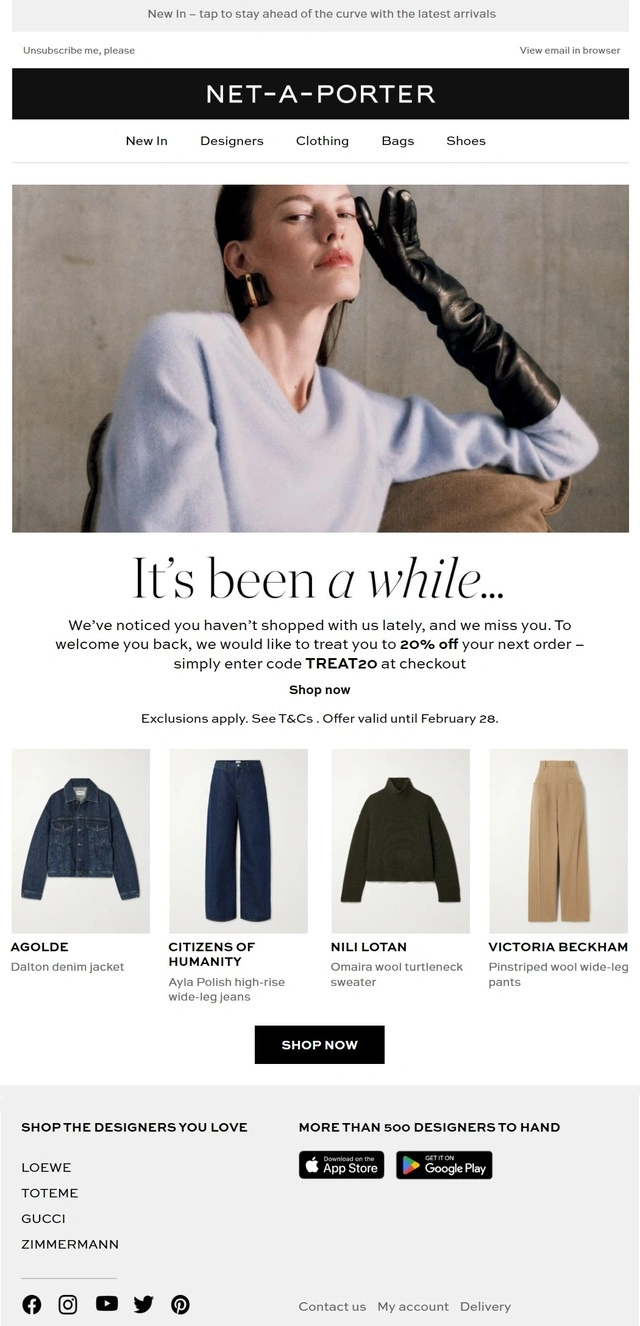
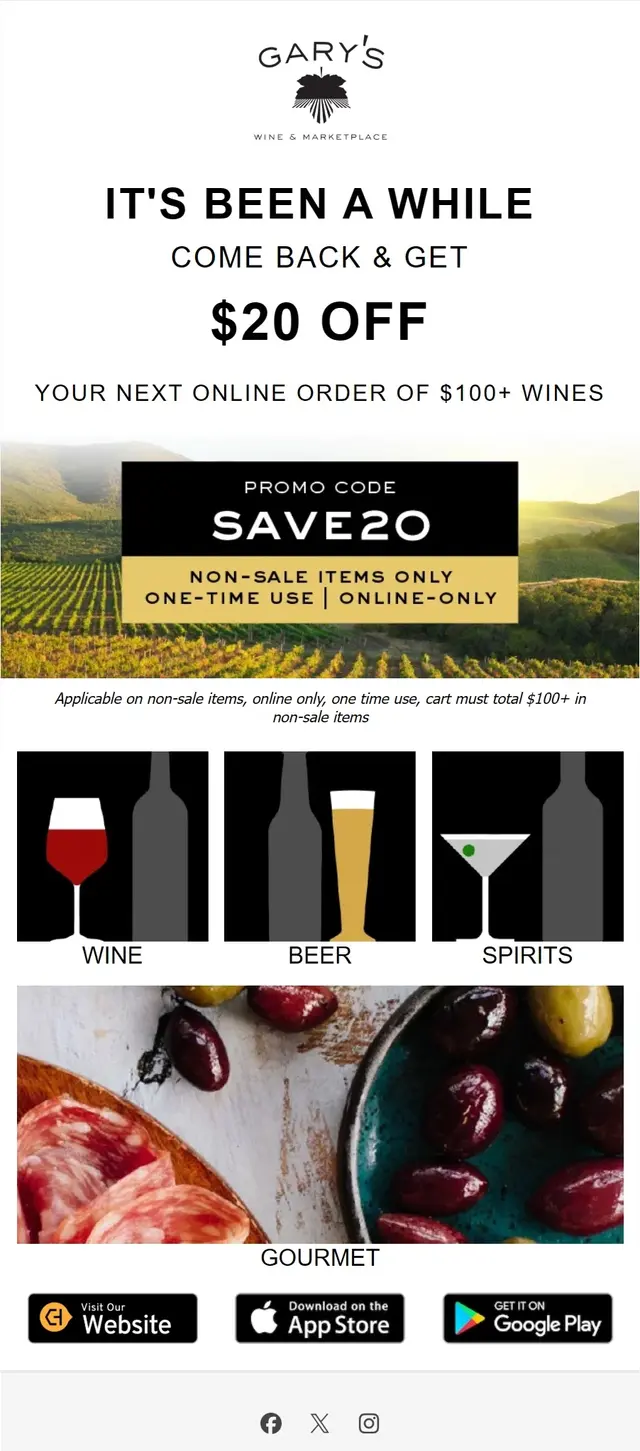
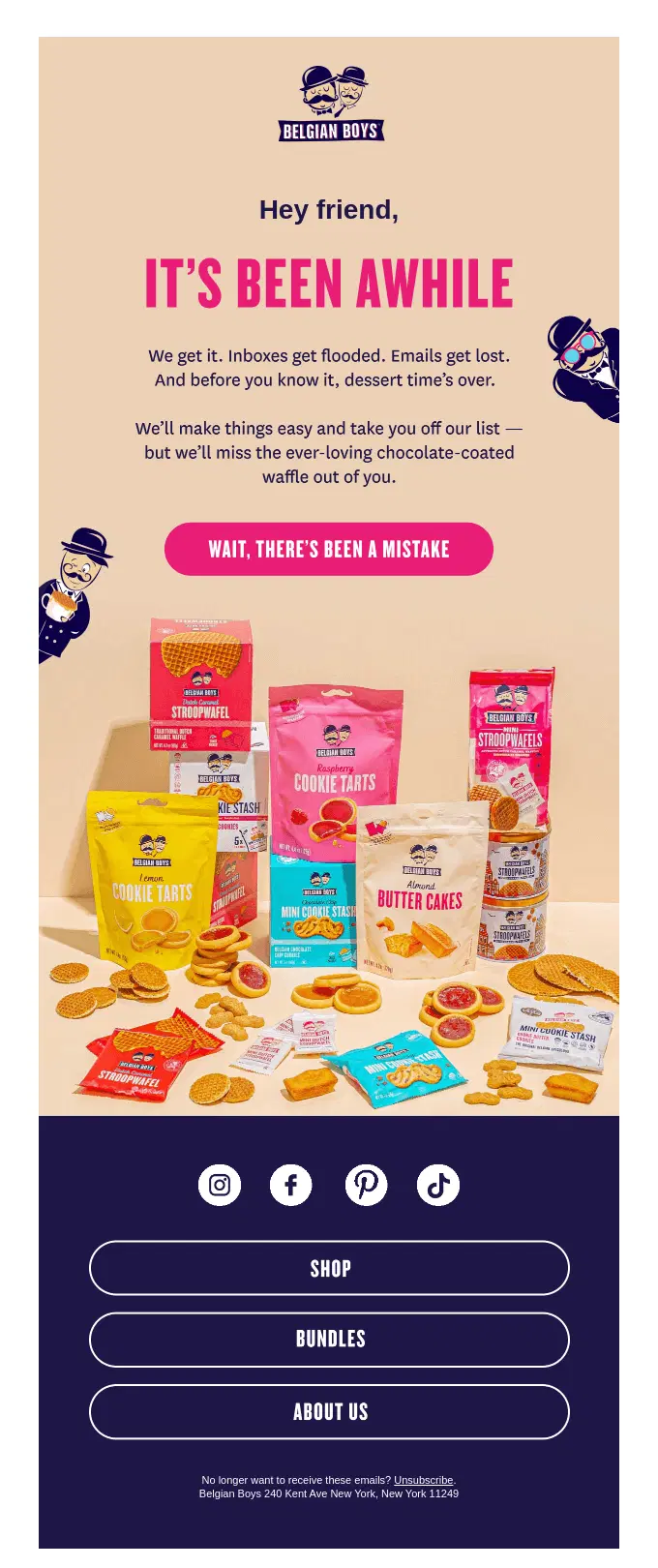
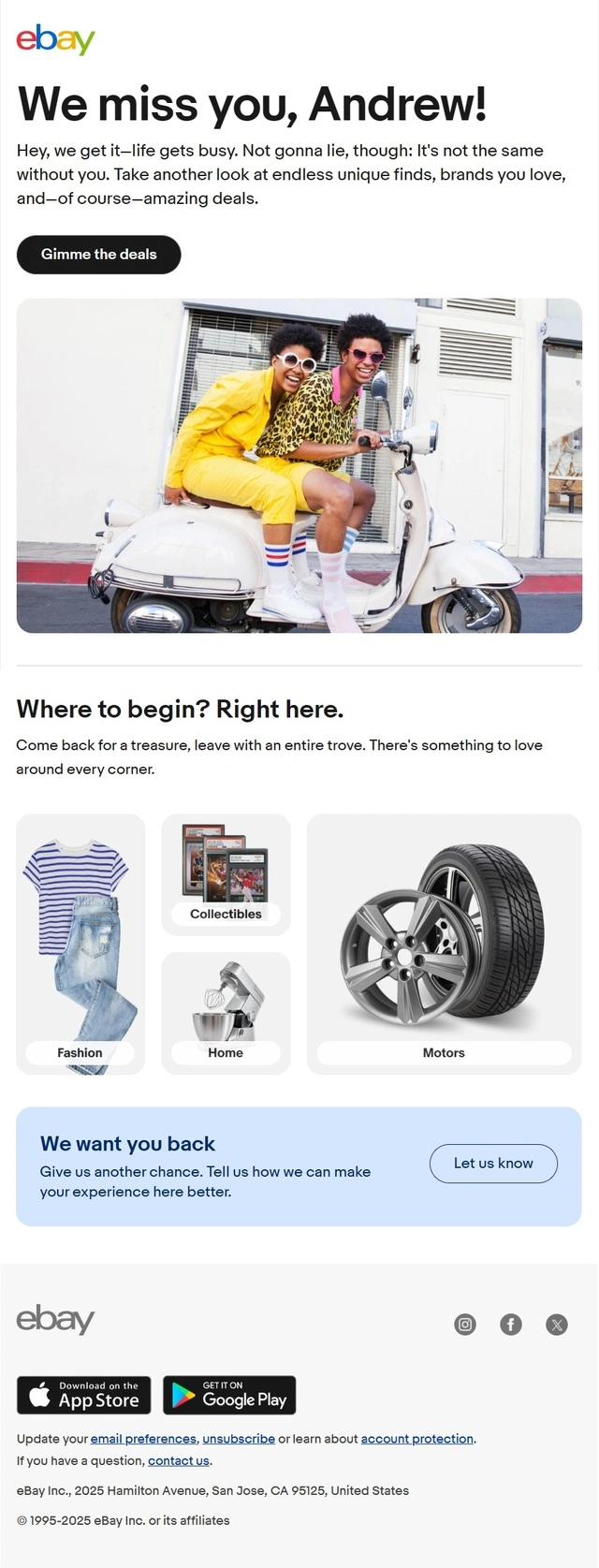
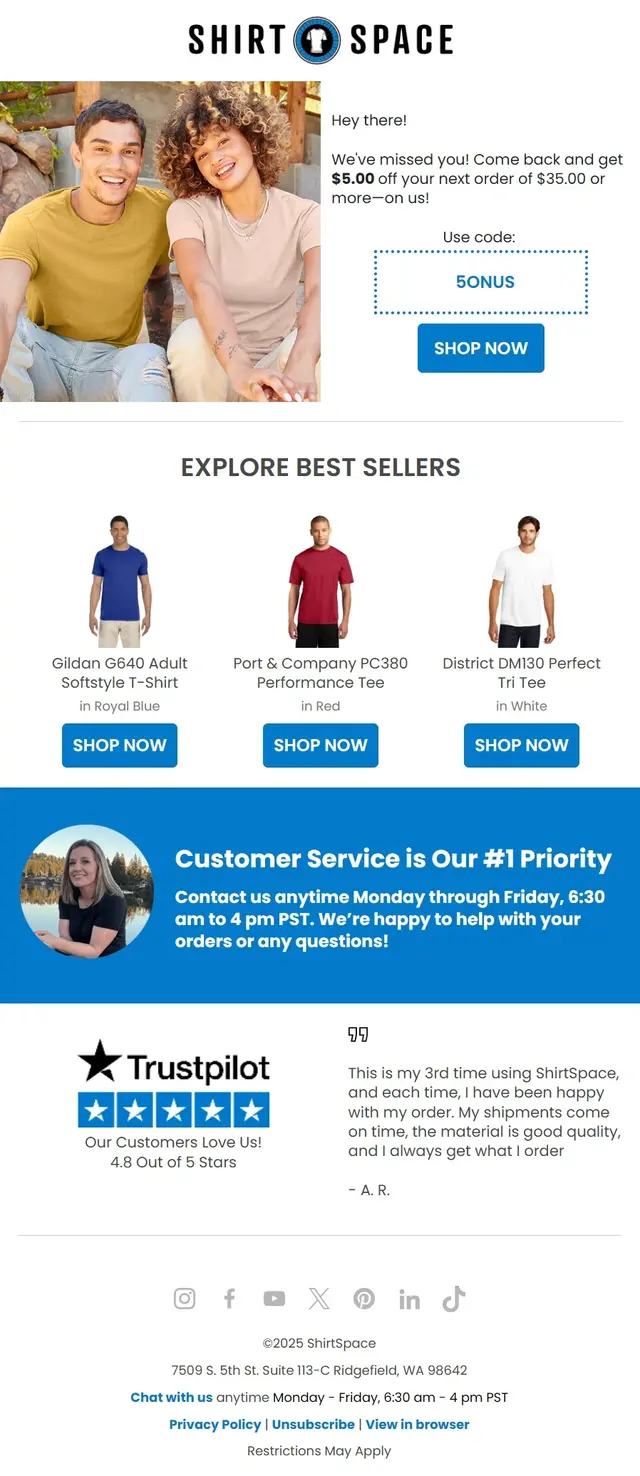
These winback emails take a more personal approach, using messages like “We miss you,” “Come back,” or “It’s been a while” to reopen the conversation. Some include an offer, while others rely on brand personality, familiarity, or a simple reminder that the customer is welcome back.
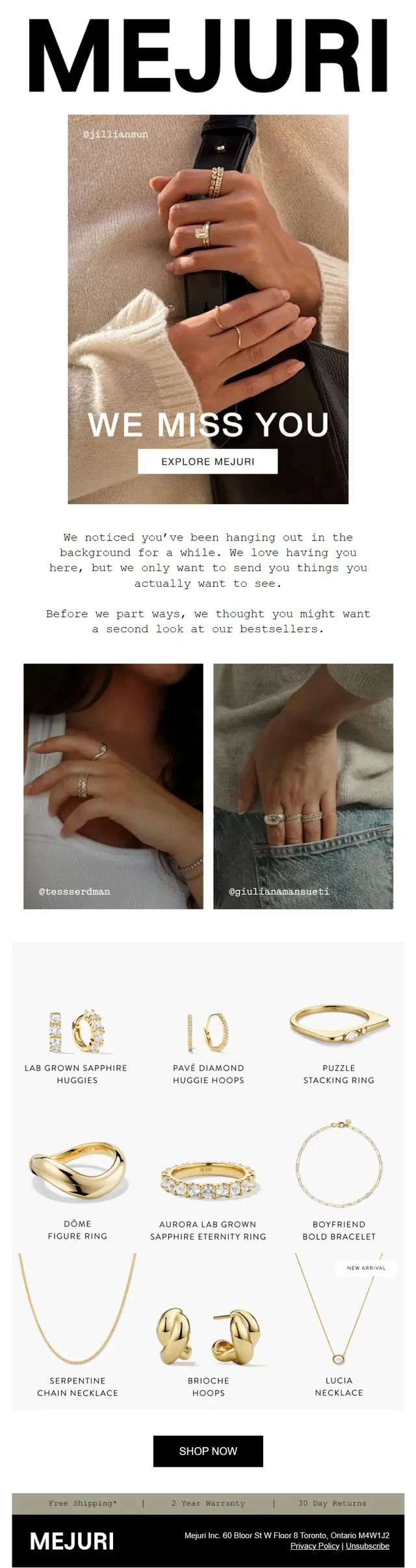


No-Discount Winback Email Examples
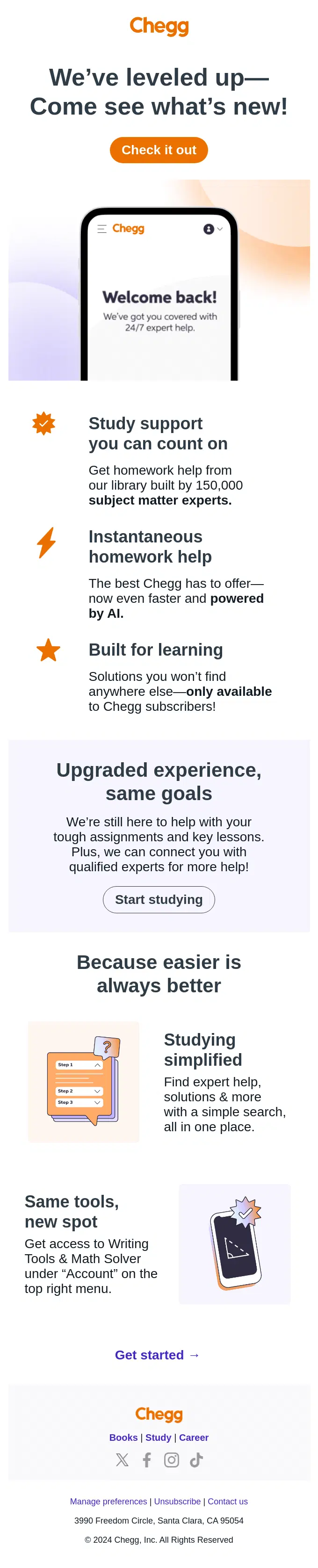
Not every customer winback email needs a coupon. These examples give customers other reasons to return, such as product benefits, convenience, new experiences, helpful content, or a reminder of what made the brand worth choosing in the first place.

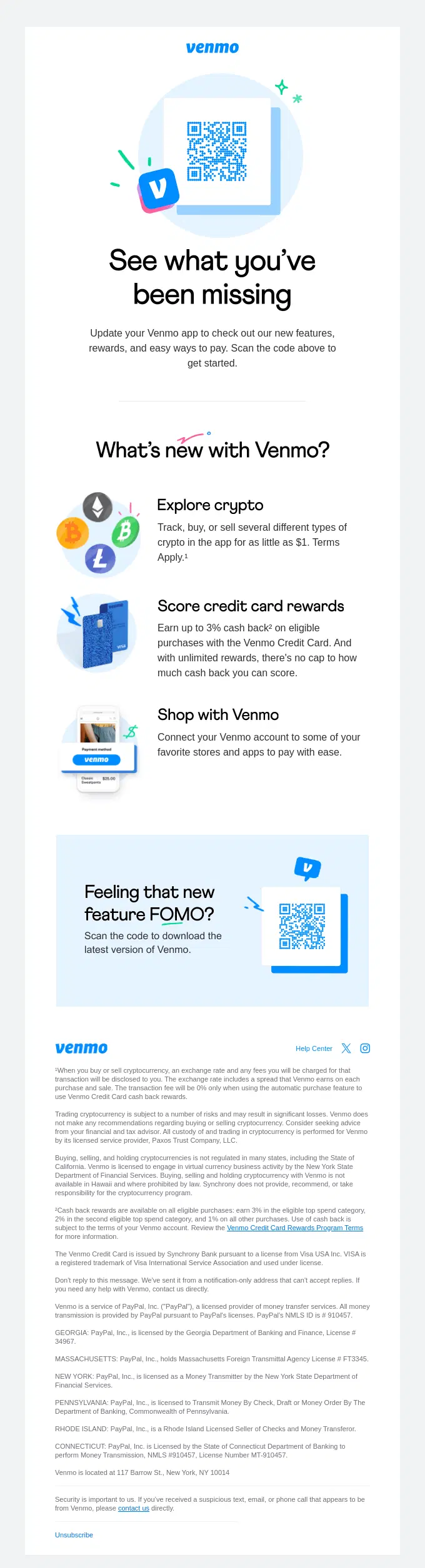
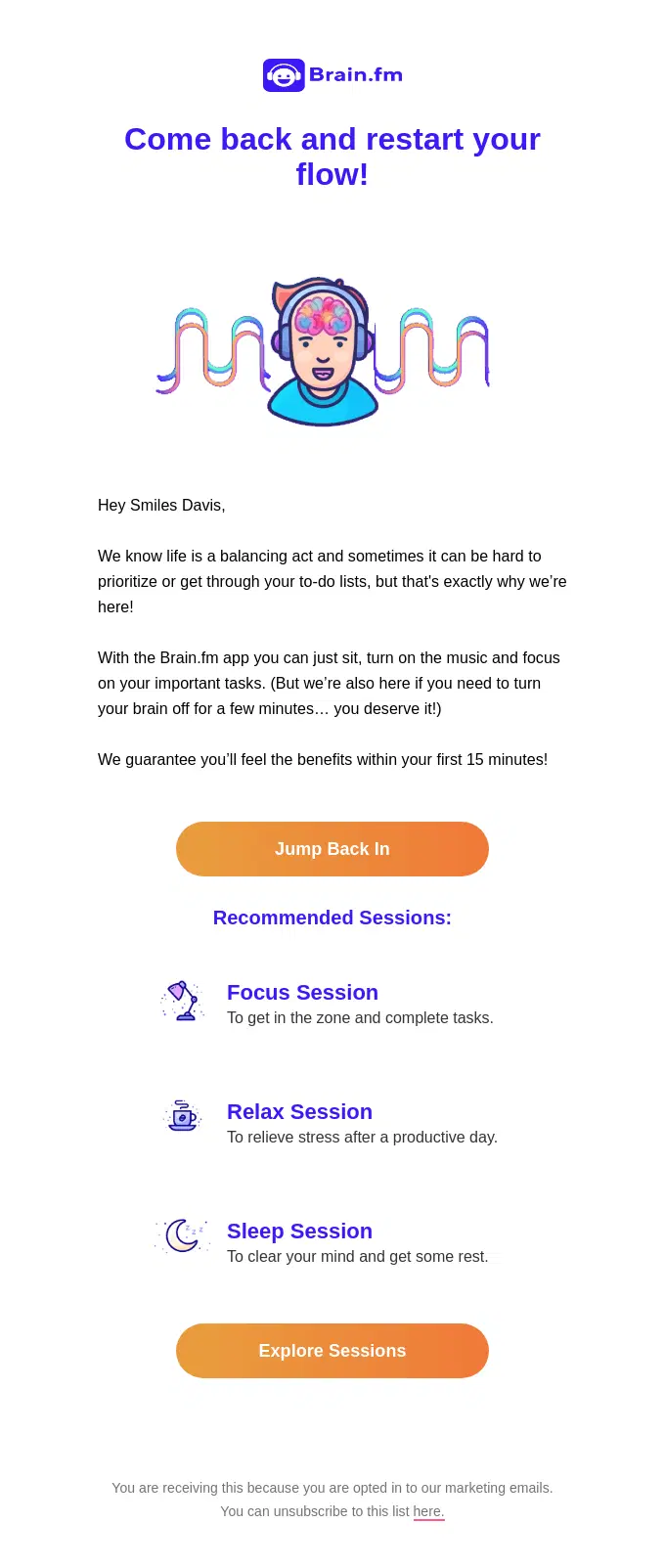
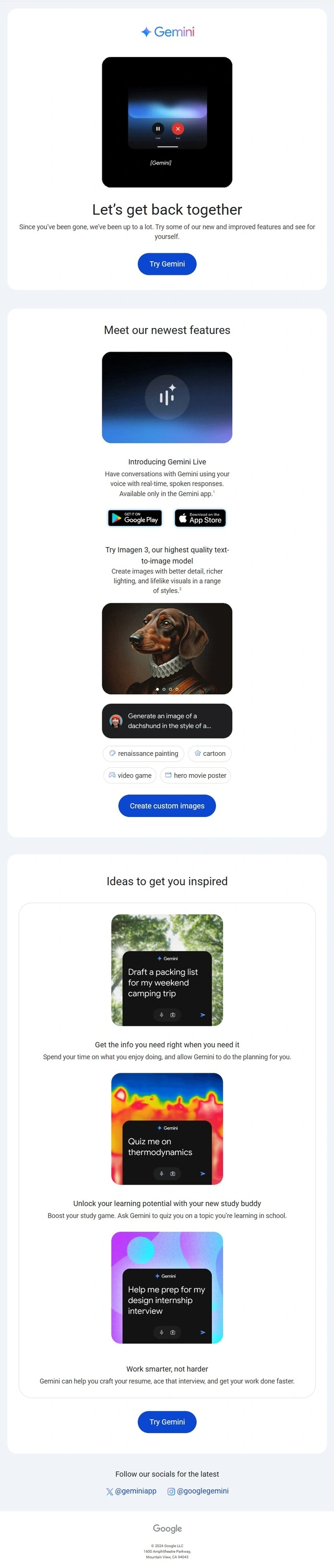
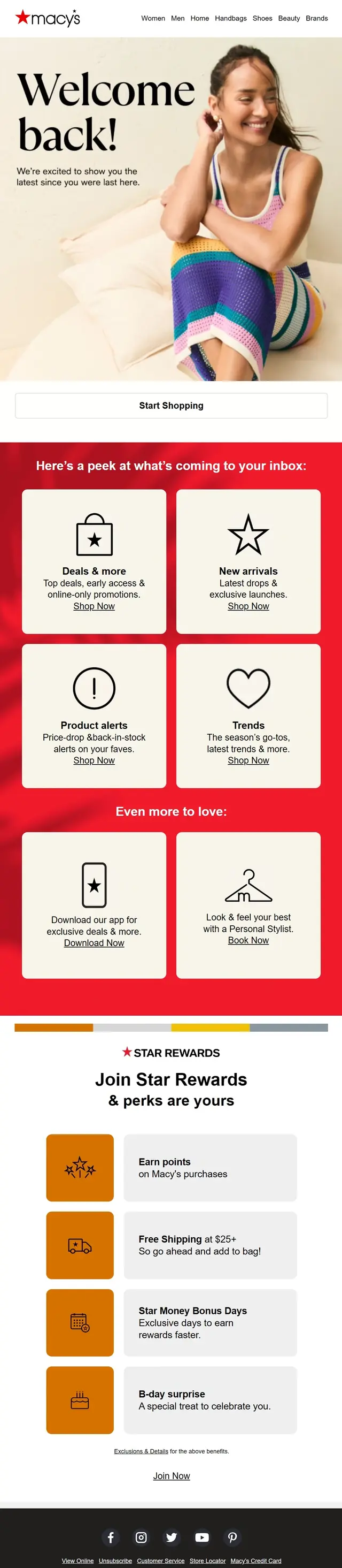

Product Recommendation Winback Email Examples
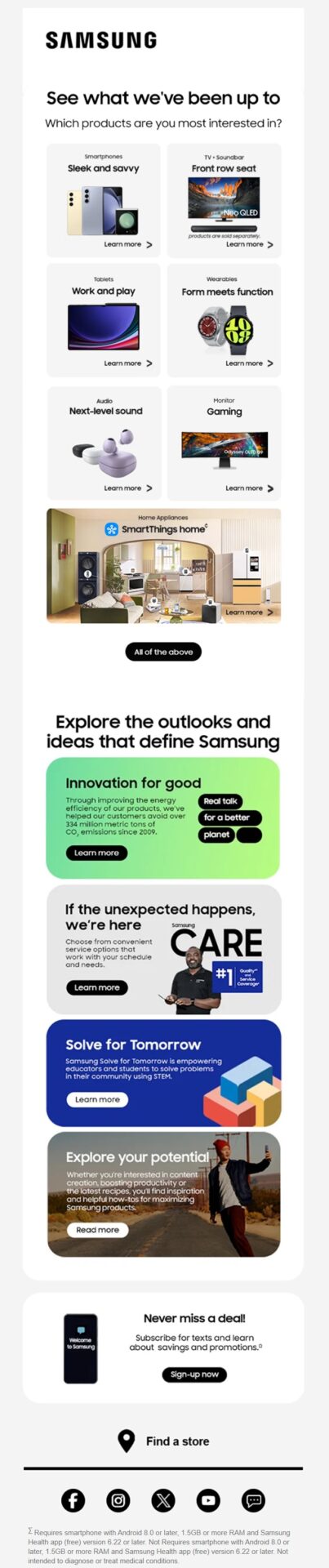
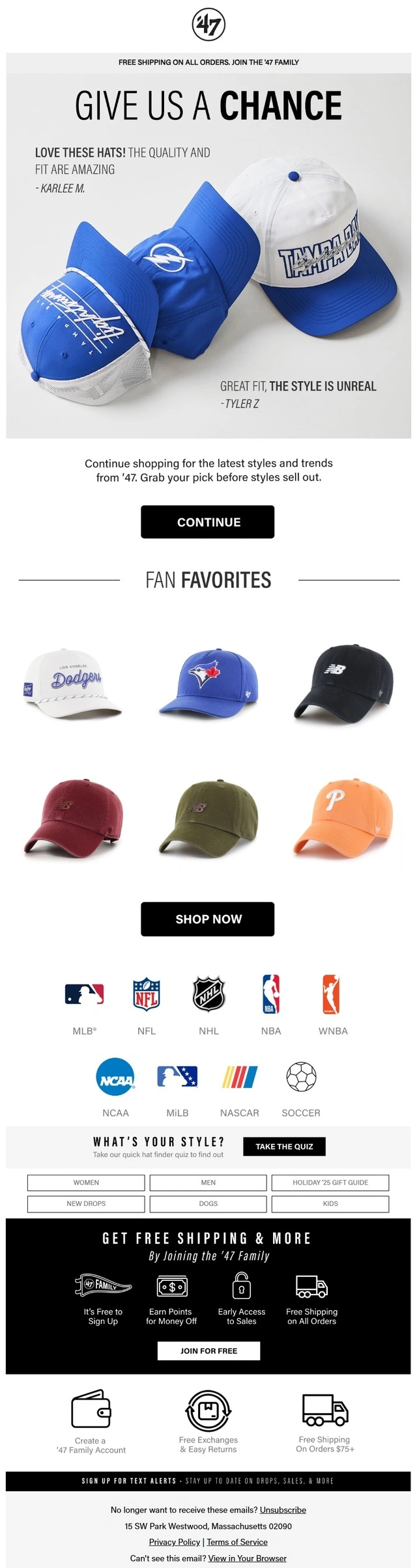
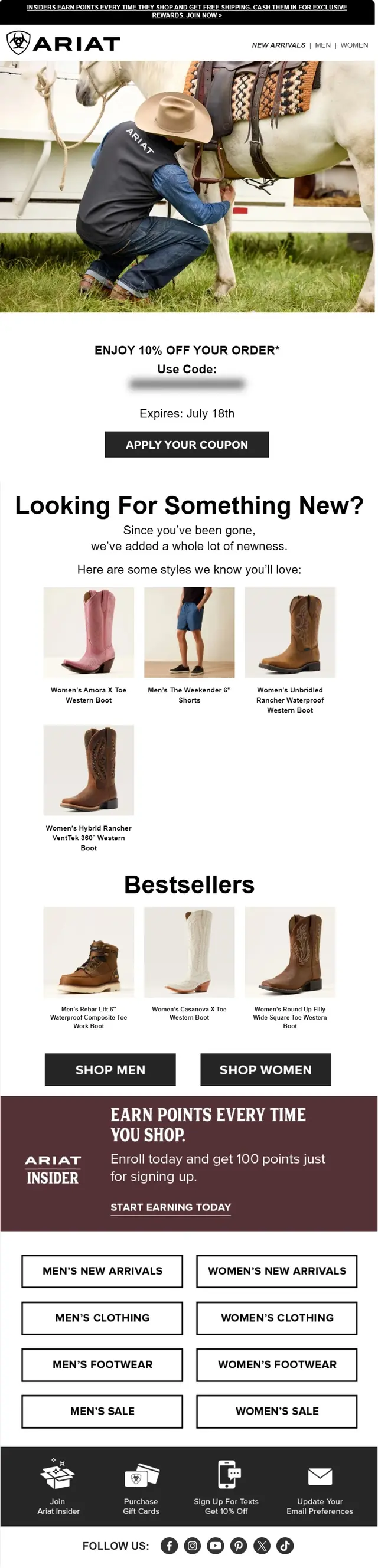
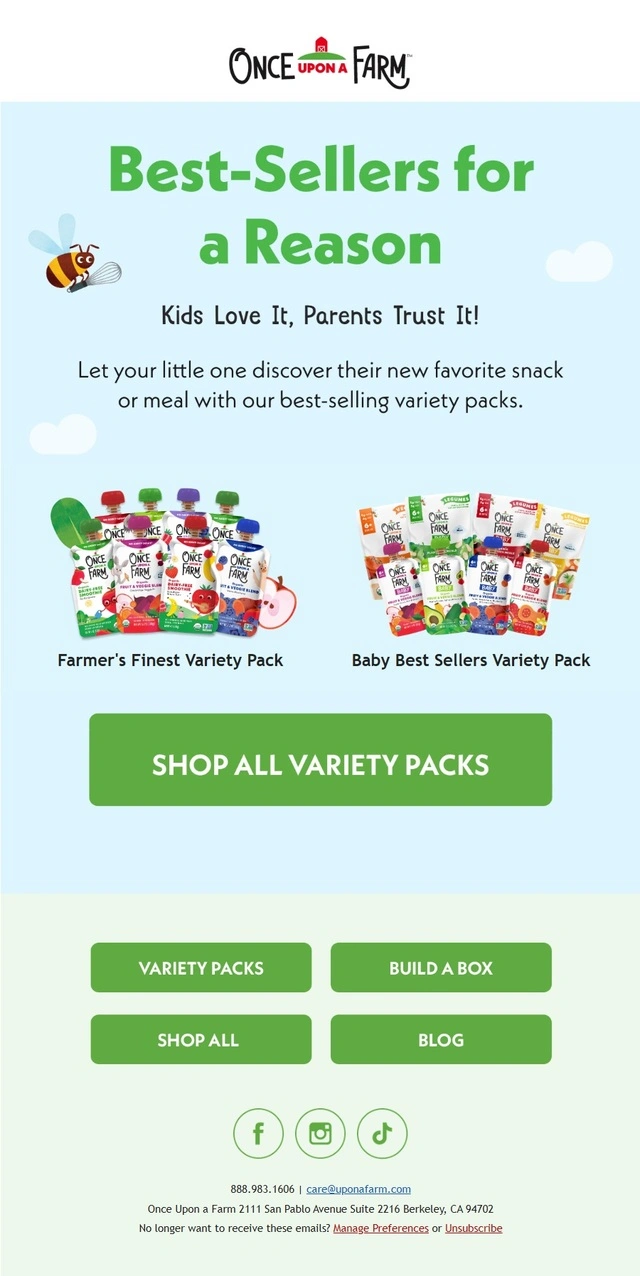
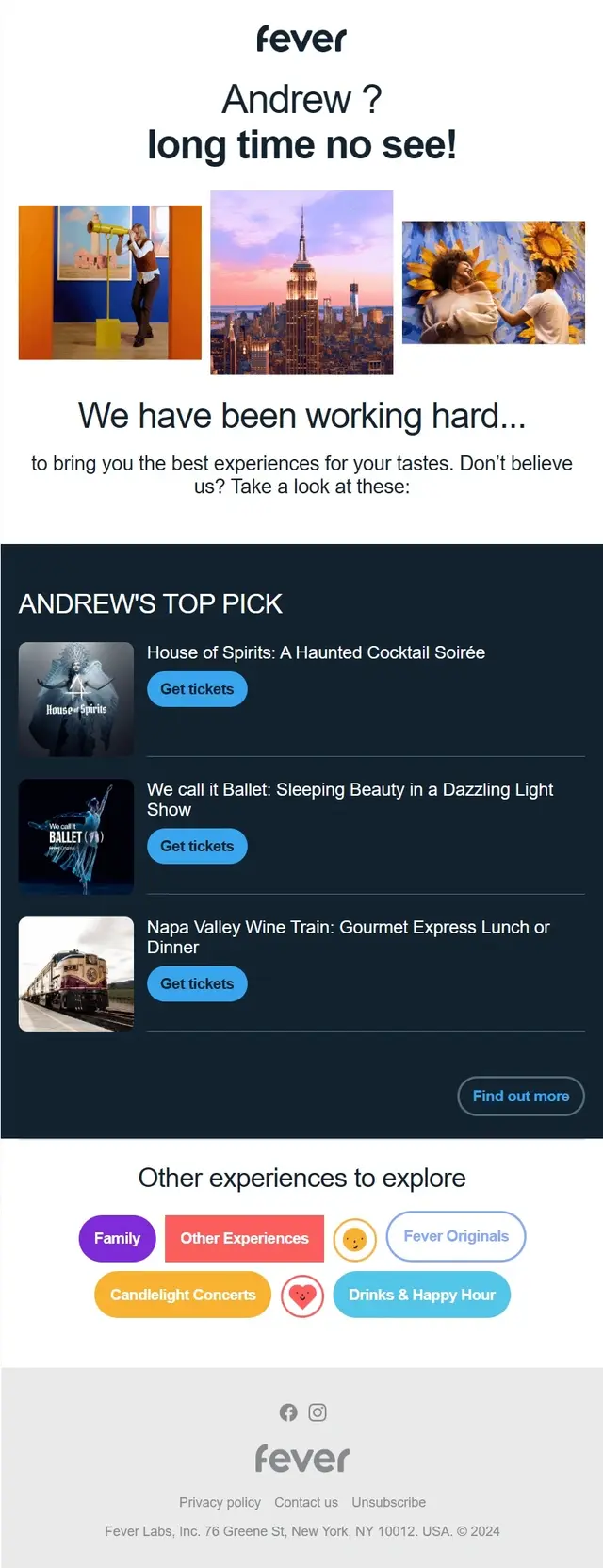
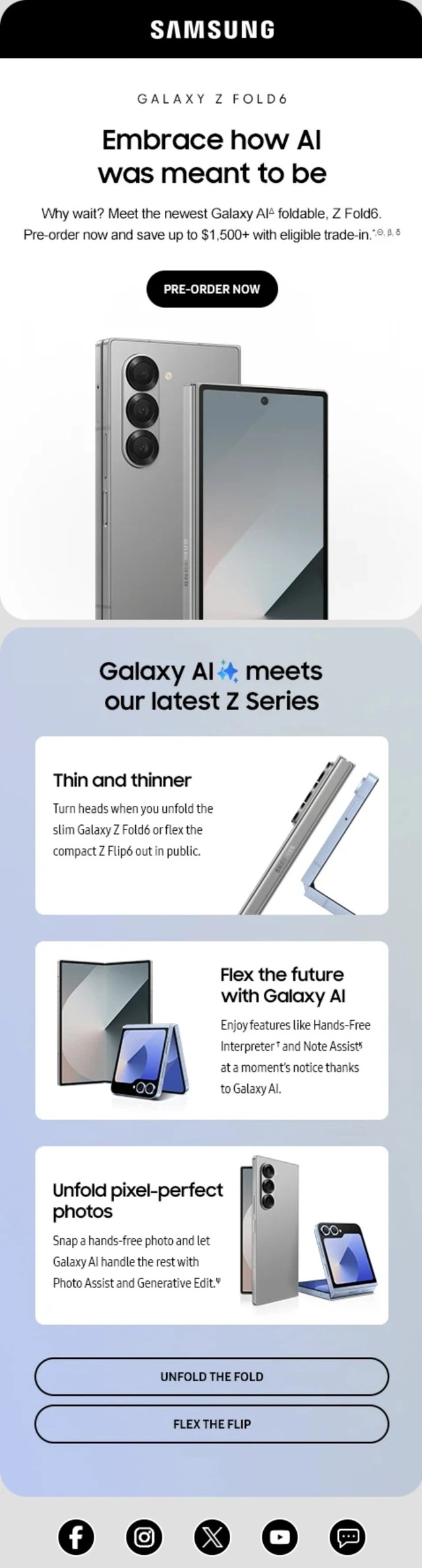
Product recommendation winback emails use products as the reason to reconnect. Brands may highlight bestsellers, new arrivals, personalized picks, or items related to a customer’s previous interests to make another purchase feel relevant rather than random.






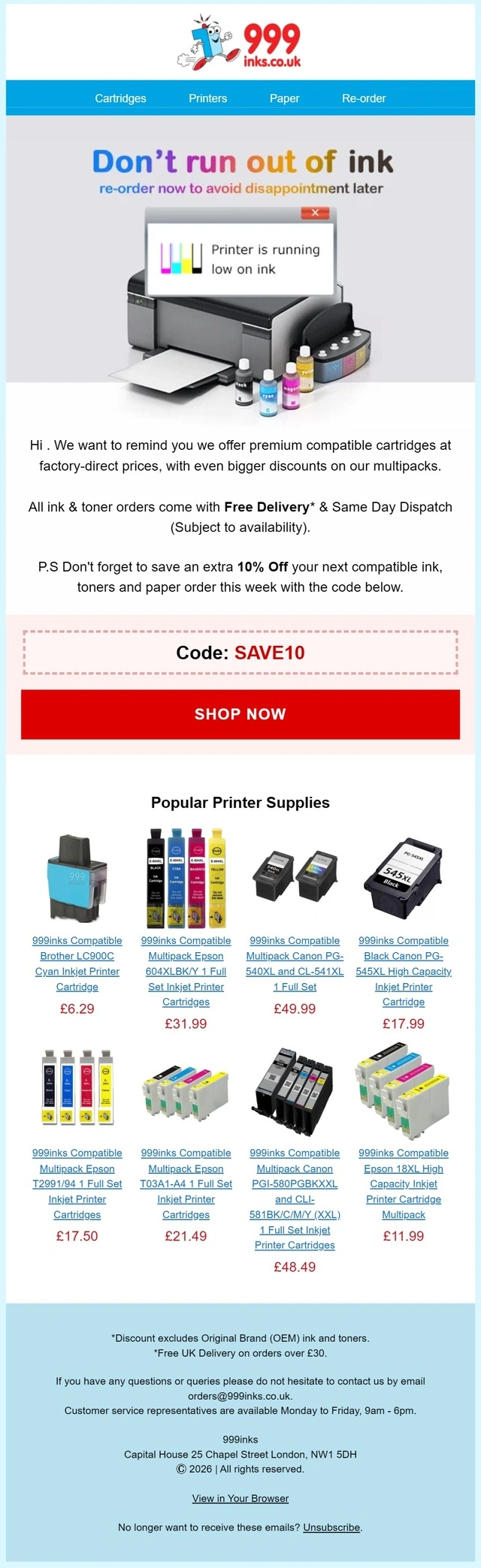
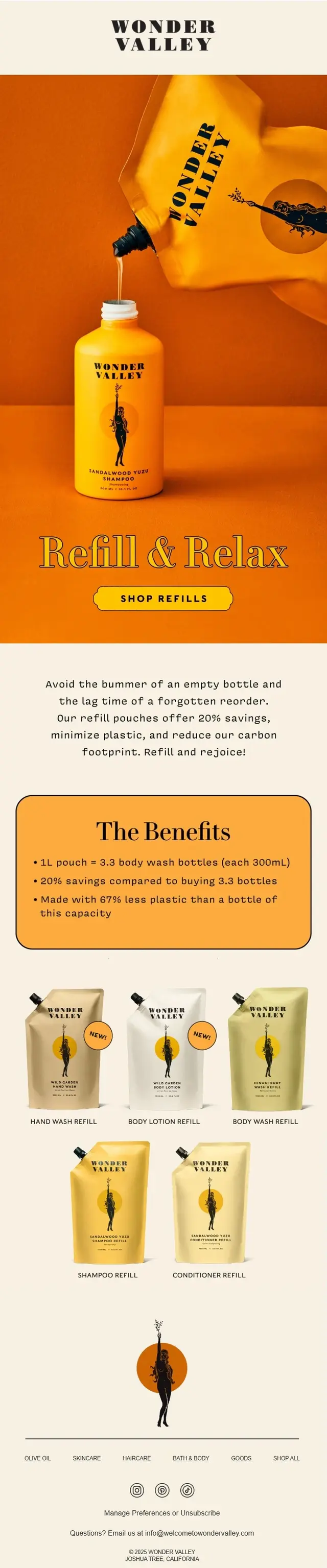
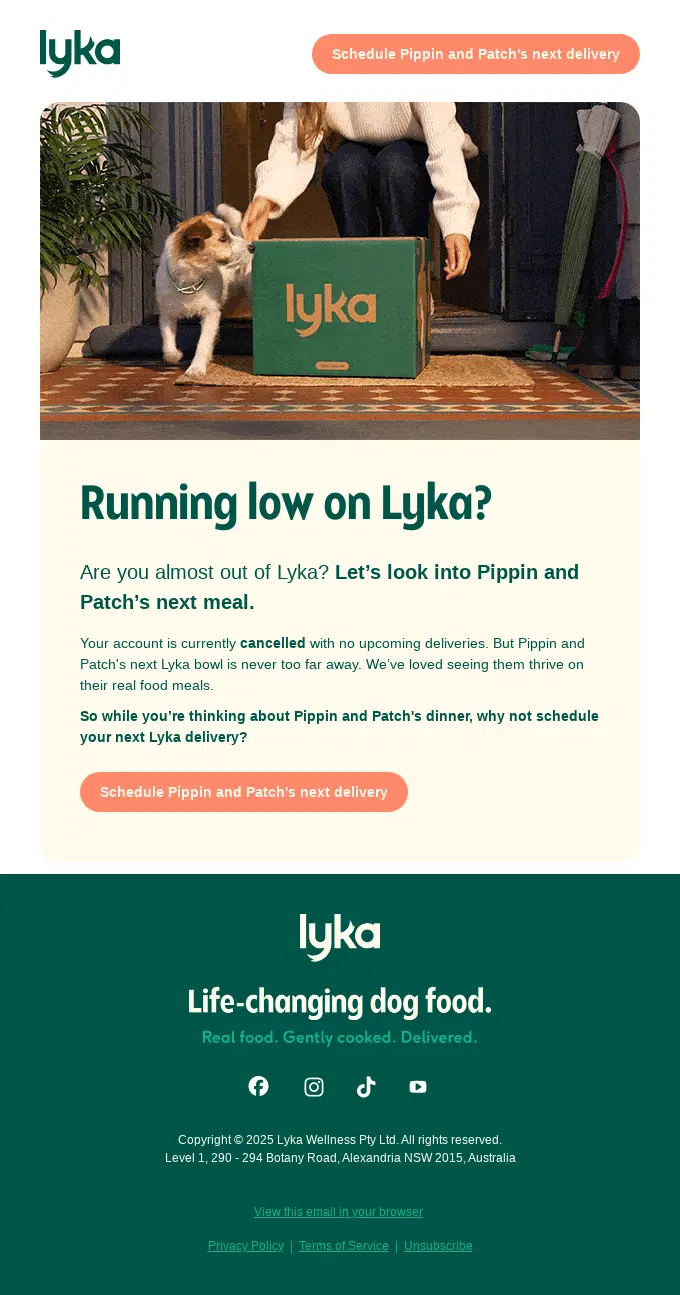
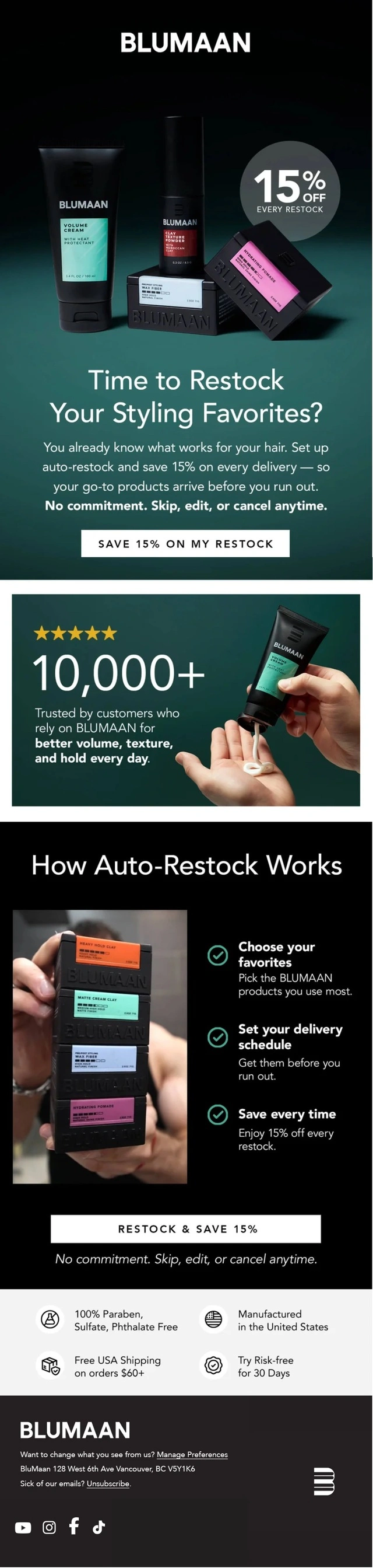
Replenishment and Repeat Purchase Winback Emails
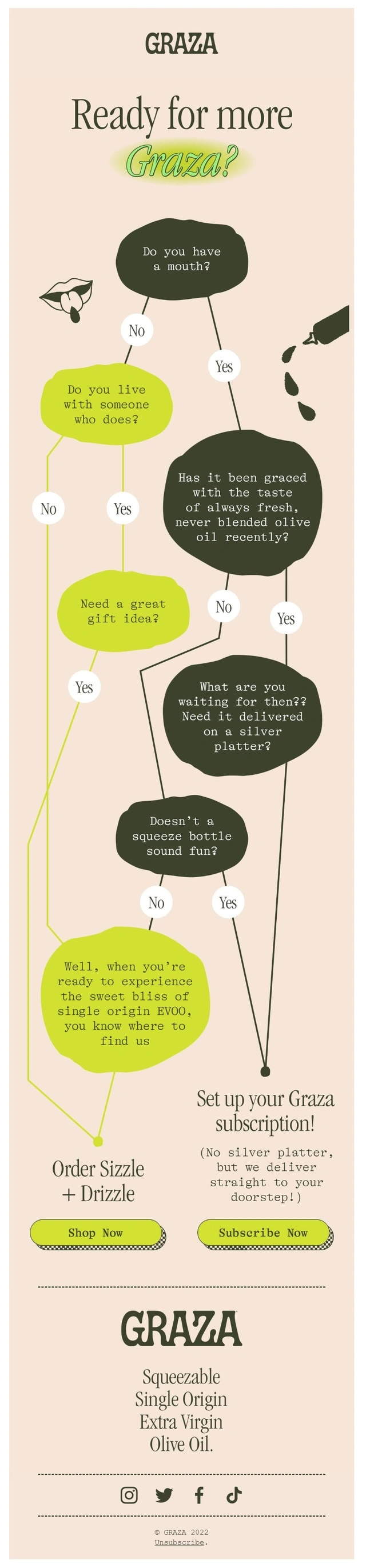
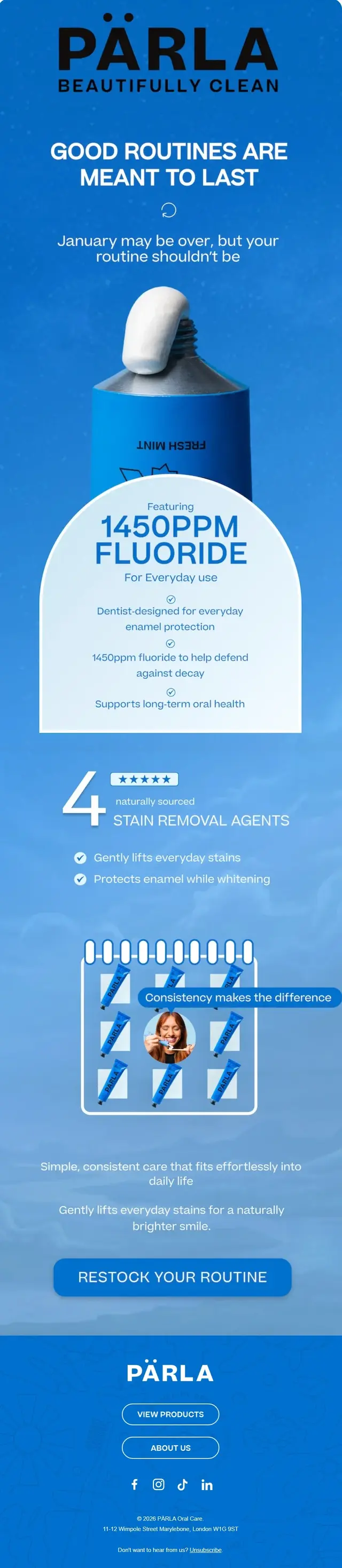
Some customers do not need to discover something new. They simply need a reminder that it may be time to buy again. These winback emails work especially well for consumable and frequently replaced products, where purchase history can help brands reach customers at a natural reorder point.

Loyalty and Reward Winback Email Examples
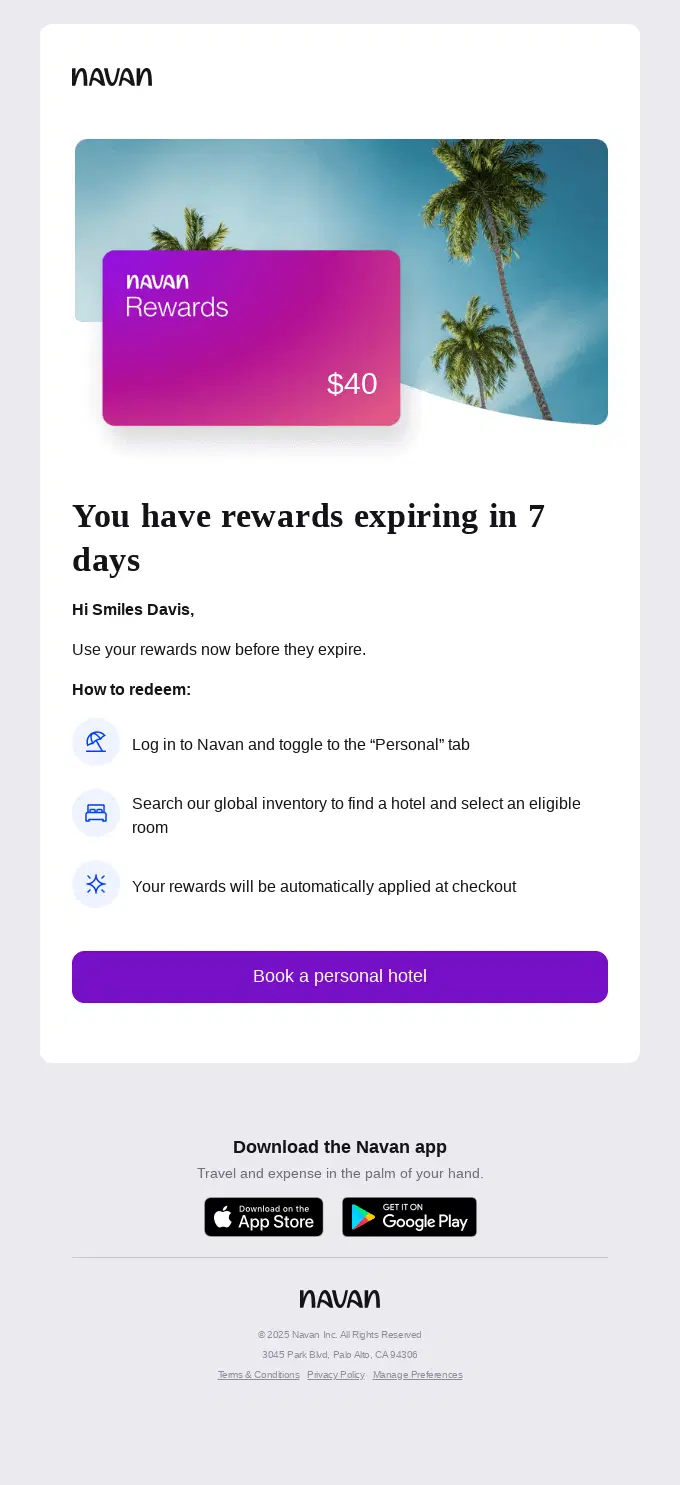
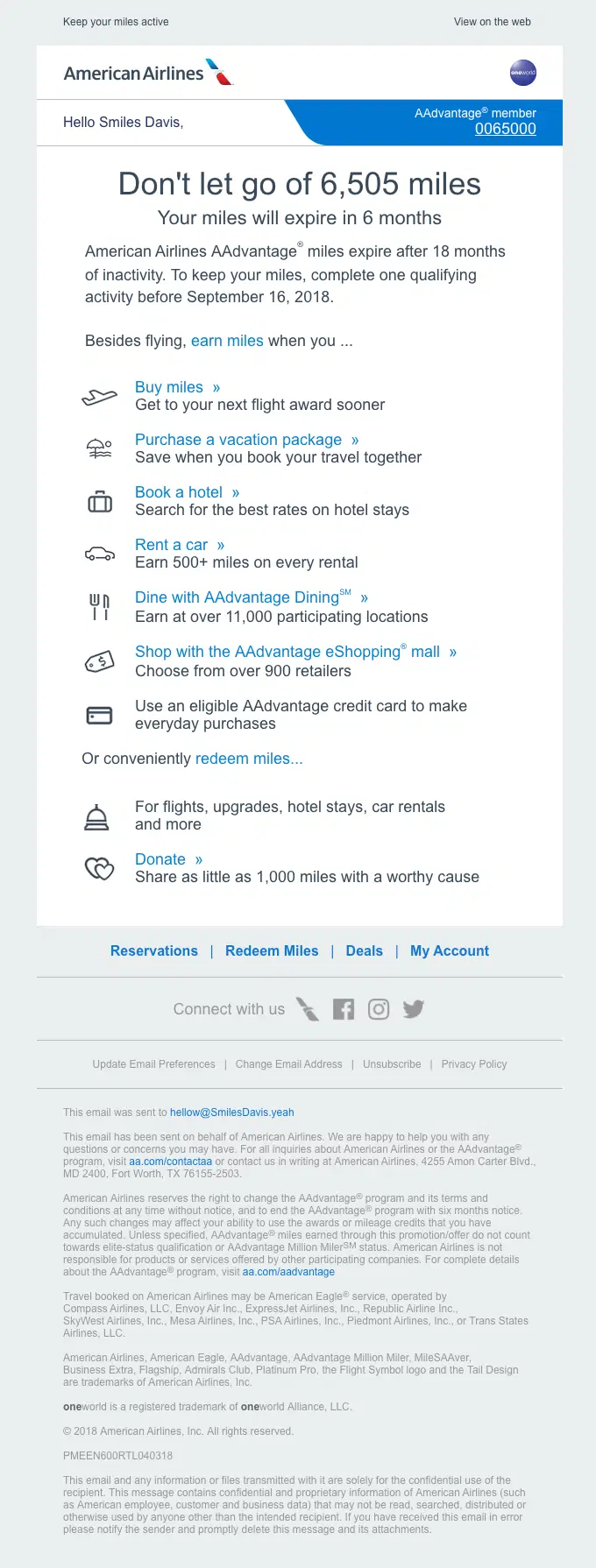
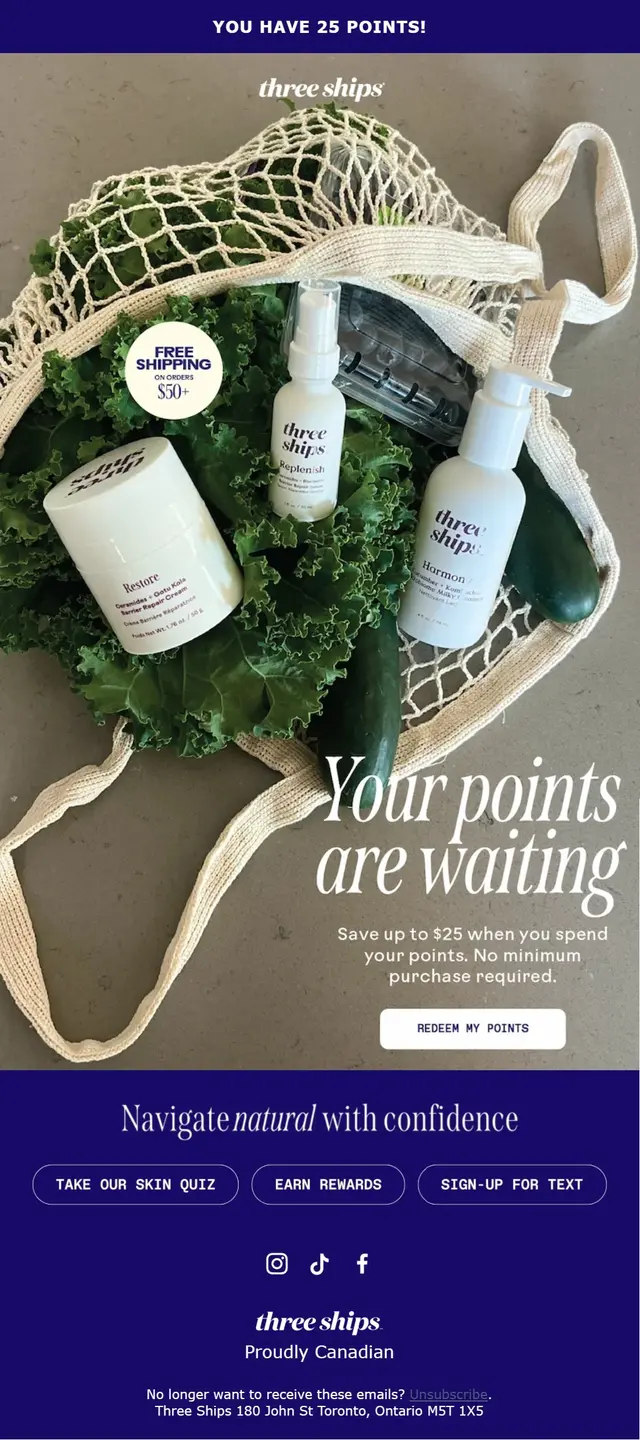
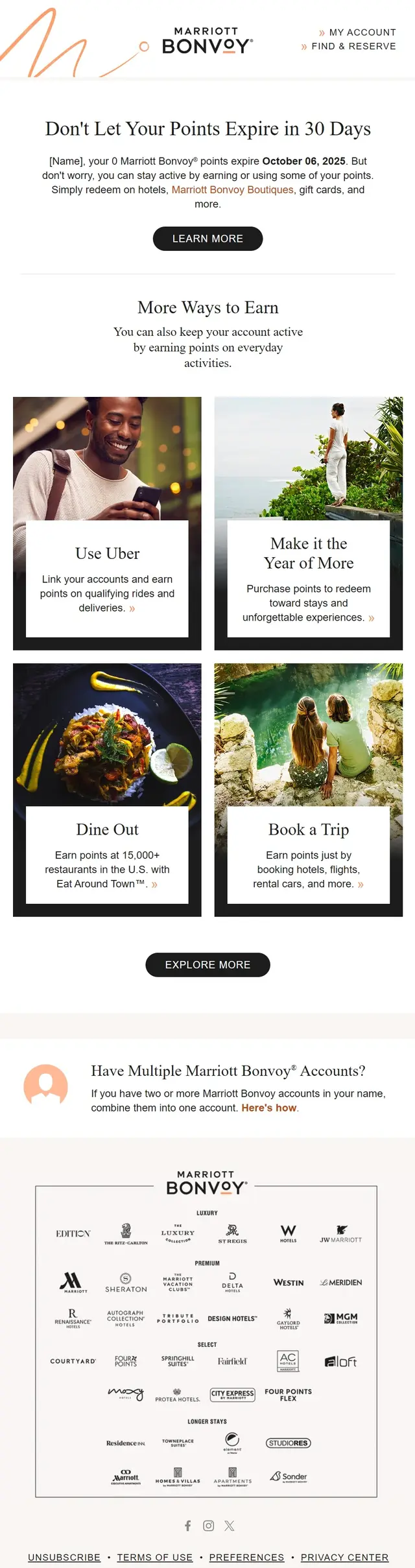
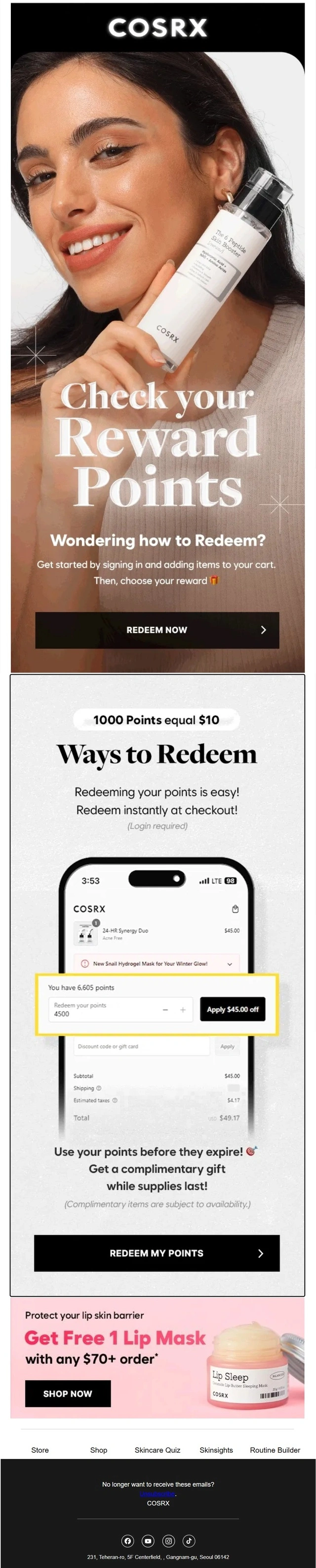
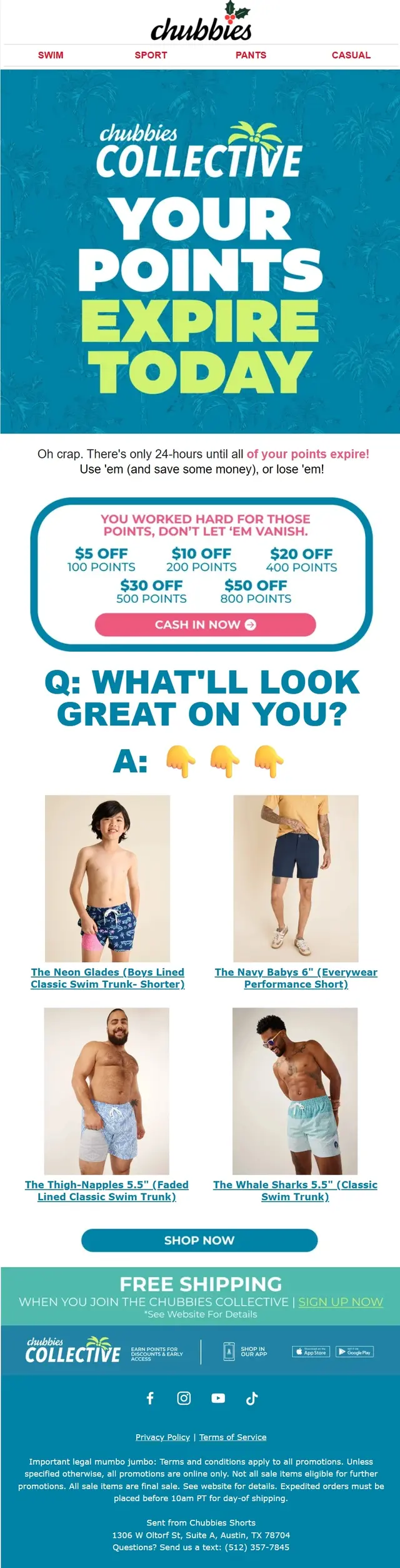
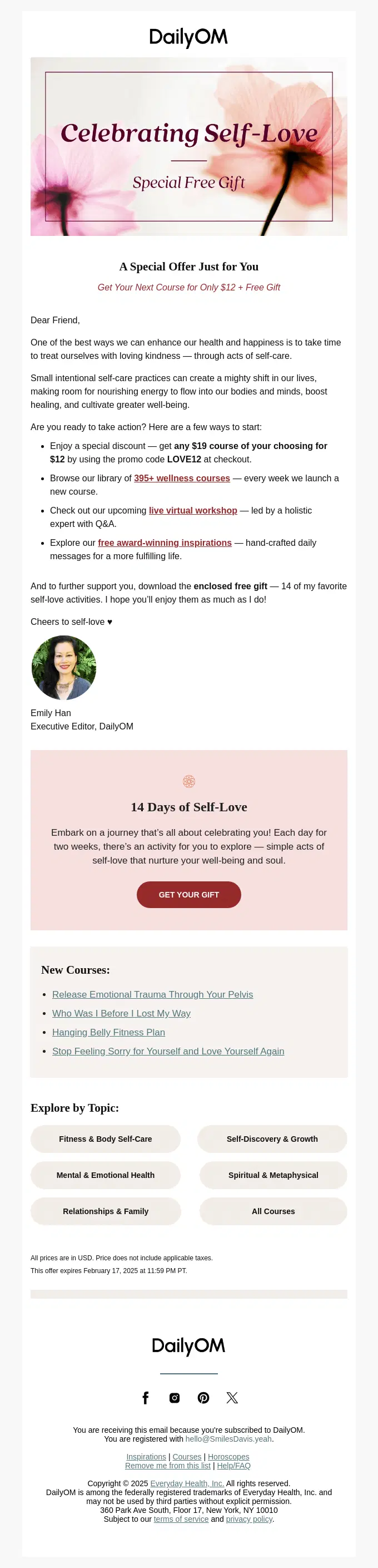
Rewards can give inactive customers a reason to return without relying on a traditional discount. These winback campaigns may highlight unused points, account credit, bonus rewards, exclusive benefits, or other incentives that become more valuable when the customer makes another purchase.


Subscription Winback Email Examples
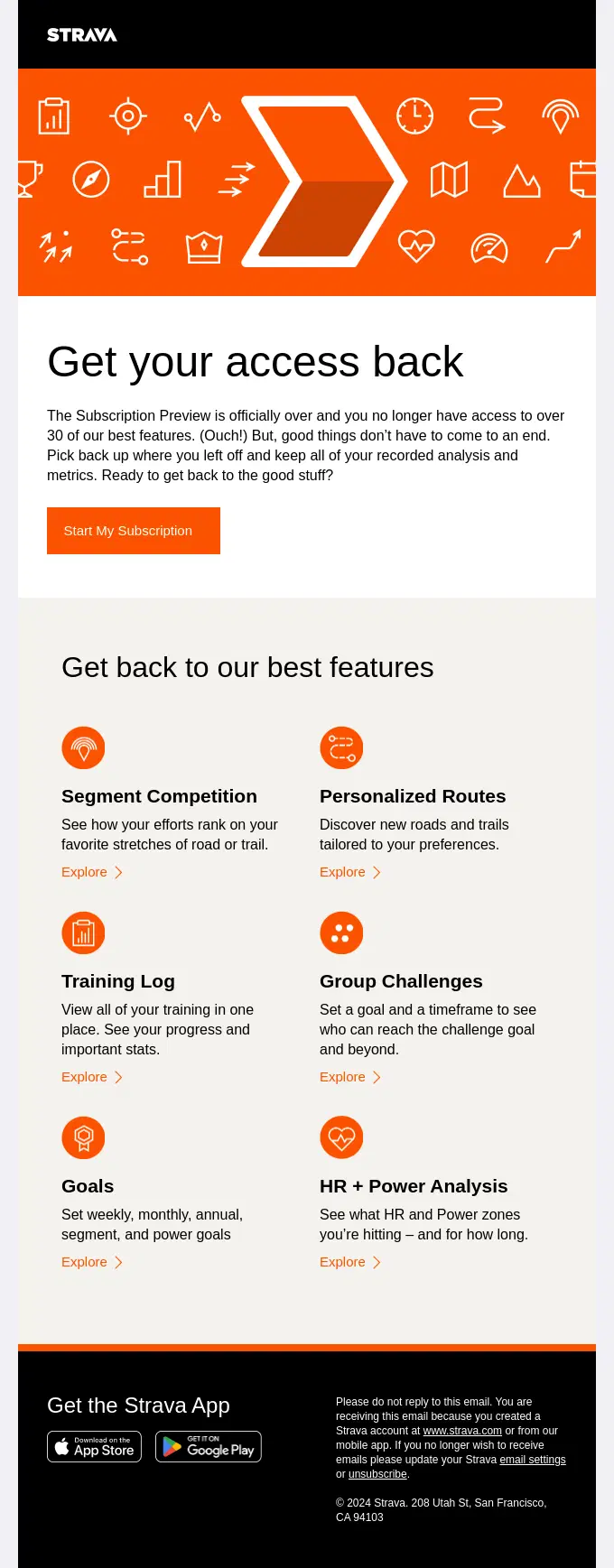
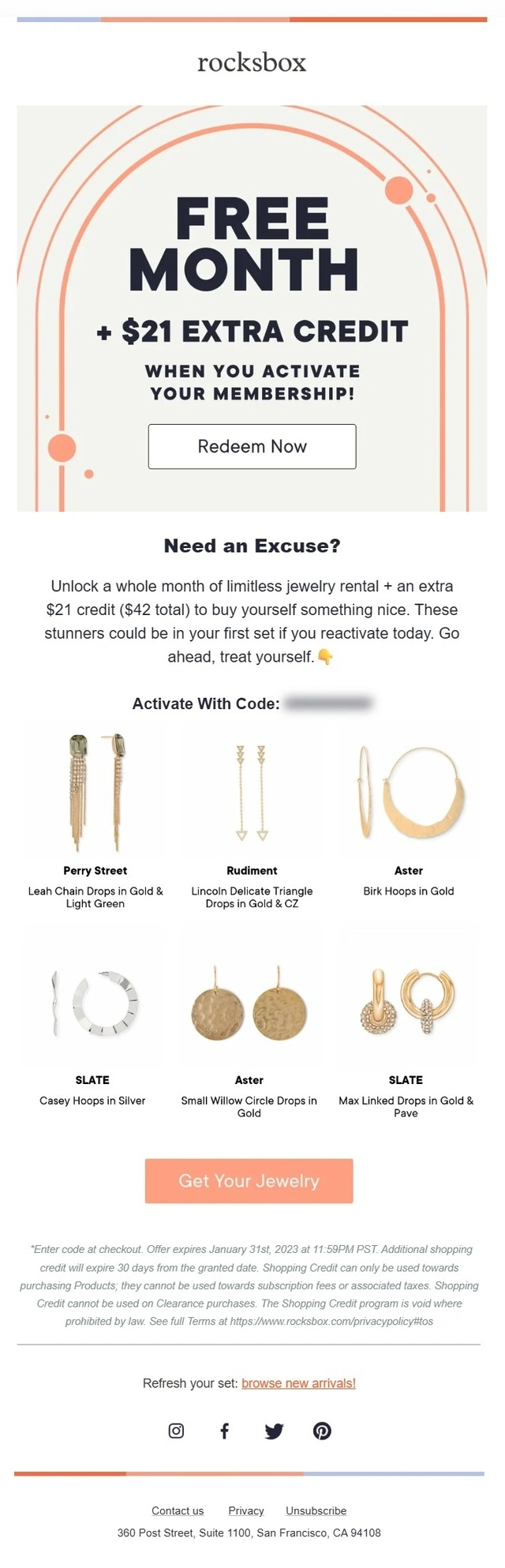
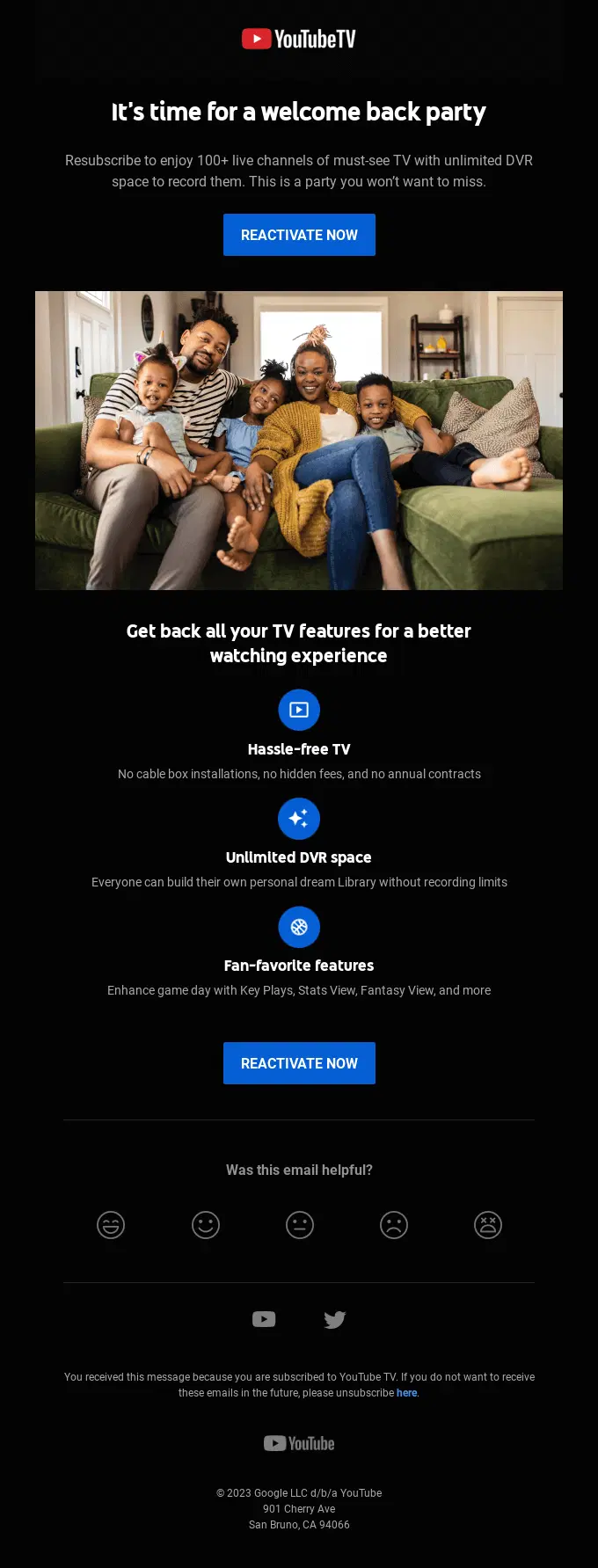
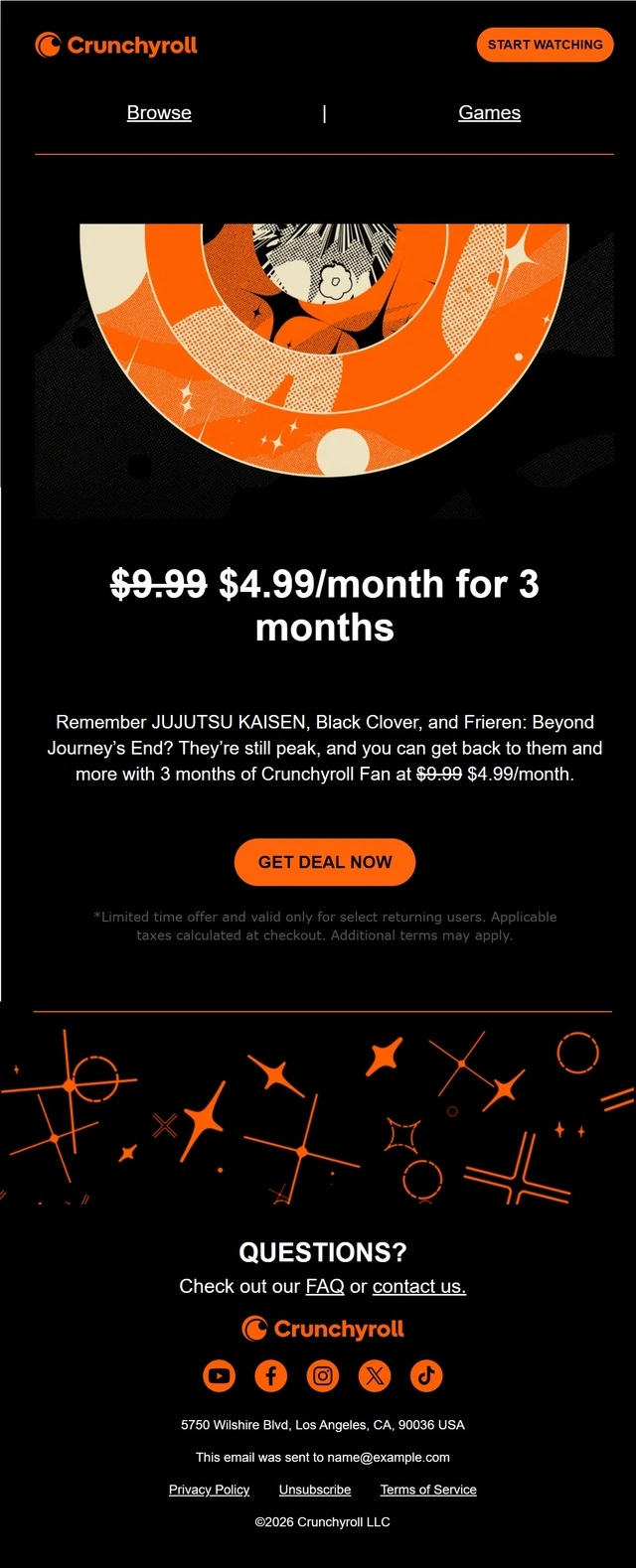
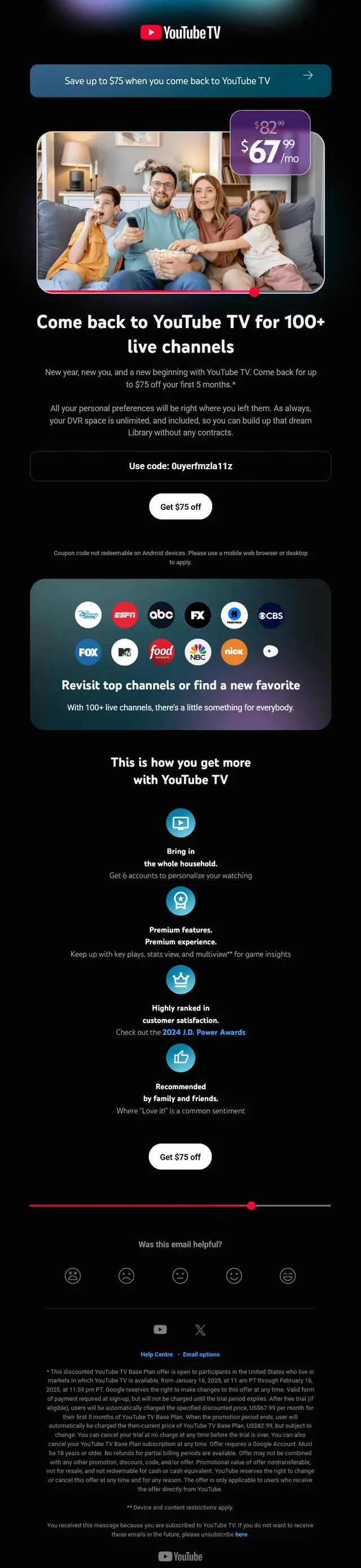
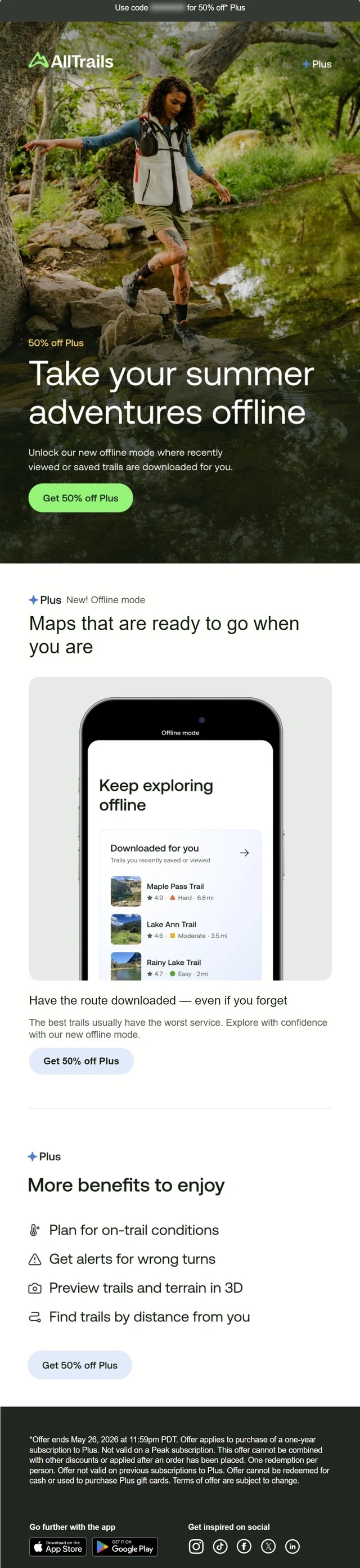
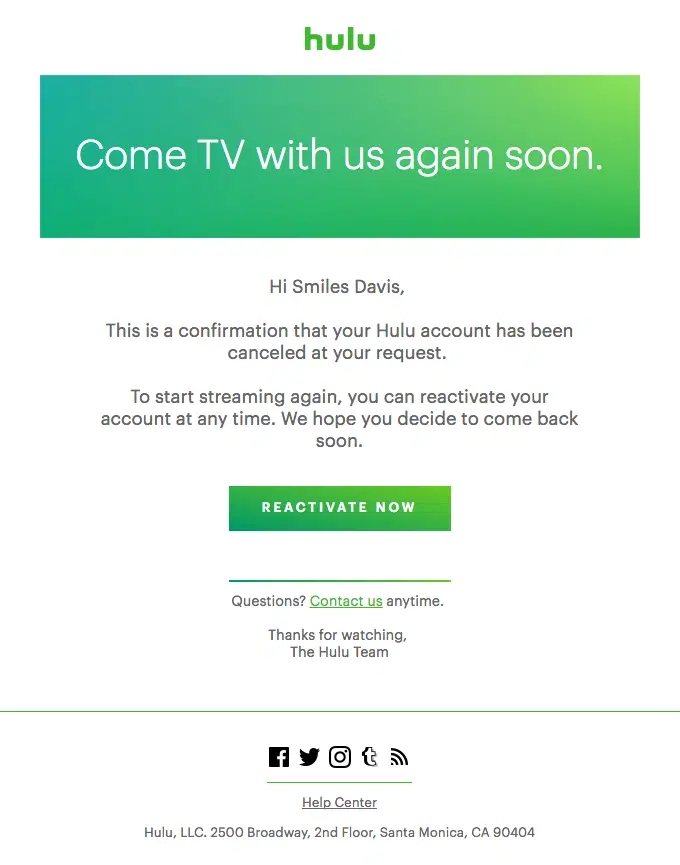
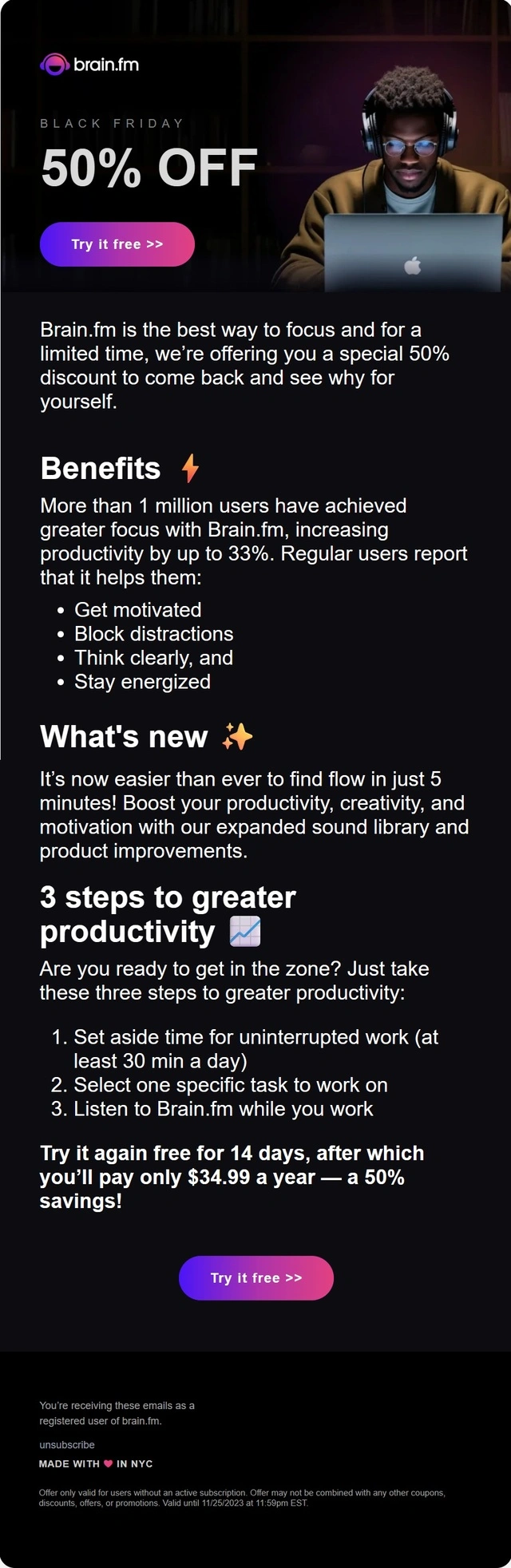
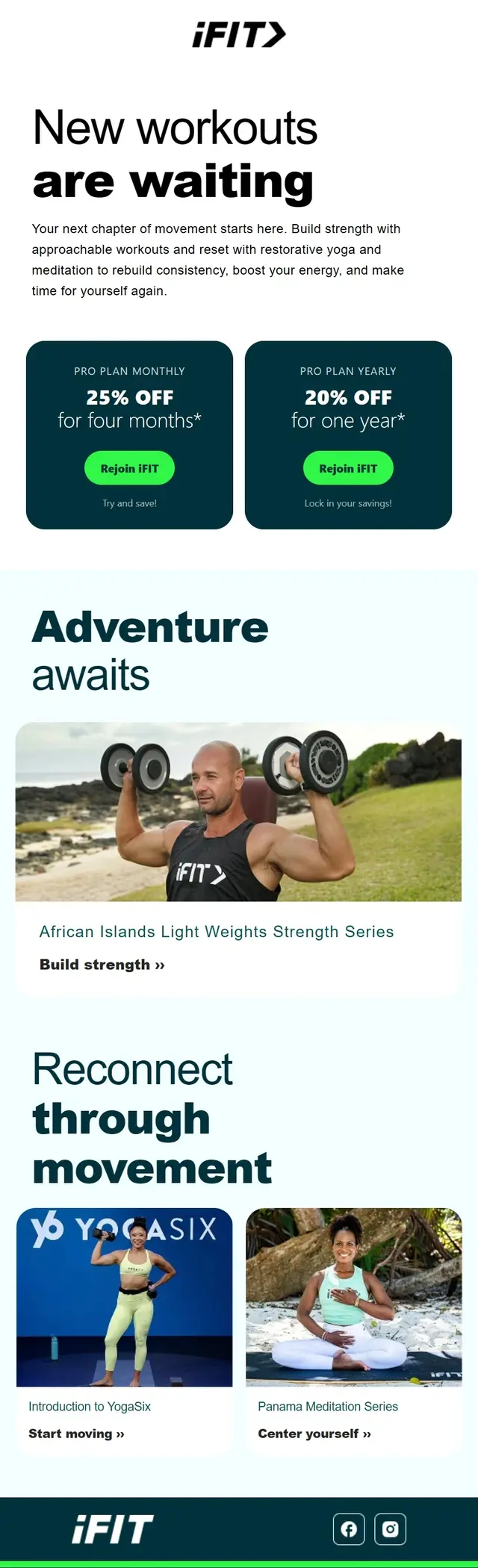
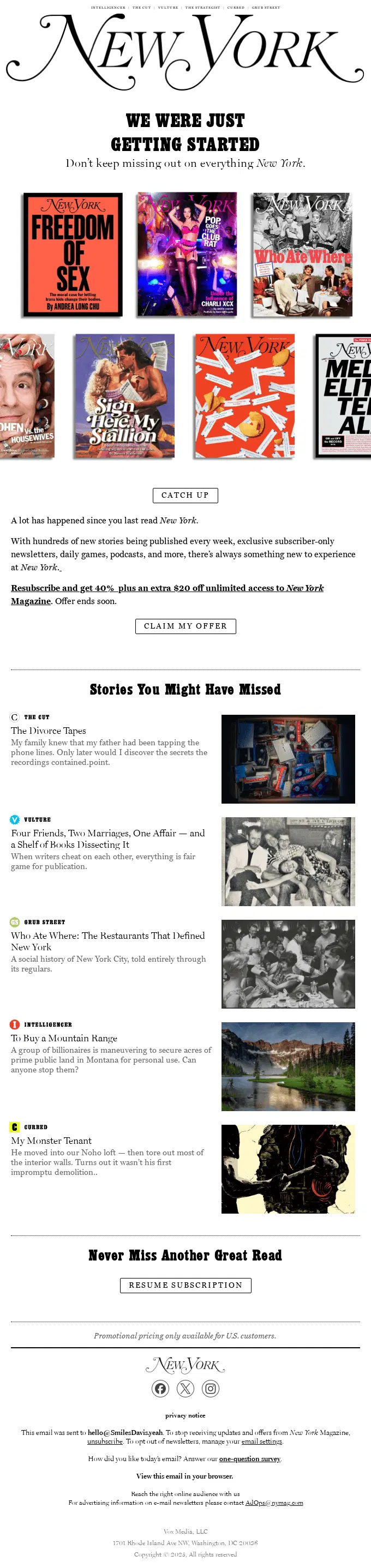
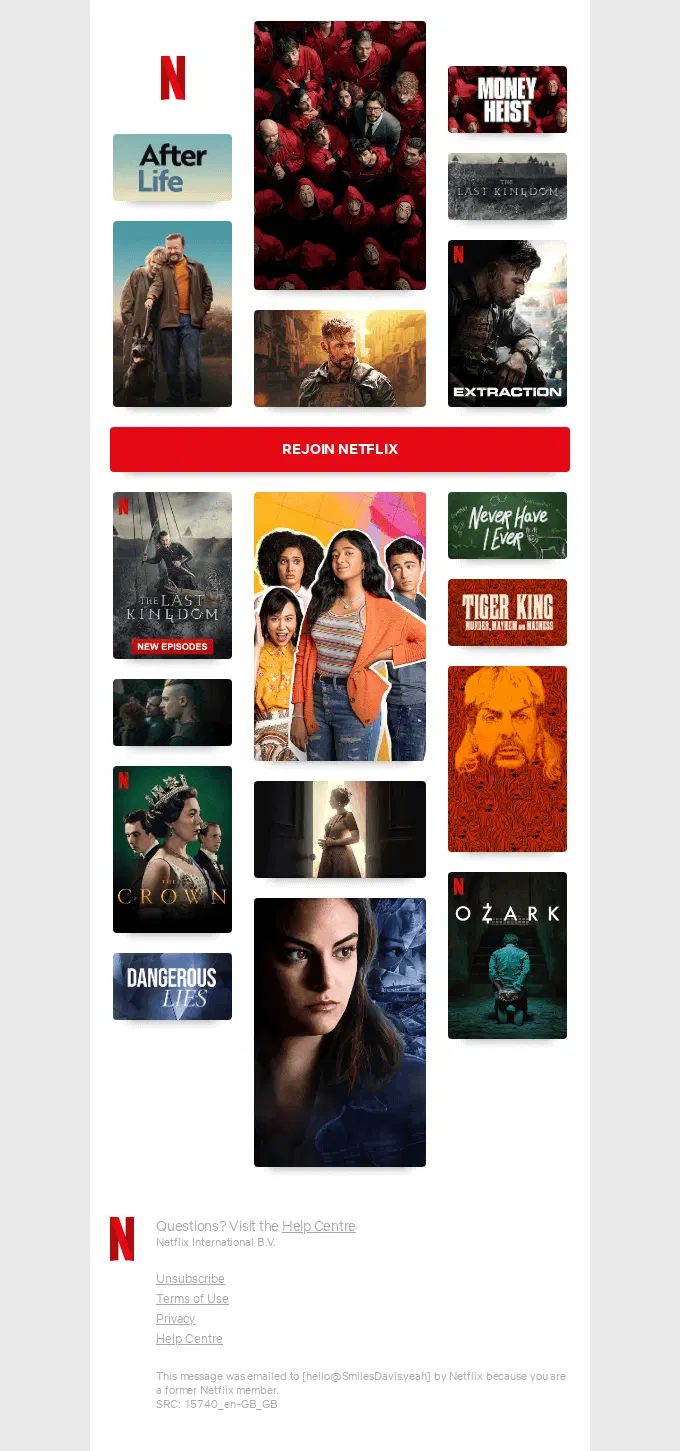
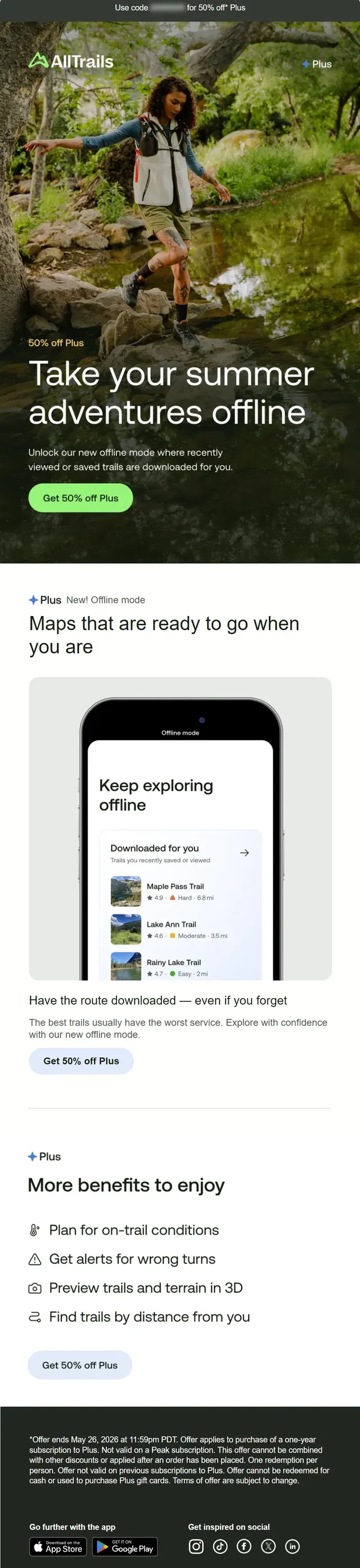
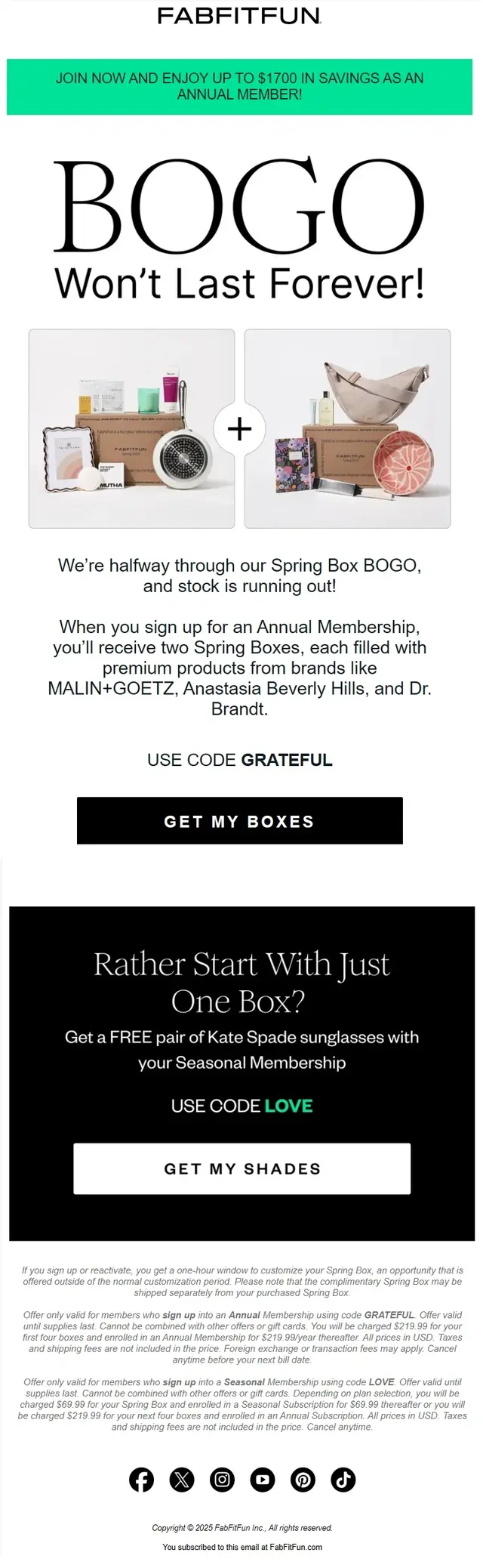
Subscription winback emails target customers who have canceled, paused, or allowed a paid subscription to lapse. The goal is usually straightforward: remind them what they are missing and give them a reason to reactivate, restart, or rejoin.

Last Chance Winback Email Examples
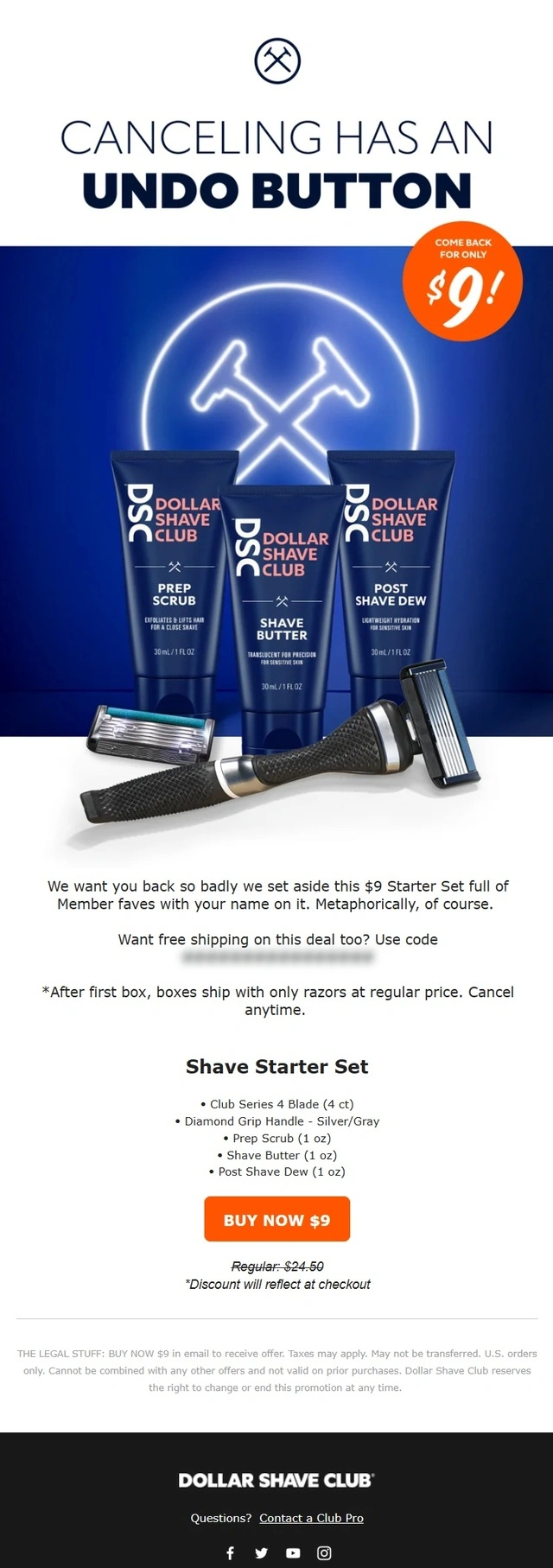
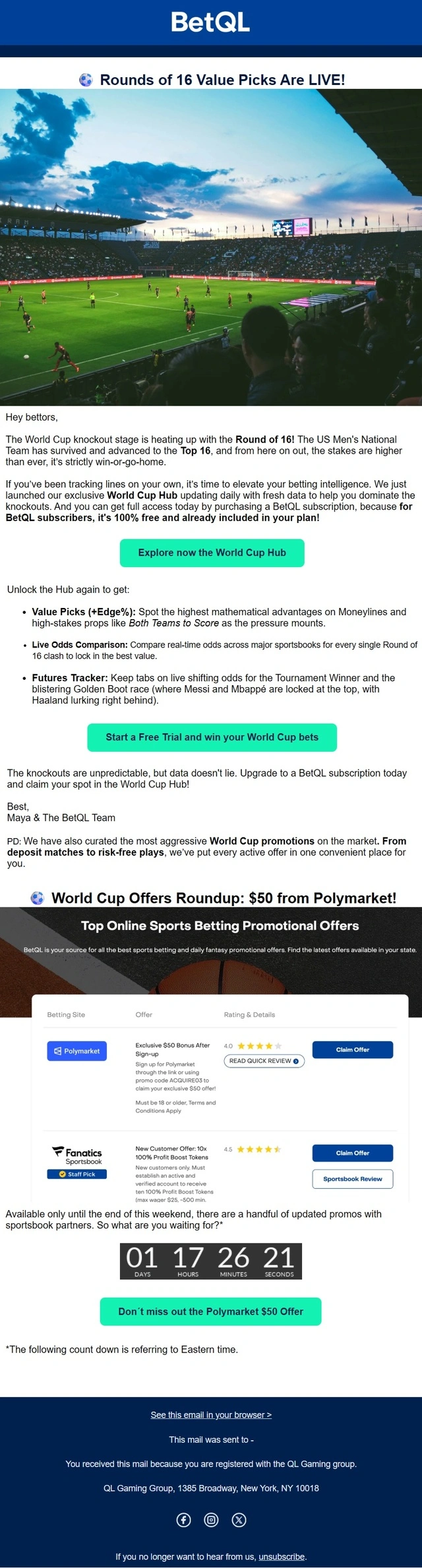
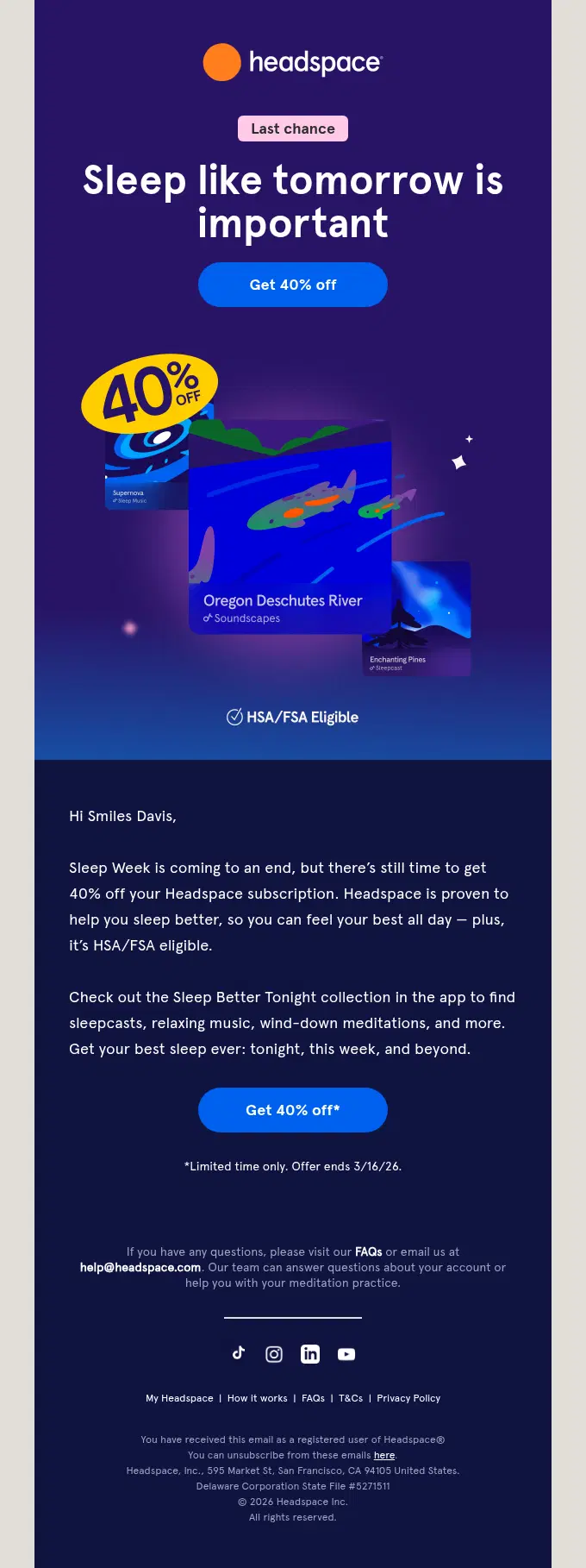
Last chance winback emails add urgency to the final stage of a campaign. They often remind customers that an offer, credit, or special incentive is about to expire and give them one more opportunity to return before it disappears.
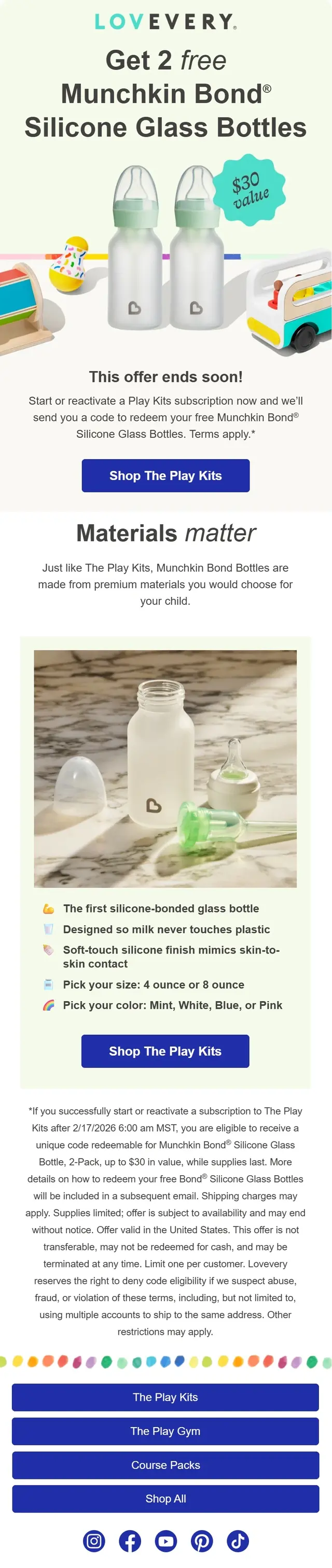
B2B Winback Email Examples
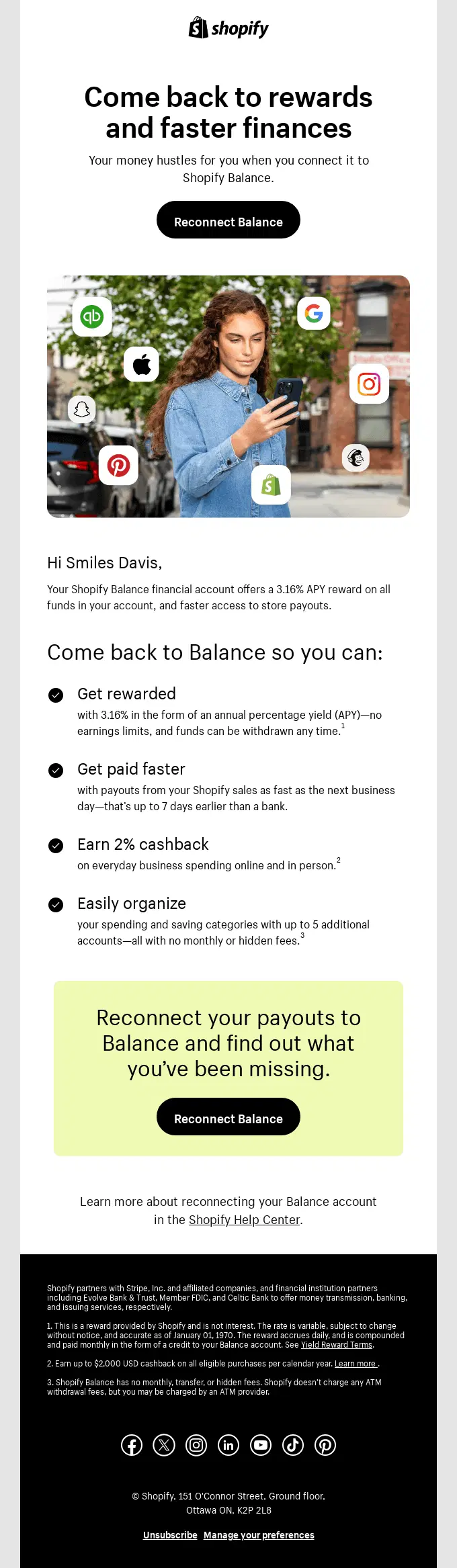
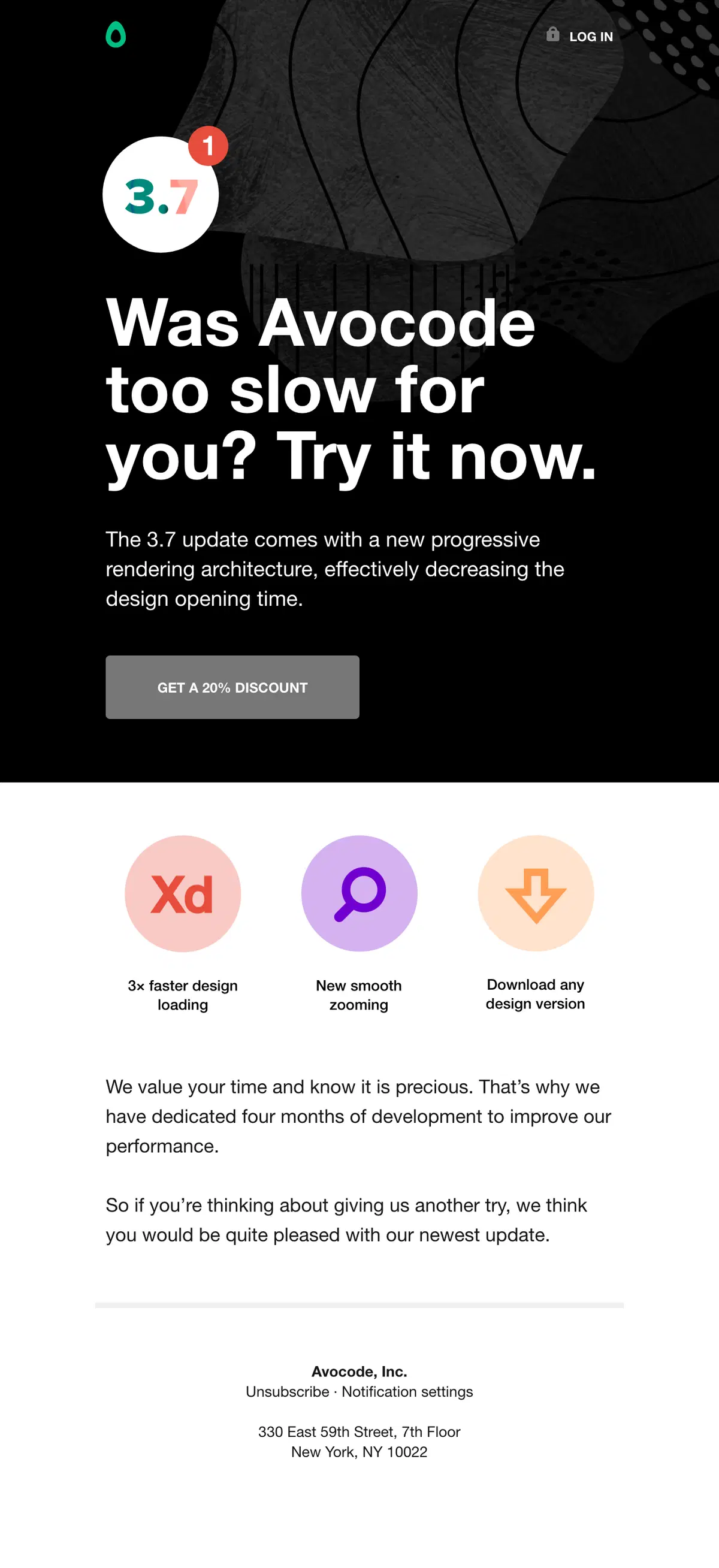
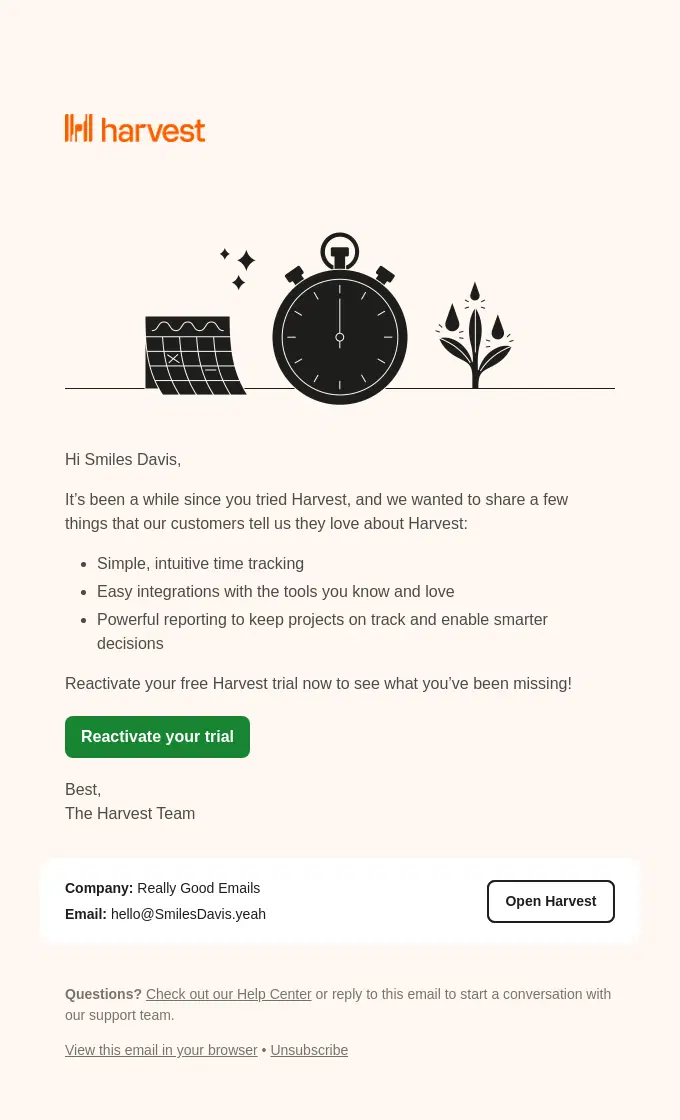
B2B winback campaigns focus on former clients, subscribers, or business customers who have stopped using or paying for a product or service. Instead of relying only on discounts, these emails may highlight new features, improved value, business outcomes, account benefits, or a straightforward invitation to restart the relationship.
Winback Email Flow Examples
A winback email flow uses several messages instead of relying on a single attempt to bring a customer back. The sequence can gradually move from a simple reminder or personalized message to an incentive and, eventually, a final opportunity to return.
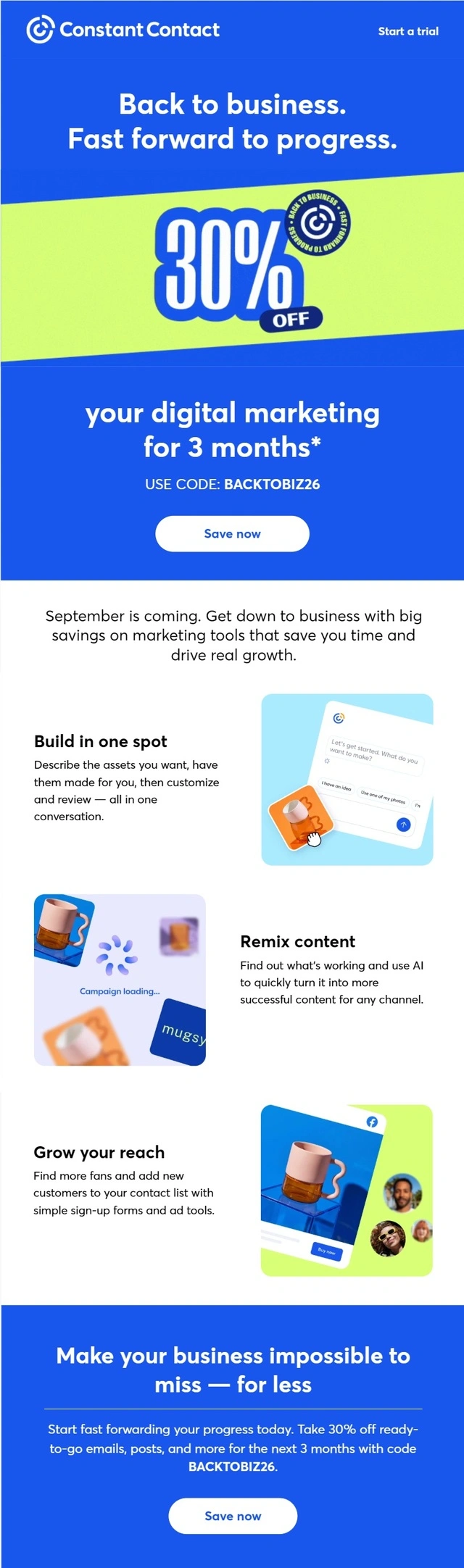
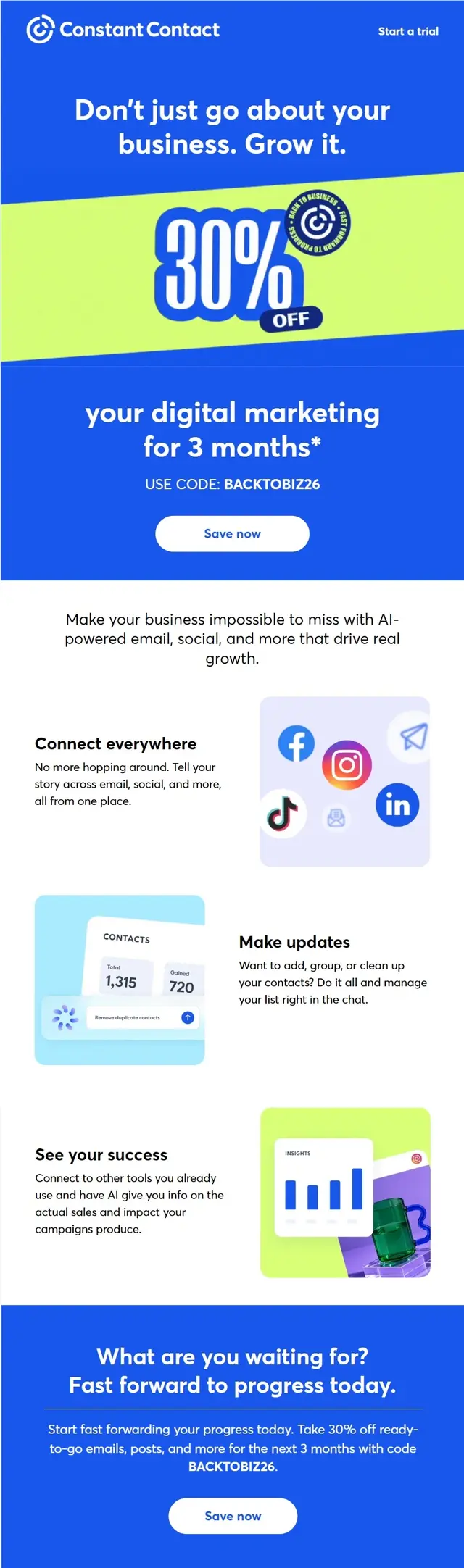
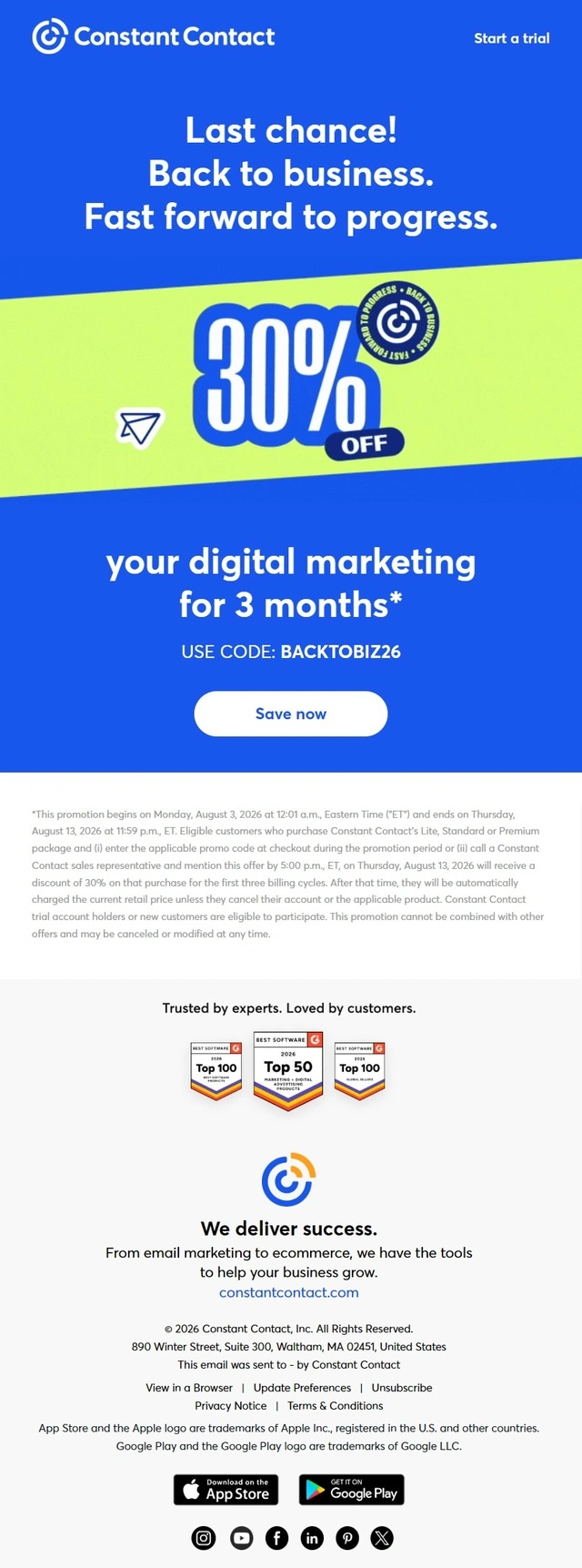
Constant Contact 3-Step Welcome Back Flow
Here is a 3-step winback flow example by Constant Contact, showing how the brand keeps the same 30% comeback offer consistent across the sequence while gradually increasing urgency, from the initial incentive to a reminder and a final last-chance email.
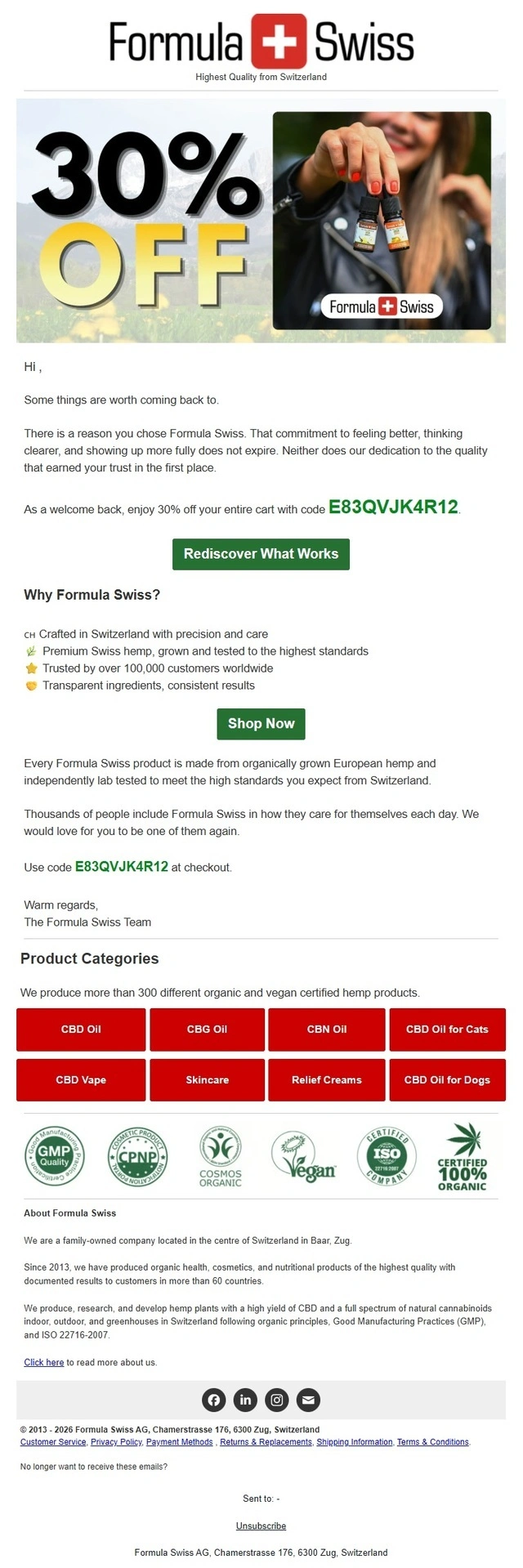
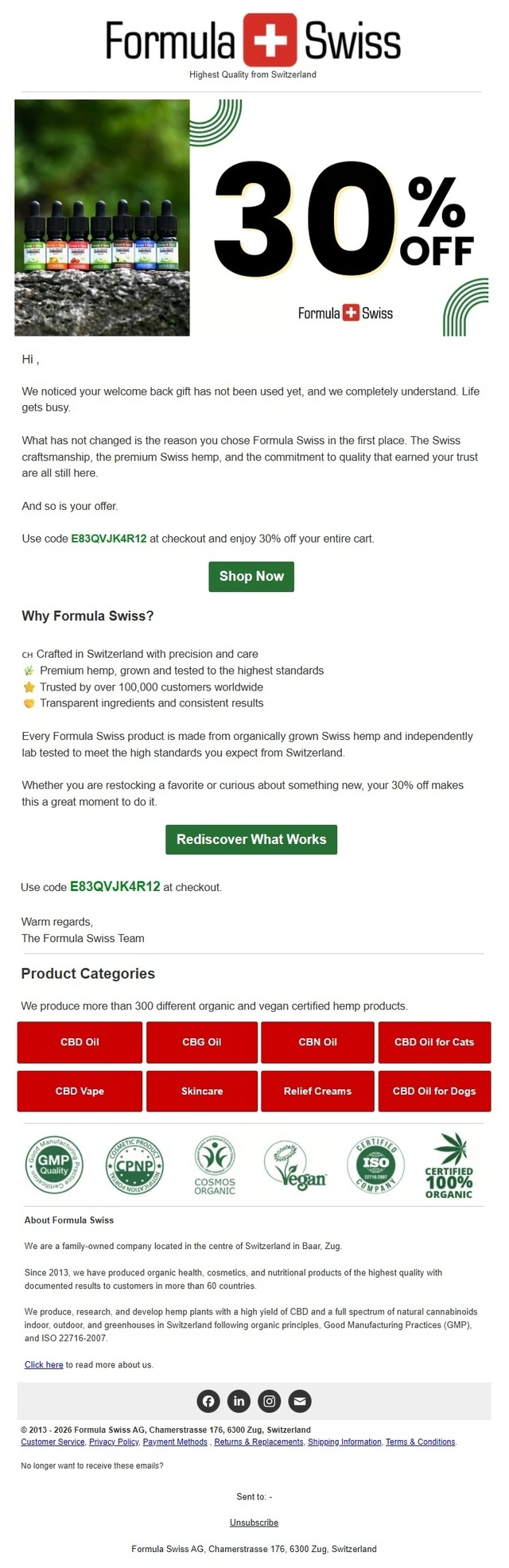
Formula Swiss 3-Step Welcome Back Flow
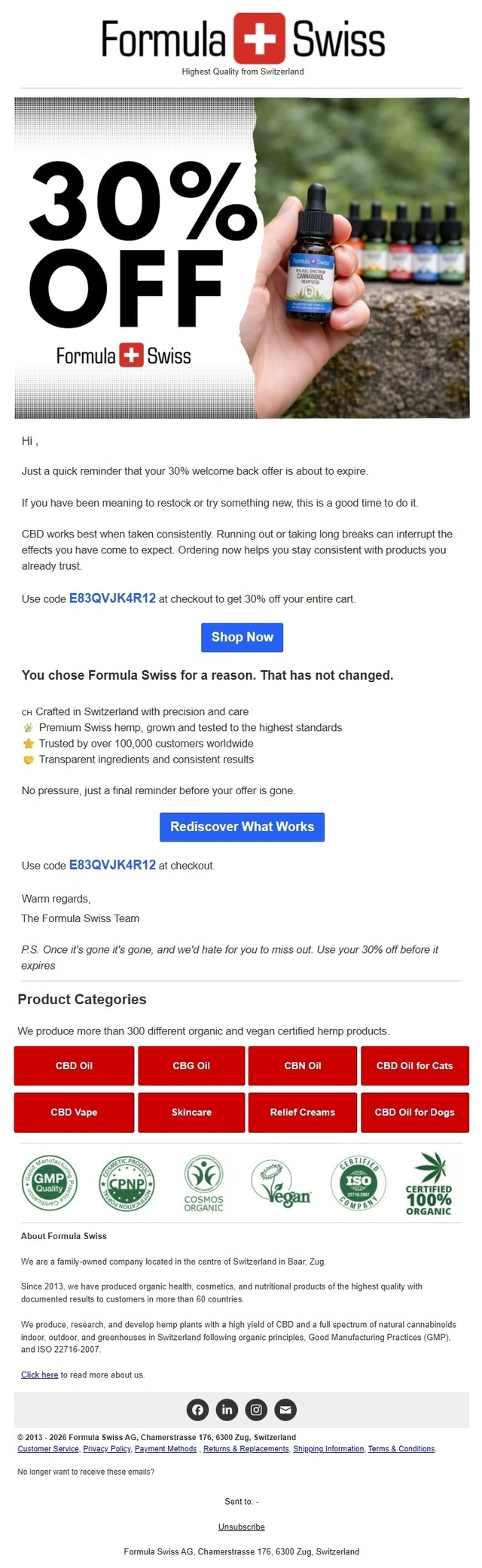
Formula Swiss uses a three-step winback flow built around the same 30% comeback offer. The sequence starts with a clear welcome-back incentive, follows with a benefit-focused reminder, and finishes by nudging customers who are still considering the offer.
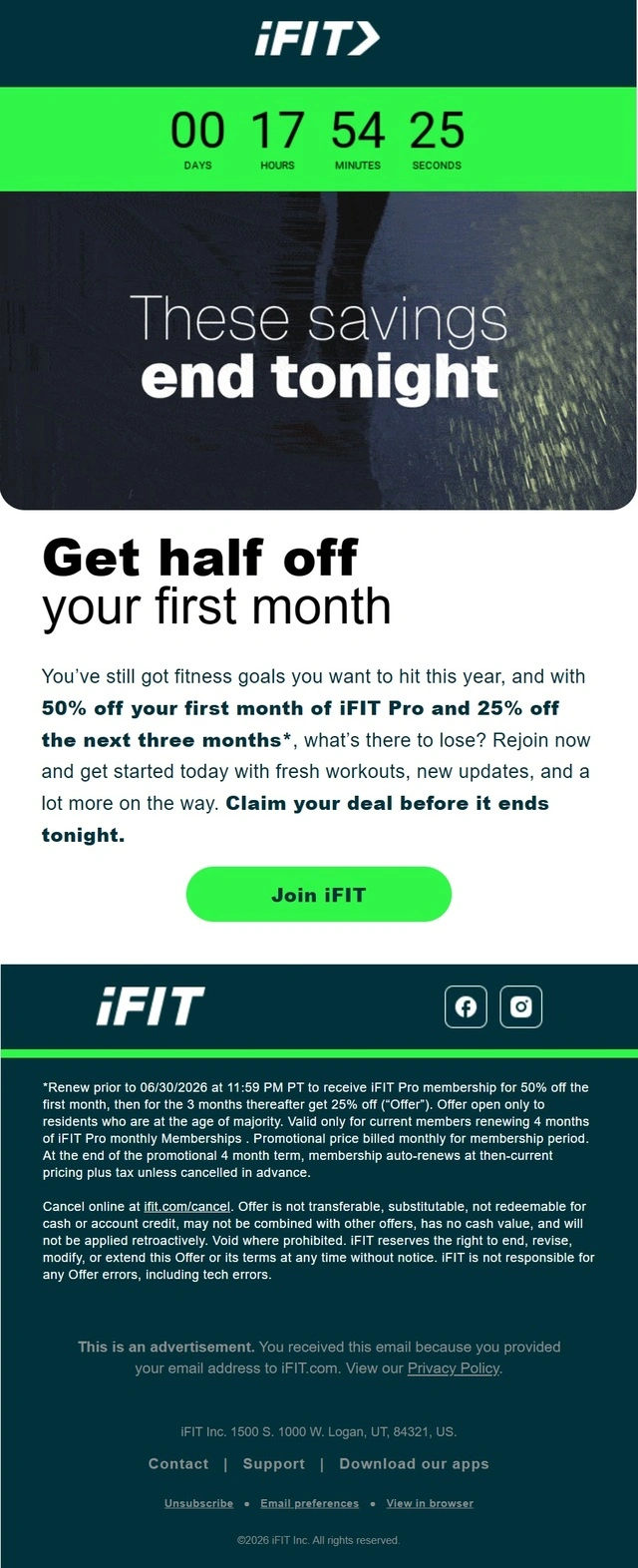
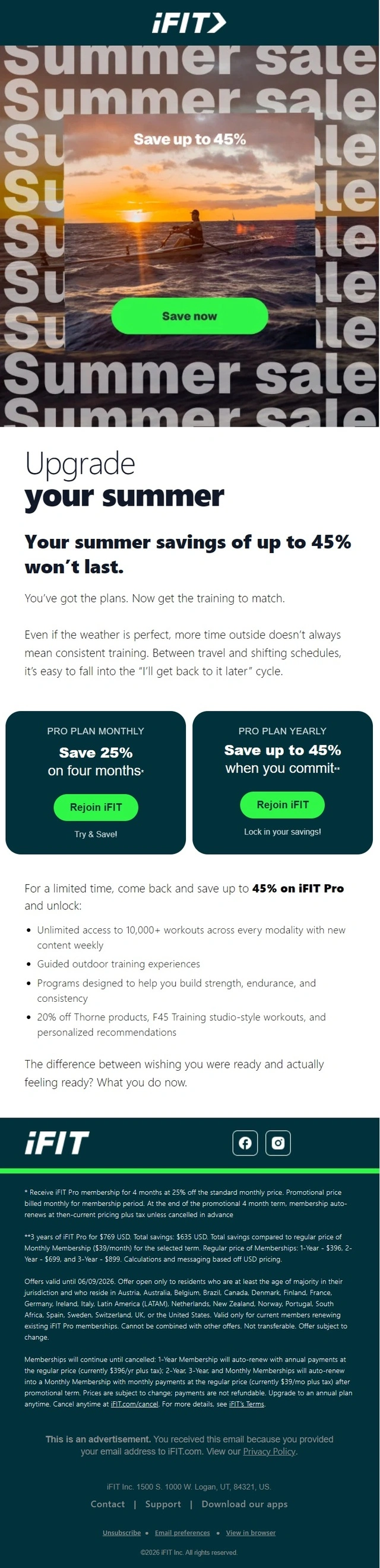
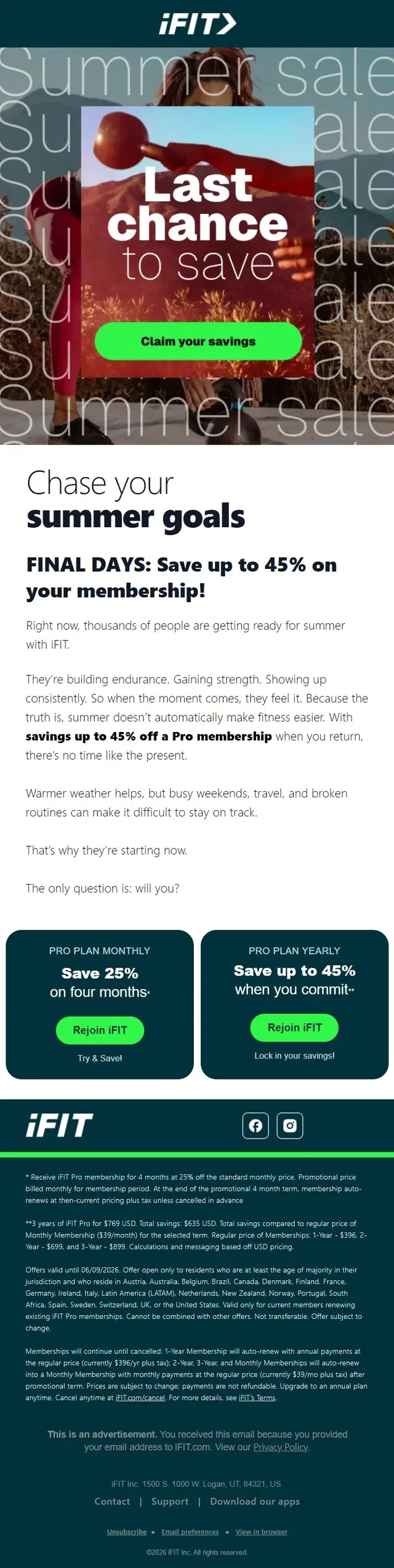
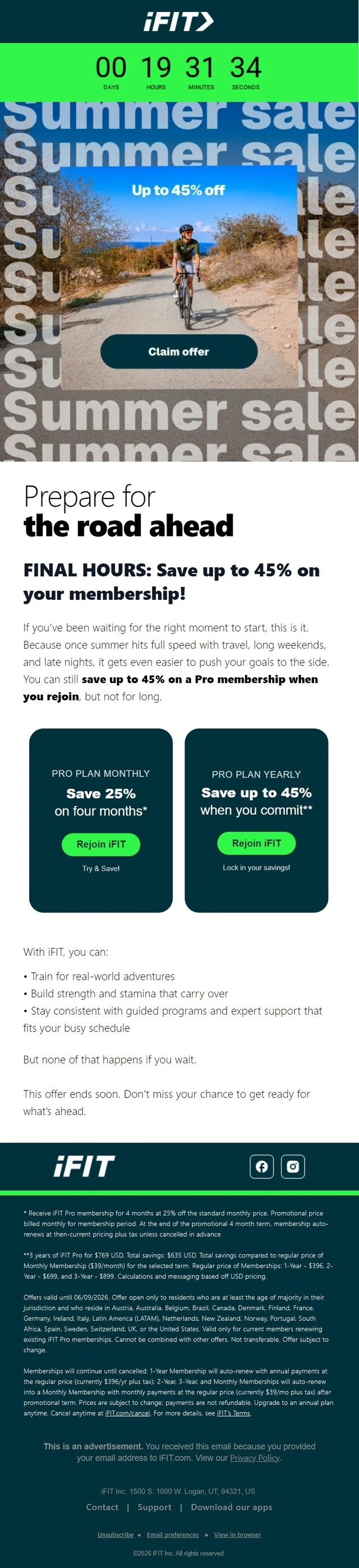
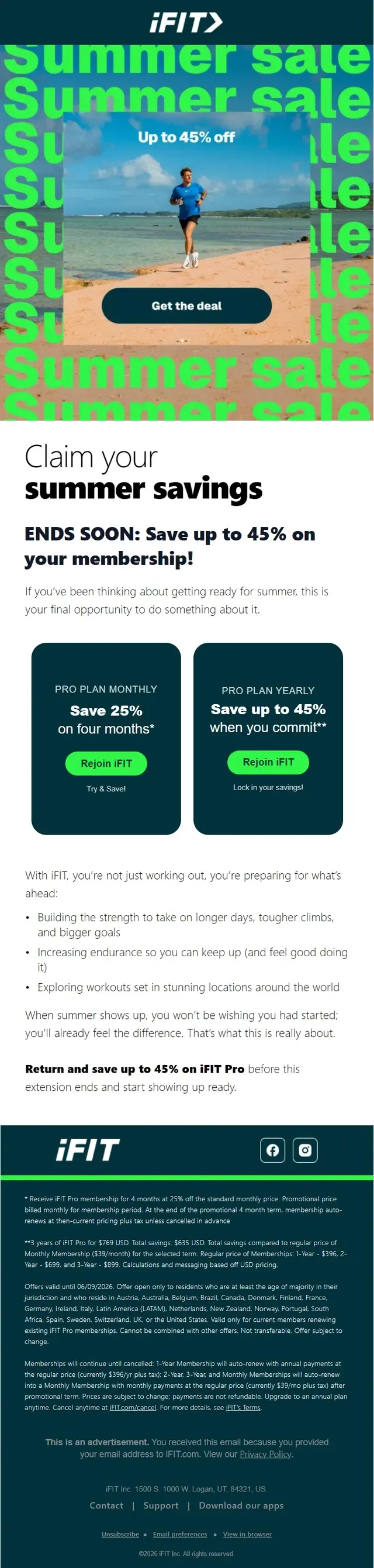
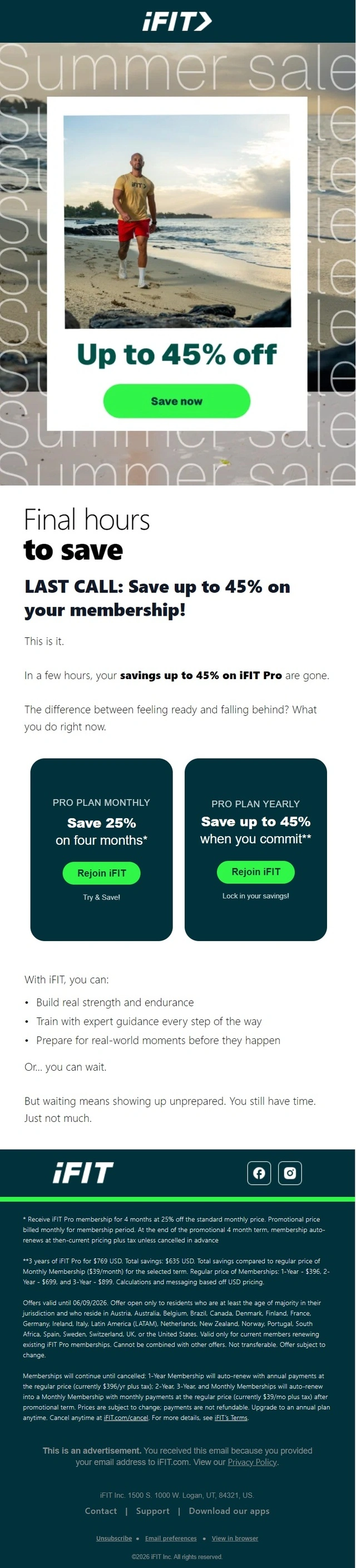
iFit 8-Step Welcome Back Flow
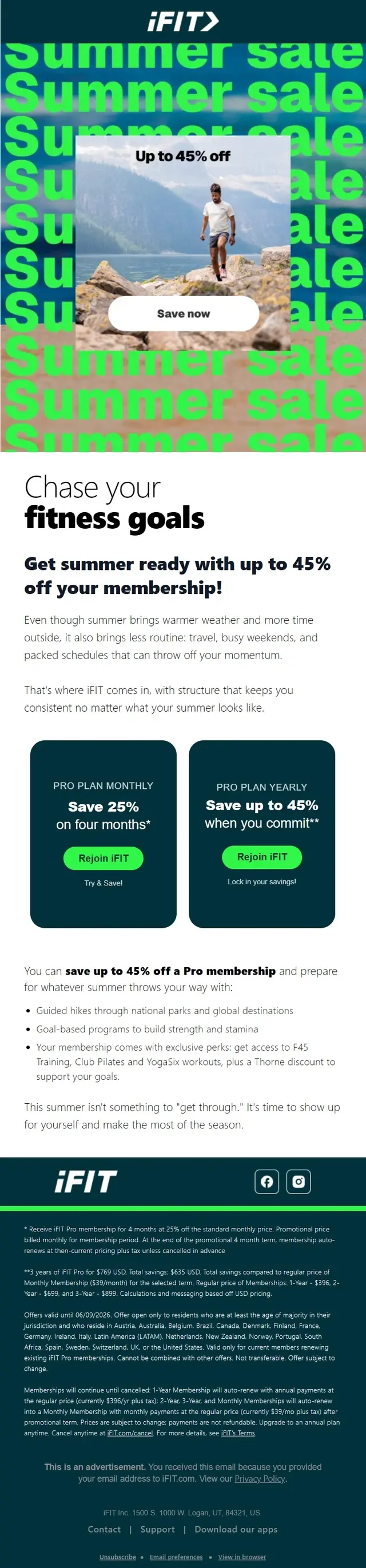
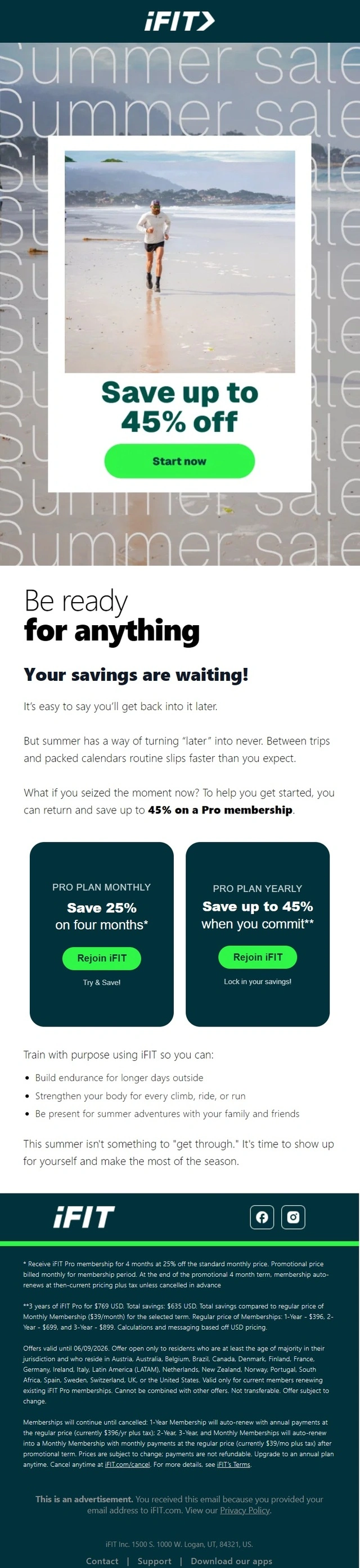
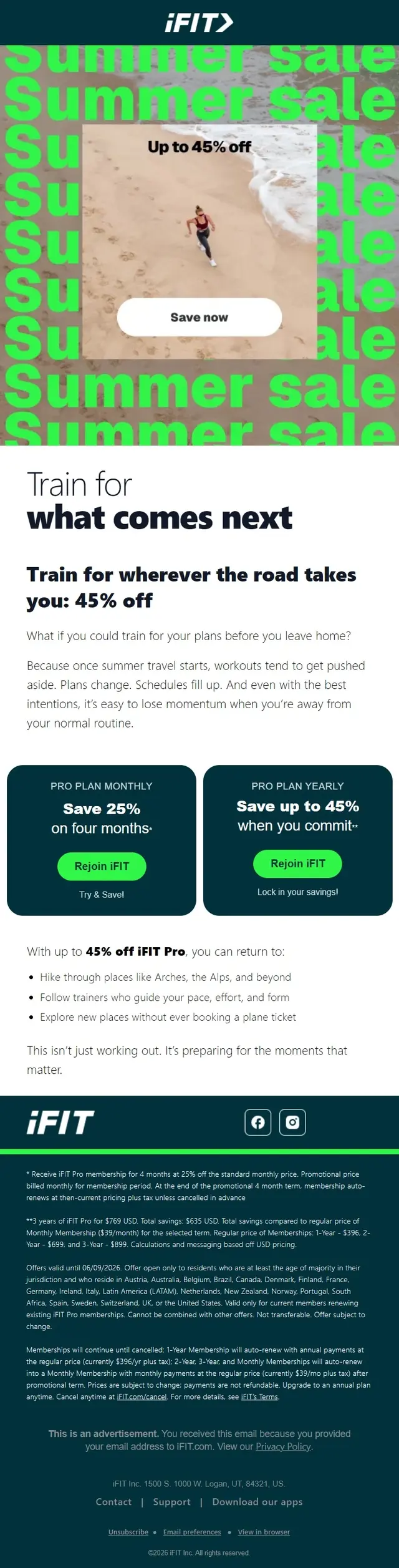
Winback flows do not always have to stop after two or three emails. For higher-value subscriptions, brands may use a longer sequence to test different messages, reinforce benefits, and gradually increase urgency. This 8-email iFIT winback flow keeps the same membership offer consistent while moving from an initial invitation to rejoin through benefit-focused reminders, limited-time messaging, and final-chance emails.
What Is a Winback Email Campaign?
A winback email campaign is a message or series of messages sent to previous customers who have stopped buying or canceled a paid subscription. The goal is to give them a relevant reason to return, whether through a special offer, new products, personalized recommendations, rewards, or a reminder of the value they already know.
Winback emails target customers who have purchased before but stopped buying or canceled a paid subscription. Unlike broader re-engagement campaigns, their main goal is to turn a lapsed customer into a paying customer again.
Winback Email Subject Line Ideas
A good winback email subject line should quickly communicate why it is worth opening the email again. The best angle depends on why the customer stopped buying and what you are offering them now.
Use the examples below as inspiration and adapt the wording to your brand, offer, and customer relationship.
| Email Type | Subject Line Ideas | What They Signal |
|---|---|---|
|
We Miss You / Come Back |
• We miss you! |
Reopens the relationship with a personal, low-pressure reason to return |
|
Discount Winback |
• We miss you. Here’s 15% off. |
Makes the financial incentive the main reason to return |
|
Product Recommendation |
• Come back for our bestsellers |
Uses relevant products, bestsellers, or new arrivals to restart interest |
|
Replenishment / Repeat Purchase |
• Running low? |
Connects the email to a natural reorder or replenishment moment |
|
Loyalty / Reward |
• Your points are waiting |
Reminds customers that they already have something valuable to use |
|
Subscription Winback |
• Ready to rejoin? |
Makes reactivation clear and reminds former subscribers what they can regain |
|
Last Chance |
• Your comeback offer ends tonight |
Adds genuine urgency around an expiring offer, reward, or reactivation incentive |
|
B2B Winback |
• Ready to come back? |
Focuses on returning to the product, account value, or improvements made since the customer left |
Simple Winback Subject Line Formulas
You can also create your own winback subject lines by combining the reason for returning with the most relevant customer signal.
| Formula | Example |
|---|---|
| Comeback + incentive | Come back and get [discount/reward] |
| Inactivity + curiosity | It’s been a while. See what’s new. |
| Previous relationship + recommendation | Based on what you loved before, you might like these. |
| Replenishment + timing | Running low on [product]? |
| Reward + urgency | Your [points/credit/reward] expires [date]. |
| Subscription + benefit | Reactivate to get [benefit] again. |
| Last chance + deadline | Last chance to use your [offer/reward] before [date]. |
The strongest subject line should match the actual reason behind the email. Lead with the reward when unused points are the hook, mention the product when the timing suggests a reorder, and use urgency only when an offer or benefit genuinely has a deadline.
Frequently Asked Questions
What are the best practices for winback emails?
The best winback emails feel relevant to the customer rather than like another mass promotion. A few things matter most:
- Choose the right timing. Give customers enough time to become genuinely inactive before starting the campaign.
- Use what you know about the customer. Previous purchases, preferences, subscription history, and loyalty status can make the message more relevant.
- Give them a clear reason to return. That might be a new product, useful recommendation, reward, discount, or reminder of the value they already know.
- Keep the main CTA obvious. Make the next step easy, whether that is shopping again, restarting a subscription, or using a reward.
- Don’t lead with your biggest discount immediately. A simple reminder may be enough for some customers.
- Know when to stop. Repeated winback emails to someone who consistently ignores them can do more harm than good.
What is the best winback campaign strategy?
There is no single winback strategy that works for every customer. A strong campaign usually starts with a low-pressure reason to return and gradually introduces a stronger incentive if the customer does not respond.
For example, the first email might highlight new products or remind customers what they liked about the brand. A later email can add a discount or reward, followed by a final reminder before the offer expires. The strategy should reflect purchase frequency, customer value, and how long someone has been inactive.
When should you send a winback email?
The right time depends on how often customers normally buy from you. A brand selling coffee may identify a lapsed customer within weeks, while a furniture or electronics store may need to wait several months.
Start by looking at the typical time between purchases and send the winback campaign when a customer moves noticeably beyond that window. Subscription businesses can also trigger winback emails after a cancellation, pause, or expired membership.
How many emails should be in a winback campaign?
A winback campaign can include anywhere from two or three emails to a longer sequence, depending on the buying cycle, customer value, and type of product or subscription. Short flows are common, but higher-value subscriptions may use more touchpoints to test different messages and gradually increase urgency.
A simple sequence could include an initial reminder, a stronger reason to return, an incentive, and a final chance message. The exact number should depend on the buying cycle, the value of the customer, and how people respond to each stage of the campaign.
How do you win back old customers by email?
Start by reminding customers why they chose the brand before and give them a relevant reason to return now. That could mean showing what is new, recommending products based on past purchases, highlighting unused rewards, offering an incentive, or making it easy to restart a canceled subscription.
The strongest winback emails use customer history to make the message feel connected to the previous relationship rather than treating the recipient like a new prospect.
Should you offer a discount in a winback email?
Not always. Discounts can be effective, but they are only one reason a customer might return.
Before offering one, consider testing new products, personalized recommendations, loyalty rewards, improved features, useful content, or a simple reminder. Customers who already intended to come back may not need an incentive at all. If you do use a discount, save stronger offers for later in the winback sequence rather than automatically giving every inactive customer the same deal.
What is the difference between a winback email and a re-engagement email?
A winback email focuses on past customers or paying subscribers and aims to bring them back for another purchase or paid subscription.
A re-engagement email is broader. It can target anyone who has become inactive, including newsletter subscribers, free users, leads, or customers who have stopped opening emails.
In other words, winback is usually tied to recovering a customer relationship and revenue, while re-engagement can simply mean getting someone to interact with the brand again.
How do you create a Klaviyo winback flow?
A Klaviyo winback flow can be triggered when a customer goes longer than expected without making another purchase. The timing should be based on the typical buying cycle rather than using the same delay for every store.
A simple flow might start with a reminder or personalized recommendation, follow with a stronger reason to return, and end with an incentive or last-chance message. You can also segment customers by previous purchases, order value, loyalty status, or buying frequency so the flow feels more relevant to each group.
Build a Winback Flow Around What Brings Customers Back
A strong winback campaign starts with understanding why customers lapse and what could make returning worthwhile. The right sequence can combine reminders, recommendations, rewards, and incentives without relying on the same message every time.
If you use Klaviyo, we can help you build a winback flow around real customer behavior, with the right timing, segmentation, messaging, and offers for your store.