100+ Post Purchase Email Examples You’ll Want to Steal


Post-purchase emails give brands a chance to keep the customer relationship going after an order is placed. From simple thank-you messages and helpful product tips to review requests, cross-sells, replenishment reminders, and loyalty offers, the right post-purchase email can turn a completed order into the start of the next customer interaction.
In this collection, you’ll find 100+ post purchase email examples covering different goals, industries, and stages of the customer journey. We’ve included post purchase thank you emails, follow-up emails, review requests, upsell and cross-sell emails, product education emails, loyalty messages, and replenishment campaigns, along with post purchase email flow examples, design best practices, and subject line ideas you can use for inspiration.
Quick links:
→ Post Purchase Thank You Email Examples
→ Post Purchase Follow Up Email Examples
→ Post Purchase Review Email Examples
→ Post Purchase Cross-Sell and Upsell Email Examples
→ Product Education Post Purchase Emails
→ Loyalty and Referral Post Purchase Emails
→ Replenishment and Reorder Emails
→ Shipping and Delivery Follow Up Emails
Post Purchase Email Flow Examples
Post Purchase Thank You Email Examples
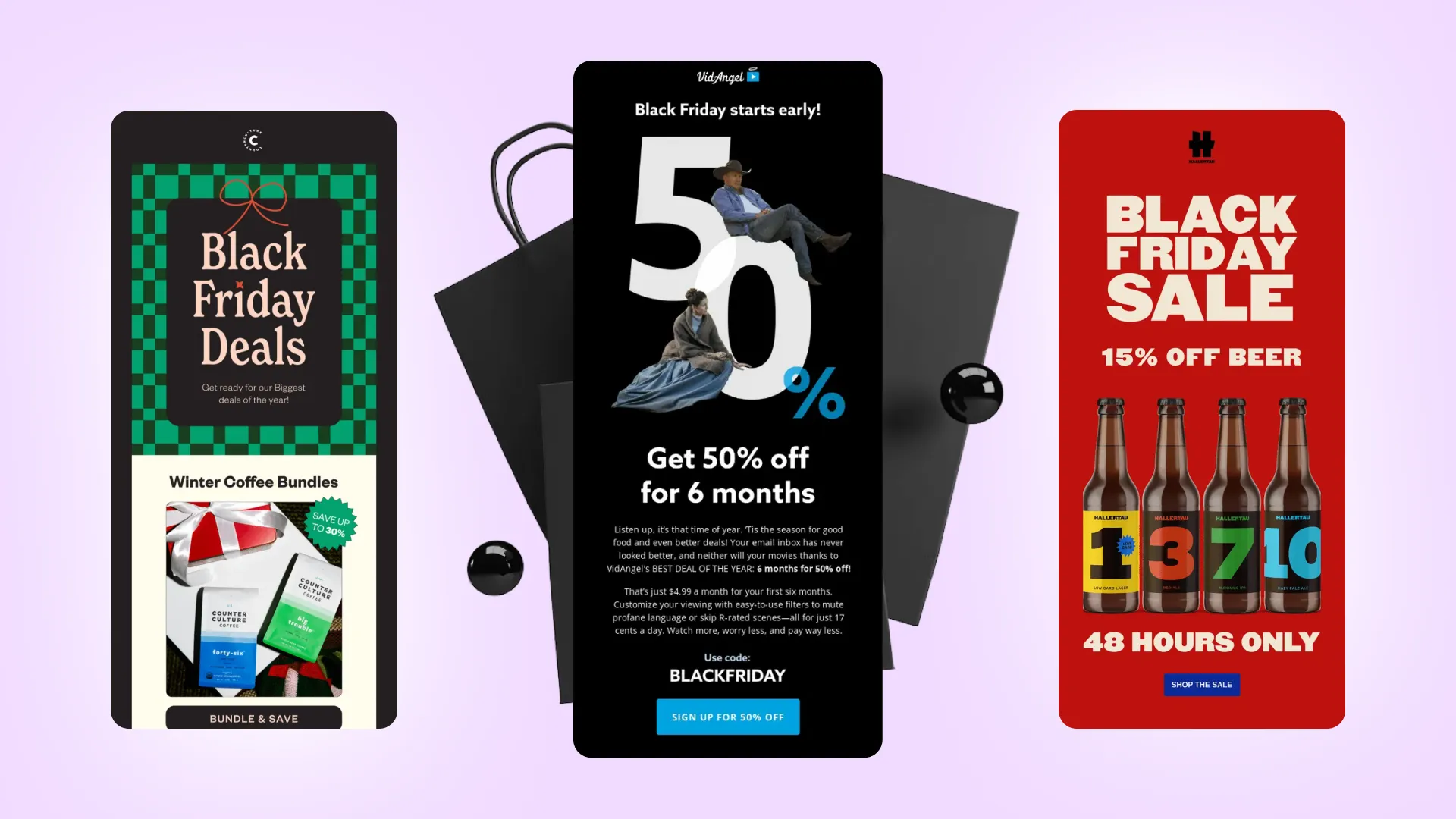
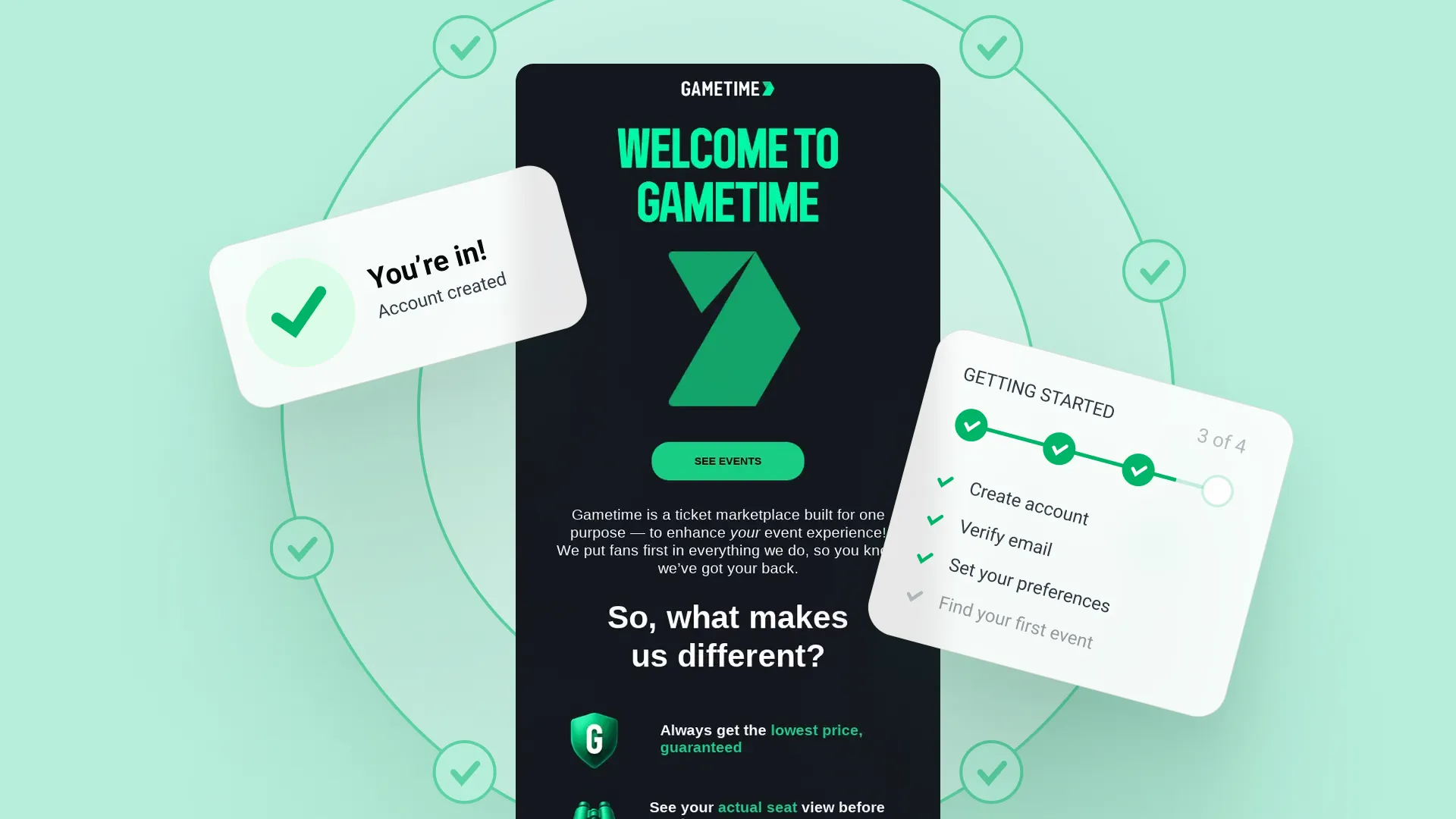
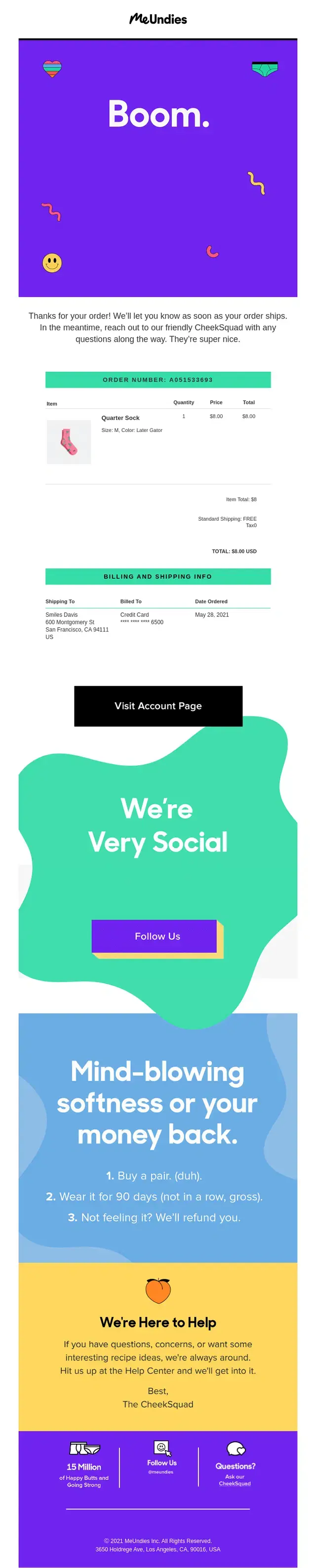
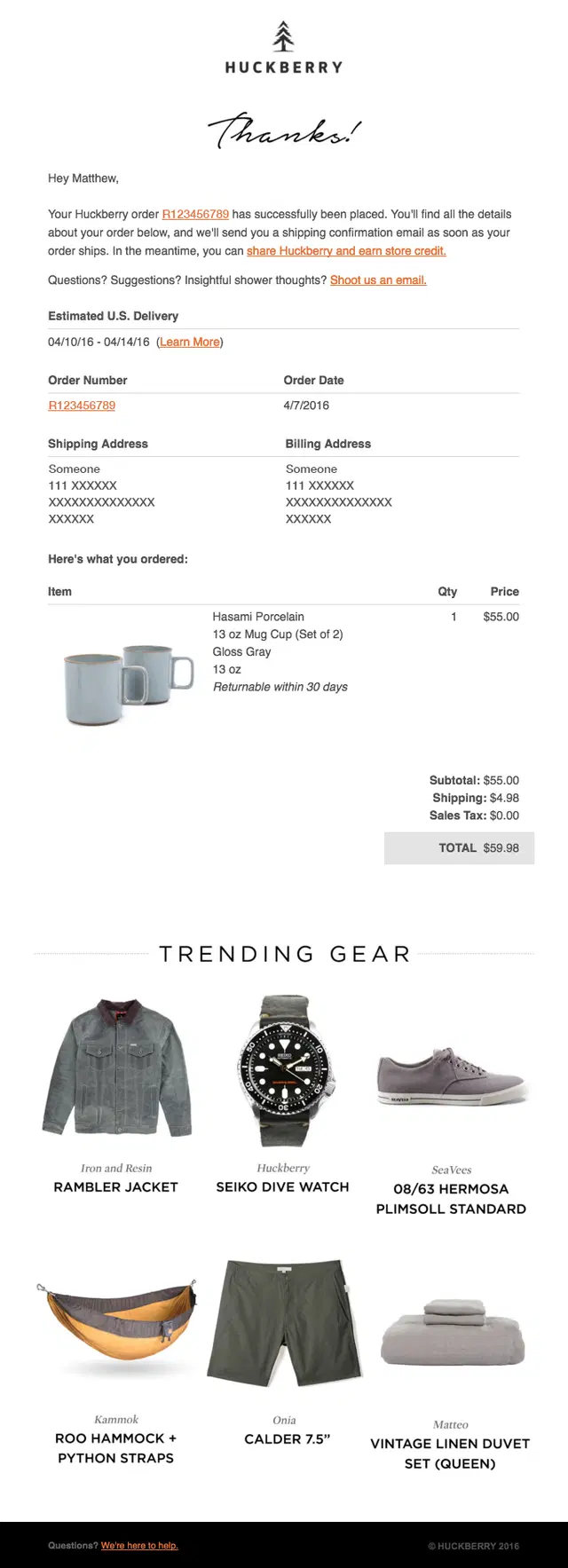
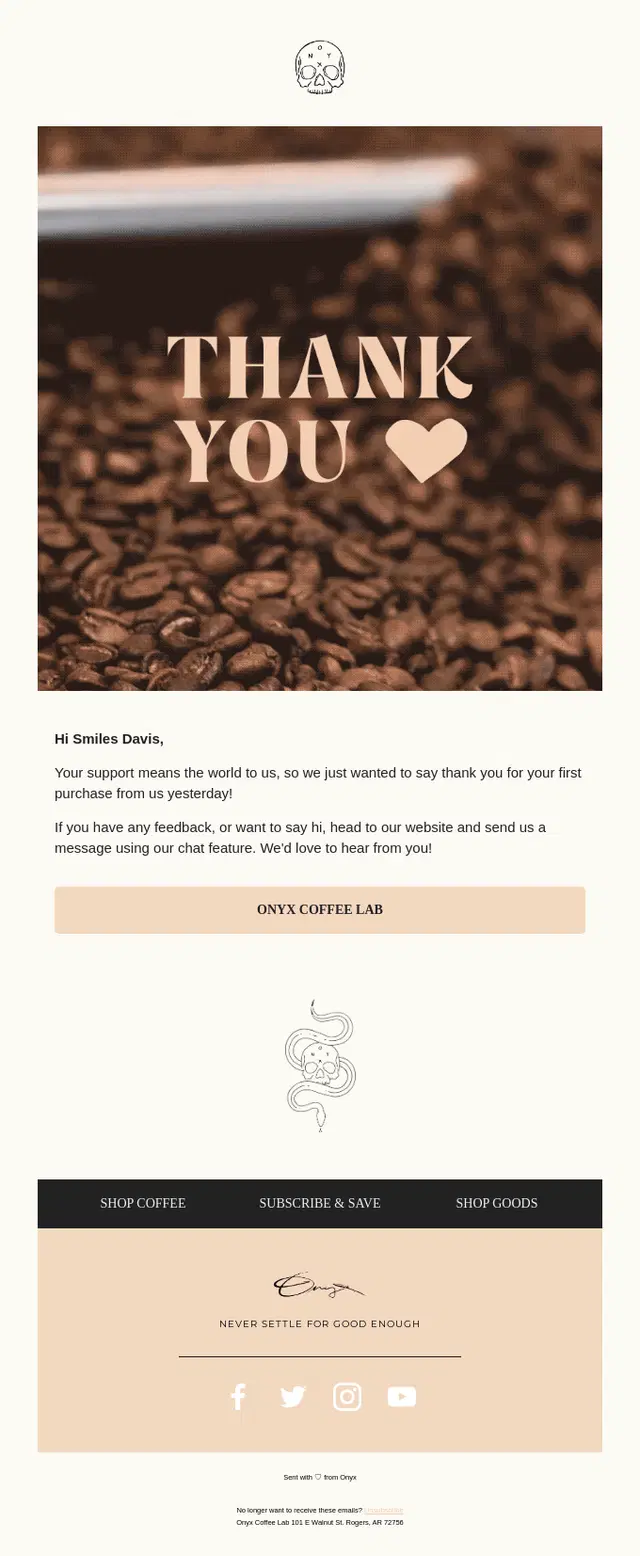
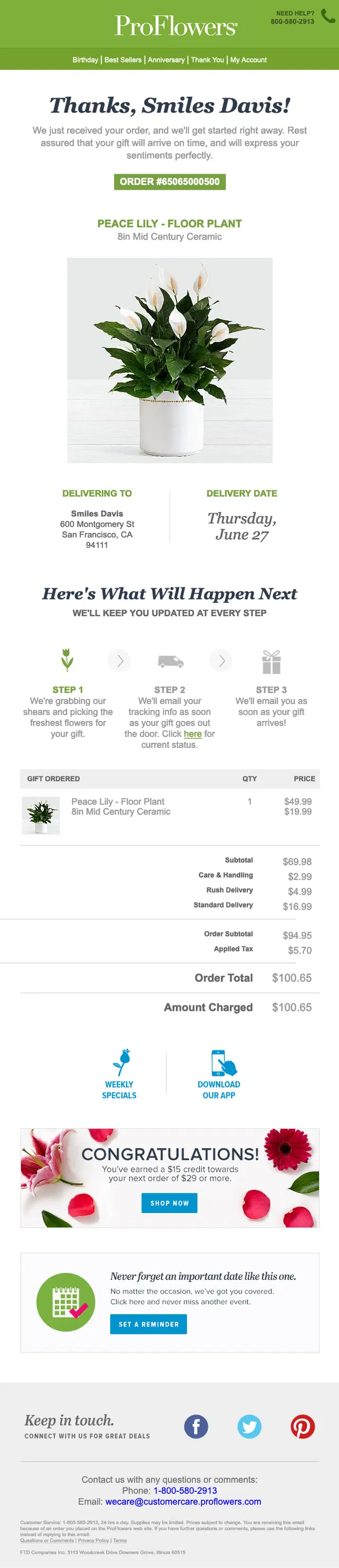
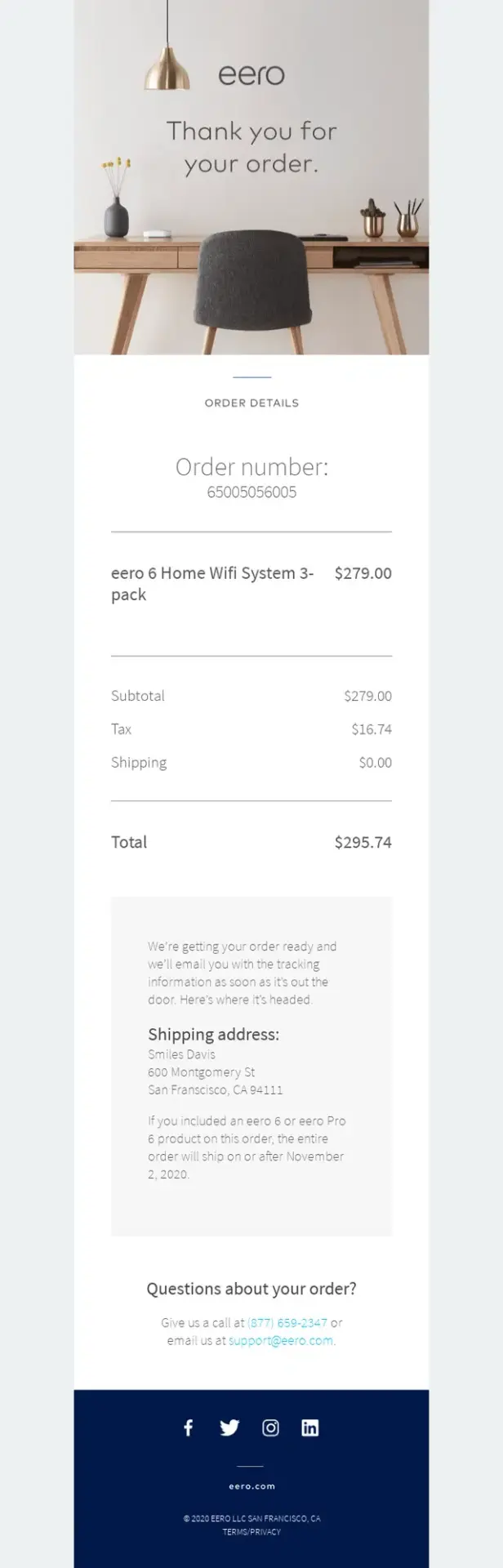
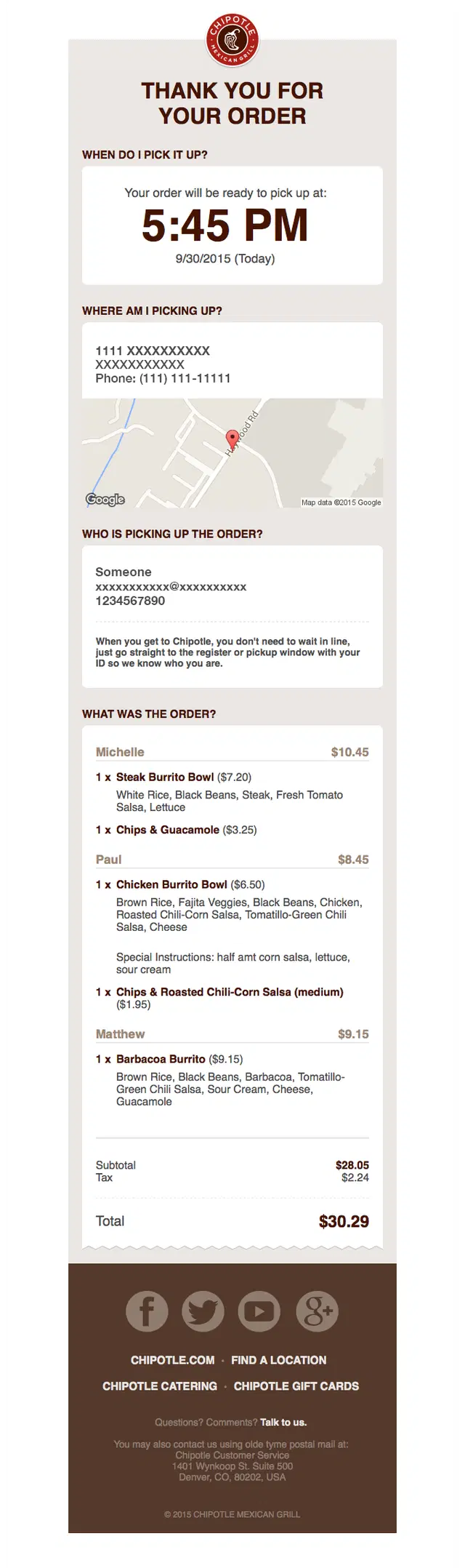
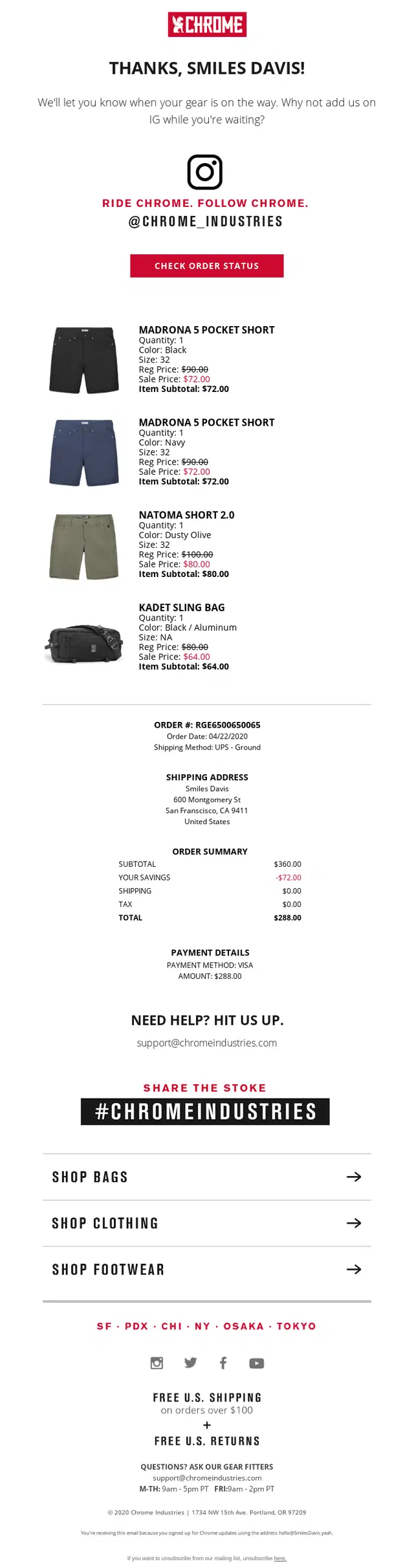
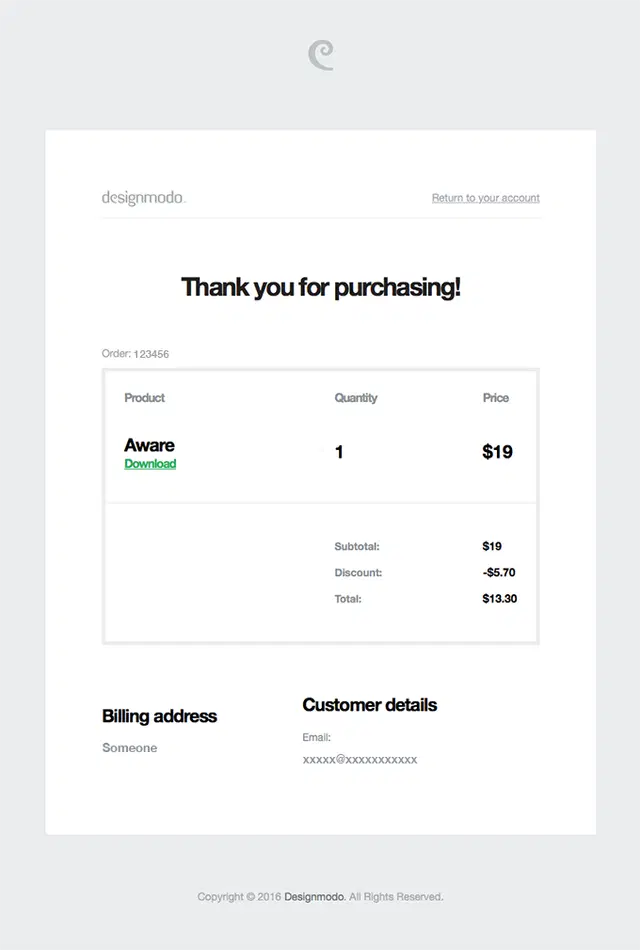
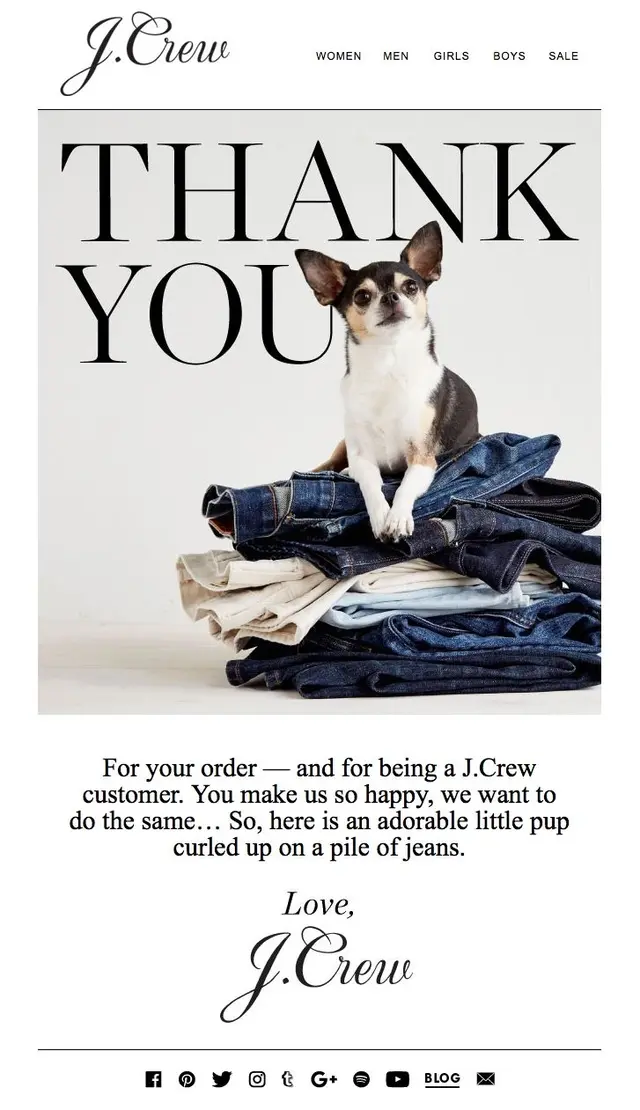
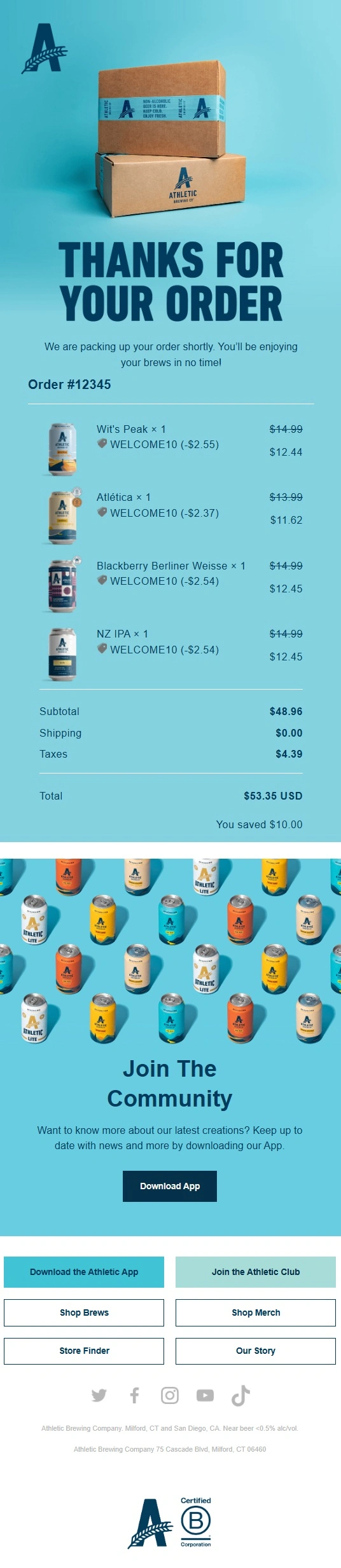
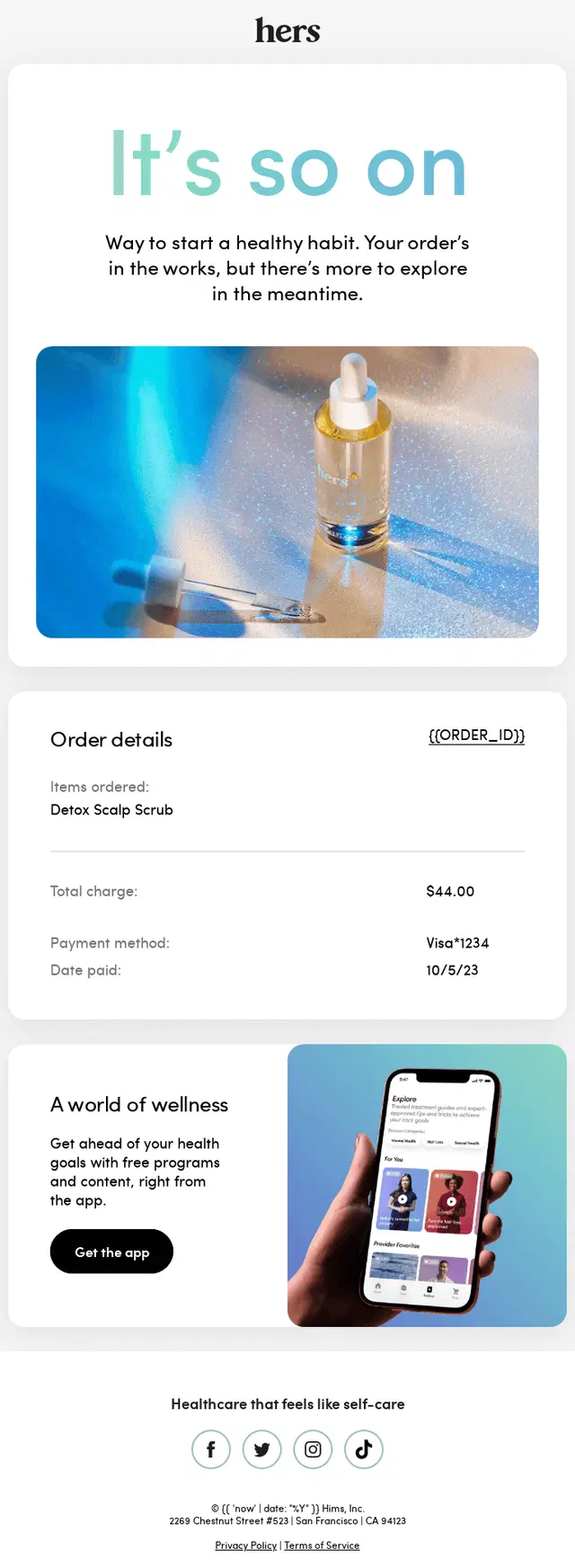
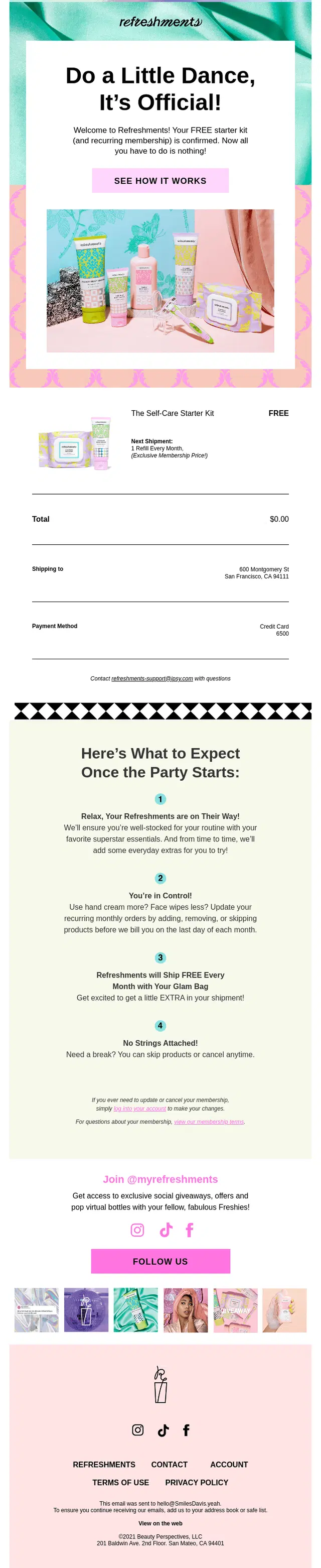
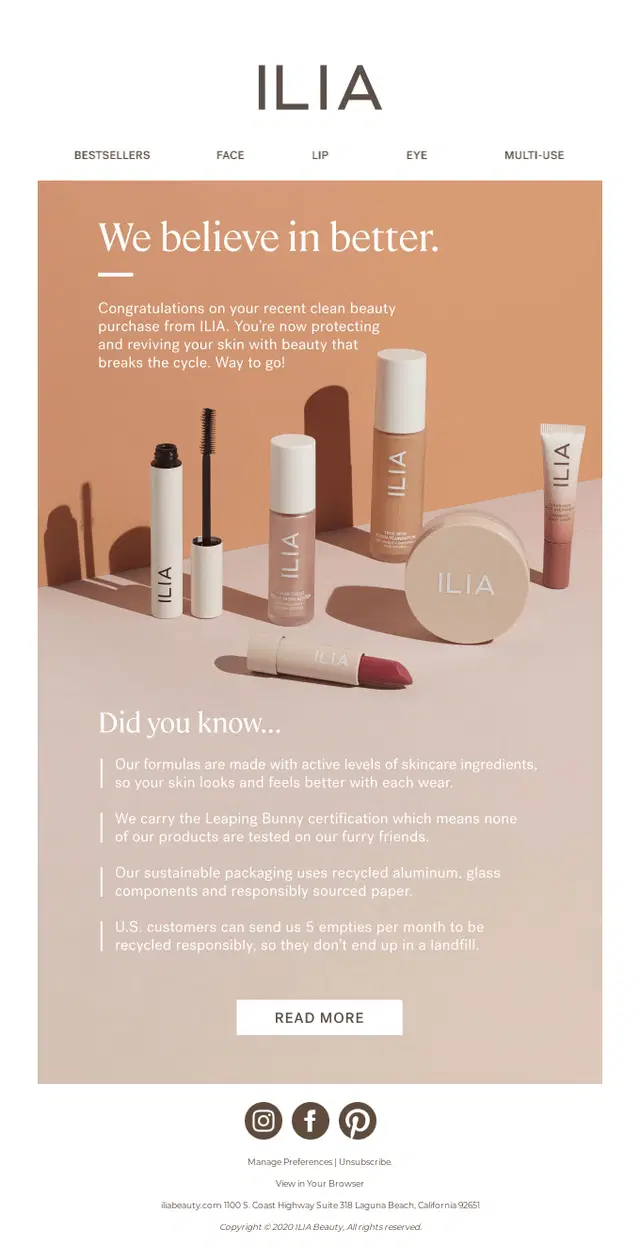
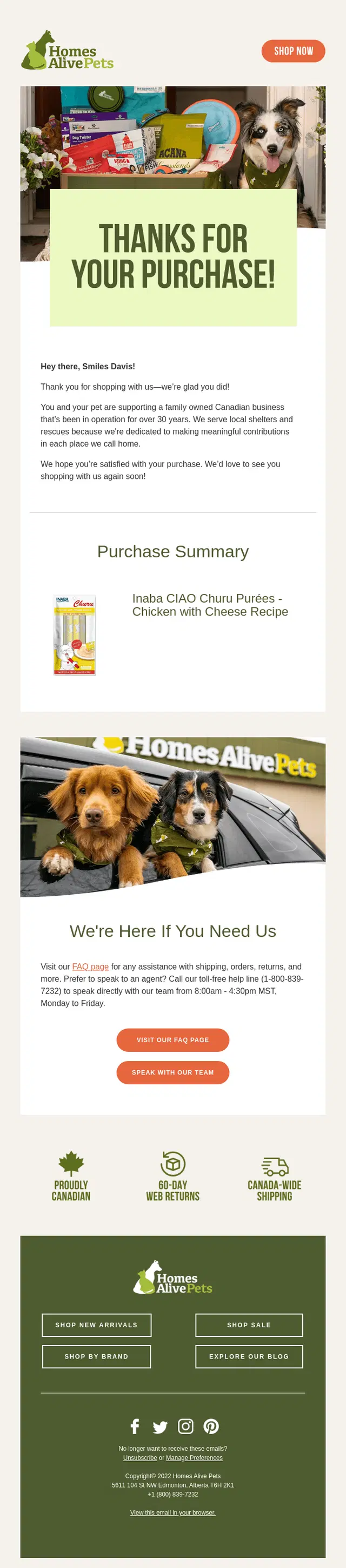
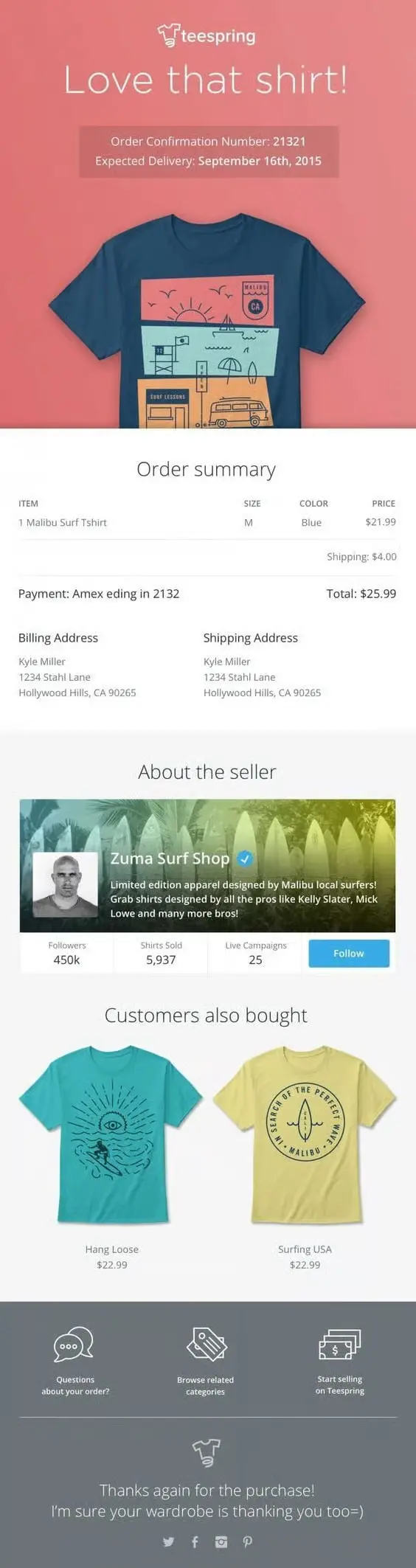
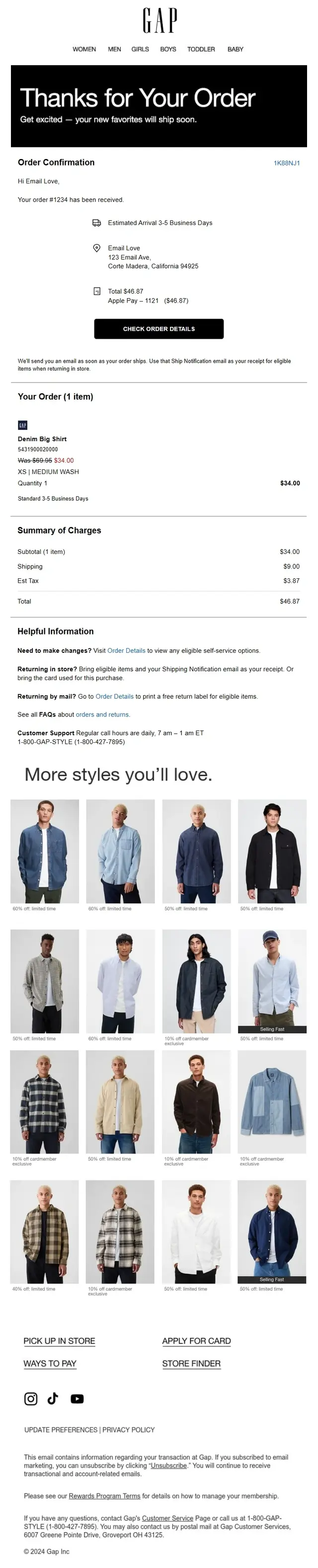
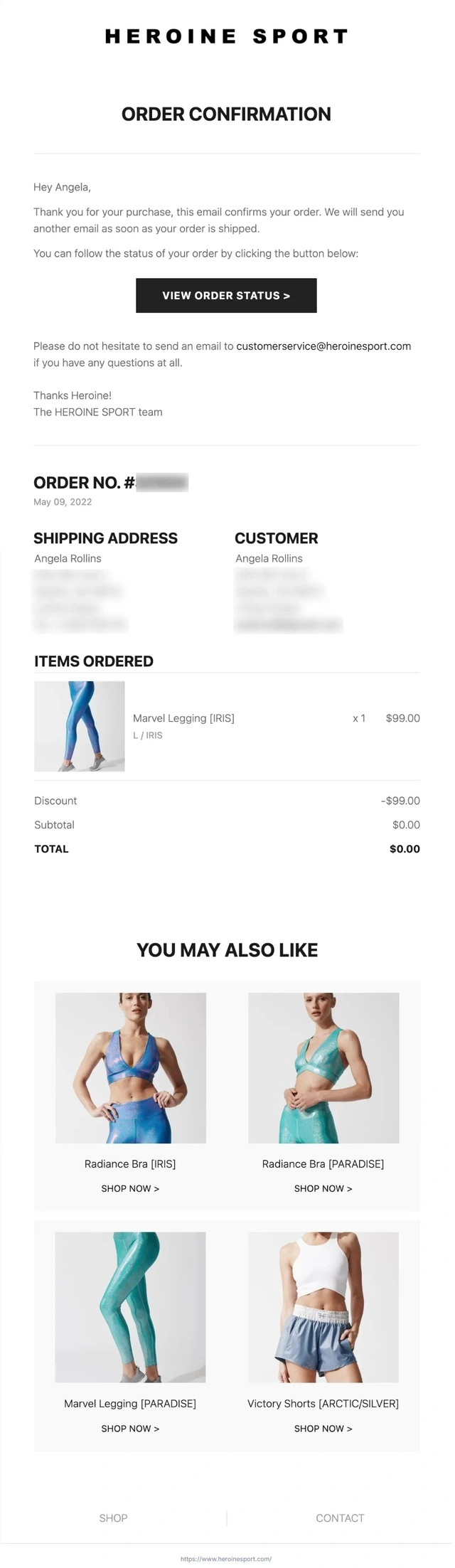
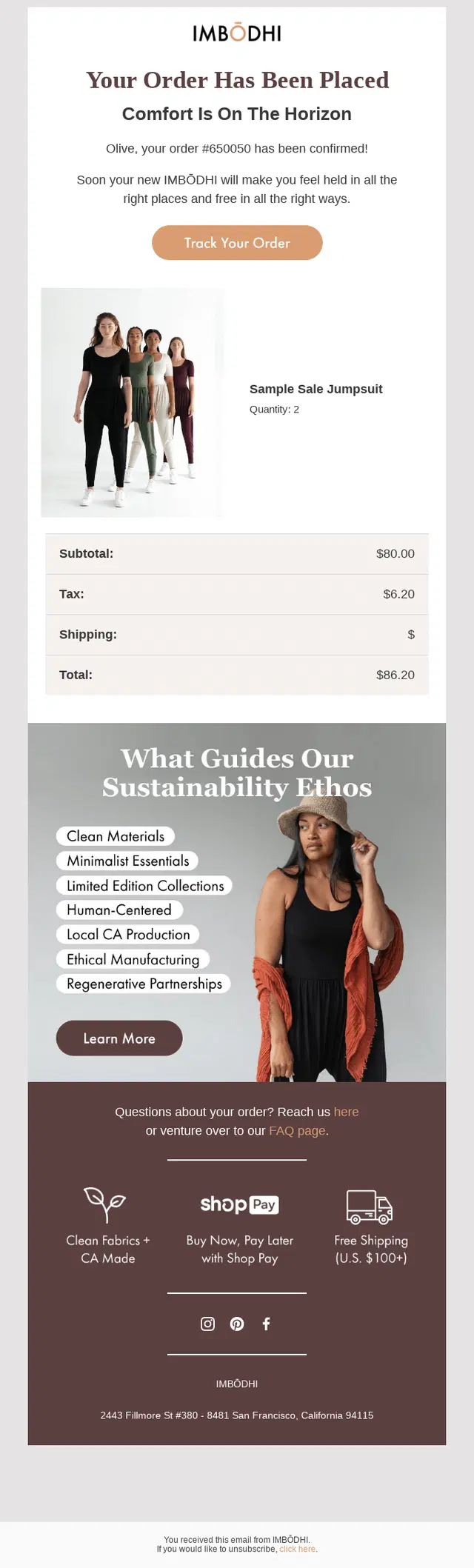
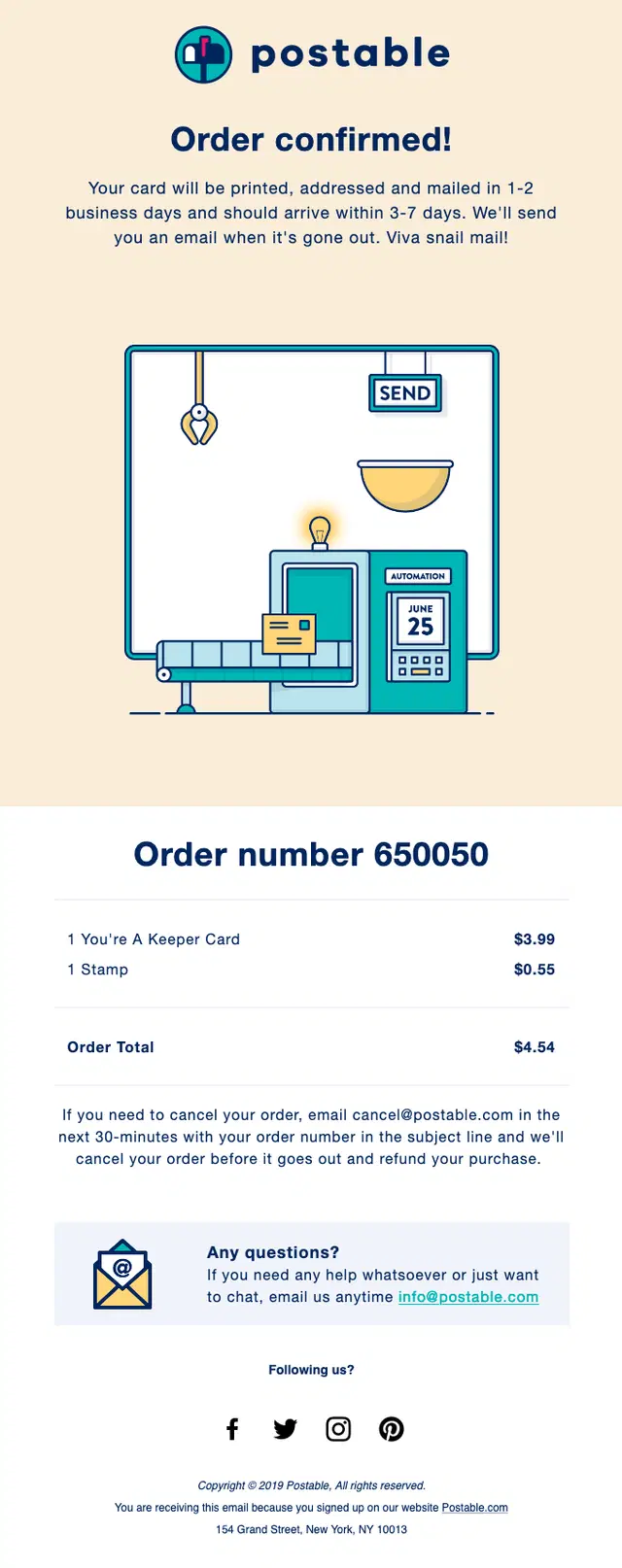
A post purchase thank you email is one of the simplest ways to acknowledge a customer after an order while keeping the conversation going beyond the checkout. These emails can do much more than confirm a purchase. Brands often use them to reinforce their personality, introduce helpful next steps, highlight product benefits, or give customers a reason to return.


Want to dive deeper? See 100+ Order Confirmation Email Examples, Ideas, and Inspiration
Post Purchase Follow Up Email Examples
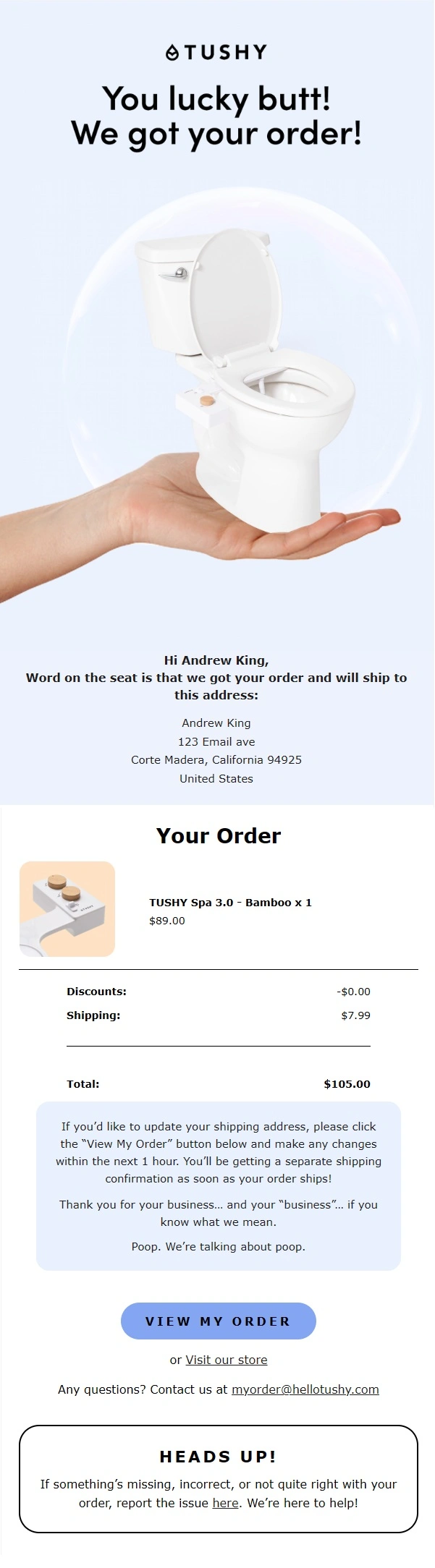
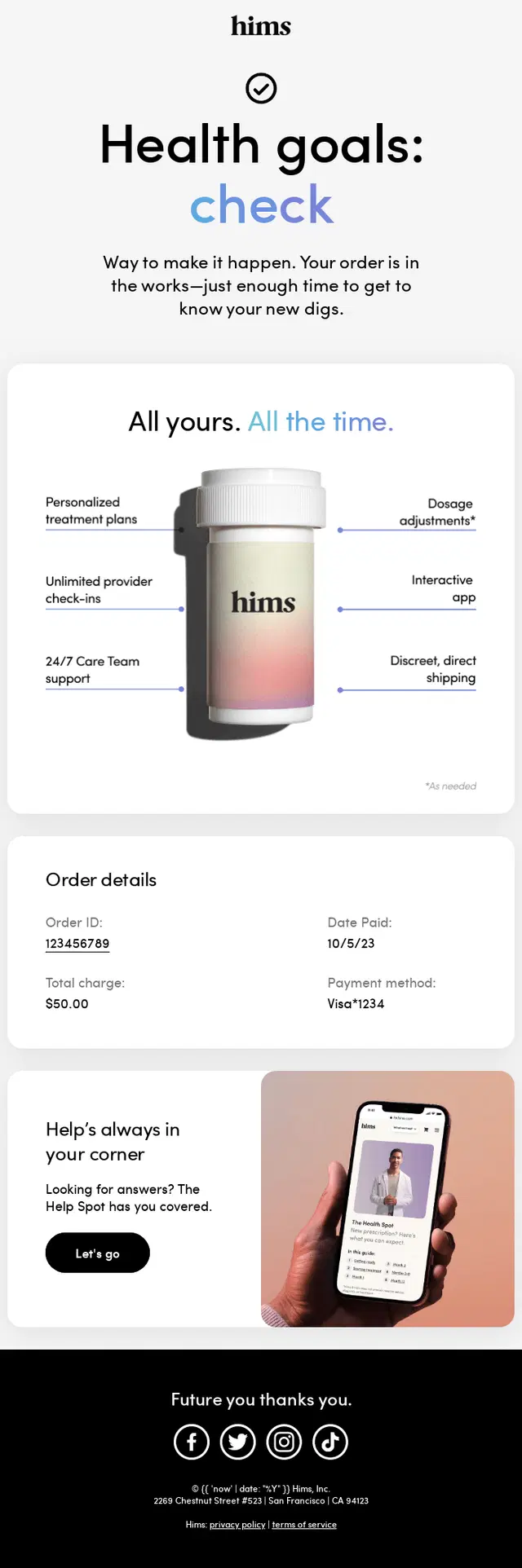
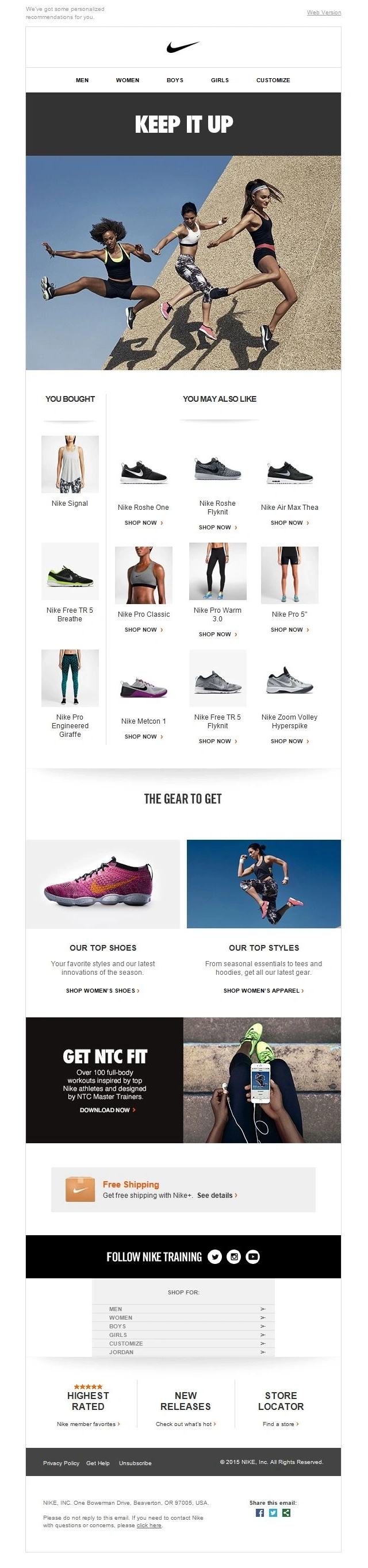
A post purchase follow up email keeps the conversation going after the initial order confirmation. Brands can use these emails to check in with customers, share useful next steps, provide personalized recommendations, answer common questions, or encourage another interaction based on what the customer has purchased.
Post Purchase Review Email Examples
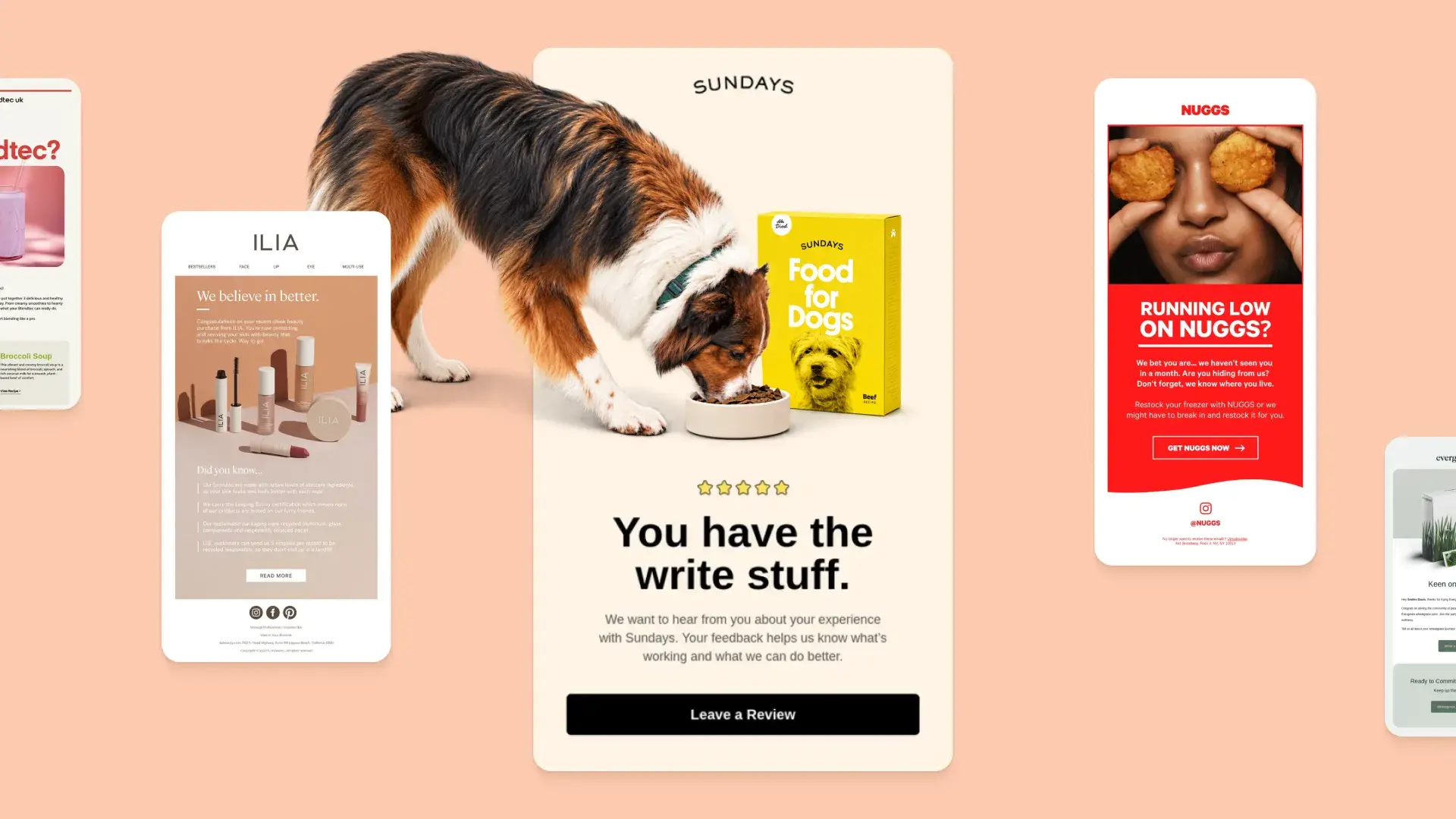
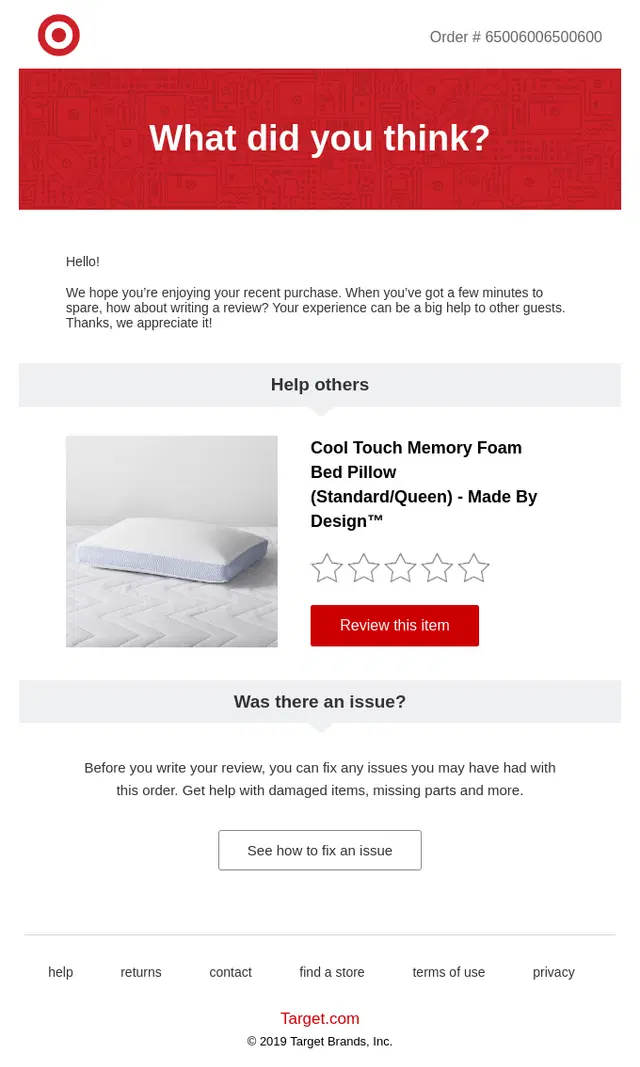
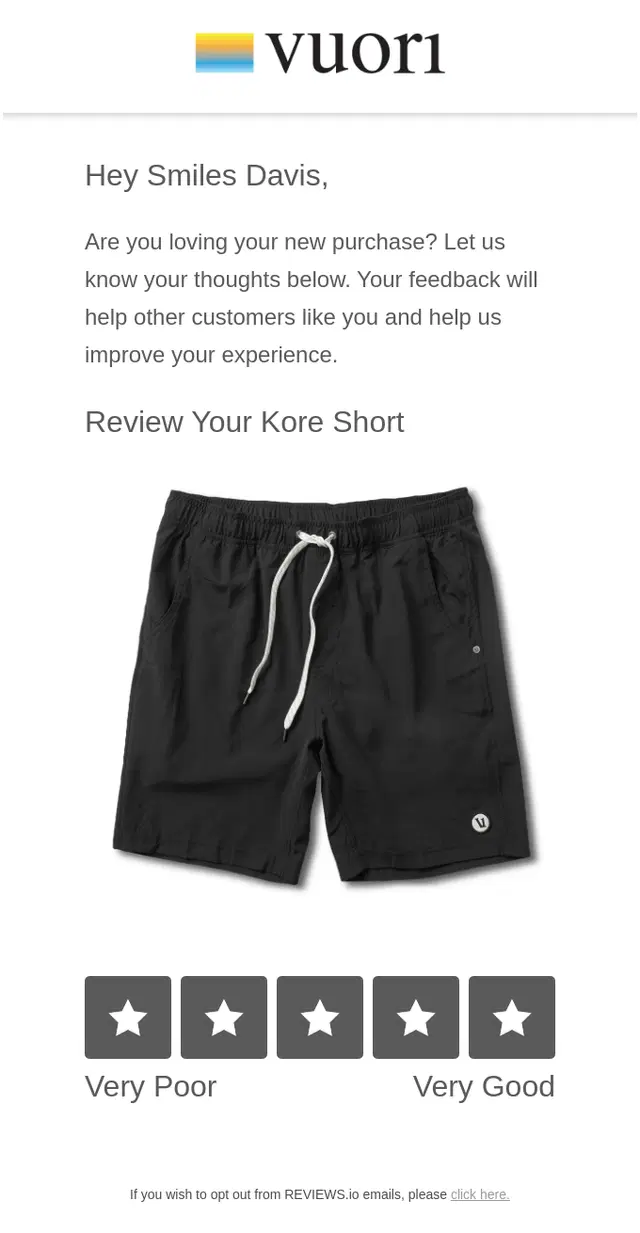
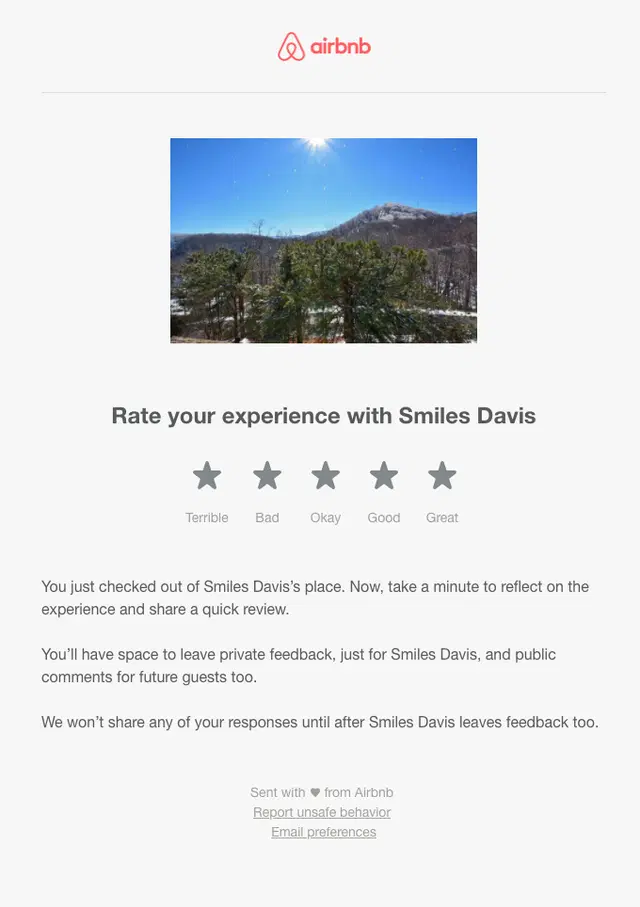
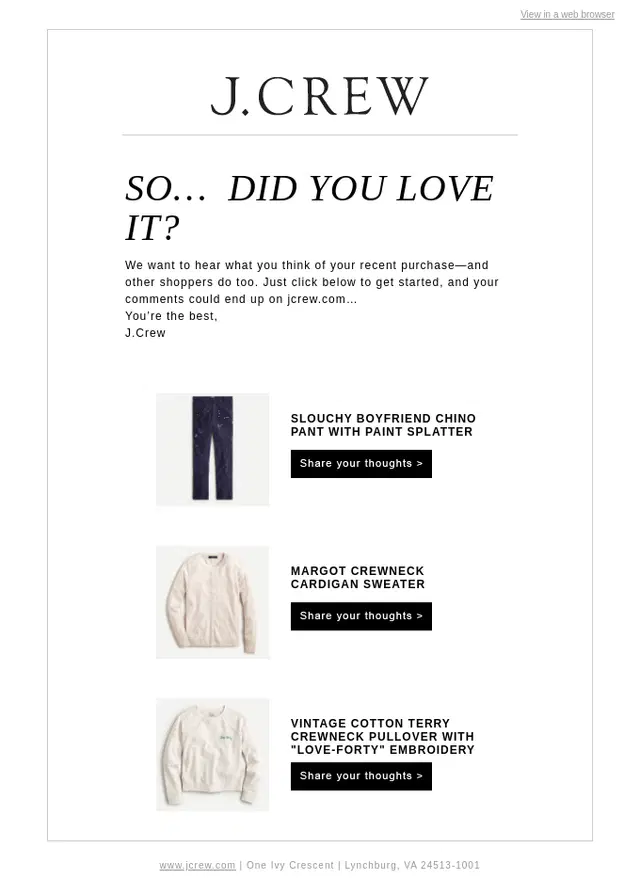
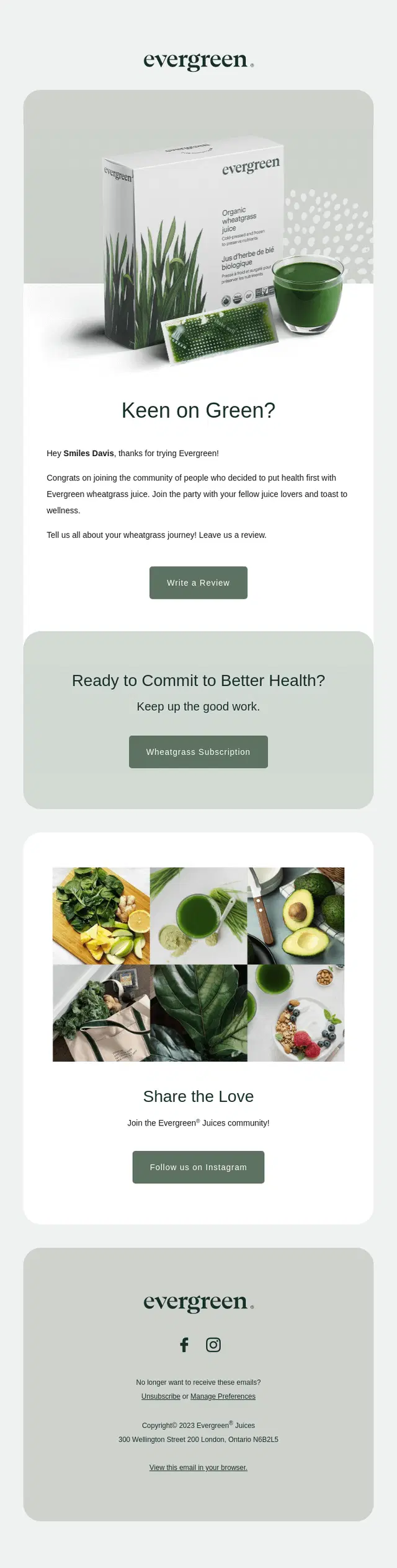
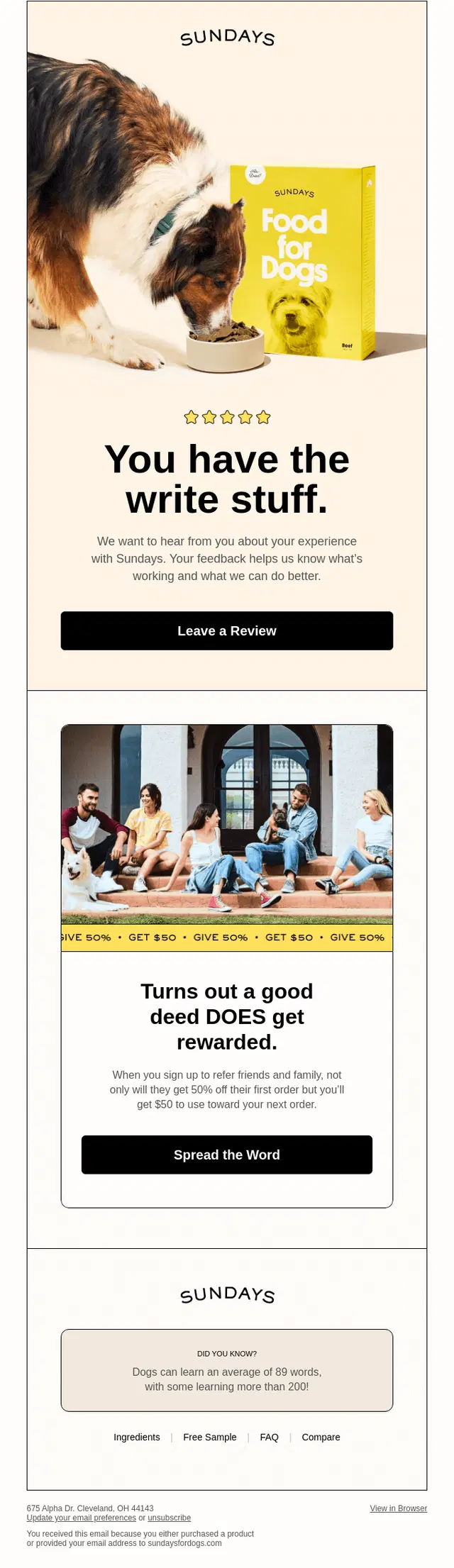
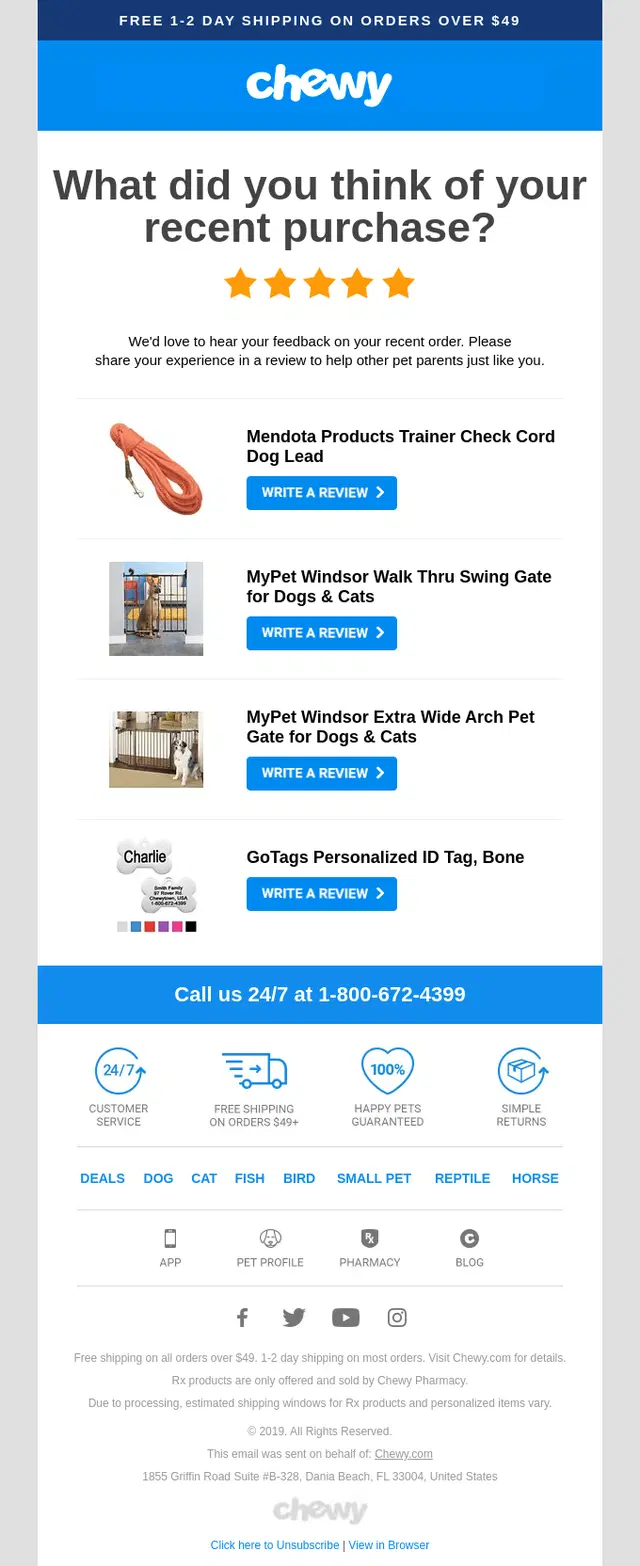
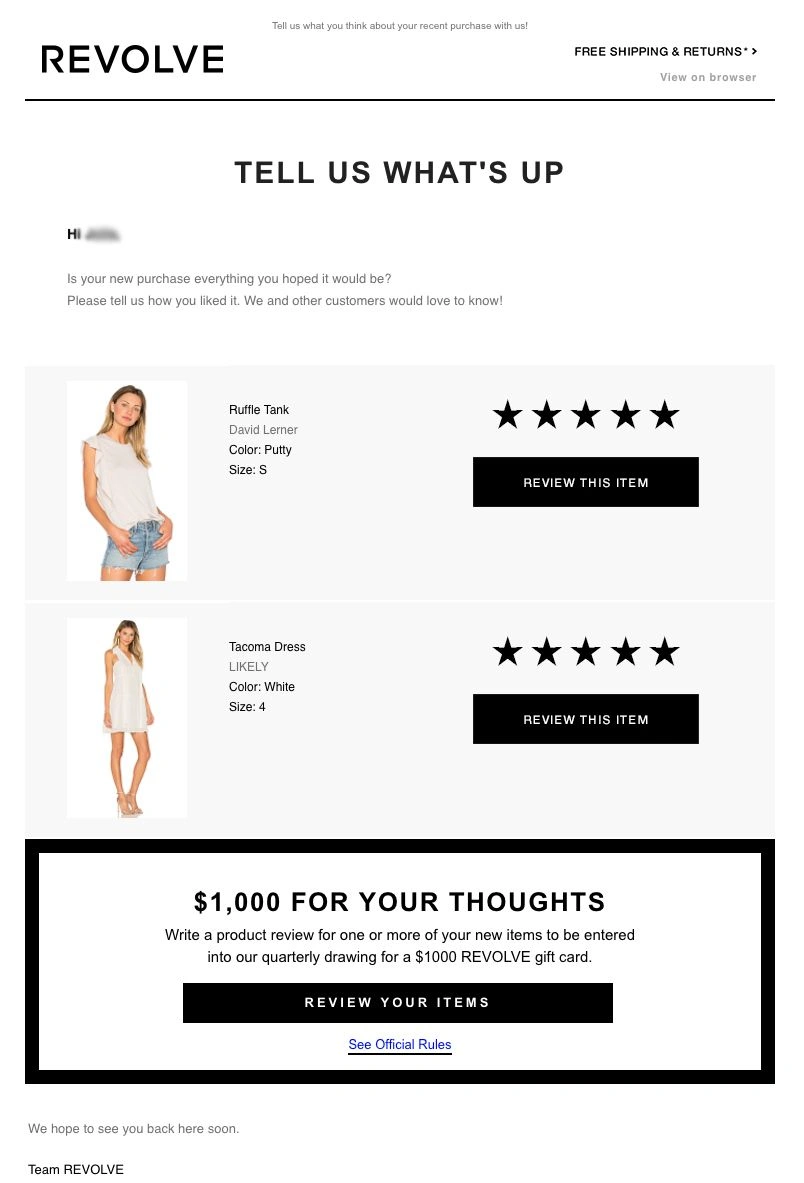
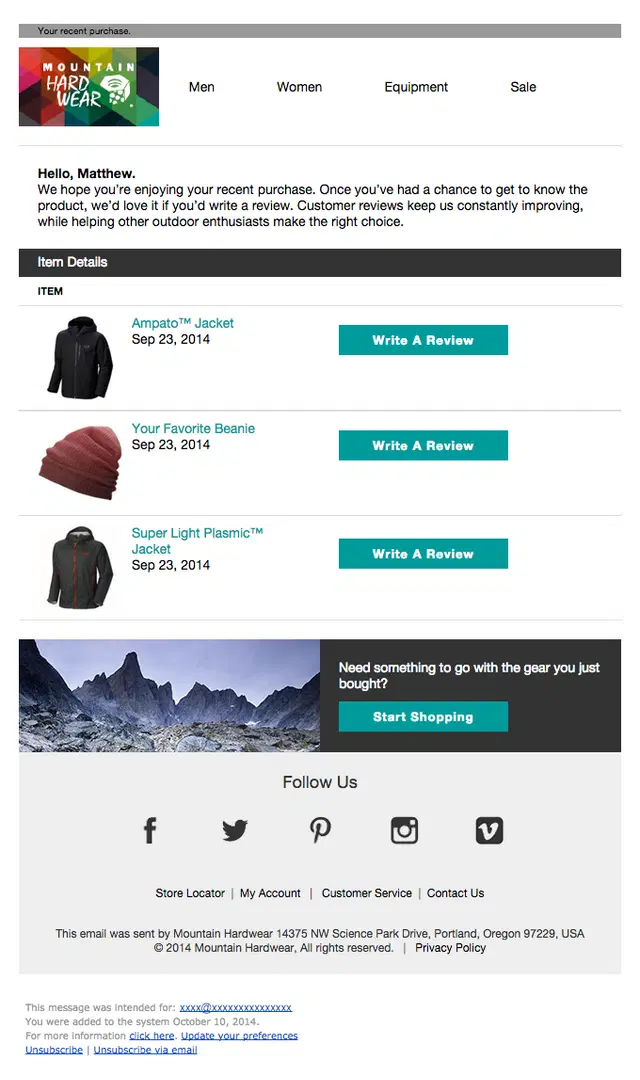
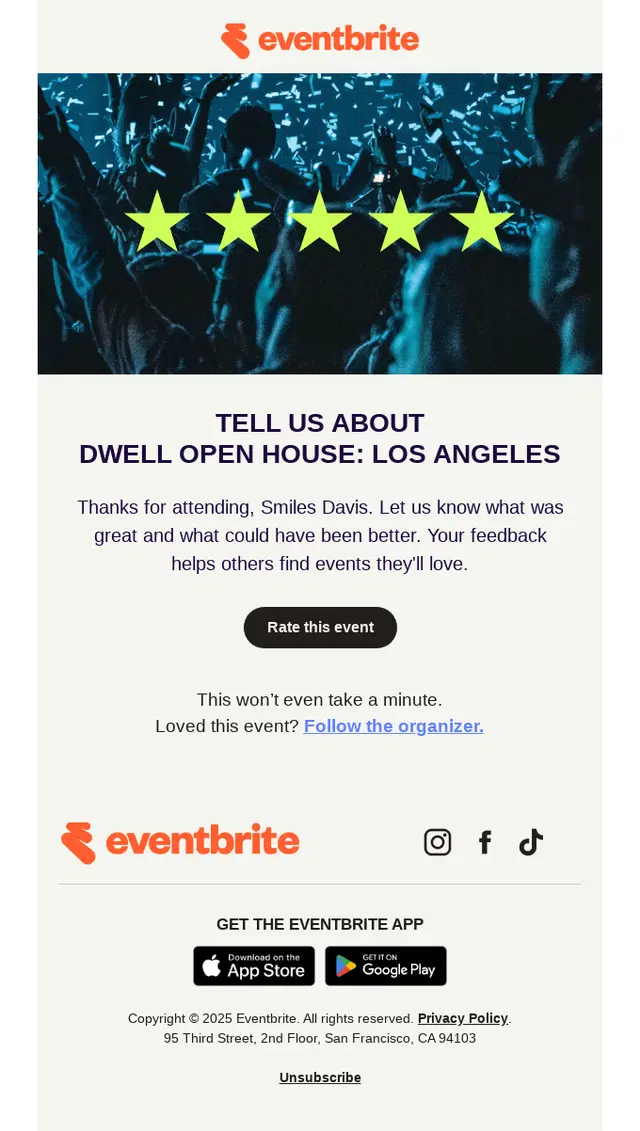
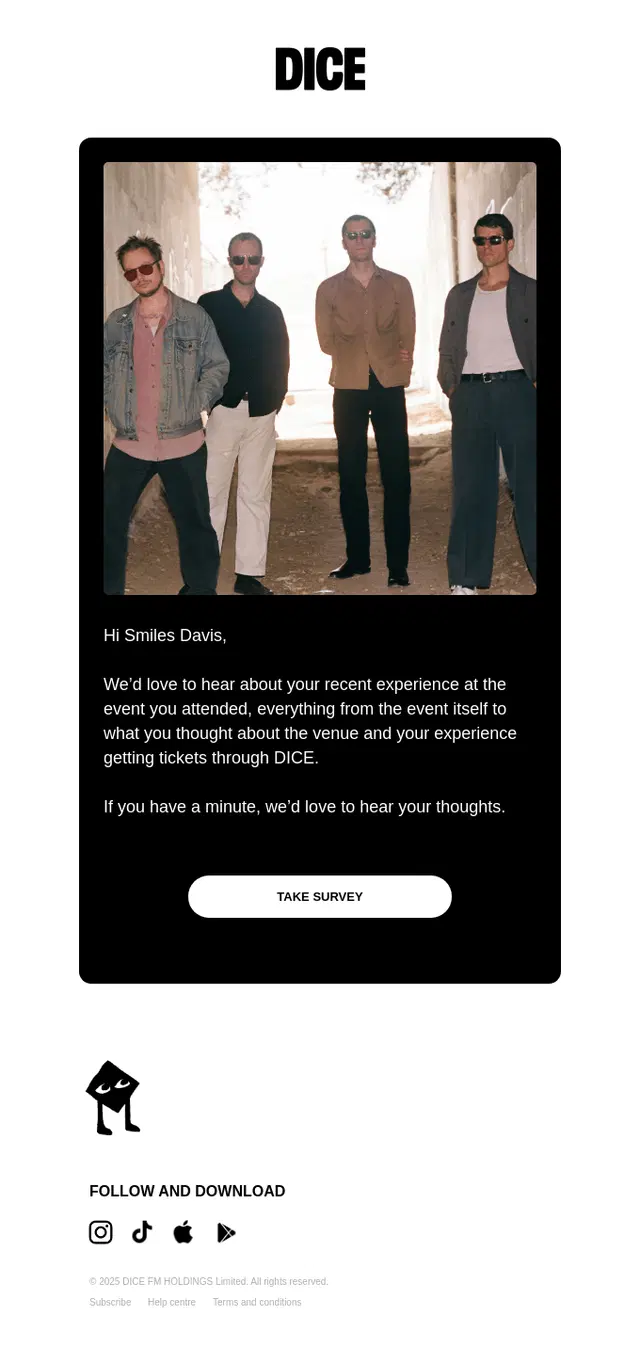
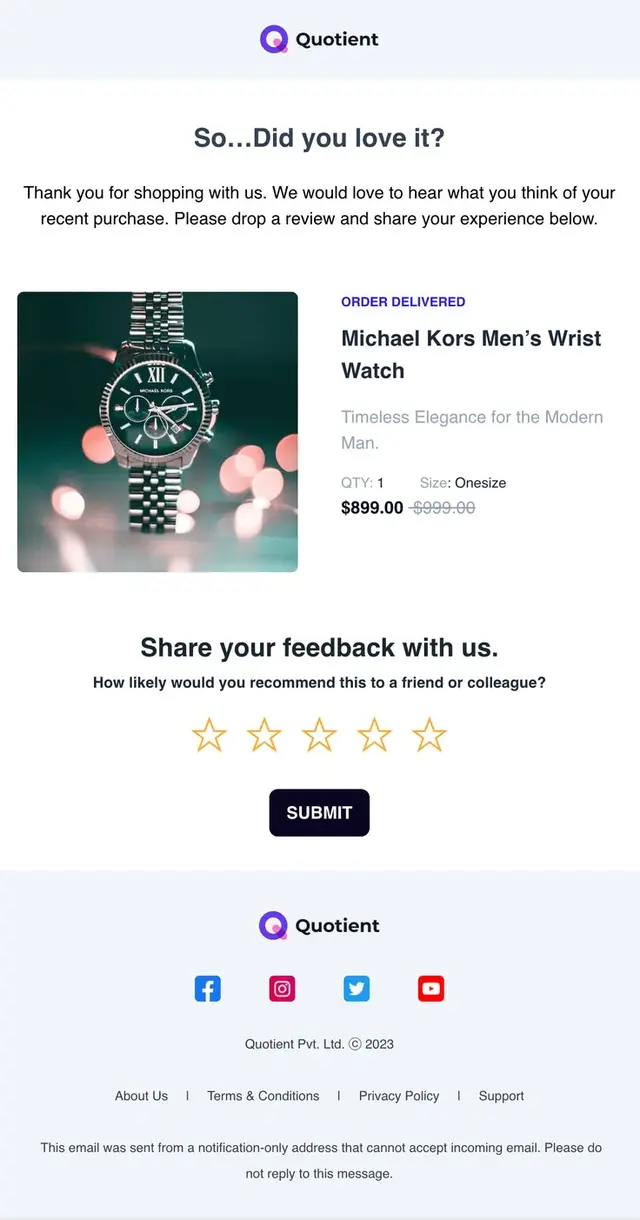
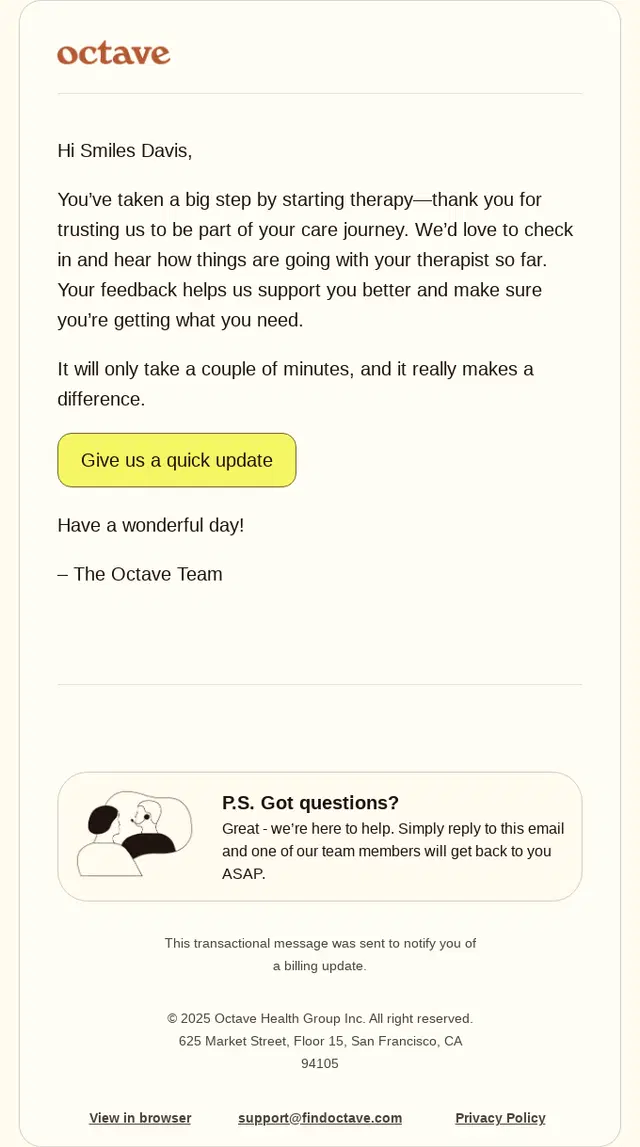
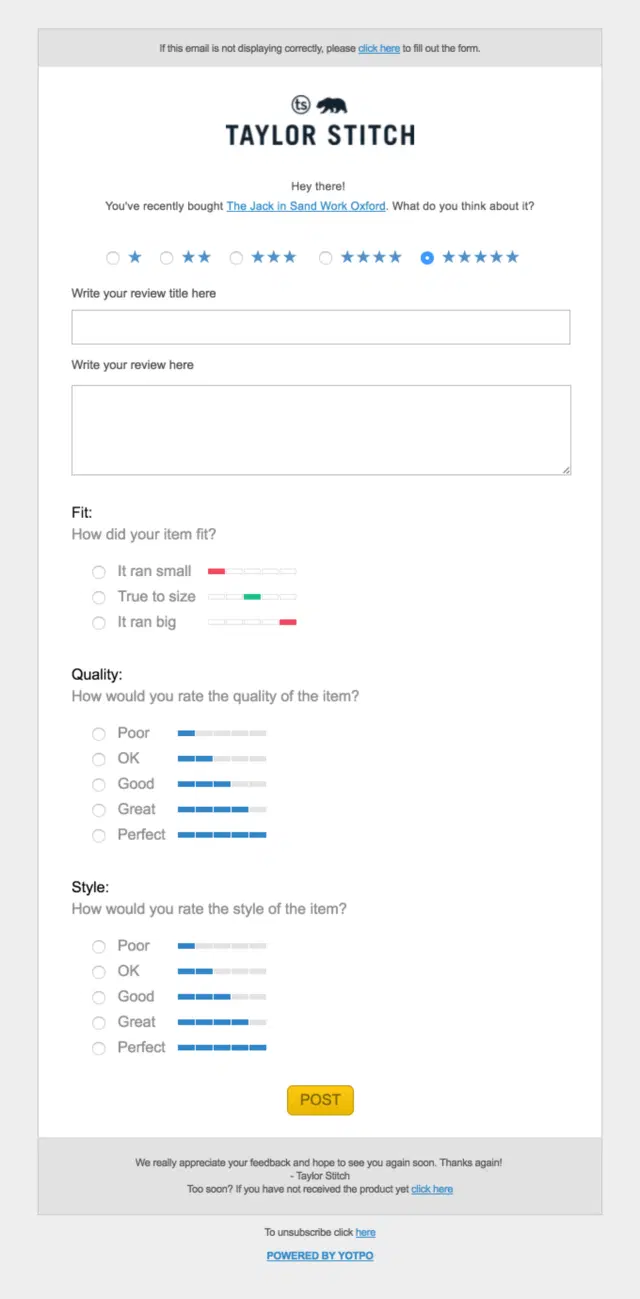
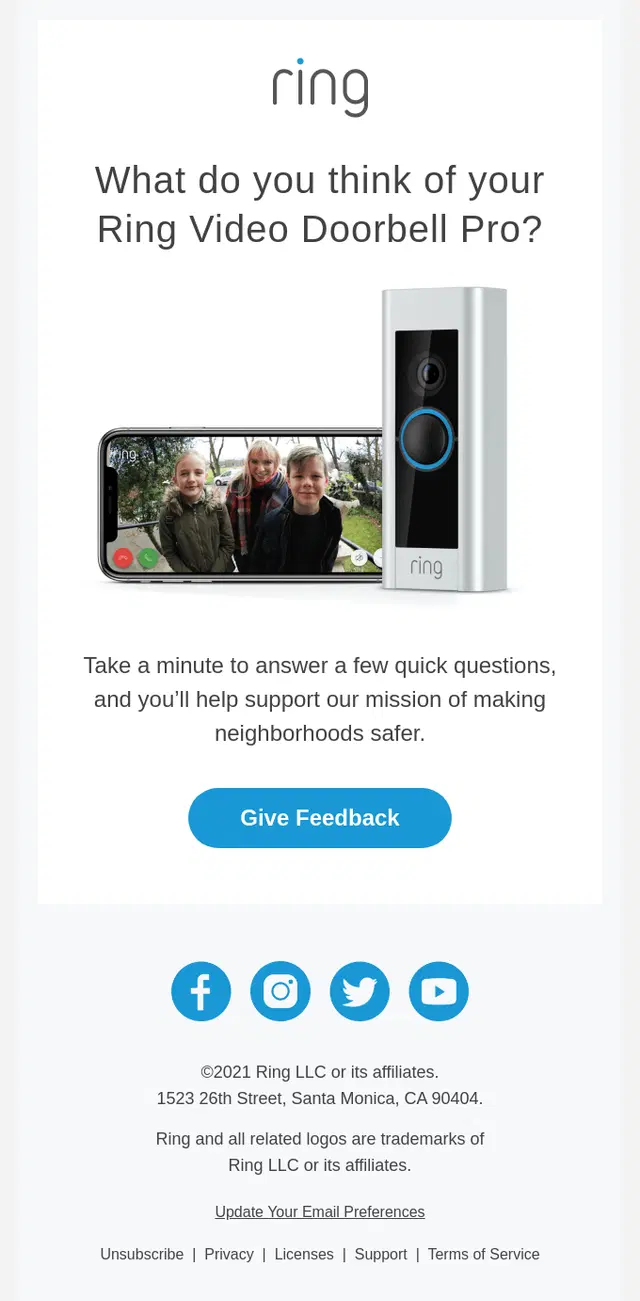
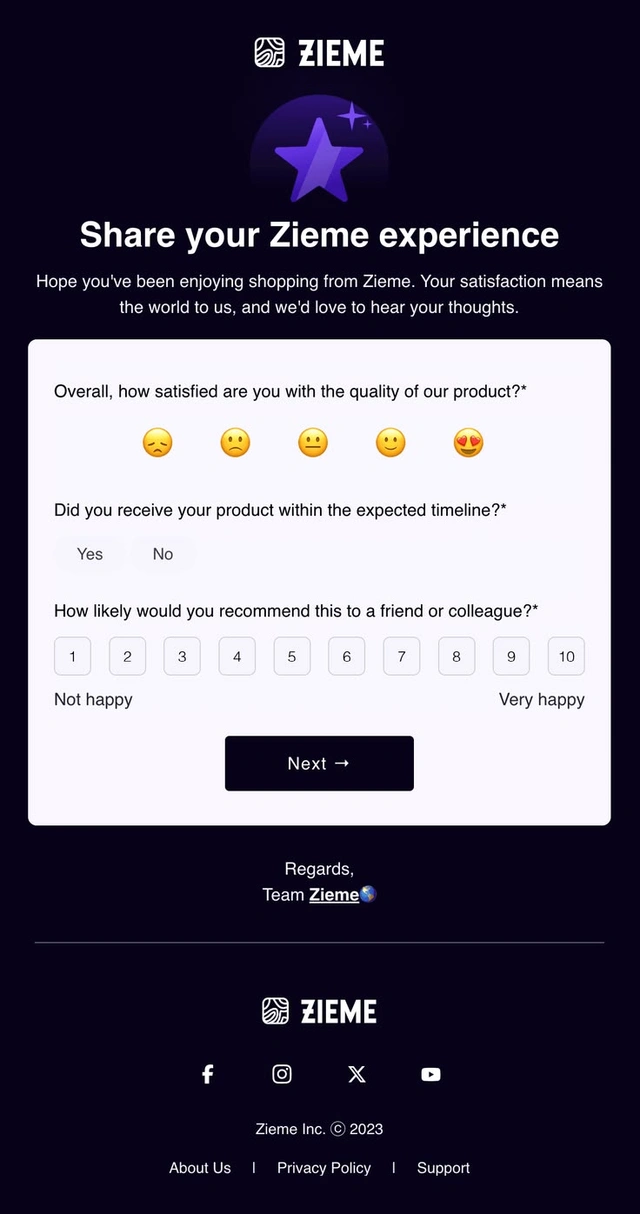
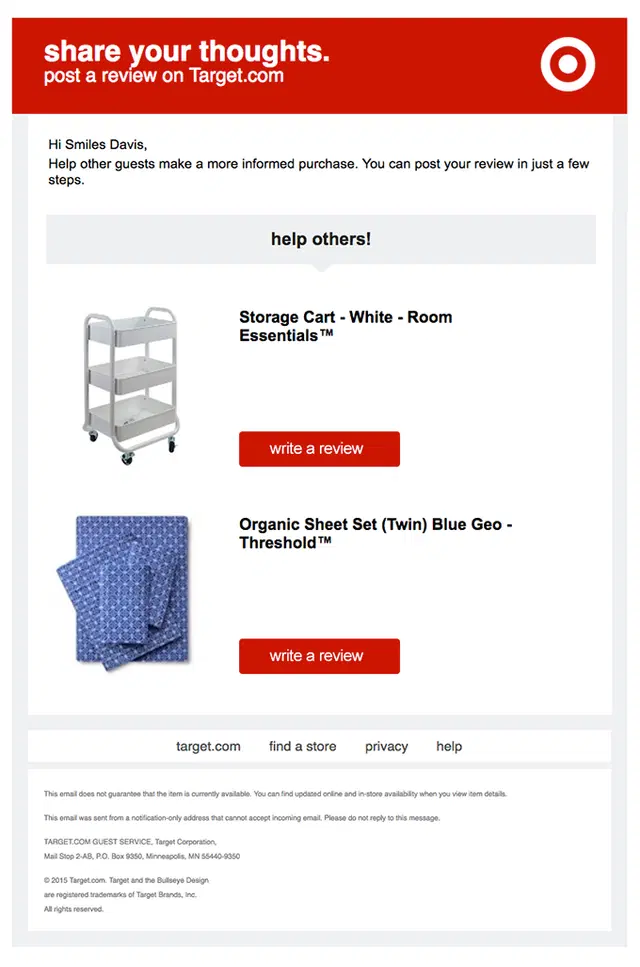
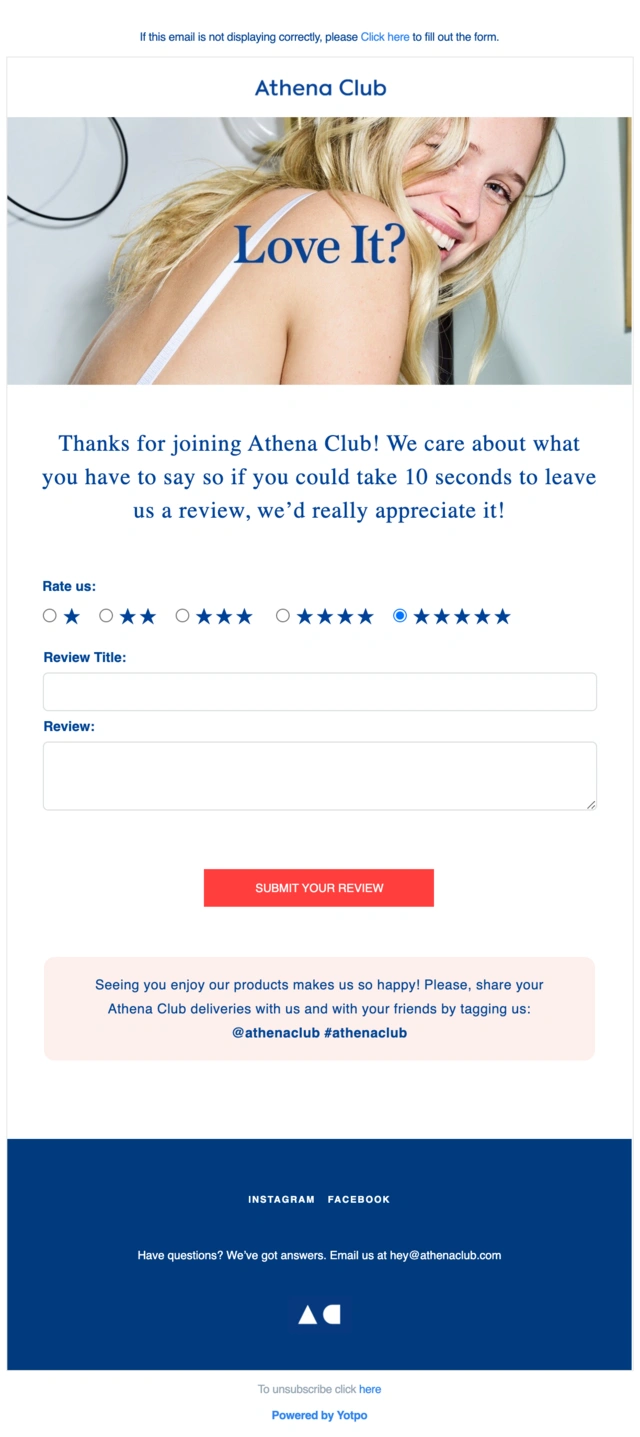
Post purchase review emails ask customers to share feedback after they have received and used a product. The best examples make the process quick and clear while using the right timing, messaging, and incentives to encourage more reviews without making the request feel pushy.
Post Purchase Cross-Sell and Upsell Email Examples
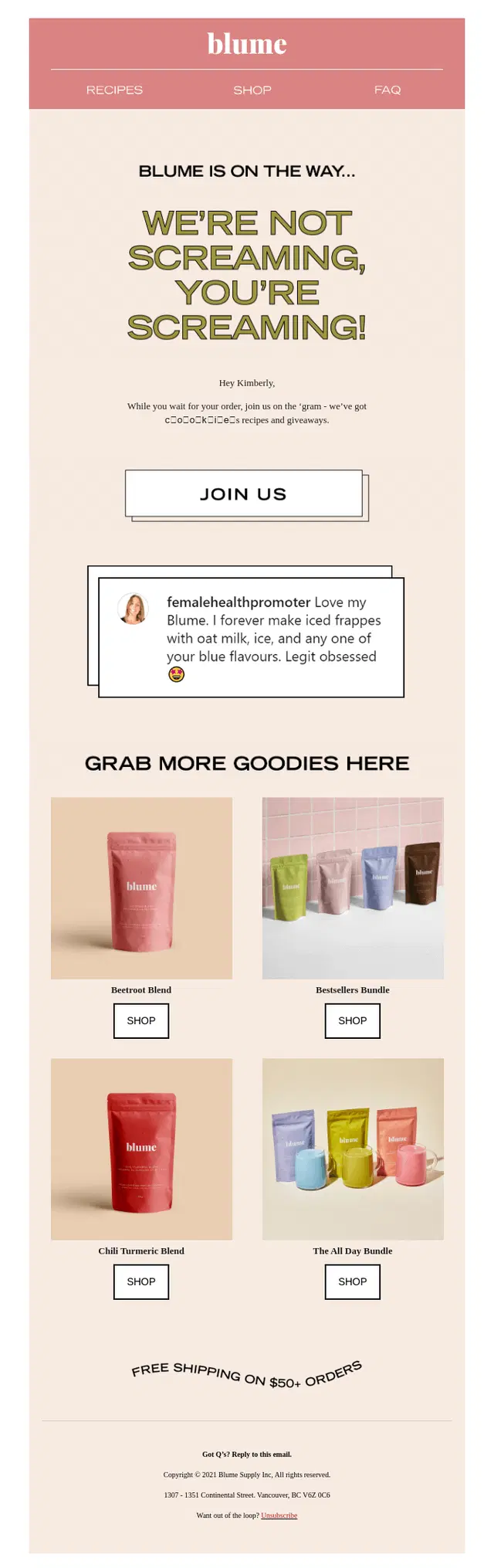
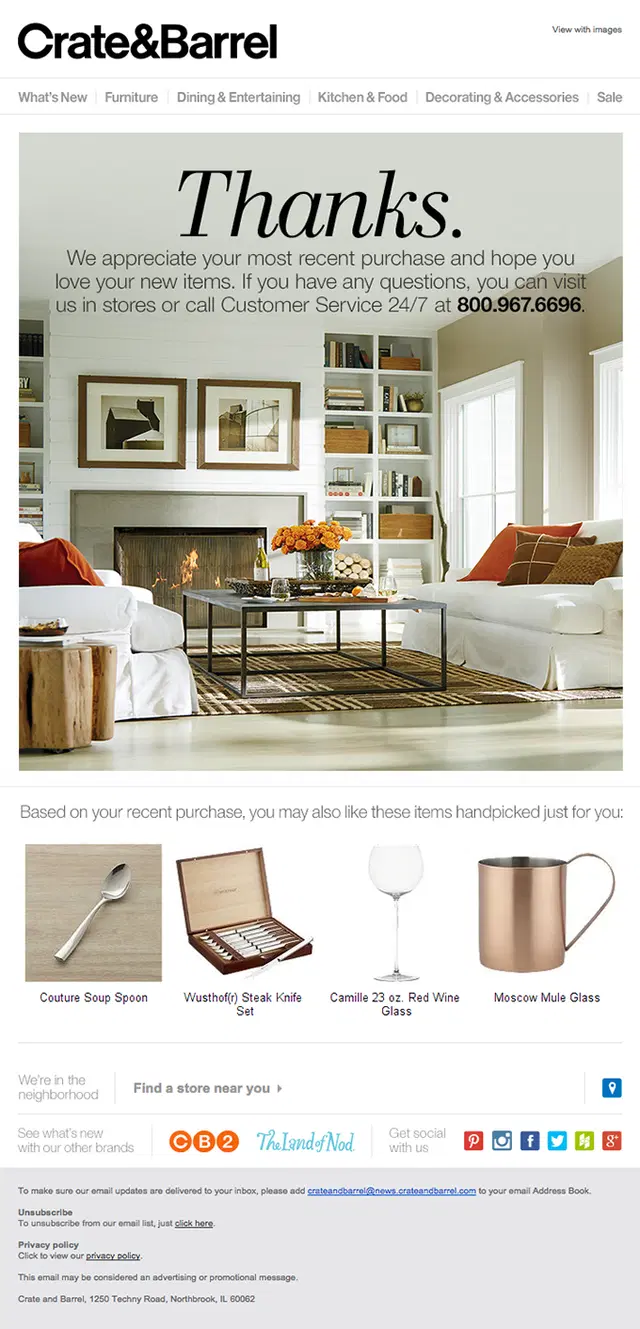
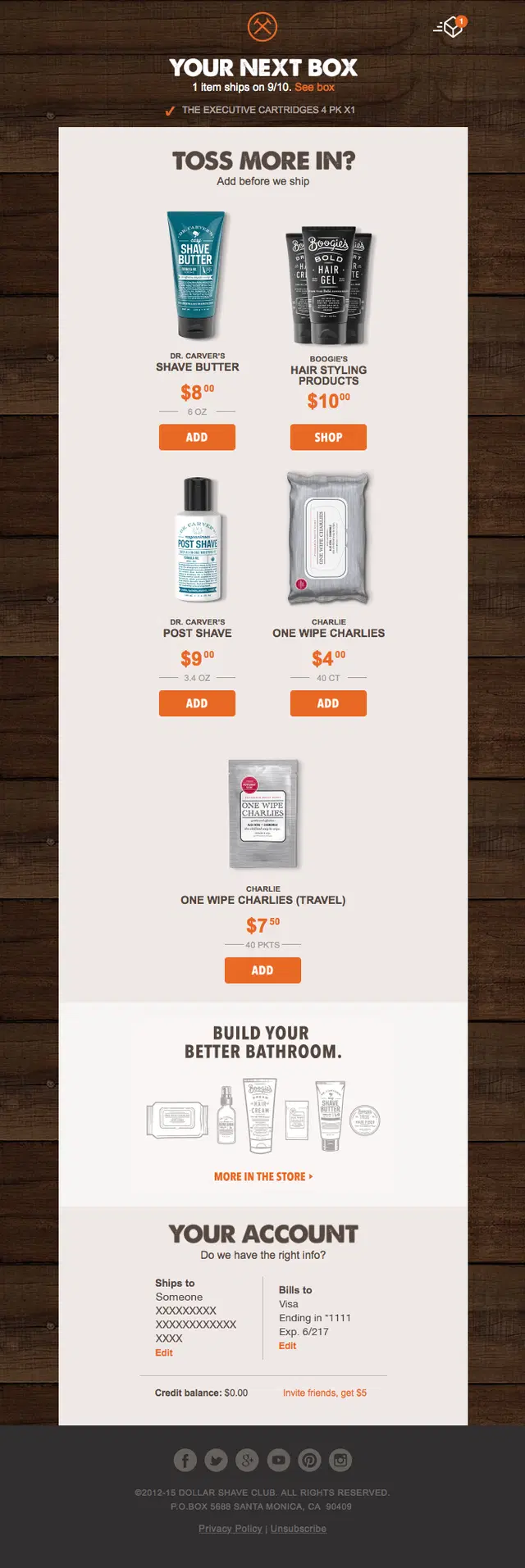
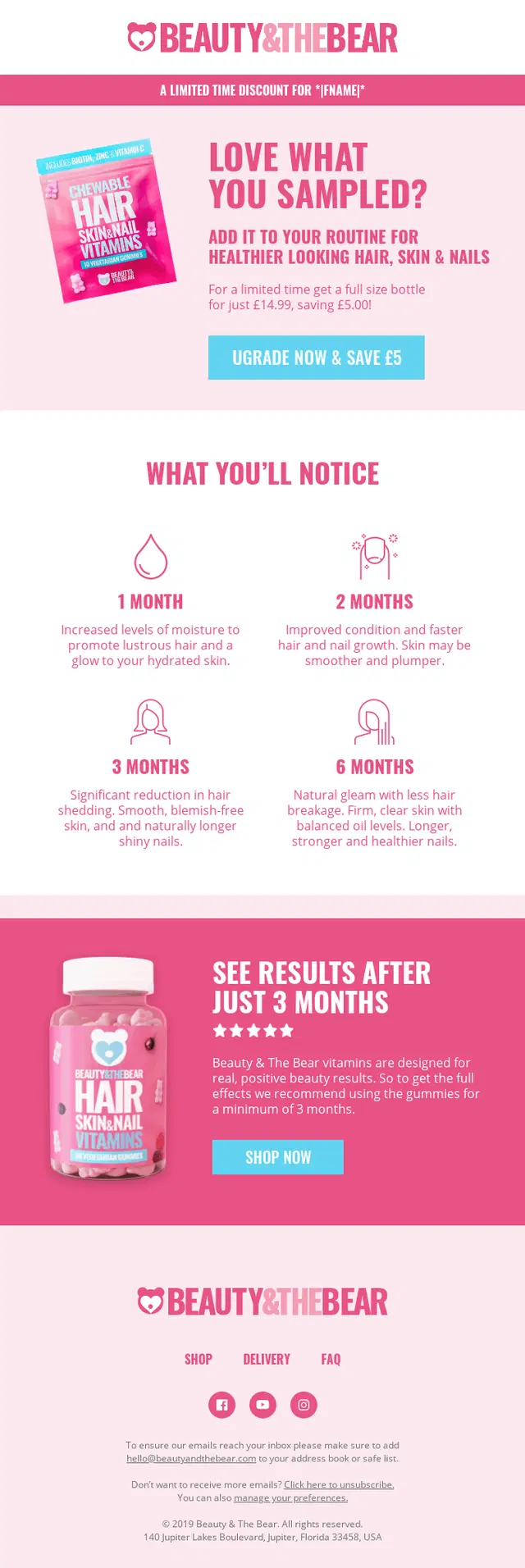
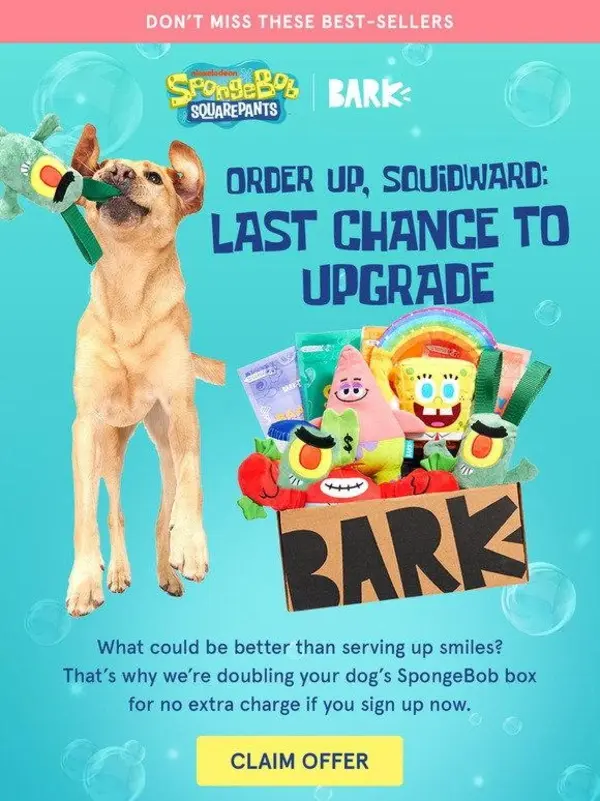
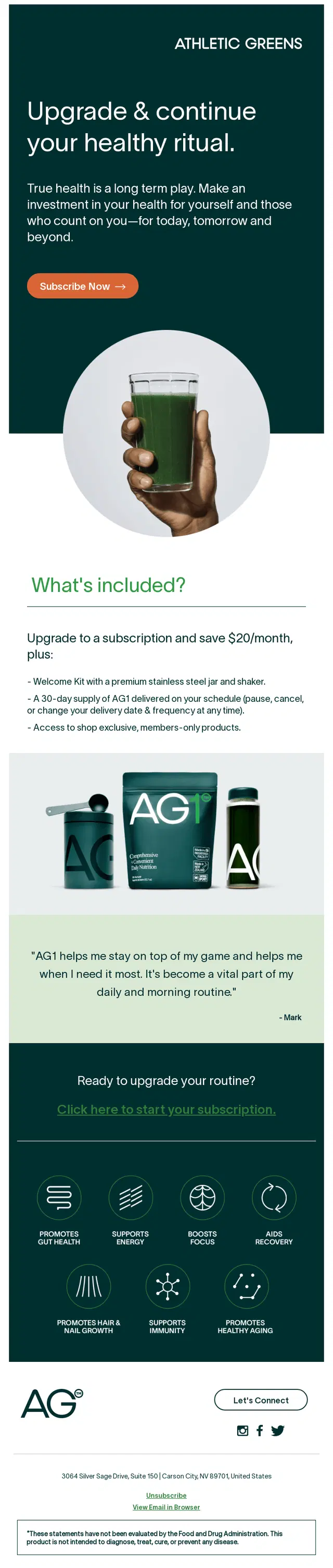
Post purchase cross-sell and upsell emails create opportunities for an additional purchase after checkout. Cross-sell emails recommend complementary products based on what the customer already bought, while upsell emails encourage an upgrade, bundle, subscription, or higher-value option. The best examples keep these recommendations relevant to the original purchase rather than turning the follow-up into a generic promotion.





Product Education Post Purchase Emails
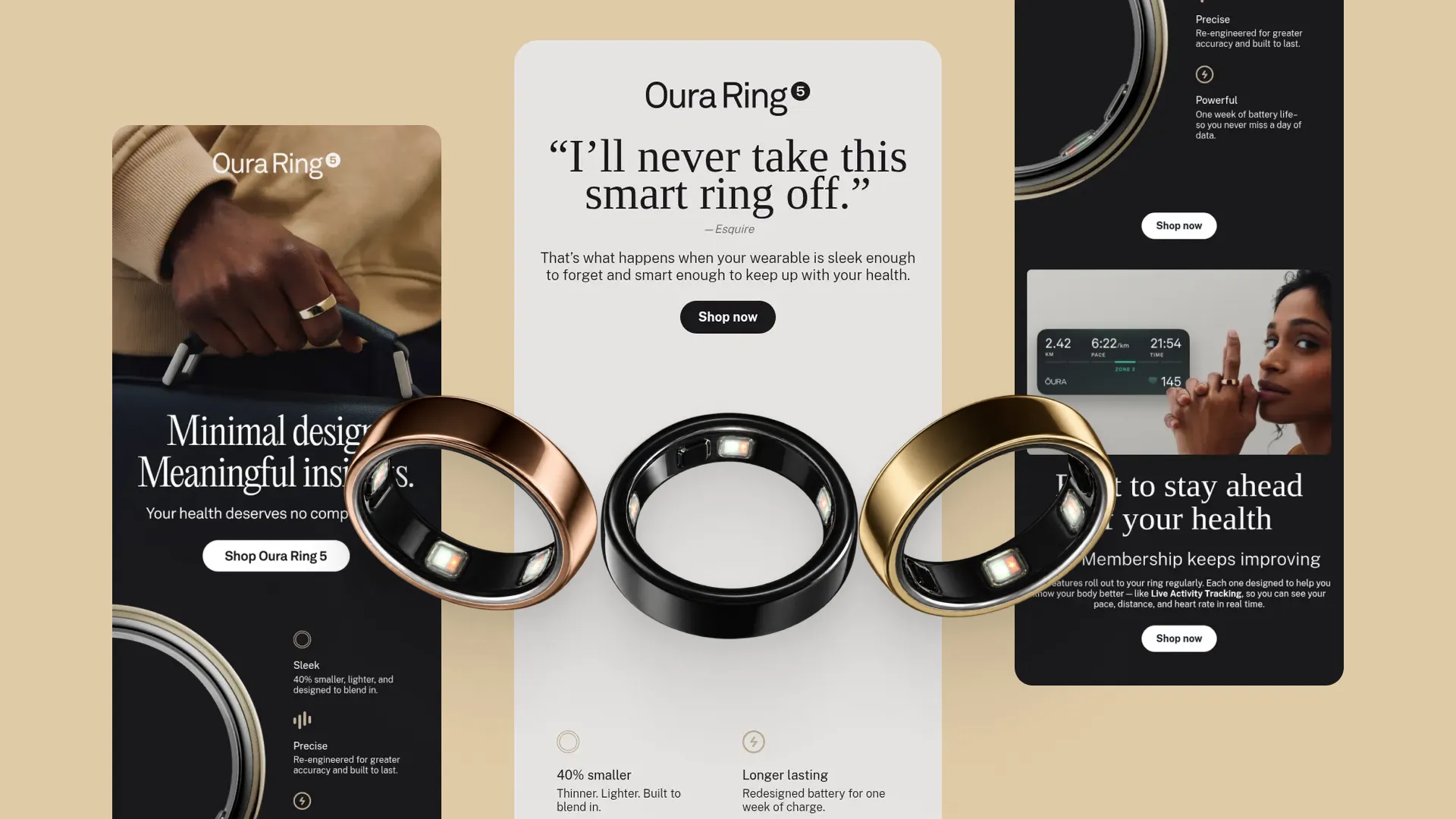
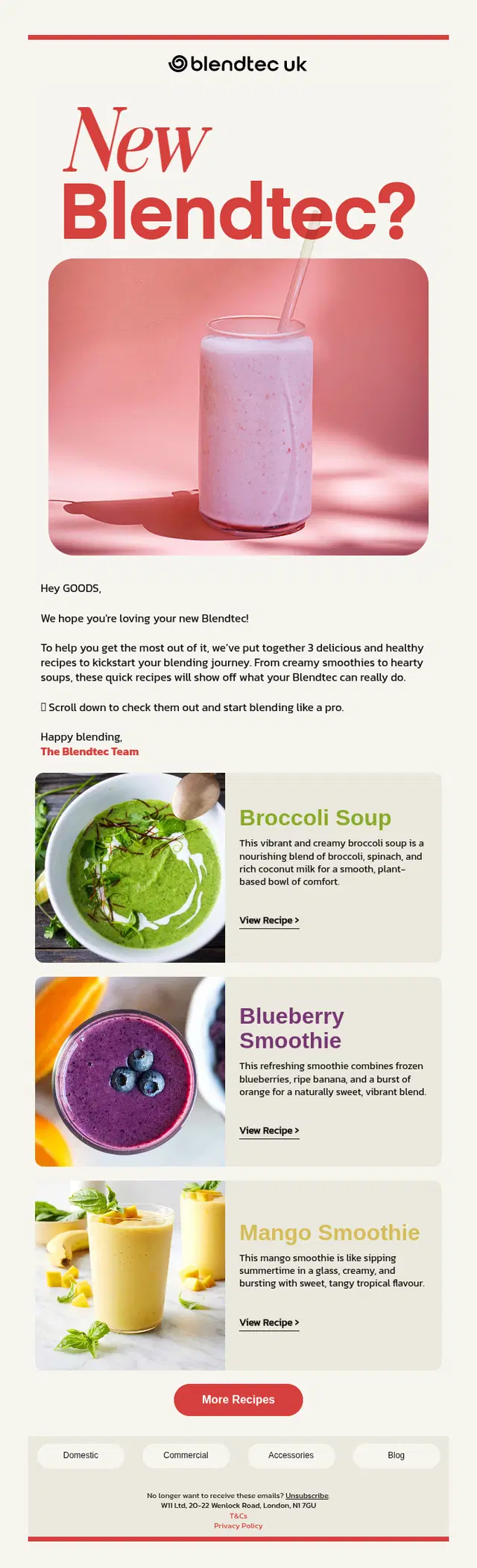
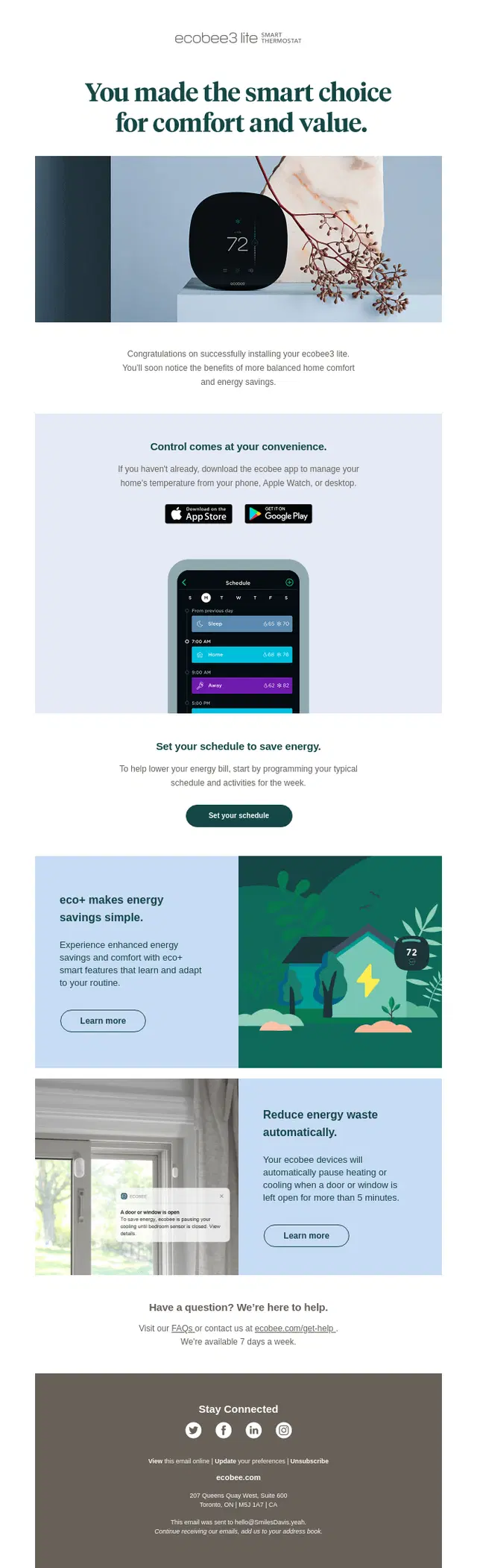
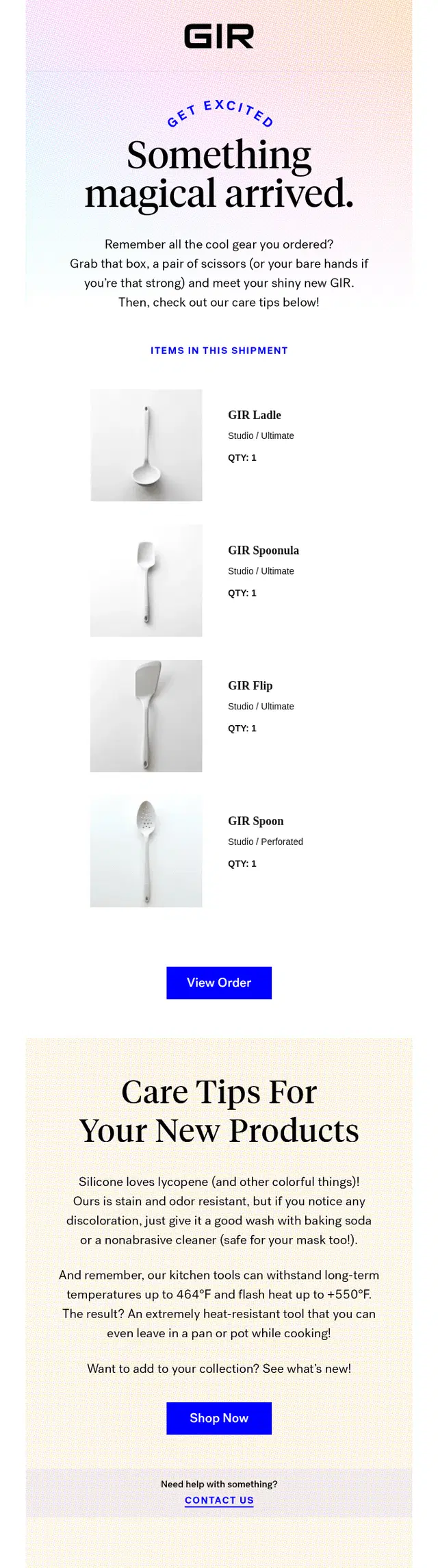
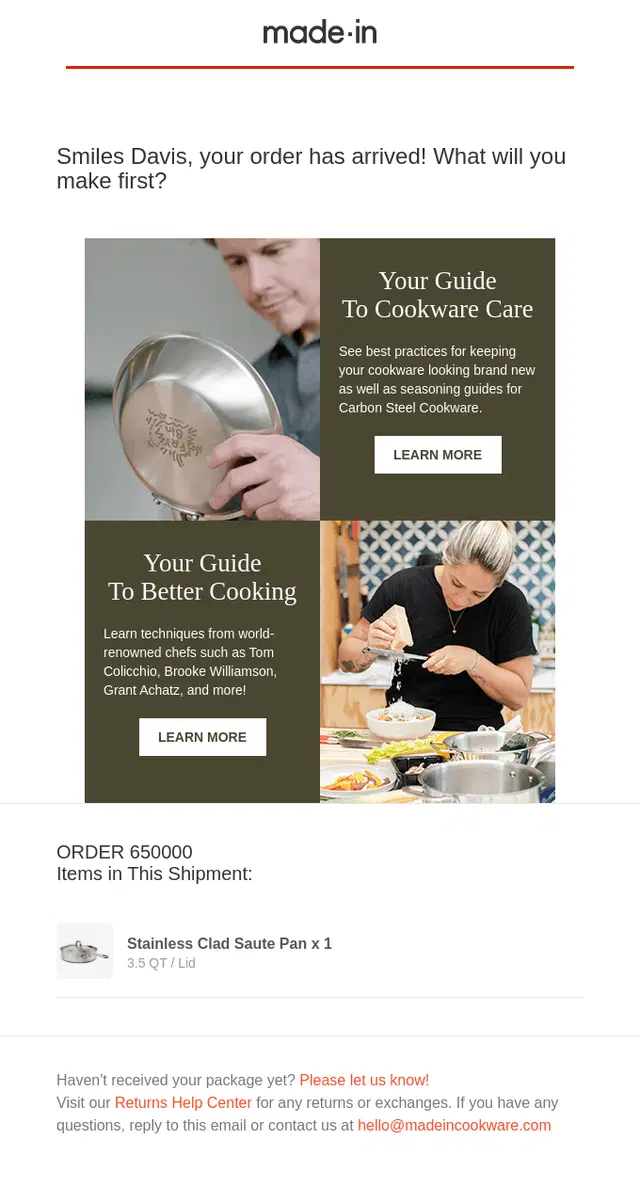
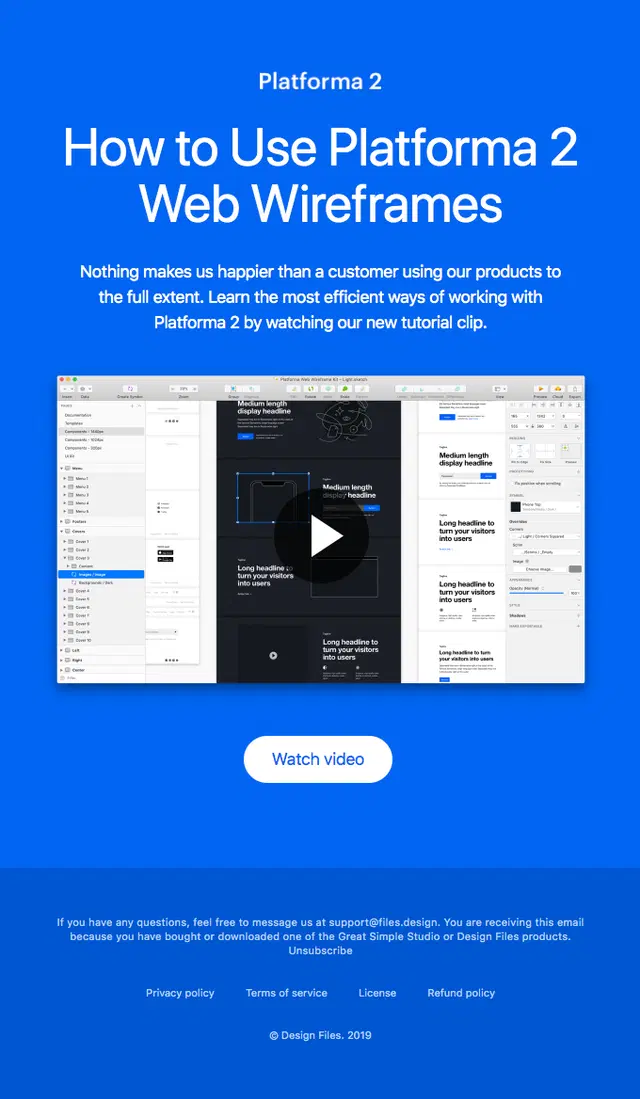
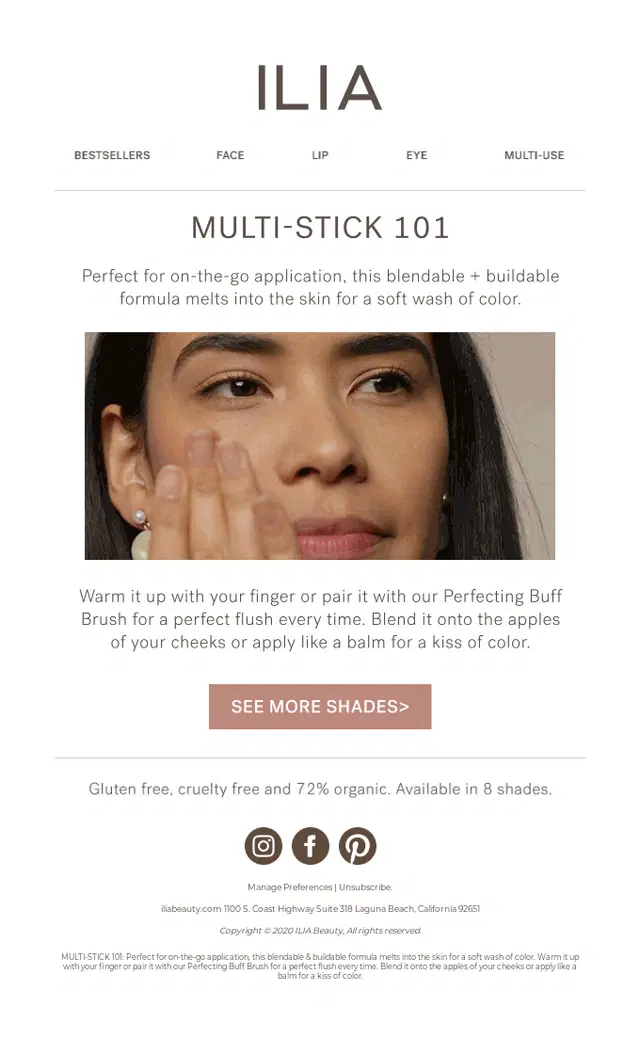
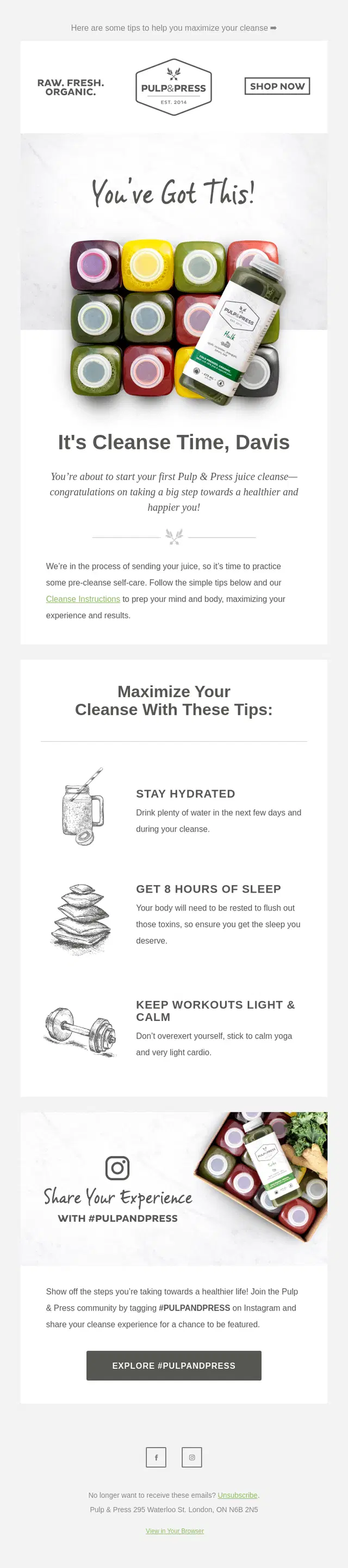
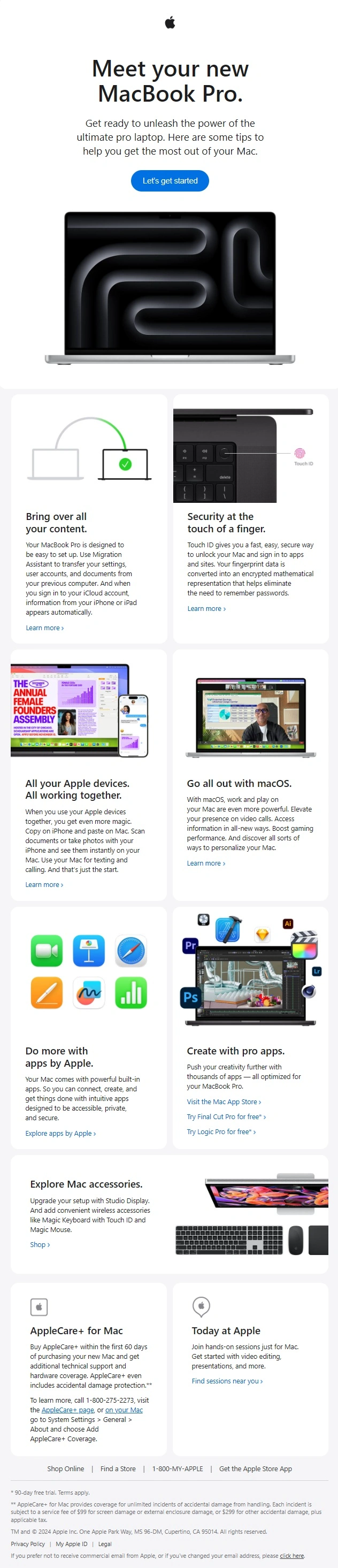
Product education emails help customers get more value from something they have already purchased. Brands use them to share setup instructions, how-to guides, care tips, tutorials, recipes, styling ideas, and other useful content that improves the post purchase experience.




Loyalty and Referral Post Purchase Emails
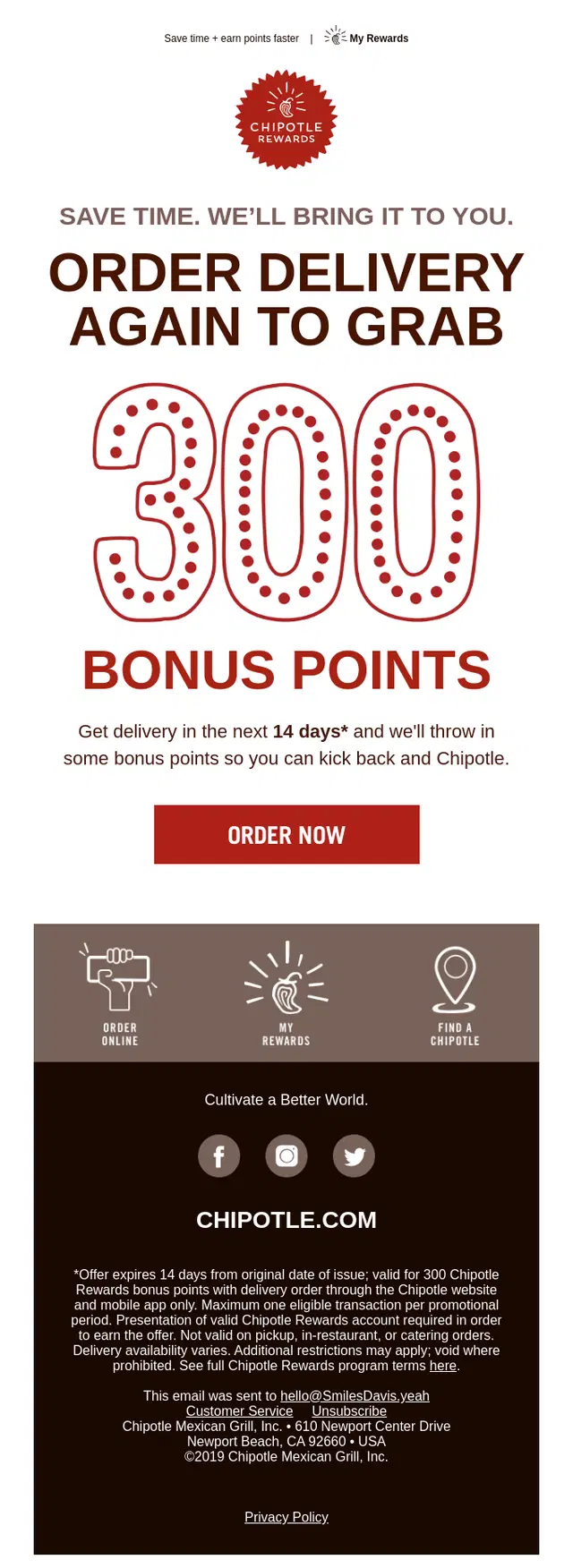
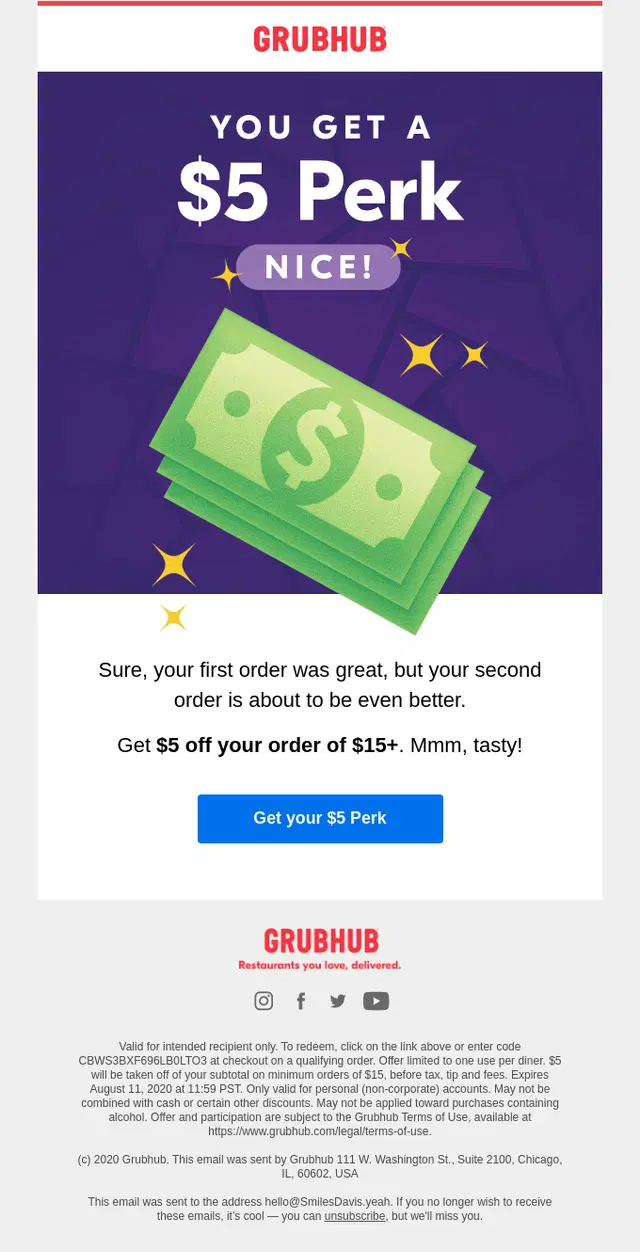
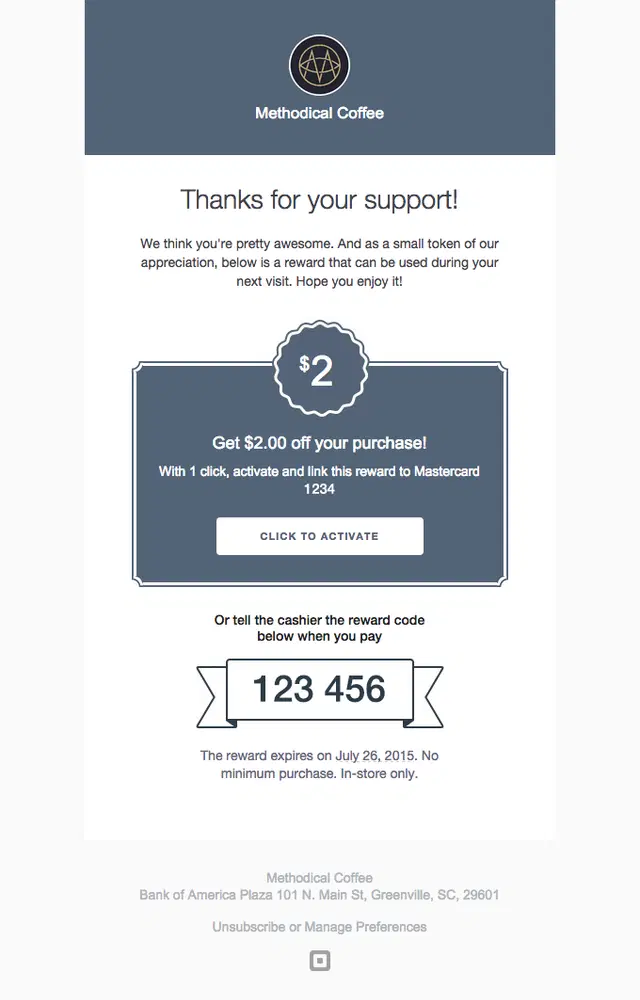
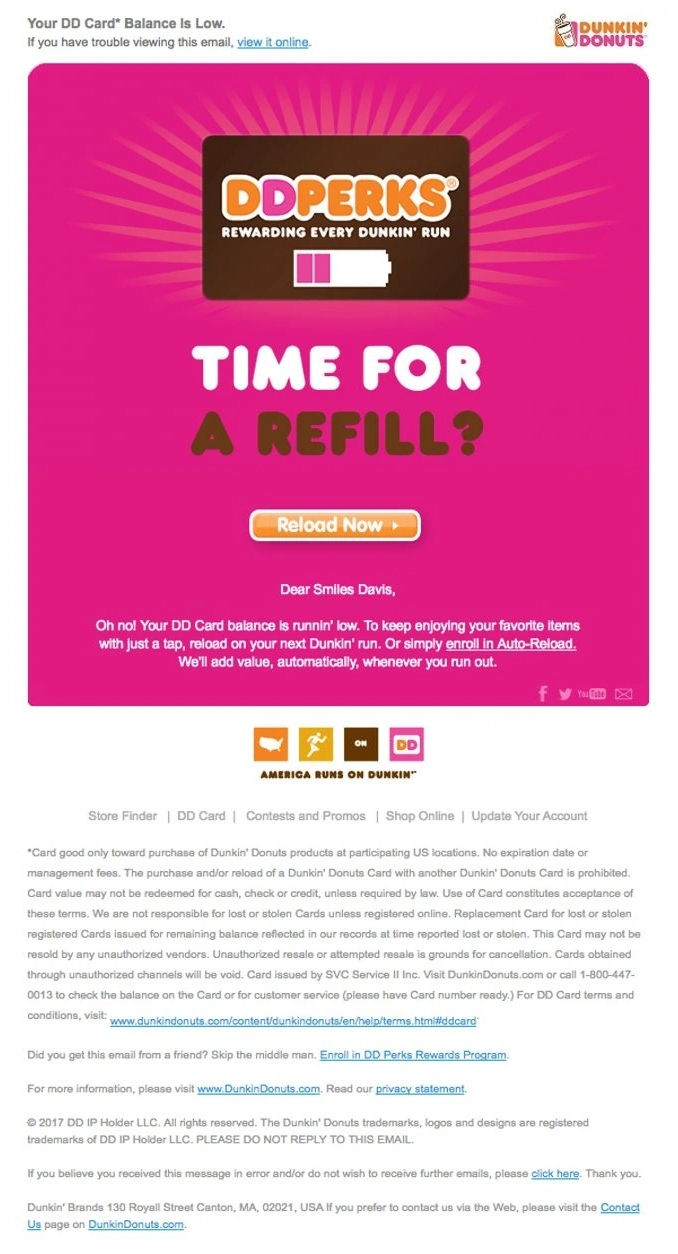
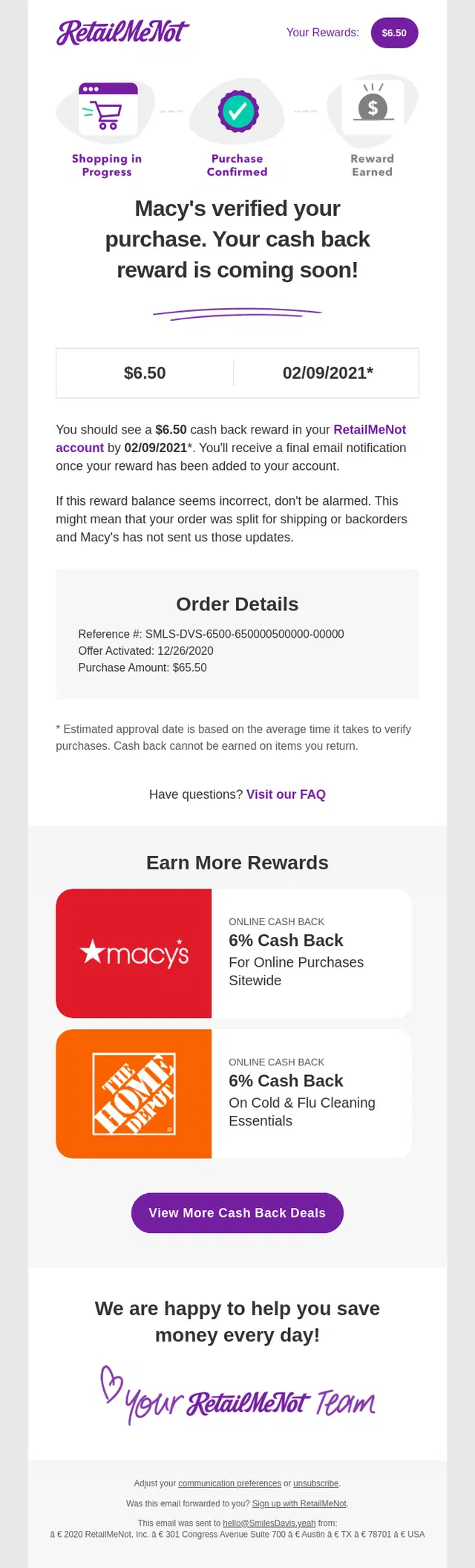
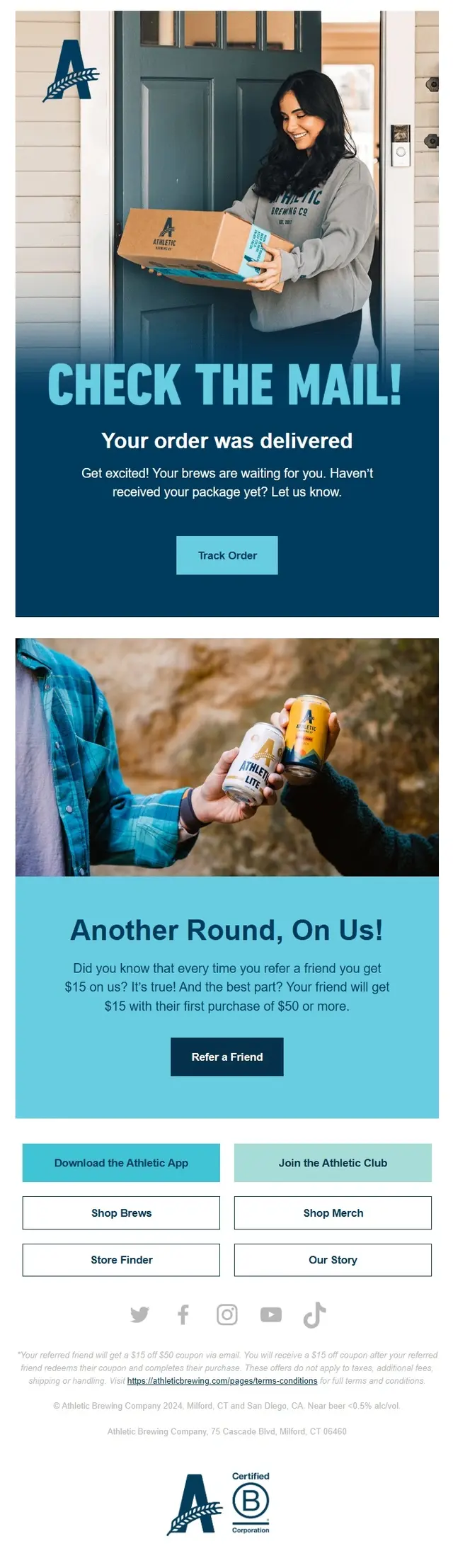
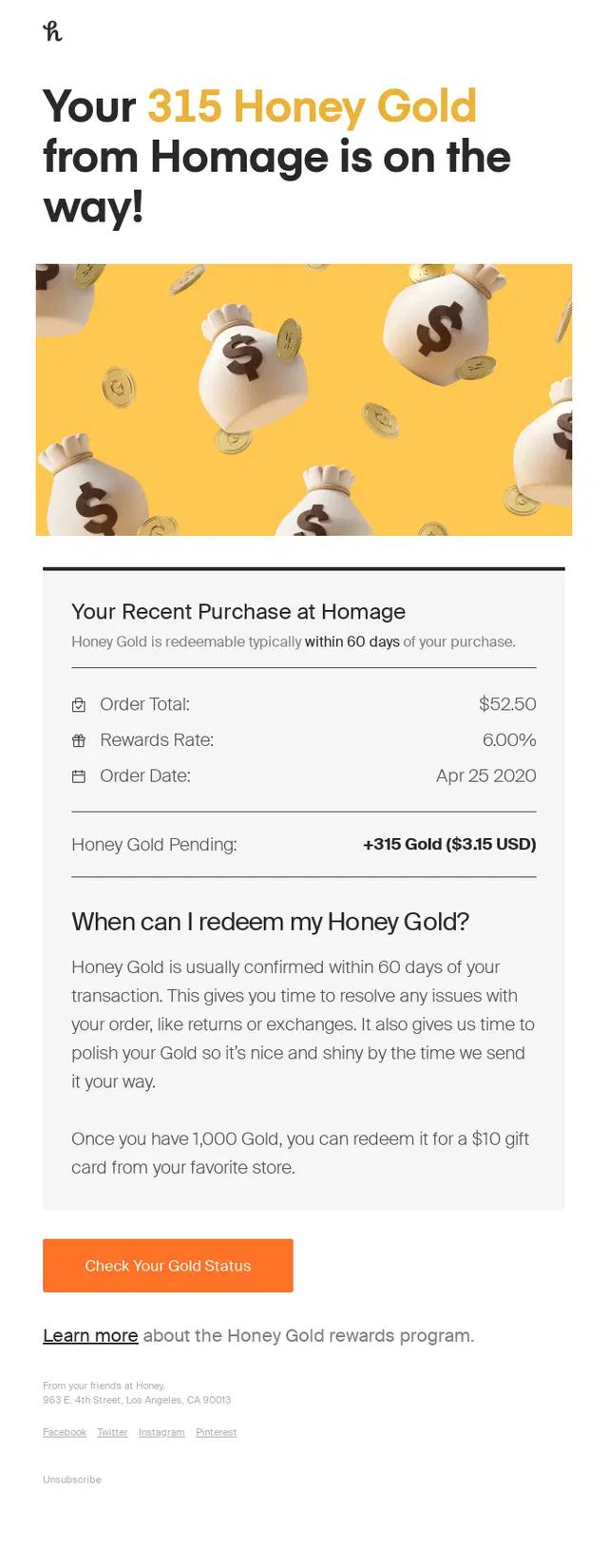
Loyalty and referral emails use the period after a purchase to strengthen the customer relationship and encourage future engagement. They may introduce rewards programs, highlight available points or benefits, invite customers to refer friends, or offer incentives for returning to the brand.

Replenishment and Reorder Emails
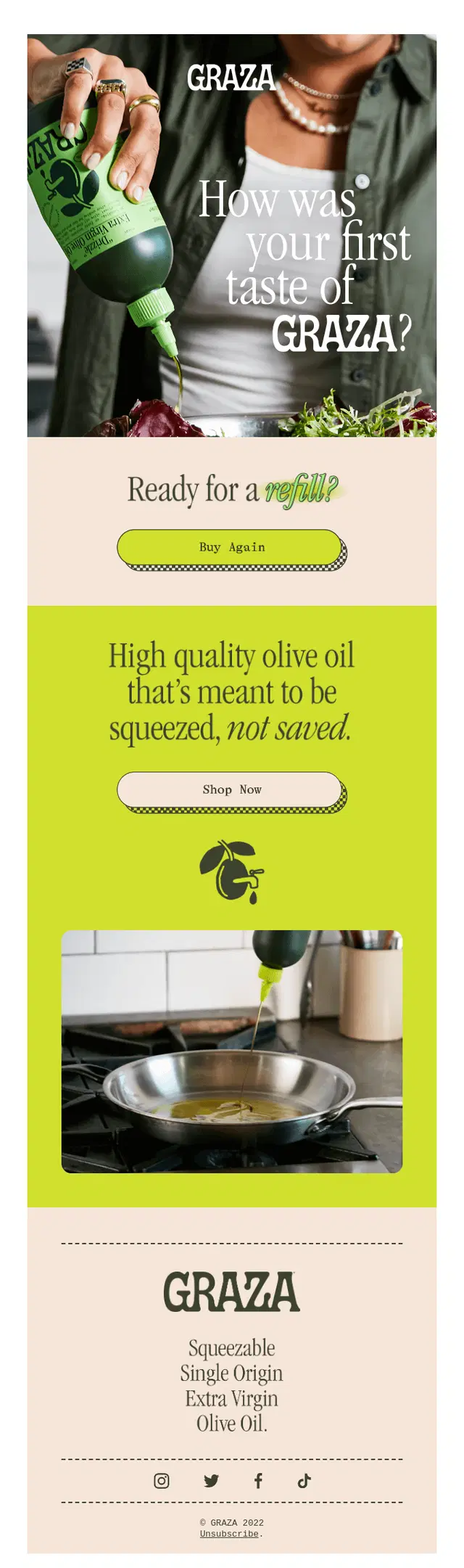
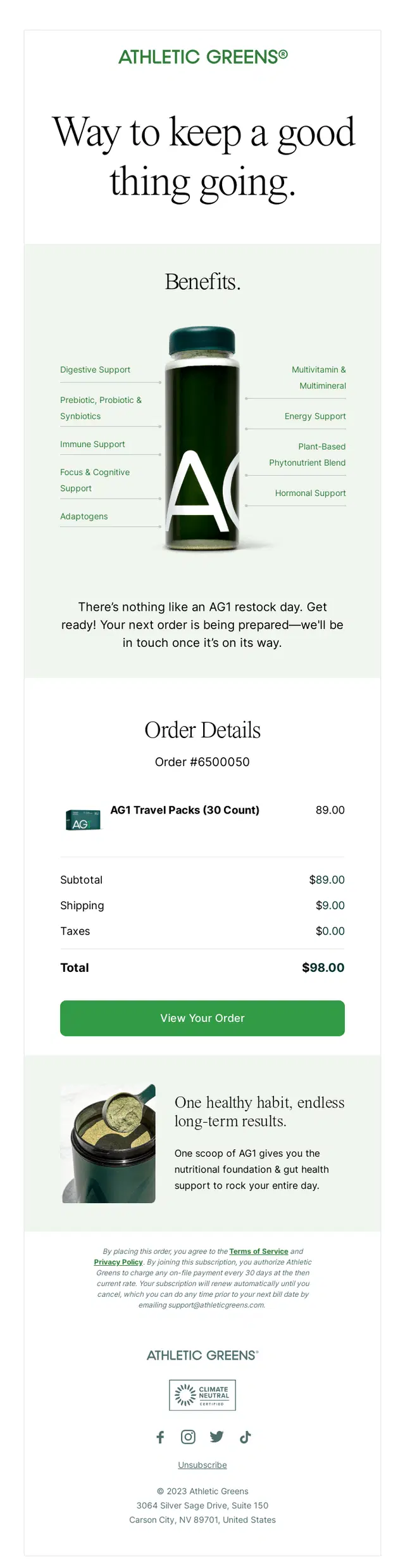
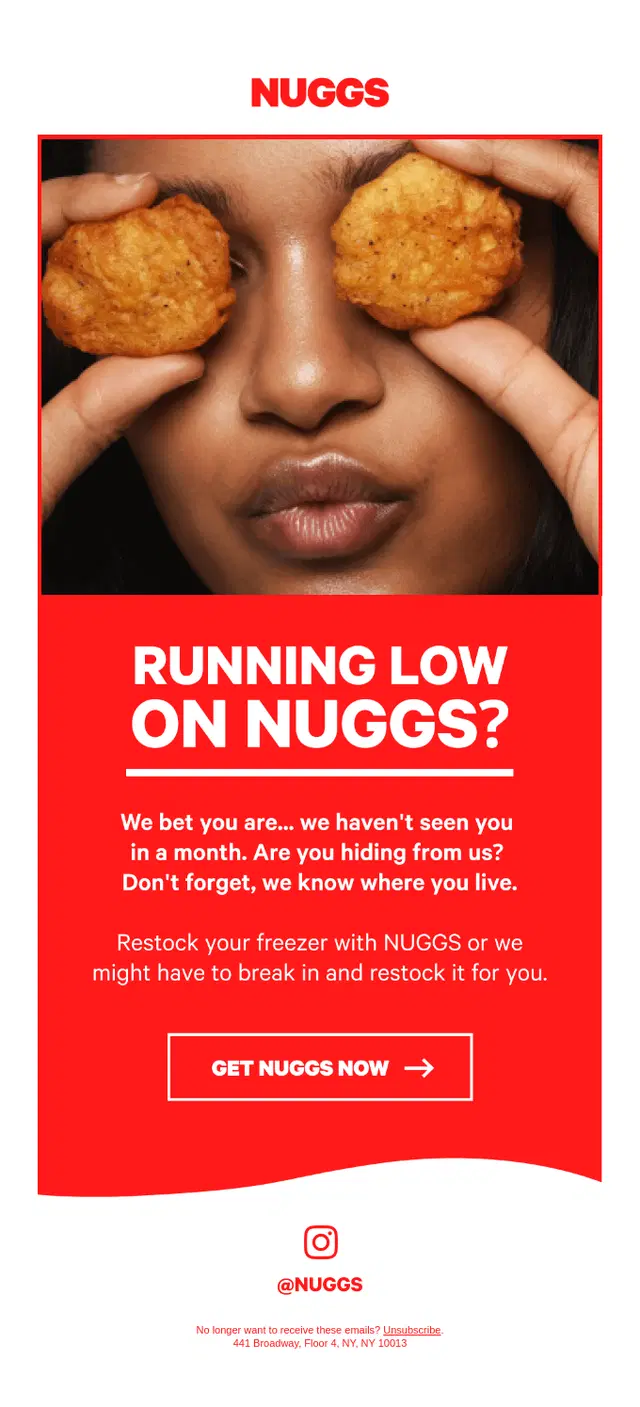
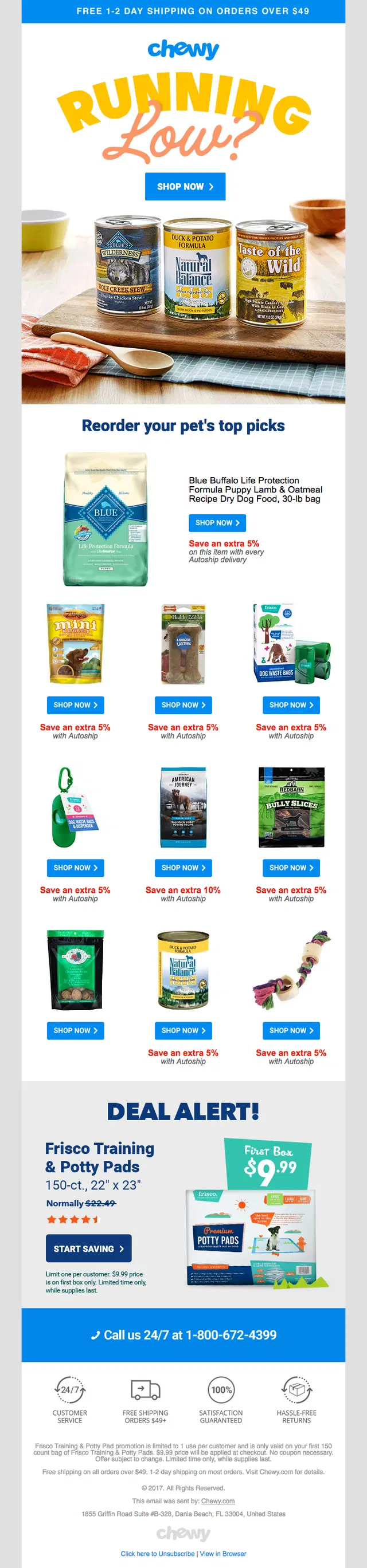
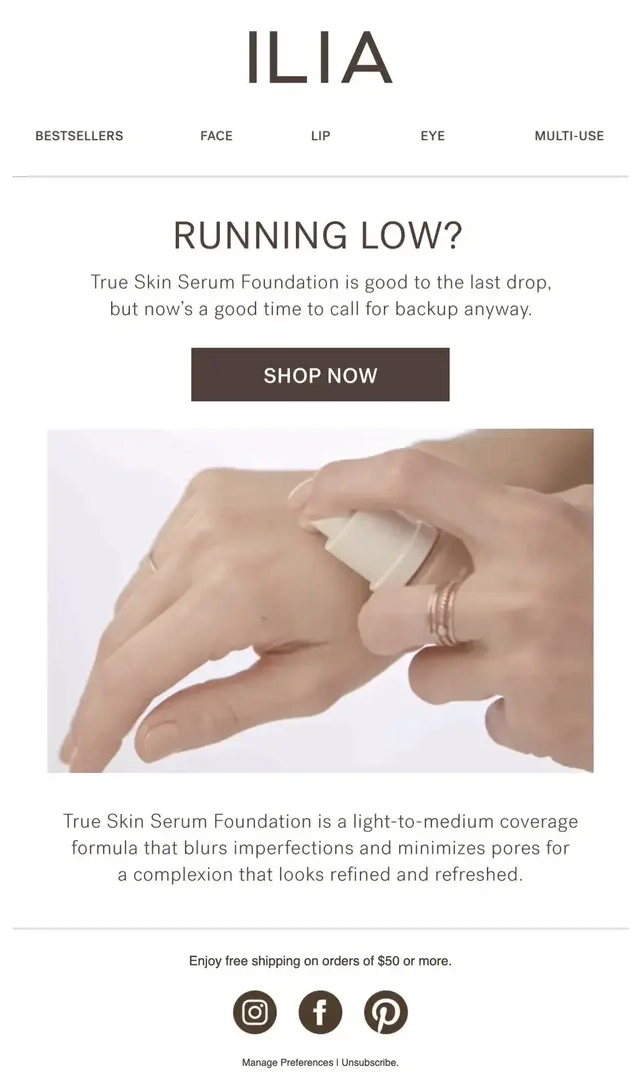
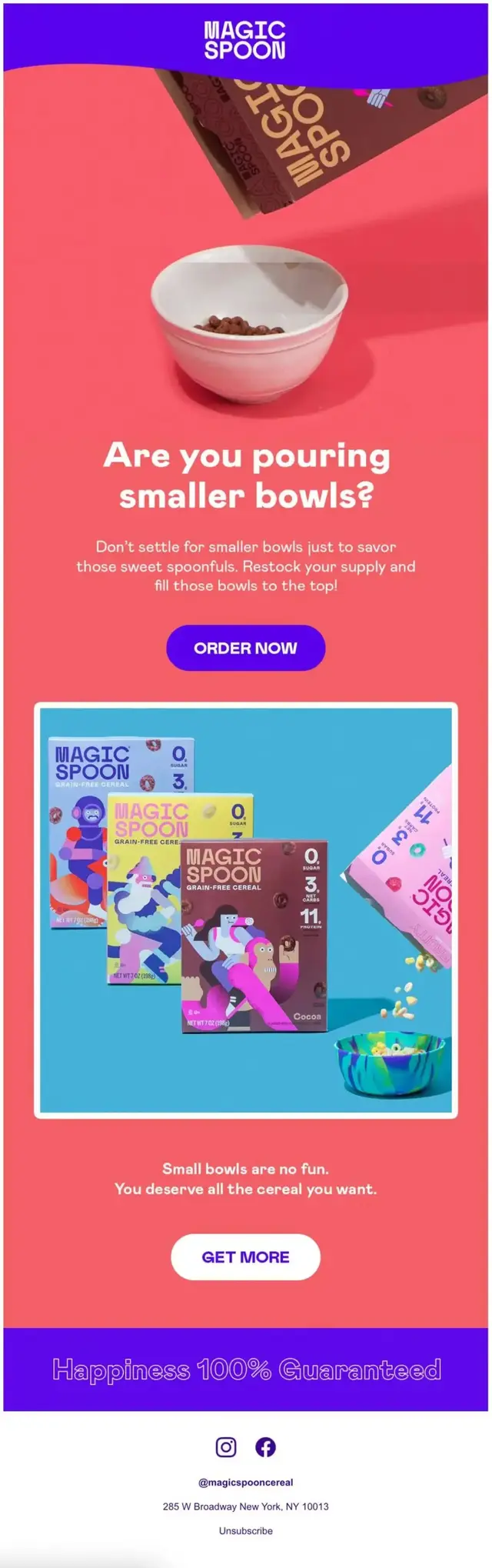
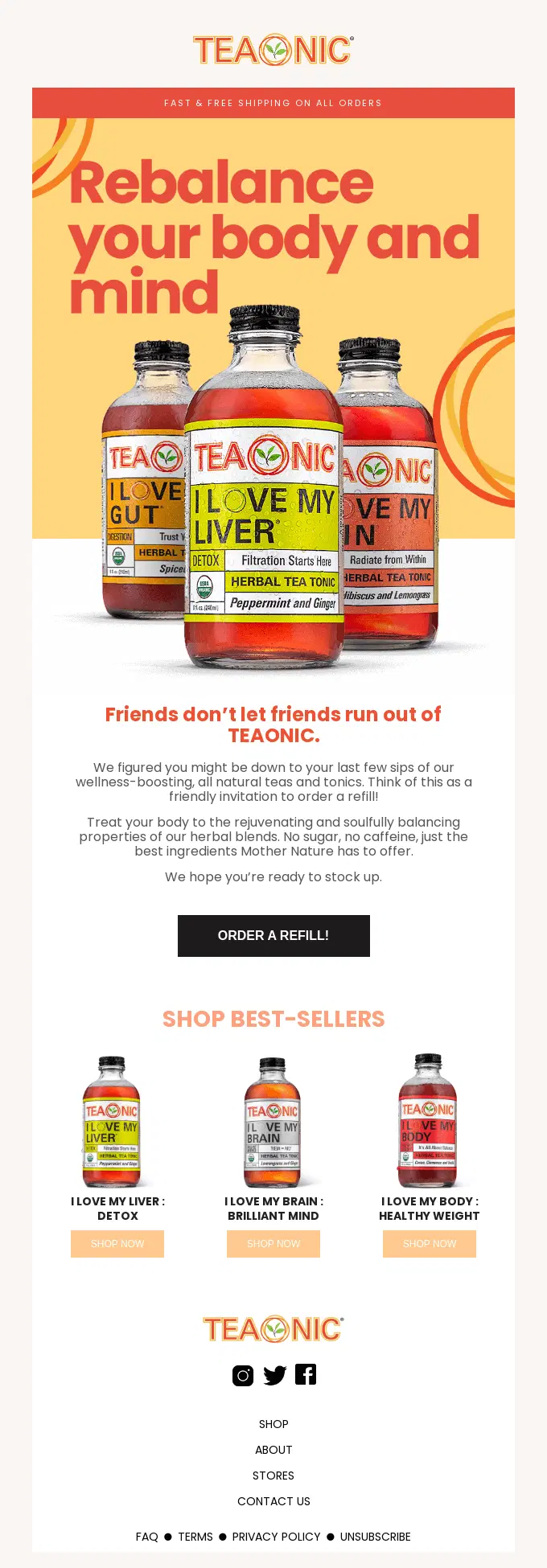
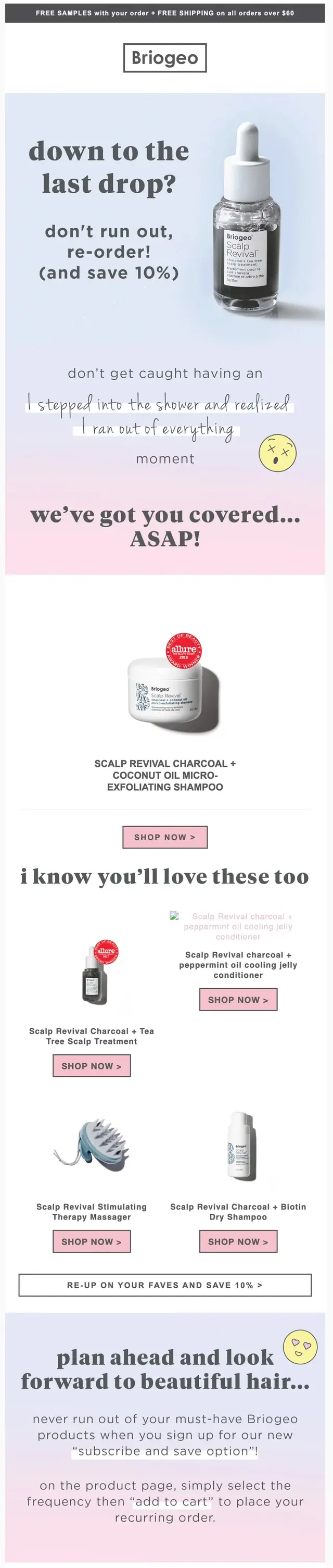
Replenishment and reorder emails remind customers when it may be time to purchase a product again. They work particularly well for frequently used or consumable products and can make repeat purchases easier by bringing the right product back to the customer’s attention at the right time.

Shipping and Delivery Follow Up Emails
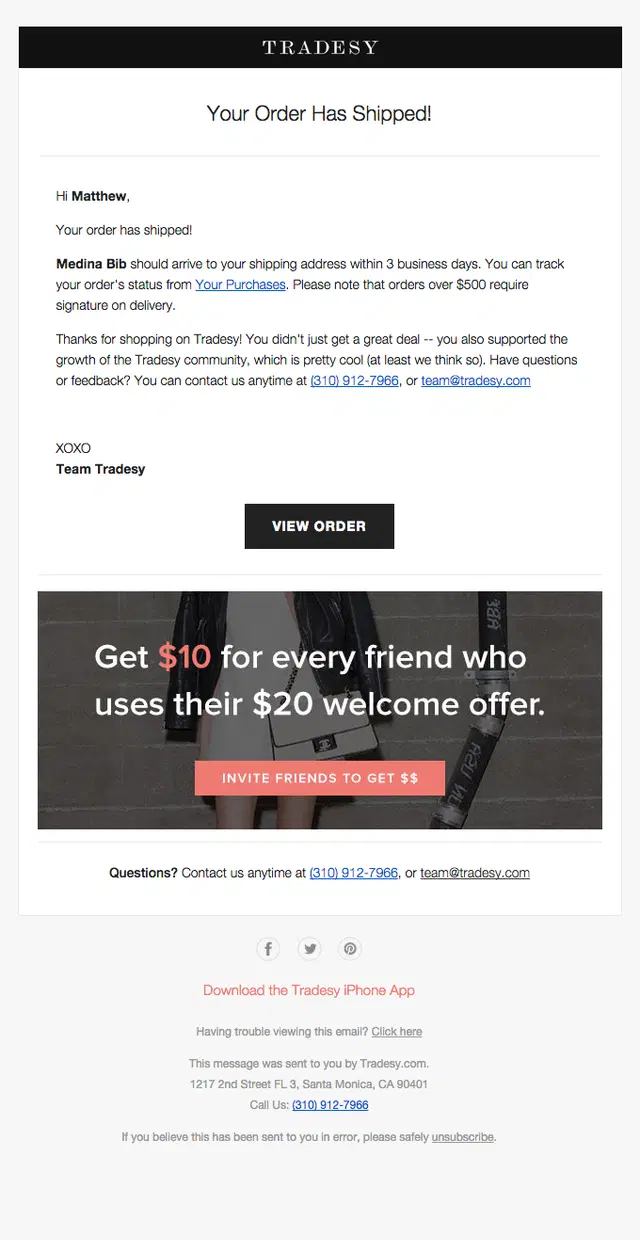
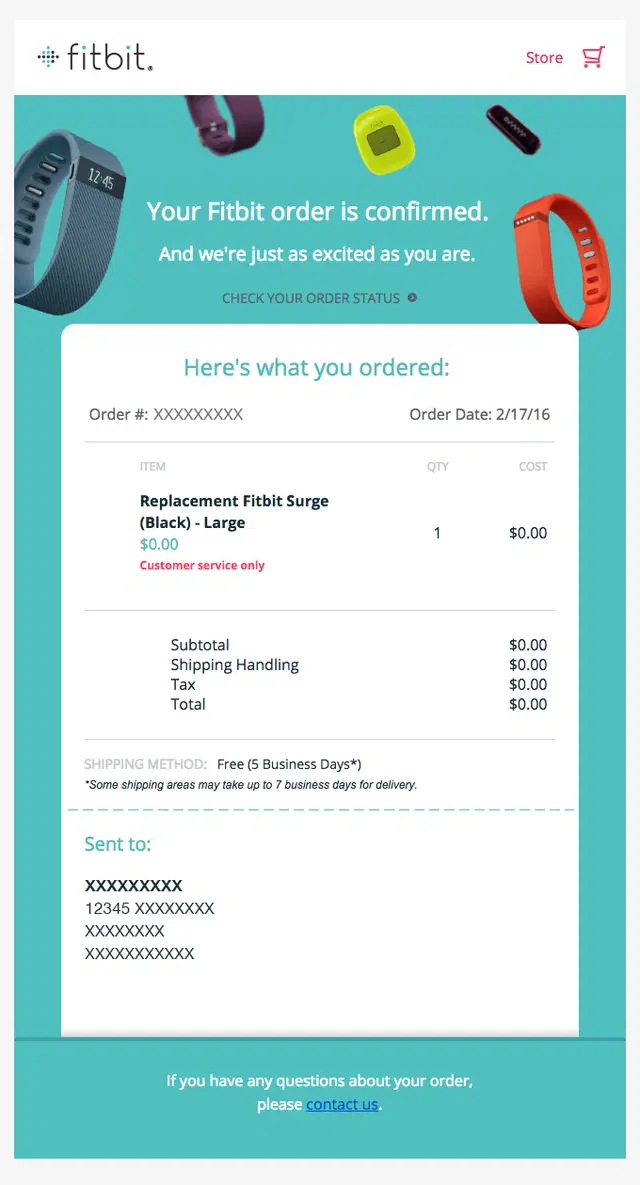
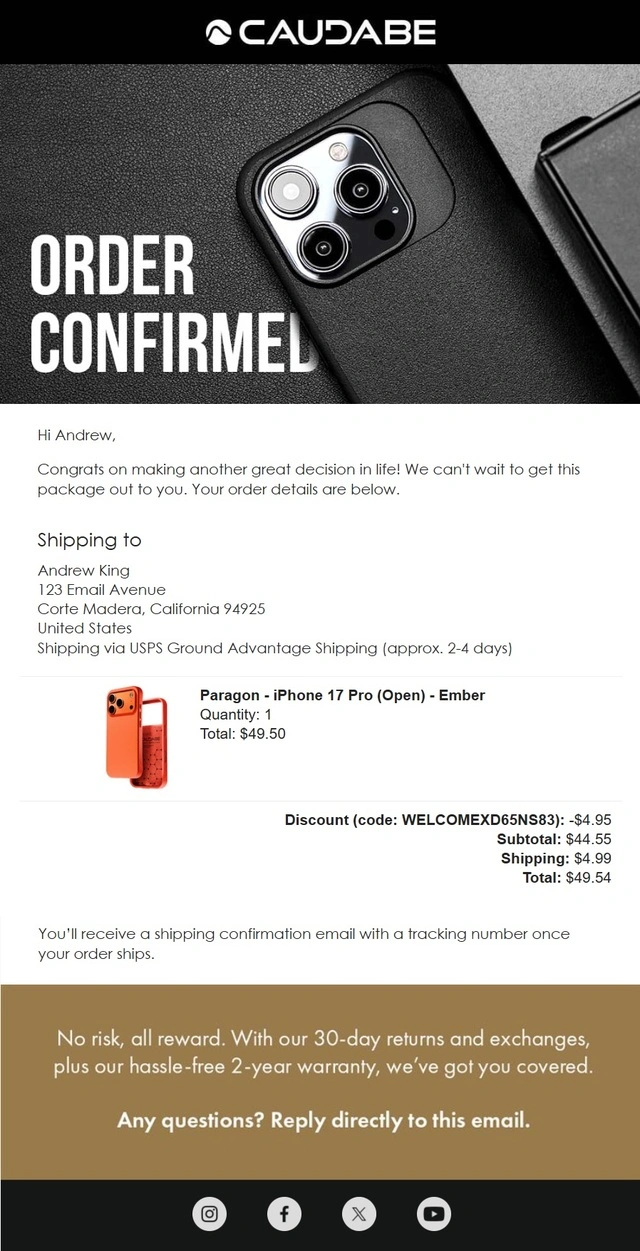
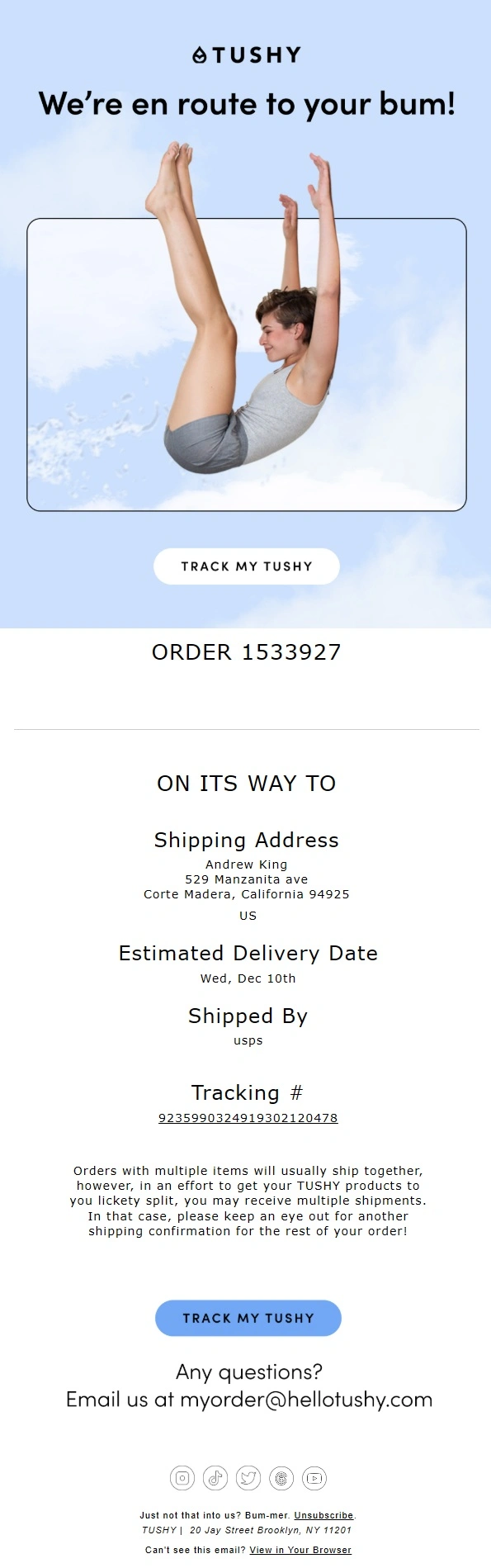
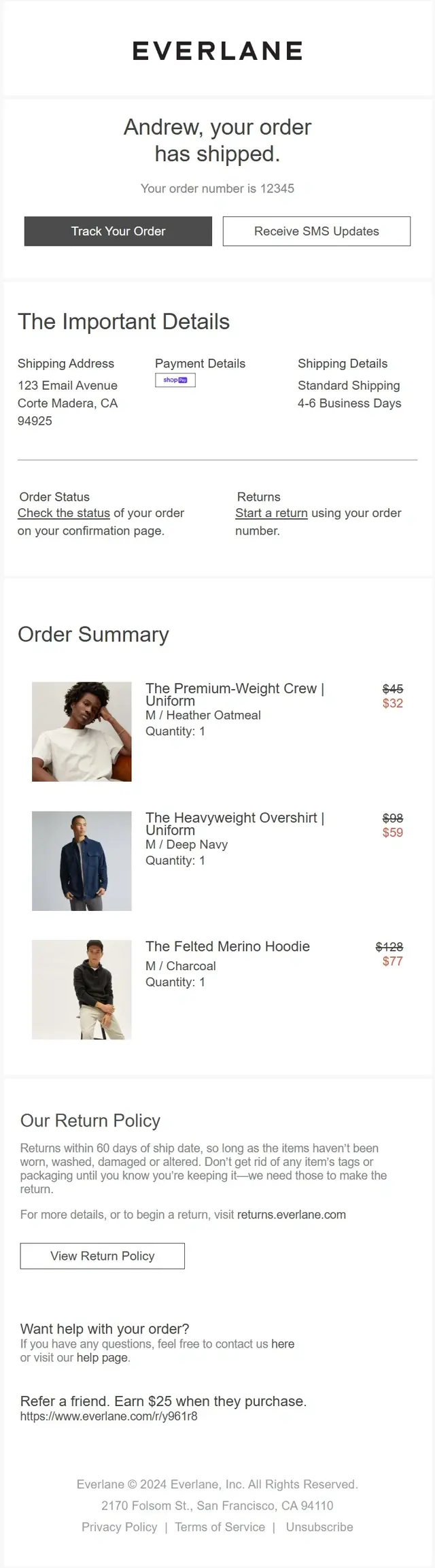
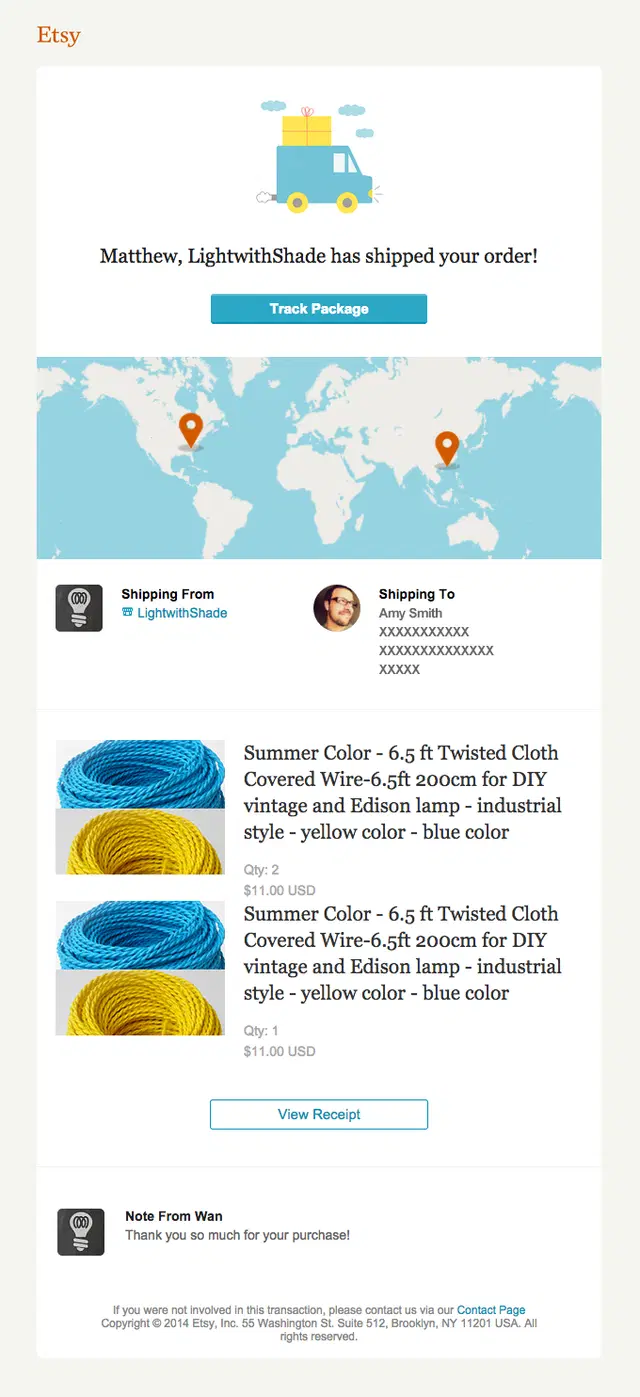
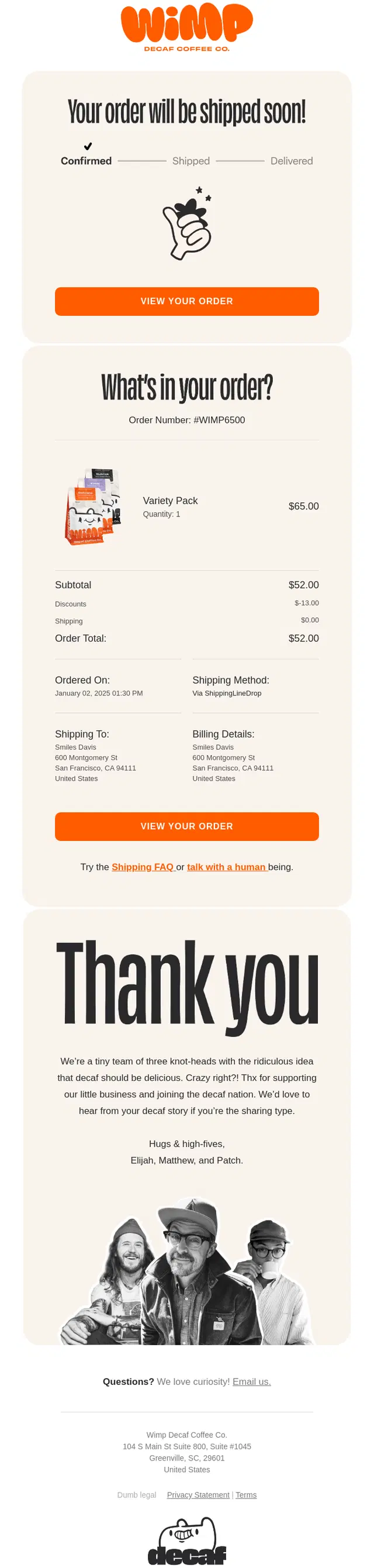
Shipping and delivery follow up emails keep customers informed as their order moves from the warehouse to their door. Alongside tracking and delivery information, brands can use these messages to build anticipation, provide useful product guidance, or suggest what customers should do once their order arrives.
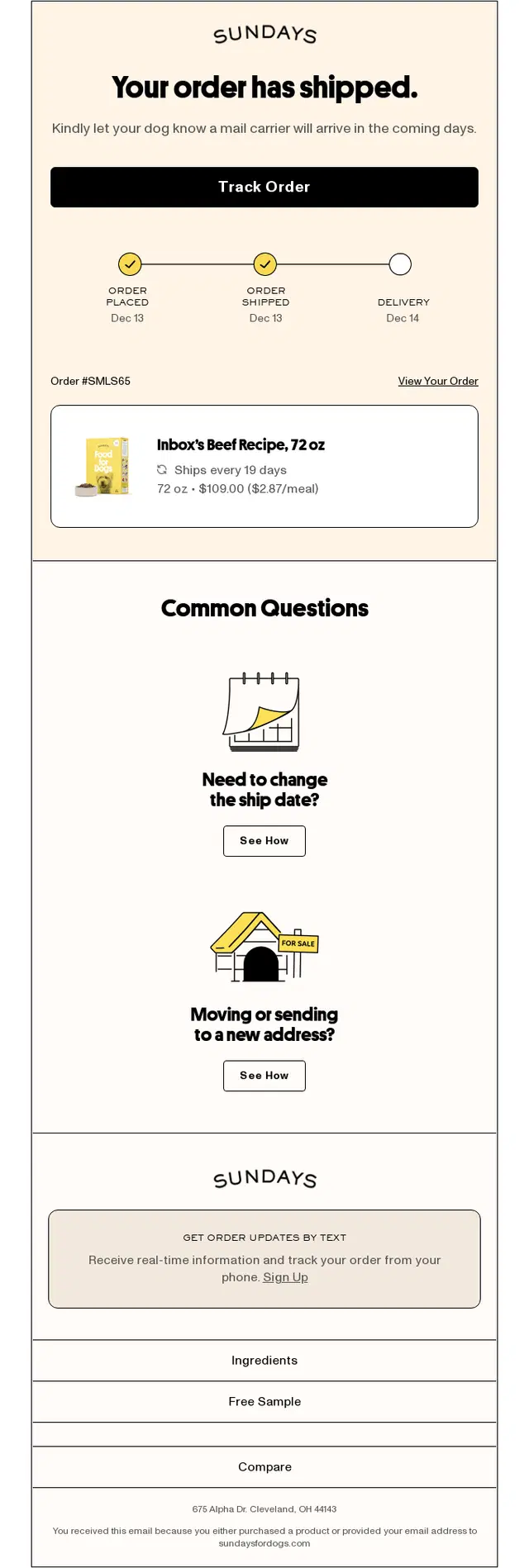


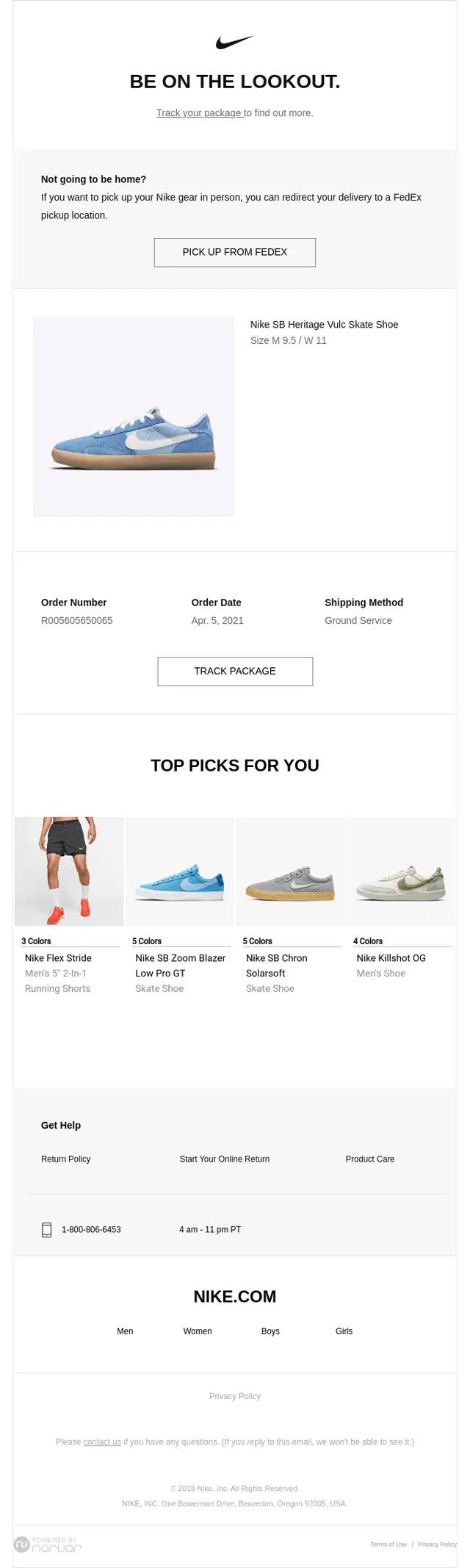
Want to see more examples of this type? Check out 100+ Shipping Confirmation Email Examples
Post Purchase Email Flow Examples
A post purchase email flow is a sequence of automated messages triggered after a customer completes an order. Rather than relying on a single email, brands can use a series of timely messages to confirm the purchase, provide shipping updates, educate the customer, request feedback, recommend relevant products, and encourage repeat purchases.
The examples below show how different post purchase email sequences can guide customers through the experience after checkout.
2-Step Post Purchase Email Flow: OLIPOP
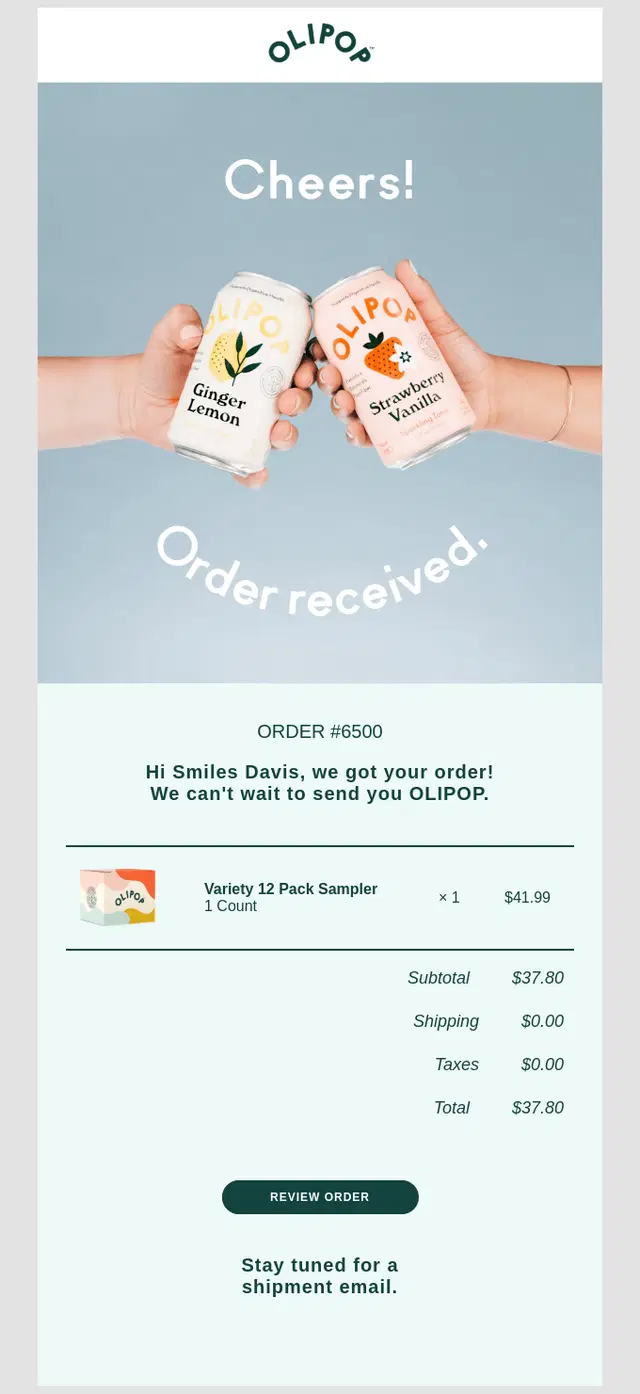
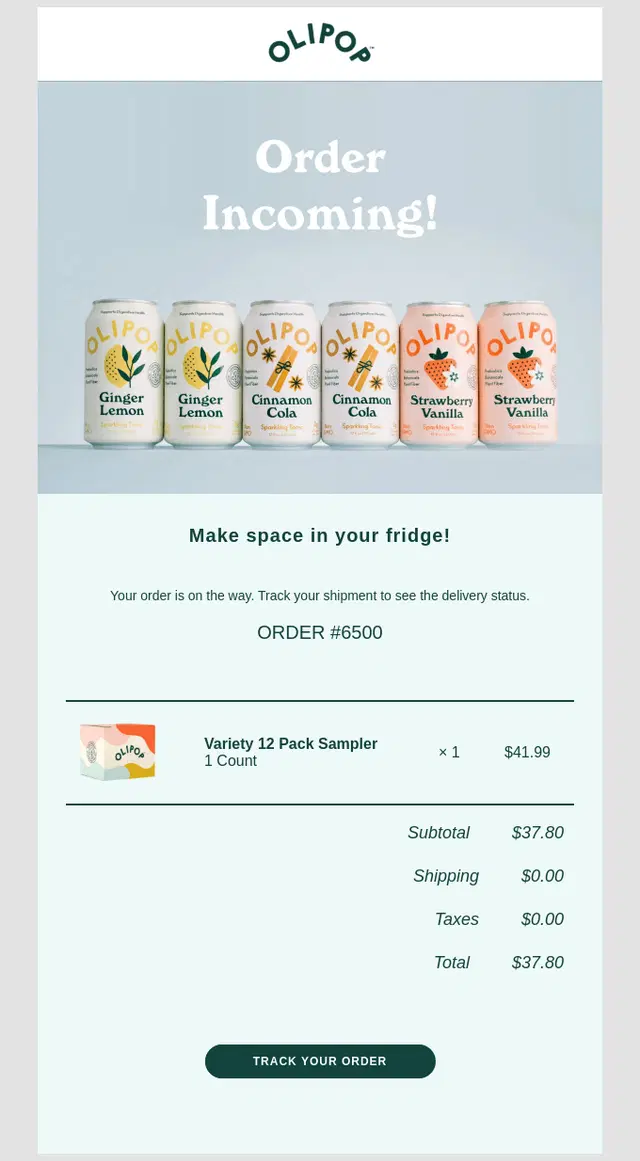
OLIPOP keeps its order updates simple with a two-step post purchase email flow that covers the essentials without adding unnecessary complexity. Each message has a clear purpose while maintaining the brand’s bright visual style and product-first presentation.
3-Step Post Purchase Shipping Flow: Methodical Coffee
Methodical Coffee uses a three-step post purchase email flow to keep customers informed from checkout through delivery. The sequence maintains a consistent visual style and repeated order progress indicator, making each stage of the post purchase journey easy to follow.



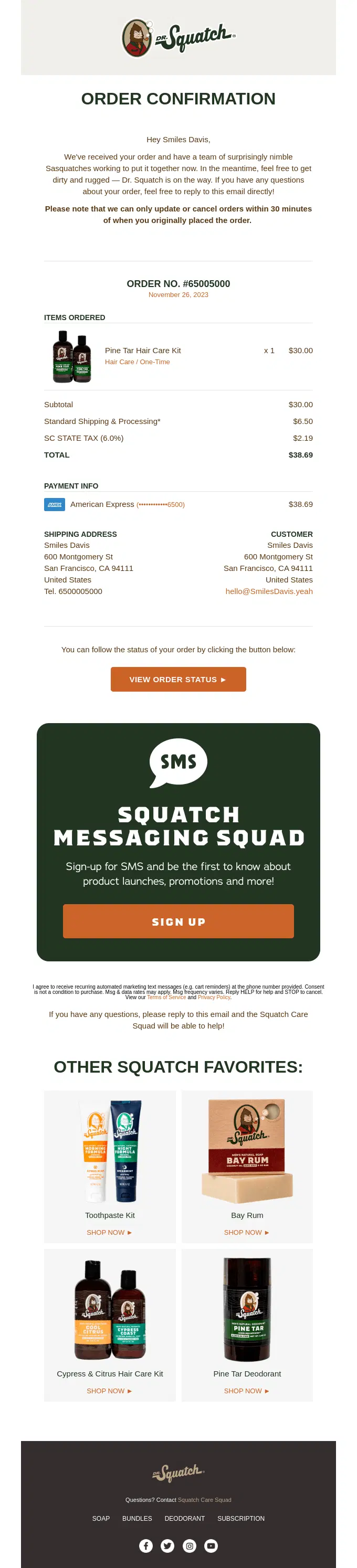
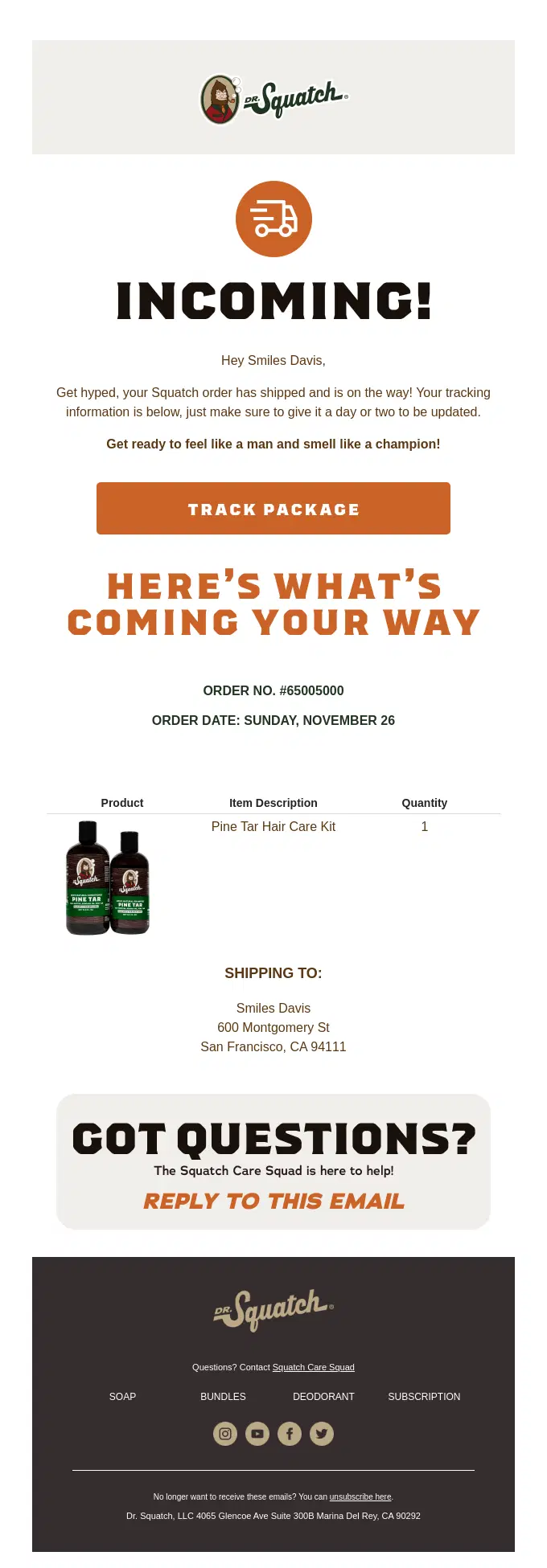
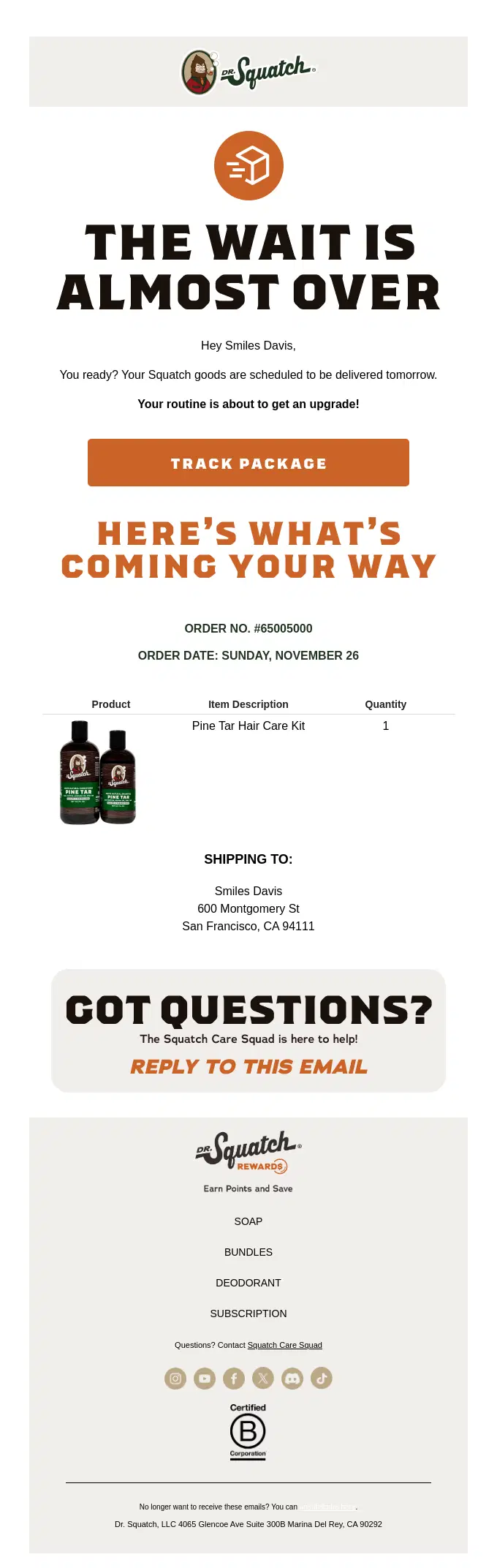
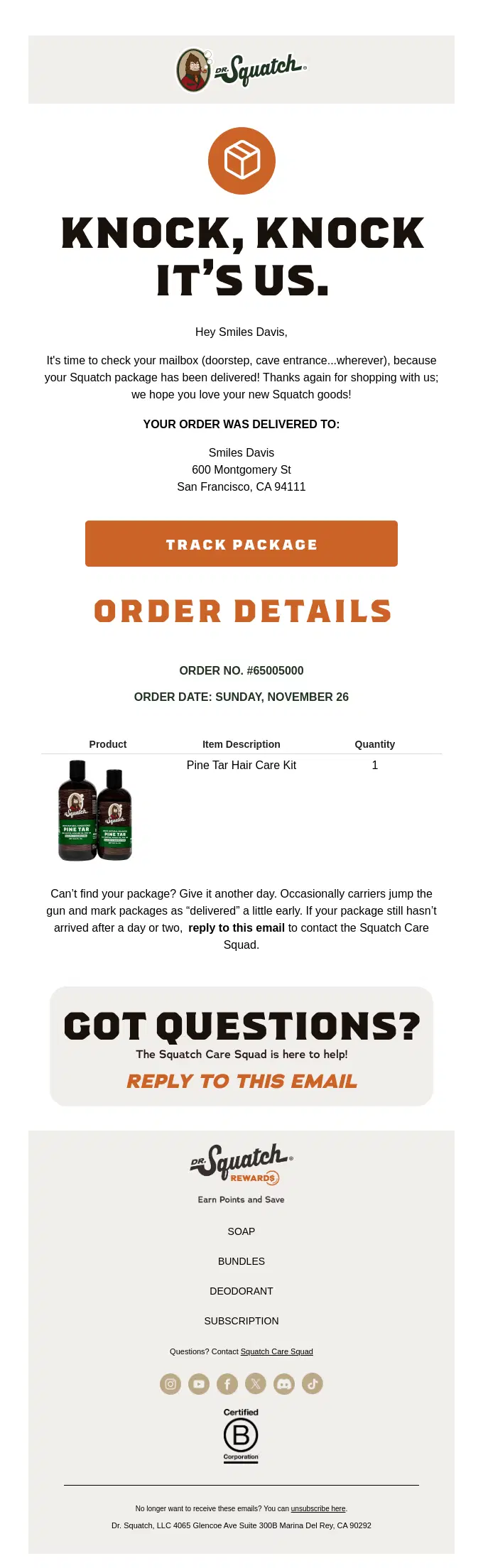
4-Step Post Purchase Shipping and Delivery Flow: Dr. Squatch
Dr. Squatch turns routine order updates into a four-step post purchase email flow that keeps customers informed from checkout through delivery. Each message has a clear purpose while maintaining the brand’s recognizable voice and visual style.
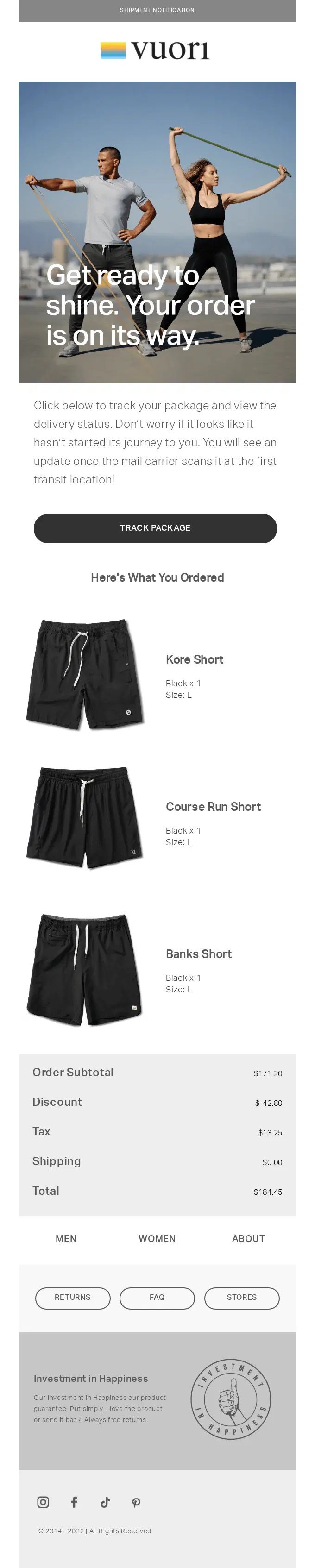
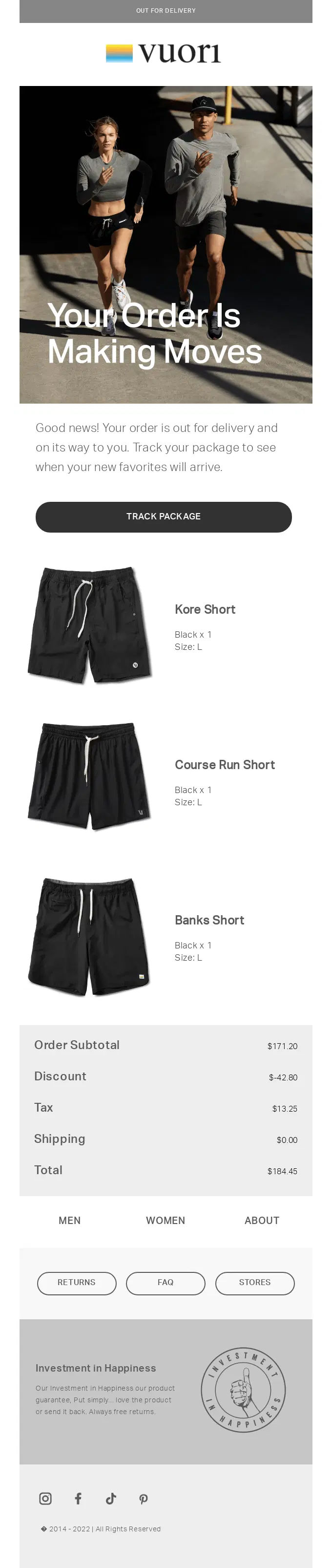
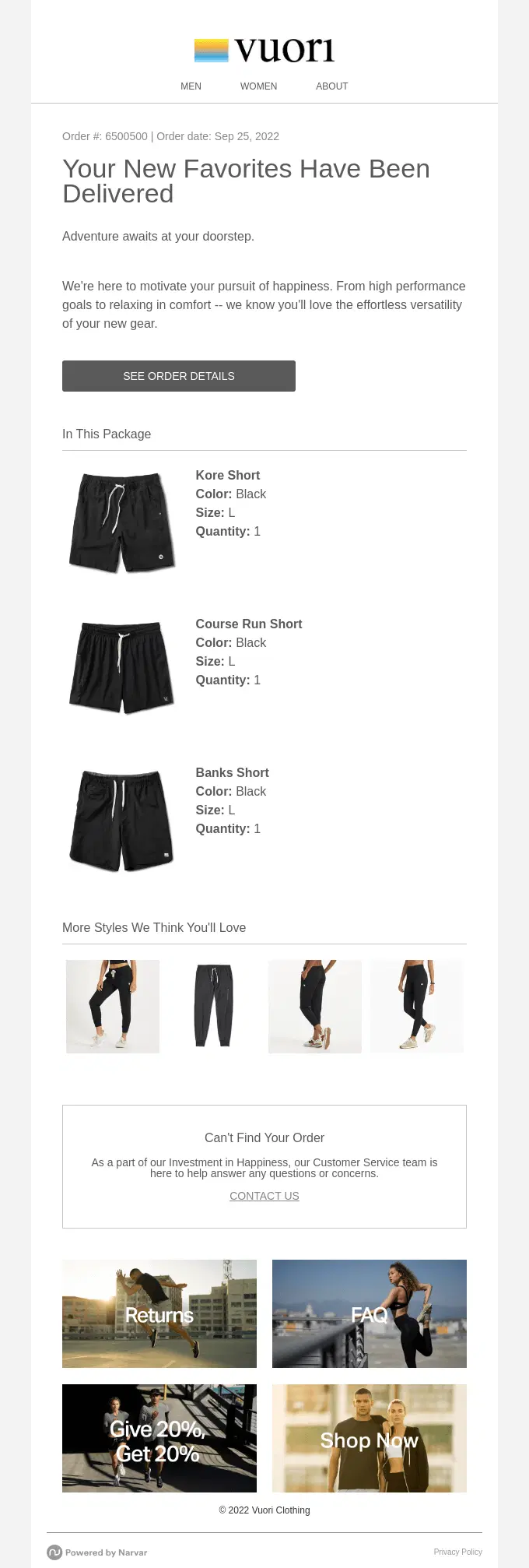
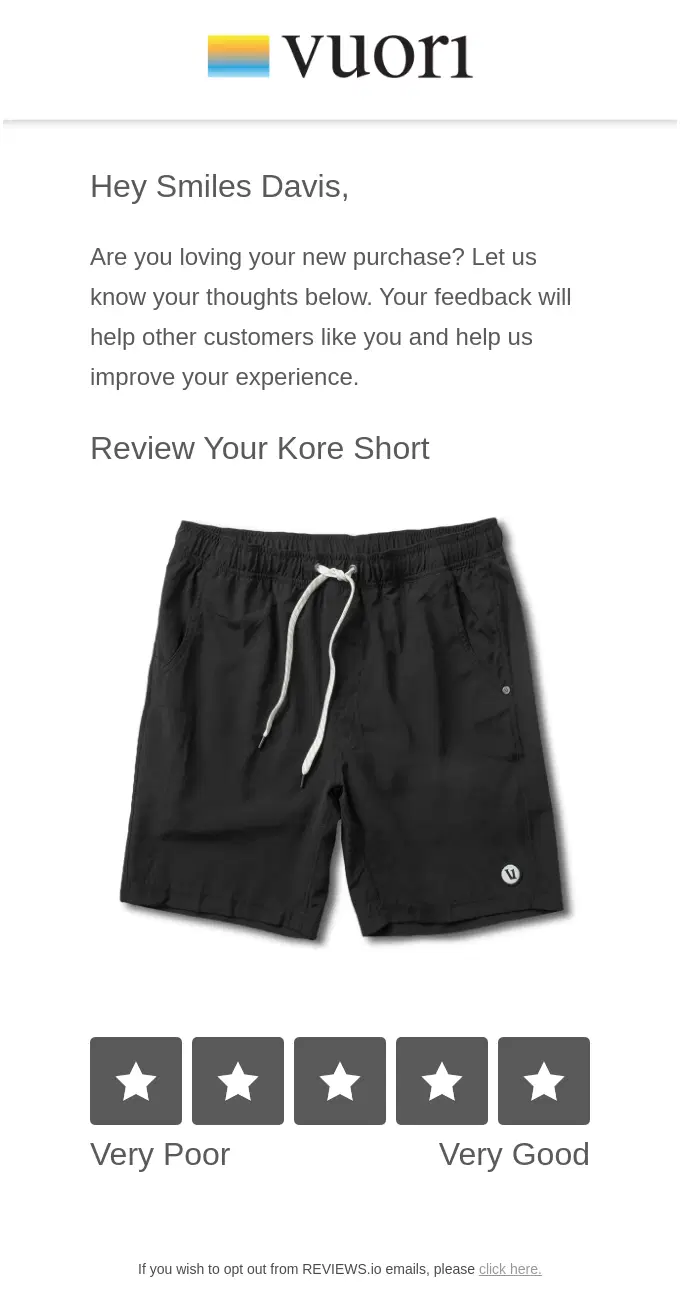
5-Step Post Purchase Email Flow: Vuori
Vuori uses a five-step post purchase email flow that takes customers from order confirmation through delivery and continues with a review request. Consistent branding, product imagery, and clear calls to action connect each message while giving customers the right information at every stage of the post purchase journey.

Post Purchase Email Subject Line Ideas
The best post purchase email subject lines make it clear why you’re reaching out without sounding overly automated. A shipping update should feel different from a review request, product recommendation, or reorder reminder. Here are subject line ideas for the main types of post purchase emails.
| Email Type | Subject Line Ideas | What They Signal |
|---|---|---|
|
Thank You |
|
Acknowledges the purchase and reinforces the customer relationship |
|
Follow Up |
|
Continues the conversation and gives customers useful next steps |
|
Review Request |
|
Makes the feedback request clear before the customer opens the email |
|
Cross Sell |
|
Introduces complementary products related to the customer’s purchase |
|
Upsell |
|
Positions a higher-value version, plan, size, or bundle as the next step |
|
Product Education |
|
Promises practical help with setup, use, care, or product benefits |
|
Loyalty & Referral |
|
Highlights rewards, points, referrals, or incentives for future engagement |
|
Replenishment & Reorder |
|
Reminds customers to repurchase a consumable or frequently used product |
|
Shipping & Delivery |
|
Communicates where the order is in the delivery journey |
Frequently Asked Questions
What Is a Post Purchase Email?
A post-purchase email is a message sent to a customer after they complete a purchase. It can be part of an automated post purchase email flow or sequence and may include a thank-you message, product instructions, a review request, related product recommendations, a replenishment reminder, or a loyalty offer. Post-purchase emails are designed to support customers after the sale, encourage engagement, and create opportunities for repeat purchases and long-term retention.
What are the best practices for post purchase emails?
The best post purchase emails are useful first and promotional second. A few things matter most:
- Send the right message at the right time. Order updates should arrive immediately, while reviews, replenishment reminders, and follow-up offers need more time.
- Focus on what the customer needs next. Think about the stage they are in after the purchase, whether that is tracking an order, setting up a product, or deciding what to buy next.
- Use purchase data to personalize the email. Recommendations and follow-ups should connect to what the customer actually bought instead of feeling like another generic campaign.
- Keep important information easy to find. Order details, delivery dates, tracking links, and support information should be easy to scan, especially on mobile.
- Give each email one clear main goal. Avoid competing CTAs. Make it obvious whether you want the customer to track, review, reorder, learn, or shop.
- Don’t turn every email into a sales pitch. Cross-sells and upsells can work well after a purchase, but they should feel relevant and well-timed rather than forced.
When should you send a post purchase email?
The right timing depends on the purpose of the email. Order confirmations should arrive immediately, while shipping updates follow as the order moves through delivery. Product education can arrive shortly before or after delivery. Review requests should wait until the customer has had time to use the product, while replenishment emails should match the product’s typical usage cycle.
How many emails should be in a post purchase flow?
There is no fixed number that works for every business. A simple post purchase flow might contain two or three emails, while a longer sequence can include order confirmation, shipping updates, delivery confirmation, product education, a review request, and a reorder or cross-sell email. The goal is to include only messages that add value at each stage.
What should a post purchase email flow include?
A typical post purchase email flow starts with an order confirmation, followed by shipping and delivery updates. After that, brands can add product education, customer support, review requests, loyalty rewards, cross-sells, upsells, or replenishment reminders. The exact sequence should depend on the product, buying cycle, and what customers are likely to need next.
What is the difference between a post purchase email and a transactional email?
A transactional email is defined by its function, while post purchase describes where the email appears in the customer journey. Order confirmations, receipts, and shipping updates are transactional emails, but they are also part of the wider post purchase experience because they are sent after a purchase. Post purchase emails can also include marketing messages such as reviews, recommendations, loyalty offers, and reorder reminders.
What is the difference between post purchase cross-selling and upselling?
Post purchase cross-selling recommends additional products that complement the original purchase. For example, a customer who buys a camera might receive recommendations for a case or memory card.
Post purchase upselling encourages the customer to move to a higher-value version, size, bundle, or plan related to what they already purchased. Both can increase repeat revenue, but the recommendation should still make sense for the customer.
How long should you wait before sending a post purchase review email?
Wait until the customer has had enough time to receive and realistically experience the product. That might mean a few days for food or clothing, but several weeks for skincare, supplements, furniture, or products where results take longer to evaluate. Instead of using one delay for every order, base review timing on how customers actually use the product.
Turn Post Purchase Ideas Into a Flow That Fits Your Brand
The best post purchase emails do more than follow up on an order. They keep the experience consistent, give customers a useful next step, and create natural opportunities for repeat purchases and long-term loyalty.
If Klaviyo is part of your email strategy, we can help you turn these ideas into a complete post purchase flow built around your customers, products, and ecommerce goals.