130+ Email Marketing Examples for Every Stage of the Customer Journey


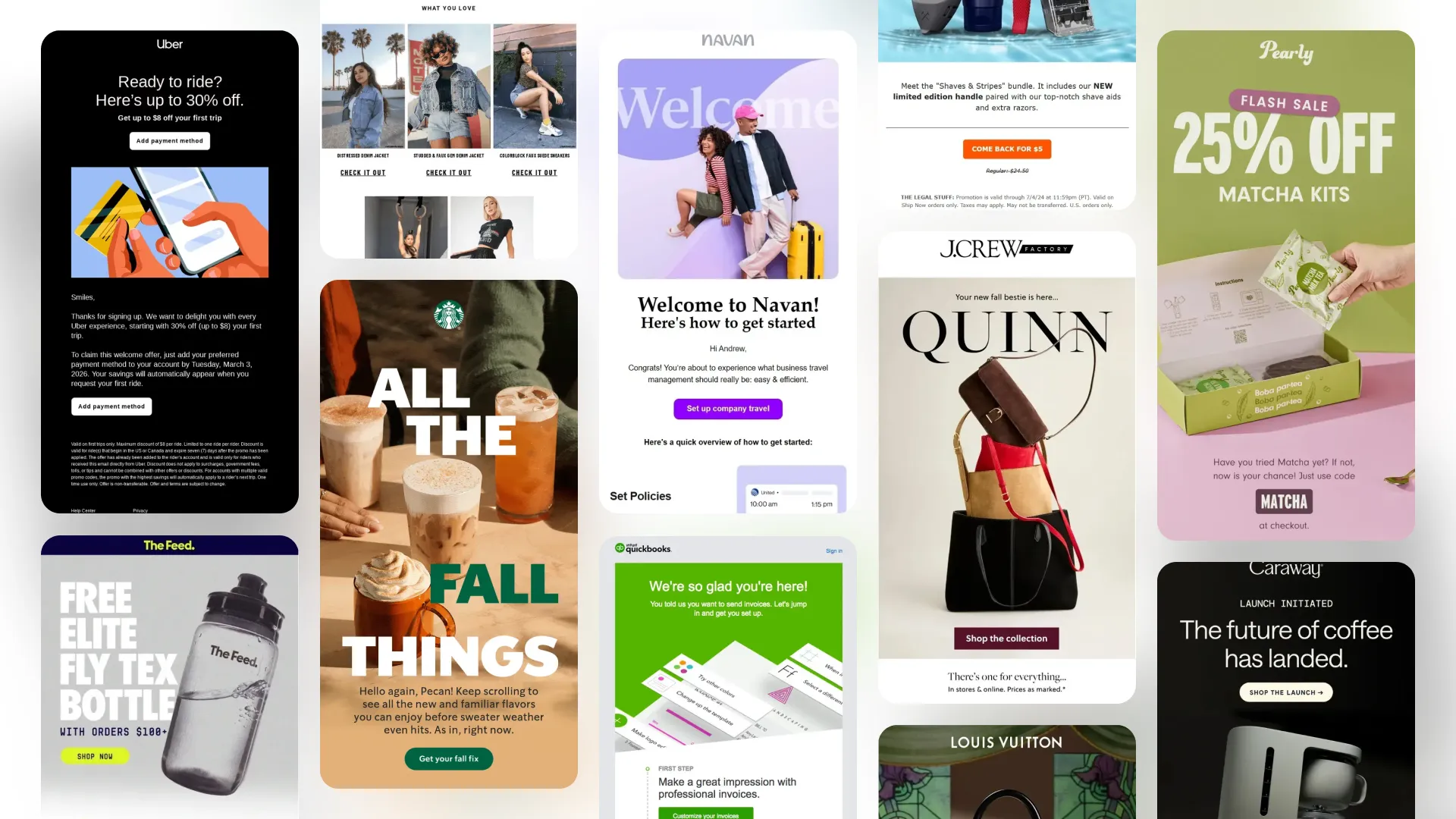
Email marketing shows up in almost every part of the customer journey. One email might welcome a new subscriber, another might introduce a product, bring someone back after months of inactivity, or help a customer decide what to buy next.
We’ve collected 100+ real email marketing examples across different campaign goals, audiences, and stages of that journey. Browse them for ideas, compare how different brands approach the same job, and use the examples as a starting point for your next campaign.
Quick links:
→ Customer Acquisition and Lead Nurture Email Examples
→ Welcome and Onboarding Email Examples
→ Promotional and Sales Email Examples
→ Product Launch Email Examples
→ Personalized and Product Recommendation Email Examples
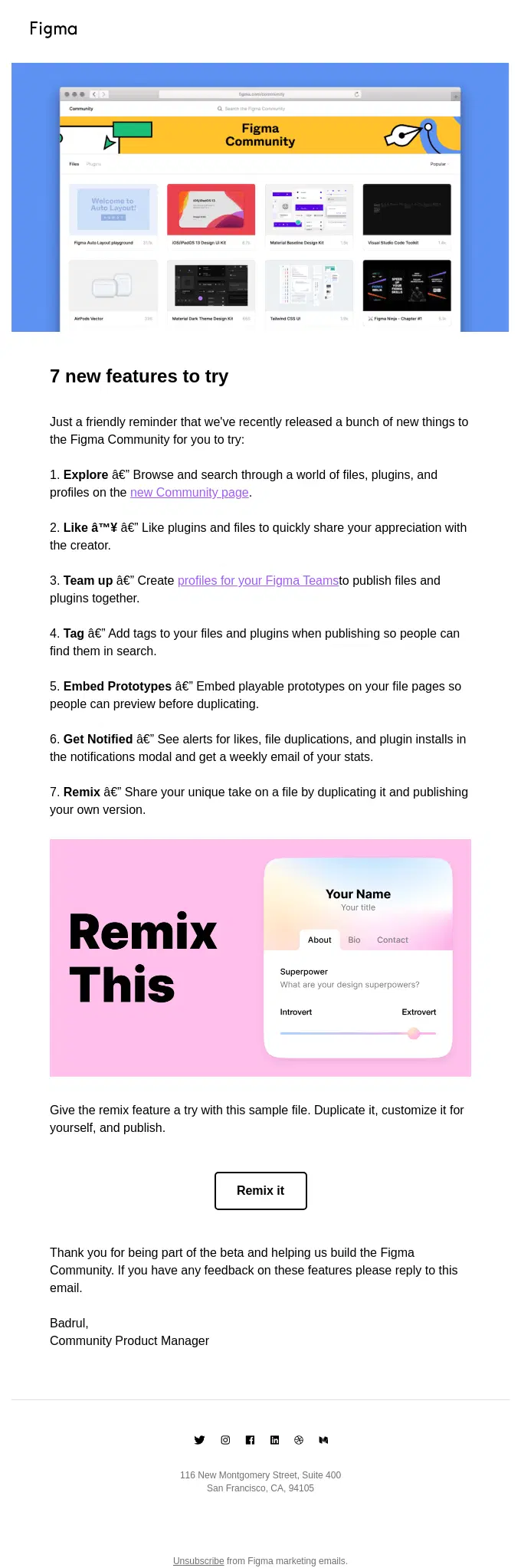
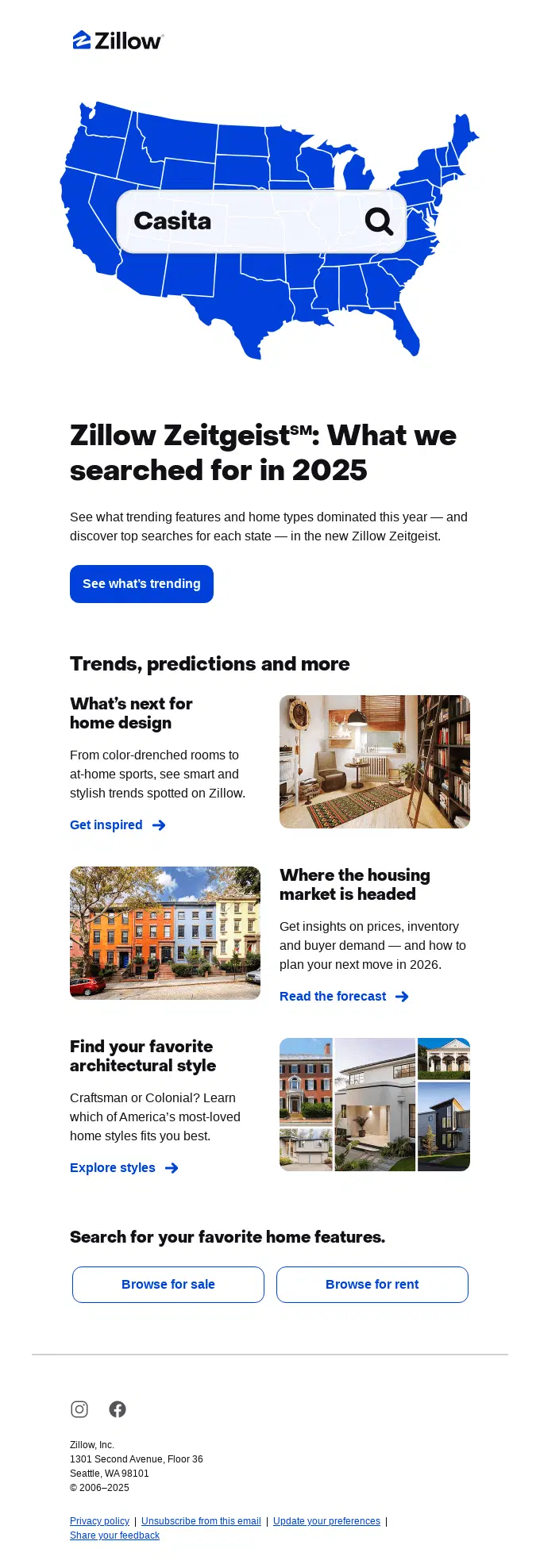
→ Newsletter and Content Marketing Email Examples
→ Event Email Marketing Examples
→ Seasonal and Holiday Email Marketing Examples
→ Re-Engagement and Winback Email Examples
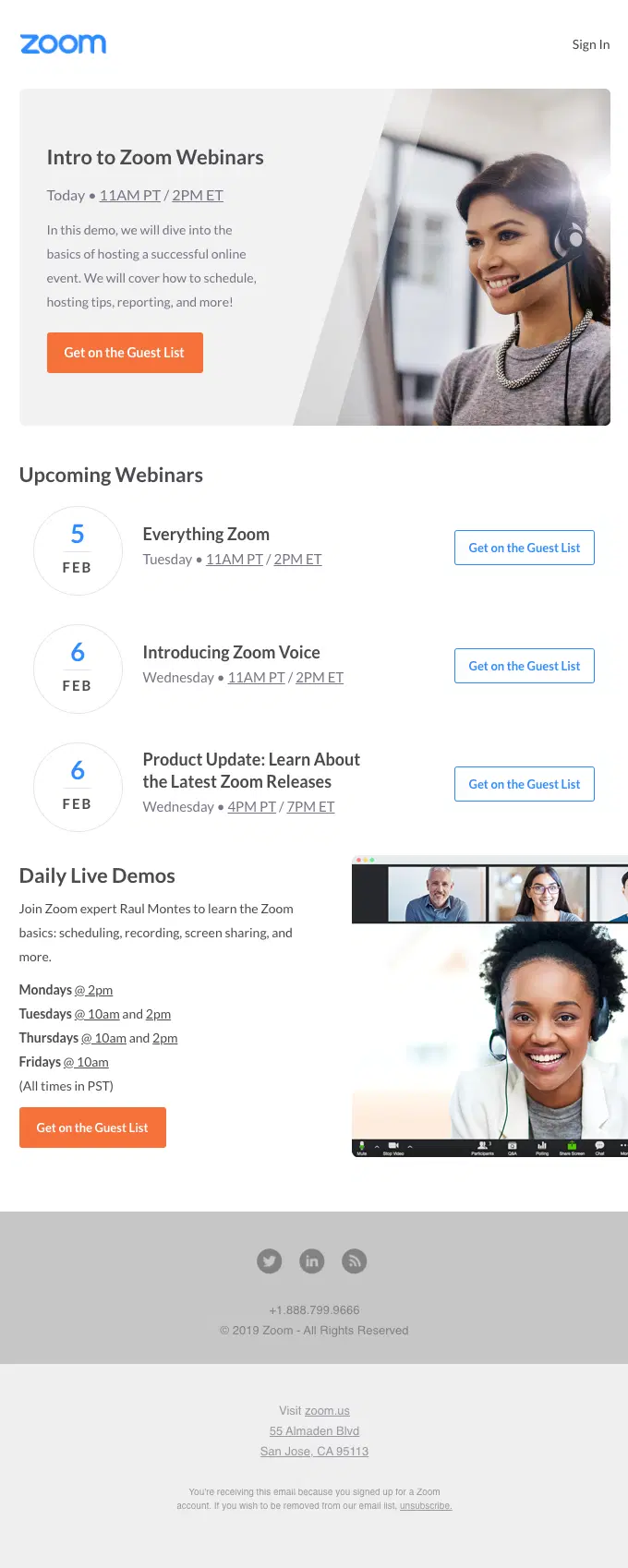
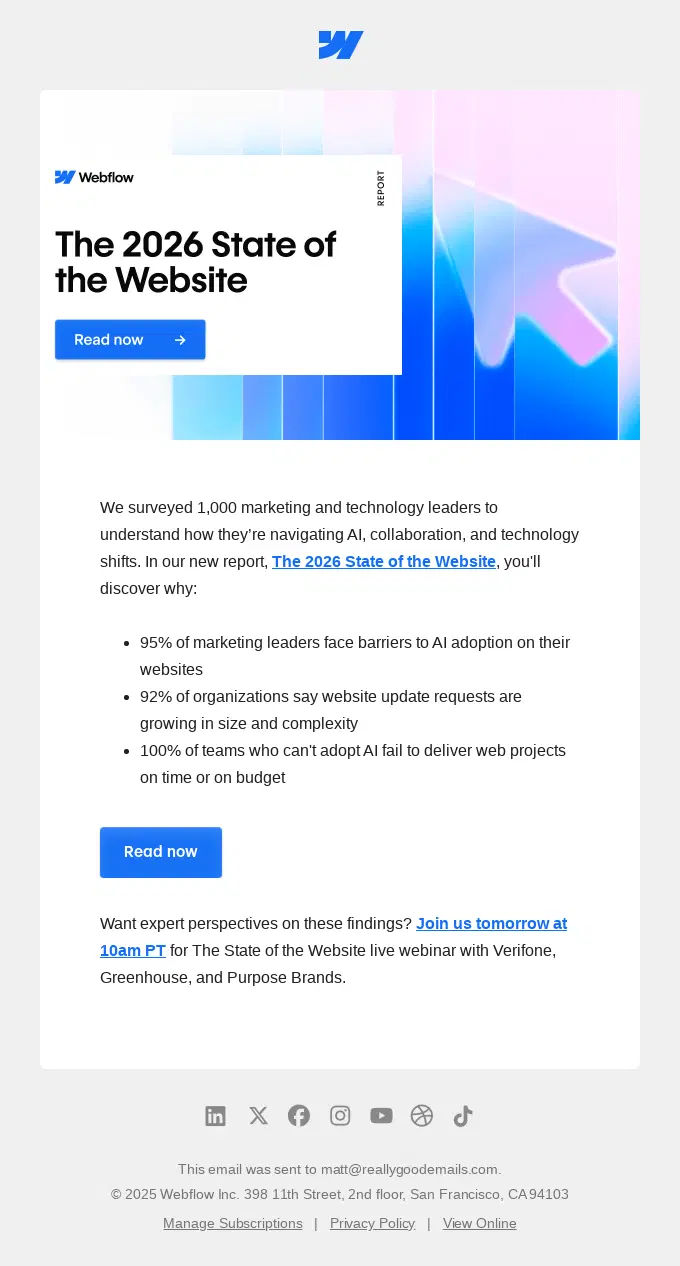
→ B2B Email Marketing Examples
Email Marketing Campaign and Automation Examples
Customer Acquisition and Lead Nurture Email Examples

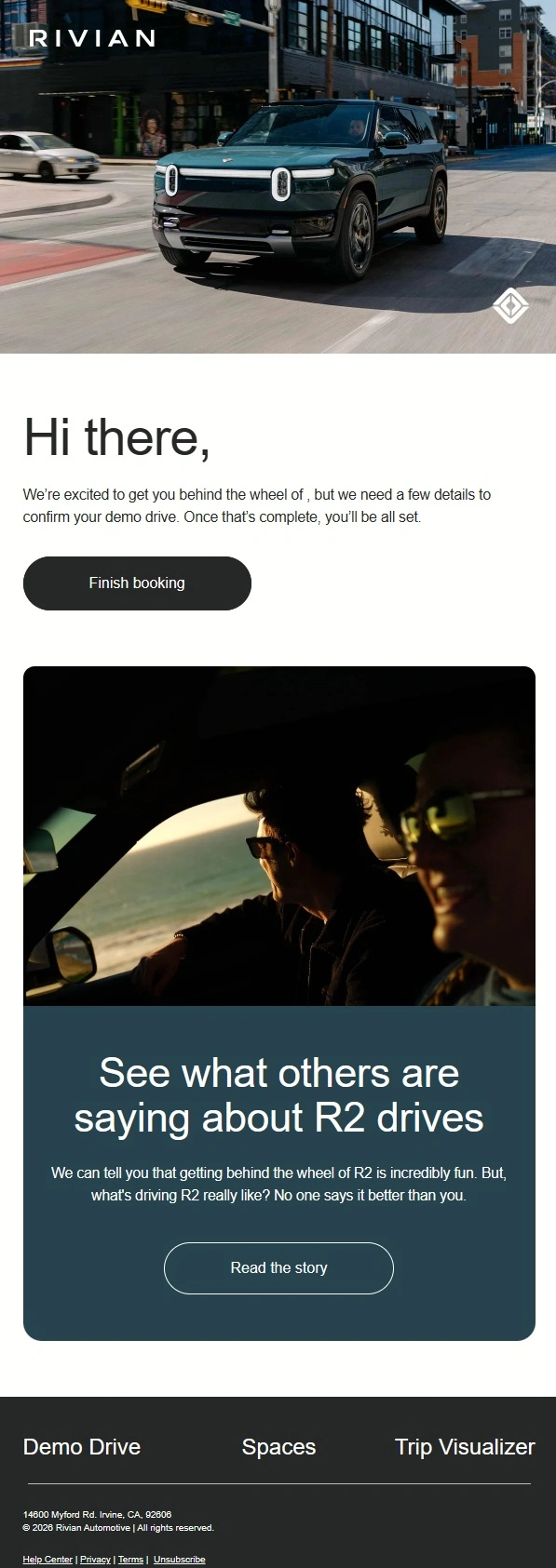
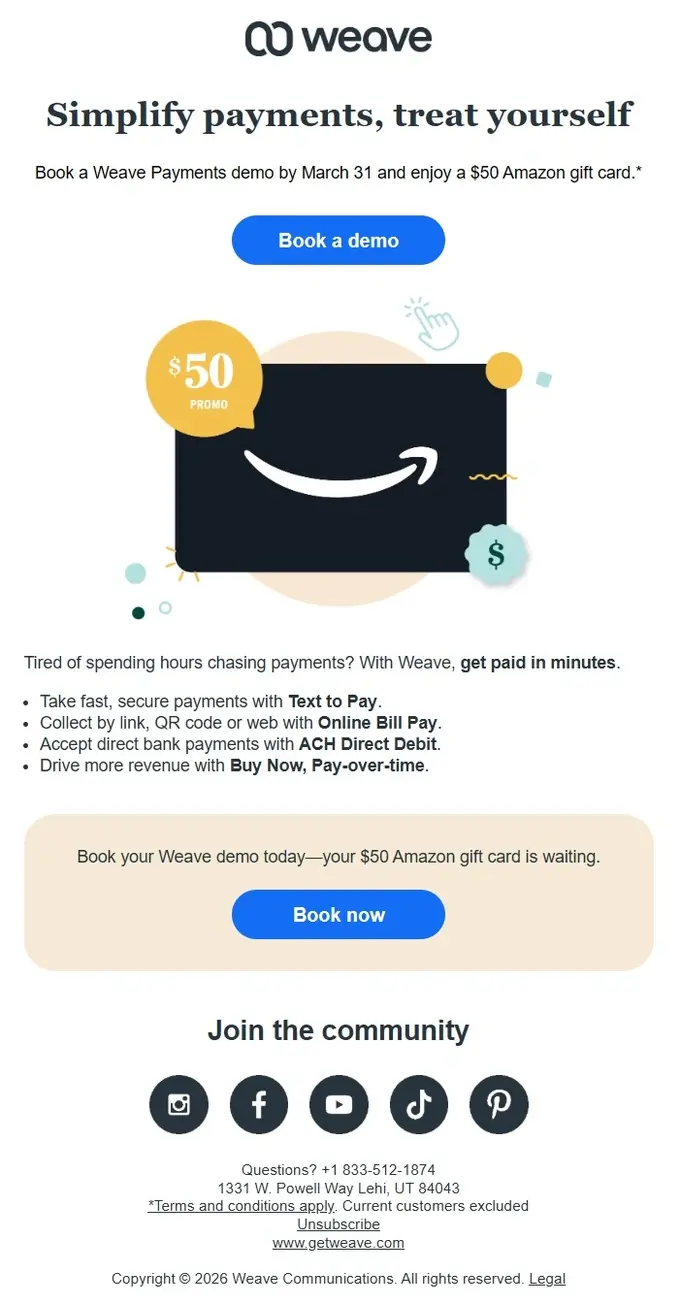
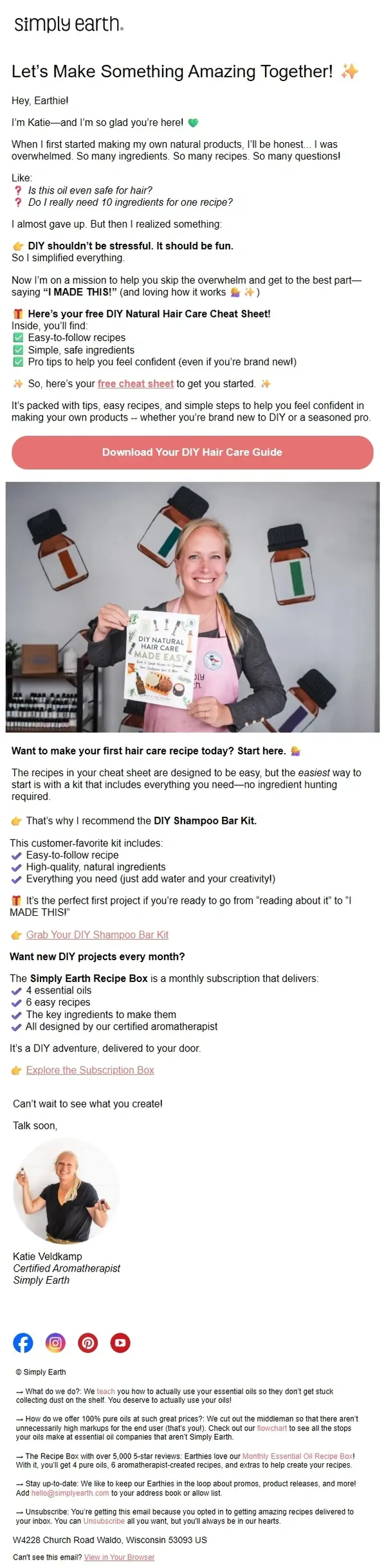
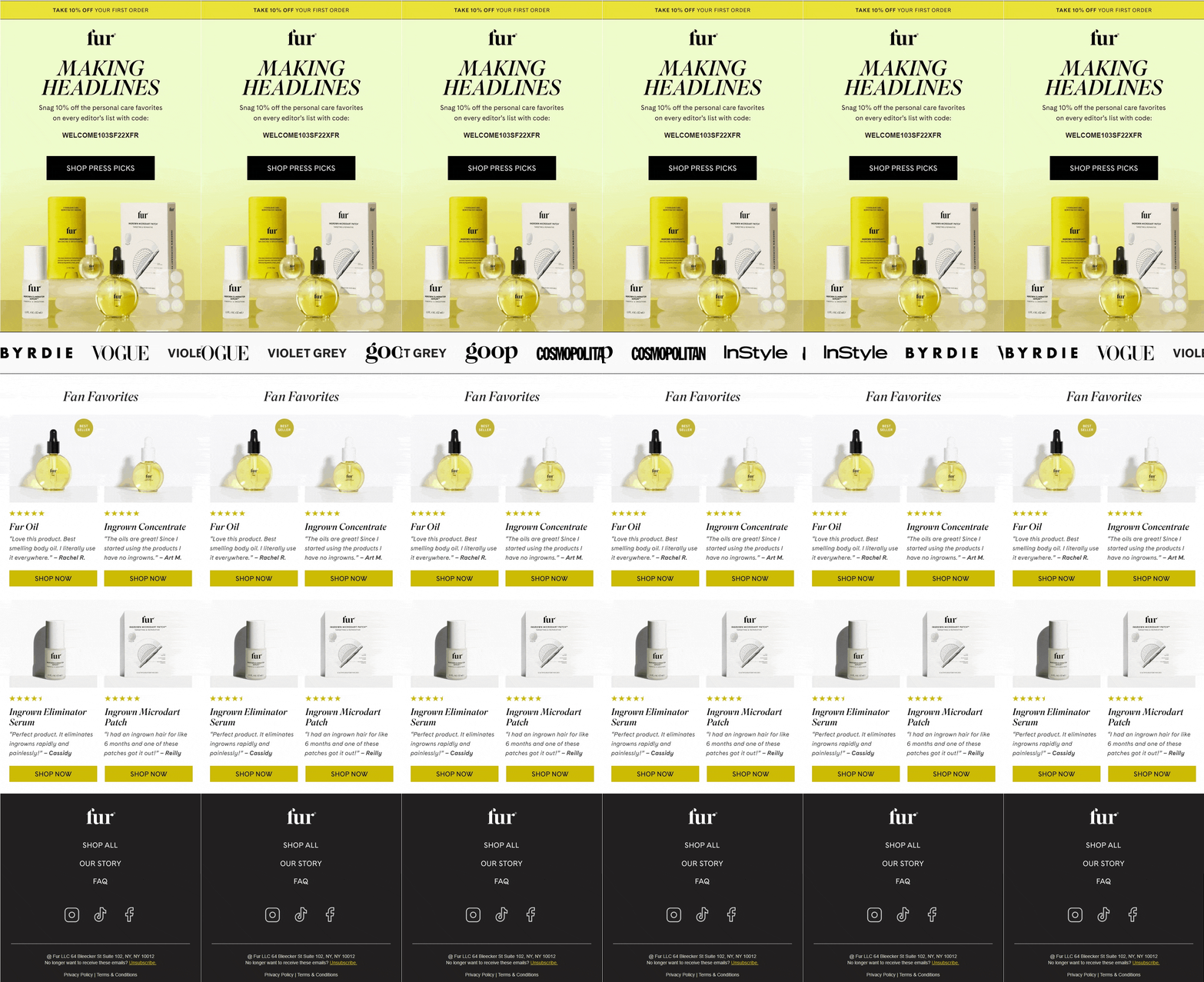
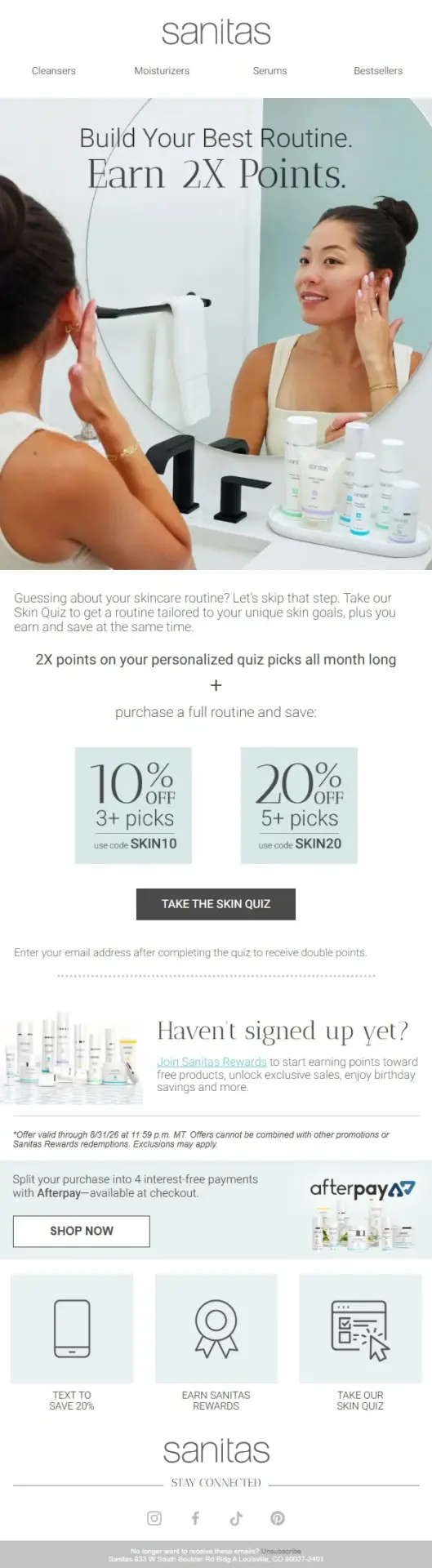
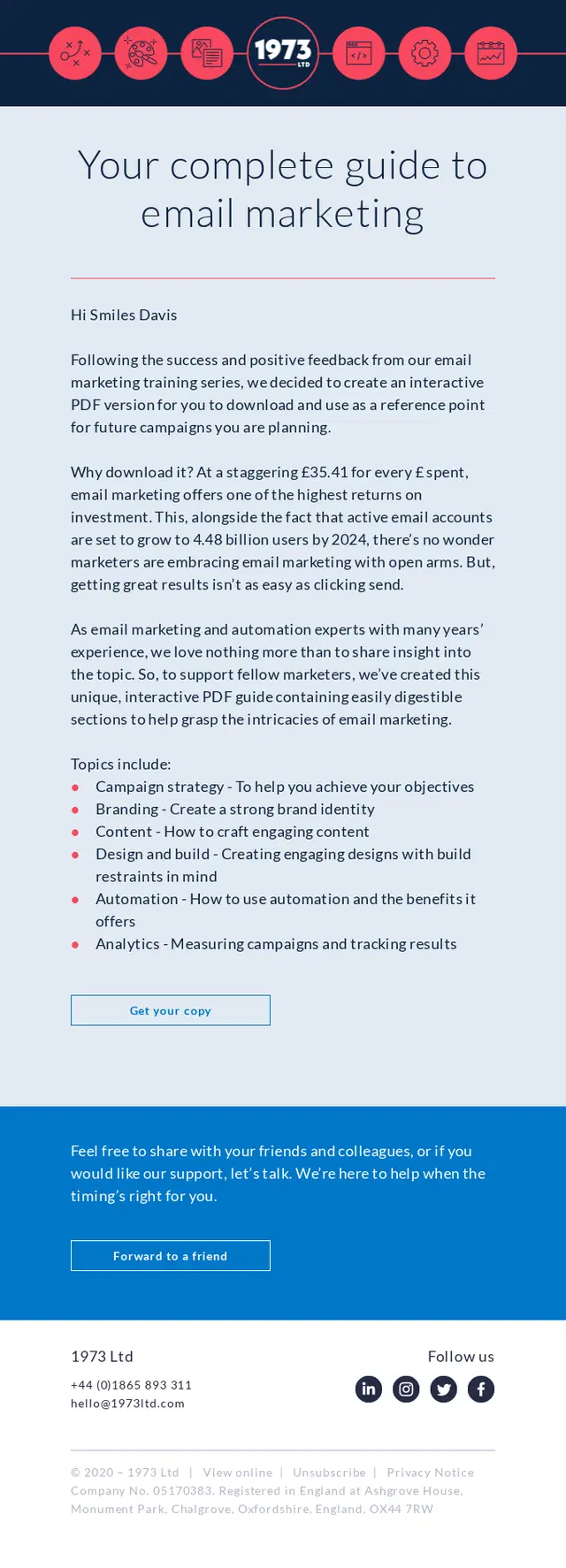
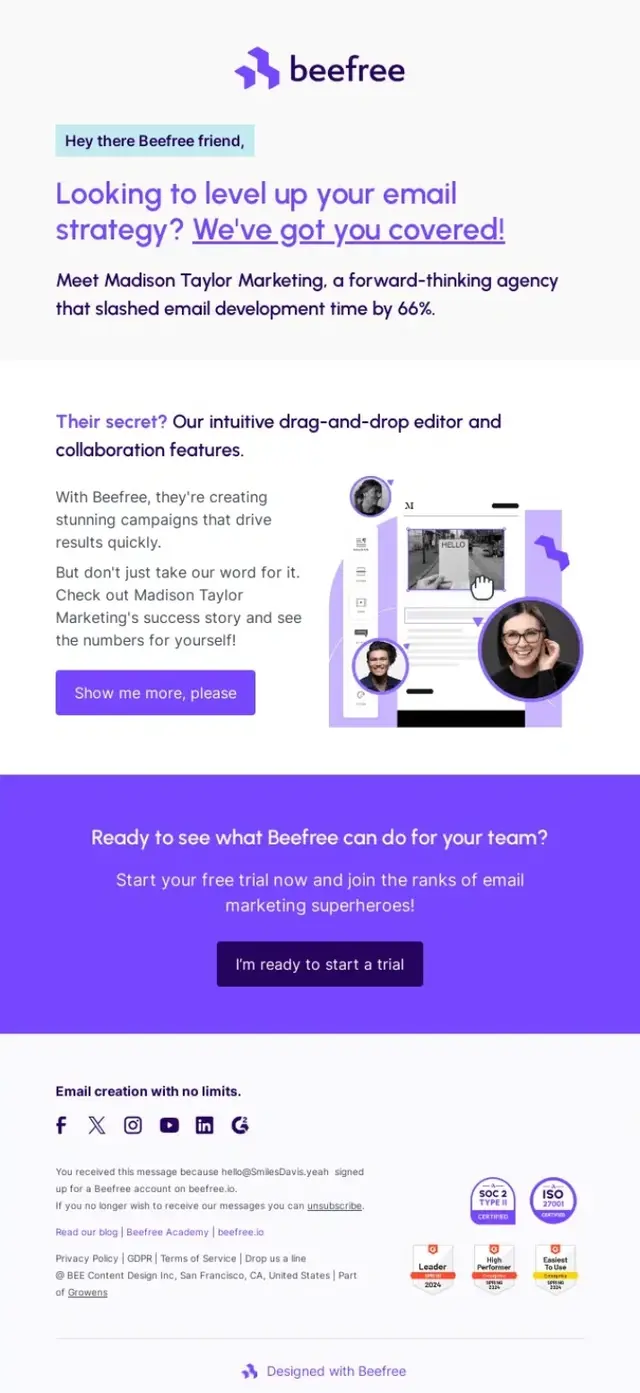
Customer acquisition emails help move potential buyers from initial interest toward a first purchase, signup, demo, or other conversion. Lead nurture emails support that journey with useful content, product education, incentives, and timely follow-ups that give prospects a reason to keep engaging.

Welcome and Onboarding Email Examples
Welcome and onboarding emails shape the first experience after someone subscribes, creates an account, starts a trial, or becomes a customer. Strong examples set expectations, introduce the brand or product, and help recipients reach their first useful action without overwhelming them with information.
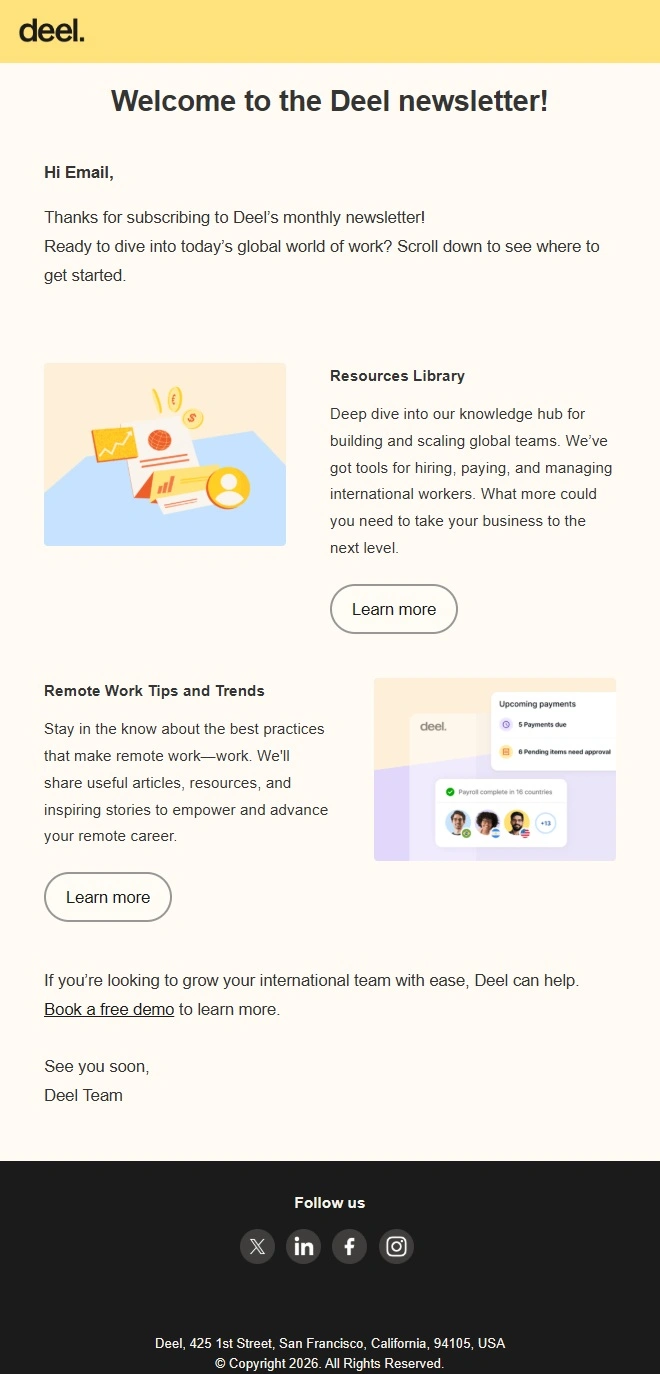

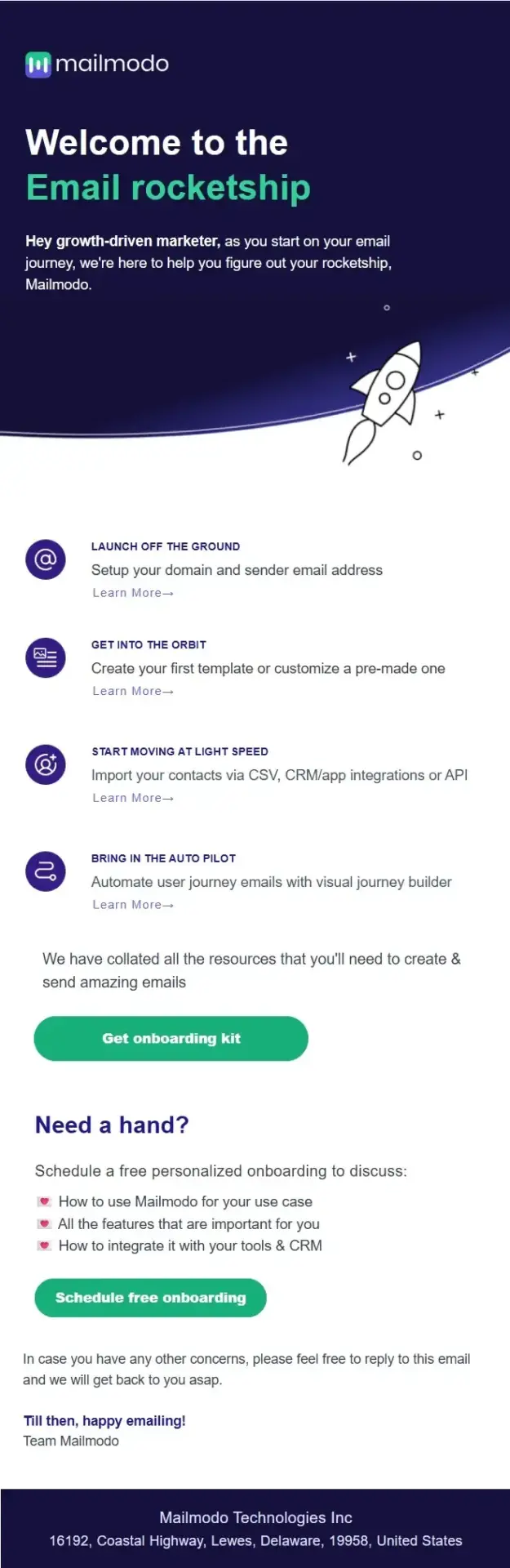

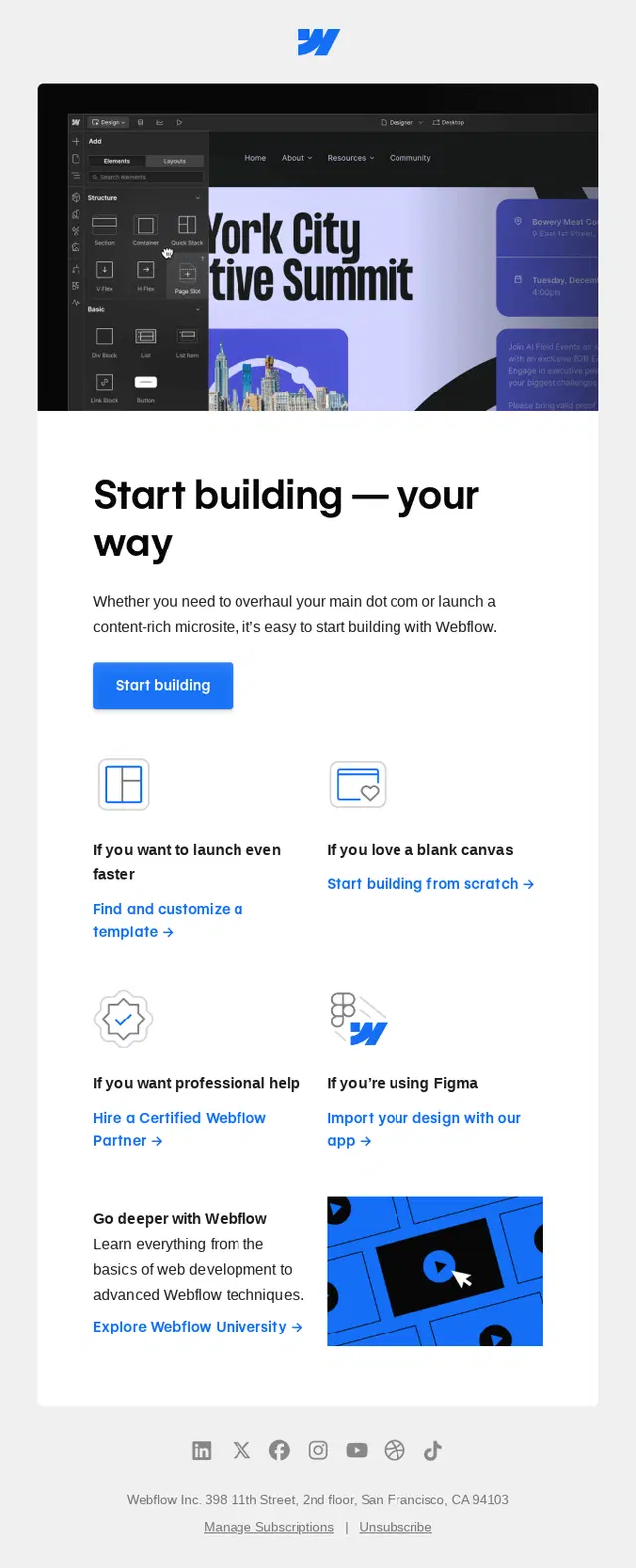
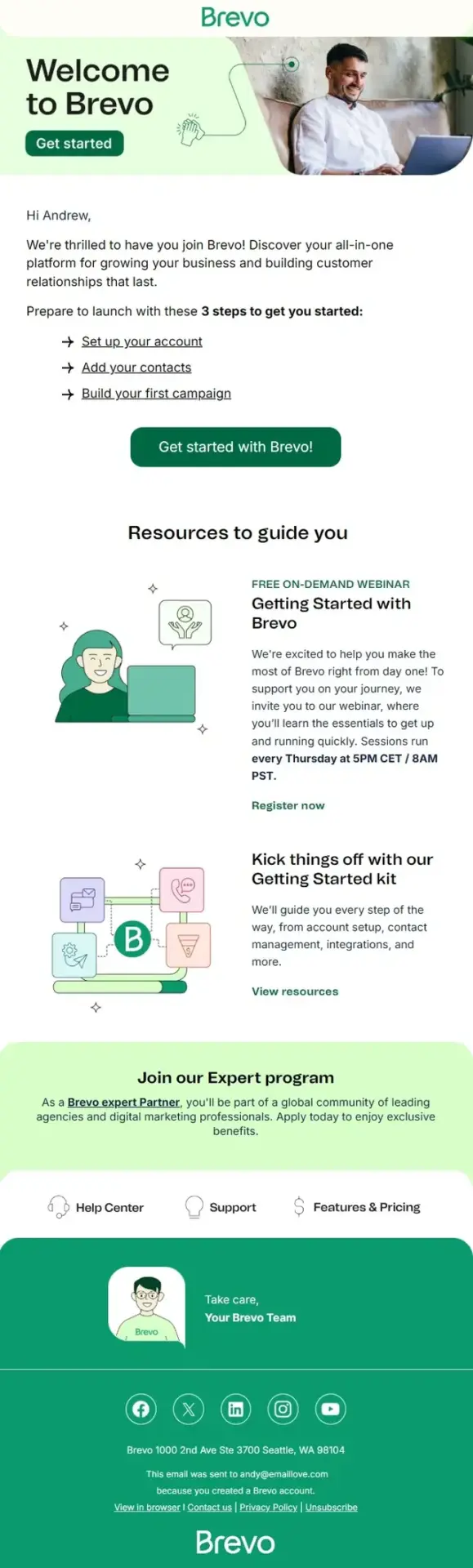
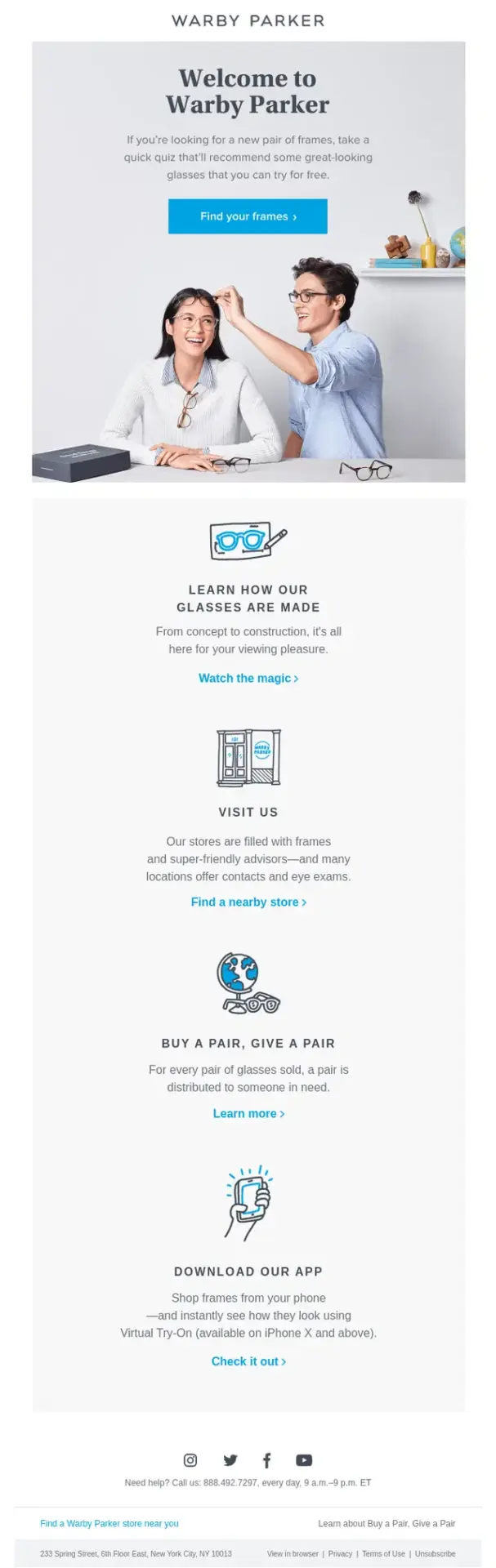
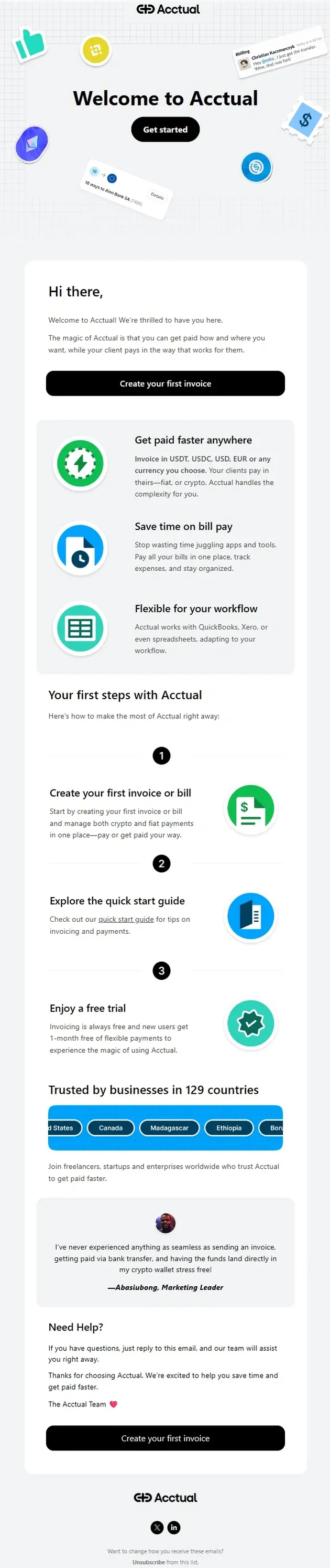
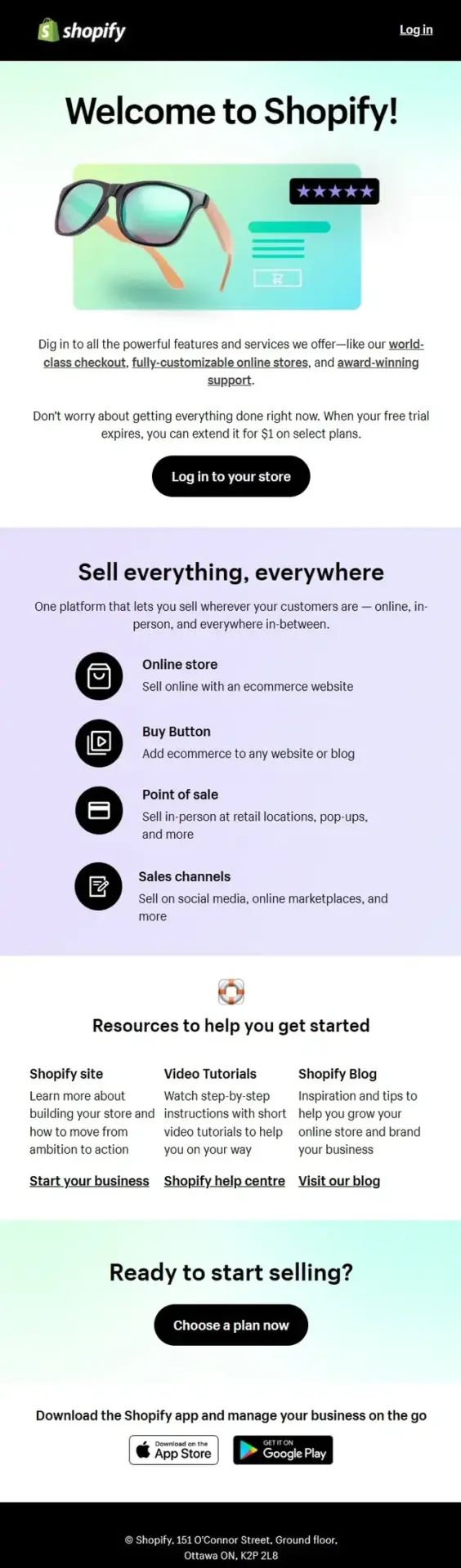
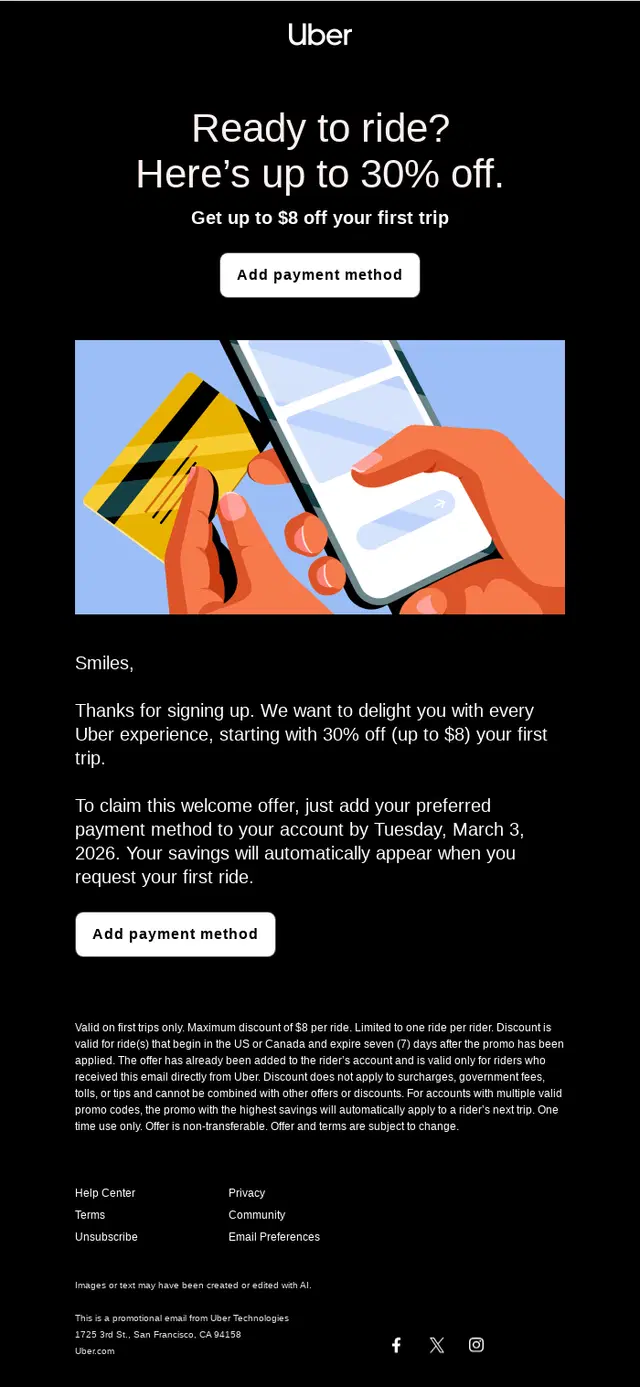
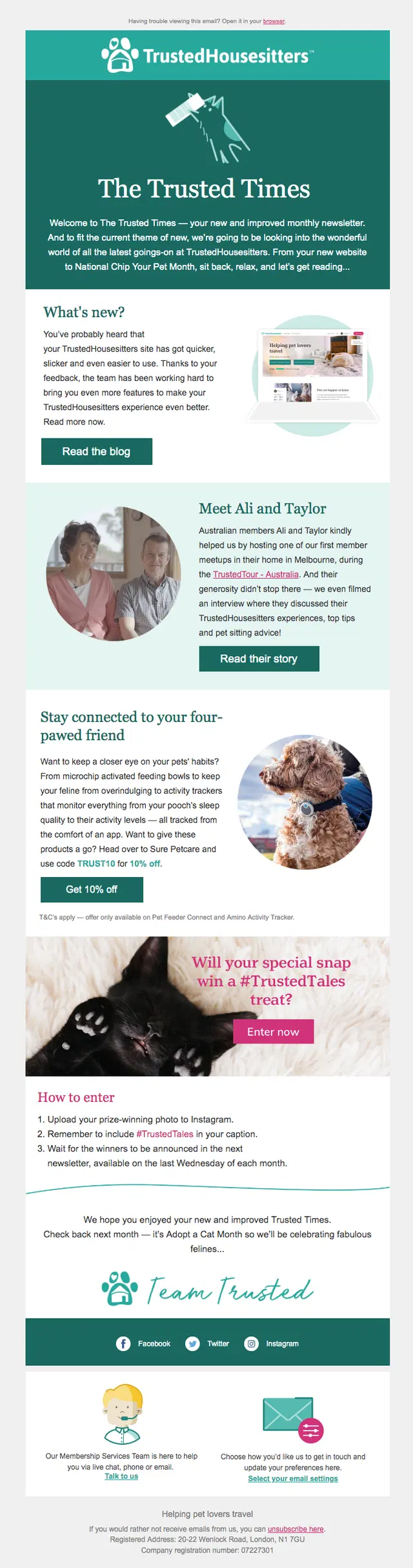
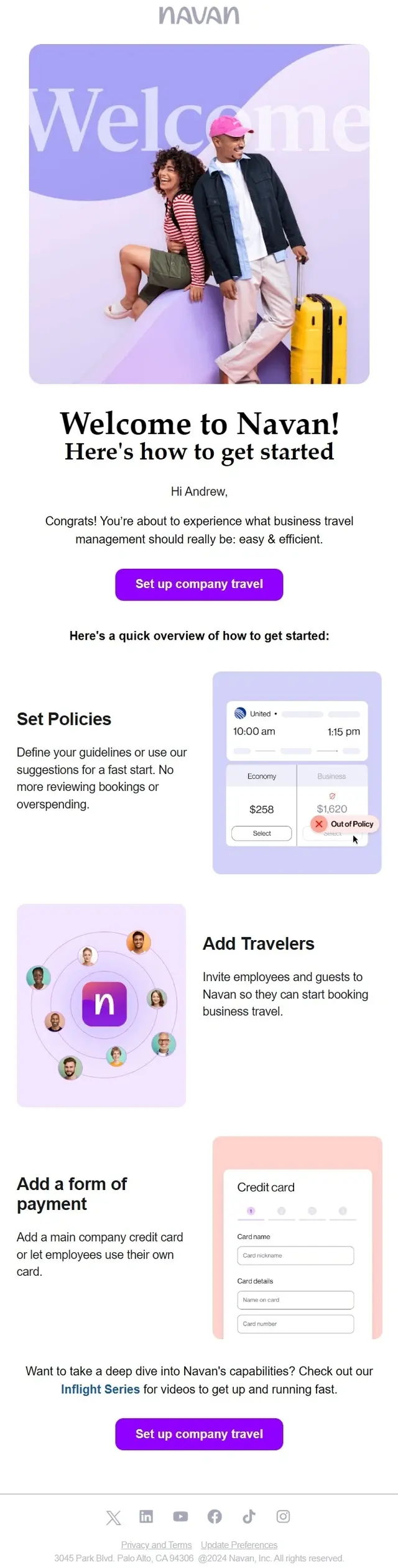
Check out 150+ Welcome Email Examples to Inspire Your First Impression
Promotional and Sales Email Examples
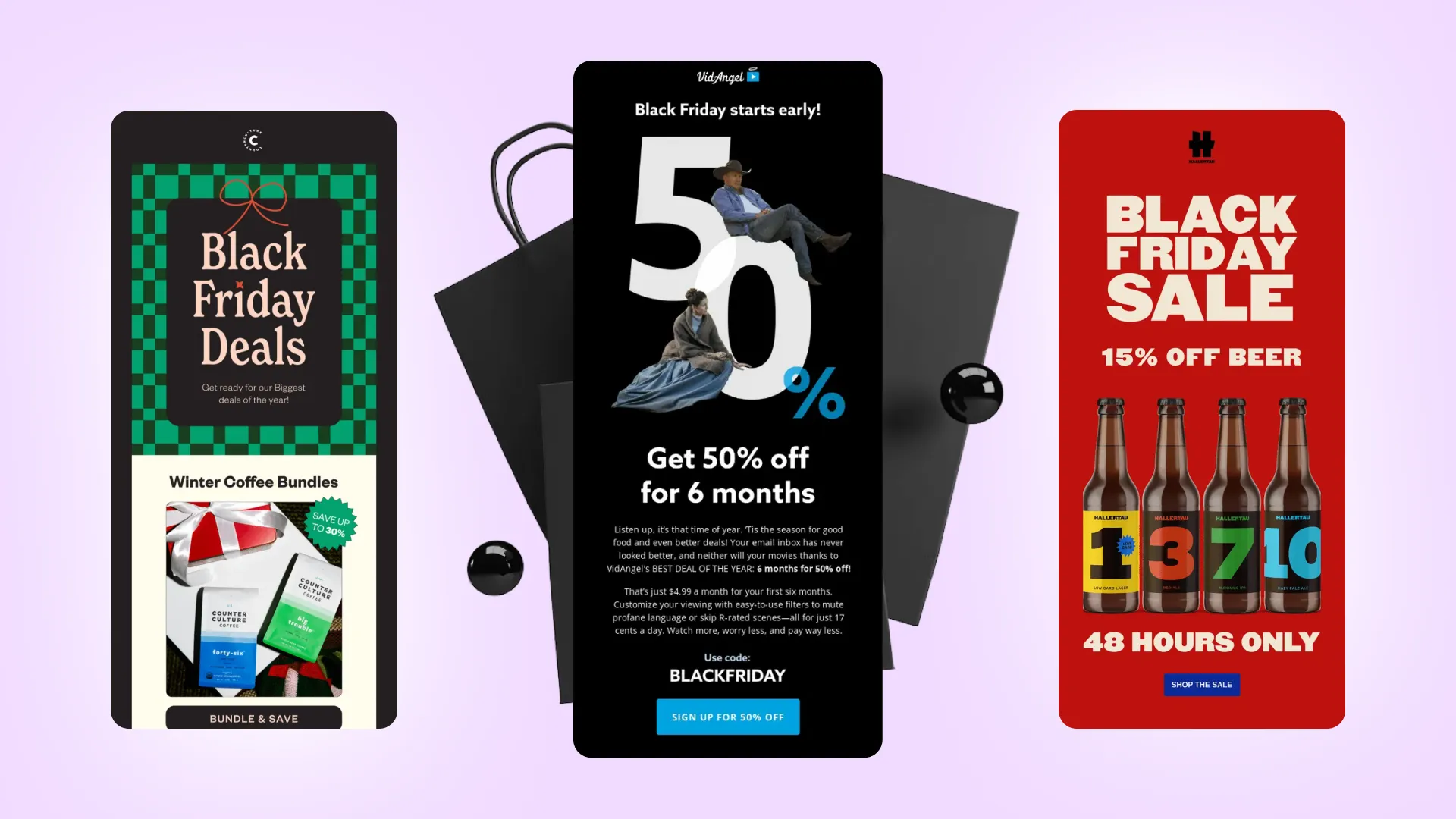
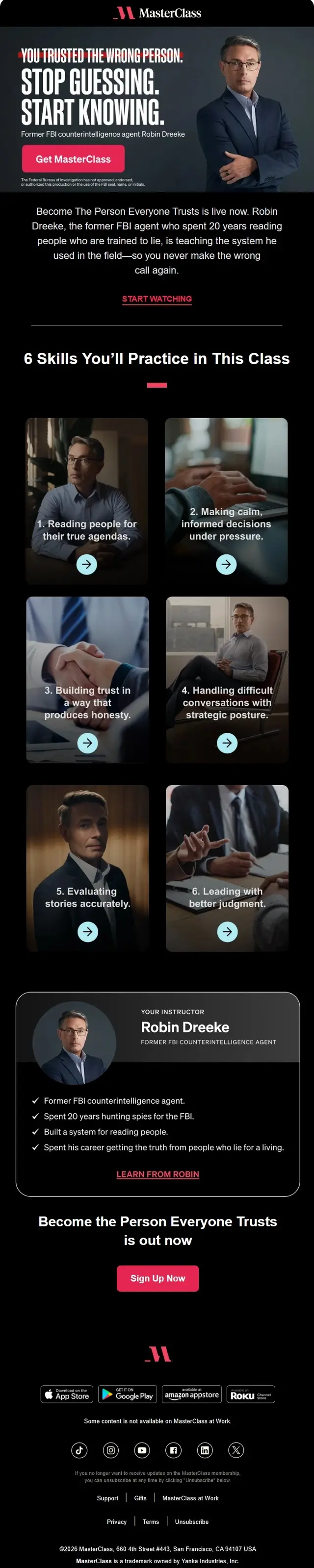
Promotional emails are designed to drive a specific commercial action, such as shopping a sale, using an offer, exploring a product, or taking advantage of a limited-time deal. Effective promotional emails make the value of the offer easy to understand and give readers a clear path to act.


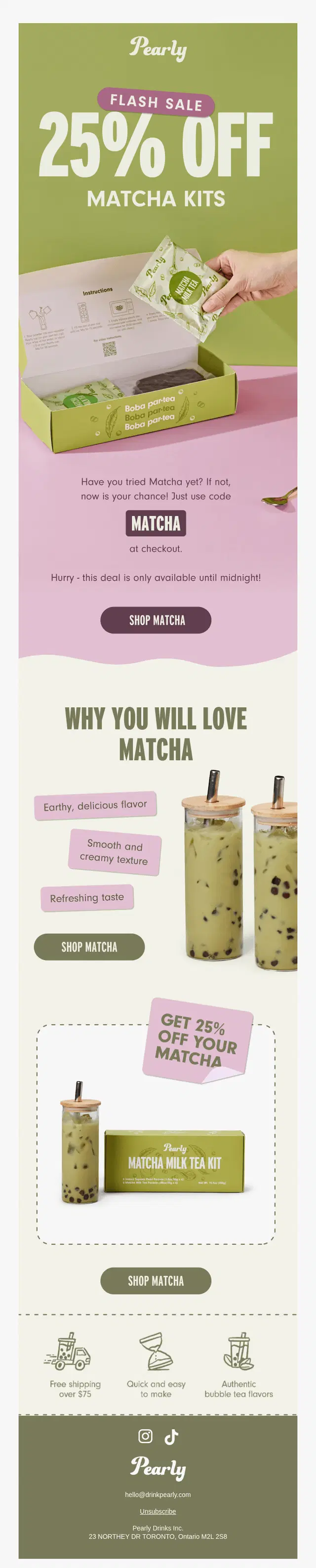

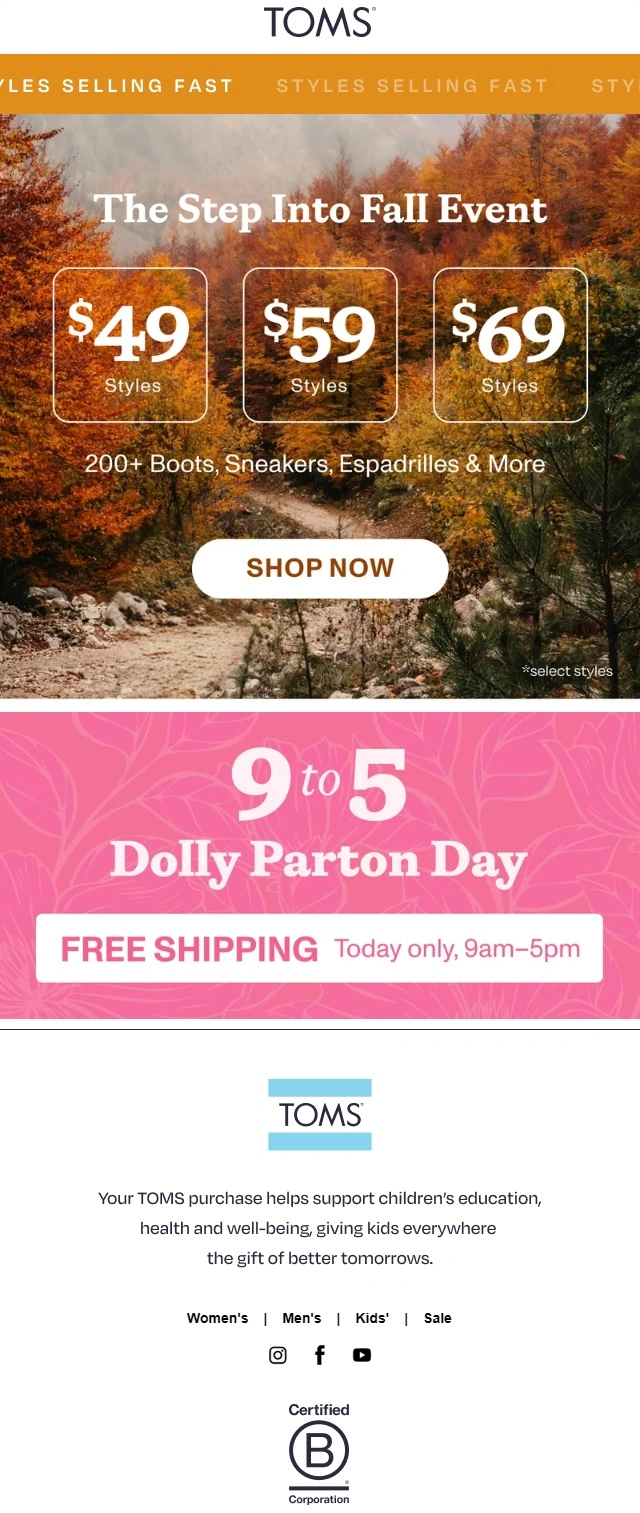

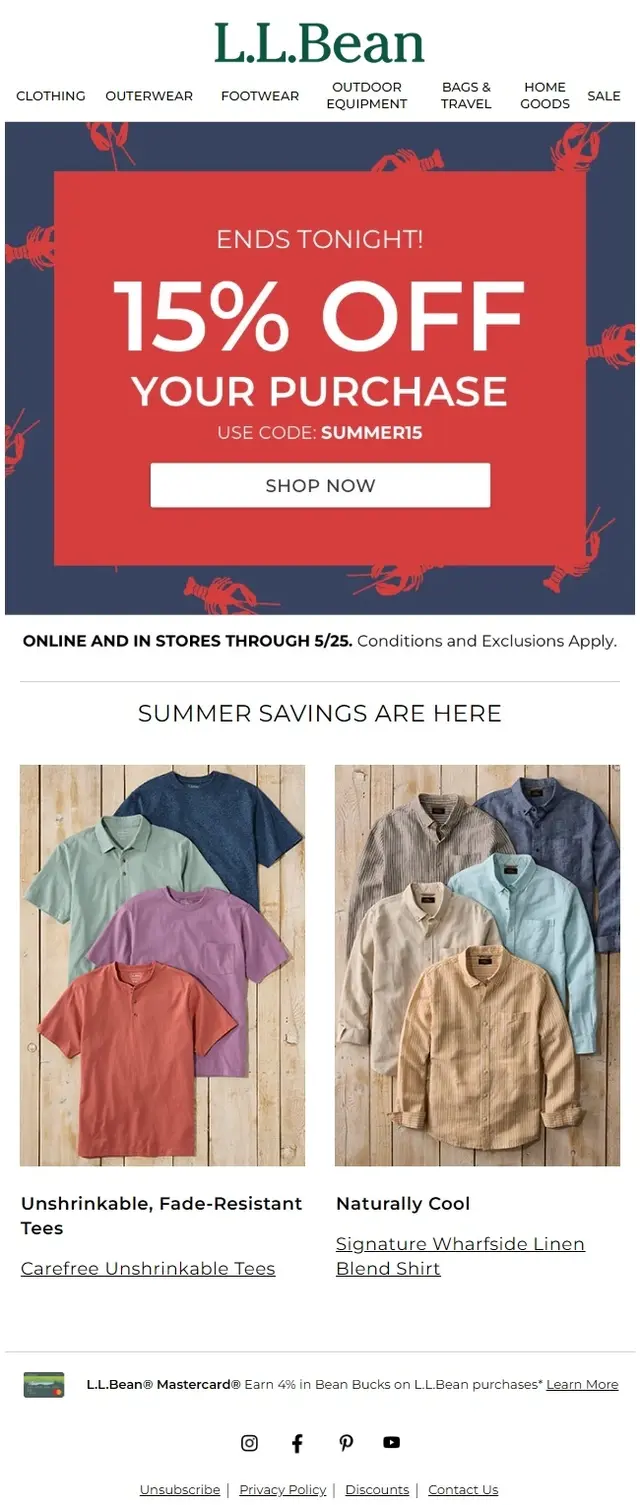


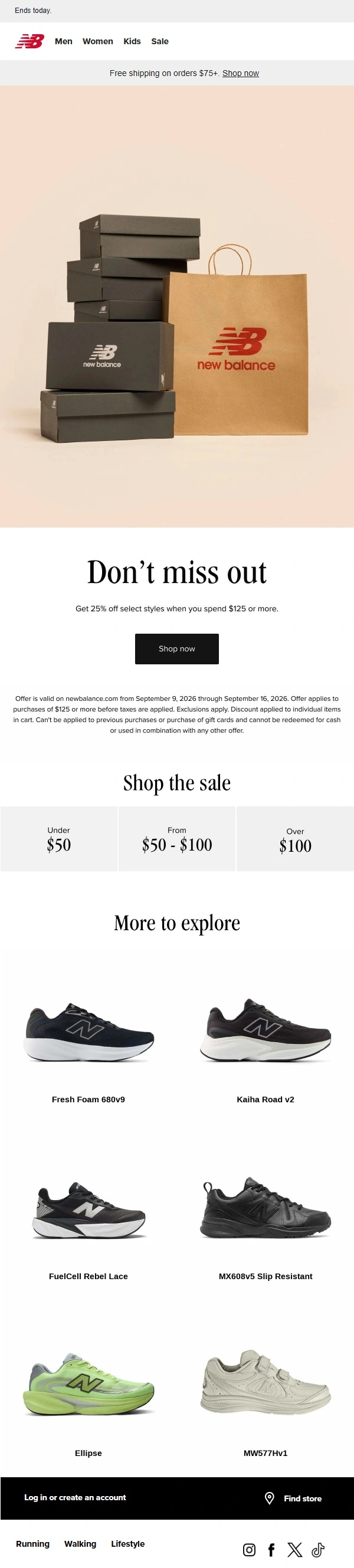


Want to see 150+ Promotional Email Examples to Inspire Your Next Campaign ?
Product Launch Email Examples
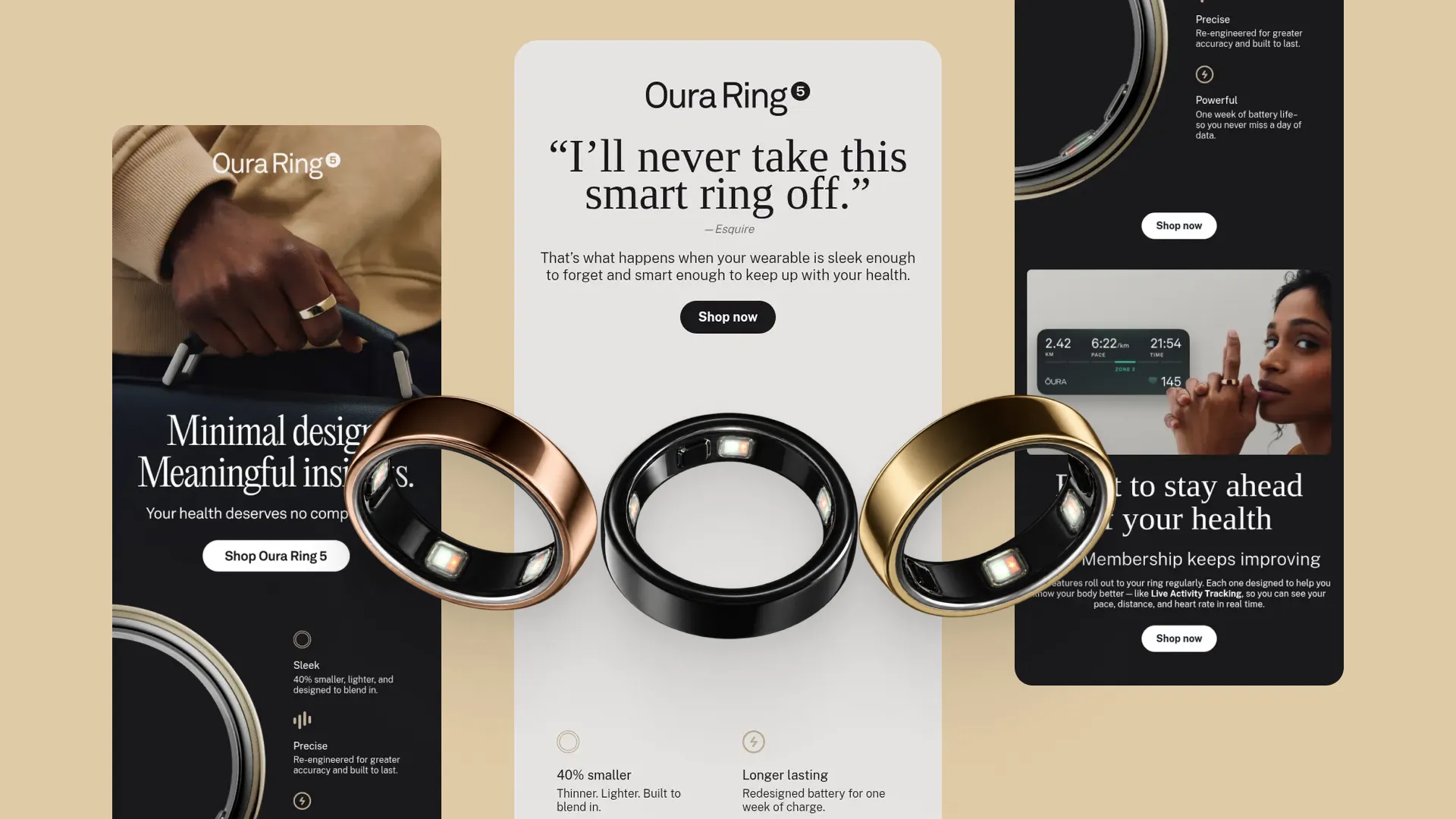
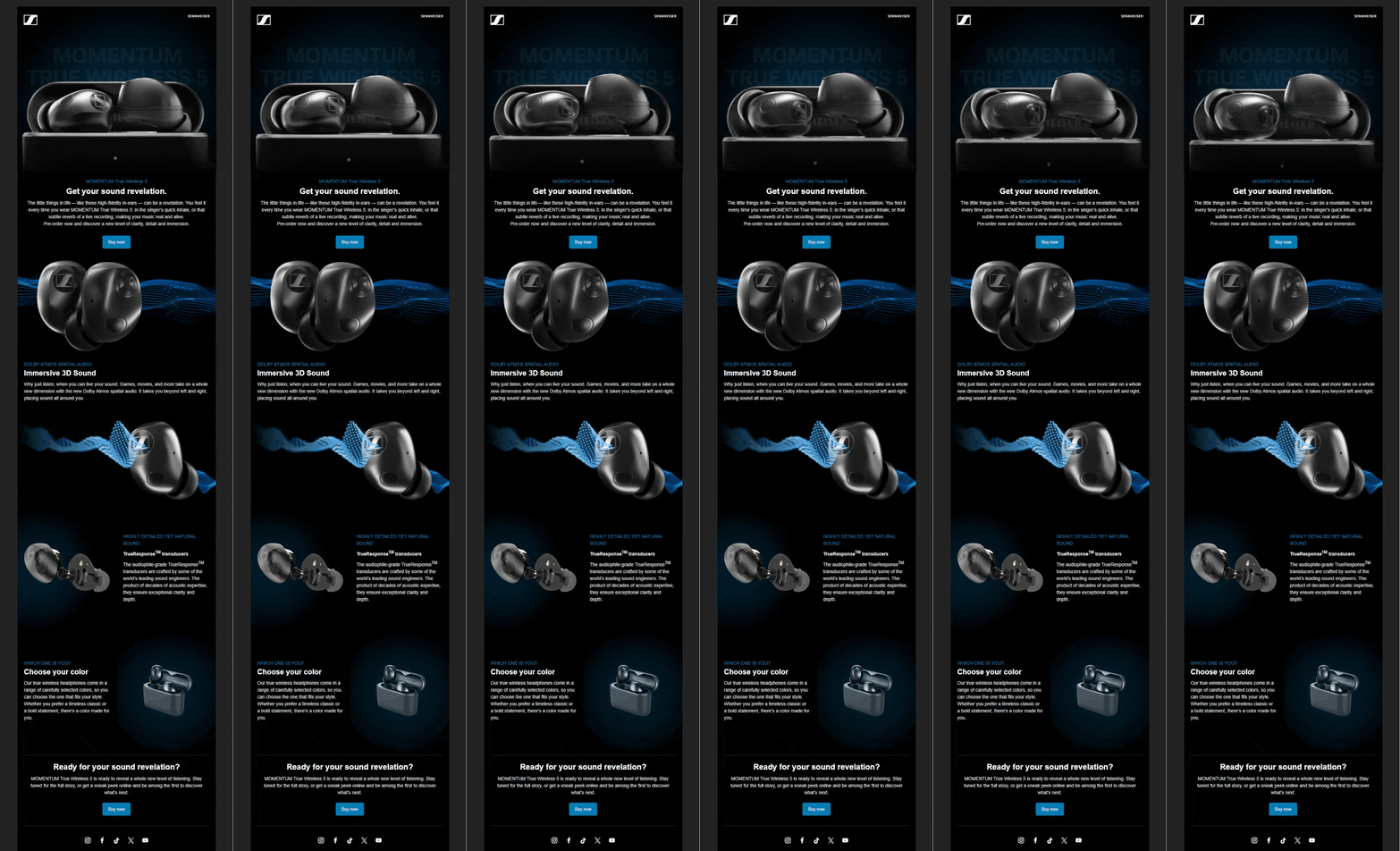
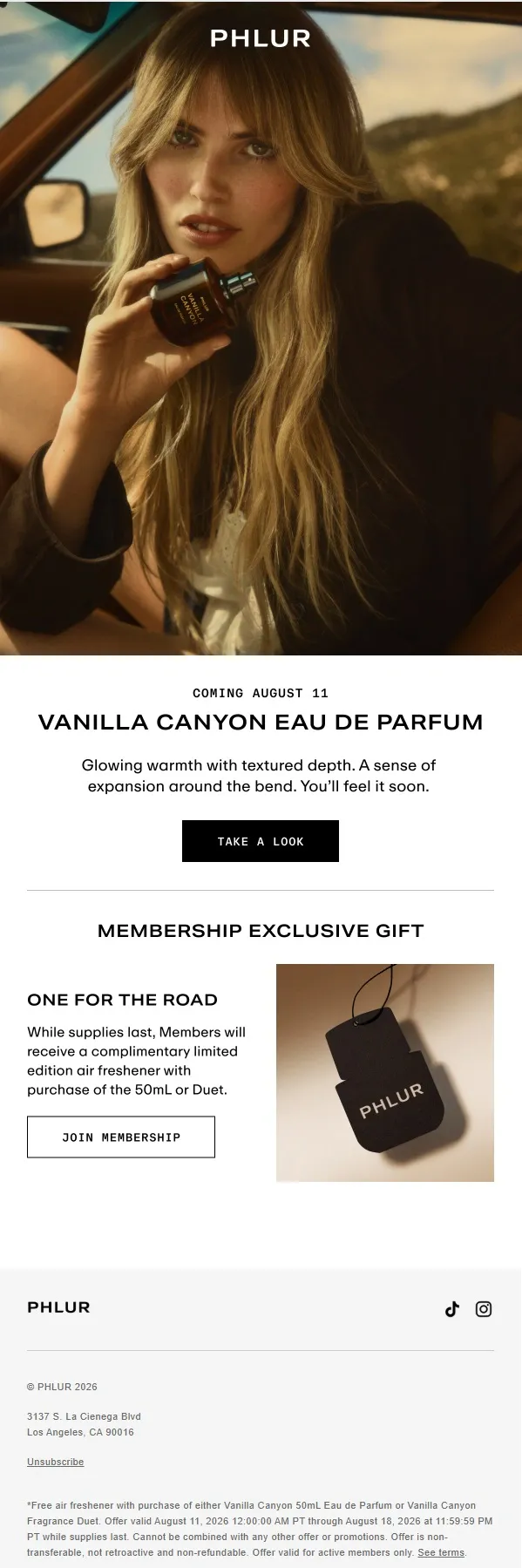
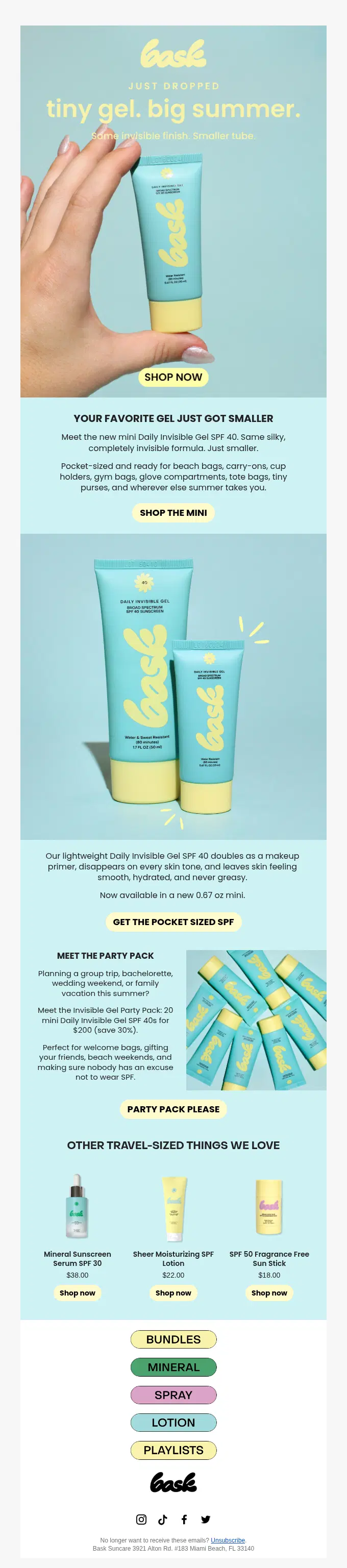
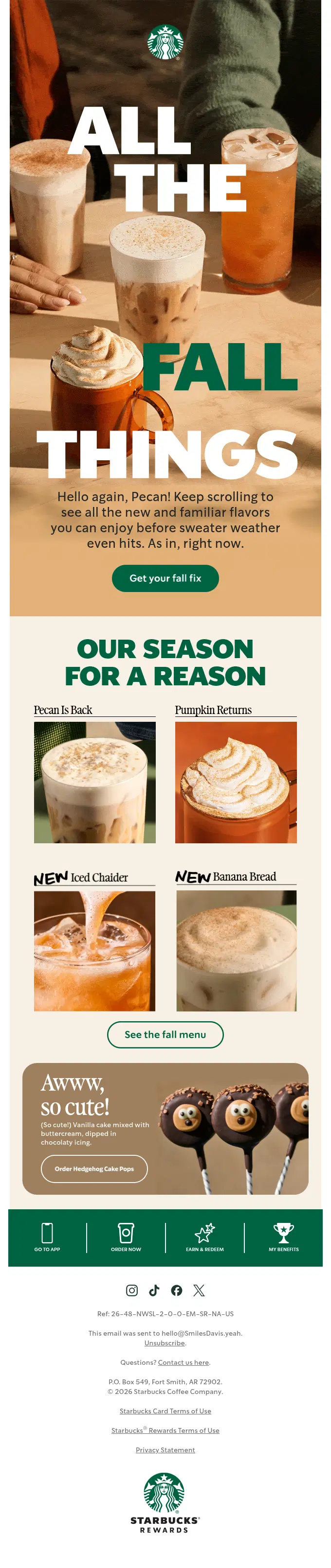
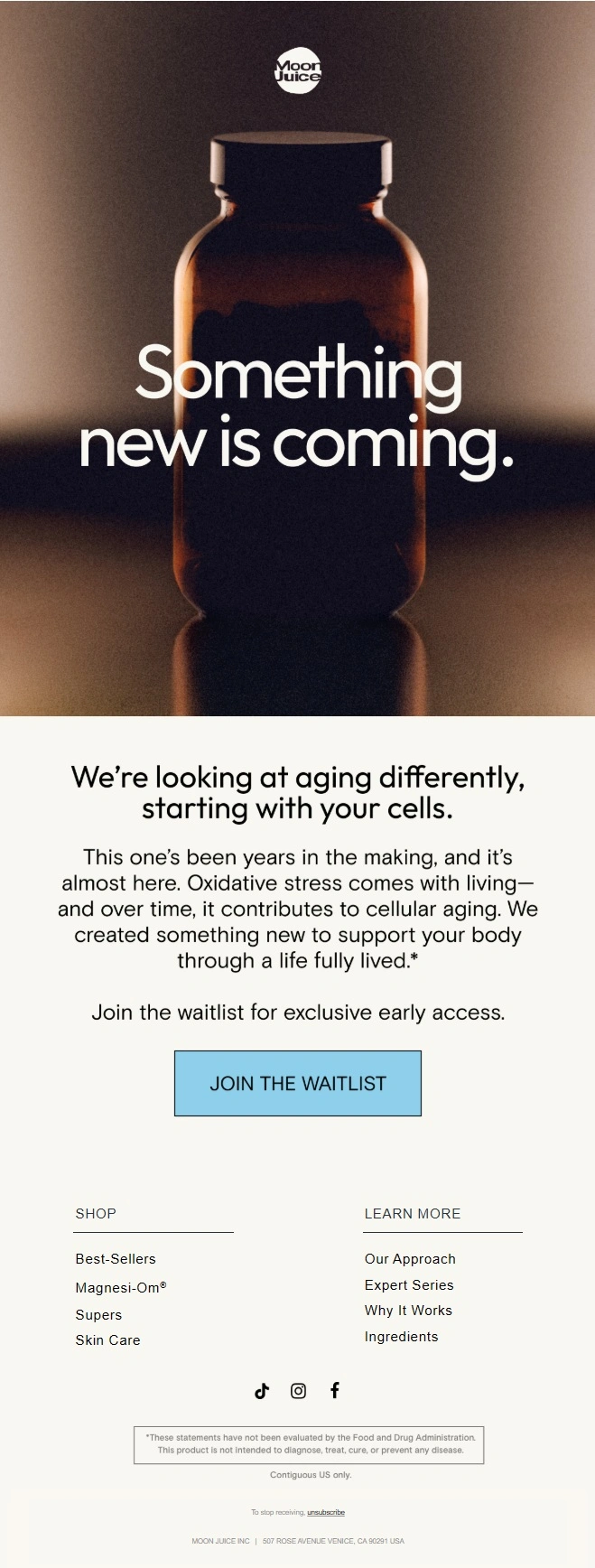
Product launch emails introduce something new while giving subscribers a reason to pay attention now. A launch campaign may start with a teaser or early-access message, continue with the main announcement, and use follow-ups, education, offers, or urgency to maintain momentum after release day.







Personalized and Product Recommendation Email Examples
Personalized marketing emails use customer data, behavior, preferences, or purchase history to make the message more relevant to the individual recipient. Product recommendation emails are a common example, helping customers discover items based on what they have viewed, bought, or shown interest in.
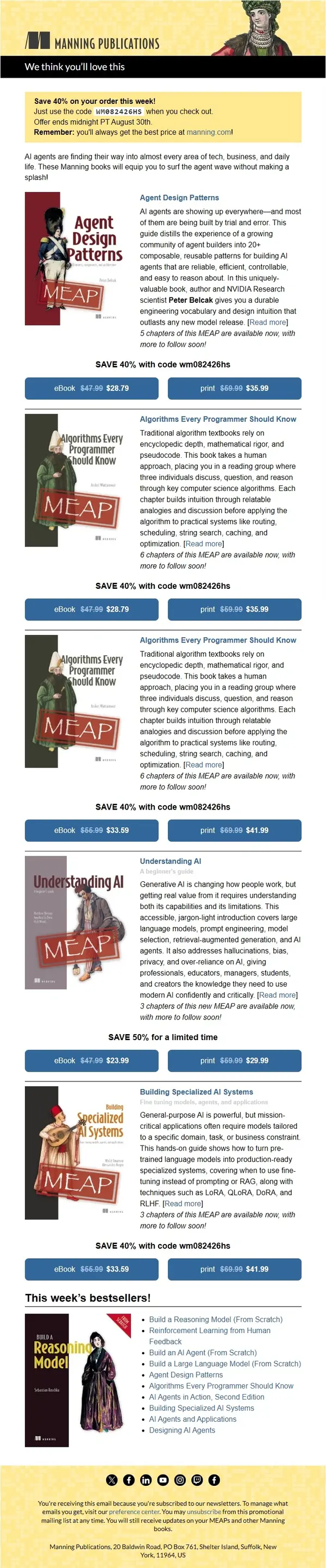
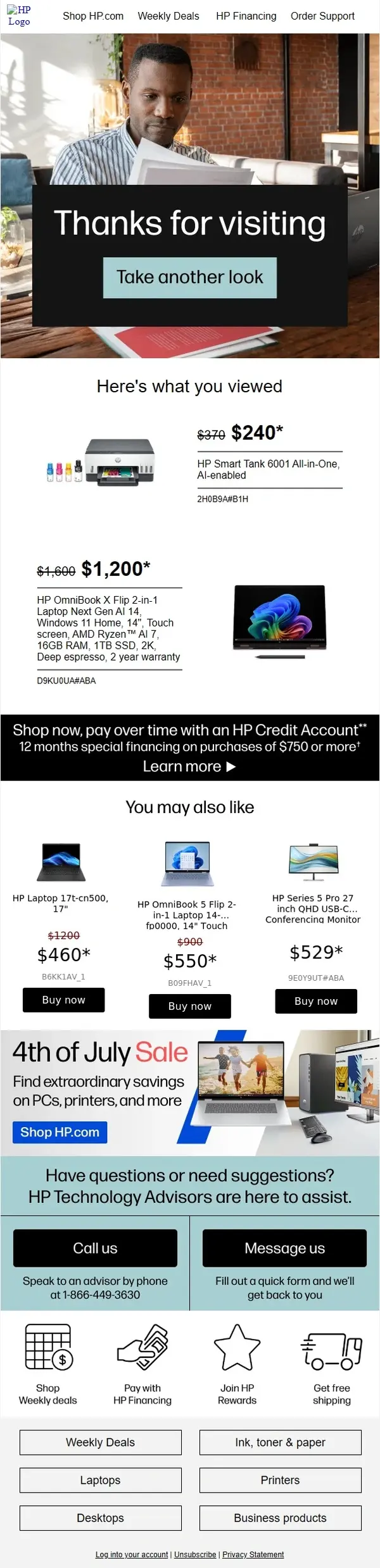
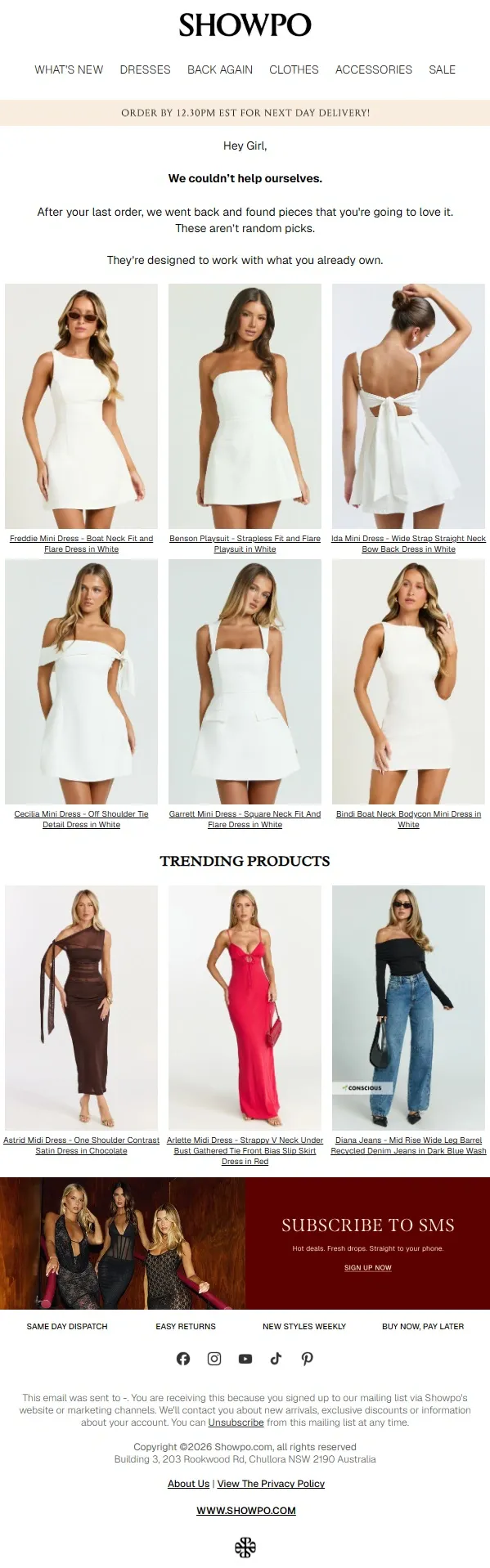

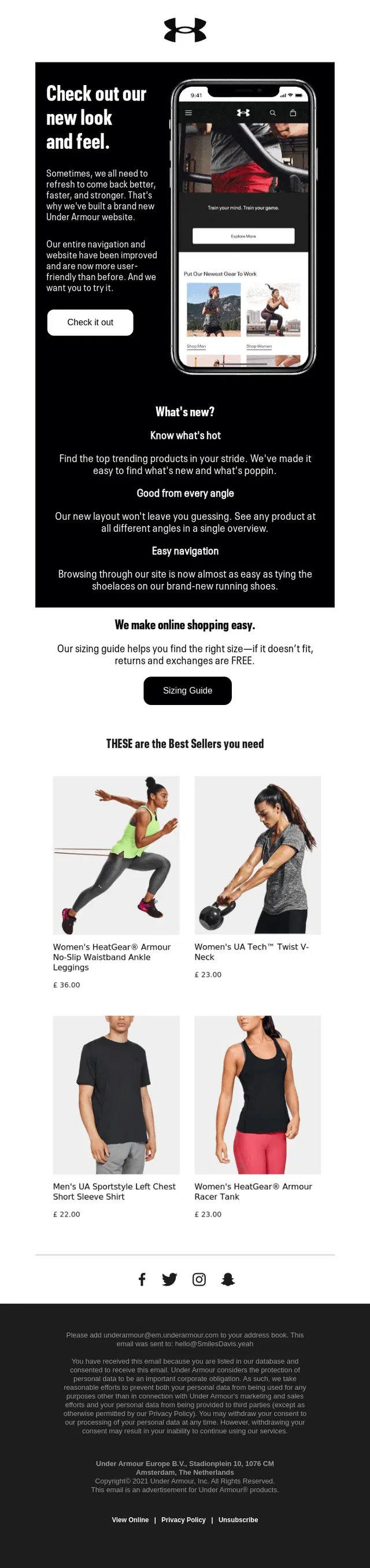
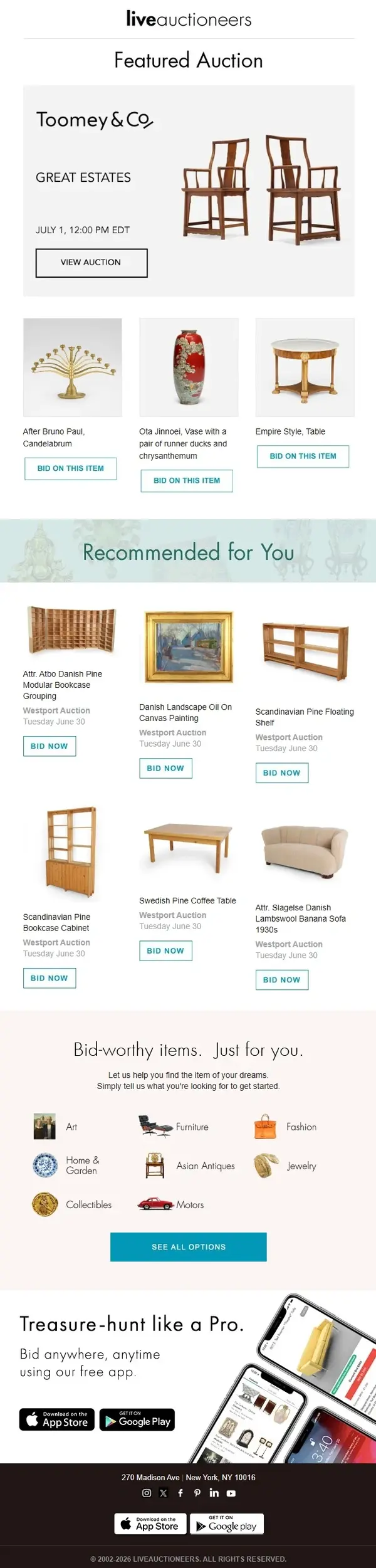

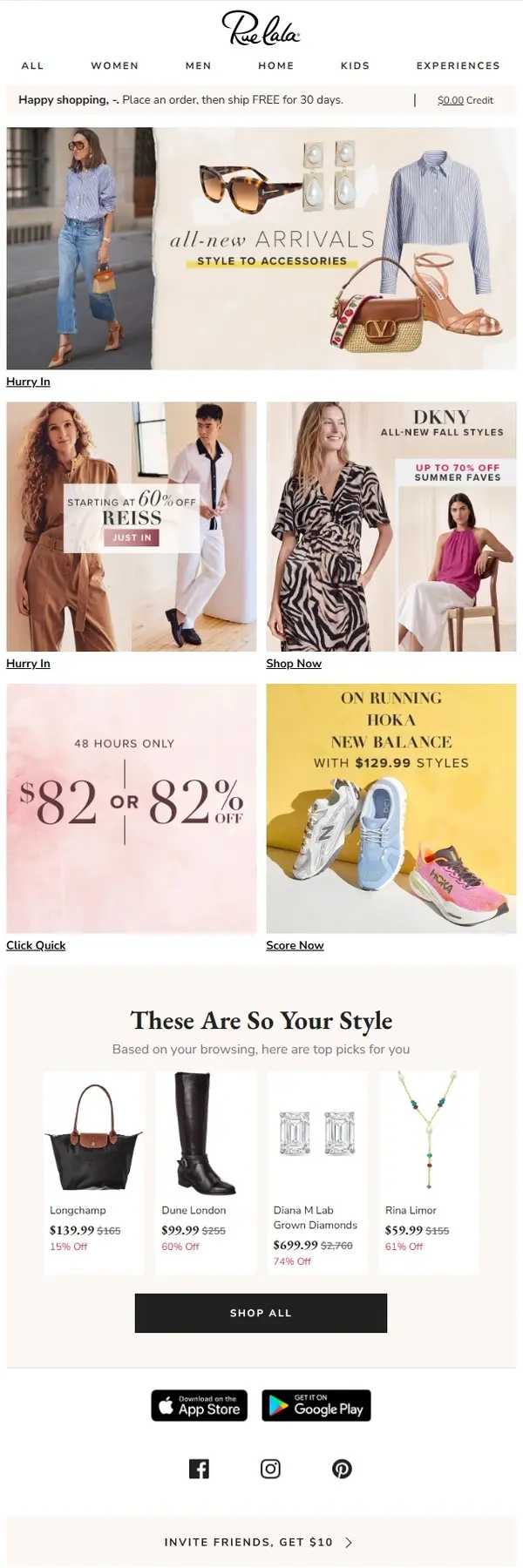
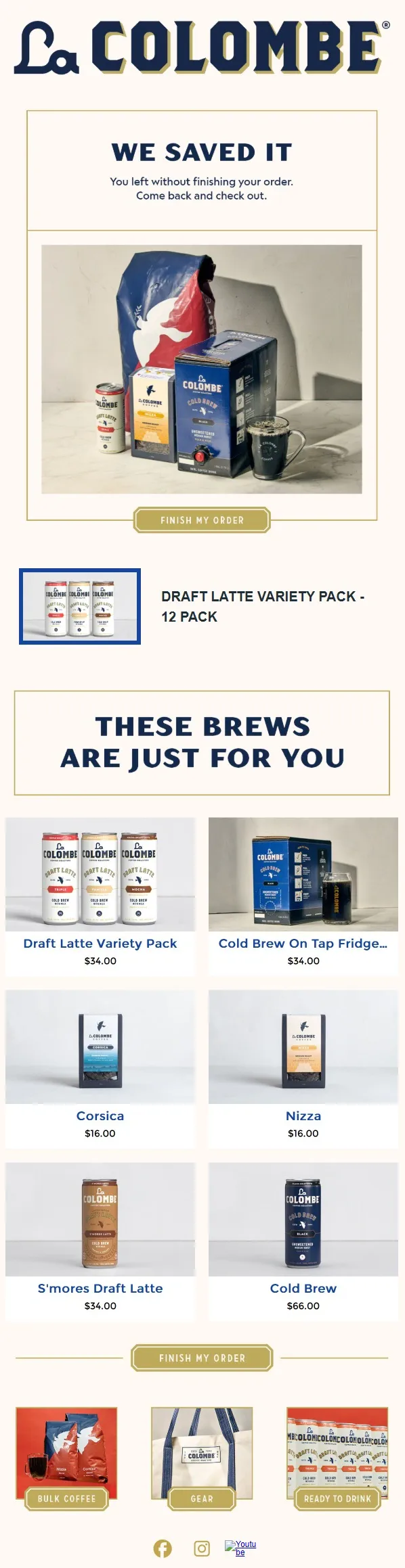
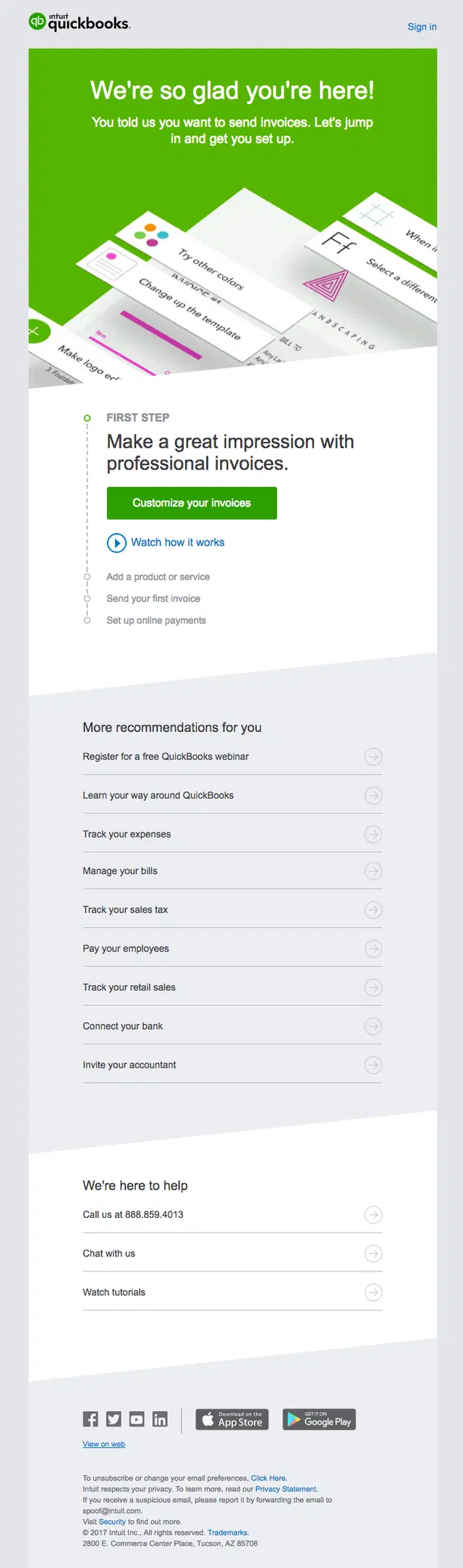
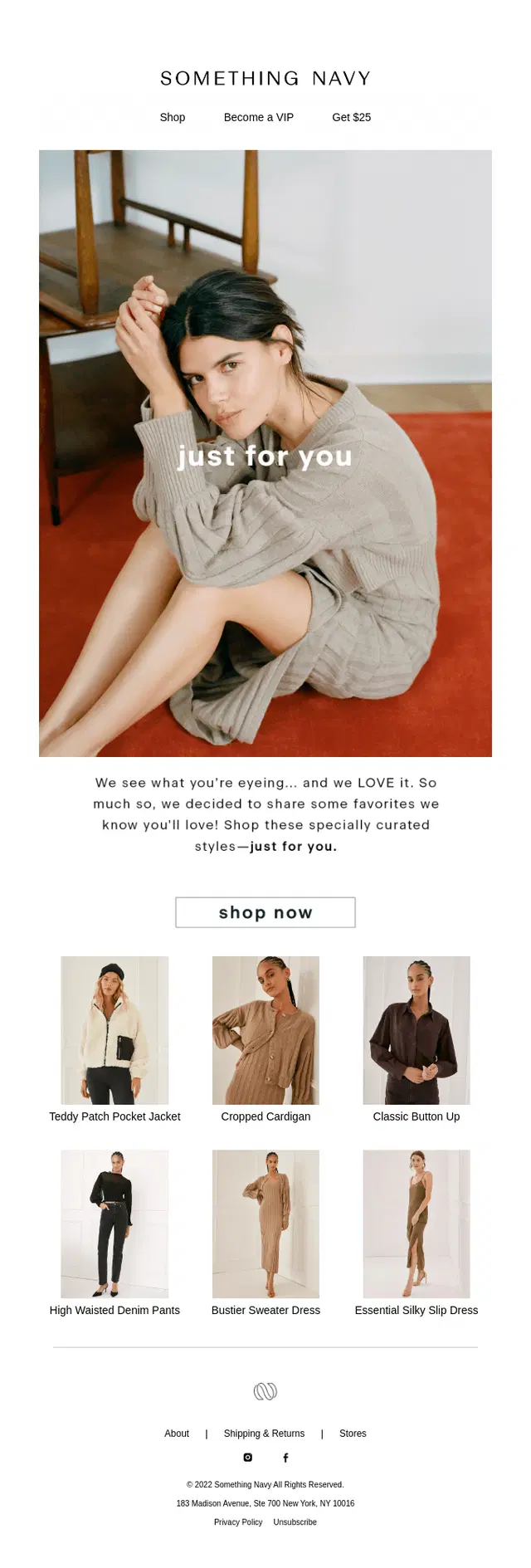
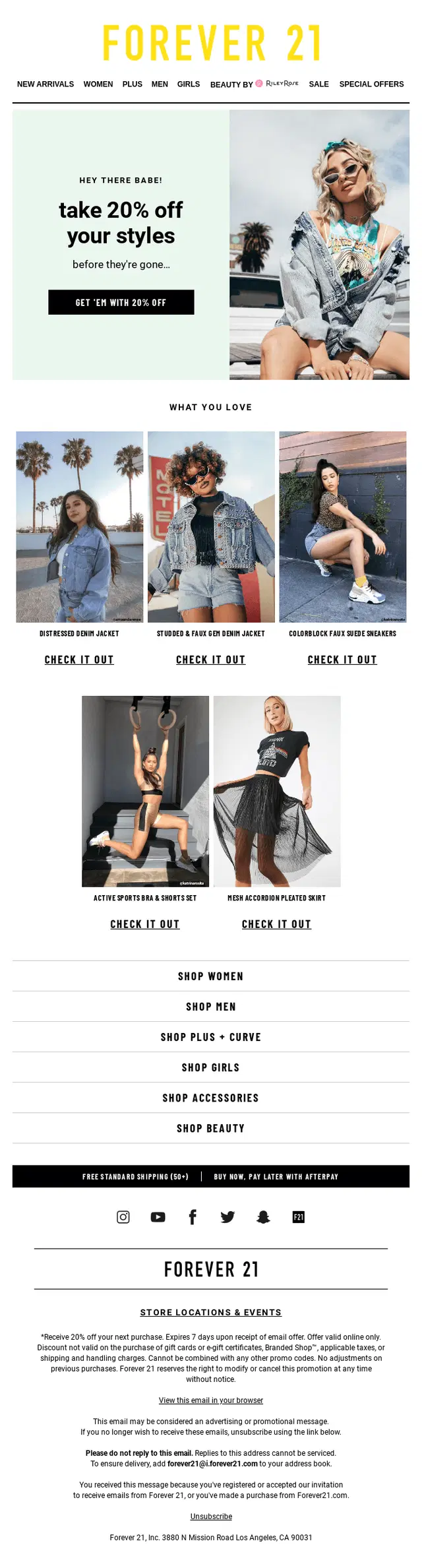
See these 140+ Product Recommendation Email Examples You’ll Want to Borrow From
Newsletter and Content Marketing Email Examples
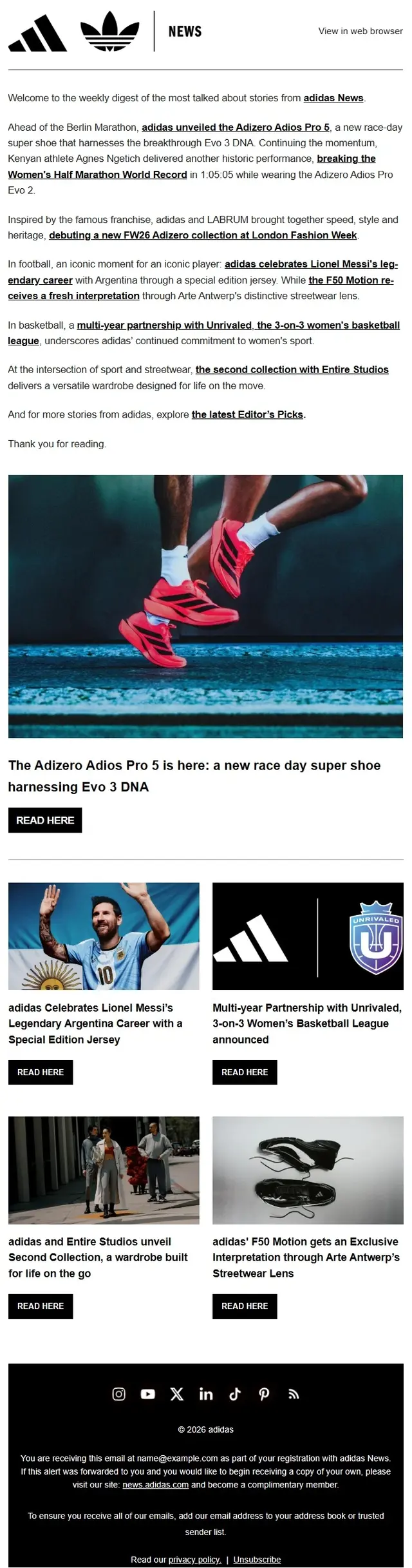
Newsletter and content marketing emails keep subscribers engaged even when there is no immediate sale to promote. They can share educational resources, company updates, curated content, stories, insights, or useful recommendations that give readers a reason to keep opening future emails.
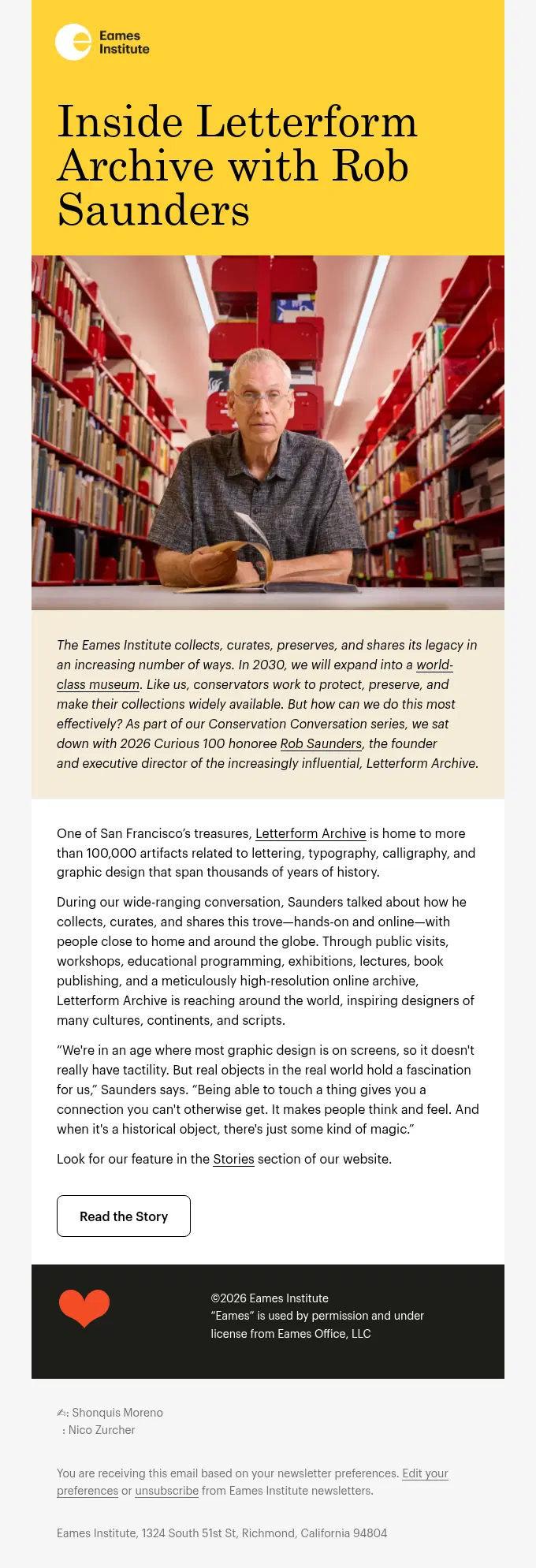

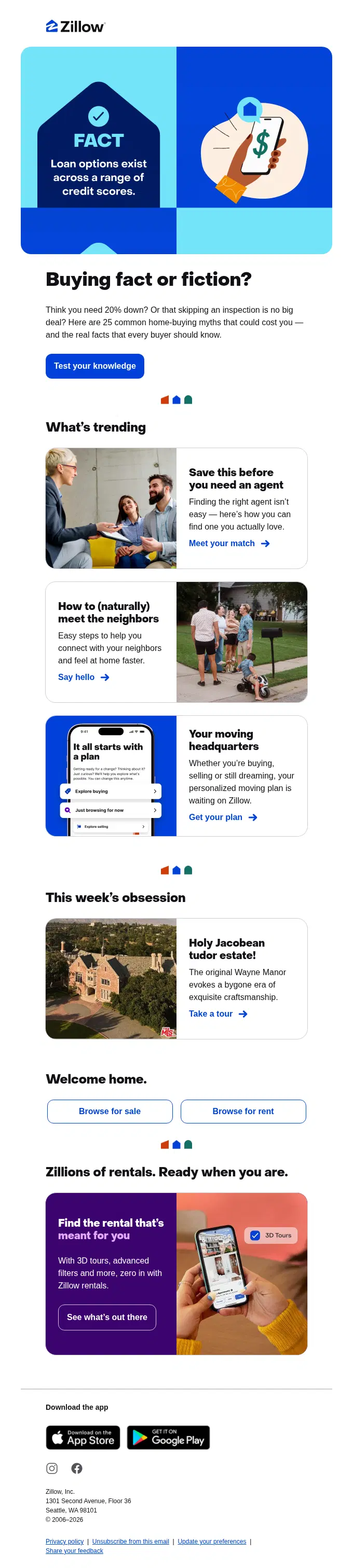





Event Email Marketing Examples
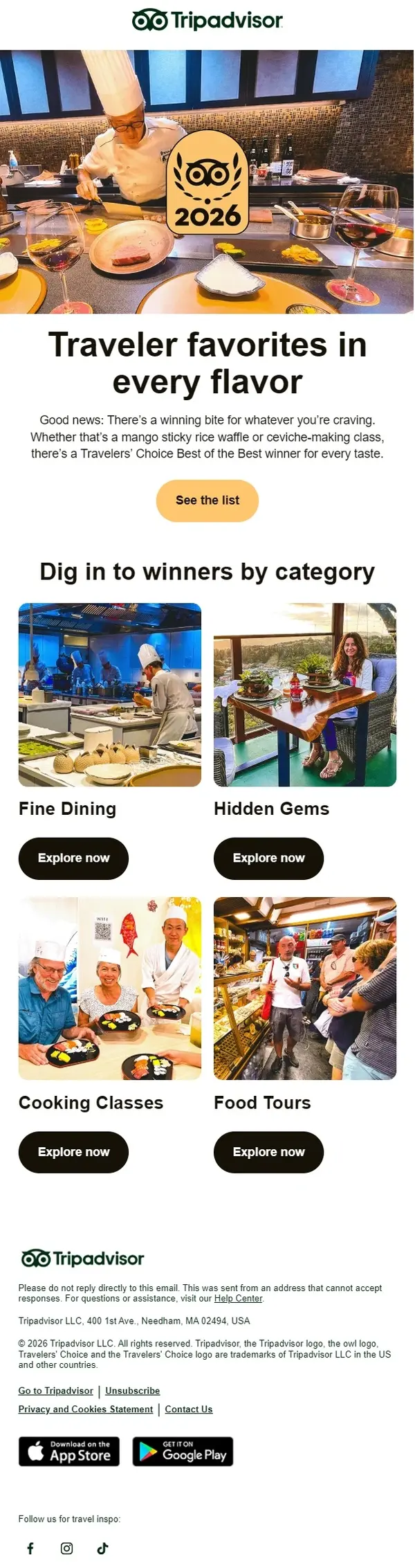
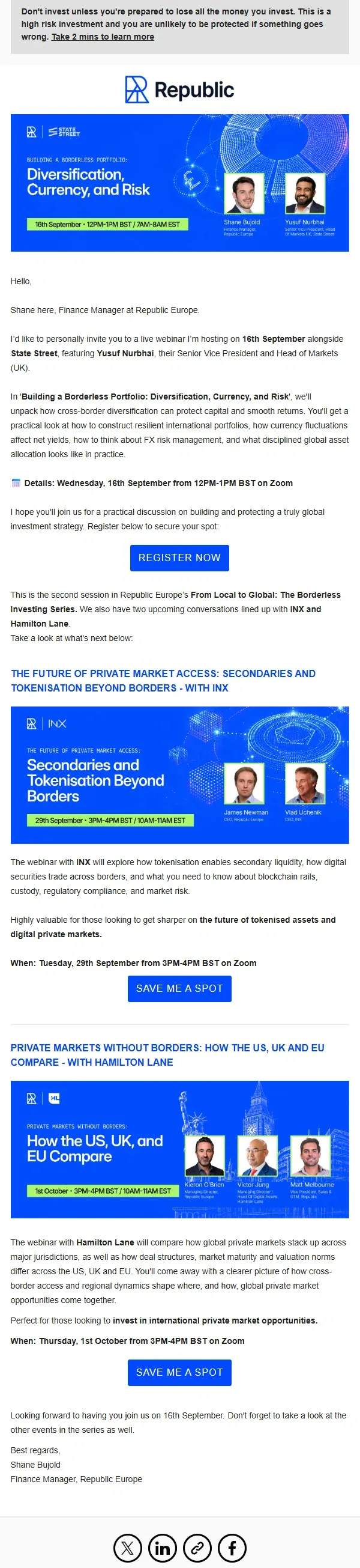
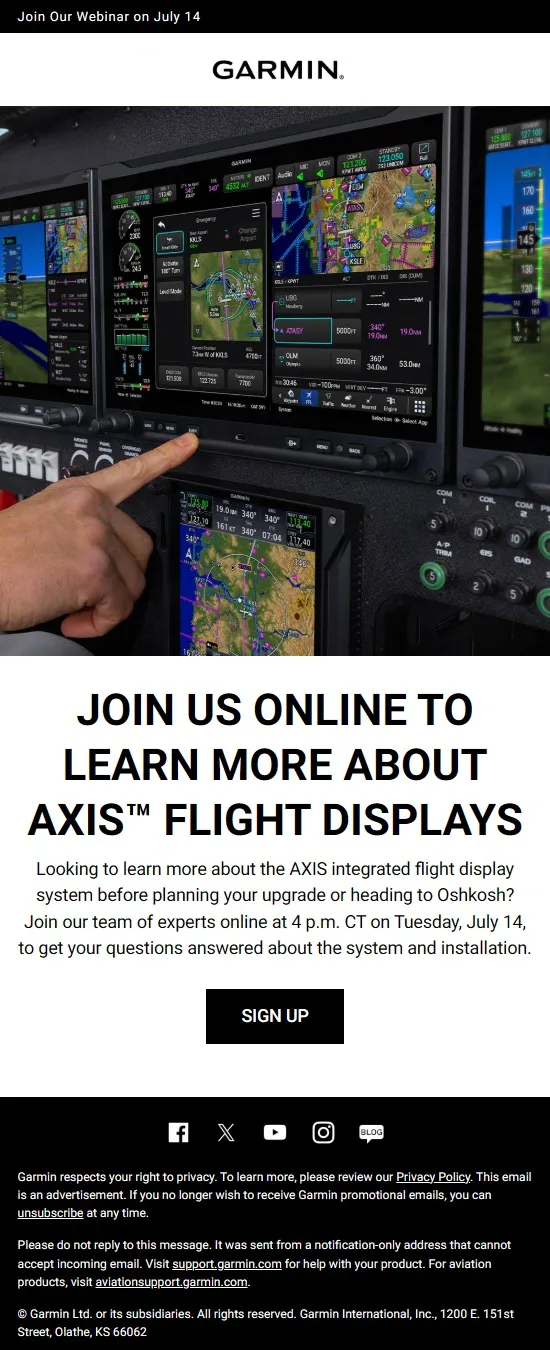

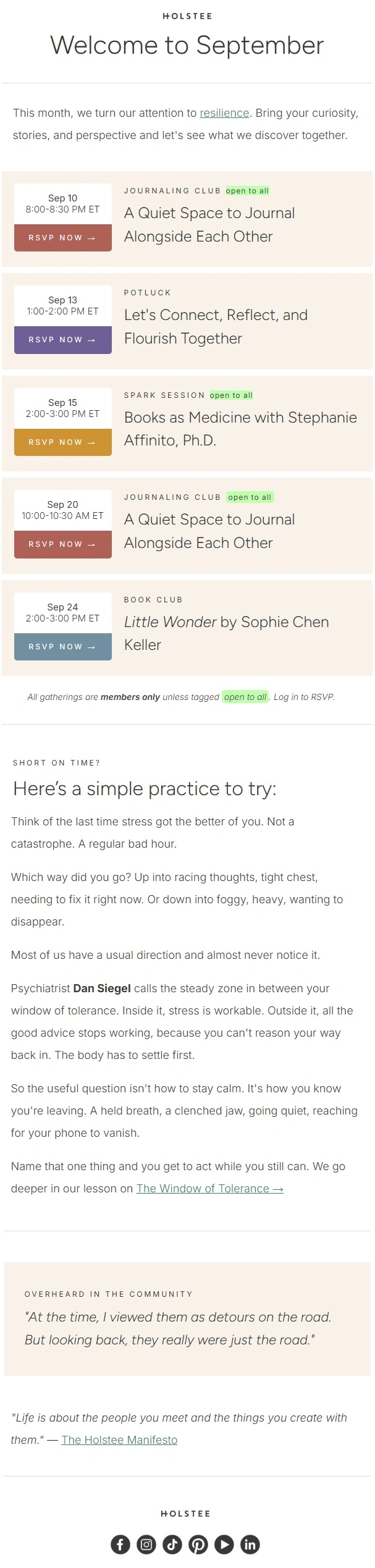
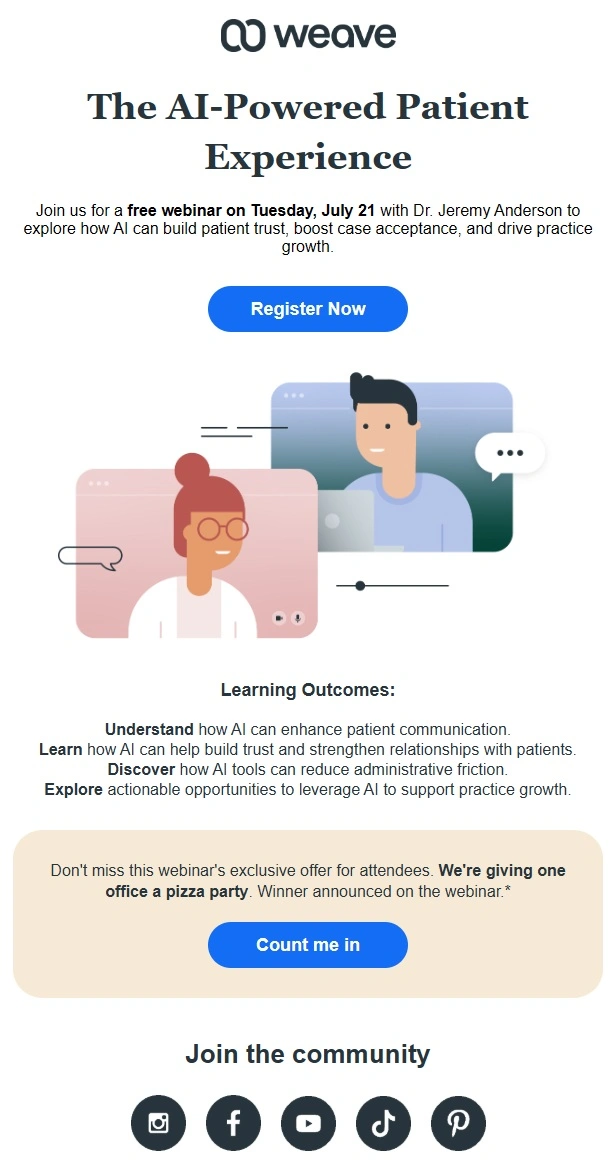
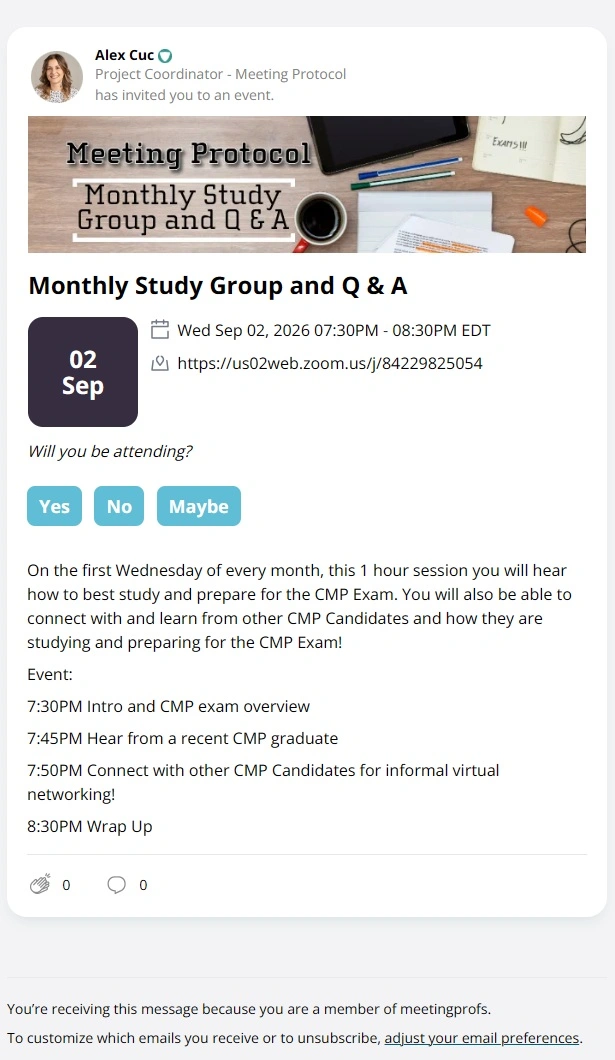
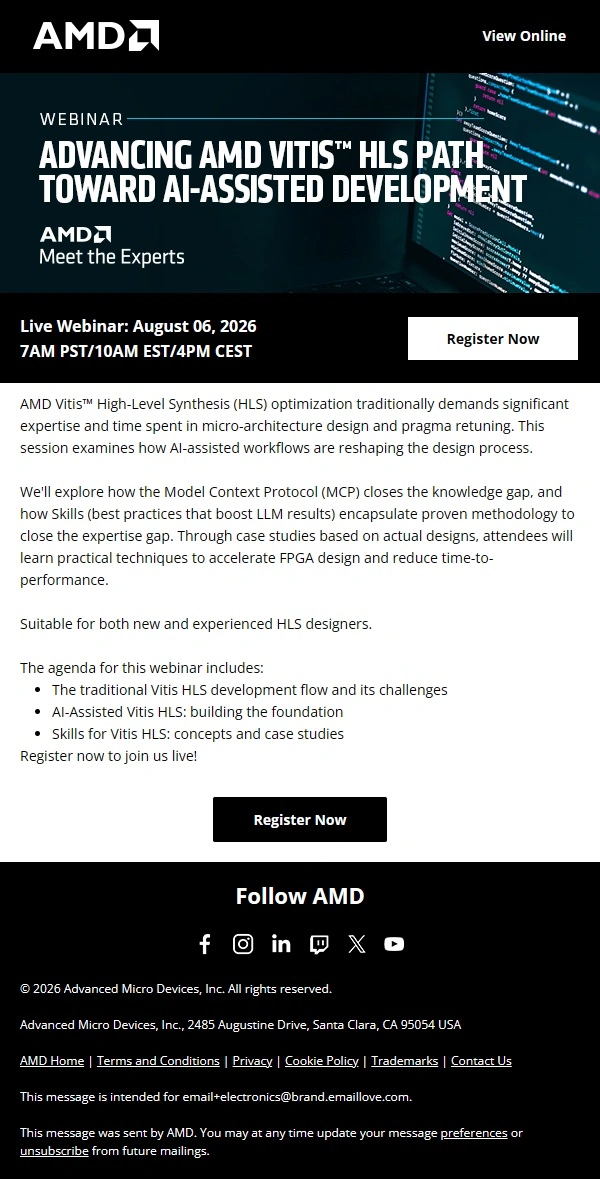
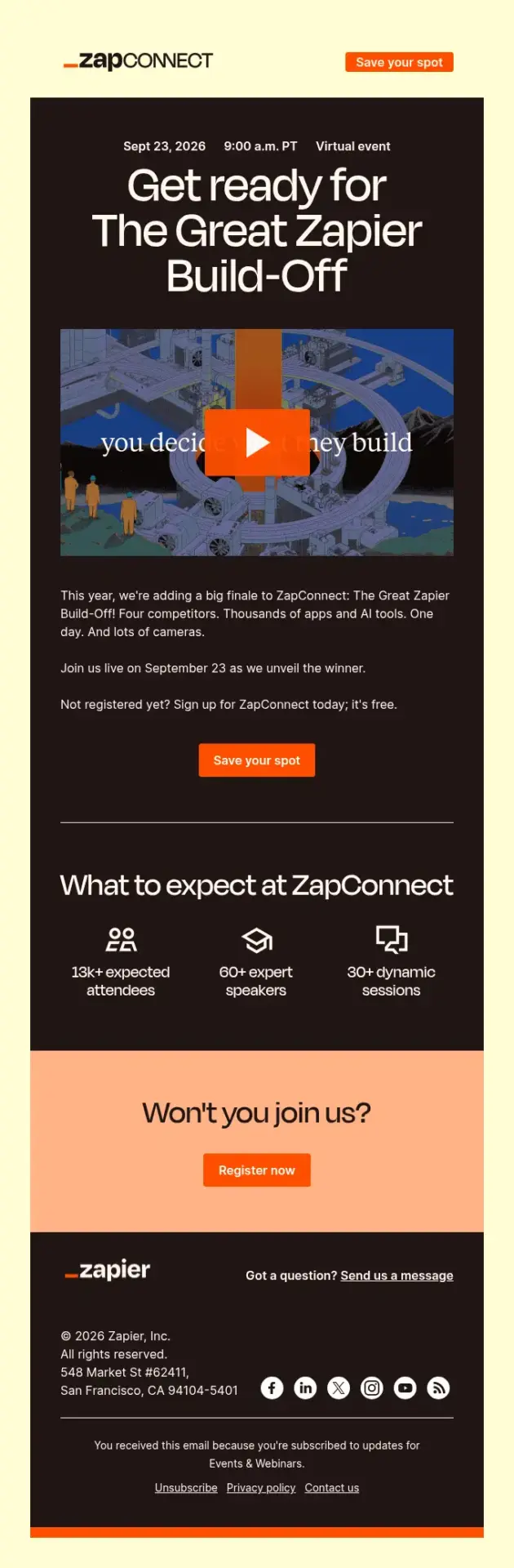
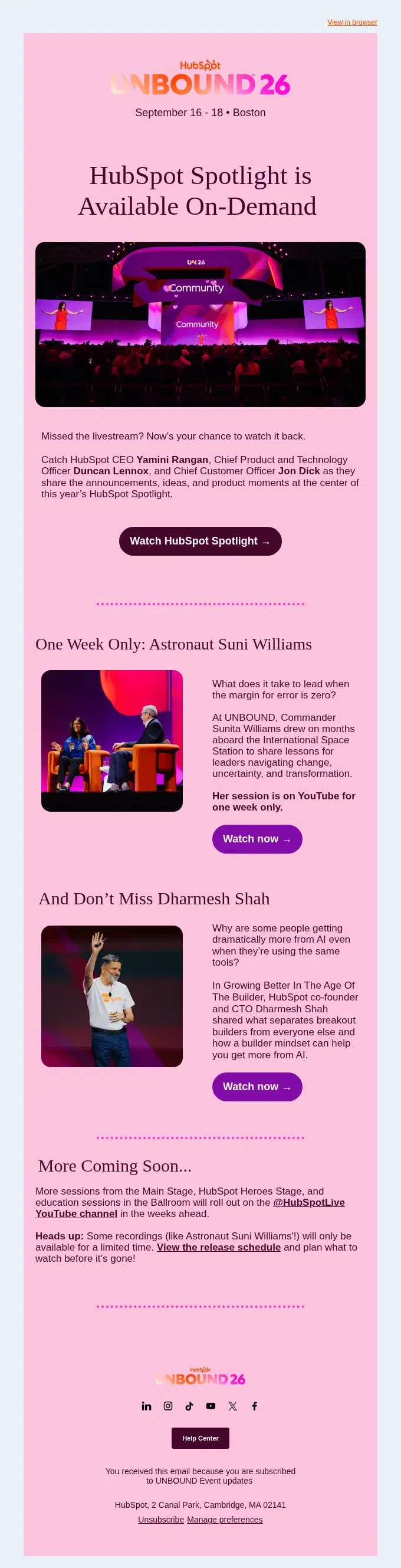
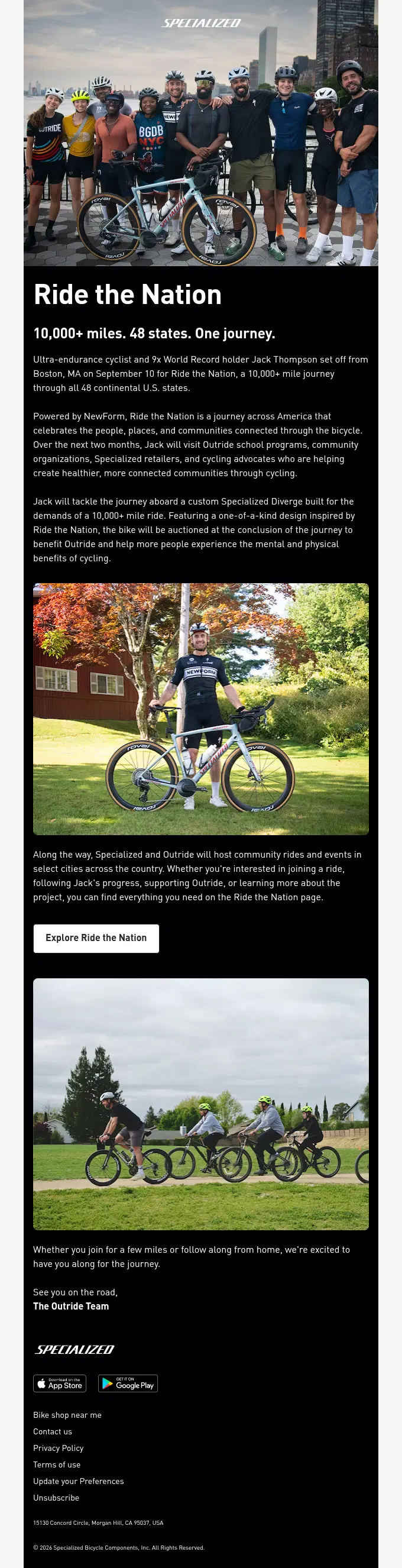
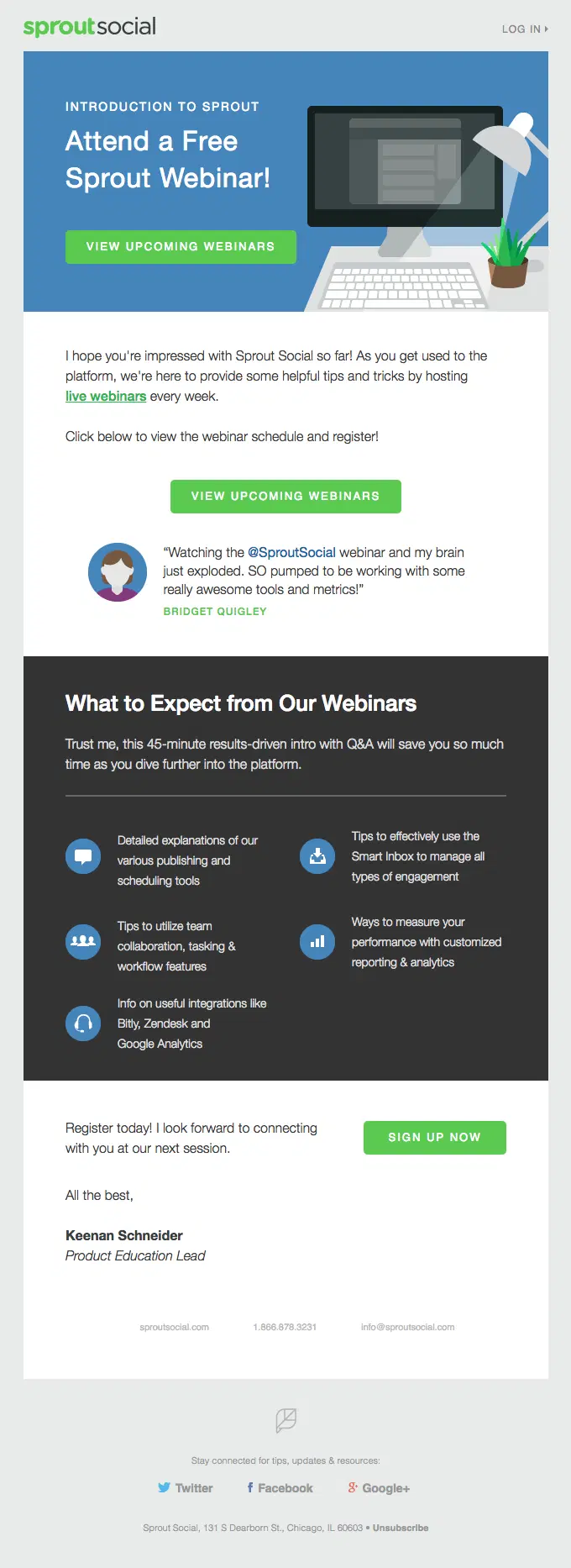
Event marketing emails help attract attendees and keep them informed before, during, and after an event. A complete event email campaign can include the initial announcement, invitation, registration push, reminders, last-call messages, practical event information, and post-event follow-up.


Seasonal and Holiday Email Marketing Examples
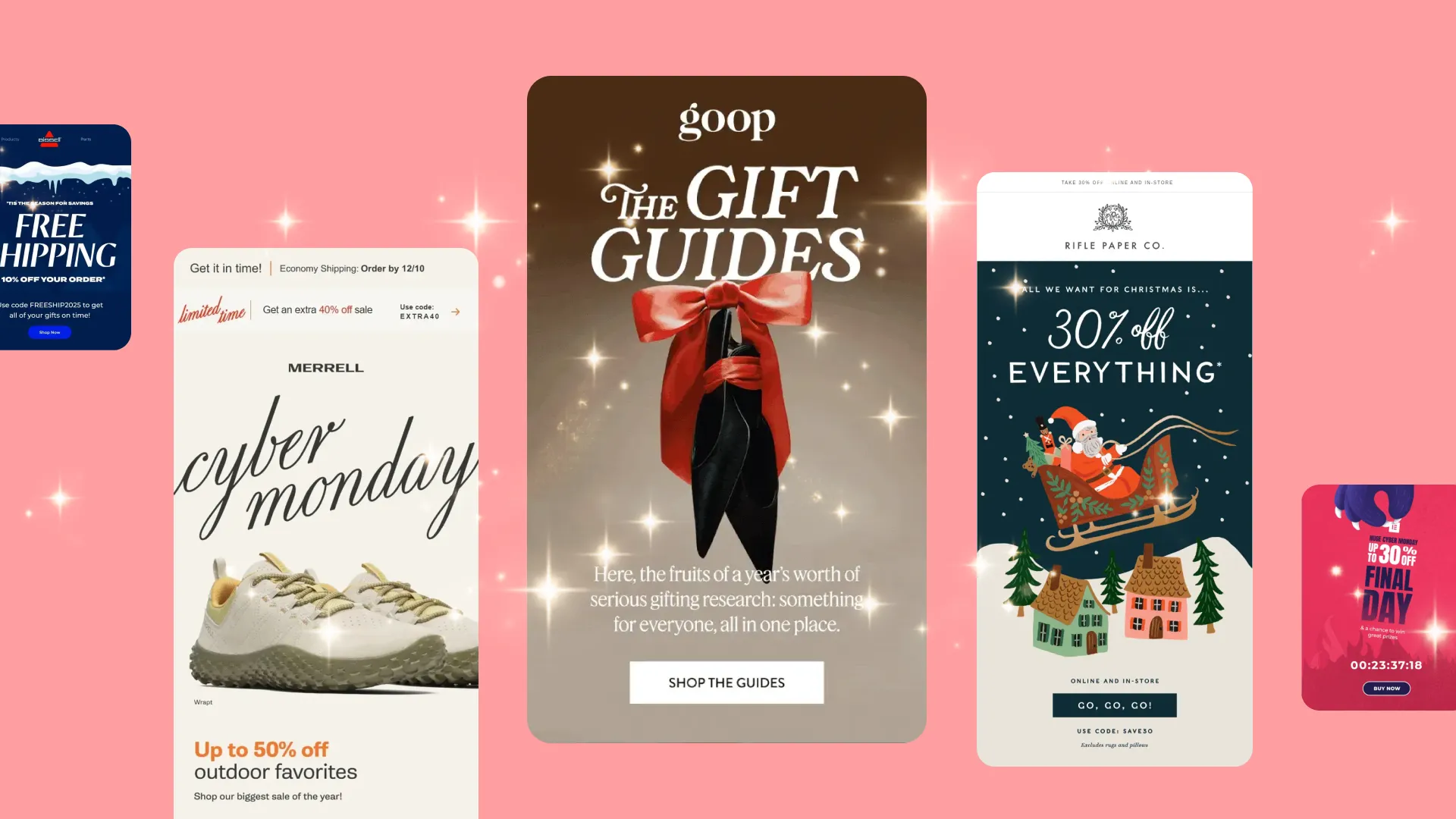
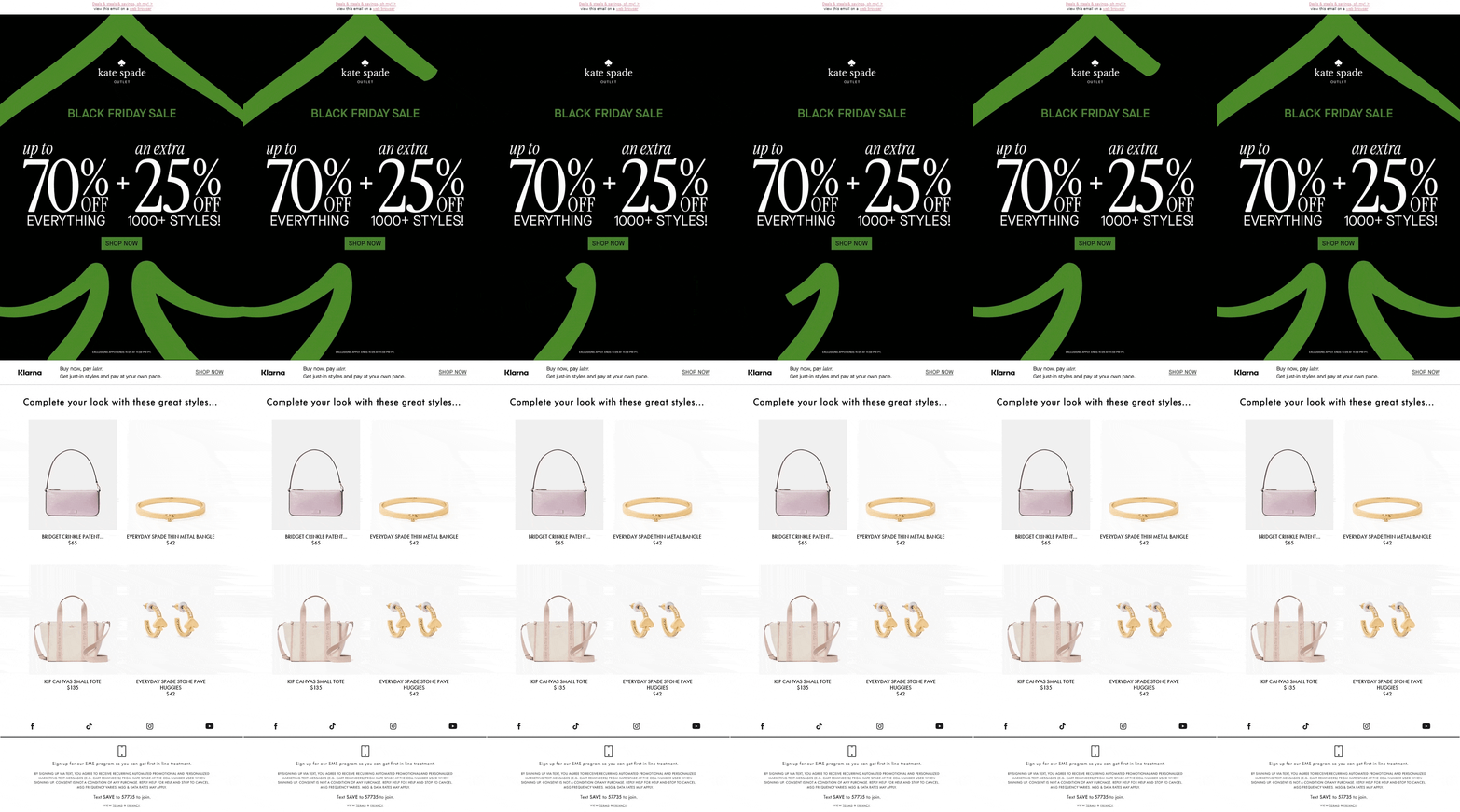
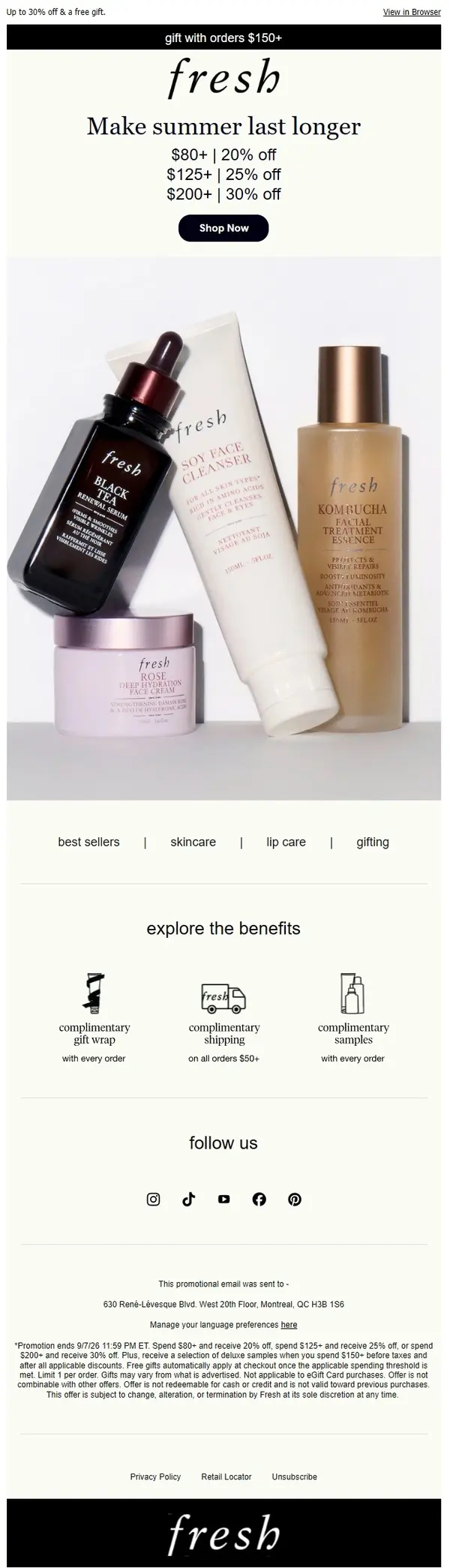

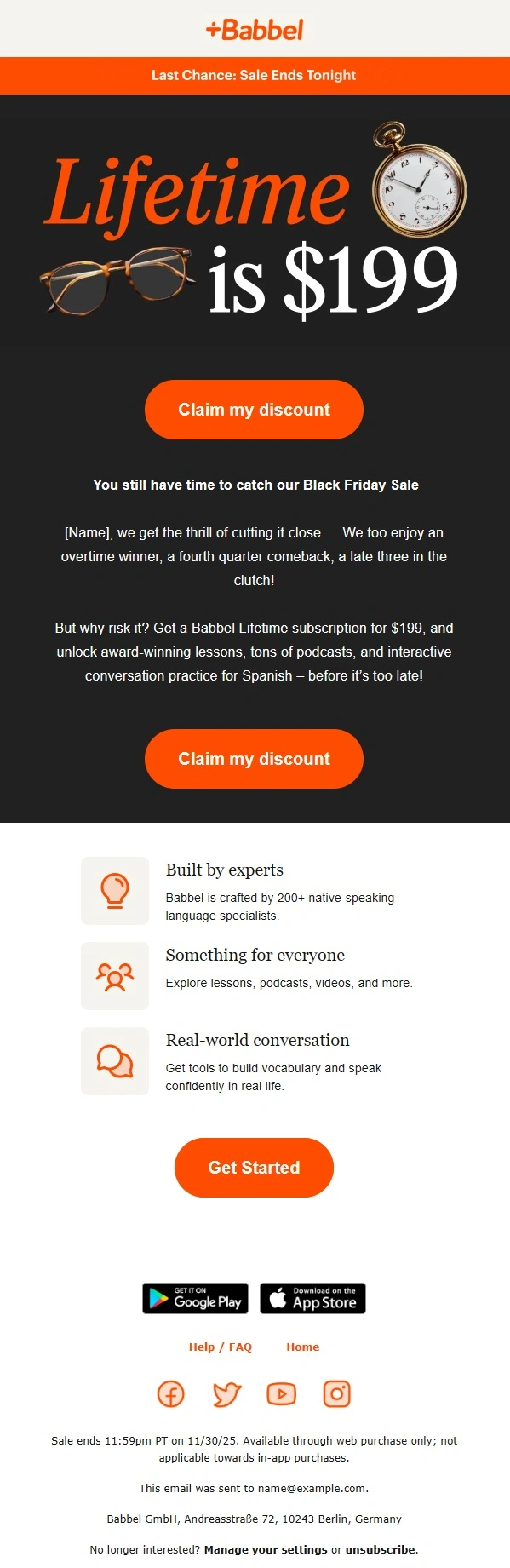
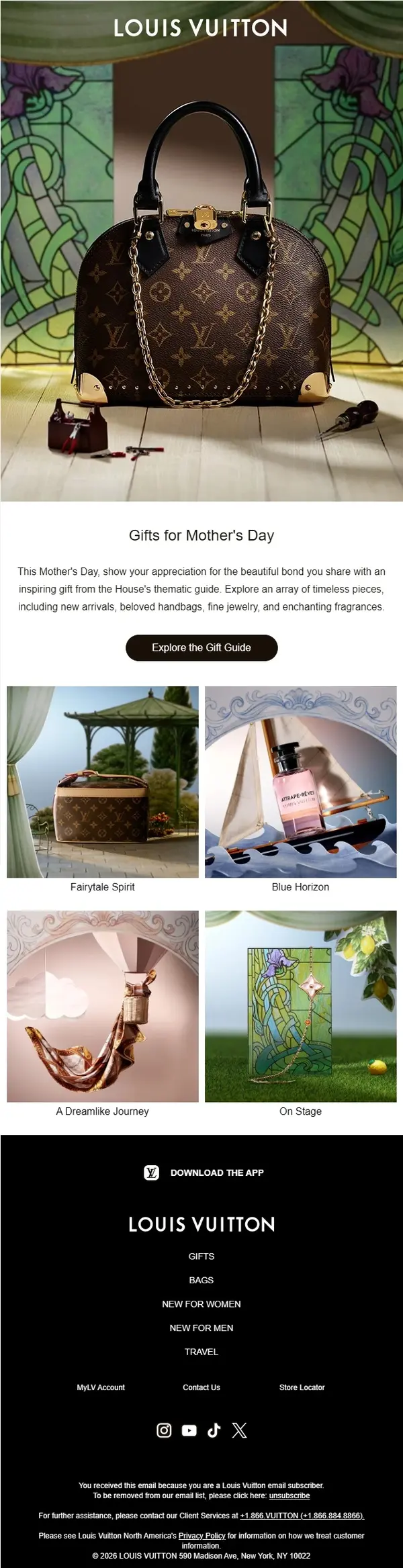
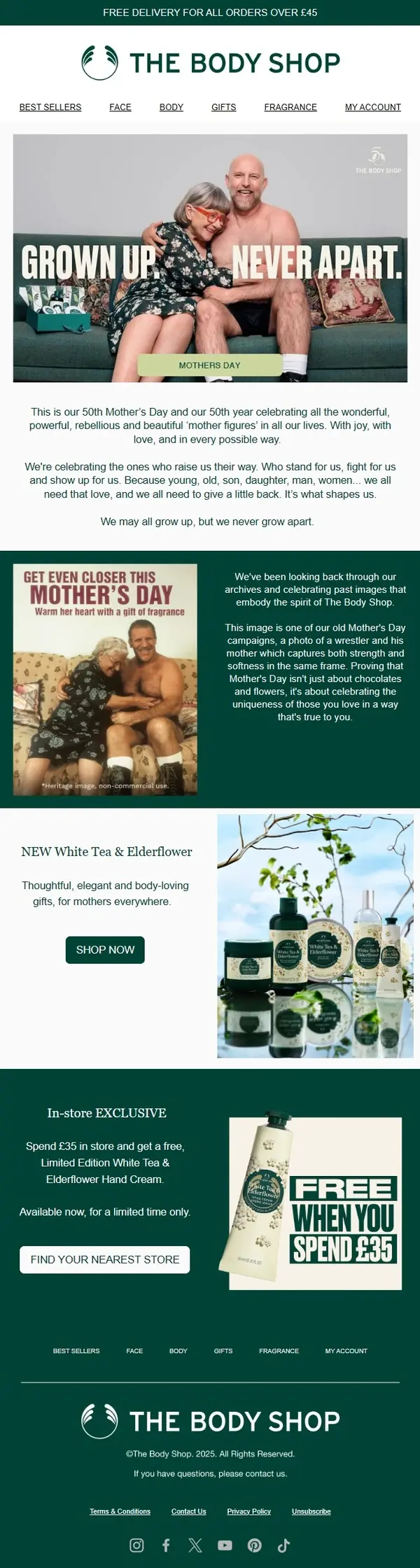
Seasonal email campaigns connect promotions and brand messaging to moments that already have customer attention. Black Friday, Christmas, Valentine’s Day, Mother’s Day, summer campaigns, and other seasonal occasions can all create a natural reason to launch an offer, collection, gift guide, or themed campaign.



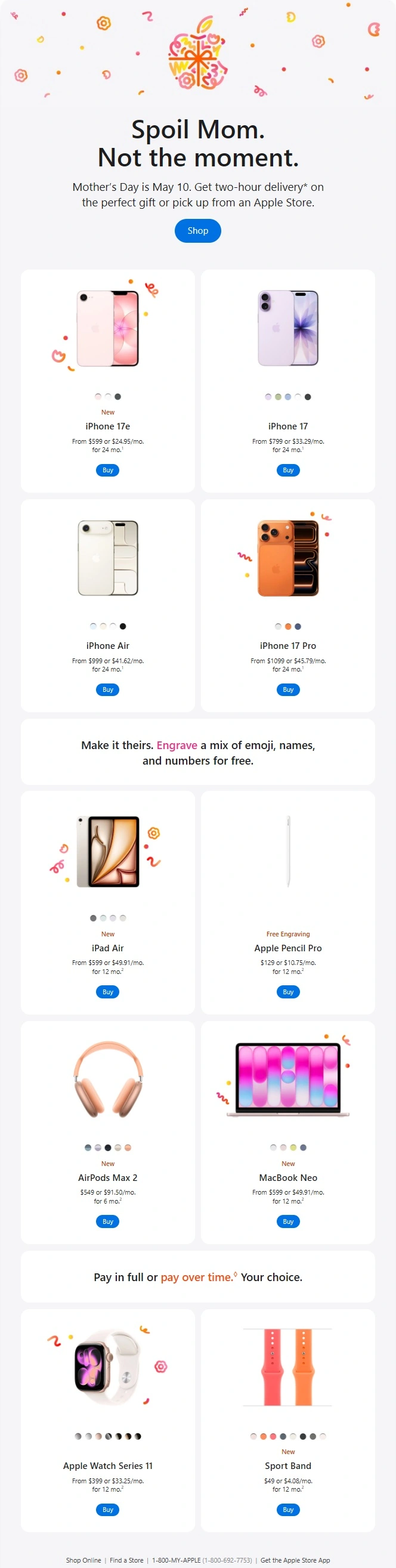

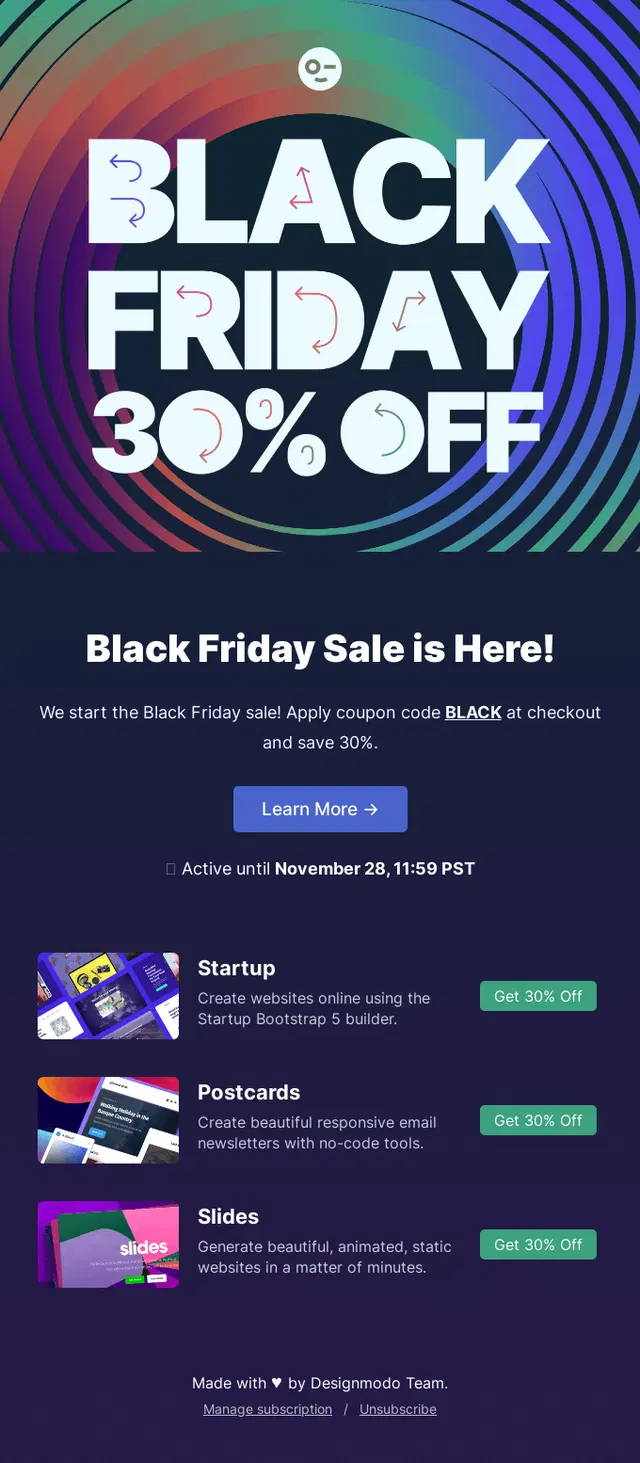
Go to 150+ Holiday Email Examples for Every Major Seasonal Campaign
Re-Engagement and Winback Email Examples
Re-engagement and winback emails target subscribers or customers whose activity has declined. They can use reminders, personalized recommendations, new products, incentives, loyalty benefits, or a simple “we miss you” message to encourage someone to return.
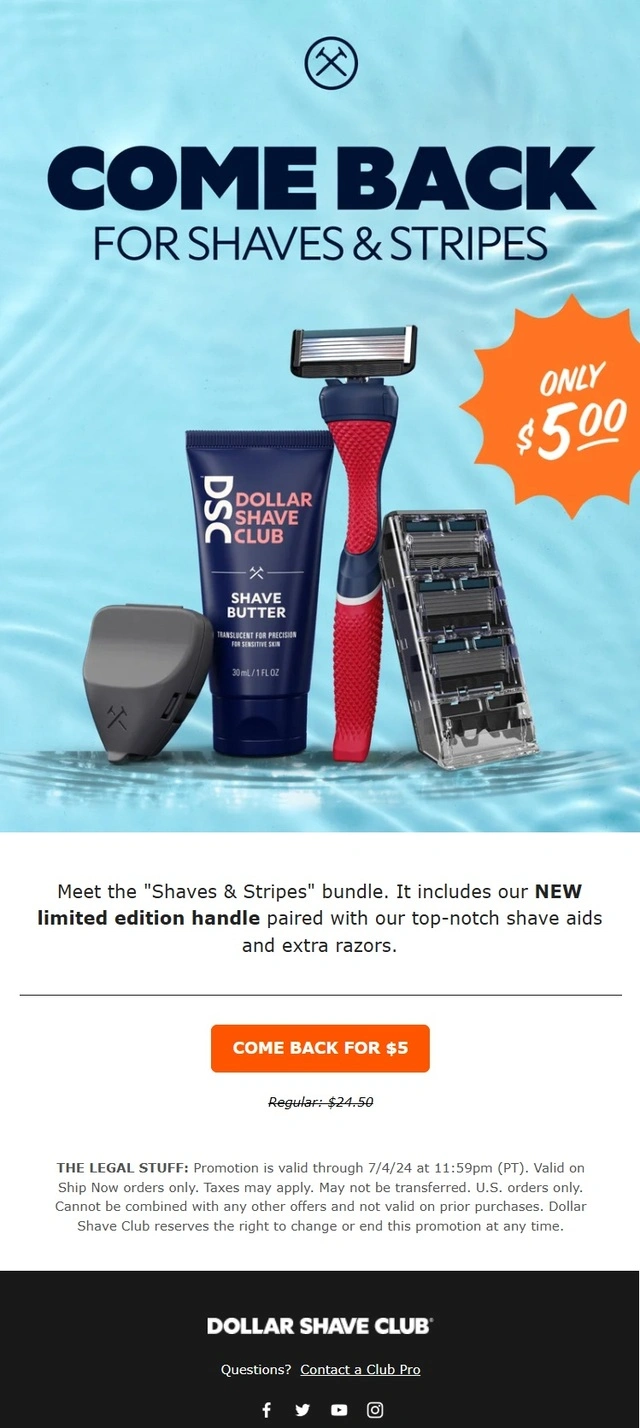
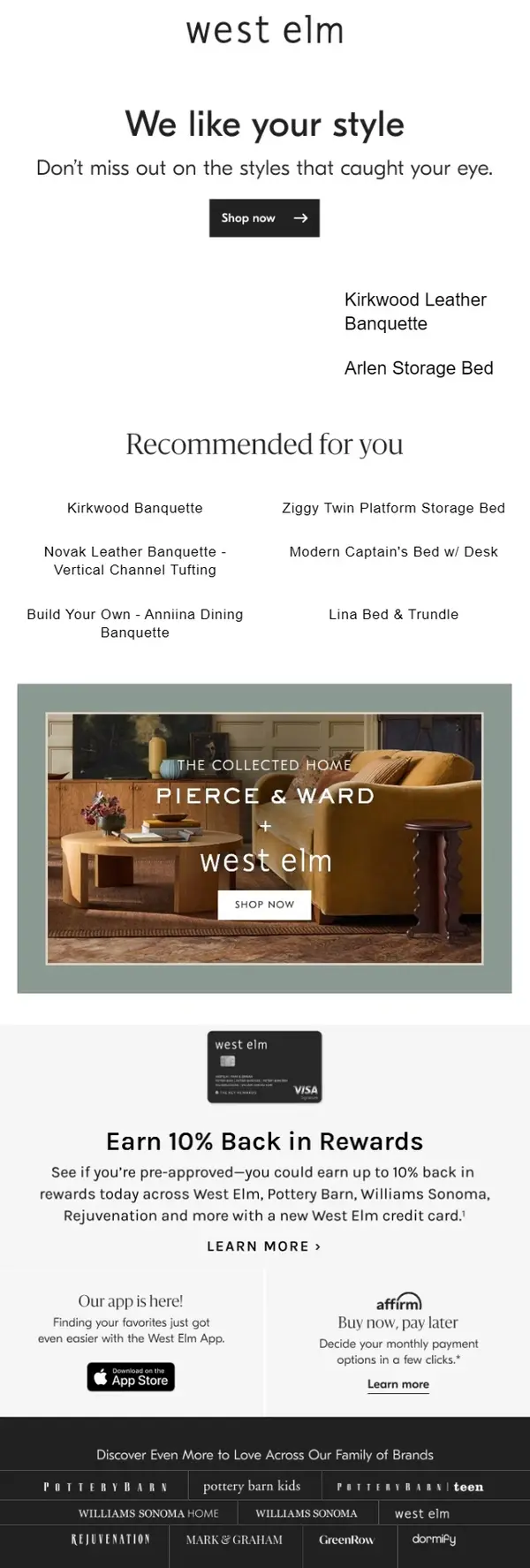
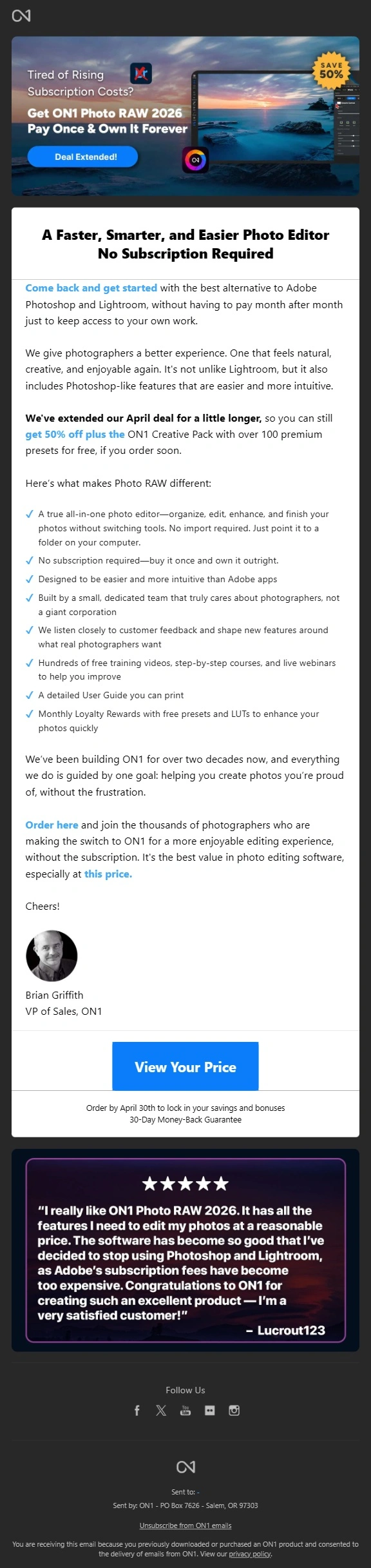

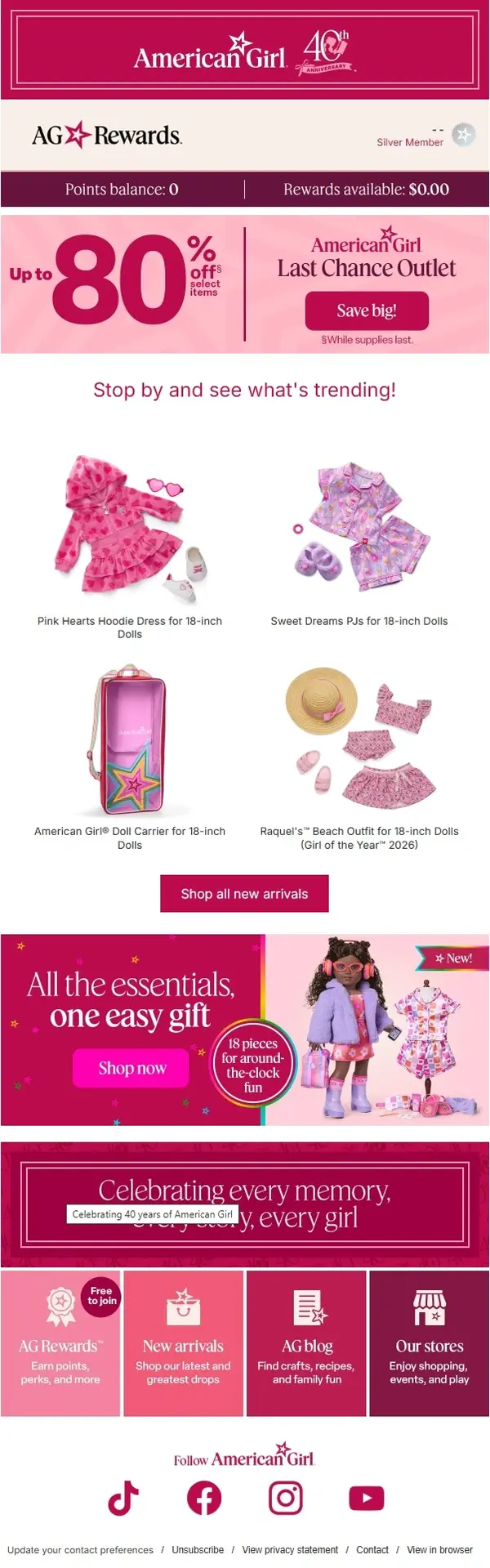
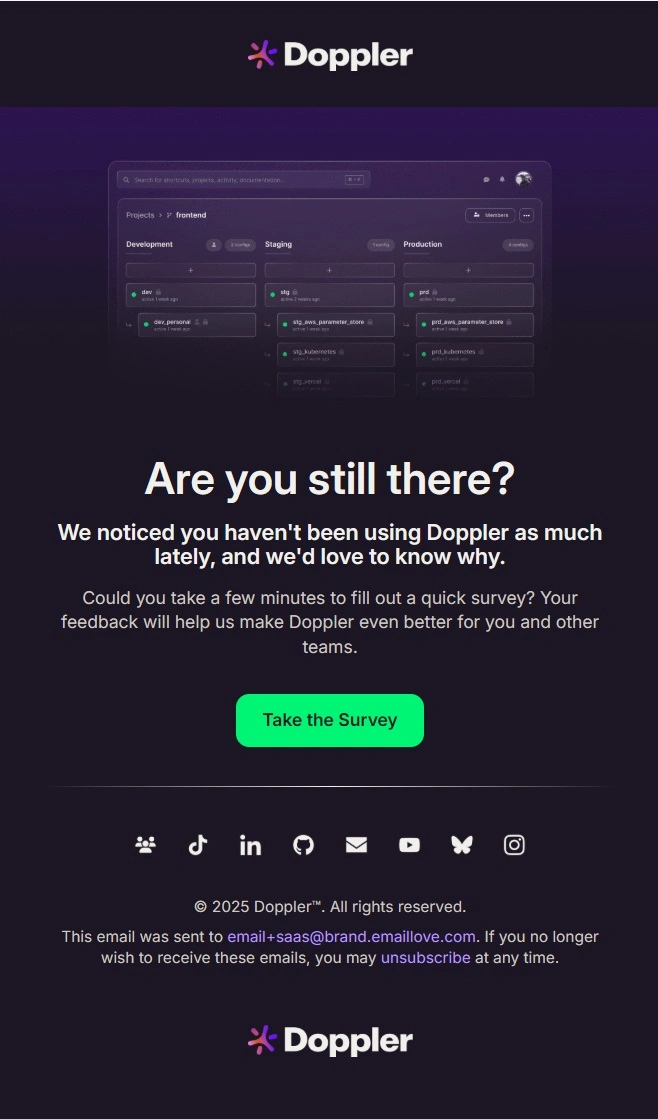

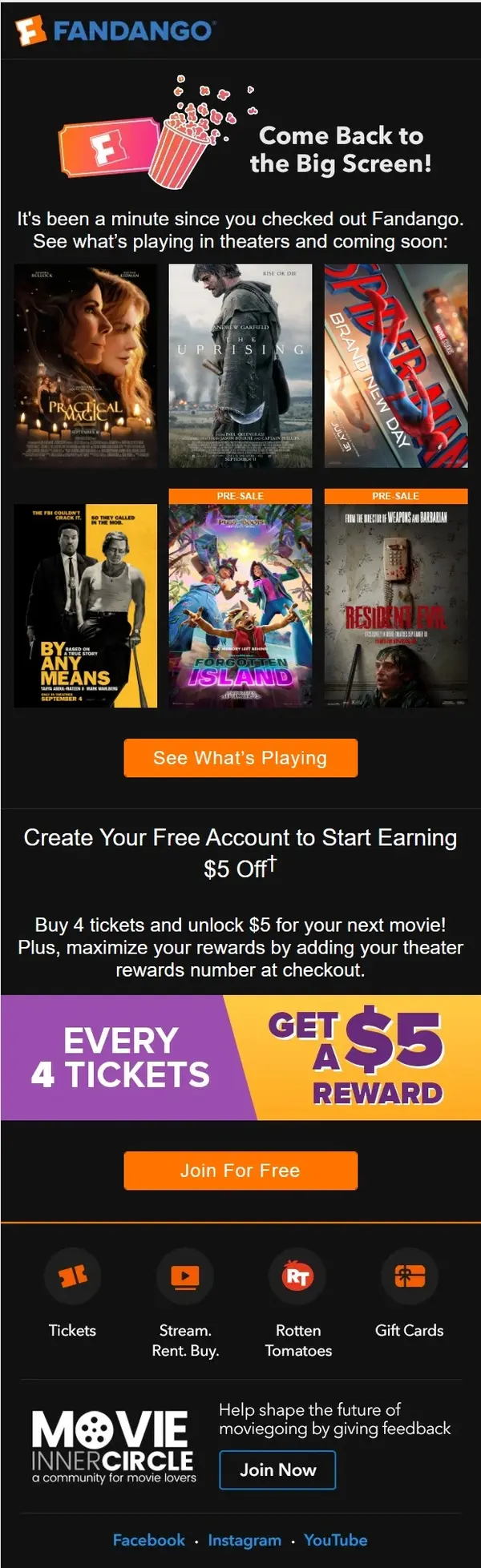
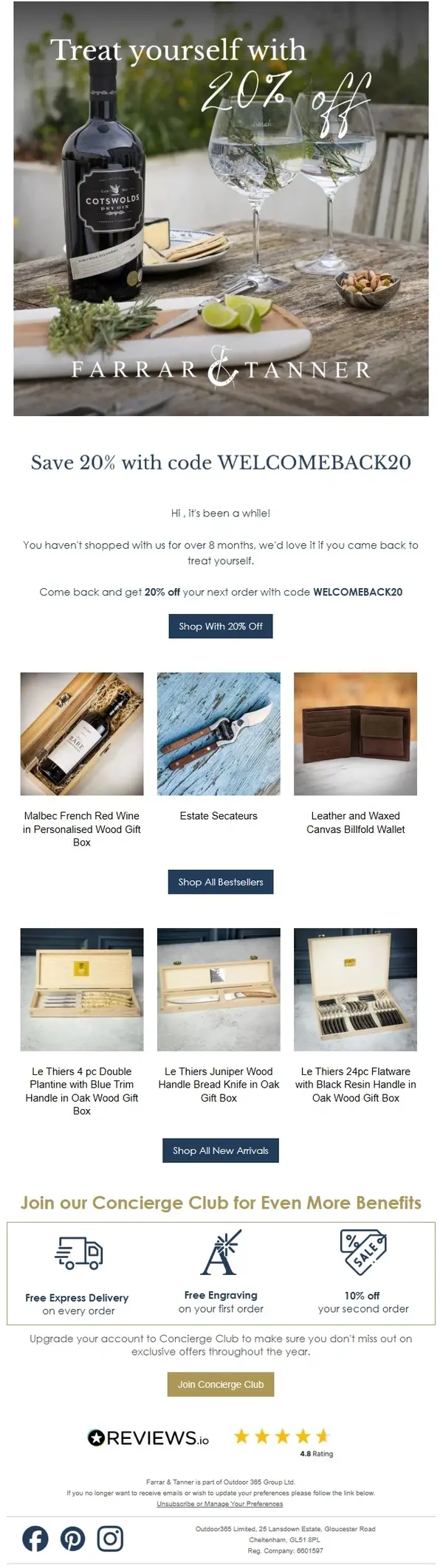



Check out 100+ Winback Email Examples That Make a Return Hard to Resist
B2B Email Marketing Examples
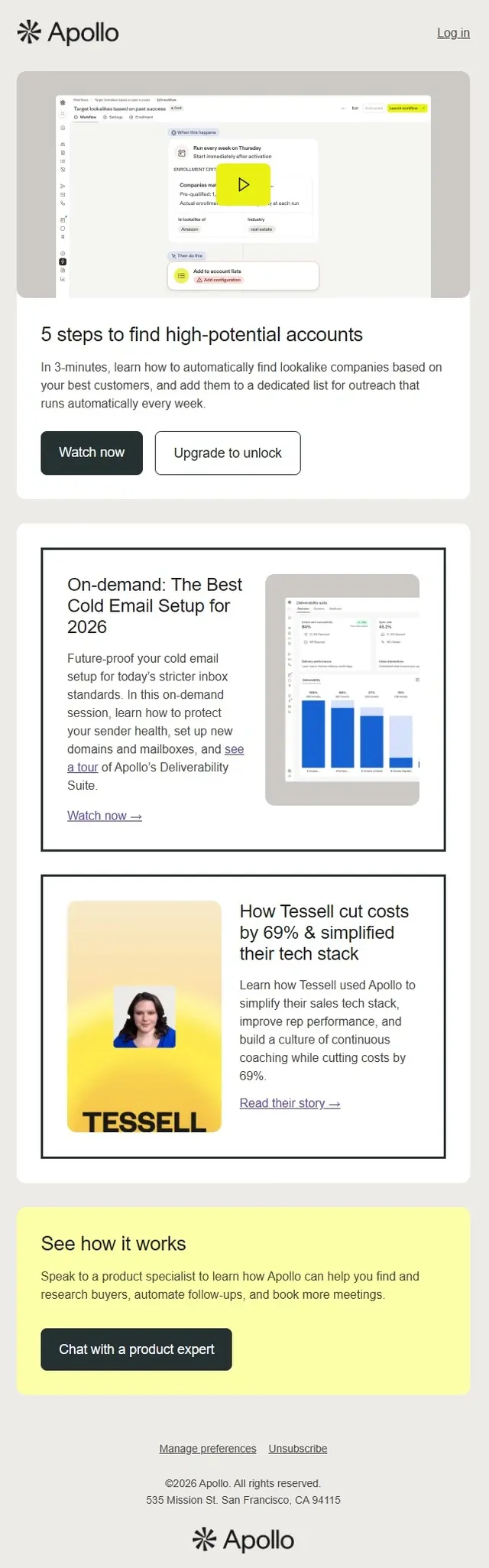
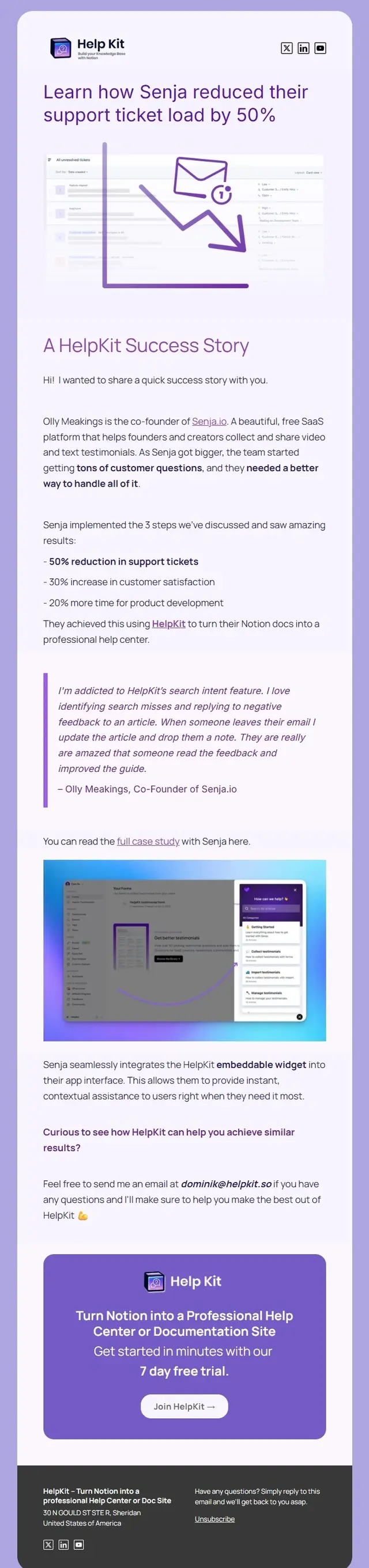
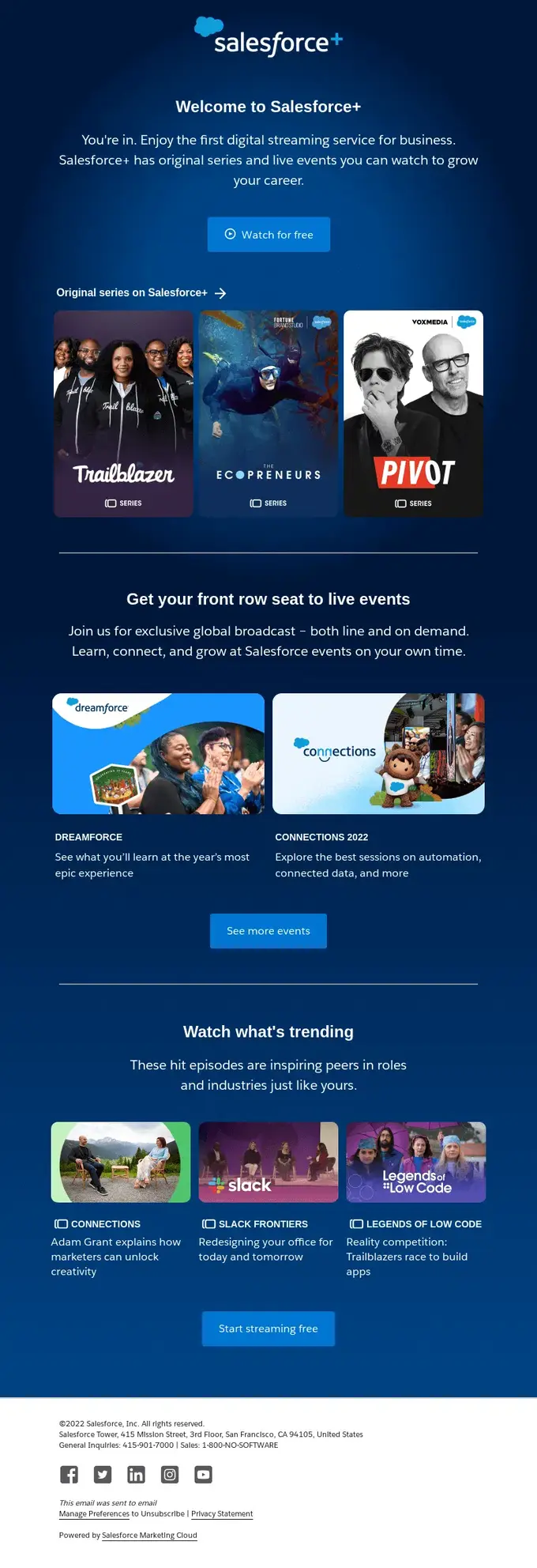
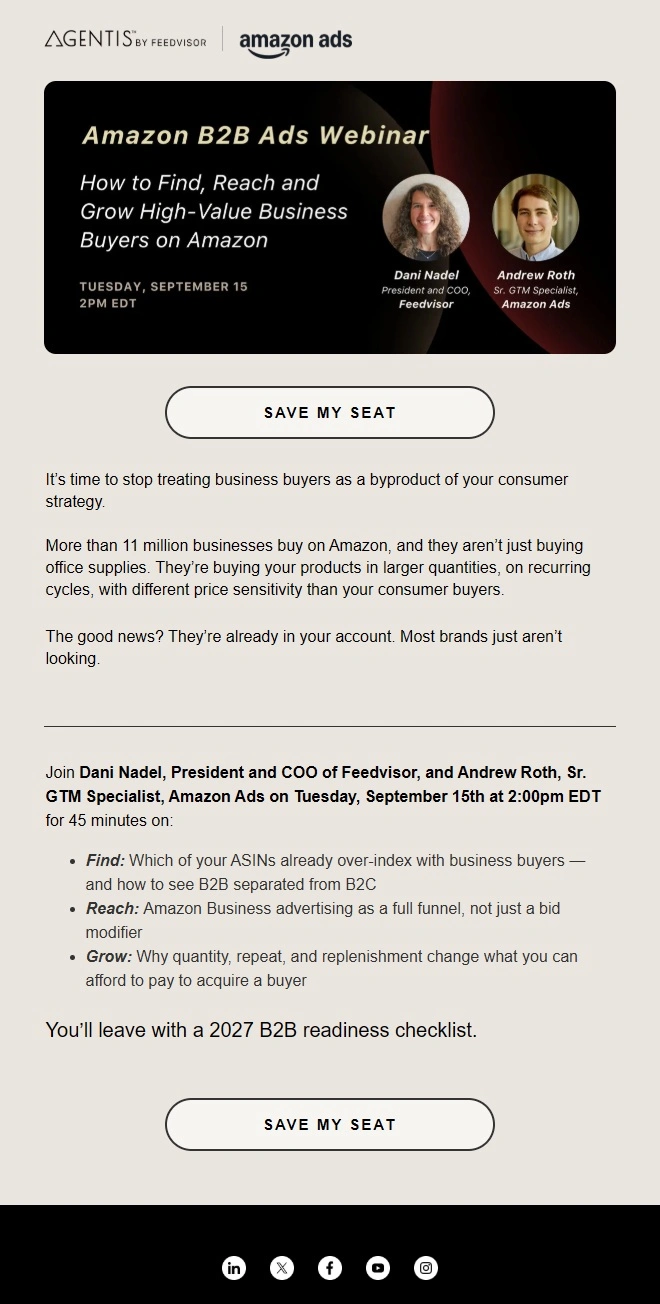
B2B email marketing often has a longer path to conversion than consumer email, so the message needs to do more than push an immediate sale. Strong B2B emails educate prospects, demonstrate expertise, promote useful content or events, explain product value, and guide leads toward a demo, trial, consultation, or purchase.

Email Marketing Campaign and Automation Examples
Individual emails can work well on their own, but many marketing goals are better supported by a sequence of messages. Email campaigns and automations use multiple emails to respond to timing, behavior, or customer lifecycle stages while gradually moving the recipient toward a specific outcome.
Welcome Email Campaign
A welcome email campaign introduces new subscribers or customers over several messages instead of trying to explain everything in one email. The sequence can establish the brand, highlight key benefits, introduce products or resources, and encourage the recipient to take an early action.
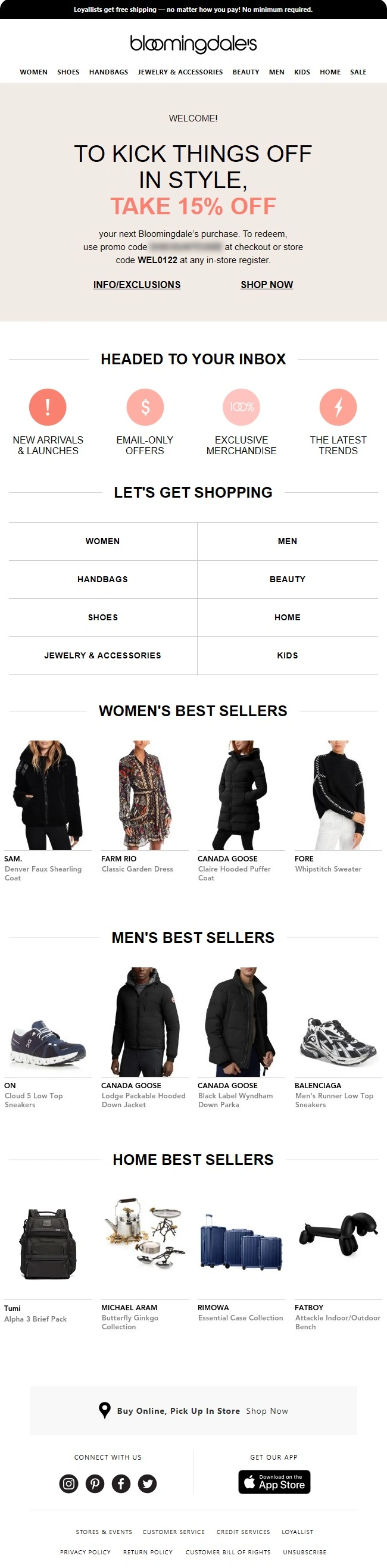
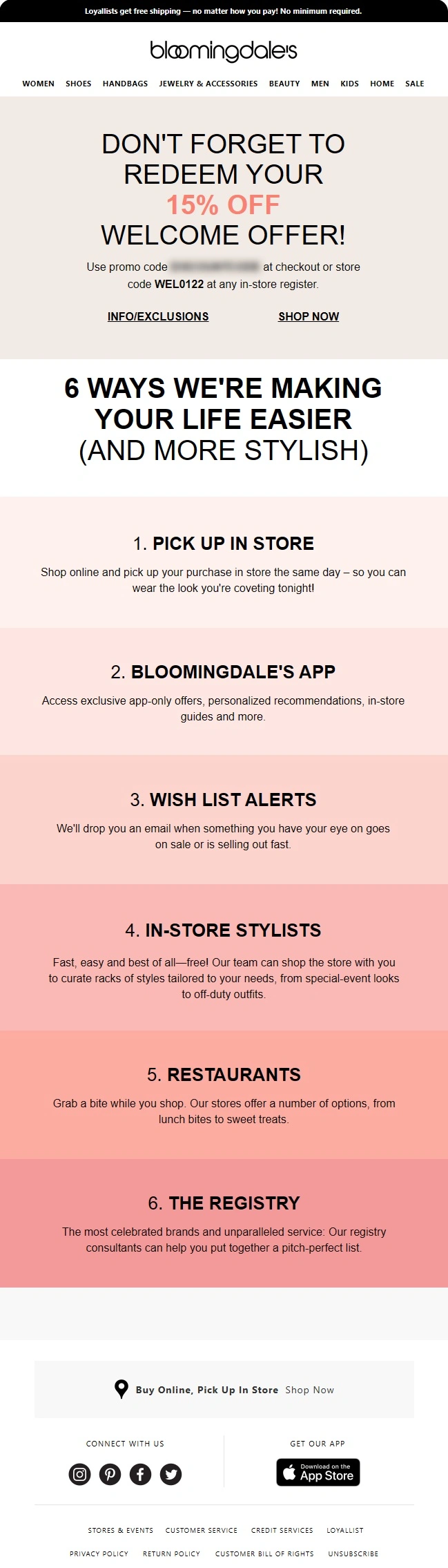
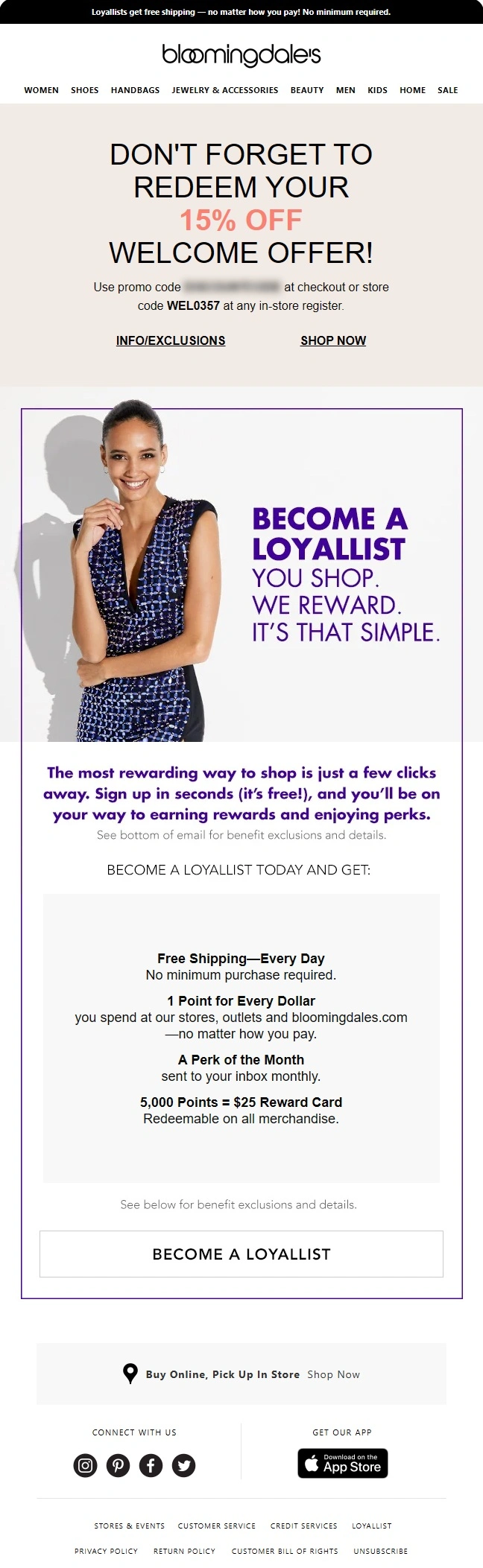
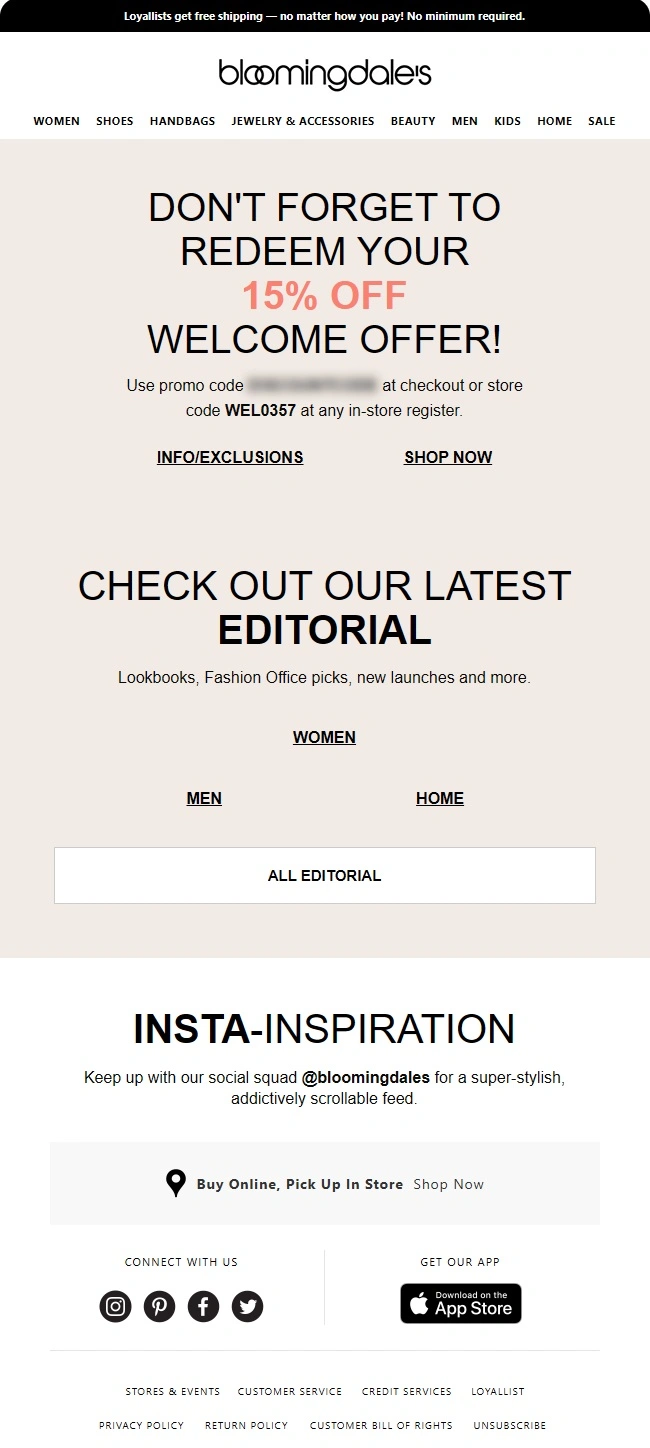
Bloomingdale’s 4-Step Welcome Email Campaign
Bloomingdale’s builds its welcome sequence around a 15% first-purchase offer, then gradually introduces more of the brand experience. The emails move from bestsellers and shopping categories to useful services, loyalty benefits, and editorial content, giving new subscribers multiple reasons to return even if they do not redeem the offer immediately.
Lead Nurture Email Campaign
A lead nurture campaign keeps potential customers engaged while they consider a product or service. Each email can answer a different question, share useful information, address objections, provide proof, or introduce the next logical step toward conversion.
Heights 4-Step Educational Lead Nurture Campaign
Heights nurtures prospective customers through a sequence focused on education rather than repeated promotions. The emails move from the science behind everyday wellbeing to building a consistent routine, then reinforce the product’s role with practical guidance and clinical research. The result is a gradual path from understanding the problem to trusting the solution.




Product Launch Email Campaign
A product launch campaign builds interest before the release and continues the conversation after the product becomes available. Teasers, early access, launch-day announcements, product education, social proof, reminders, and final calls can all play different roles in the same sequence.
Caraway 3-Step Coffee Maker Launch Campaign
Caraway builds its Coffee Maker launch around a three-email sequence that introduces the product, explains what makes it different, and reinforces the launch with more detailed product education. The emails keep the same visual world throughout while shifting the message from excitement to proof and practical benefits.



Promotional Email Campaign
A promotional campaign uses several emails around the same sale, offer, or commercial goal. The sequence can introduce the promotion, highlight different products or benefits, remind subscribers of the deadline, and create urgency as the offer comes to an end.
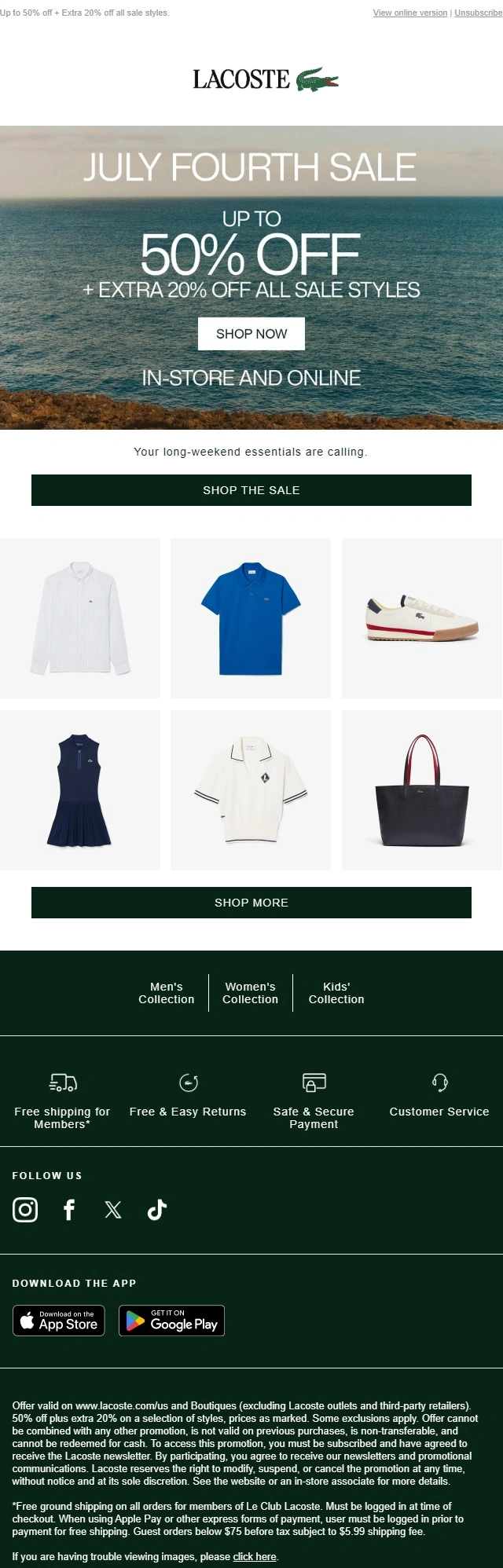
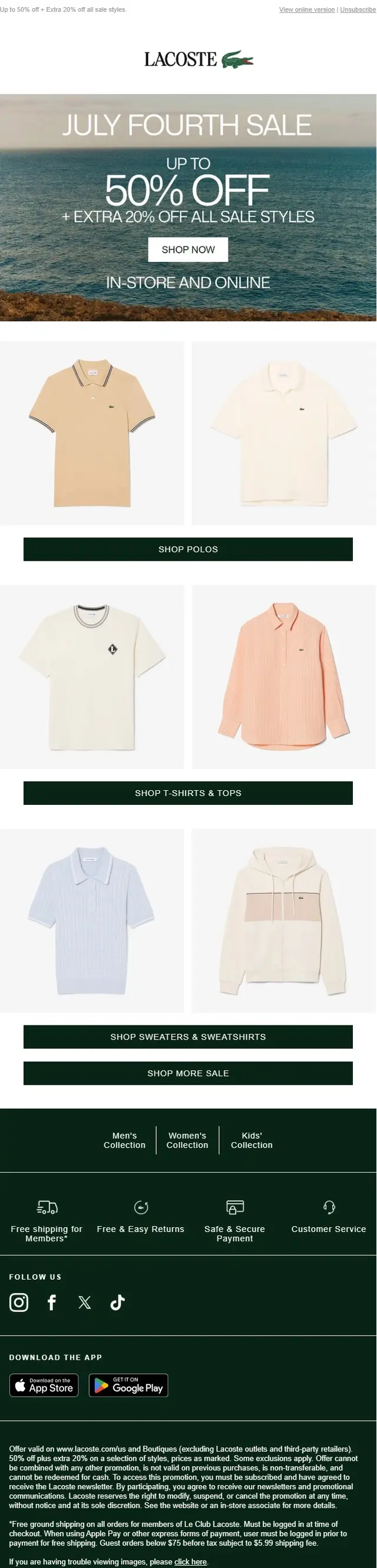
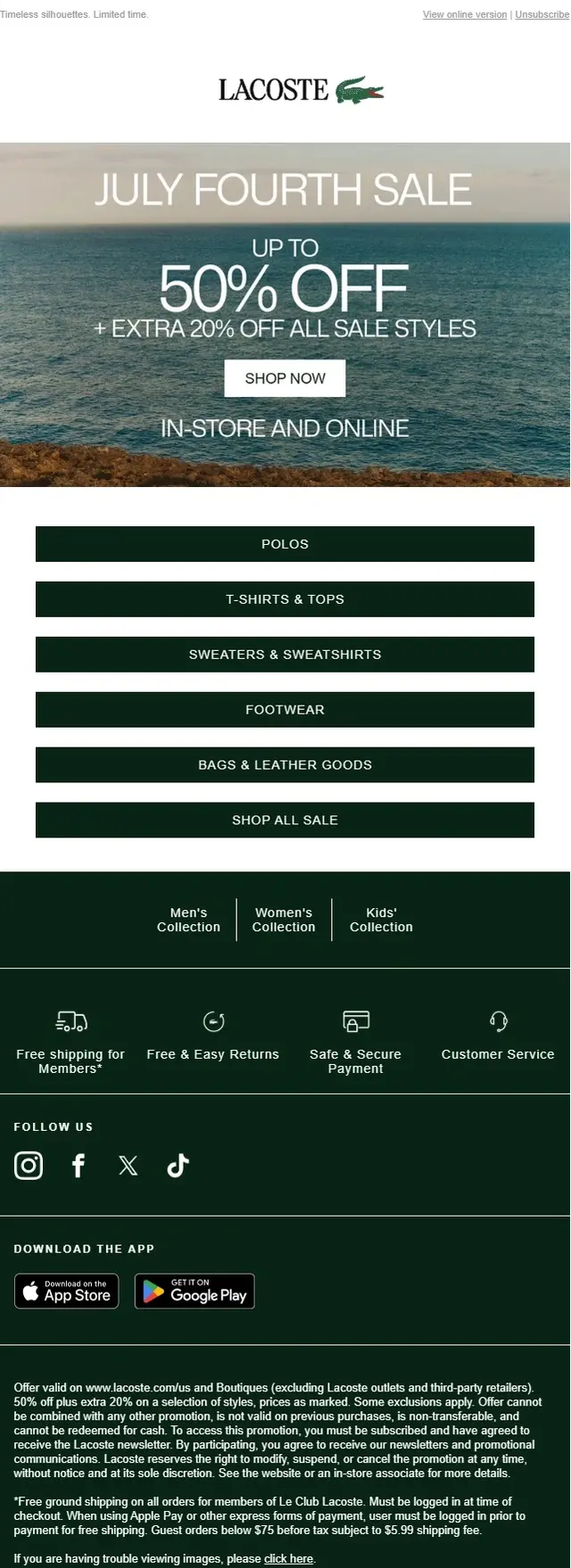
Lacoste 4-Step July Fourth Promotional Campaign
Lacoste builds its July Fourth promotion as a four-email sequence that keeps the same core offer while changing the way the sale is presented. The campaign moves from a broad launch message to product and category discovery, then closes with a stronger reminder as the promotion nears its end.

Lifecycle Email Automation
Lifecycle email automation sends messages based on a customer’s actions or stage in the relationship with a brand. Common triggers include signup, browsing behavior, cart abandonment, purchase, replenishment timing, subscription renewal, inactivity, and other events where timing makes the email more relevant.
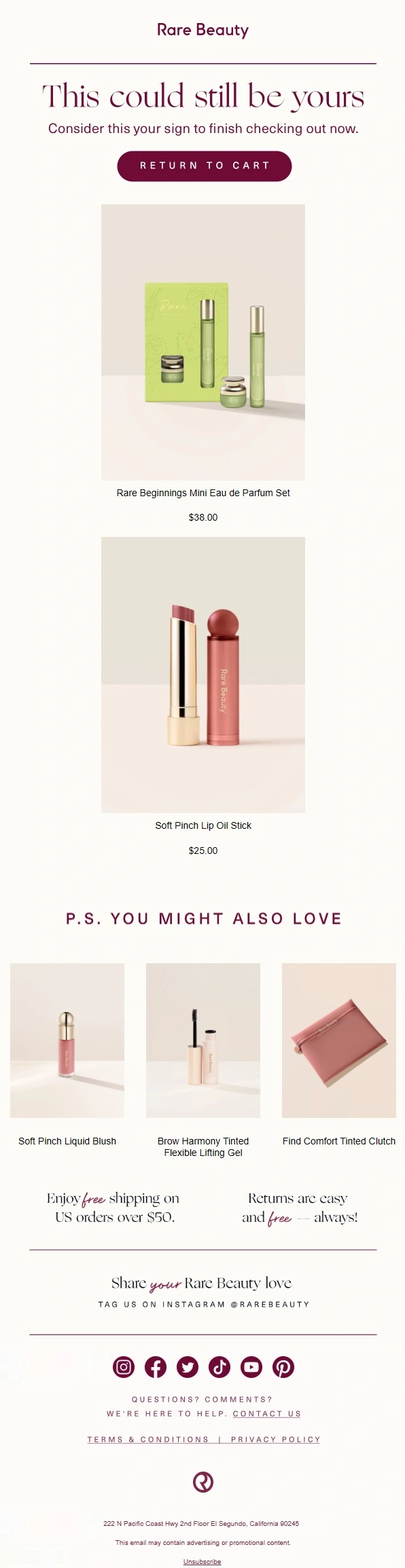
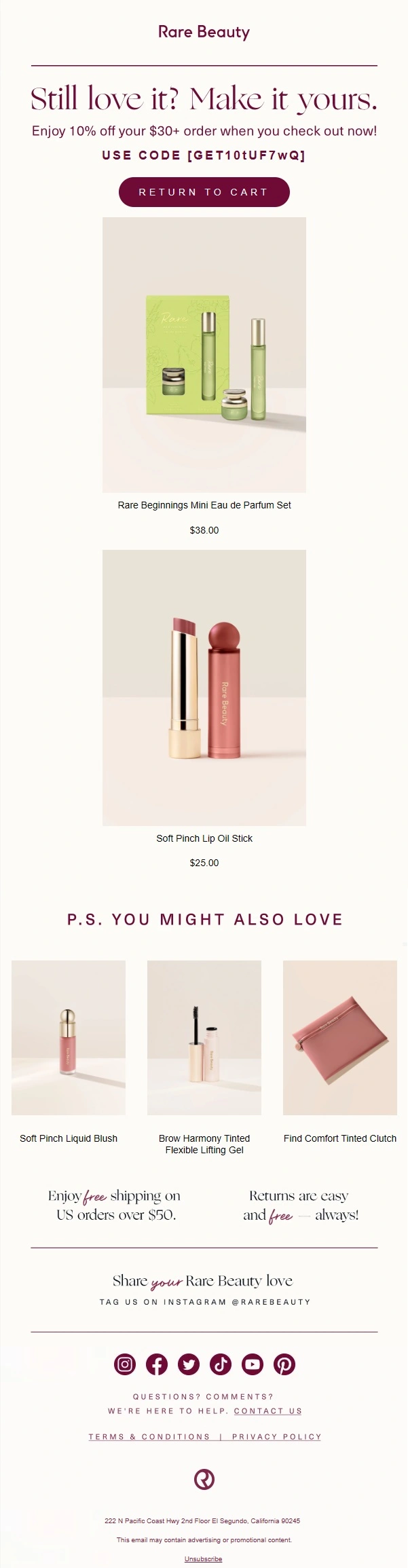
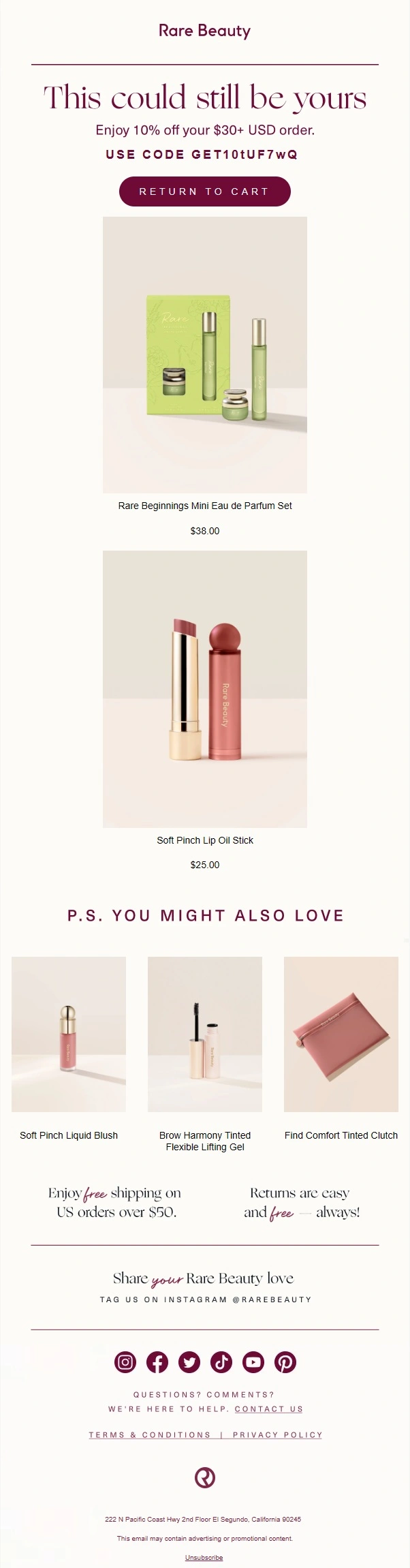
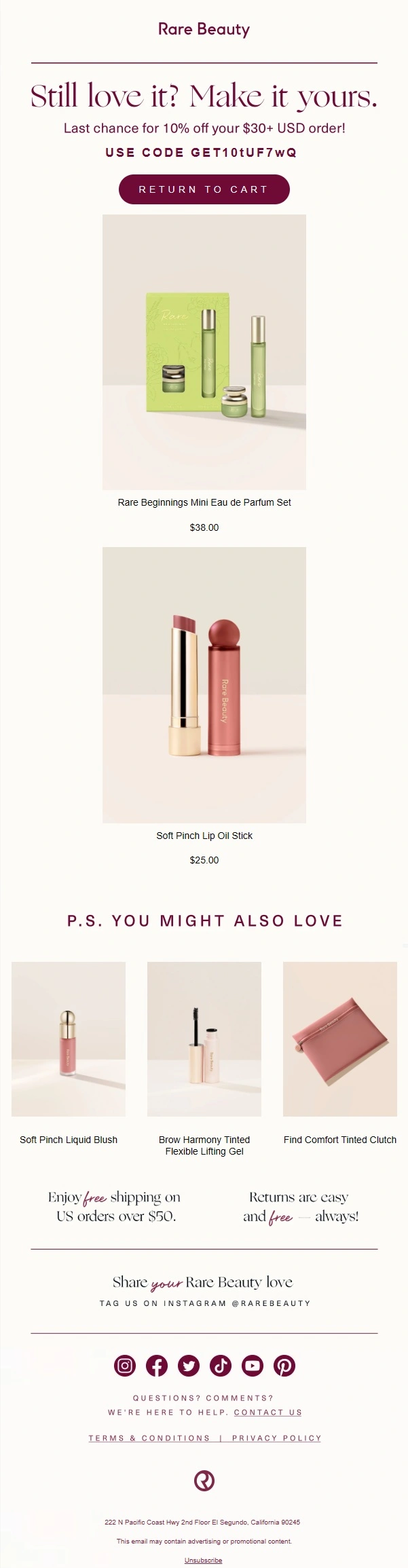
Rare Beauty 4-Step Abandoned Cart Automation
Rare Beauty uses a four-email abandoned cart sequence that gradually increases the reason to return. The first message simply reminds the shopper about the products left behind, while later emails introduce a 10% discount and eventually add a last-chance deadline. Product recommendations remain consistent throughout, giving the shopper additional paths back to the store.
Winback Email Campaign
A winback campaign uses a sequence of emails to re-engage customers who have stopped purchasing or interacting with the brand. Rather than repeating the same incentive, each message can use a different angle, such as new products, personalized recommendations, benefits, social proof, an offer, or a final reminder.
Trtl 2-Step Winback Email Campaign
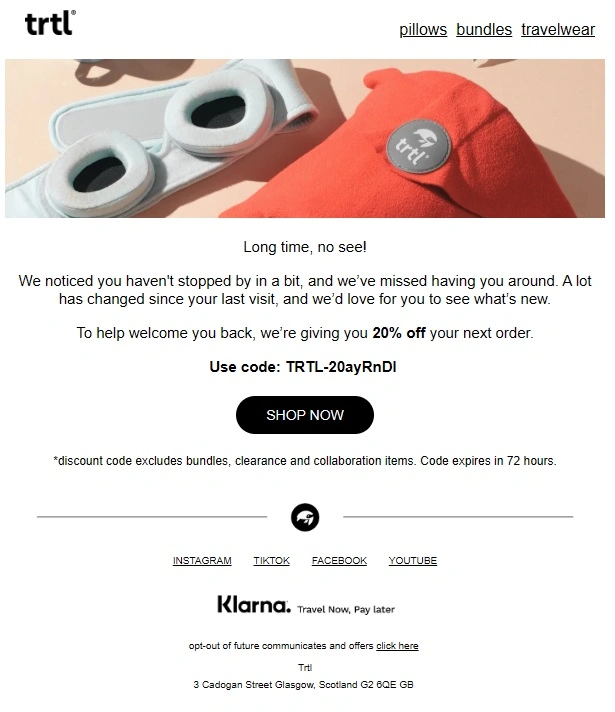
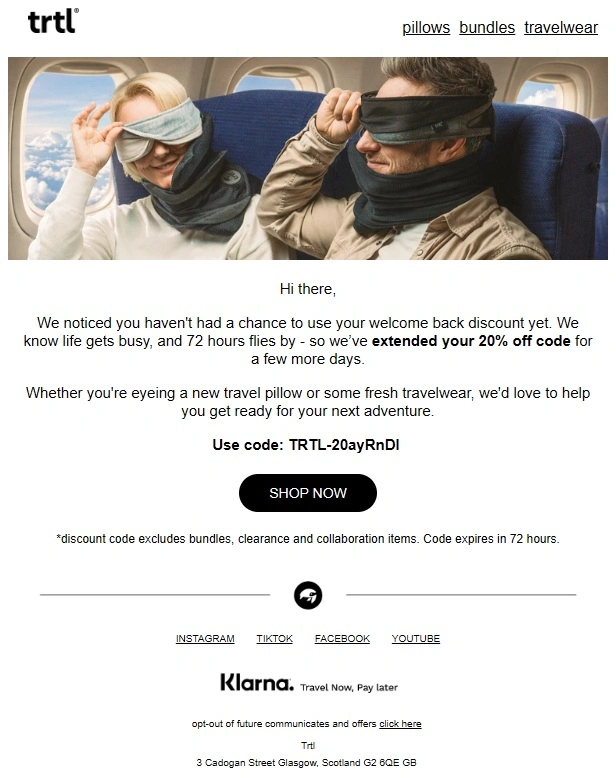
Trtl uses a simple two-email winback sequence built around a 20% return incentive. The first email acknowledges the customer’s inactivity and invites them back, while the follow-up extends the same discount and adds a stronger reminder that the offer will not stay available for long.
Email Marketing Best Practices
A strong marketing email starts with a clear reason for being sent. The offer, message, design, CTA, timing, and audience should all support the same goal instead of competing for attention. The examples above use very different creative approaches, but the most effective ones tend to follow a few practical principles.
Match the Email to the Customer Journey Stage
A first-time subscriber does not need the same message as a repeat customer, an inactive subscriber, or someone who has just abandoned a cart. Build the email around what the recipient already knows about the brand and what would make sense for them to do next.
Give Each Email One Primary Job
An email can contain several products, links, or supporting sections, but its main purpose should be obvious within a few seconds. Decide whether the goal is to shop, register, read, book a demo, finish checkout, return to the brand, or take another specific action, then build the hierarchy around it.
Segment and Personalize Where It Adds Value
Personalization works best when it changes the usefulness of the message, not just the greeting. Browsing behavior, purchase history, lifecycle stage, interests, and previous engagement can all help determine which products, content, offers, or CTAs a subscriber sees.
Make the CTA Easy to Find
The primary CTA should stand out visually and use language that tells the reader what happens next. Long emails can repeat the same CTA after key sections, while shorter emails often work better with one clear action rather than several competing buttons.
Design for Scanning and Mobile Screens
Most readers will not study every line. Use clear headings, short sections, strong visual hierarchy, enough spacing, and product or content blocks that still make sense on a smaller screen. Important information should not depend on tiny text or complex desktop-only layouts.
Use Automation When Timing Matters
Welcome emails, abandoned carts, product recommendations, replenishment reminders, winback messages, and onboarding flows become more relevant when they are triggered by customer behavior rather than sent on a fixed calendar. A well-timed automated email can respond to intent while it is still fresh.
Test the Parts That Can Change Performance
Subject lines, send time, offers, CTA wording, email length, layout, product order, and creative treatment are all worth testing. Change one meaningful variable at a time when possible so the result tells you something useful instead of simply producing a different version.
Keep Brand Recognition Consistent
Email can be playful, editorial, minimal, sales-heavy, or highly visual without losing the brand behind it. Consistent typography, imagery, tone, colors, and product presentation help subscribers recognize who is speaking before they even reach the logo.
Frequently Asked Questions
How do you choose which type of marketing email to send?
Start with the customer’s current stage and the action you want them to take next. A new subscriber may need a welcome or educational email, an active shopper may respond better to product recommendations or a promotion, and an inactive customer may need a re-engagement message. The campaign type should follow the customer situation rather than the other way around.
How do you know when to use a single email or a multi-email sequence?
Use a single email when the message is simple, timely, and can be understood in one interaction. A sequence makes more sense when the recipient needs several steps to move forward, such as learning about a product, considering an offer, completing onboarding, or returning after a period of inactivity. Each email in the sequence should add a new reason to continue rather than repeat the same message.
What customer data is most useful for personalized email marketing?
The most useful data usually comes from behavior rather than basic profile fields. Browsing history, previous purchases, abandoned products, content engagement, lifecycle stage, stated preferences, and recent activity can all change what a recipient sees. Personalization is most valuable when the data makes the email more relevant, not when it only adds a first name.
Which email campaigns should be automated and which should be sent manually?
Behavior- and lifecycle-triggered messages are usually the strongest candidates for automation. Welcome flows, onboarding, abandoned cart, browse abandonment, post-purchase, replenishment, subscription reminders, and winback campaigns can all respond automatically when a specific event occurs. Newsletters, launches, seasonal campaigns, and one-off promotions are more often scheduled manually around a particular date or campaign plan.
How can you tell if an email sequence is too long?
A sequence is too long when later emails stop adding new information, context, proof, or urgency. The number of messages should follow the goal, not a fixed formula. A short re-engagement flow may only need two or three emails, while onboarding or launch campaigns can justify more if each message has a distinct role.
Found a Direction Worth Building On?
After 130+ examples, the next step is not finding one more email to save. It is deciding what fits your brand, your audience, and the job the email needs to do.
MailBakery creates custom email templates from the ground up — shaped around your content, visual identity, campaign type, and the platform you use. You bring the brief. We turn it into an email that is ready to send.